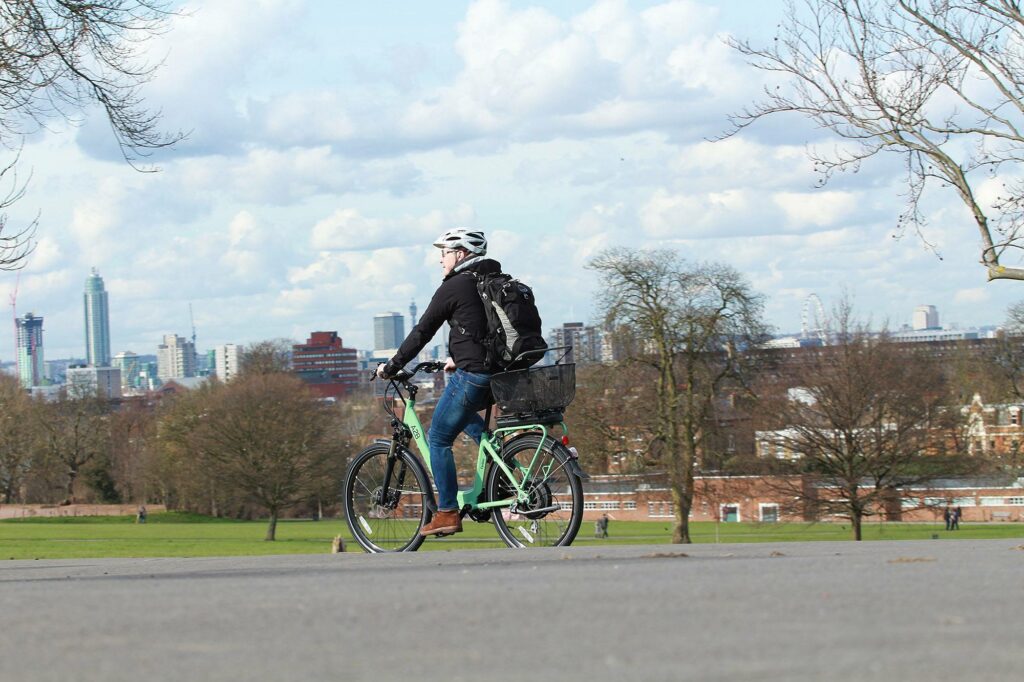

An electric bike makes a lot of sense as a transport option for a lot of different people, and there’s a huge range of bikes out there. Let’s have a look at what the options are.
Frame design
There’s two predominating styles of city bike available. You can have a traditional diamond frame with a crossbar, or you can have a step-through frame where the main tube swoops down to meet the seat tube by the pedals.
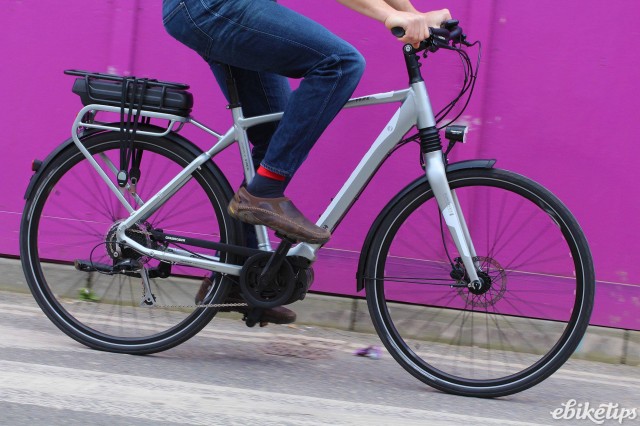

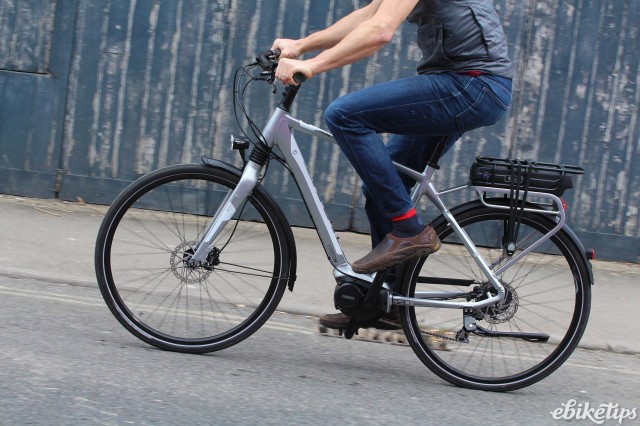







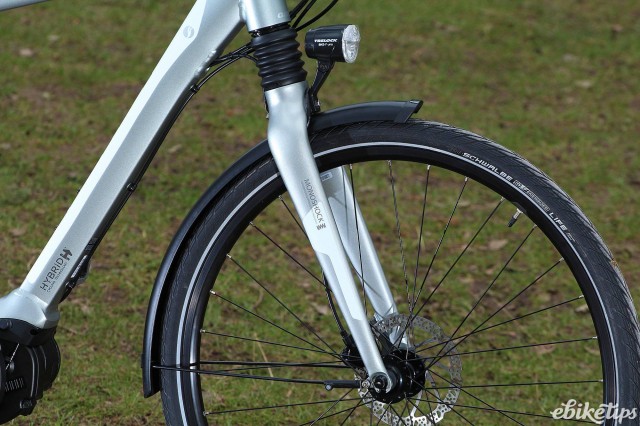
This Giant Prime E +3 has a standard diamond frame
If you were to ask a cross section of people who those two styles were for, the majority would probably say that the diamond frame is a men’s bike and the step-through a women’s bike; that’s how they’ve historically been marketed.
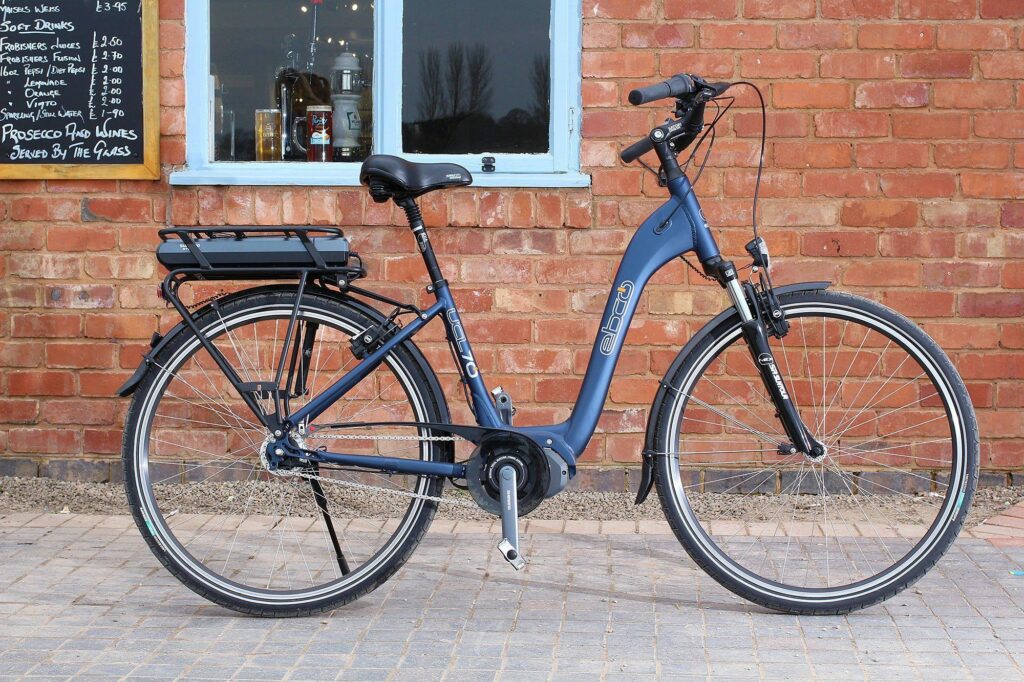
The step-through has advantages as a city bike, though. With no crossbar to step over the bike is easier to mount and dismount, especially if you’re not particularly flexible; with e-bikes appealing to older people who’d like to cycle but lack the fitness, that’s an obvious bonus. You’re not kicking your shopping off the rear rack when you sling your leg over, either.
The position of a step-through frame tends to be more upright, with the bars higher, which gives you a better view of what’s going on around you. The downside is that you’re less aerodynamic and the pedalling position is less efficient, but neither of those things are an issue with an e-bike. They tend to be a bit more flexy as well, but you’re not likely to be doing much sprinting out of the saddle.
For these reasons step-through frames are much more popular in the e-bike sector than they are as a whole, and many manufacturers market them as a unisex product, with sizing ranges to suit taller, as well as smaller, riders.
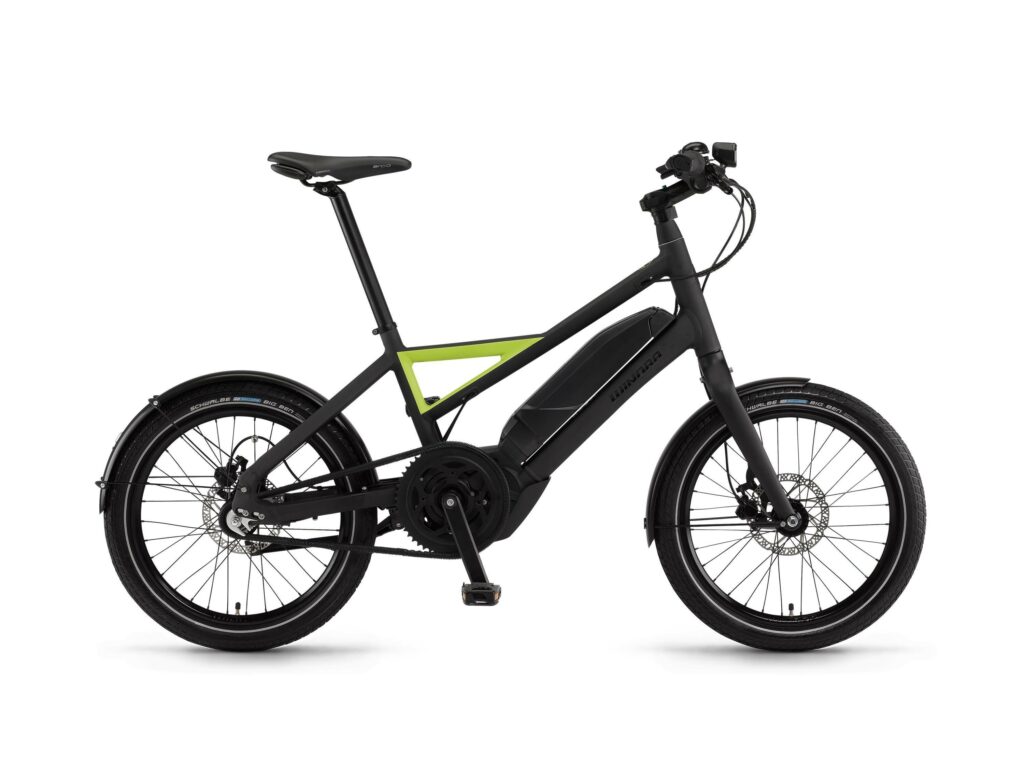
Small wheelers are also becoming more popular. These are compact bikes that use a 20” wheel as opposed to a more standard 26” or 29” wheel. The upside is that they’re significantly smaller, which makes storing them easier; they have a similar ride position and ride characteristics to a standard bike. Frames usually have a fairly low stepover height, though not as low as a standard step-through.
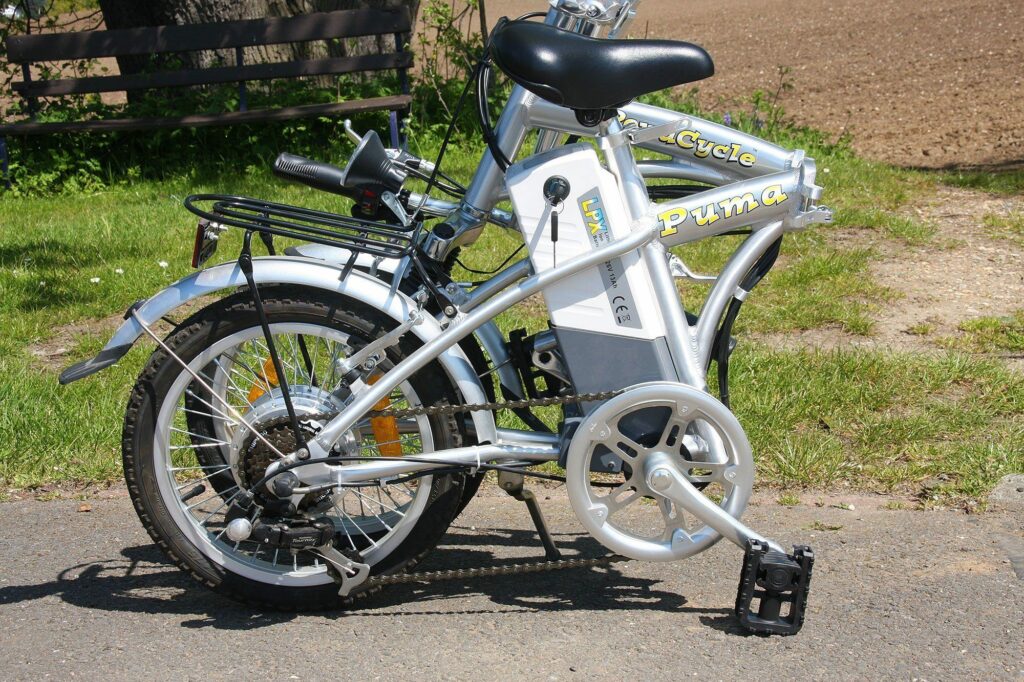
Folding e-bikes are also available. If you’re very short of space at home (or at work) or you want to do a mixed commute, taking the bike on the train or in the boot of your car part of the way, a folding bike is a good option. Folding e-bikes are available in a range of wheel standards, right down to 16”. The smaller the wheels, the smaller the folded package, although the handling of the bike is compromised. Folding e-bikes aren’t light, either, so they can be difficult to get onto a train or into your car if you’re not particularly strong.
Frames are almost invariably aluminium alloy, with a few of the cheapest bikes available using a steel frame.
Power
City e-bikes cover a wide range of price points, and there’s lots of different types of equipment specced to reflect that.
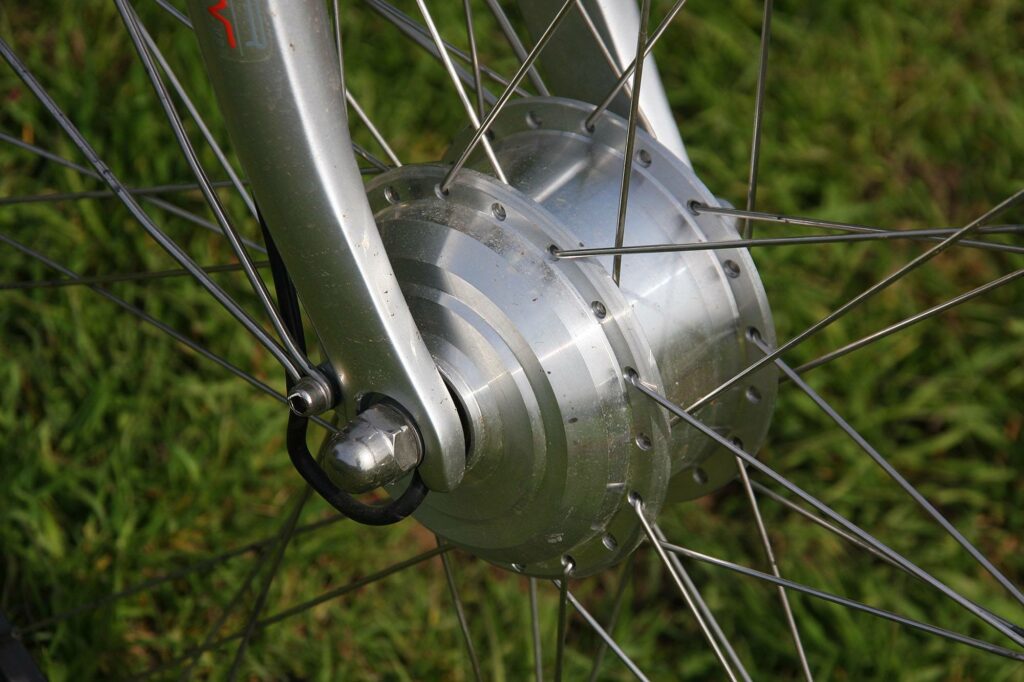
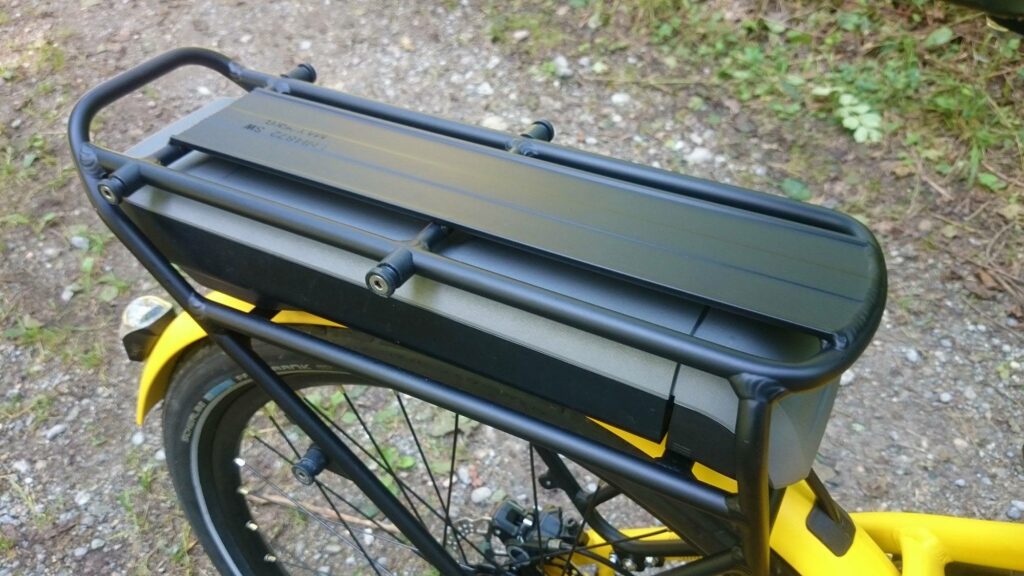
At the cheaper end of the spectrum, expect to find a hub motor in the front wheel, and a battery in the rack at the back. Cheaper bikes use a cadence sensor which is a magnetic ring attached to the cranks. When you turn them, the motor system adds power. Many bikes still come with a throttle which works independently of the pedals, although the latest clarifications to the UK e-bike laws have outlawed this going forward.
As you spend more money, two things happen. Firstly, you get a torque sensor instead of a cadence sensor. This measures how much strain you’re putting through the transmission of the bike, and adds power accordingly. It’s a better system with a more natural feel but it’s more complicated and subsequently more expensive.
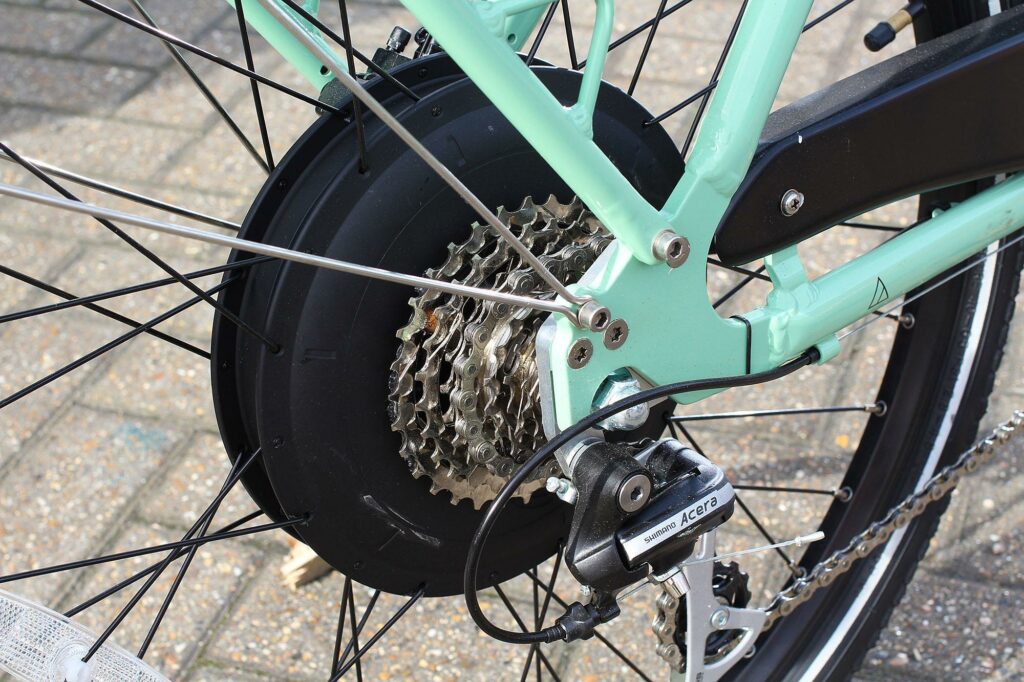
Secondly, the motor moves from the front hub to the rear hub, and then to the bottom bracket. Rear hub motors can measure torque because they’re being driven directly by the chain. That’s a good mid-range option.
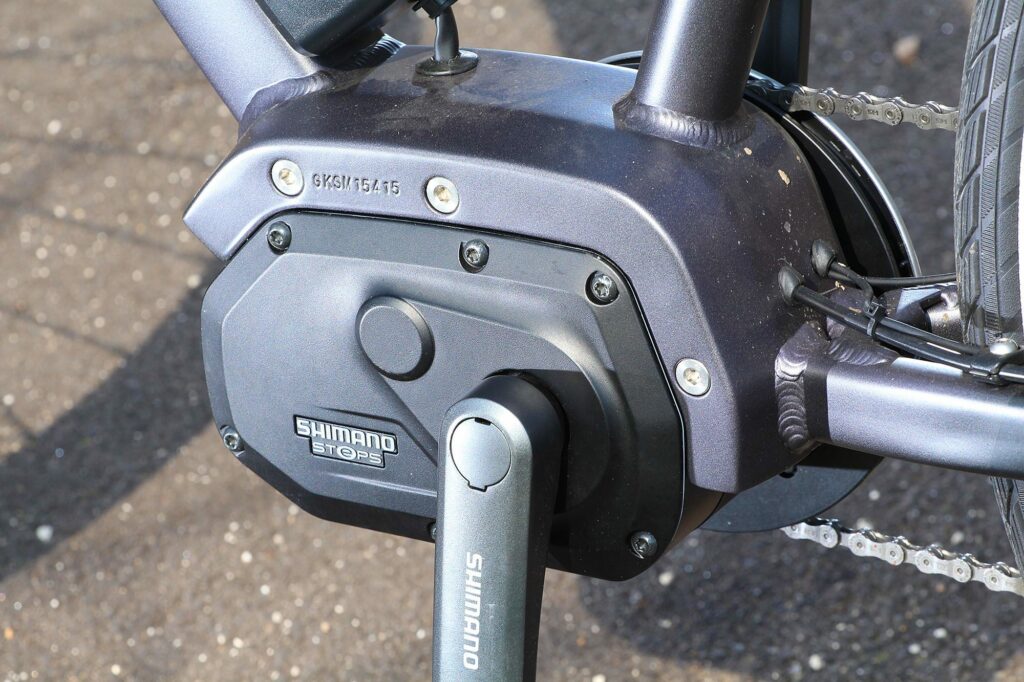
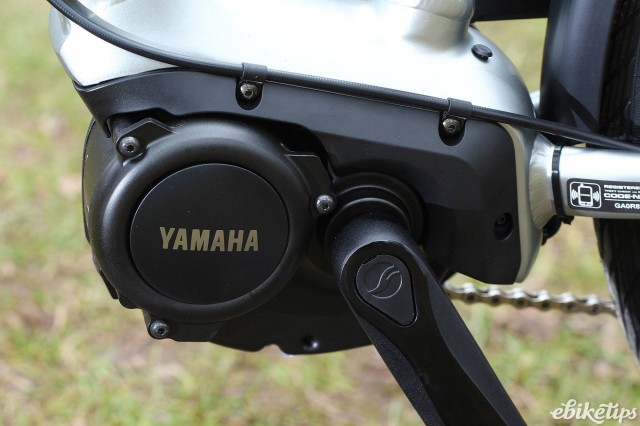
Mid-motors are what you’ll find on the top-end bikes. They have the motor in the bottom bracket area (by the pedals) and they drive the cranks directly. Everything’s enclosed and the weight is centralised in the bike and low down for better handling. It’s the most elegant option. Bosch and Shimano dominate the mid-motor market. Both offer rack-mounted and frame-mounted batteries.
Battery and range
The battery is the single most expensive component of the whole bike. It’ll be a Lithium-Ion battery of some description, and the more you pay the more capacity it’s likely to have. The smallest batteries are around 200Wh, with some manufacturers now offering top-end batteries with three times as much capacity as that. Most are either 300Wh or 400Wh as standard.
The bigger your battery, the further you’ll be able to go. Your actual range will depend on where you’re riding, what you’re riding on, how much you weigh and how much you’re asking the bike to do: you’ll have various power modes available, which will complement your effort to a greater or lesser extent. Realistically you can expect anywhere between about 15 and 100 miles on one charge, depending on battery size and all the factors above.
Transmission
Your bike will almost certainly have a range of gears. Hub gears are popular with city bikes: everything is enclosed and they don’t need much maintenance. Commonly you’ll get between 3 and 8 gears. The chain is always in the same place so it’s easier to fit a full chaincase to stop you getting oil on your clothes. Some hub-geared bikes use a belt drive instead, which doesn’t require any oil.
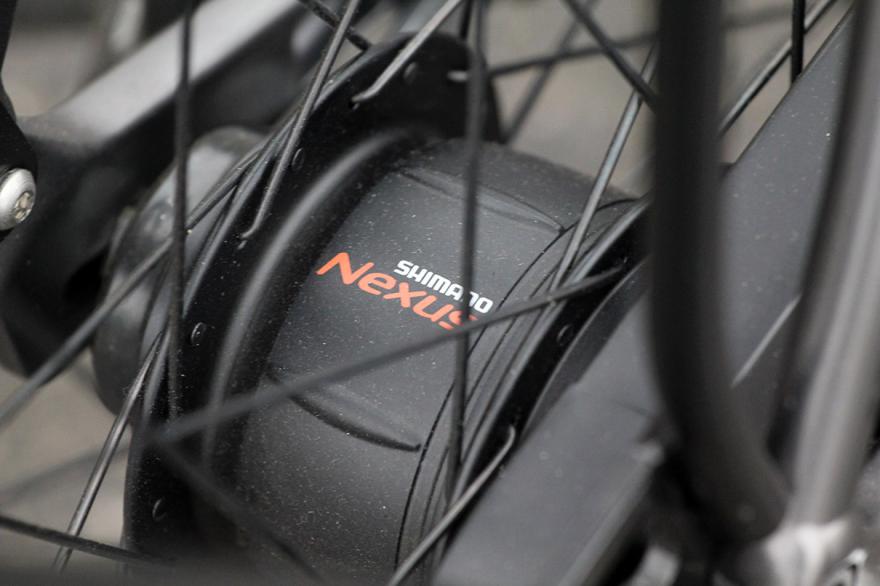
Derailleur gears are also widely used. Shimano systems are the most common, with anything from 6 to 11 sprockets (more expensive bikes have more). They’re simple to operate and you can use them with a rear hub motor; that’s not possible with a hub gear of course.
Brakes
Inexpensive city bikes will have rim brakes, which are almost always V-brakes. They’re simple and they work well. Disc brakes are more common the more you spend. They’re more powerful (especially hydraulic discs which use fluid instead of a cable to actuate the brake) and they’re more predictable in variable conditions.
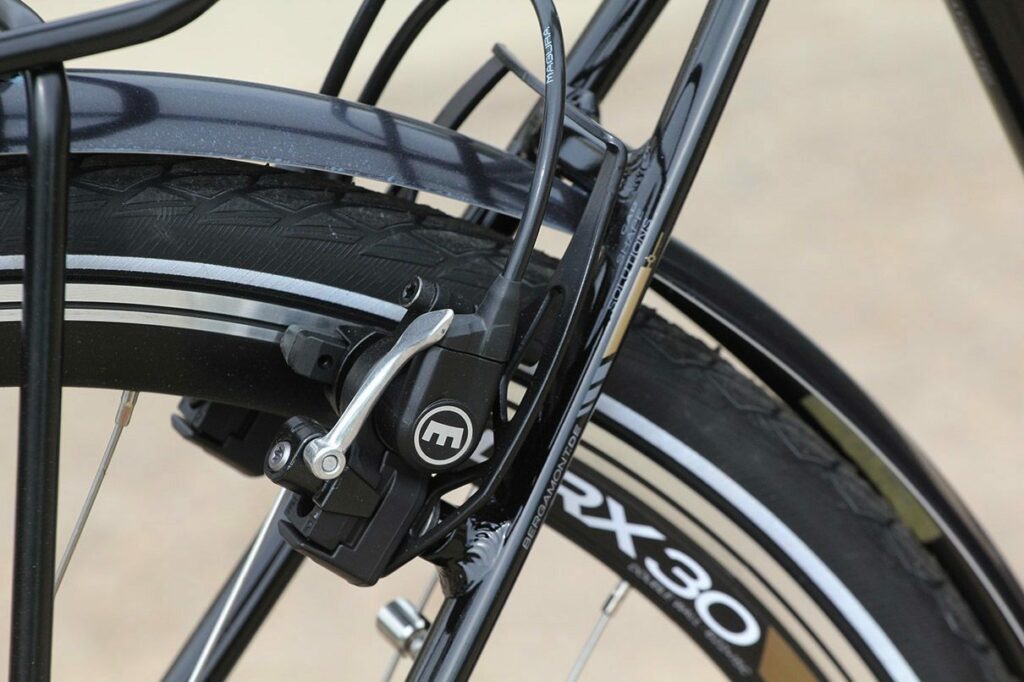
Many continental brands also use Magura’s hydraulic rim brakes. These are more powerful than V-brakes and they push the pads perpendicular to the rim, so they wear more evenly.
Roller or drum brakes are less common, but they’re a good option for city bikes because they’re a fully enclosed unit and very low maintenance. They feel a bit spongy compared to rim or disc brakes but they have plenty of stopping power.
Coaster or back-pedal brakes are common with hub gears, and activate when you press the pedals backwards. They’re not common but they’re sometimes used as an additional brake; e-bikes are heavy, after all.
Equipment
If you’re using a bike day in, day out, then you want it to be ready for anything. City bikes come with a wide range of equipment. Here are some things to look out for.
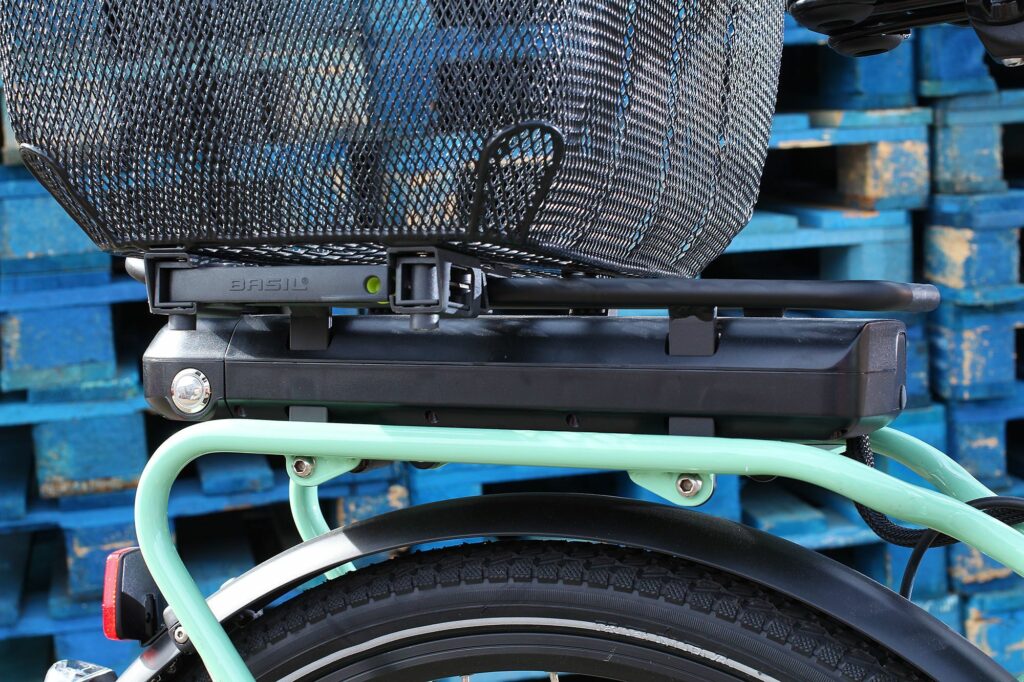
Rack: nearly all city e-bikes have a rear rack, because that’s where the battery is positioned. You can normally fit pannier bags to it to increase the bike’s luggage capacity. Some bikes use the RackTime standard which allows you to bolt accessories to the rack, such as a basket or child seat.
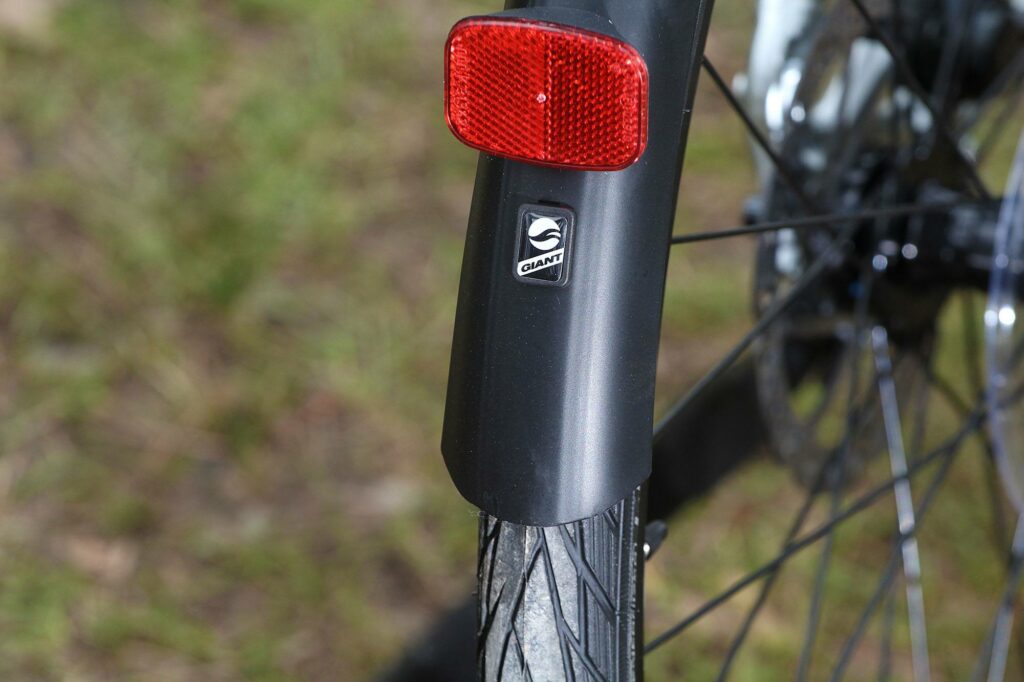
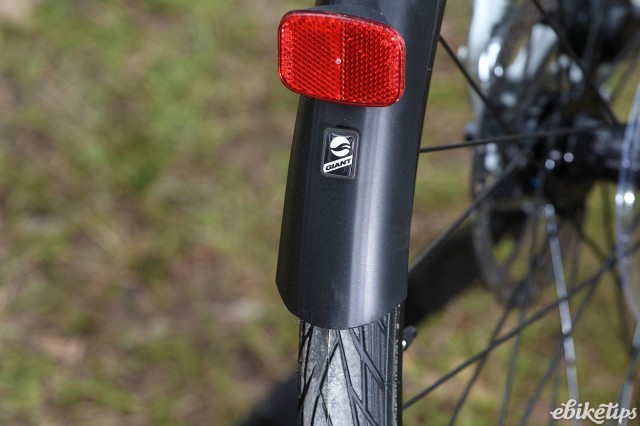
Mudguards: If you’re riding in the UK then it won’t be long before you’re glad of some mudguards. The longer they are, the better they’ll protect you from road spray.
Kickstand: a kickstand means you’re not restricted to leaning your bike against a bike rack or a fence. Nearly all city e-bikes will come with one fitted. If you’re planning to haul big loads of shopping, it’s worth looking for a double kickstand which better supports the bike for loading and unloading.
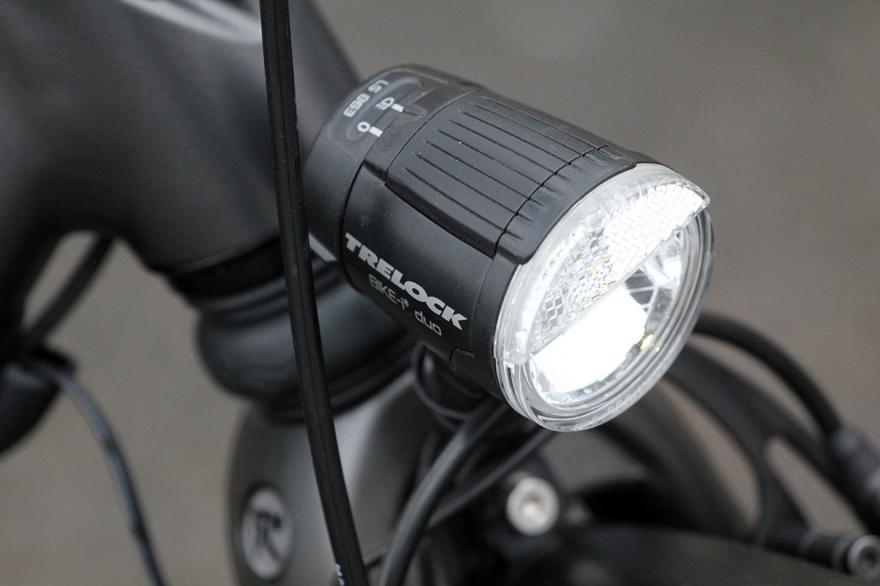
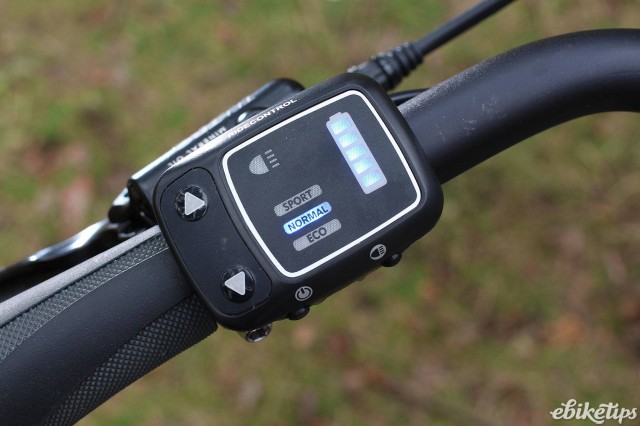
Lights: Many e-bike power systems have a circuit for running lights and the lights can be controlled from the display unit. The rear light for an e-bike is sometimes integrated into the rack-mounted battery. Other bikes use a dynamo front hub to power the lights. If you have any unlit lanes to navigate, make sure the lights are up to the job.

Suspension: many city e-bikes have a suspension fork of some kind. The weight distribution of a city bike is mostly over the rear, and city bikes tend to have large tyres, so they’re not really that necessary. Some forks have a lockout switch which stops the fork from compressing which is useful on good surfaces.
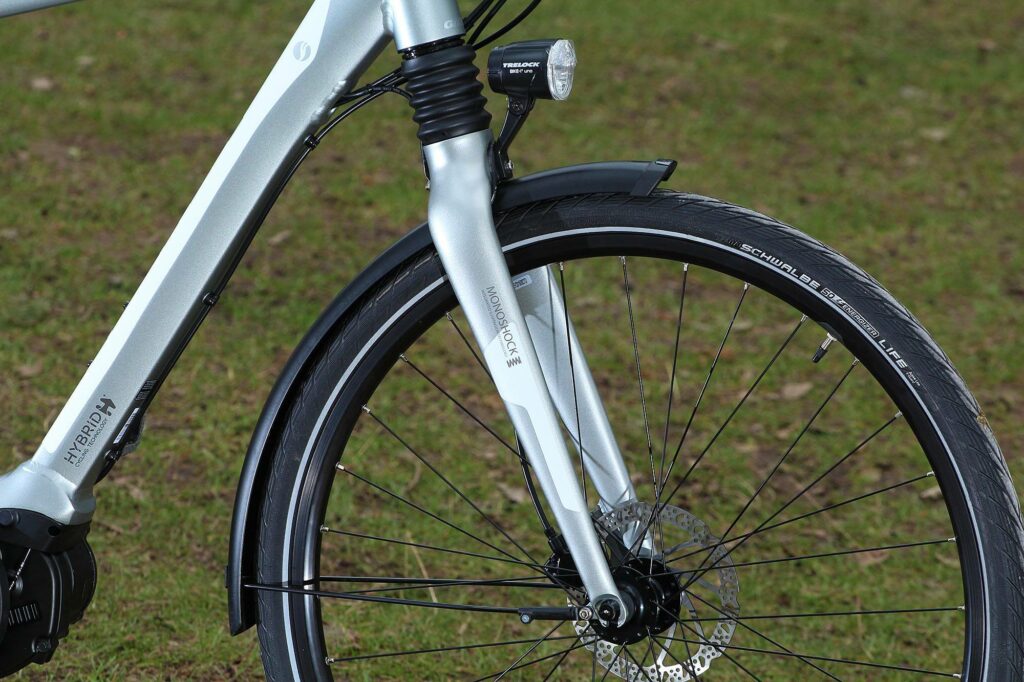
The headshock style of suspension fork (where the suspension unit is between the fork crown and the frame) is generally preferable to the telescopic style (where the fork legs have two sections, one that slides inside the other) because they tend to be stiffer, giving better steering response. Bikes that use a heavy front hub motor and a cheap, flexy suspension fork are best avoided.
Many bikes have a suspension seatpost, and that’s arguably a more useful place to have suspension as most of your weight on a city bike is carried through your behind.