


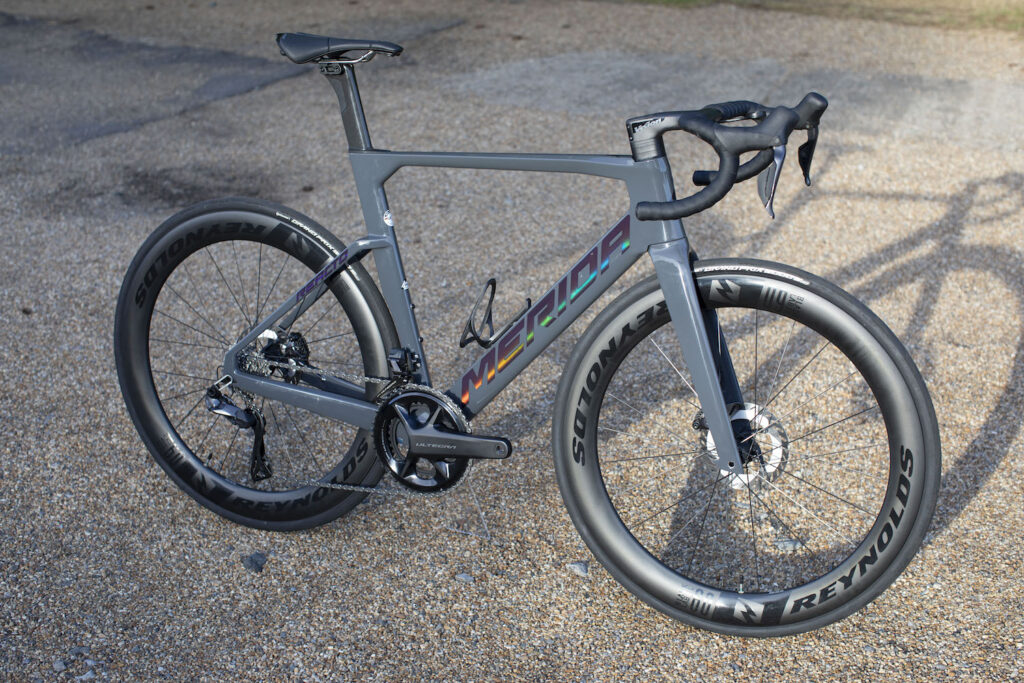

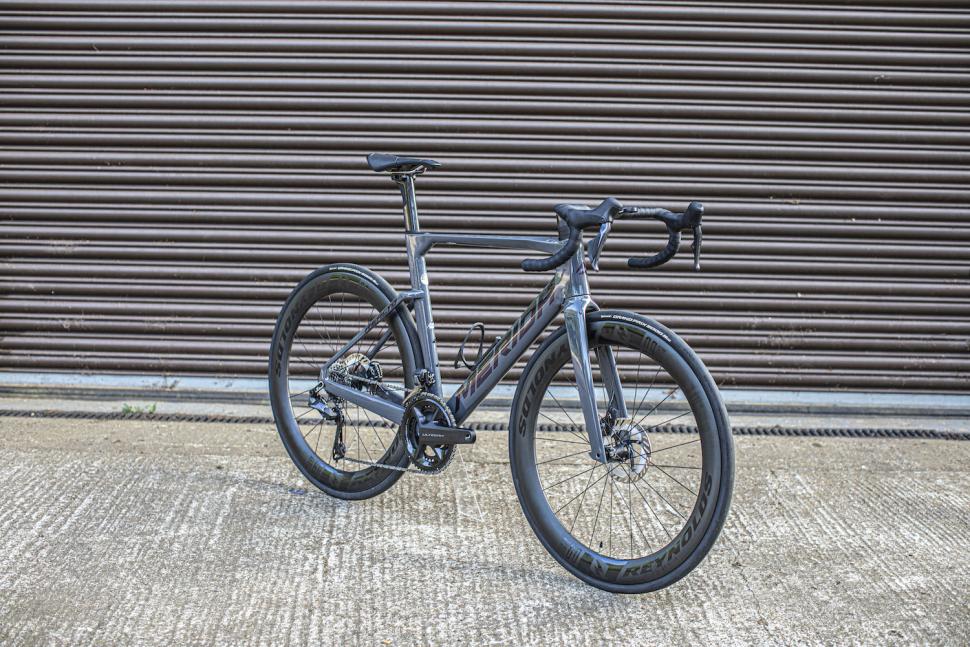
The Merida Reacto 9000 is a rapid aero bike with well-appointed spec sheet at a price in line with similarly specced rivals. It still looks as aggressive as it did when it was launched in 2020, the geometry is balanced for an aero bike, it handles sharply and weighs just 100g more than the Team version that costs over two grand more. Oh, and it’s fast.
Merida Reacto 9000: Ride
One word: fast. That’s the only way to describe the way the Reacto rides. In fact, if I think back to when I tested the Reacto Team-E back in 2020, there’s no discernible difference in performance whatsoever – and that goes for its handling and climbing credentials, too.
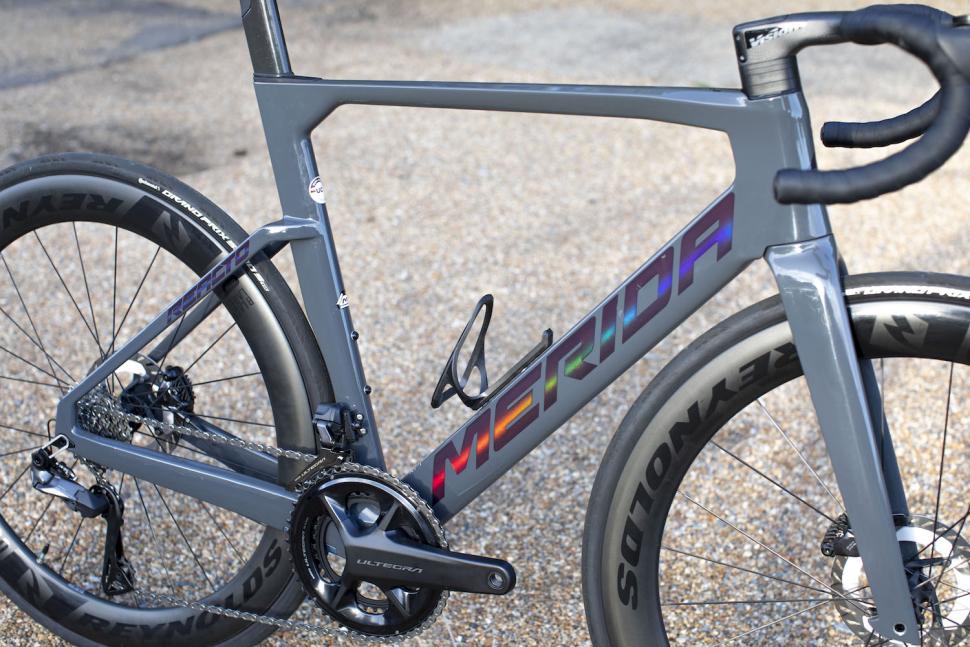
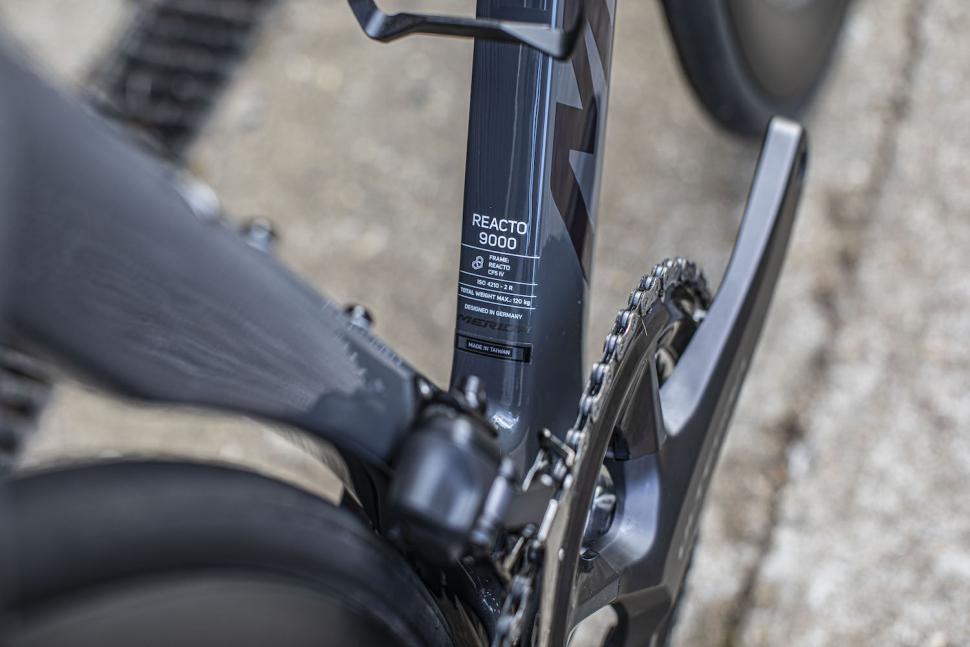
I believe a significant portion of this comes down to the frame architecture and materials used in the construction of the 9000. Like the range-topping Team Edition, the 9000 model uses the same CF5 IV carbon fibre chassis, so it’s just as stiff and reactive, and this means there’s no weight penalty for the frame either.
Still, at 7.7kg, I wouldn’t call the Reacto 9000 particularly heavy. It’s lighter than the 7.95g Wilier Filante SL I tested a few months ago, and nearly a kilo less than the Orbea Orca Aero M120iLTD (8.45kg).
The main differences are the sum of its parts. While the Team Edition comes with Shimano Dura-Ace and Vision SL60 wheels, the Reacto 9000 is built around Shimano Ultegra and Reynolds BL60 Expert wheels. The weight difference is pretty marginal: just 100g.
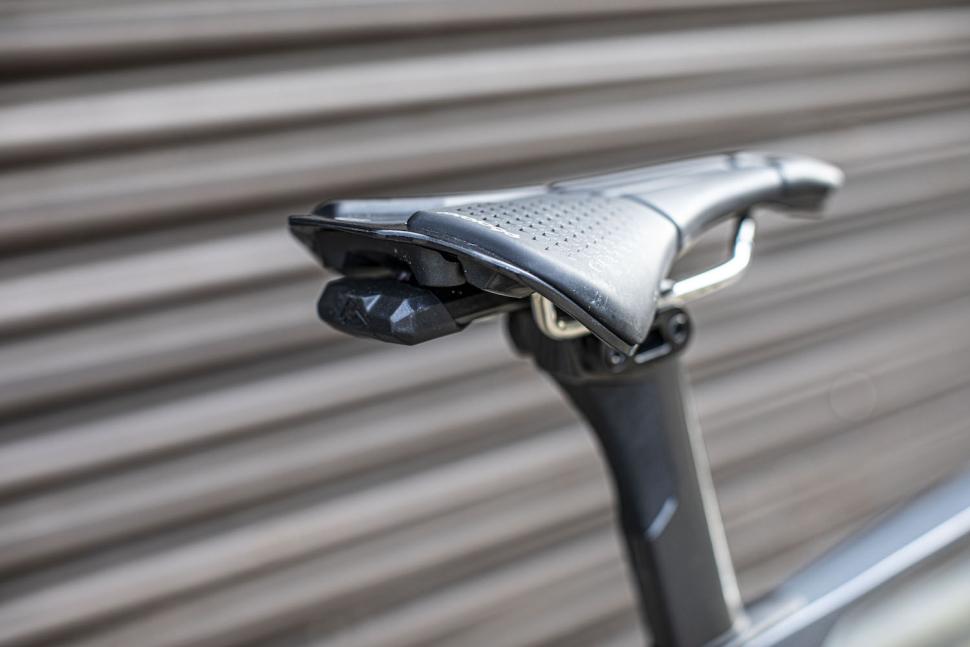
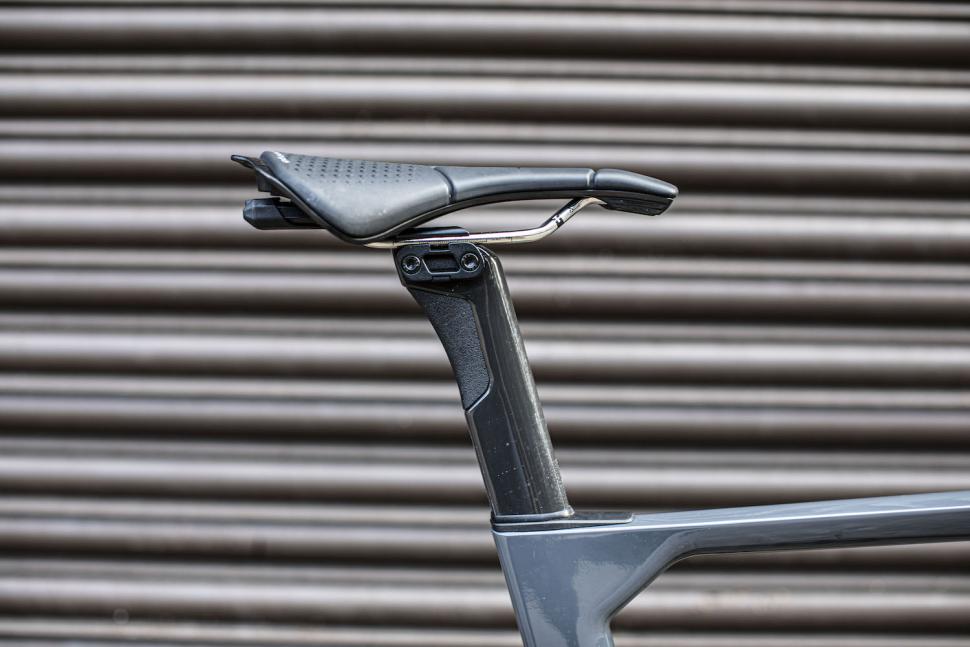
Our medium Merida Reacto tipped the scales bang on the claimed 7.7kg figure with the saddle-mounted multi-tool removed (7.9kg with the tool in place).
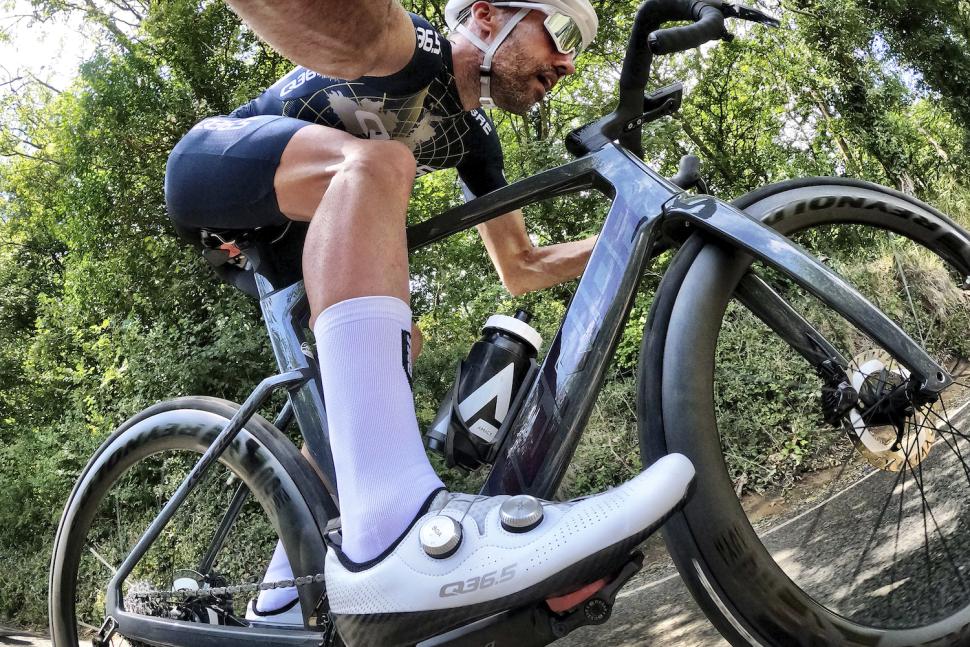
As a result, the Reacto 9000 feels as urgent on the climbs as it does on the flats. While you can flatten rolling hills through maintaining momentum, you’ll need to flick through the upper sprockets of the cassette to find a sweet spot when things get steeper – thankfully, there’s more than enough gearing to help get you over the steep stuff.
And once over the top of a climb, the speed continues in a controlled and precise manner. Handling is rock solid, and it’s easy to get weight over the front end – either by moving forward on the saddle or lightly dabbing the front brake – to improve grip through the corners.
There’s more to the Reacto, however, than just its speed. The lay-up of the carbon has made the bike comfortable to ride and live with every day. The dropped seatstays, along with the lay-up in the headtube and fork, all help to reduce road chatter and harsh vibrations.
Even with the tyres (run with inner tubes) inflated to 70 psi and above, the ride quality remains on par with its rivals, and something you can further improve by opting for the lower pressures afforded by tubeless tyres.
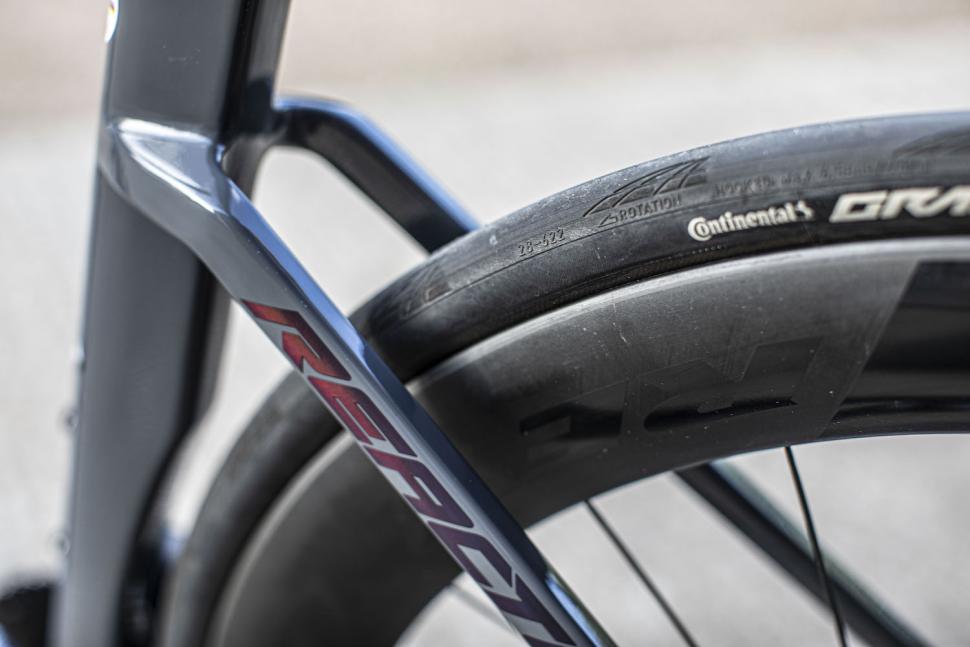
That said, for the first time in months, I left the stock inner tube setup in place for all of the testing period, and I was impressed by the all-round performance of the Continental GP5000S TR tyres. Pressure-wise, I went as low as 55/60psi front/rear and had no issues whatsoever with pinch flats or other punctures.
In short, the Reacto 9000 makes a compelling case as a dedicated race bike when you look at its weight and the way it performs out on the road. It’s fast in a straight line, changes direction with precision, and does a pretty damn good job of overcoming gravity. It’s a superb all-rounder.
And while it does still cut a contemporary figure among the best aero road bikes, the fifth-generation model was spotted at this year’s Tour de France, though Merida says the launch is still a while away.
Merida Reacto 9000: Frame and fork
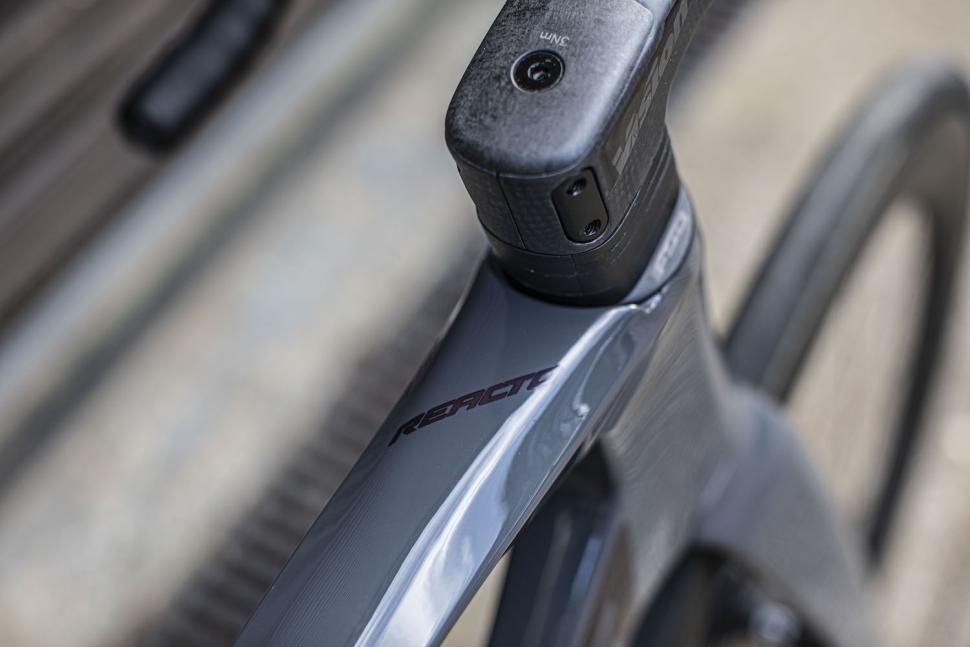
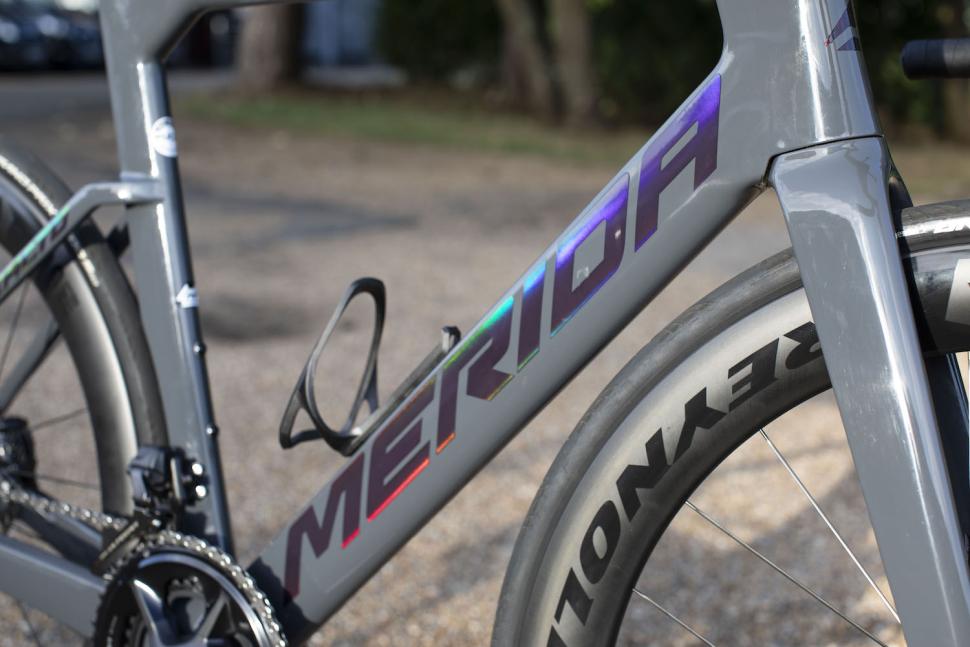
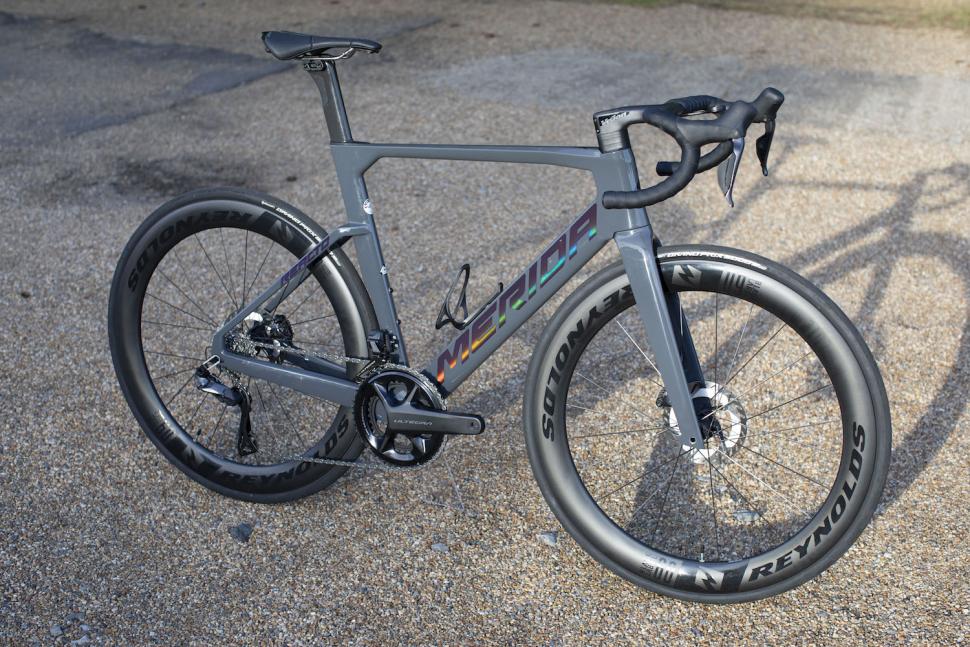
The 2025 Merida Reacto still looks as aggressive as it did when it was launched in 2020, featuring deep, boxy tube shaping – dubbed ‘NACA Fastback’ aerofoils – dropped seatstays and a deep-set seatpost and seat tube to keep it relevant.
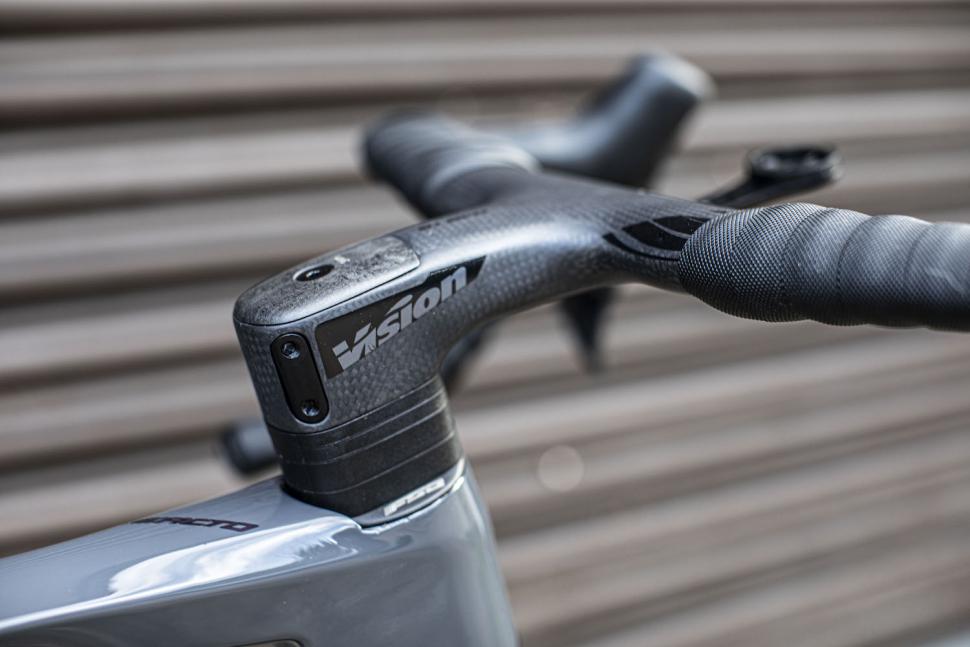
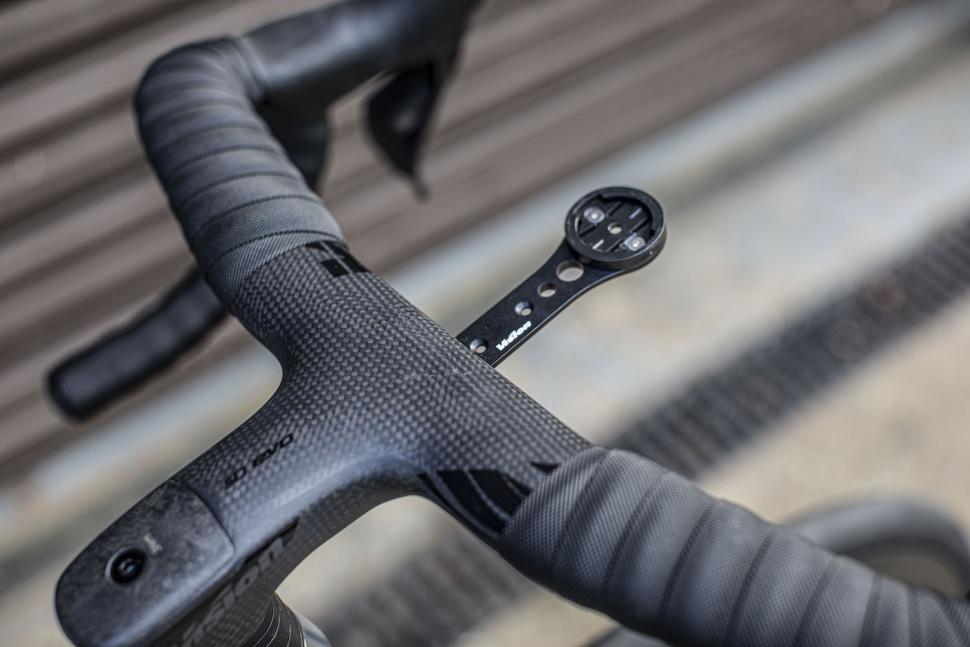
While we’re seeing a new wave of aero bikes with much deeper head tubes and fork legs, the current Reacto remains very aerodynamic in appearance and aligns with the trend towards full integration through its one-piece Vision Metron ACR Evo cockpit – an effort to reduce drag.
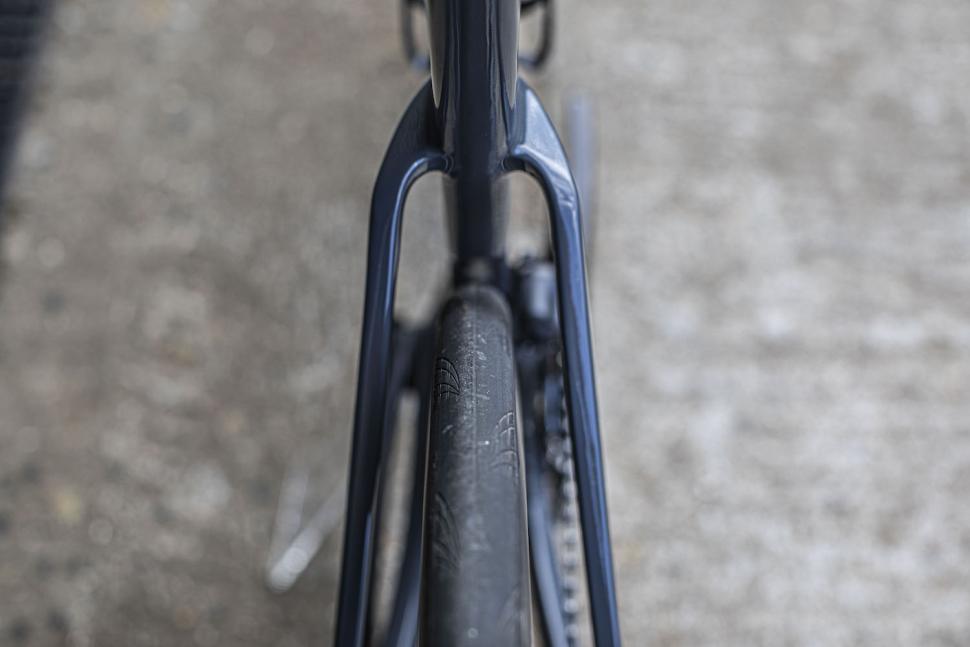
The result is a very tidy-looking package.
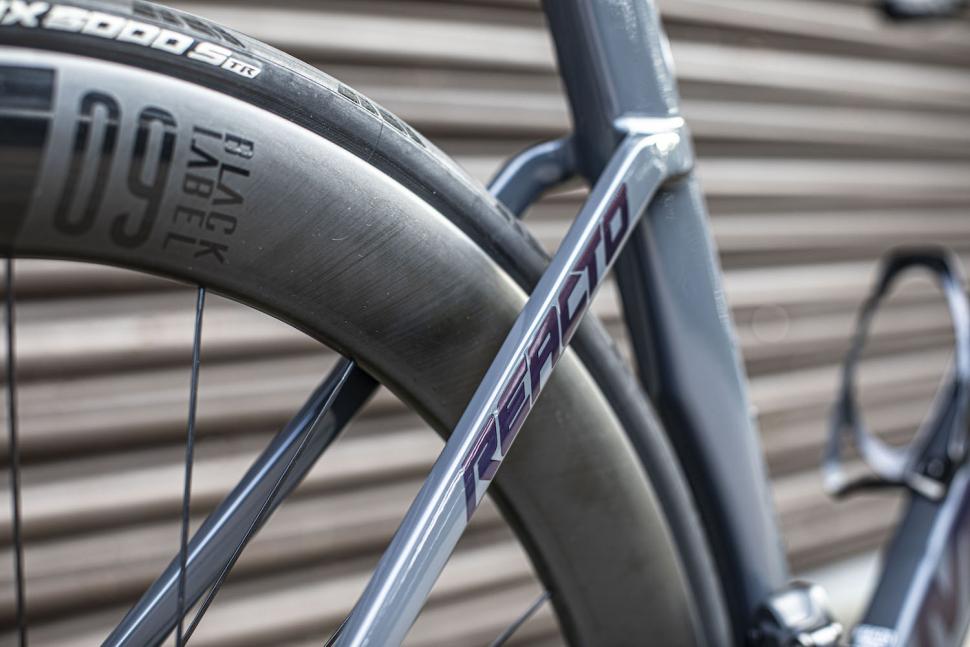
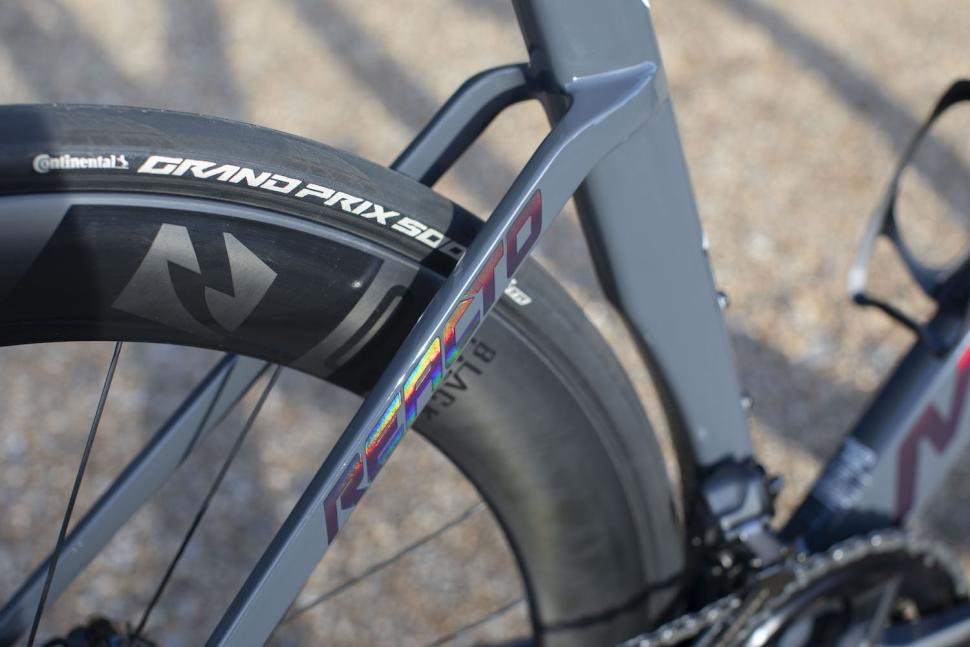
Our Reacto 9000 foregoes the range-topping Team-Edition livery for a hue I like a lot – a solid grey offset by rainbow/hollowgram-treated logos. These logos look rather unassuming in the shade – flat-purple even – but the moment they are touched by the sun, they emit a beautiful rainbow effect by the wordmark logo and model designation stickers, which creates quite a spectacle.
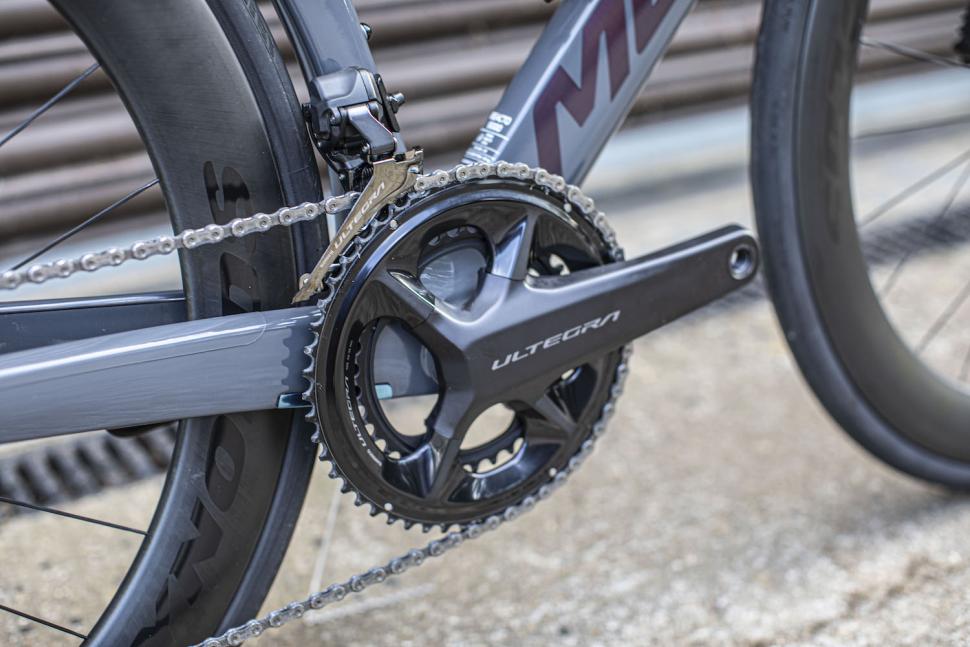
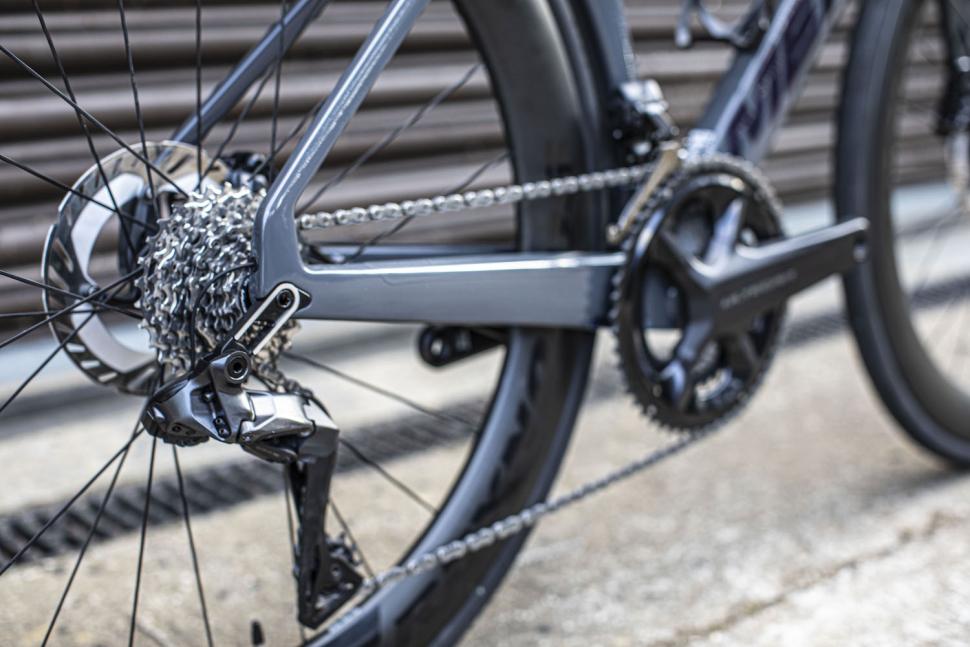
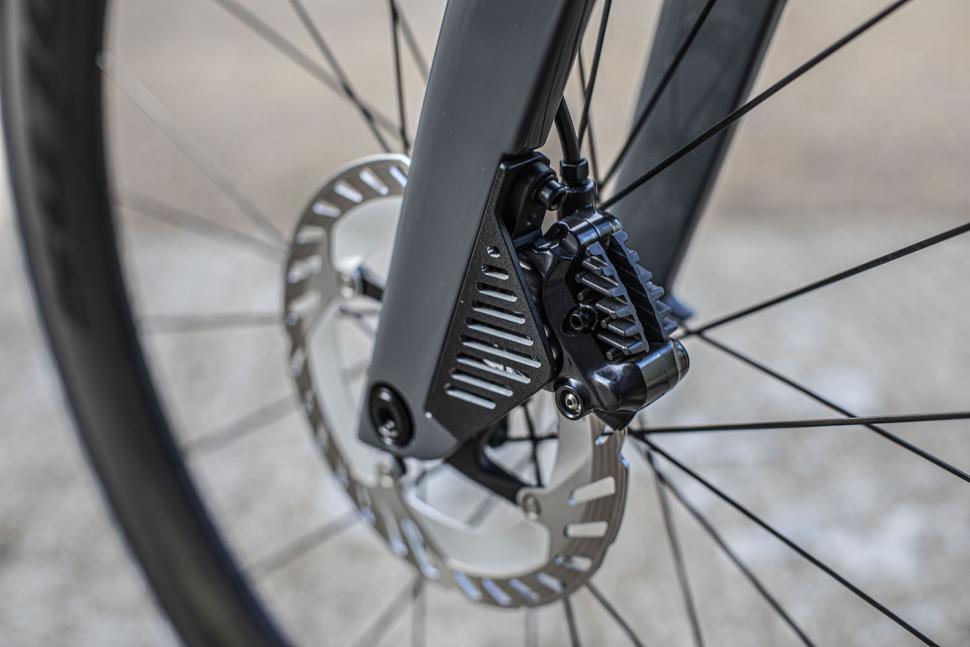
The frame is accentuated by the gloss treatment of Shimano Ultegra Di2 groupset, the ornate cooling fins above the brake callipers and the deep-section wheels.

It all looks rather refined and should find favour if you’re looking for something less quotidian and more stealthy.
The geometry numbers have remained unchanged in the five years since launch. There are parallel 73.5° head- and seat tube angles, and chainstays that measure 408mm across all sizes. With stack and reach numbers of 557mm and 395mm, respectively, the Reacto falls into the long and low category in terms of riding position.
Sizing remains the same with six options available: XXS, XS, S, M, L and XL. Our test bike is a medium.
Merida Reacto 9000: Finishing kit
As you’d expect at this price, the Merida Reacto 9000 comes outfitted in a decent selection of componentry, in this cased based around one of our all-time favourite groupsets, 12-speed Shimano Ultegra.
This includes the racy 52/36T chainset that’s paired with an 11-30T cassette.
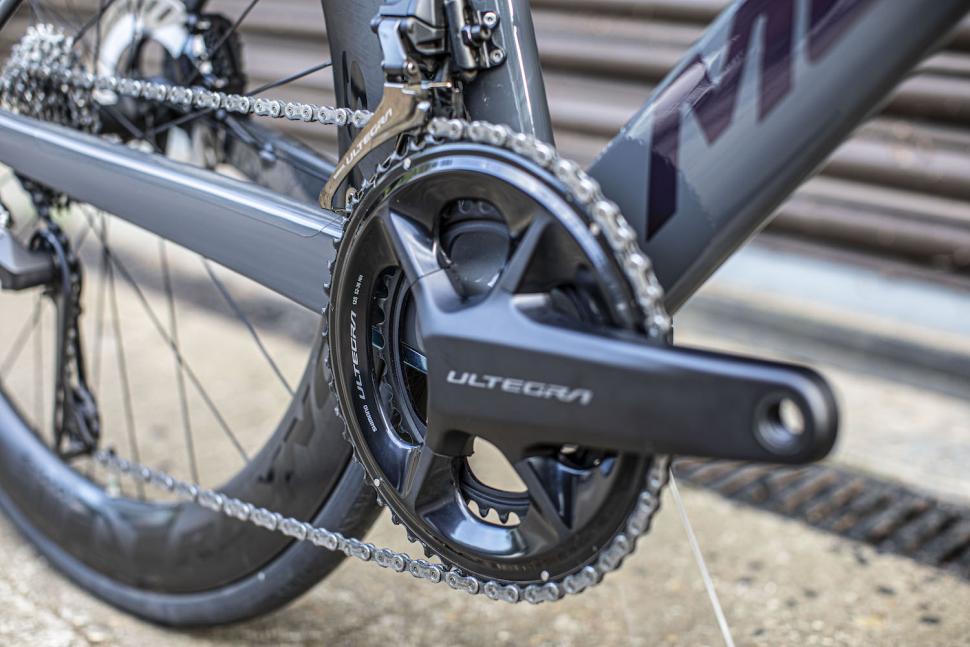
The Ultegra brakes come with cooling fins, with the front getting a 160mm rotor and the rear 140mm. This particular build comes without a power meter, but it’s not a deal breaker as most of its rivals at this price don’t offer this as an option either.
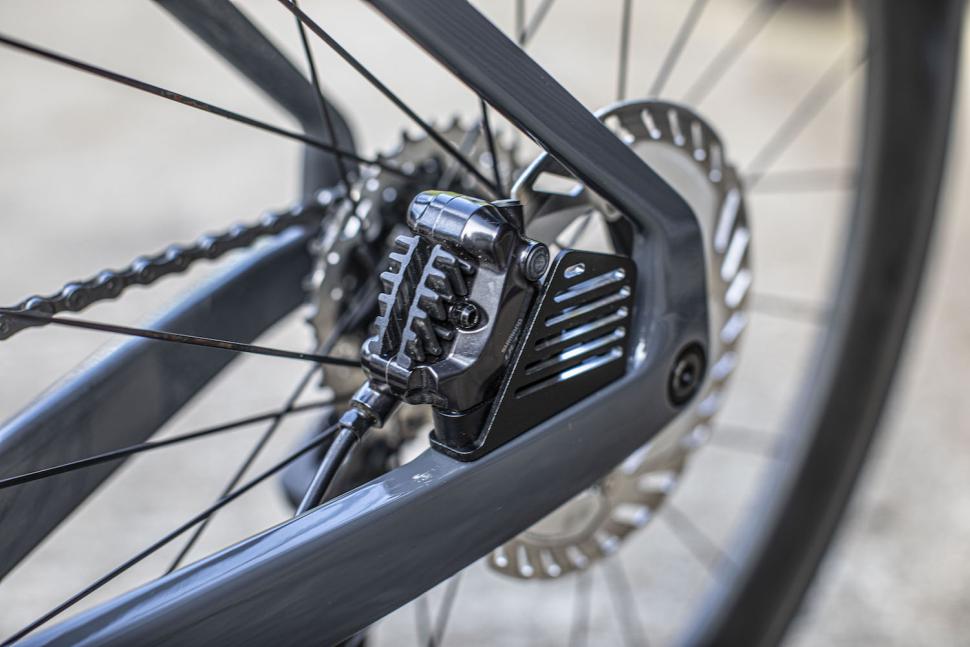
If you live in a hilly or mountainous area and require more forgiving gear ratios, you could always upgrade the cassette or look at the changing specification entirely – the Reacto 9000 is also available in a SRAM Force AXS option, which we rated nearly as high as Ultegra.
This comes with a 50/37T chainset and 11-36T cassette – the resulting near 1:1 ratio 37x36T bottom gear pairing is much lower than our test bike’s 36x30T. Though the SRAM-equipped Reacto 9000 is a fair bit pricier at £7,000.
The Reacto 9000 rolls on Reynolds BL60 Expert DB carbon wheels, which we rated very, very highly. These are shod with 28mm Continental GP5000S TR tyres – up from the 25mm tyres I first tested this bike with in 2020 – and as with the groupset and wheels, we absolutely loved the tyres when we reviewed them.
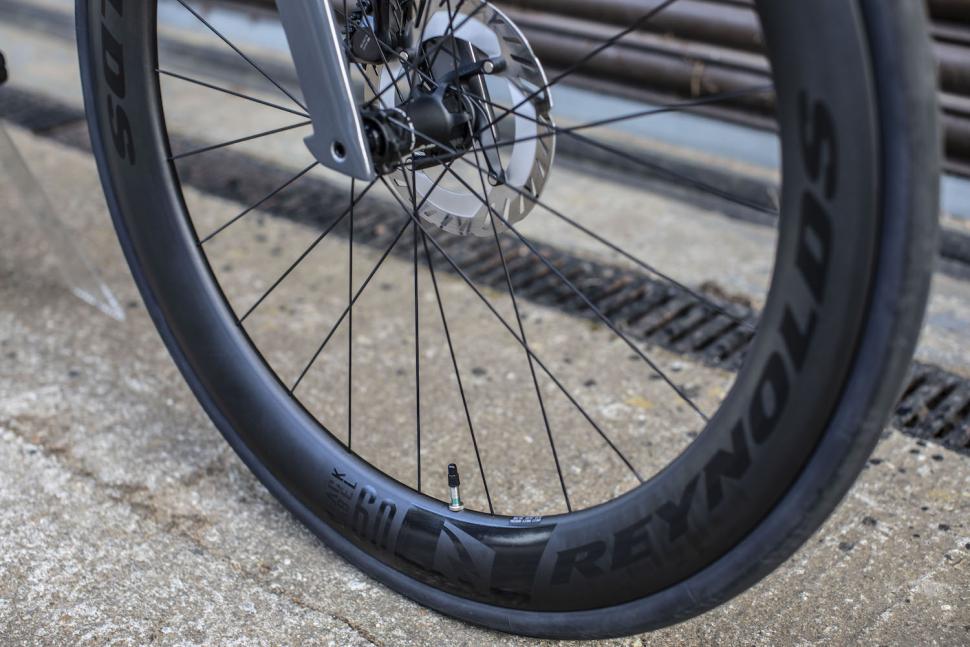
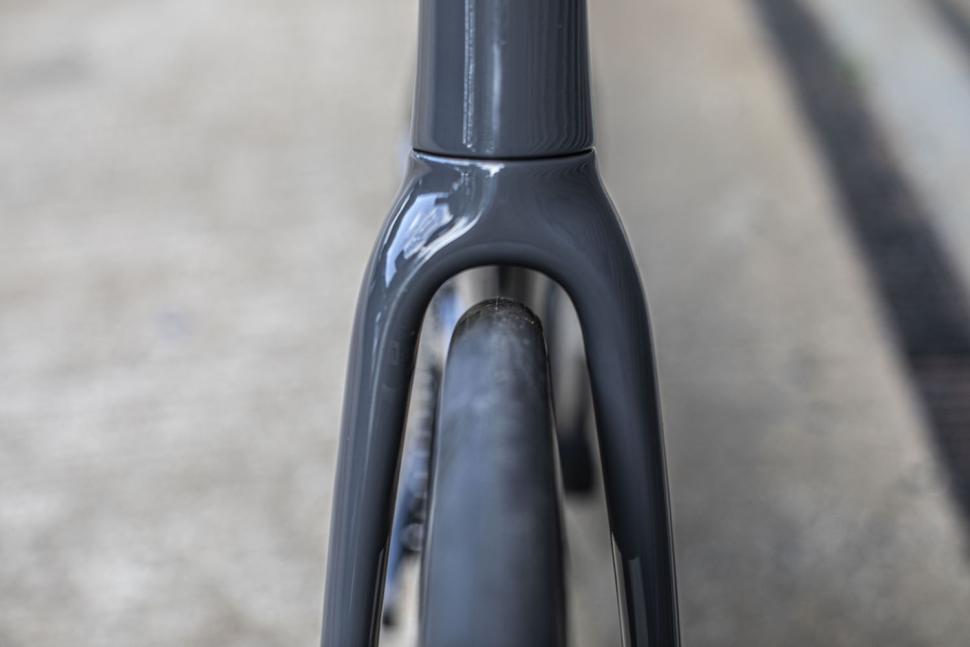
Considering there is clearance for up to 30mm, I’d have liked to have sampled it with wider tyres, but the standard 28mm rubber did little to affect the ride quality or handling.
The rest of the components are very well chosen too. In this instance, the front end has a one-piece, fully integrated Vision Metron 5D ACR Evo handlebar complete with a 110mm stem.
The 40cm bar width is standard on frame sizes spanning M to XL, and a 38cm option is available for 3XS to XS frames.
A Prologo Scratch M5 saddle with Tirox alloy rails and Merida multi-tool cradle completes the rear end.
Value
I hear you – £6,250 is still a lot of money for a bike, but its rivals with similar specs are priced in the same ballpark.
The Merida Reacto 9000 goes head-to-head with the Wilier Filante SL Ultegra. As the name suggests, it also has a Shimano Ultega Di2 groupset and a maximum tyre clearance of 30mm, but it weighs a little more. There’s not much in it on paper, but I suspect the £5,999 sticker price might make it appealing to some.
Thw £5,999 Orbea Orca Aero M120iLTD – like the Reacto and Filante SL – is built around an Ultegra Di2 12-speed groupset, but it’s significantly heavier than both models and comes with the shallowest wheels of the lot (Oquo Road Performance RP45TEAM wheels).
Stu rated the Orro Venturi STC SRAM Force eTap Tailor Made very highly. It’s presently unavailable, but Orro says the same bike with Ultegra Di2 is coming soon and will cost just £4,699.99.
If you’re set on the Reacto but are on a tighter budget, the Merida Reacto 6000 costs £3,400 and comes with Shimano 105 Di2 and Team-Edition paint. Crucially, it uses identical geometry and should deliver a very similar ride.
For other options, check out our best aero road bikes buyer’s guide.
Due to Merida carrying limited stock in the UK and the new Reacto likely to launch in the last quarter of 2025 or the first quarter 2026, now is the time to act – while you could possibly wait for the new model to benefit from discounted prices, the likelihood is these bikes will sell out pretty quickly.
Conclusion
After five years, Merida’s Reacto platform remains rock solid and dependable, perfectly adept among the current crop of aero road bikes. It’s one of the lighter options around, boasting a solid frameset with sharp handling manners and straight-line performance, and a lifetime warranty for the entire ownership of the original purchaser.
While there’s a new Reacto on the horizon, you won’t go wrong with the current model. If anything, you’re likely to pick up a good deal in the coming months.
Verdict
Five years on, the Reacto is still a fast and planted aero road bike that is able to compete with the best in the category
All the deals displayed on our review pages are pulled from a constantly updating database feed of the best affiliate deals available. The criteria for deciding on what are the best deals is who is offering the lowest, delivered price. In most cases we will be showing the very best deal available online, but sometimes you may be able to find an item cheaper. If you can please feel free to post a link in the comments box below. To find out more about affiliate links on road.cc click here.
road.cc test report
Make and model: Merida Reacto 9000
Size tested: M
About the bike
List the components used to build up the bike.
The Reacto 9000 is built around a Shimano Ultegra Di2 12-speed groupset with 52/36T chainrings and an Ultegra 11-30T cassette. It gets a fully integrated Vision Metron 5D ACR Evo handlebar, Prologo Scratch M5 saddle and Reynolds BL60 Expert DB carbon wheels shod with 28mm Continental GP5000S TR tyres.
Tell us what the bike is for and who it’s aimed at. What do the manufacturers say about it? How does that compare to your own feelings about the bike?
The Merida Reacto is a bike for the racer looking to level up. Merida describes it as a bike built for “racing, long-distance rides or challenging club outings, the Reacto will take your riding to the next level”.
And Merida is right: its Reacto 9000 is fast, handles well and I’d happily race on it. After all, it’s only 100g heavier than the Team Edition Reacto that costs a whole chunk more.
Where does this model sit in the range? Tell us briefly about the cheaper options and the more expensive options
The Reacto 9000 sits just below the range-topping Reacto Team in an 11-bike line-up.
Frame and fork
Tell us about the build quality and finish of the frame and fork?
The frame and fork are built to an exceptionally high standard, the paint finish is exquisite.
Tell us about the materials used in the frame and fork?
It is built using CF5 IV carbon – Merida’s highest-quality carbon fibre.
Tell us about the geometry of the frame and fork?
Very racy. There are parallel 73.5° head- and seat tube angles, and chainstays that measure 408mm across all sizes. Stack and reach are 557mm and 395mm respectively.
How was the bike in terms of height and reach? How did it compare to other bikes of the same stated size?
The Reacto falls into the long-and-low category in terms of riding position, and is perhaps a little more stretched than its rivals.
Riding the bike
Was the bike comfortable to ride? Tell us how you felt about the ride quality.
Yes. Super smooth and compliant.
Did the bike feel stiff in the right places? Did any part of the bike feel too stiff or too flexible?
A stiff head tube and bottom bracket ensure the bike is responsive – very well balanced.
How did the bike transfer power? Did it feel efficient?
Superb. Power transfer is instant.
Was there any toe-clip overlap with the front wheel? If so was it a problem?
No
How would you describe the steering? Was it lively neutral or unresponsive? Neutral
Tell us some more about the handling. How did the bike feel overall? Did it do particular things well or badly?
The Reacto 9000 is pretty lively; it changes direction with ease, and the forward-bias weight distribution ensures more grip over the front axle and improved confidence in the corners.
Which components had the most effect (good or bad) on the bike’s comfort? would you recommend any changes?
The Prologo Scratch M5 is a solid saddle, but I’d upgrade to the carbon-rail version to reduce weight a little and dial in a little more compliance.
The drivetrain
Wheels and tyres
Tell us some more about the wheels.Did they work well in the conditions you encountered? Would you change the wheels? If so what for?
This is a set of wheels that we rated very highly when we reviewed them.
Tell us some more about the tyres. Did they work well in the conditions you encountered? Would you change the tyres? If so what for?
As with the Reynolds wheels, we rated the Conti tyres very highly when we reviewed them.
Controls
Your summary
Did you enjoy riding the bike? Yes
Would you consider buying the bike? Yes
Would you recommend the bike to a friend? Yes
How does the price compare to that of similar bikes in the market, including ones recently tested on road.cc?
The Merida Reacto 9000 goes head-to-head against the Wilier Filante SL Ultegra we tested recently. The Reacto is lighter, more direct and perhaps a bit more balanced in the handling stakes, but costs just over £250 more than the Filante SL. Nothing in it really, so the decision will come down to preference.
Use this box to explain your overall score
£6,250 is a lot of cash to part with – but, for a bike that uses the same grade carbon fibre as the Reacto Team and is just 100g heavier, it’s the racing option in the range I’d choose based on its £2,250 cheaper price tag. Factor in the indistinguishable performance levels, and there’s no reason – save for the Team Edition livery – to opt for the Reacto Team.
About the tester
Age: 0 Height: 175cm Weight: 62kg
I usually ride: My best bike is:
I’ve been riding for: 10-20 years I ride: Every day I would class myself as: Semi pro
I regularly do the following types of riding: road racing, time trialling, mtb, Time trial, gravel and Elite Cycling eSports


3 thoughts on “Merida Reacto 9000”
Gloss grey with big rainbow
Gloss grey with big rainbow decals looks pretty ghastly to my eyes.
Clearance between chainstays,
Tyre clearance between chainstays, to seat tube and front mech is what matters, not clearance between seatstays. No point going any bigger than 30mm either, since rolling resistance worsens with bigger tyres.
I would never have a Merida,
I would never have a Merida, they came to the village I lived in to launch a bike. Numerous signs were put up directing all and sundry to the location. Three years later the litter was still there. It’s the small things that count.