


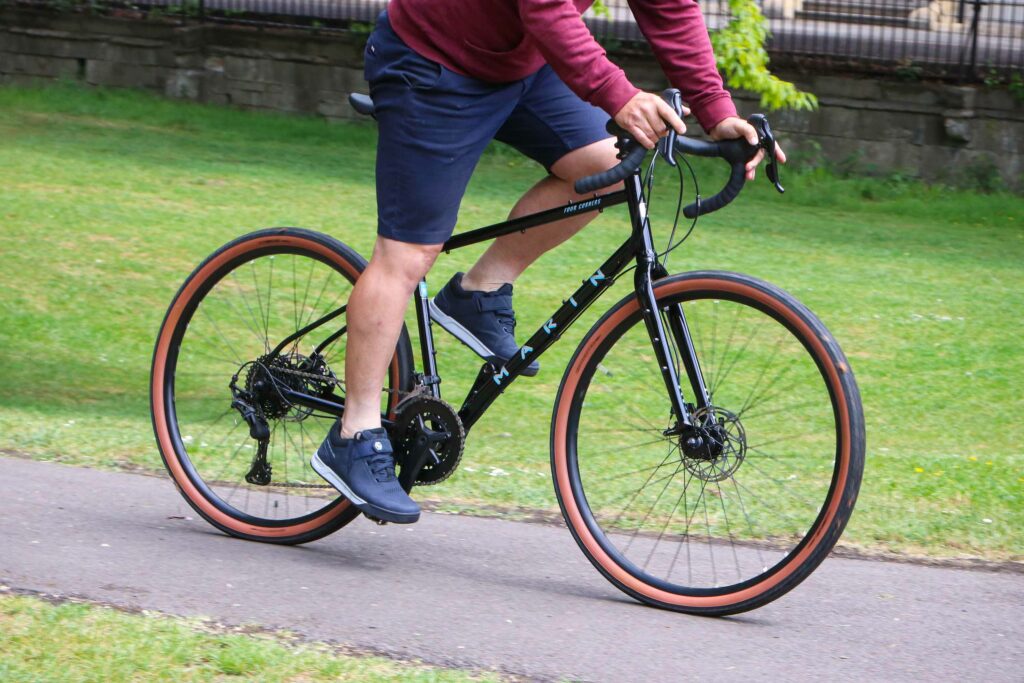



The Marin Four Corners 1 is a genuine touring bike with a wide range of gears, good brakes and a super-comfortable ride courtesy of its extra-wide tyres and all-steel frameset. It looks good, the saddle and bar are well chosen and, in truth, there’s very little to fault. While it’s marketed primarily as a tourer, it would make a great day-to-day machine that will tackle poor surfaces and unsurfaced routes with aplomb and the £950 price makes it a stone-cold bargain.
> Buy now: Marin Four Corners 1 for £939 from The Rolling Fix
Marin Four Corners 1: Ride
Comfort. Oodles and oodles of long-distance comfort is what the Marin Four Corners 1 delivers.
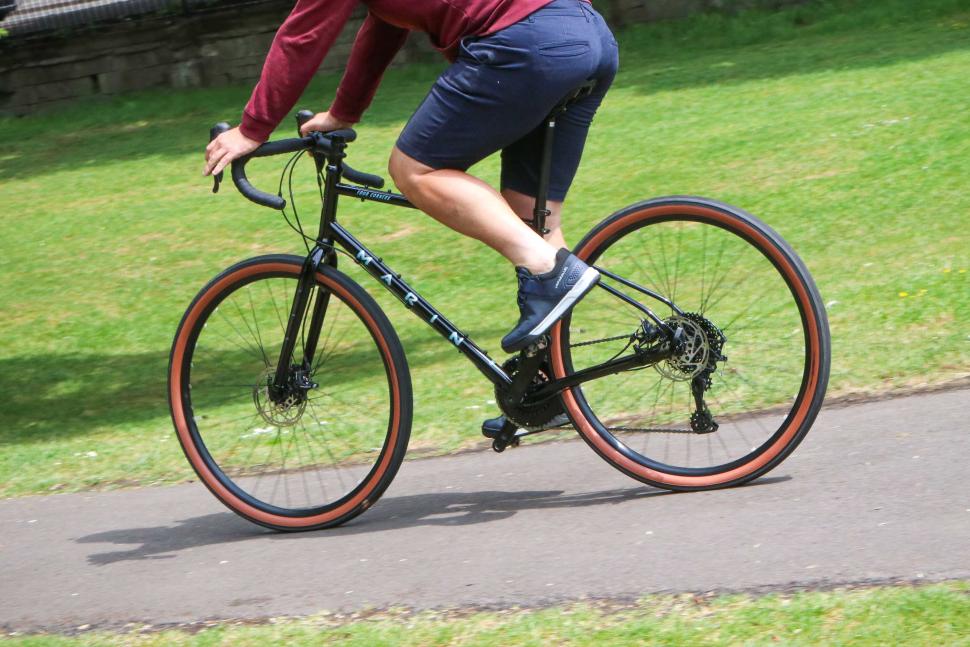
And it really shouldn’t be surprising. The steel frame’s pretty skinny by today’s standards, and steel and comfort have a long history when it comes to cycling.
But in addition to this, you have 45mm tyres providing a huge cushion of air between you and the road – especially as they actually measure over 47mm wide when fitted. These inevitably have a major effect on the Marin’s ride. These are some of the biggest tyres I’ve ridden and are up from the 40mm tyres Marin specced on the 2024 Four Corners. They offer bags of suppleness, combining with the steel fork and compact steel frame to really take the sting out of poor road surfaces, canal towpaths and light gravel.
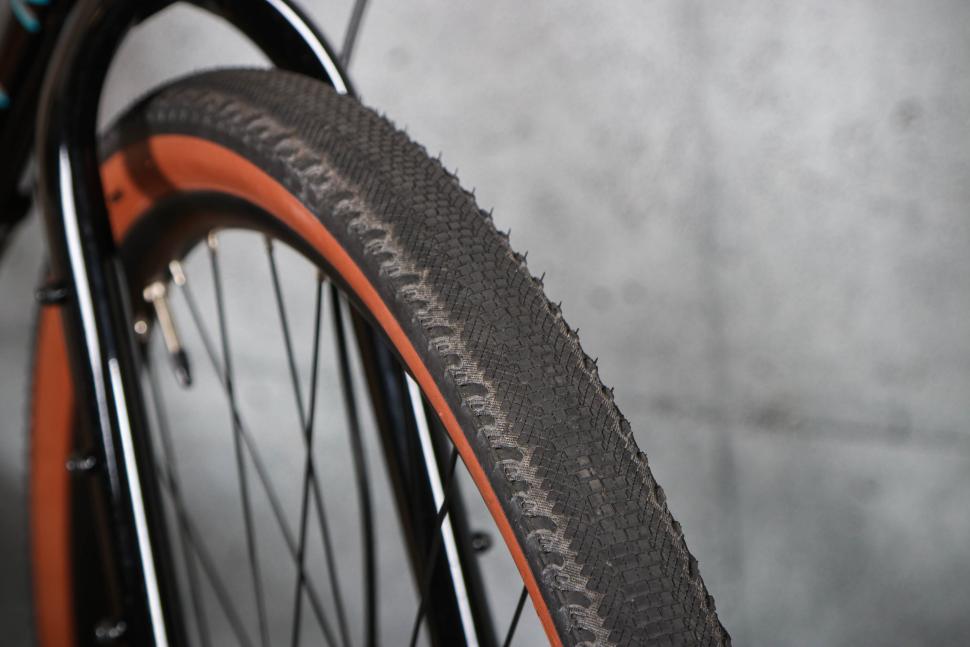
But just as with the gear levers coming up later, the tyres also take a little getting used to. On a fast and sweeping high-speed descent, they want to go their own way with a little understeer. The opposite is true for tight, very low-speed manoeuvres where the heavy front tyre causes a slight oversteer.
I wouldn’t want to overemphasise this as it’s very easy to counter and it never caused any issues. I suspect Star Trek’s Scottie would say: ‘Ye Cannae Change the Laws of Physics,’ about the momentum of the weighty tyres.
While it feels a bit strange at first, it’s so easy to overcome that I’m not going to mark it down, so much as flag it up.
That said, if I was taking the Four Corners on tour, I’d be happy with 35-40mm tyres – perhaps something like the 35mm Panaracer GravelKing Slick TLC or the 38mm Hutchinson Overide. Both of these would still offer a decent bump-cushioning volume of air, but would shed a little handling-affecting mass.
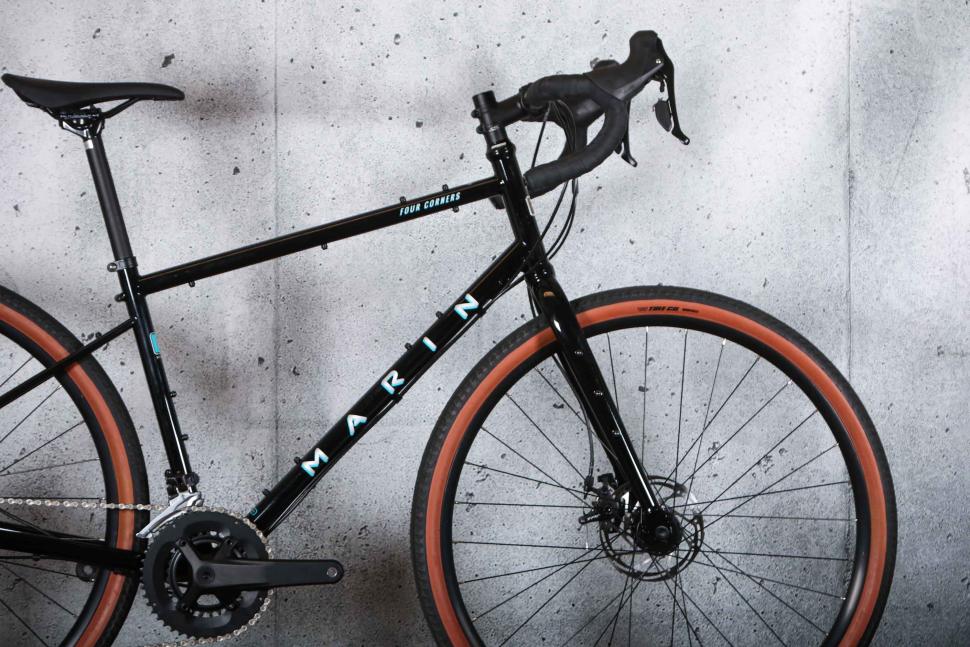
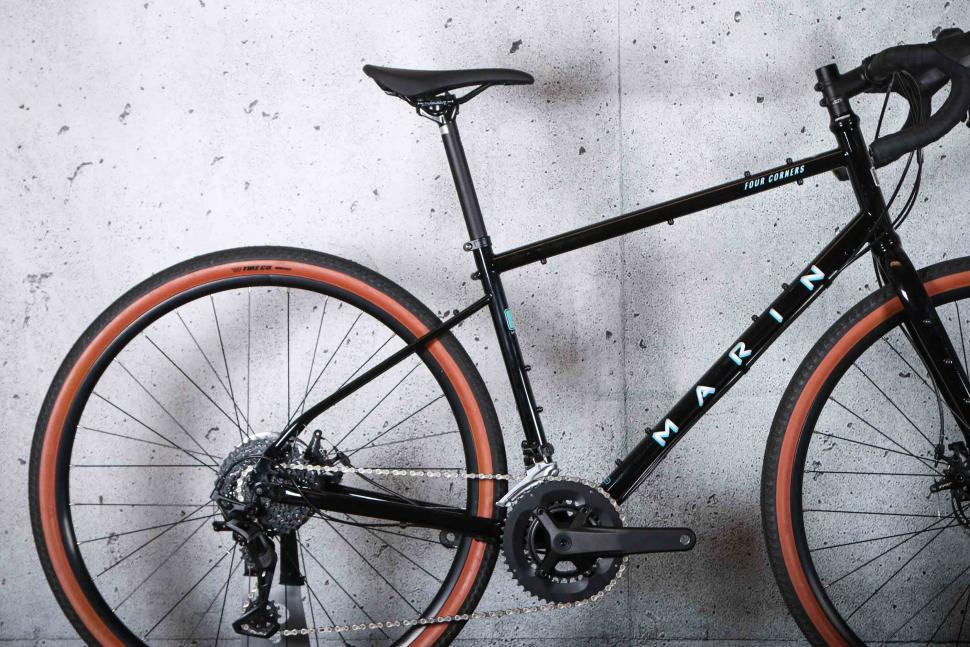
The geometry is stretched out and the Marin is tall at the front, making it stable while offering a back-friendly and upright riding position. The wheelbase is 1,087mm on our medium-size bike, which is lengthy by any standards, though this is accompanied by a short stem, which stops the steering getting too slow.
When you’re touring, you really do want comfort and an upright riding position. Day after day of long-distance riding can put a lot of pressure on your body (it took me a while after my first extended tour to regain the sensation in the ends of a couple of my fingers…), so you really don’t want to stretch out – and you also need low gears.
The frame angles are pretty typical for a touring bike, with a shallow 71° head angle paired with a steeper 73.5° seat angle. The Temple Adventure Disc 3 is broadly similar, with 71.5° head and 73° seat, with the Genesis Tour de Fer 10 71.5° and 73.5°.
The long chainstays ensure there’s little chance of your heels hitting a rear pannier (unless you’re wearing clown shoes), while the long front-centre (the distance from the centre of the bottom bracket to the centre of the front hub) also makes toe overlap unlikely. My size 42 shoes were nowhere near the front tyre, though with a mudguard fitted they’d have been close.
The long front-centre figure also encourages stability, though with a corresponding reduction in responsiveness.
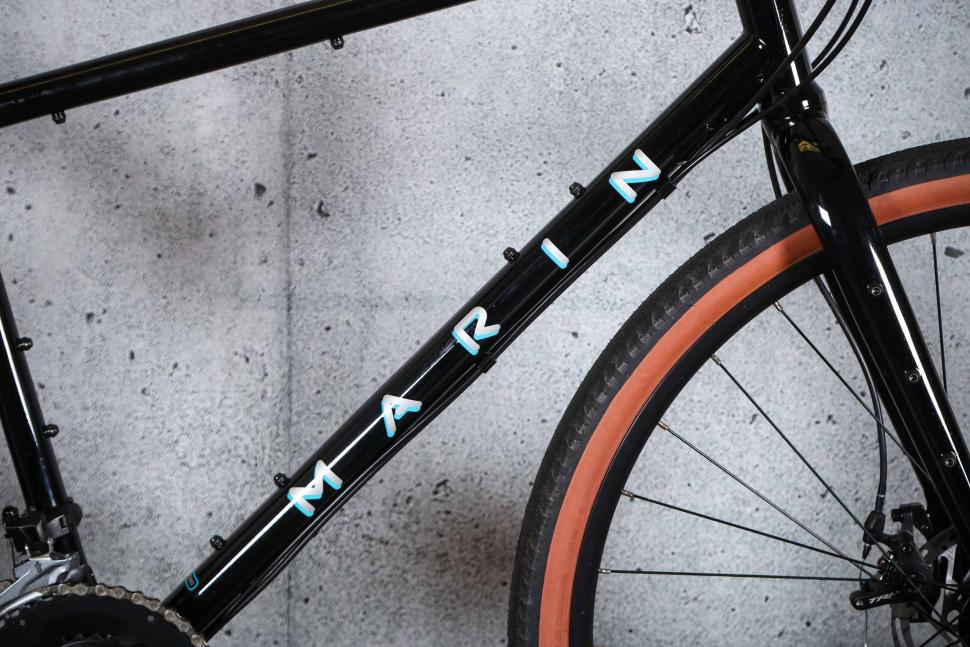
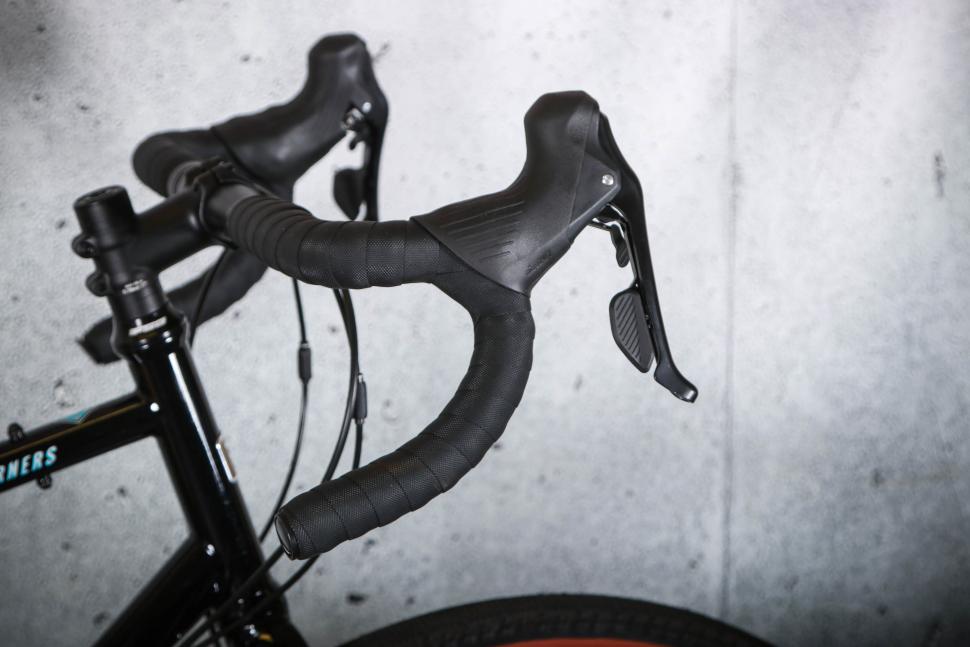
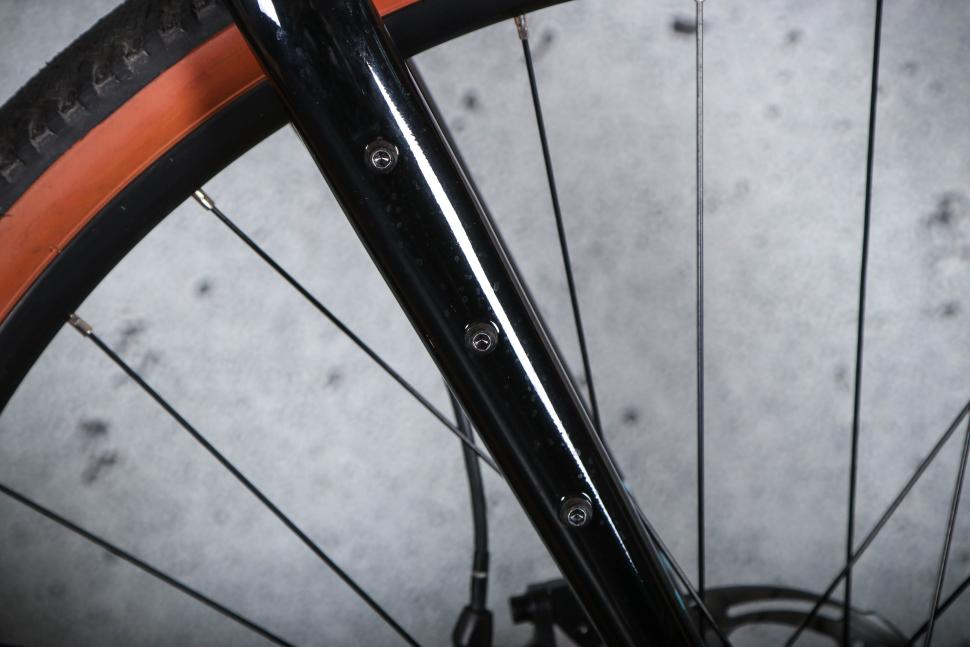
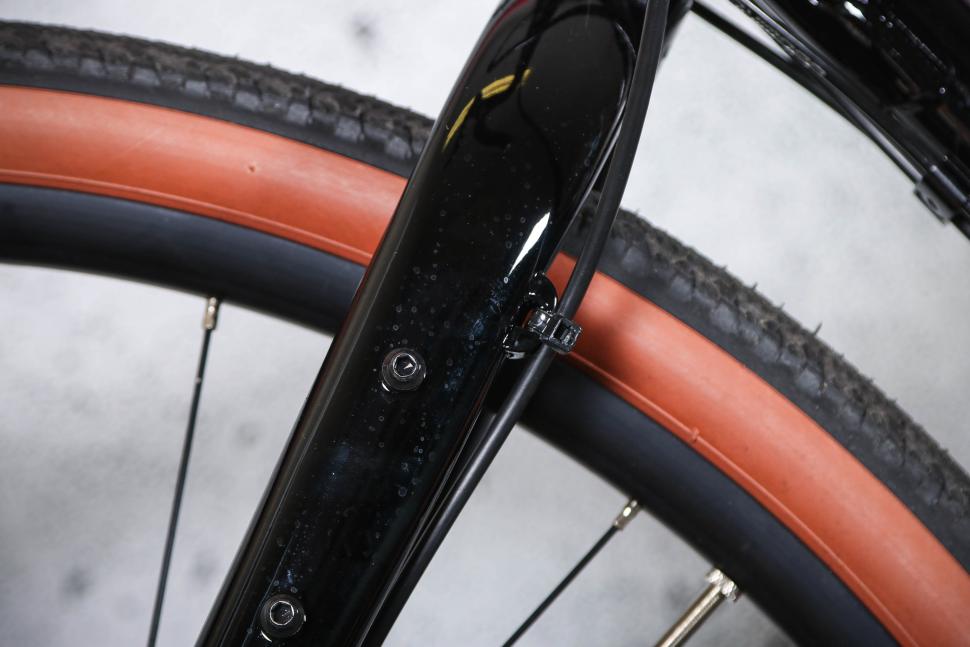
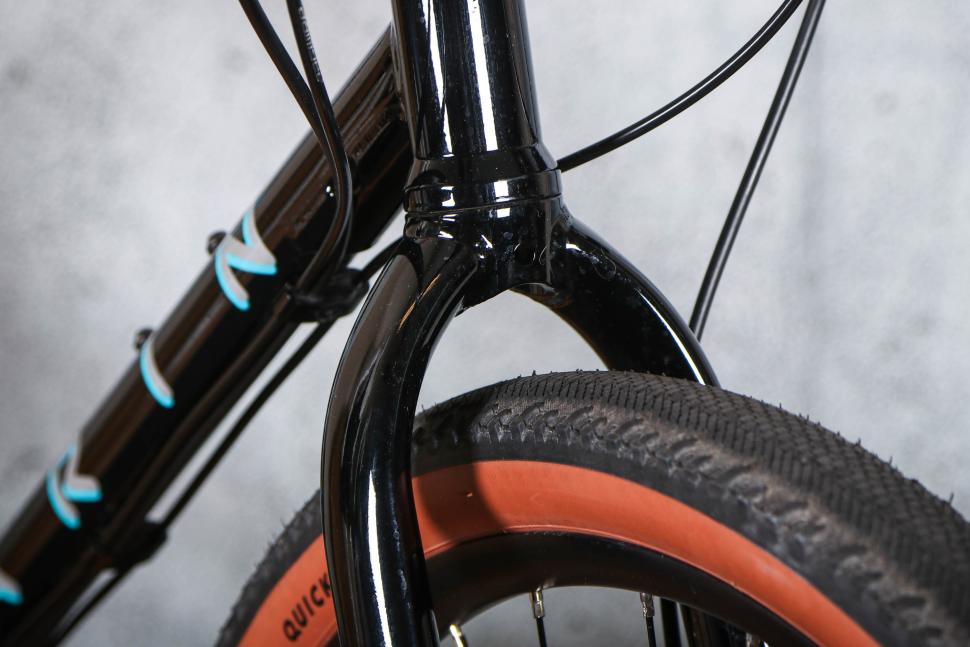
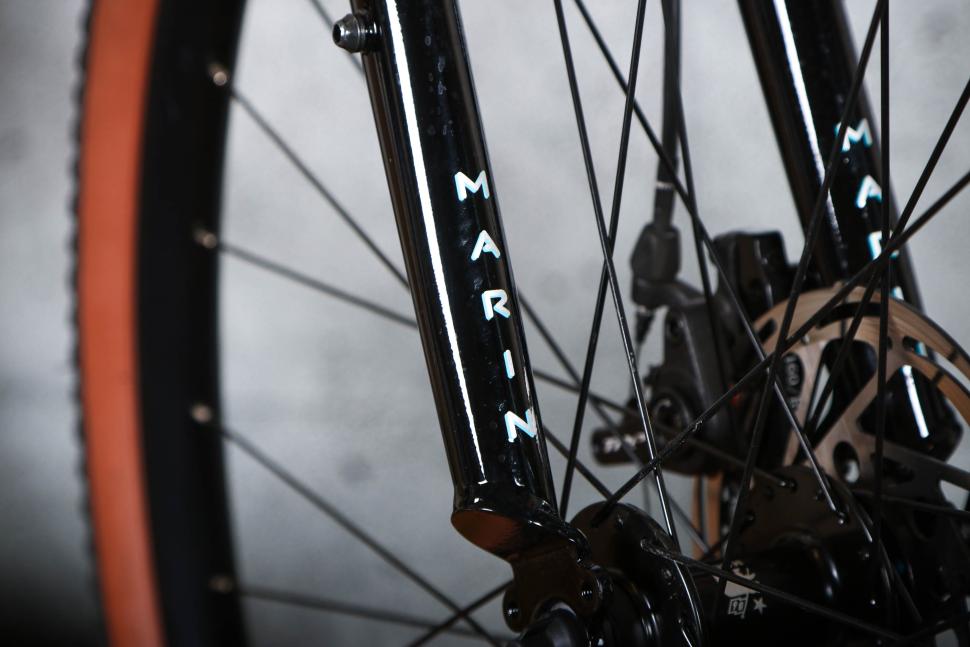
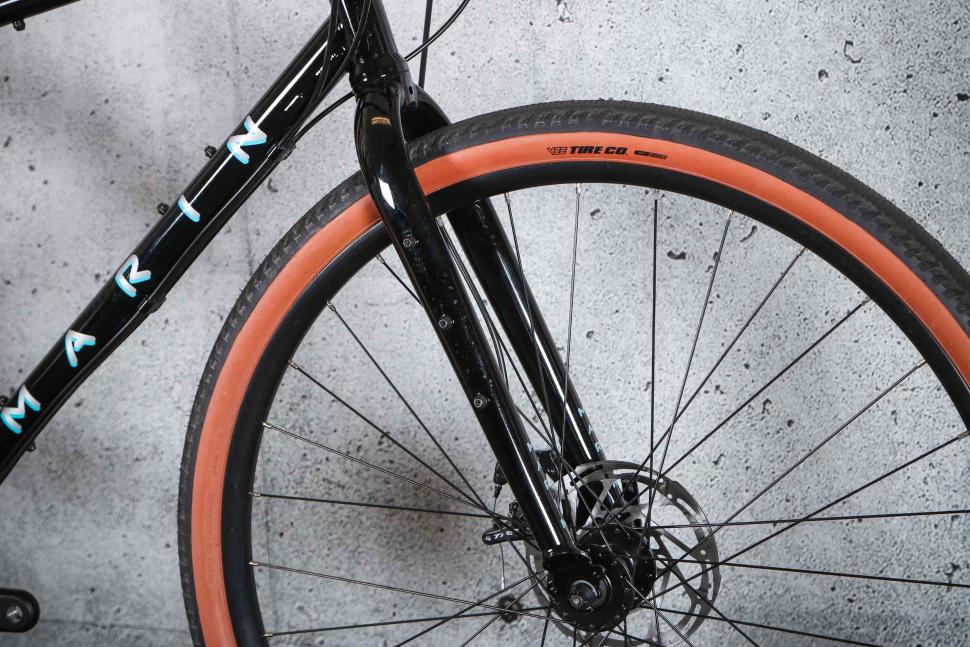
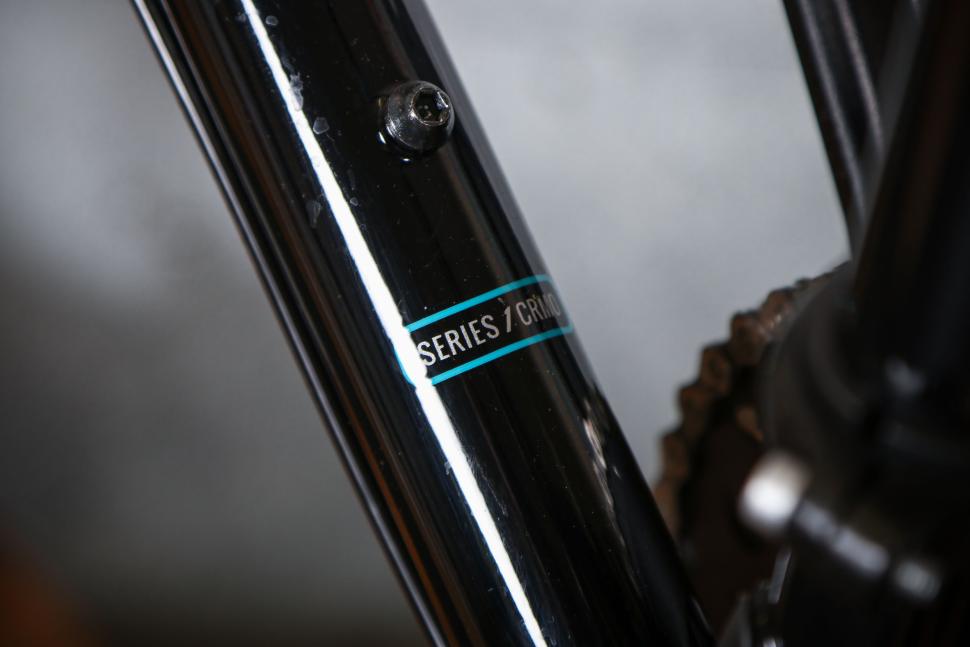
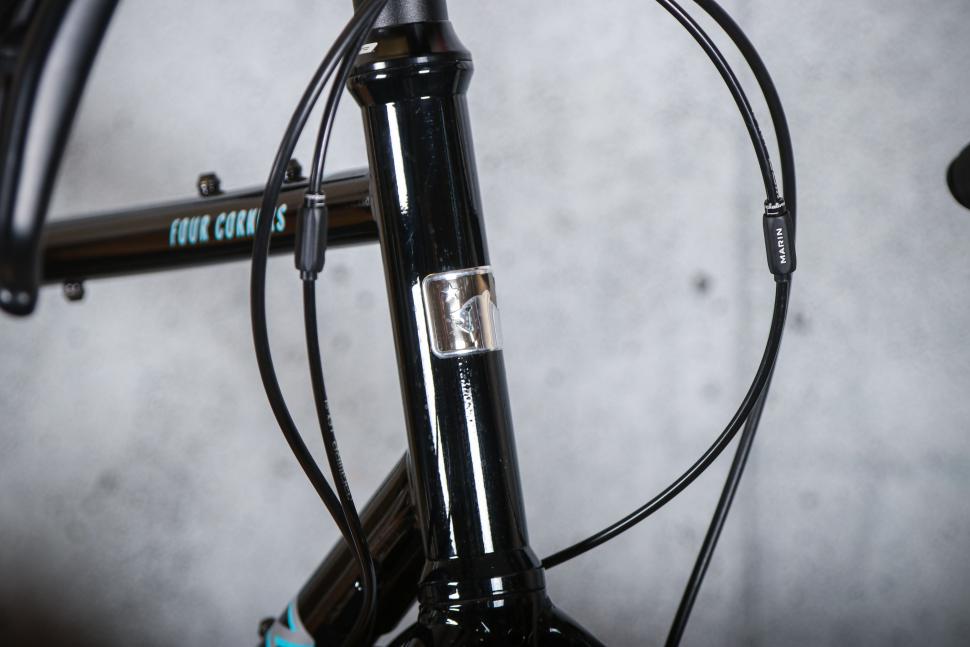
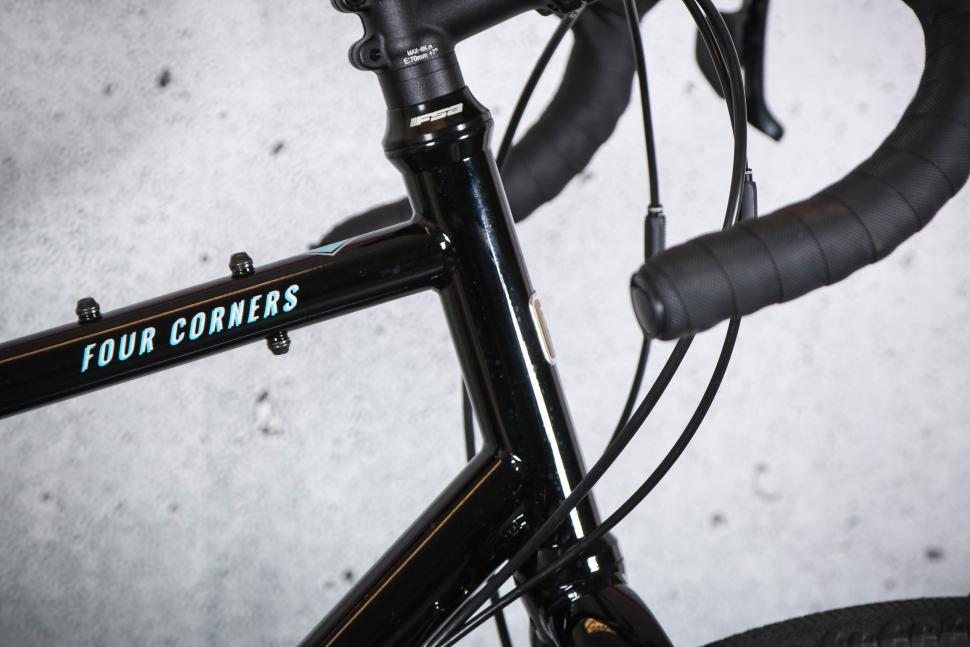
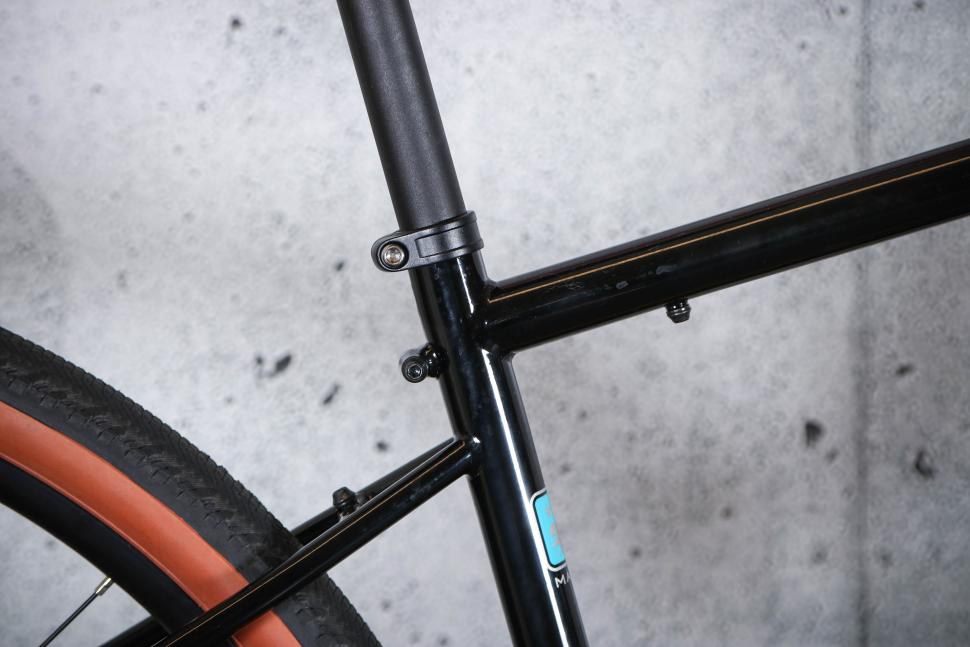
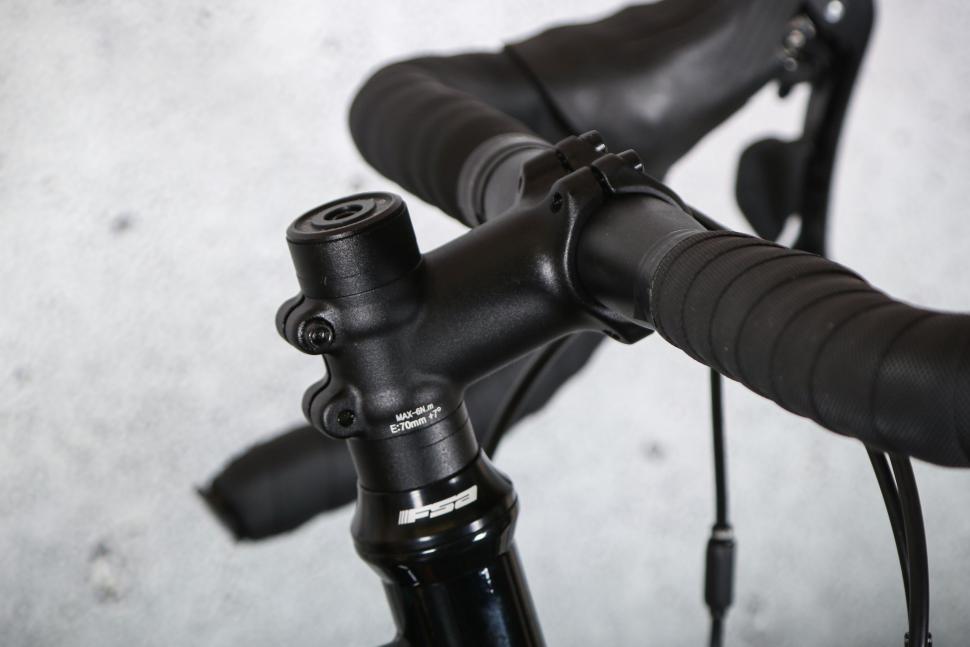
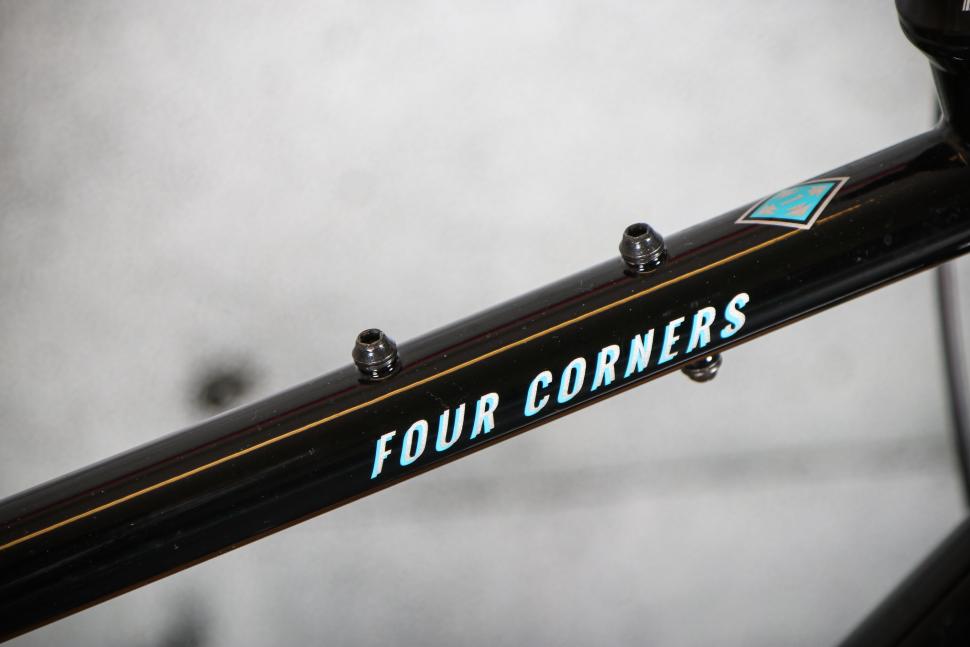
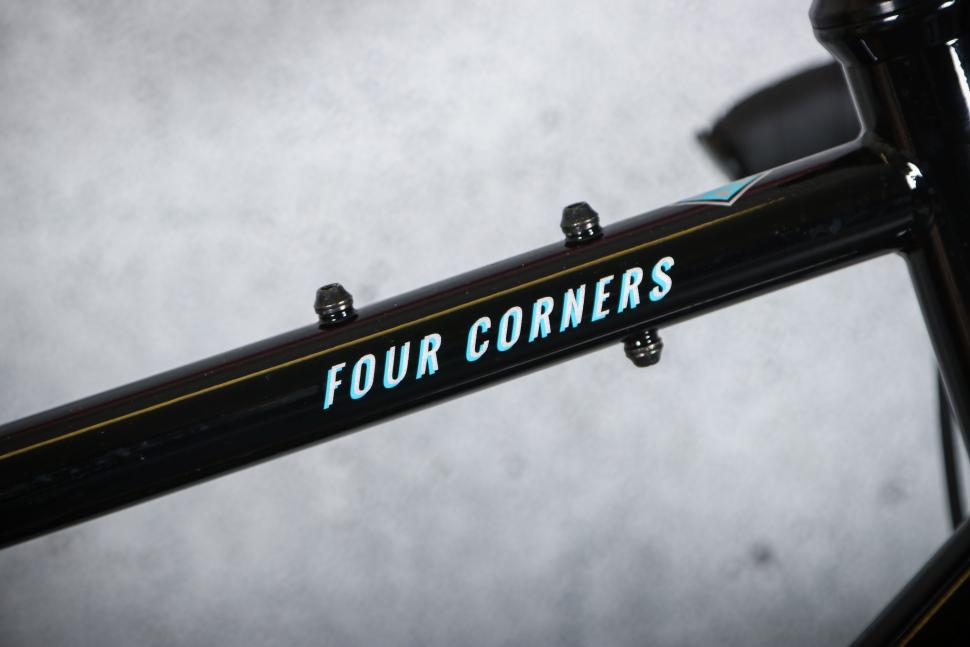
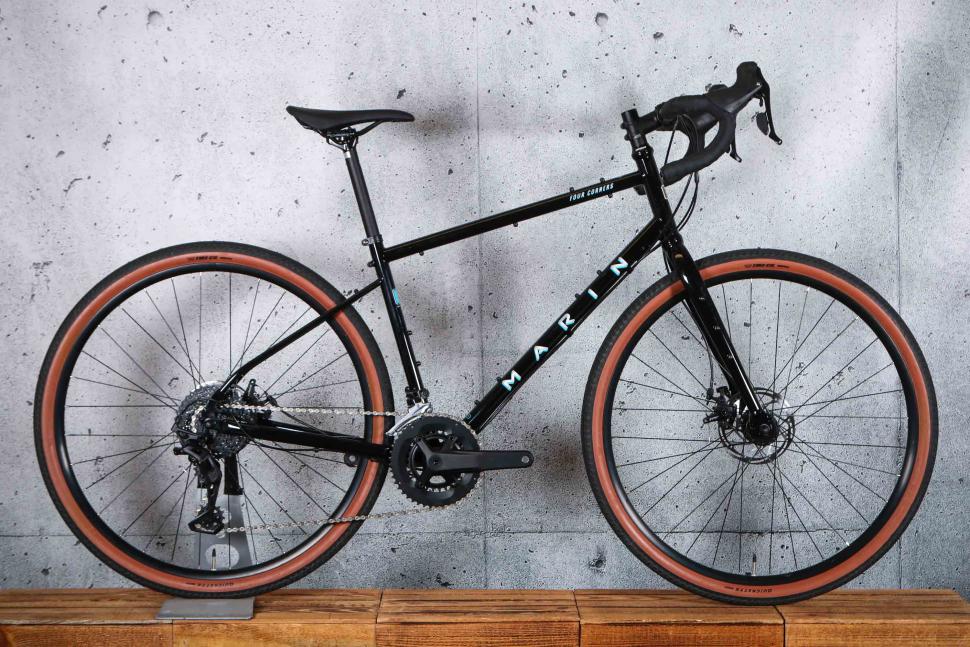
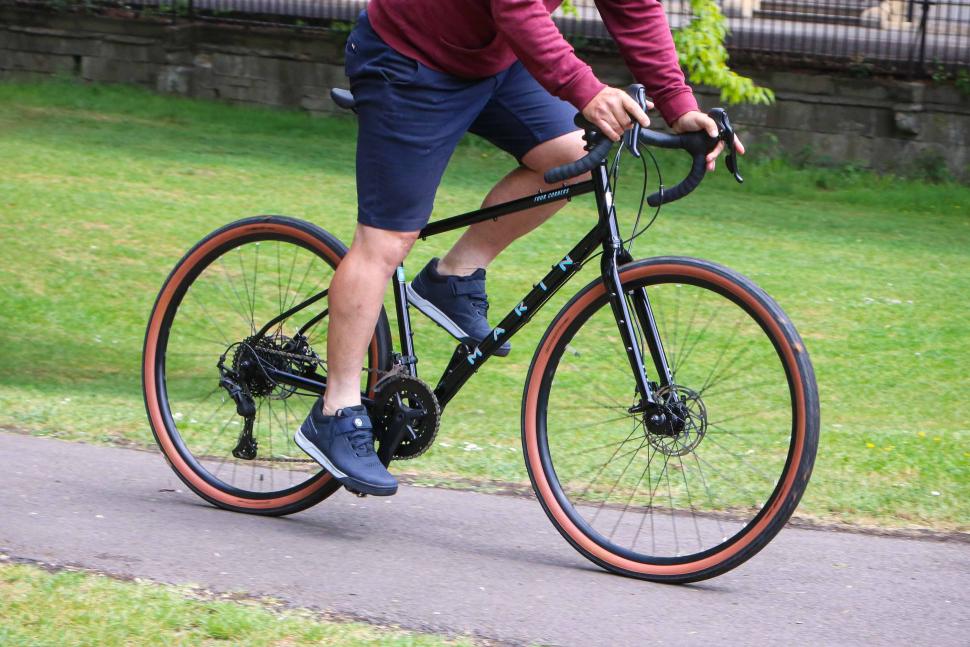

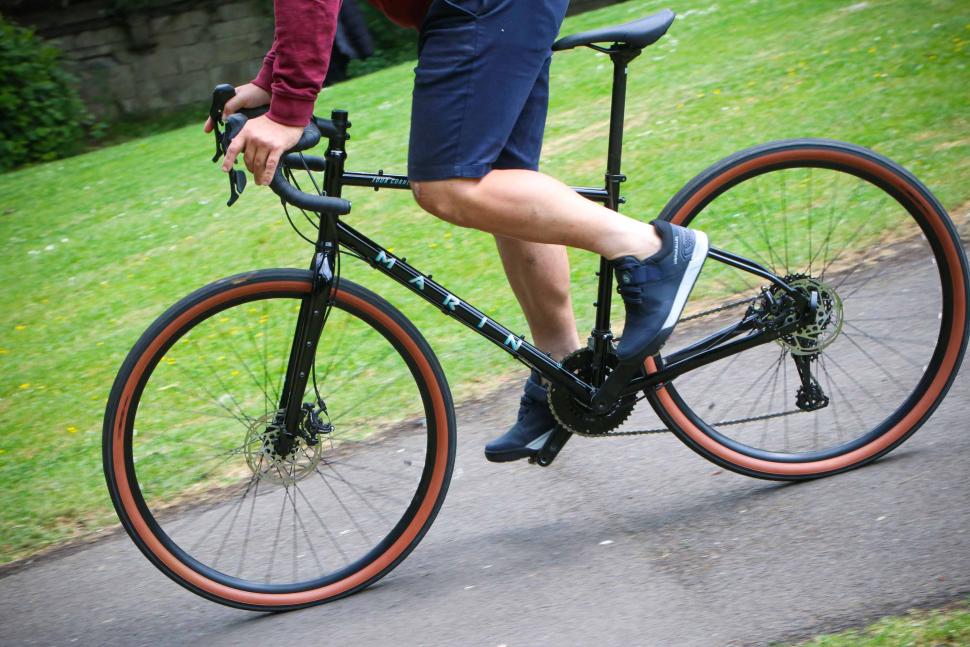
The reason a touring bike typically has a slacker front end than a road bike is that it delivers slower handling, which helps to keep things stable when you’re carrying kit and clobber. The Marin also carried weight well, with no poor behaviour, even when loaded up with a pair of bulging panniers (not to mention a slightly overweight rider).
You’re never going to be flying along on this bike – its 13.4kg unladen weight sees to that – but as I regularly say, a bit of extra weight on a touring bike is neither here nor there if you’re carrying 100kg of rider and kit.
Climbing is leisurely, but with that 21in bottom gear, you just sit in the saddle and spin your way up. Simple. Meanwhile, on the flat, a kilogram or three really will make very little difference. Though as I say elsewhere, I’d still be tempted to go for slightly narrower tyres unless you’re carrying all your earthly belongings. I rarely do – my knees wouldn’t allow it…
Marin Four Corners 1: Frame and fork
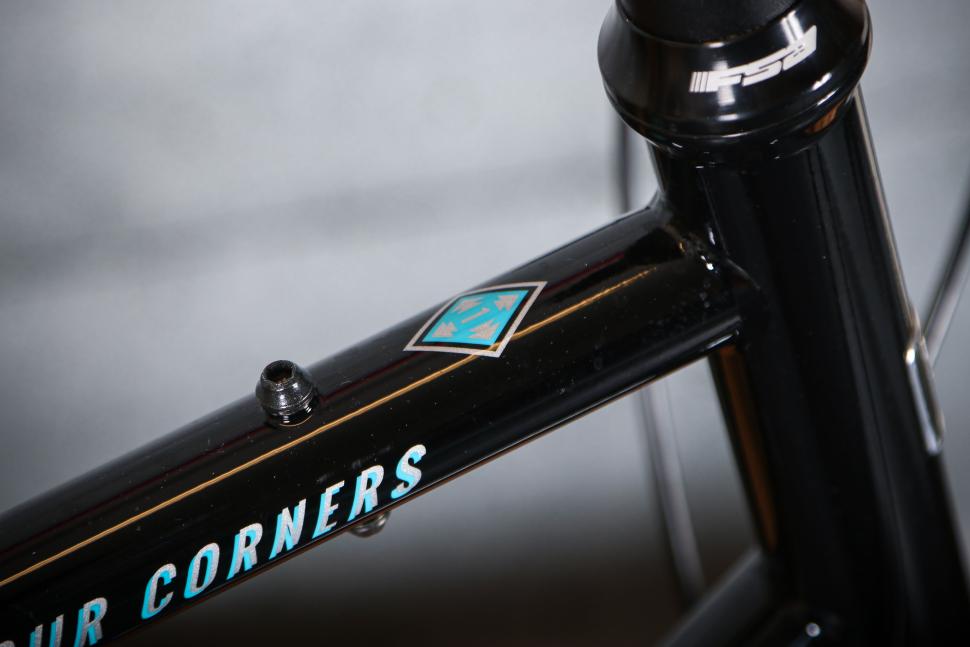
It’s that most venerable of materials for the Marin Four Corners 1. No titanium, no aluminium, not even a sniff of carbon fibre, but simple 4130 chromoly steel. And it’s none the worse for that.
It’s never going to be as light as aluminium or carbon but it’s still the go-to material for a lot of touring bikes – and for a number of very good reasons.
It’s tough, repairable anywhere in the world, and you can still make a steel bike at a reasonable cost. While steel’s repairability used to be mentioned in reviews all the time back in the day, there is a kernel of truth in it. Years ago I met a fellow cycle tourist who did indeed have his steel frame repaired by a welding torch-wielding garage mechanic somewhere in the back of beyond. So, yes, it does really happen – albeit blue-moon rare perhaps. And it wouldn’t be one of my primary reasons for choosing the material.
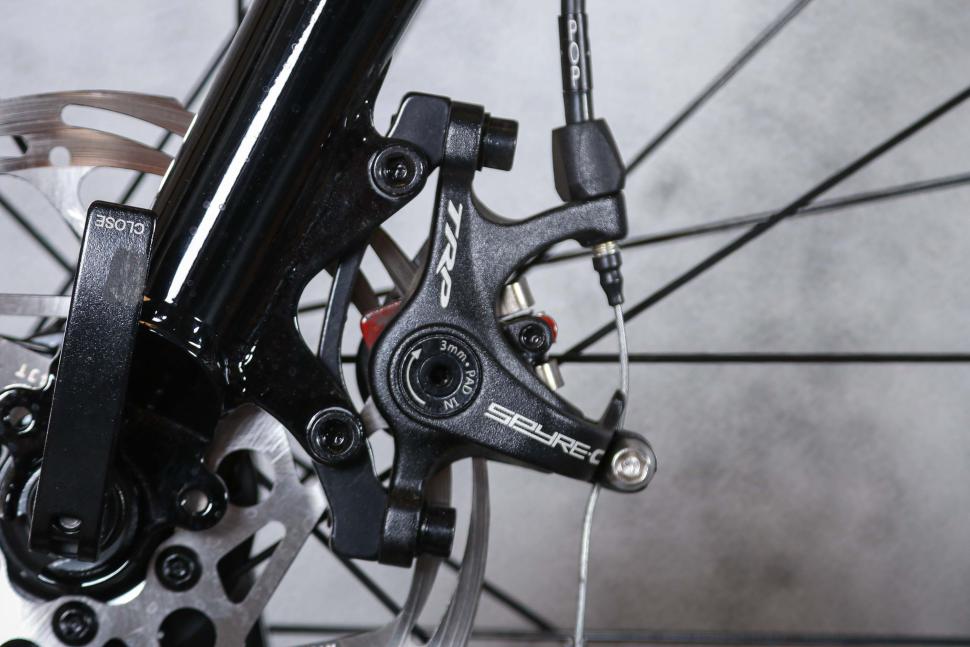
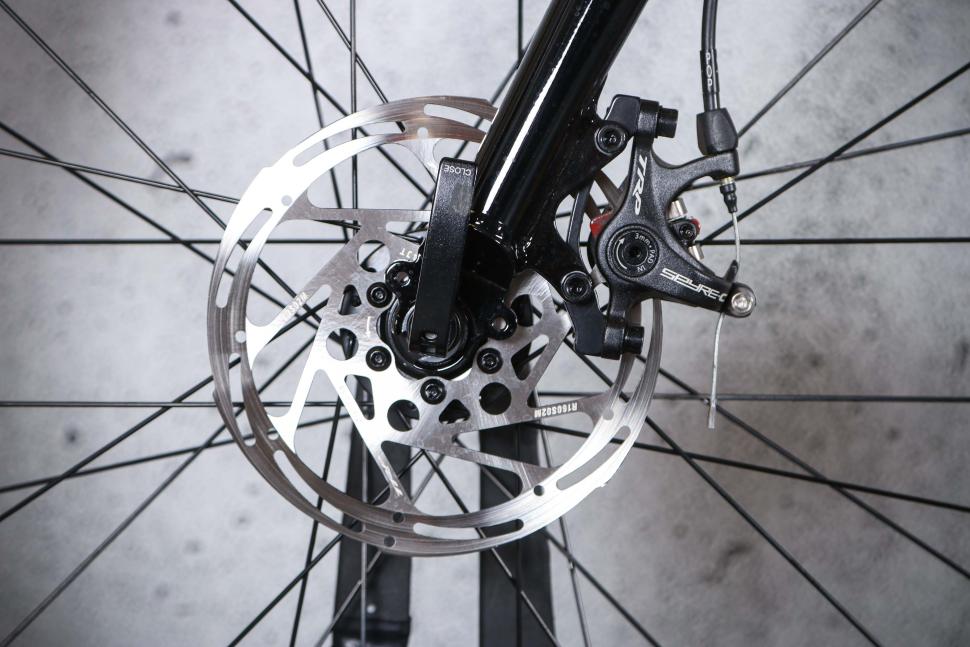
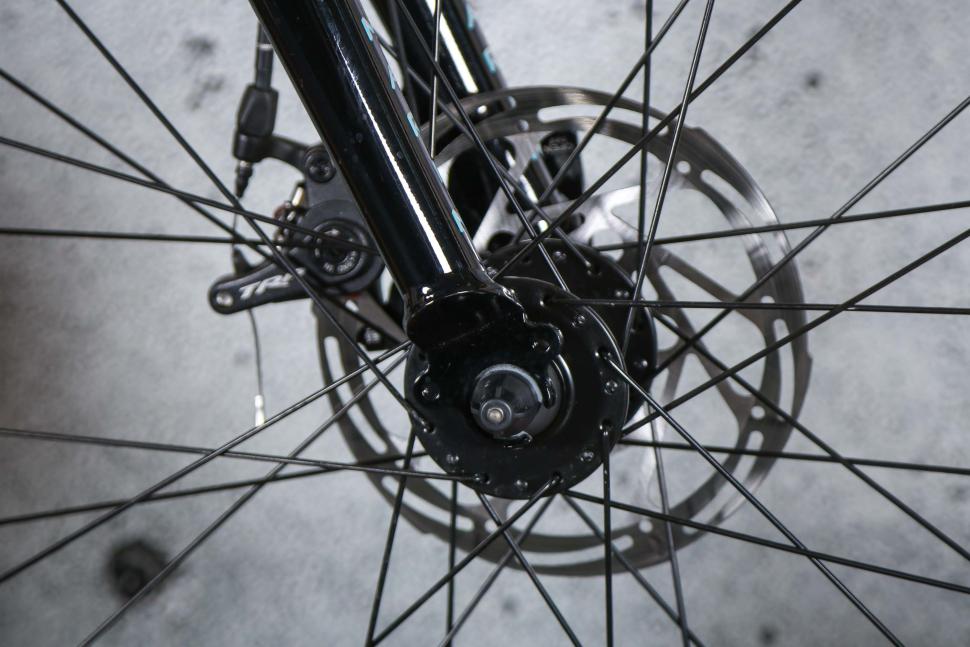
While the bike has disc brakes, both the frame and fork have quick-release dropouts rather than thru-axles. Yes, I’d have preferred thru-axles, but I don’t feel it’s a major issue at this price, as the technology is tried and trusted and spares for quick-release setups are widely available just about everywhere in the world.
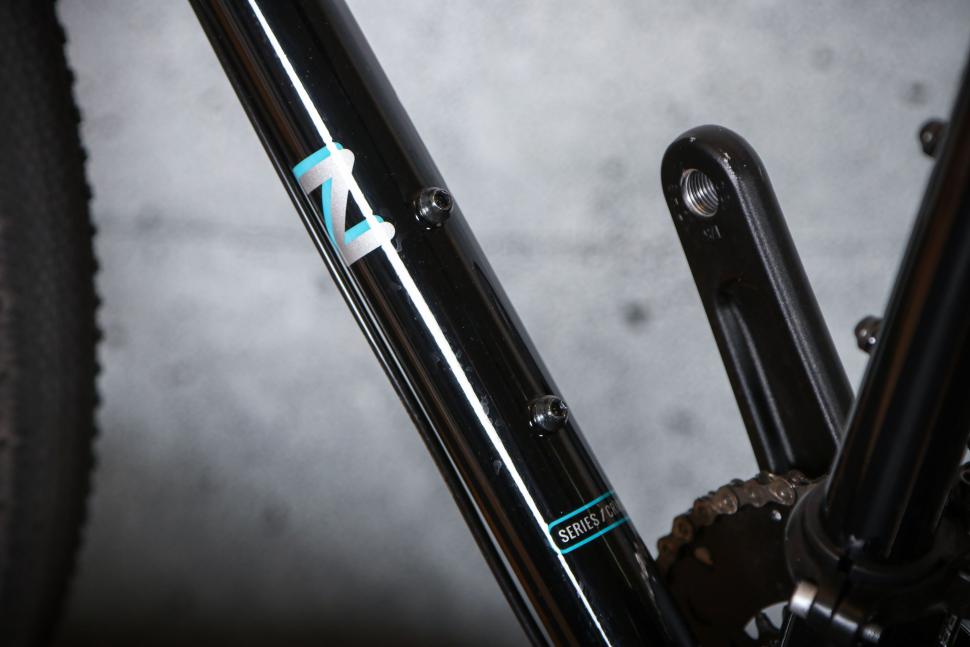
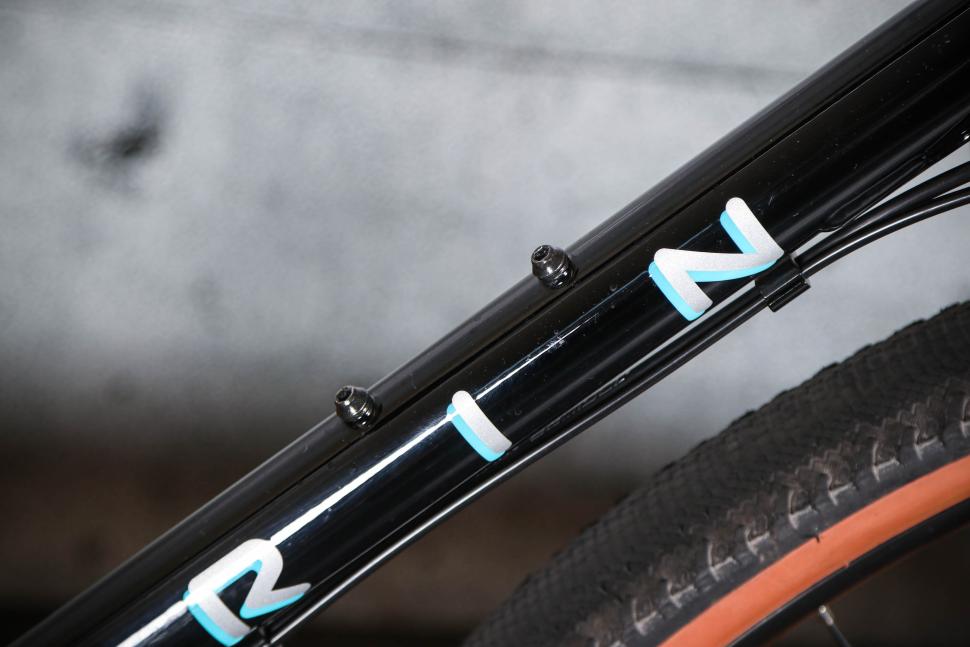
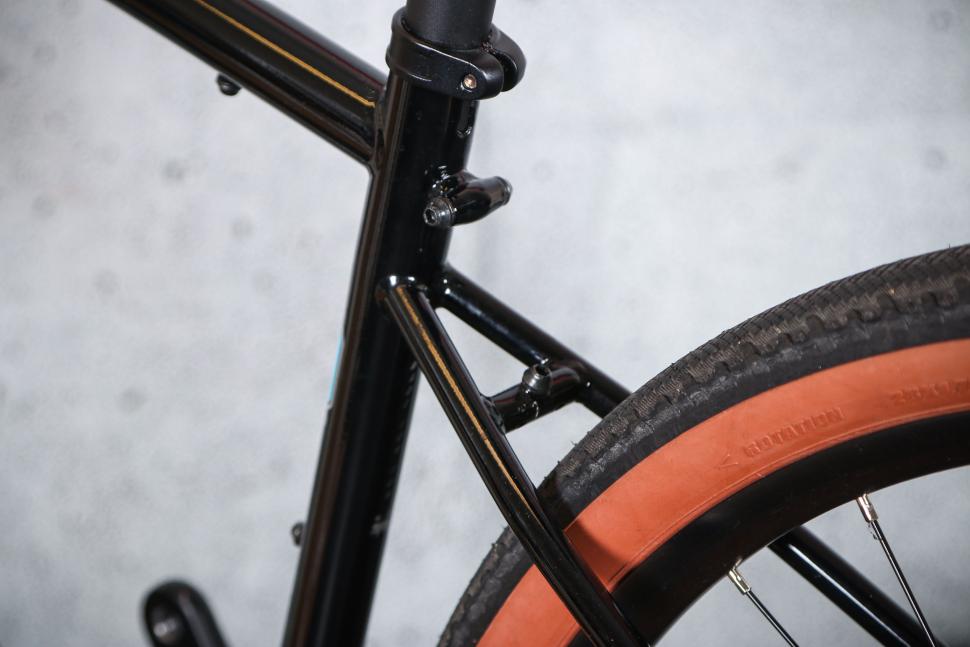
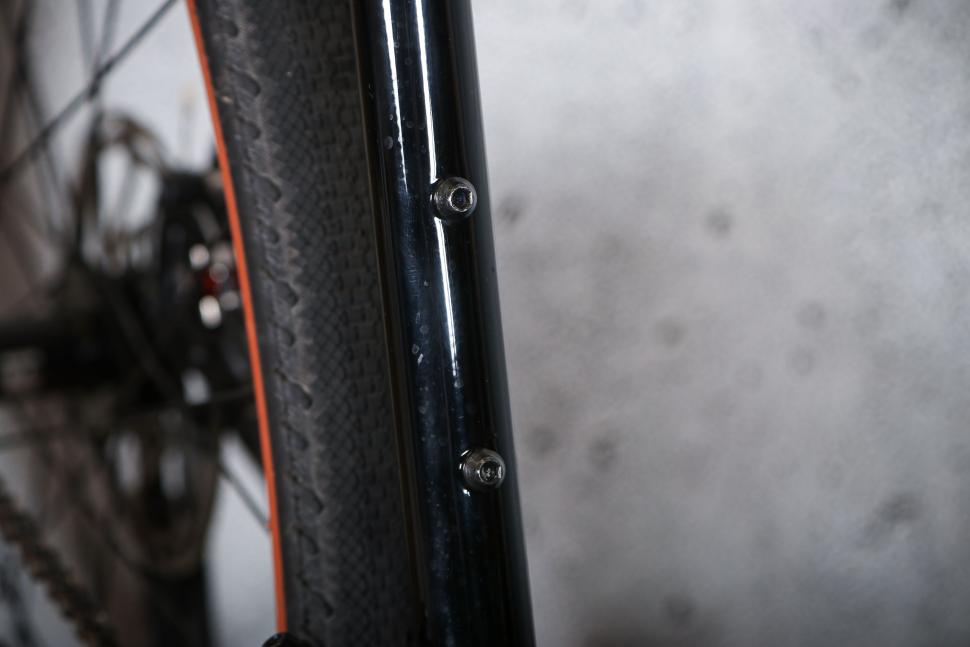
One area where the Marin does excel is the number of bosses for bottles and bags, which gives it some bikepacking credentials too. There are four pairs of bottle bosses on the main frame triangle – including two pairs on the down tube and one pair underneath. That let me run two 500ml bottles and my DIY bottle cage tool kit within the frame.
The compact frame’s short seat tube means you can’t fit a full-size 750ml bottle in a standard bottle cage, though something like the £15 Restrap Side Release Bottle Cage or Giant’s £12.99 Airway Dual Side Bottle Cage would let you use a larger bidon if that’s crucial.
You also get ‘bento box’ bosses on top of the top tube, and bosses for bags or accessories under the top tube for even more storage. The fork is just as well provided, with triple bosses on each fork leg for bottles, low-rider racks or luggage cages.
You won’t be surprised to hear that there are also mounts for front and rear mudguards and for a rear rack – though the Marin doesn’t come with guards or rack, unlike the similarly priced Ridgeback Tour that I’m also reviewing.
Very impressively, there’s clearance for full-length mudguards even with the super-wide 45mm tyres fitted.
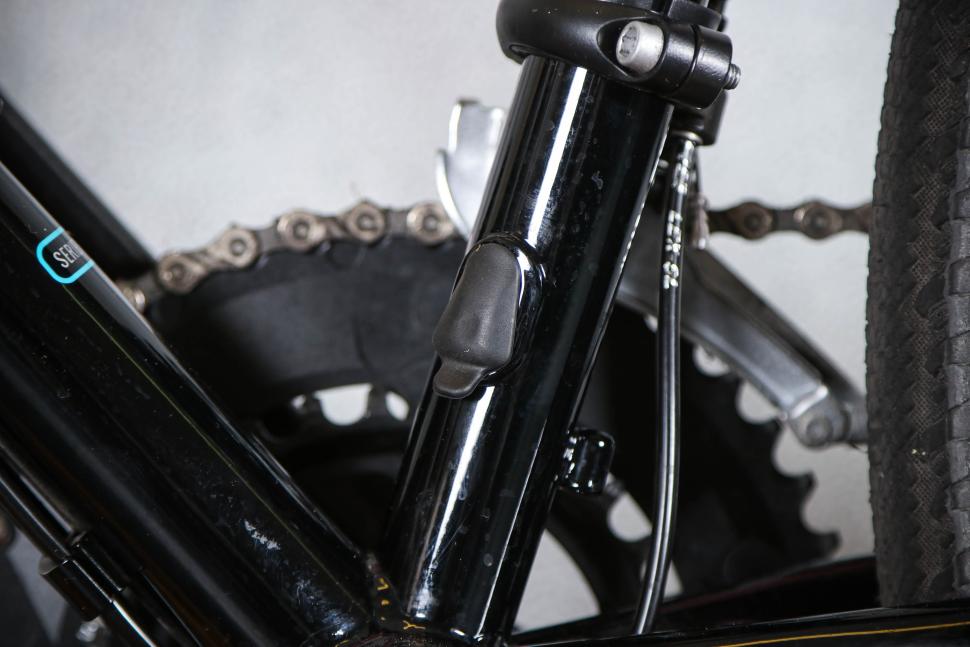
If you’re wondering what the port is on the lower part of the seat tube, well, the frame is compatible with an aftermarket dropper post. This is probably of more use when riding off-road, but it’s a handy addition.
Marin Four Corners 1: Groupset
The 2024 version of the Four Corners came with the more familiar Shimano Sora triple chainset that offered a 24in bottom gear courtesy of the 30×34 pairing.
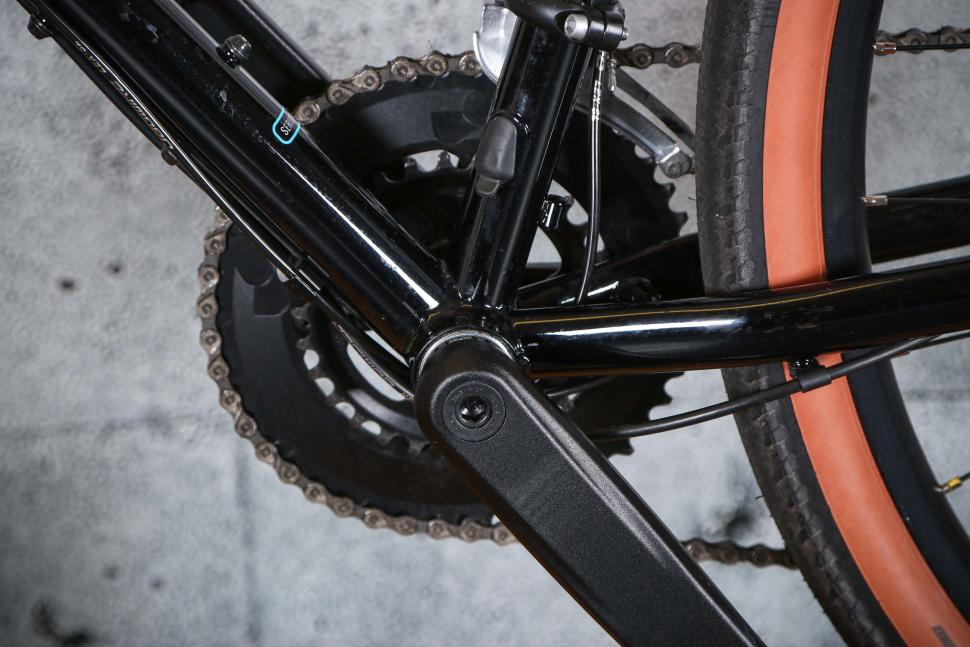
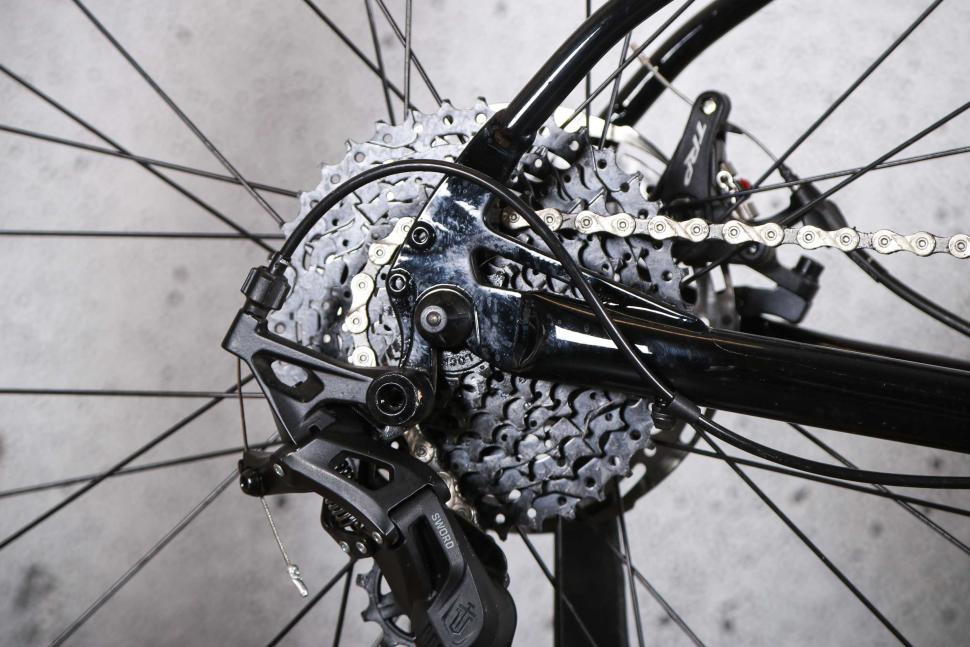
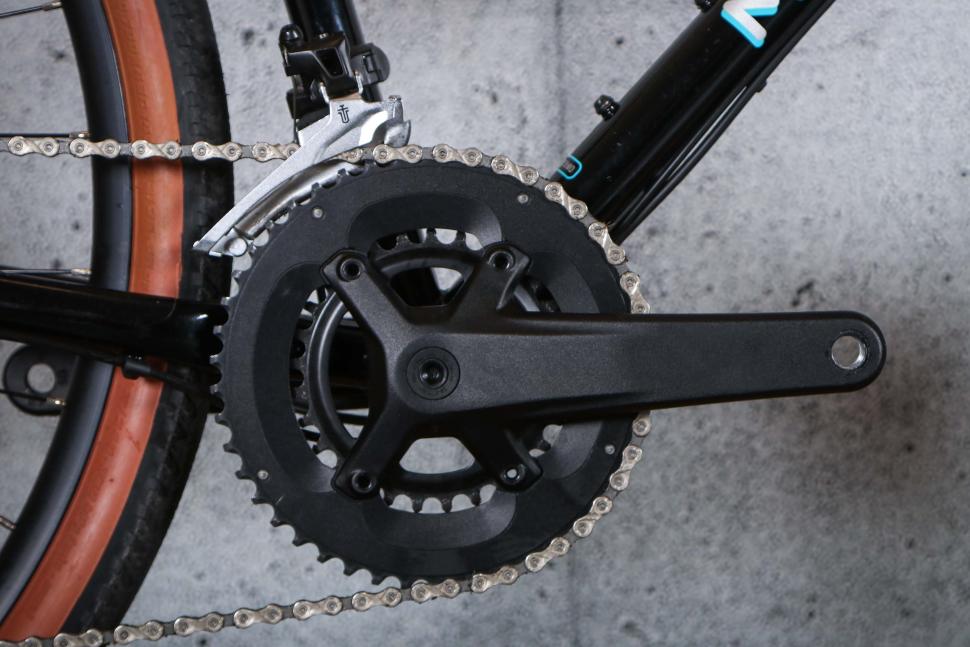
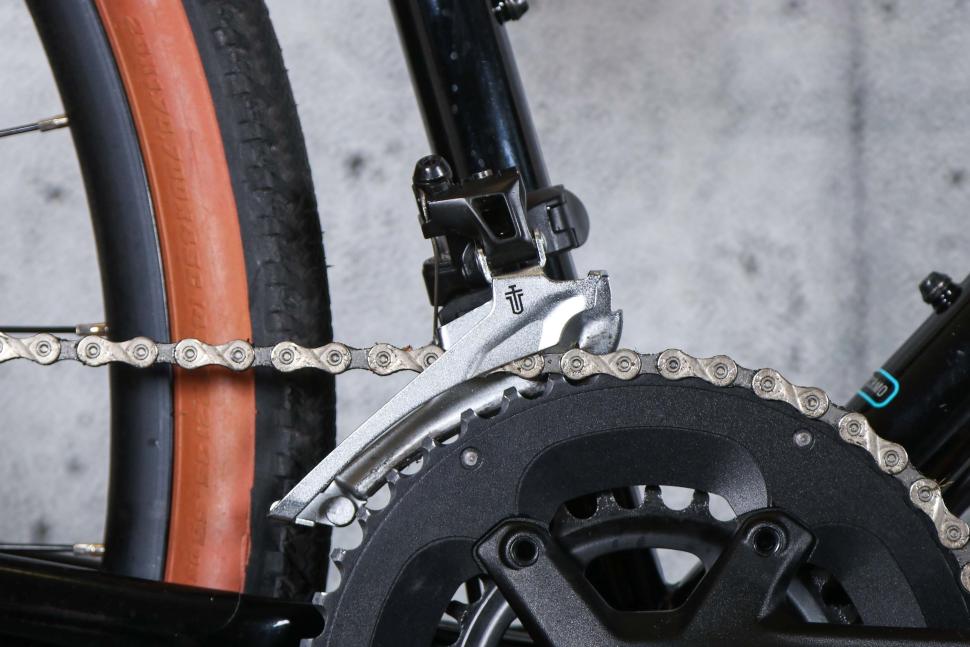
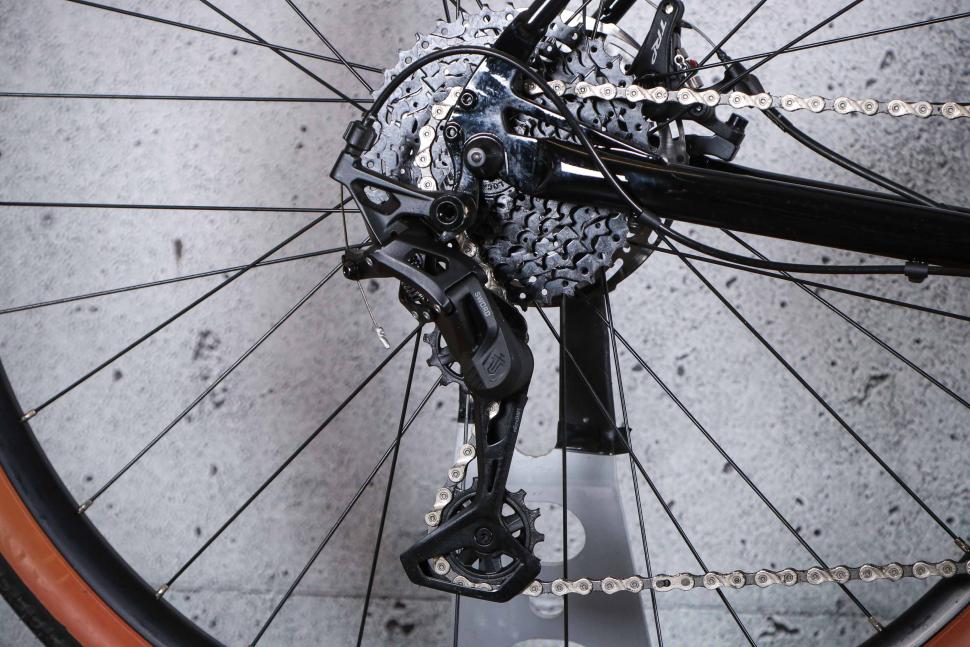
But it’s all change for 2025, with this year’s model getting 9-speed microSHIFT with an unbranded 46/29T chainset and super-wide-ranging 11-38T cassette. This gives a fantastic 21-117in gear range.
The bottom gear is low enough for loaded touring, while the high gear means you’re never going to spin out. There are inevitably going to be bigger jumps between gears than with a standard double chainset, including a six-tooth jump from the 32T to the 38T sprocket, but I never found this an issue when riding, as the gearing behaved impeccably.
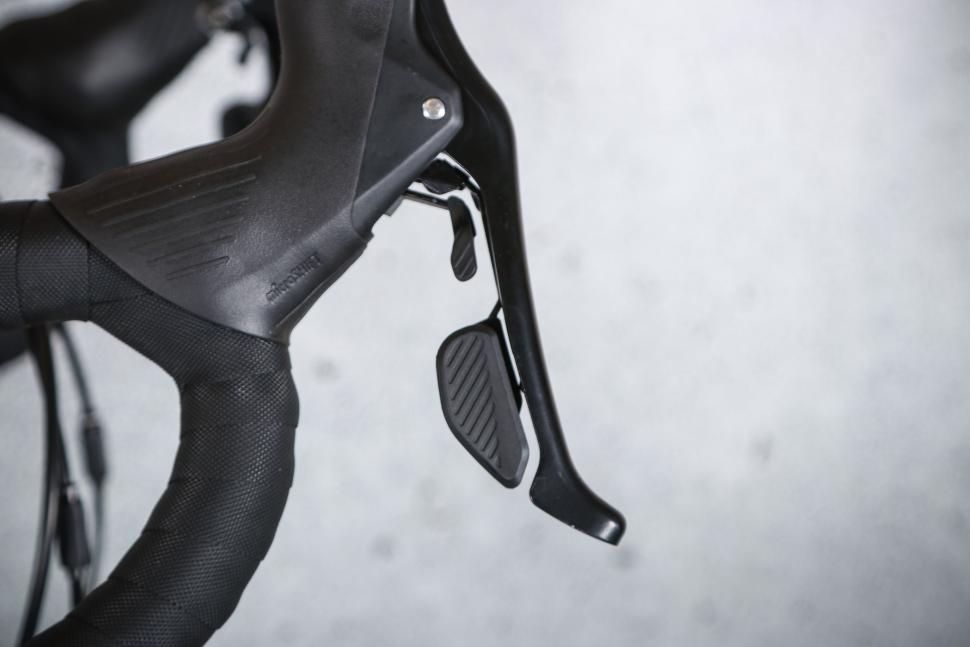
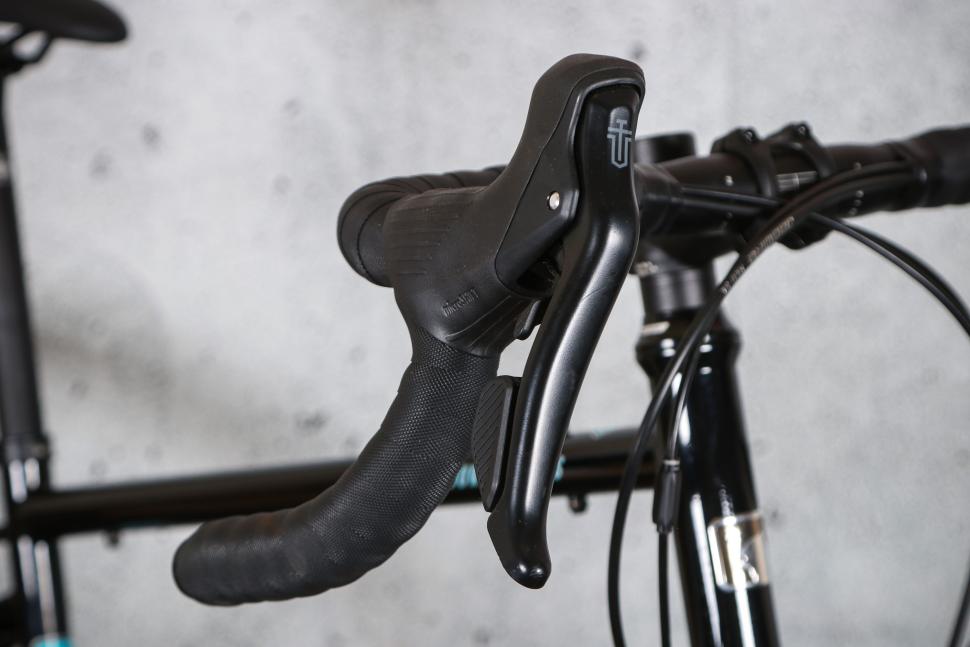
MicroSHIFT’s levers do take getting used to, if you ordinarily use Shimano, but the shifting is as good as you get with similarly priced counterparts, and it becomes second nature after a few rides.
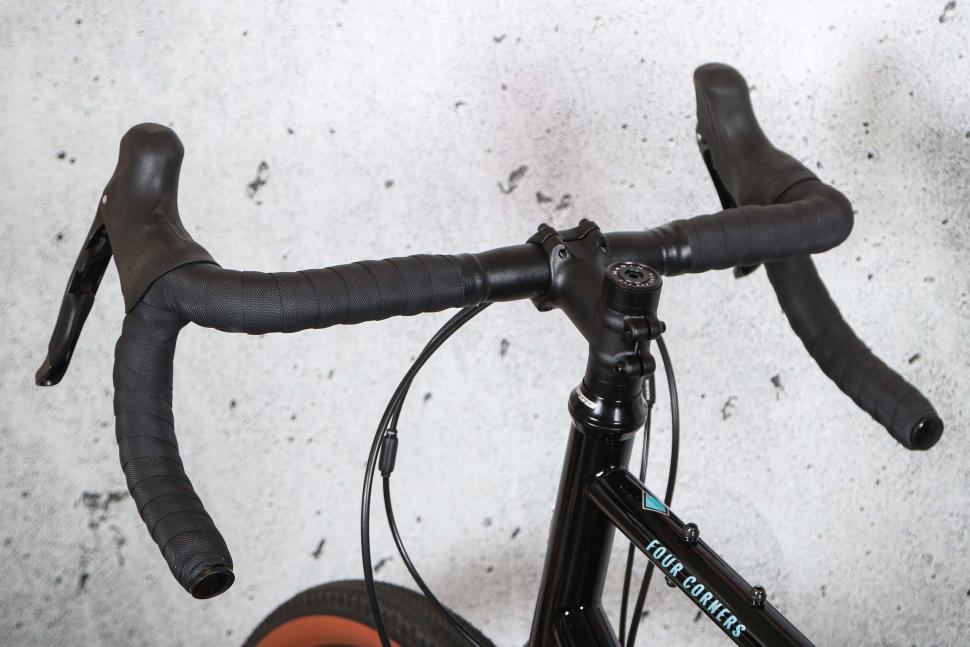
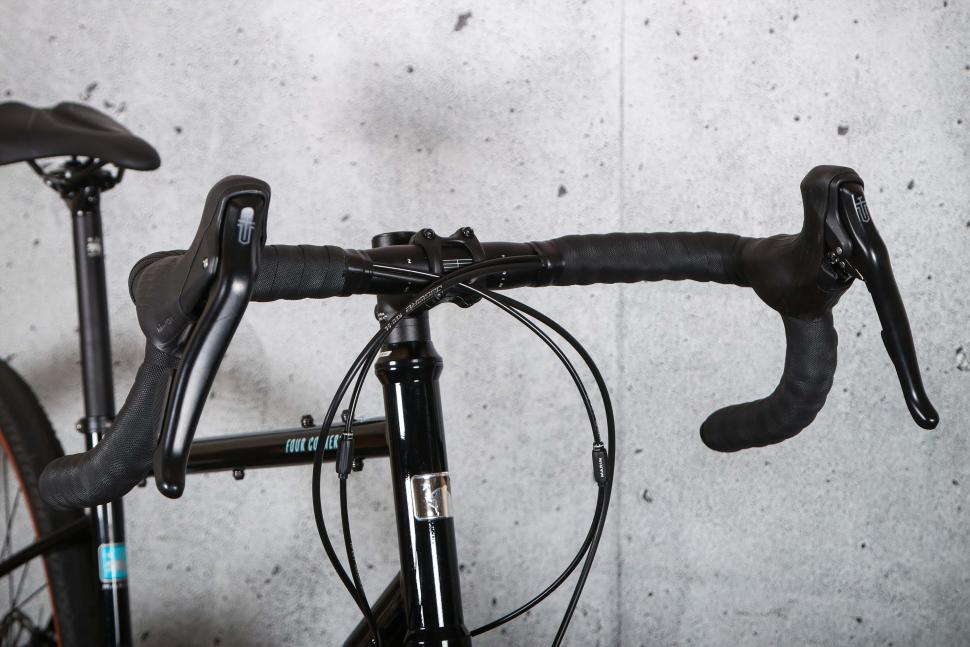
Unlike Shimano’s STi with its combined gear and brake lever, the microSHIFT setup has a dedicated brake lever, which is accompanied by two paddles for changing gears. On the right, the larger paddle shifts to a lower gear; the smaller paddle to a higher gear. On the left, the larger paddle shifts the chain to the big ring and the smaller paddle to the small ring.
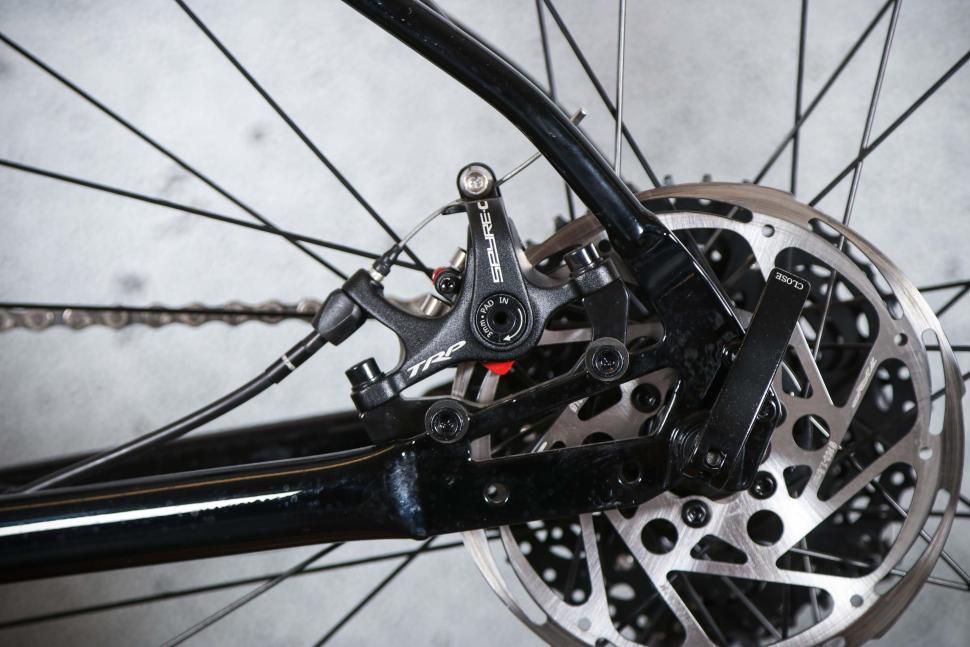
The brakes are the usual suspects for a drop-bar bike with a sub-£1,000 price tag: cable actuated discs. But it’s good to see that Marin has gone for TRP-Spyre C brakes with 160mm rotors. These are a dual-piston design, and while now more than a decade old, they’re still one of the top cable choices around.
Do they equal hydraulic discs for power and lightness of action? Nope. Would I be happier fixing these with my trusty set of Allen keys when I’m miles from the beaten track? Absolutely.
Marin Four Corners 1: Finishing kit
Just as the compact steel frame, wide-range gears and cable disc brakes are well chosen, so too is the Marin’s finishing kit.
As with most bikes around this price, it’s mainly own-brand kit, but none of it is less than decent, and some of it is very good.
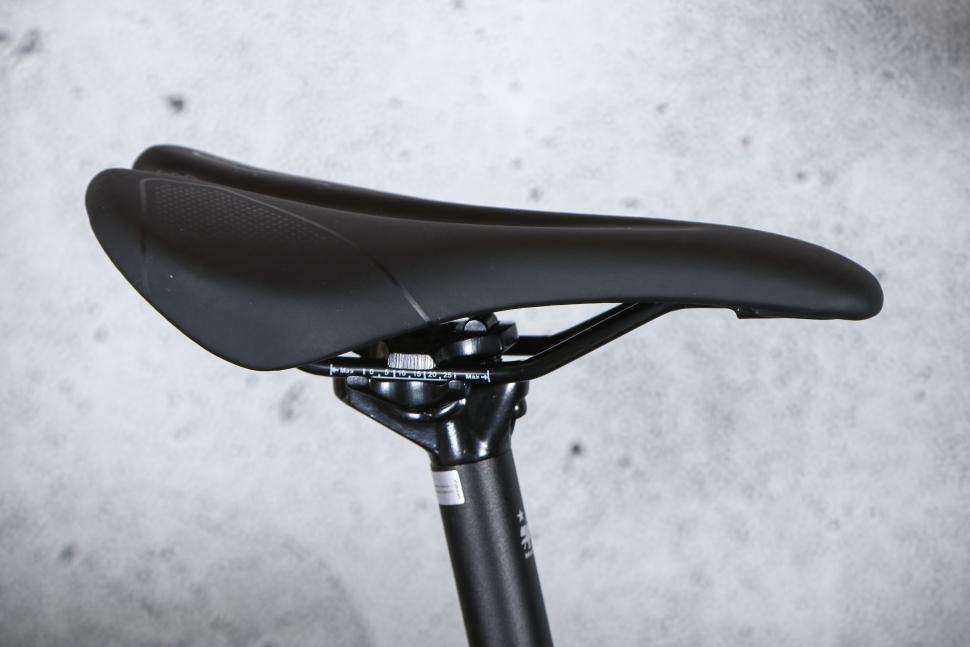
The Marin MTB saddle is quite short, at just 255mm, but for me offers just the right amount of squish and support, with enough length to move around – though this is of course entirely subjective and your mileage may vary.
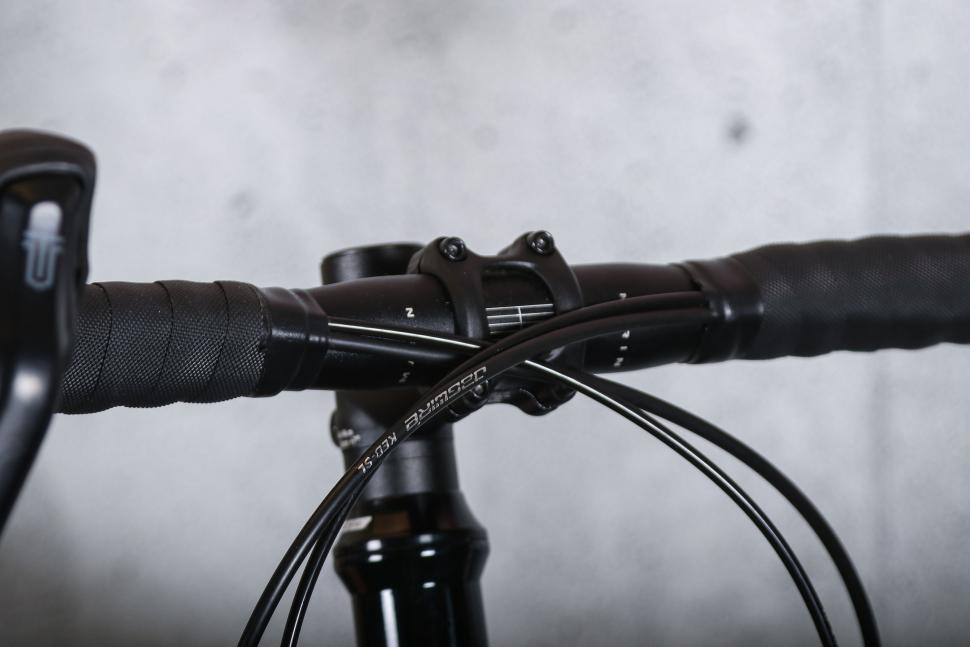
The bar and tape combo is very good. The bar shows the influence of gravel bike design on modern touring bikes, measuring a pretty standard 42cm (centre to centre) before flaring out to 50cm across the drops. This helps with handling when the going gets tough. The bar is wrapped in Marin’s own Comfort bar tape with shock-absorbing gel pads, and is very good, with no discomfort getting through to my hands or wrists until I reached 60 miles or so.
The 27.2mm seatpost is an unbranded matt black alloy affair, which looks good against the shinier black frame. It’s fine.
Marin Four Corners 1: Wheels and tyres
It’s a tough, functional but weighty wheelset for the Marin, which isn’t unusual for a touring bike.
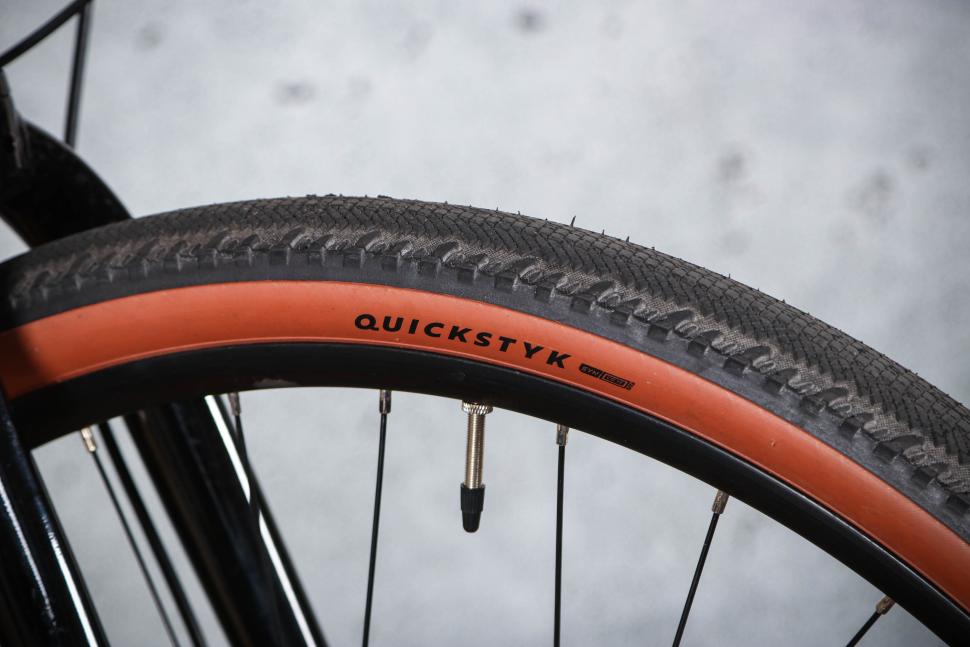
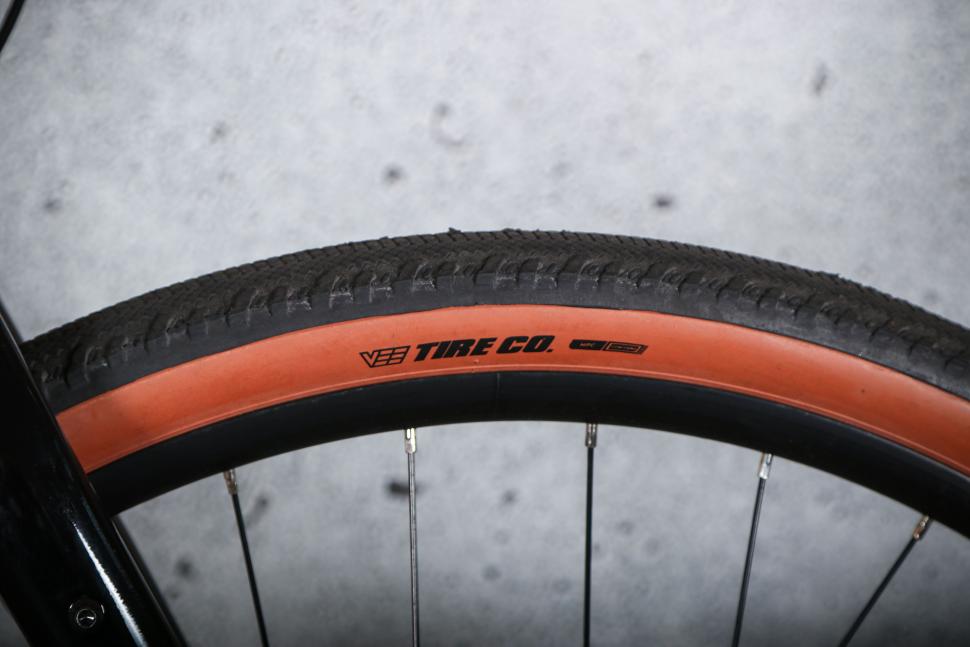
The wheels pair Marin’s own hubs and double-wall aluminium rims with 45mm Vee Tire Quickstyk tyres, which would cost 40 euros each bought separately, so they’re not an entry-level item.
The tyres are very good – and who doesn’t like a tan wall tyre, which I think sets off the largely black look of the Marin?
The treads have small central blocks that work pretty well on smoother surfaces, with larger shoulder blocks coming to aid on grit and gravel, where they add grip.
The tyres are also tubeless compatible, though the rims of the Four Corners 1 aren’t – you have to go up to the Four Corners 2 for that.
While their width offers great comfort, I’ve mainly toured on narrower tyres than this, unless I was carrying kilos and kilos of kit.
Value
A price under a grand for a genuine tourer that also has bikepacking and commuting capabilities makes this a bit of a bargain. There used to be a handful of touring bike rivals costing around £1,000 from the likes of Dawes, Fuji, Trek, Edinburgh Bike Coop’s Revolution and more, but most have sadly fallen by the wayside over the last decade.
I’m presently testing the Ridgeback Tour which manages a full touring package for just £899.99. The aluminium frame and chromoly fork come with a full range of bosses and this low price manages to include both full-length mudguards and a rear rack.
We liked the Spa Cycles Wayfarer, though it’s now a chunk of change dearer at £1,450. And if you’re happy with rim brakes, Spa also does its Steel Tourer Drop Bar 9 Speed, a triple-equipped bike that costs just £1,120. Both Spa bikes have the option of high-quality handbuilt wheels, which is always a bonus.
Though having a flat bar, the Genesis Tour de Fer 10 has a lot in common with the Four Corners, coming with a chromoly steel frameset and a double chainset – 2×10-speed Shimano Cues in this case – and while dearer at £1,299.99, this price includes front and rear mudguards, front and rear racks and a kickstand, which will account for a fair amount of that difference.
> Best touring bikes 2025 — dream builds for your two-wheeled travels
Conclusion
I loved my time on the Marin Four Corners 1 and was sorry to take it back to Marin when the time came. It’s a genuine touring bike at an exceedingly attractive price. The microSHIFT gearing is spot on, the braking likewise and the comfort from the steel frameset and ultra-wide tyres is excellent. The stretched-out geometry makes for a stable and well-controlled ride, with the flared bar coming into its own on poor surfaces. I personally don’t worry about bike weight that much, though even I would consider going for slightly narrower 35-40mm tyres for anything bar a heavily laden extended tour. Nevertheless, I really think Marin has created a winner here.
Verdict
Great gearing, good brakes, exceptional long-distance comfort and a sub-grand price – Marin has created a winner
> Buy now: Marin Four Corners 1 for £939 from The Rolling Fix
All the deals displayed on our review pages are pulled from a constantly updating database feed of the best affiliate deals available. The criteria for deciding on what are the best deals is who is offering the lowest, delivered price. In most cases we will be showing the very best deal available online, but sometimes you may be able to find an item cheaper. If you can please feel free to post a link in the comments box below. To find out more about affiliate links on road.cc click here.
road.cc test report
Make and model: Marin Four Corners 1 Sword
Size tested: Medium, 586mm
About the bike
List the components used to build up the bike.
Series 1 4130 chromoly steel frame
Series 1 4130 chromoly steel fork
Forged aluminium 46-29T chainset
Square taper bottom bracket
KMC X9 chain
microSHIFT front and rear derailleurs
microSHIFT 9-Speed 11-38T cassette
microSHIFT integrated levers
Tektro TRP Spyre-C mechanical discs with 160mm rotors
Marin aluminium, double-wall, disc-specific rims
32 14g black stainless steel spokes
Marin forged aluminum alloy disc hubs
622×45 Vee Tire Quickstyk tyres
Marin Comfort bar tape
Marin butted alloy, compact 16° flared drop bar
Marin 3D forged alloy stem
Marin MTB saddle
Marin alloy 27.2mm seatpost
Tell us what the bike is for and who it’s aimed at. What do the manufacturers say about it? How does that compare to your own feelings about the bike?
Marin says: “Midweek commute or weekend adventures? A three day audax or a 12 month round the world tour? The Four Corners 1 now comes with a fresh 2×9 MicroShift Sword drivetrain offering improved reliability and a wider range of useable gears. The butted 4130 CroMo steel frame and fork are designed to be comfortable on rough roads but to also handle fully loaded touring and bike packing. We’ve included six bottle mounts, rack and fender eyelets, lowrider fork mounts, generous tire clearance and disc brakes to set you up for all conditions and all terrain.
“Whatever you choose is no problem for the Marin Four Corners, our steel-framed explorer that’s as comfortable on the asphalt as it is in the dirt.
“Life is about the journey, not the destination, and that’s what the Four Corners is here for.”
Ignore the OTT spiel and Marin has got it spot on – it’s supremely comfortable, very practical and pretty versatile. You won’t go anywhere fast, but you will enjoy the experience.
And as Robert Louis Stevenson said: “To travel hopefully is a better thing than to arrive.” Which is pretty much what Marin was saying…
Where does this model sit in the range? Tell us briefly about the cheaper options and the more expensive options
There are just two bikes in the Four Corners range, with the Four Corners 2 having an upgraded series 3 4130 chromoly frame (compared with the series 1 on our test bike) with thru-axles for the frame and fork. Other upgrades include a move to 1×12 SRAM Apex with hydraulic disc brakes, and the rims as well as the tyres are now tubeless compatible. It costs £1,899.
Frame and fork
Tell us about the materials used in the frame and fork?
It’s the good ol’ favourite 4130 chromoly steel for both the frame and fork, a material that’s much older than me (which is going some).
In case you fancy a run-out on University Challenge, 4130 is a steel alloy with small quantities of – wait for it, wait for it – chromium, molybdenum, carbon, manganese, phosphorous and sulphur. Phew! Though the amount of chromium, according to Wikipedia, isn’t enough for 4130 to provide the corrosion resistance found in stainless steel.
Tell us about the geometry of the frame and fork?
This is very much a touring bike, with a relaxed head angle, steeper seat angle and a very long wheelbase. While a road bike in this size would have a wheelbase of around a metre, or perhaps even less, the Four Corners has a wheelbase of 1,087mm, which is designed for stability.
How was the bike in terms of height and reach? How did it compare to other bikes of the same stated size?
The geometry is very much at the leisurely, touring end of the spectrum, with a shallow head angle and a very long 1,087mm wheelbase.
The 618mm stack figure is very high, and you can see that when you look at the bike; the figure for the same size Temple Adventure Disc 3 is 575mm and it’s 593mm for the Ridgeback Tour I’m also testing.
The 403.3mm reach is longer than the Ridgeback’s 385mm, though the Temple’s is a sportier 420mm. But while the reach is longer than the Ridgeback’s figure, the Marin has a super-short stem. Both the Temple and Ridgeback also have considerably shorter wheelbases, the Ridgeback measuring 1,035mm and the Temple just 1,023mm.
Riding the bike
Was the bike comfortable to ride? Tell us how you felt about the ride quality.
It’s very comfortable – which is what you’d expect from an all-steel frameset and 45mm tyres. The combination smooths out the worst road bumps and copes with unsurfaced tracks and trails as well.
Did the bike feel stiff in the right places? Did any part of the bike feel too stiff or too flexible?
There was no problem with unwanted flex even when the bike was fully laden.
How did the bike transfer power? Did it feel efficient?
The weighty wheelset means that the power transfer is leisurely rather than efficient.
Was there any toe-clip overlap with the front wheel? If so was it a problem?
No. Even with 45mm tyres there was a clear gap; it would be closer with a mudguard but any overlap would be marginal.
How would you describe the steering? Was it lively neutral or unresponsive? The weighty front wheel and slack head angle make for quite leisurely steering, though the short stem stops it from becoming too unresponsive.
Tell us some more about the handling. How did the bike feel overall? Did it do particular things well or badly?
The weight of the front tyre meant you could feel it when cornering, but it’s something you get used to very quickly.
Which components had the most effect (good or bad) on the bike’s comfort? would you recommend any changes?
The well-chosen flared handlebar is accompanied by quality bar tape and I found the shortish saddle excellent, though your mileage may vary, of course.
It’s pretty leisurely when it comes to power transfer, which is fine.
It’s a heavy touring bike with a slack head angle – this is not built for accelerating!
As above – this is not a bike for sprinting!
You do have to be aware of the effects of the weighty tyres when cornering on descents, but once you’re used to it, it’s second nature.
It’s okay – it’s a weighty ol’ beast, but the low bottom gear is your new best friend here.
The drivetrain
Tell us some more about the drivetrain. Anything you particularly did or didn’t like? Any components which didn’t work well together?
Historically, triple chainsets have been the go-to for touring bikes, the wide range of gears giving you a low bottom gear and the small jumps meaning you can keep a consistent cadence. And while Marin has gone for a double chainset, the super-wide-range cassette means you’re not wanting for a bailout gear and gear changes were slick and positive.
Wheels and tyres
Tell us some more about the wheels.Did they work well in the conditions you encountered? Would you change the wheels? If so what for?
The wheels coped well with a variety of surfaces and seem to value toughness over lightness, which is the right balance for a touring bike.
They roll reasonably well on tarmac and are excellent over poor surfaces, where their 45mm width takes the sting out of things.
Comfort is excellent
Tell us some more about the tyres. Did they work well in the conditions you encountered? Would you change the tyres? If so what for?
The tyres coped well with a variety of surfaces and they look like they’d go on for thousands of miles too. If I was using this as my day-to-day on mainly well surfaced routes I might consider going for something a little narrower – 38-40mm – which would still have bags of comfort but would lighten the bike and the handling a little.
Controls
Tell us some more about the controls. Any particularly good or bad components? How would the controls work for larger or smaller riders?
I got on really well with the microSHIFT levers. They do take a little getting used to, having a dedicated brake lever and two gear-shift paddles, but they work well.
Anything else you want to say about the componentry? Comment on any other components (good or bad)
The gravel-influenced flared handlebar is a very good choice and I also liked the shortish MTB saddle.
Your summary
Did you enjoy riding the bike? Yes
Would you consider buying the bike? Yes
Would you recommend the bike to a friend? Yes
How does the price compare to that of similar bikes in the market, including ones recently tested on road.cc?
This is one of the least expensive genuine touring bikes you can buy, with the Ridgeback Tour one of very few others that come in under a grand. But in spite of that, the Four Corners 1 has few if any shortcomings. Most of its competitors, from the likes of Spa for example, are a fair bit dearer.
Use this box to explain your overall score
I genuinely think this is an excellent bike at a very good price.
I think it’s a great achievement for Marin to make a bike that I’d happily recommend for touring at this sort of price – especially as the likes of Dawes, Fuji, Trek and Revolution are no longer in the market at all.
It’s supremely comfortable, the gearing and brakes are both very well chosen for their purpose, the saddle, handlebar and even the bar tape likewise. The rims aren’t tubeless compatible, and perhaps 45mm tyres are overkill for all but the most heavily laden touring, but those are very minor quibbles.
About the tester
Age: 57 Height: Weight:
I usually ride: 2018 Giant TCR Advanced 2 with Halo Carbaura disc wheels My best bike is:
I’ve been riding for: Over 20 years I ride: Every day I would class myself as: Expert
I regularly do the following types of riding: time trialling, commuting, touring, sportives, general fitness riding,



12 thoughts on “Marin Four Corners 1 Sword”
2010 called and wants it’s IS
2010 called and wants its IS mounts and QR skewers back
Joe, there is some truth in
Joe, there is some truth in what you say, of course – and your comment genuinely made me laugh – but re the QR skewers, these’ll be widely available for decades all over the world, which is you want in a touring bike.
And yes, while I’d have preferred thru-axles, and would expect them on a more expensive bike, I’ve never had an issue with a QR skewer in my life – and that’s a lot of cycling as my oft-mentioned knees will vouch!
And while IS mounts are as old school as me, I think (hopefully like me), they’re also good for a few years yet!
As you can imagine from my
As you can imagine from my comment, I wasn’t being too serious. I build a lot of bikes and I really don’t mind IS mounts. Sure they’re not very aesthetic but they’re easier to set up well than flat mount brakes.
QR skewers for me though on disc brake bikes are rubbish. I find each time I have to remove a QR disc wheel, I have to adjust the caliper as well as the wheel is never quite in the same position as before, not an issue with thru axles.
If only there wasn’t as many lengths of thru axle as there are types of derallieur hanger…
I also find the grudging acceptance of centrelock rotors from mountain bikers strange, it’s obviously so much easier than 6 bolt and uses widely available tools.
Don’t worry, I realised from
Don’t worry, I realised from your 2010 reference that your tongue was partly in cheek.
(It’s always risky checking below the line comments but they’re mainly very polite here, which is nice!)
They are both there for the
They are both there for the same reason. Global compatability , you can get both in the boonies on a tour.
Same for the 6 bolt discs.
Ah, the Boonies, just outside
Ah, the Boonies, just outside of Woop Woop! (I lived in Australia for a year and still use some of their expressions…)
But yes, that’s the point.
The Four Corners 2 has
The Four Corners 2 has flatmount and thru axles.
Indeed, though it’s twice the
Indeed, though it’s twice the price of the Four Corners 2.
Lovely bicycle, made for the
Lovely bicycle, made for the laziest riders on drops as well as the most hardcore riders ready to tour the world.
I have always loved Marin
I have always loved Marin bikes. This one looks like an absolute gem, especially at that price. I wish I was in the market for a new tourer. Perhaps I could swing it if I let the wife get another cat?
Terry Hutt wrote:
I guess it depends how much room you have…
They should first agree who
They should first agree who is going to swing it, otherwise they might end up fighting not just like but over kilkenny cats.