


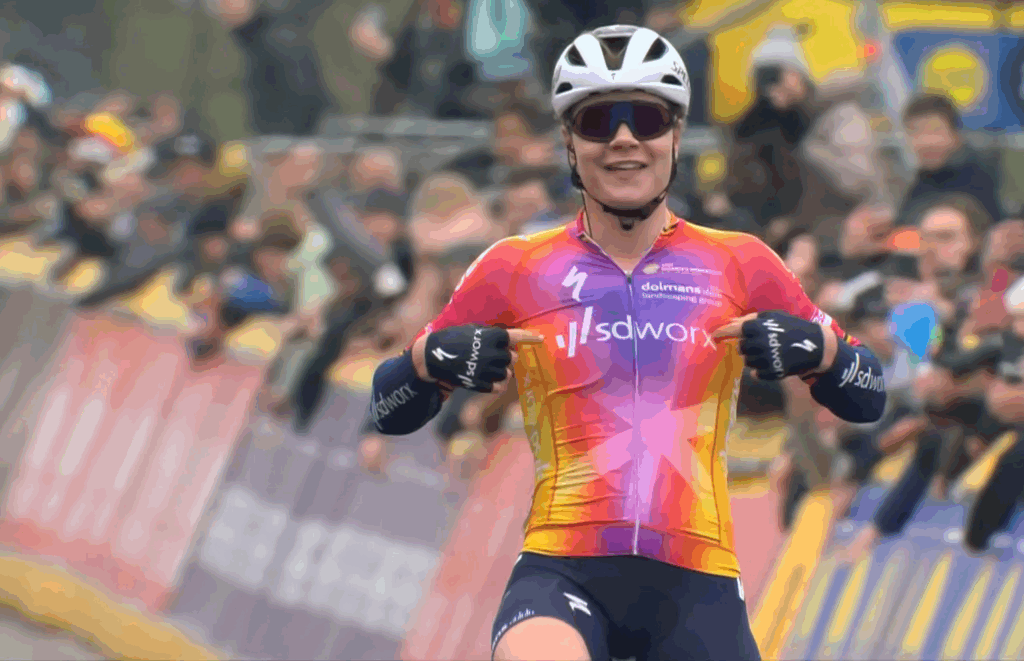

Former world champion Lotte Kopecky has spoken out about the persistent taboo she feels around menstruation in professional cycling, and she’s urging more open conversations about its effect on performance.
“I used to suffer from it a lot, too – my body retained a lot of fluid. If that comes back every month and coincides with an important goal, you have a problem,” the SD Worx leader said on the Café Koers podcast.
“You have to learn to understand your body. My advice is: don’t be afraid to ask for help.”
Kopecky explained that the taboo surrounding the topic makes it harder for cyclists to recognise and address how it impacts their performance.
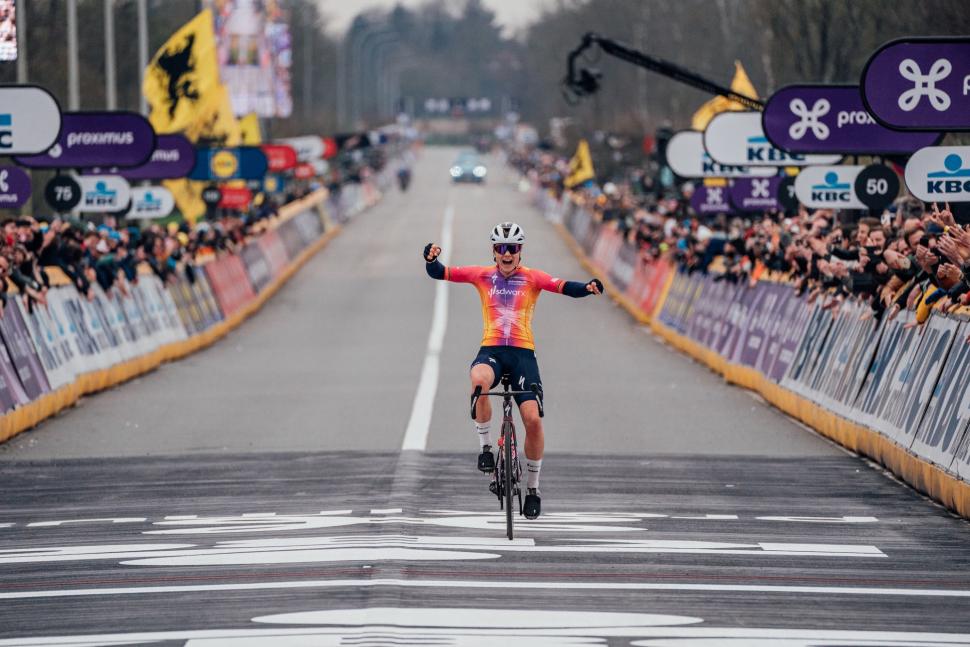
“Especially when the coach is male, there’s still some embarrassment around talking about it. But as a male coach, you have to immerse yourself in it if you train women. It shouldn’t be taboo. It’s part of the job.
“A lot of riders have testified this season that it brings more discomfort than the outside world realises.
“When you say that, people still often laugh it off. But many women have complaints during that period that can hinder performance.
“It shouldn’t be a taboo. It belongs in the sport”.
This discussion comes after EF Education-Oatly rider Veronica Ewers announced she will step away from elite cycling in 2026 to recover from RED-S, following a long battle with eating disorders.
RED-S, or relative energy deficiency in sport, is a condition caused by inadequate energy intake that affects hormone function, bone health and athletic performance.
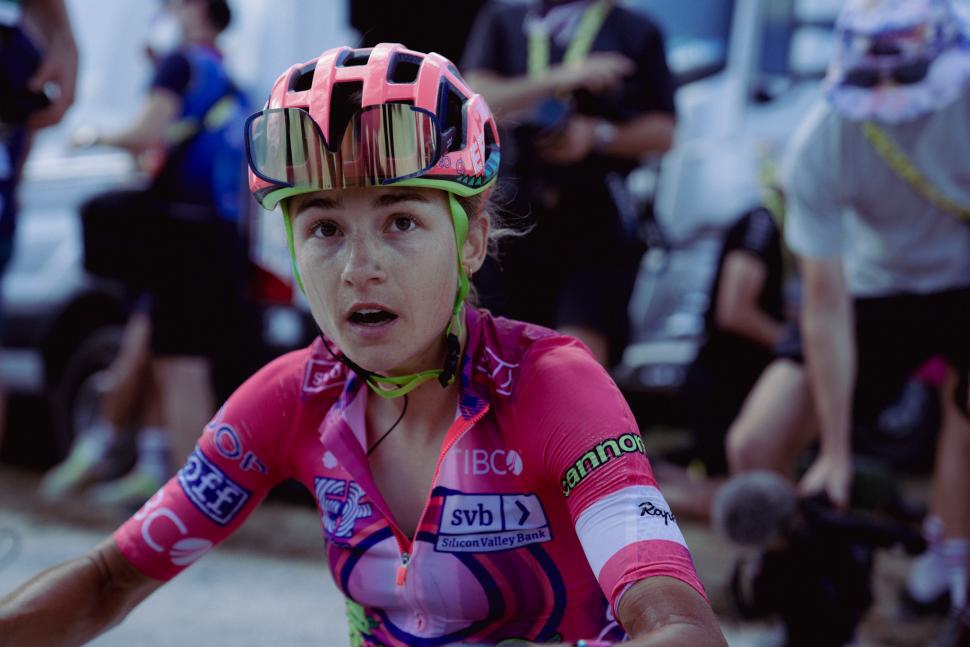
In the brutally honest blog post on her Substack, she wrote: “I’ve not had my period since 2014. My bones are weak. My gastrointestinal function is shit.”
“Trying to perform, which I physically couldn’t do until my hormones recover (stabilise), while trying to recover, which I couldn’t do until I stop trying to perform at the top level, was like beating my head against the wall.
“I sat down with my dietician to go over the results and was devastated. I was confronted with two options: keep doing what I’ve been doing or focus on full recovery and then performance.
There have been more open conversations surrounding menstruation in the sport recently. At the Tour de France Femmes this year, Kim Le Court revealed that she won a stage of cycling’s biggest race while on her period.
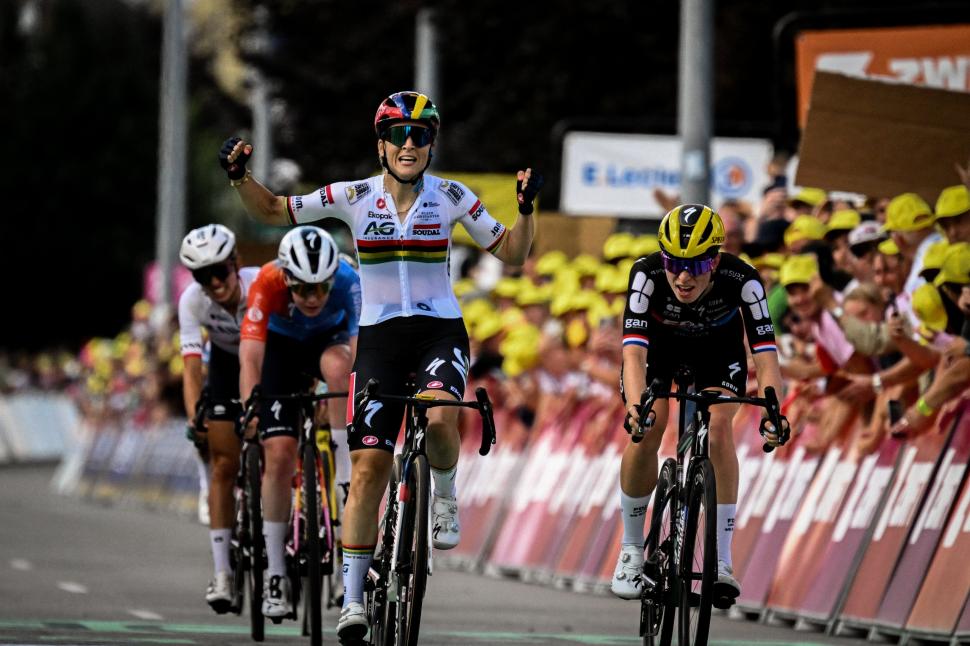
At the finish in Guéret she said: “It’s that time of the month for me, and my body is more tired than usual. That’s what we women have to go through.”
Dutch journalist and former pro Marijn de Vries has also noted changes in attitudes in the sport, explaining that when she was racing, “it was crucial that you didn’t menstruate.”
“You were so thin that it wouldn’t start,” she said. “Now it’s the opposite, and it’s encouraged.”
“They just want you to menstruate, because that’s a sign of health,” Le Court’s Belgian teammate Justine Ghekiere added. “We also have specific meetings about this topic with the team. It’s discussed openly.”


















6 thoughts on ““It shouldn’t be a taboo. It belongs in the sport”: Lotte Kopecky pushes to remove shame around menstruation in cycling”
Or maybe hire a female coach?
Or maybe hire a female coach?? Someone who understands, lived & experienced the menstruation process?
Its not like there is a shortage of ex-pro female athletes or coaches one can possibly hire.
RoubaixCube wrote:
It’s a good idea but definitely not a panacea; I have female friends who were quite traumatised by their experience as children/teenagers in swimming and gymnastics teams who said female coaches could actually be less sympathetic in a “I have to go through it too and I’m not moaning about it, pull yourself together” sort of way. But the right female coach, obviously, would be hugely beneficial in this area and there are plenty of other good reasons why cycling teams – not just female ones – would benefit from diversifying their staffs.
On first glance I read that
I went to watch some of the
I went to watch some of the women’s rugby world cup games this summer with my daughter (who plays rugby), and I was surprised that the England team chose to wear white shorts – in a lot of women’s sport, they wear dark shorts.
Apparently it was a team decision, to be open about the issue and at the same time not ‘different’ to the men’s team. Because – it’s entirely natural.
Remember that men’s sport has had plenty of idiotic belief systems and attitudes as it evolves. So it’s positive that women’s cycling is being up front about this.
It’s high time some of us
It’s high time some of us understood that coaching is much more than improving performance. In fact, I believe the physiological ceiling is more or less the same for most athletes and most of them are very near it.
What really matters is everything around sport: comfort, respect, trust, but also a reasonable racing schedule or sport-commerce balance. As a non-athlete (which could mean I am terribly wrong) I believe it is especially here that greatest progress can be made.
For that we need more than just excellence in understanding human physiology. We need educated, but also empathetic, acommodating and simply good (no matter how cheesy and outdated it sounds) people. Once you start with choosing the right people for the whole process (not just for the athletic component), they will WANT to know more about menstruation as it it a natural part of the athlete’s wellbeing. And with that kind of attitude they will just be hardwired to learn how to accomodate the needs of their athletes better without being told specifically what to focus on – they will just know, because the athletes will tell them.
The same applies to good bosses, good parents, good spouses. Simple, though not easy at all.
Although athletes may be at
Although athletes may be at their ceilings, it is also important that coaches understand that male and female athletes respond differently to coaching (I only learnt this after reading an account of the experiences of a man who coached the British women’s hockey squad).
Men generally will be less cautious with regard to changes in training regime. For example if it is suggested to a group that sprinting uphill carrying a haversack of bricks, will lead to great improvements, the mens’ response will be “Great, when do we start?”. The women on the other hand would need to understand more about the benefits and any downsides, before accepting the proposal.
When players were being dropped from the squad, the women players wanted involvement in breaking the news to those deselected; as a result the deselected players were more likely to stay involved in squad practice to assist the preparation of others.
While this is a generalisation and there will be exceptions, I thought it was fascinating and if a coach understands this then it can only help to make sport more enjoyable for all.