



Is the cycling industry doing enough to promote sustainability and prioritise climate action? Most industry representatives believe so, but consumers aren’t so sure, a new report assessing climate action progress within cycling has found.
According to the report, published this week by the not-for-profit Shift Cycling Culture group, 62 per cent of industry representatives who took part in the organisation’s survey said that they were either positive or very positive about their sustainability practices. In contrast, only 23 per cent of consumers said the same about the cycling industry.
The Climate Action Pulse Check 2025 is the second edition of Shift Cycling Culture’s annual global survey, which tracks how the cycling industry is progressing on its climate commitments and strategies and how these efforts are perceived by cyclists and customers at home.
Shift Cycling Culture says their survey gives companies the chance to learn from their peers and identify “opportunities for collective action”, while providing a way for cyclists to share with the industry the priorities that matter most to them.
This year, 111 industry representatives from 106 organisations, across 21 countries, participated in the survey, alongside 206 cyclists from 17 nations, with every company who took part receiving a personalised “benchmark report” to assess how their progress compares to other brands.
The 2025 survey was also, for the first time, available in both English and Mandarin, enabling the group to engage with more participants from cycling’s all-important Asian market, accounting for a third of all respondents.
Shift Cycling Culture says its ‘Pulse Check’, by highlighting several case studies from across the industry, including Frog Bikes, demonstrates how climate action is currently driving innovation in the cycling industry and is being integrated into day-to-day operations and enabling collaboration.
“While it’s too early to define long-term trends, the report highlights some key shifts and interesting insights into some contrasts between industry action and consumer expectations,” the group said.
According to the report’s key findings, 75 per cent of the industry representatives surveyed say their company is taking a “strategic approach to climate action”, while 85 per cent report that reducing climate impacts is part of their product design and development.
Over a third of companies have conducted at least one Life Cycle Assessment, which the group says “reflects a shift from isolated initiatives to integrating sustainability into core business practices”.

Cycling companies, the report found, are increasingly putting climate strategies in place, disclosing emissions data, and embedding climate considerations into product design and employee training. Meanwhile, a growing number of companies now rank climate action as a high or medium priority, “reflecting broader recognition of its importance”.
According to the report, the industry expects climate action over the next five to ten years to be driven less by innovative breakthroughs and more by scaling proven solutions, such as engaging the supply chain, circular design, recycled materials, supply chain decarbonisation, and regulatory accountability.
Industry representatives also report that cutting emissions, regulatory compliance, and new product innovation have proved the top three benefits of their climate efforts, while the main challenges to advancing climate action are project costs, budget constraints, and limited awareness and knowledge within organisations.
> How green is your carbon bike? And why your next one could be made from recycled carbon fibre
And while more and more brands are beginning to prioritise sustainability, the report also found that, at the same time, fewer companies consider climate action their “top priority” (only 20 per cent, according to the survey), with leadership-level support even slightly declining over the past year.
That perhaps suggests why there is such a chasm between the optimism of the industry and that of their consumers when it comes to climate action, with the report noting that cyclists believe that the industry’s leadership lacks transparency, and fails to engage in responsible marketing and collective actions.
12 per cent of the cycling consumers surveyed also believe that climate action is “not important” to cycling brands, while 16 per cent think the issue is “very important” to those in the industry.
70 per cent of consumers report that they have switched brands due to sustainability concerns. These consumers called for longer-lasting, repairable, and compatible products, standardised parts, and circular design to reduce waste.
As part of a selection of responses highlighted in the report, consumers also called for greater transparency and communication by brands, for professional cyclists and the UCI to use their platform to promote sustainability, and for brands to “take responsibility for what happens to a product at the end of its life”.
“Create more durable products,” one consumer said. “Let’s stop glorifying the thinnest and lightest, and start championing the longevity of a product.”
“If the product itself cannot be totally ‘0’ impact, focus on longevity,” said another. “That also means stopping mindless one year product cycles, creating new ‘standards’ constantly, and actually making products repairable. As well as making these spare parts available and affordable.
“The focus in the bike industry seems to remain focused on selling new bikes, how about offering customers an upgrade package for parts at a later stage?”
Nevertheless, despite the differences in general outlook between consumers and the industry, the report noted that both groups recognise that technology and policy alone will not be enough to combat climate change.
Instead, promoting cultural and behavioural change across the cycling world, with a focus on collaboration, is viewed as equally important in the struggle to “catalyse climate action”.










19 thoughts on ““Let’s stop glorifying the thinnest and lightest, and start championing longevity”: Is the cycling industry doing enough on climate action?”
What I don’t understand is
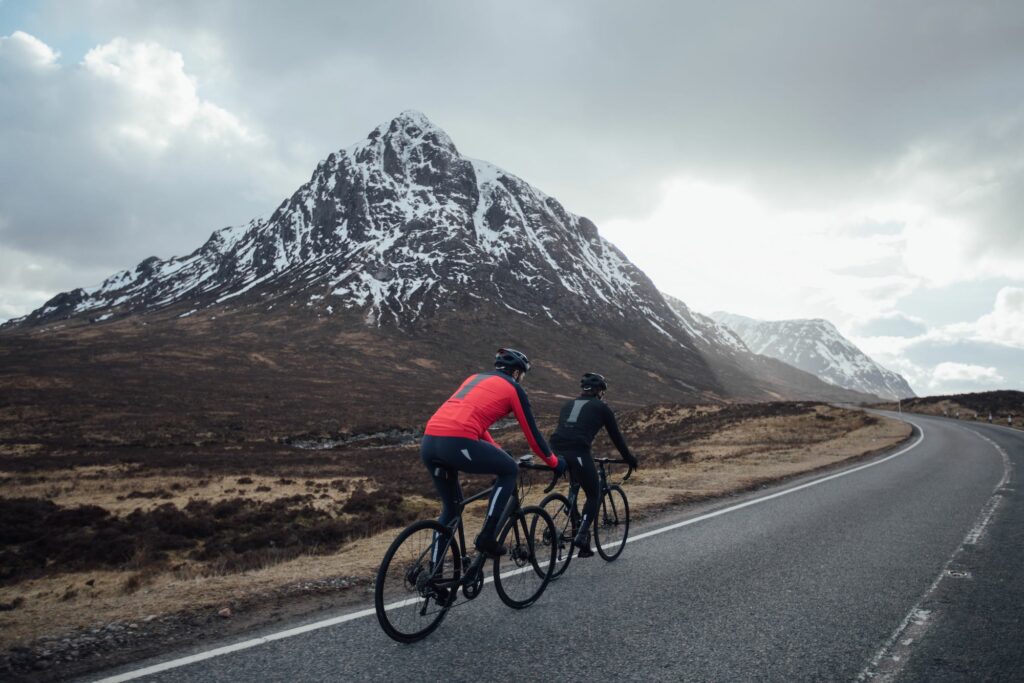
What I don’t understand is how longevity and cycling along the A82 past Buachaille Etive Mòr are linked.
Perhaps it’s intentionally ironic.
Anonymousattorney wrote:
scottish people are notoriously/stereotypically thrifty/stingy, no?
But longevity cripples sales,
But longevity cripples sales, so it will never be a major market-wide value.
I could actually end here, but…
I love it how people complain that home appliances are shit nowadays and you can’t even buy a washing machine which lasts 10 years like you used to. But then the statistical buyer goes to their shop of choice and looks for the cheapest option meeting their bare minimum requirements, not for the long-term cost of use (including the cost of buying another one sooner than if they’d got a better one in the first place).
Sure, we all have limited budgets, but retail customers are not exactly known for their far-sightedness.
BTW solid and reliable bikes do exist, it’s just that on average WE choose fancy Treks over everlasting Surlies. The disparity between declaration and purchase decision is just as wide as it was predictable before the study even began.
tomlew wrote:
A fair point other than that even a “fancy Trek” or similar can generally be used and looked after in a fashion that allows it to be used for a very long time. I have two in the house, one of 15 years age and another of 13 years age. I expect them to last as long again (probably longer than me).
Whilst stuff with built-in (planned) obsolescence is commonplace and to be avoided where possible, it’s not necessarily the low price of such stuff that seduces the average consumer to buy anew but the fashion cycle. Many cyclists in the UK and US are utterly infested with a need to have the latest thing, despite already having a list of latest-things still perfectly functional – except as an emblem of their fashion-status to all the other fashionistas.
The term “bike-frockers” is appropriate. Their bike is primarily the latest frock to promenade in, with the business of using it to keep fit or enjoy the riding somewhat secondary.
Websites like this one exist primarily to encourage the frockers, as this is what keeps the turnover high enough to support the bicycle industry churn and hence all of its supporting advertising apparatus.
Cugel wrote:
Well, first of all i used the name Trek as a generic term for modern bikes, not specifically to refer to that brand. I thought it was obvious but it turns out to have been a miscommunication on my part, sorry.
Other than that: statistically they won’t last as long.
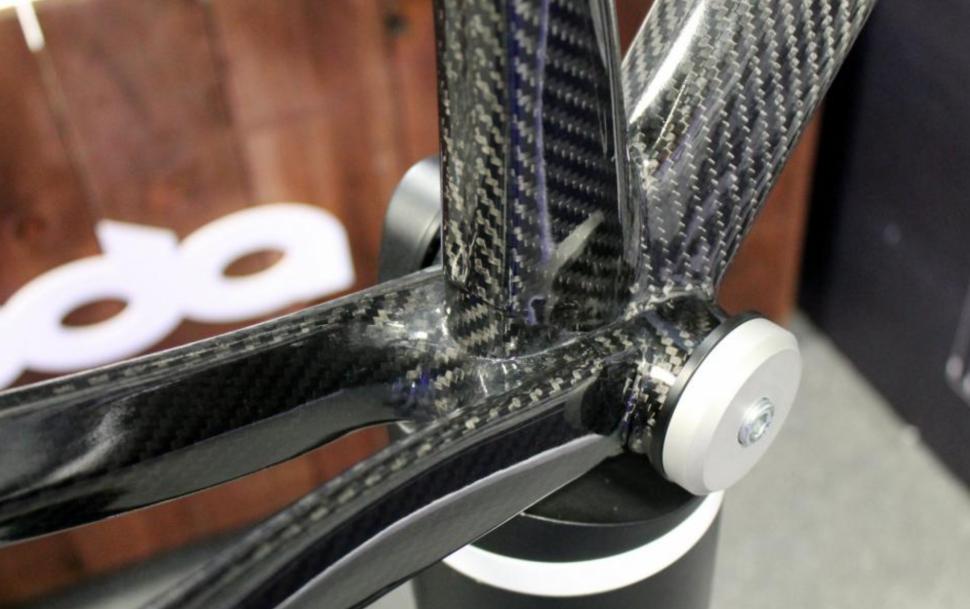
Not only carbon composites are much more fragile (both in crashes and everyday accidents), they are also more challenging to repair. A single accidental hit on a carbon frame may effectively destroy it, while a metal frame would only get a scratch or dent.
Also numerous carbon bikes are intentionally equipped with proprietary parts, many of which have been discontinued. Which in practical terms means that a simple component (say, a seatpost clamp in many modern bikes) could render the whole bicycle useless.
tomlew wrote:
Well, first of all i used the name Trek as a generic term for modern bikes, not specifically to refer to that brand. I thought it was obvious but it turns out to have been a miscommunication on my part, sorry.
Other than that: statistically they won’t last as long.
Not only carbon composites are much more fragile (both in crashes and everyday accidents), they are also more challenging to repair. A single accidental hit on a carbon frame may effectively destroy it, while a metal frame would only get a scratch or dent.
Also numerous carbon bikes are intentionally equipped with proprietary parts, many of which have been discontinued. Which in practical terms means that a simple component (say, a seatpost clamp in many modern bikes) could render the whole bicycle useless.— Cugel
Carbon frames can, in fact, be more easily and cheaply repaired than steel frames. There is, though, a dearth of carbon repair providers. What there are can mend a cracked or otherwise damaged frame eaily and quickly whereas a steel mend will usually cost a lot because of the need for some disassembly to mend; and will need a full or substantial respray as a result.
There is an issue with proprietary parts. This applies to all kinds of modern bike frames, carbon, steel, aluminium or even wood. But not every modern bike suffers the syndrome of one-off parts for which spares soon disappear. It’s also a wise move to buy such a bike inclusive of some spares, such as a one-off gear hanger or bearing.
tomlew wrote:
Buying the more expensive model doesn’t necessarily guarantee longevity, though. Often you’re just paying more for ‘features’ you don’t really need (internet-connected fridge, anyone?) which is just more stuff to break sooner.
mdavidford wrote:
True, a high price does not guarantee high quality. But a low price almost does guarantee low quality. I get your point, but there’s also an intermediate solution, which is to think hard about your actual needs and do independent research into the products.
Couldn’t agree more here!
mdavidford wrote:
I look forward to road.cc’s review of whatever bike has this feature!
Pros: Internet connectivity,
Pros: Internet connectivity, fridge keeps drink bottles cool.
Cons: Heavier than other endurance bikes, requires long extension cord which is not included.
Aluminium can wrote:
You mean you’re not running it off a dynamo?
Pro cycling has a long way to
Pro cycling has a long way to go in terms of cutting its emissions (carbon, flights, convoys, fans travel,etc) – whilst commuting on a 20 year old steel bike is probably the best counterpoint to the climate emergency (after simply walking).
Therefore half the worlds cyclists are subsidising the other half in the climate trade off – the N+1’s vs the N-1’s.
N-1 gravel bikes are now arguably the most versatile quiver killers, therefore the most environmentally sustainable, especially if they’re made of durable and recyclable steel, aluminium or titanium. …But that only works if we all stop buying carbon, buy a metal bike and then overall bike consumption drops, which is the antithesis of profit making industry ethos.
This impasse looks difficult to navigate, especially against the overarching anti-cycling climate emergency denialists lobby!
The simple reality is however that the hotter it gets the less cycling will happen (including pro tours) – and the less bikes will be sold anyway.
The UCI could mandate that all pro cycling must be on metal / fully recyclable bikes, etc. …Why not?
Selling less bikes now might actually equate to more cycling in the future. …Not for profit models are the more interesting answer.
> The UCI could mandate that
> The UCI could mandate that all pro cycling must be on metal / fully recyclable bikes, etc. …Why not?
+1 to this. There are numerous good reasons for this. Only problem is the bike manufacturers will lobby heavily against it, and they’ll rally up a very vocal group of commentators going “The UCI just want to hold back innovation!!!”. Sigh.
The best way for the industry
The best way for the industry to fight climate change is to produce budget priced, reliable commuter bikes with parts that won’t wear out quickly and need replacing. I quite often see students riding 50 year old bikes that have been handed down to them. That’s what’s needed now.
Even climate sceptics
Even climate sceptics recognise the benefits of making things last and avoiding expensive disposable kit.
My Dawes Super Galaxy is 39 years old,and part of the reason I bought an Enigma Echelon nearly 4 years ago was that titanium lasts.
However,both were expensive when purchased.
Good steel bikes are a better mass option.
Amen to all this.
Amen to all this. The industry can only stay afloat if it creates churn, like the rest of capitalism. But we have a choice in what we buy, from who, why, etc.
And we have a choice in how we use it – buy any bike and use it well and you’re doing mnore than buying one that saved 10% of its CO2 impact (though doing both is oc best).
I mean, among the talk of more sustainable products and 30 year old Dawes Galaxies that have sugh good long-term value, one flight to Majorca (etc) for that ‘training camp’ holiday or a ‘low-impact bike tour’ somewhere far away has way more impact and CO2 cost. Even a couple of drives up to a Scottish trail centre from a base in the south has more impact than a bike’s manufacturing. If we want to be sustainable we need to look beyond the product and look at how we use them.
Bikes are great things for travelling with minimal impact, add a train or coach for more range.
Every carbon fibre bike built
Every carbon fibre bike built and sold is a kick in the environmental teeth, and a precursor to landfill. Steel aluminium etc can at worst be melted down and recycled. CF can not, it’s a petroleum byproduct that will fill landfill for centuries
Bigfoz wrote:
Well…https://road.cc/content/feature/will-your-next-bike-be-made-recycled-carbon-306481
Surely it’s just in how your
Surely it’s just in how your carbon is served? I like mine cask-aged…
(That’s a Renovo – clearly not made from off-cuts for maximum sustainability…)