Please note that our live blog can sometimes be slow to load; you may need to refresh your browser.
Help us to bring you the best cycling content
If you’ve enjoyed this article, then please consider subscribing to road.cc from as little as £2.49. Our mission is to bring you all the news that’s relevant to you as a cyclist, independent reviews, impartial buying advice and more. Your subscription will help us to do more.
Simon joined road.cc as news editor in 2009 and is now the site’s community editor, acting as a link between the team producing the content and our readers. A law and languages graduate, published translator and former retail analyst, he has reported on issues as diverse as cycling-related court cases, anti-doping investigations, the latest developments in the bike industry and the sport’s biggest races. Now back in London full-time after 15 years living in Oxford and Cambridge, he loves cycling along the Thames but misses having his former riding buddy, Elodie the miniature schnauzer, in the basket in front of him.
5 Comments
5 thoughts on “Live blog: Michael Woods dedicates Vuelta stage win to stillborn son, law firm says cycle safety review means more cash for infrastructure + more”
What a great idea from
What a great idea from Edinburgh Council. Built a new velodrome in Craigmillar. You’ll cycle there, have your bike nicked by the local neds and then have to get a new one, which will then be nicked by the local neds. And so on.
Edinburghhas planety of parks. Why build the centre in a place a lot of people won’t want to go? Err, just because it’s cheapest?
What a great idea from Edinburgh Council. Built a new velodrome in Craigmillar. You’ll cycle there, have your bike nicked by the local neds and then have to get a new one, which will then be nicked by the local neds. And so on.
Edinburghhas planety of parks. Why build the centre in a place a lot of people won’t want to go? Err, just because it’s cheapest?
— OldRidgeback
Because it could also be a catalyst for the area’s regeneration. This in itself is good, but from the councils perspective, it may also open up grant funding opportunities (although thanks to Brexit, the EU related regeneration/depreived area grant schemes are no longer going to be available).
If new stuff only ever gets build in ‘OK/good/low problem’ areas, inequality widens which in time results in more crime and other social issues.
Hmm: Crack down on those dangerous cyclists vs Throw money at those car tax dodging bl00dy cyclists… I suspect that the Govt would prefer to be seen to be cracking down rather than building infrastructure.
The output of the Government’s review is therefore more likely to focus on the bigger issue – increasing the segregation of cyclists and motorists on the road by promising further funding for cycling infrastructure.
How charmingly naive! Or cynical: yes, the Government may “promise further funding” but the chances of this being delivered, and particularly this actually resulting in additional high-quality infrastructure rather than just more of the existing crap, is very low.
While I’m fully in favour of optimism, I’m afraid “Leading law firm DAC Beachcrofts” suggestion that we’ll be getting better infrastructure is unlikely, and experience says otherwise, but I suppose they only say that the government will promise more infra, not actually deliver it. Still, the proof of the pudding etc, and we could end up with cycling strategy worth the title rather than the almost useless CWIS.
I really hope I’m wrong and they are right, but remembering what started this review of cycling safety, the Alliston case, and all the previous failures, my optimism is tempered with huge slices of reality.
I was a few bikes away from the fatal collision during Ride London a few years ago, I barely avoided the victim's dog which was running loose. Definitely one of those slo-mo adrenaline fuelled moments and I was only doing about 40kph. At lead out speeds it really doesn't bear thinking about.
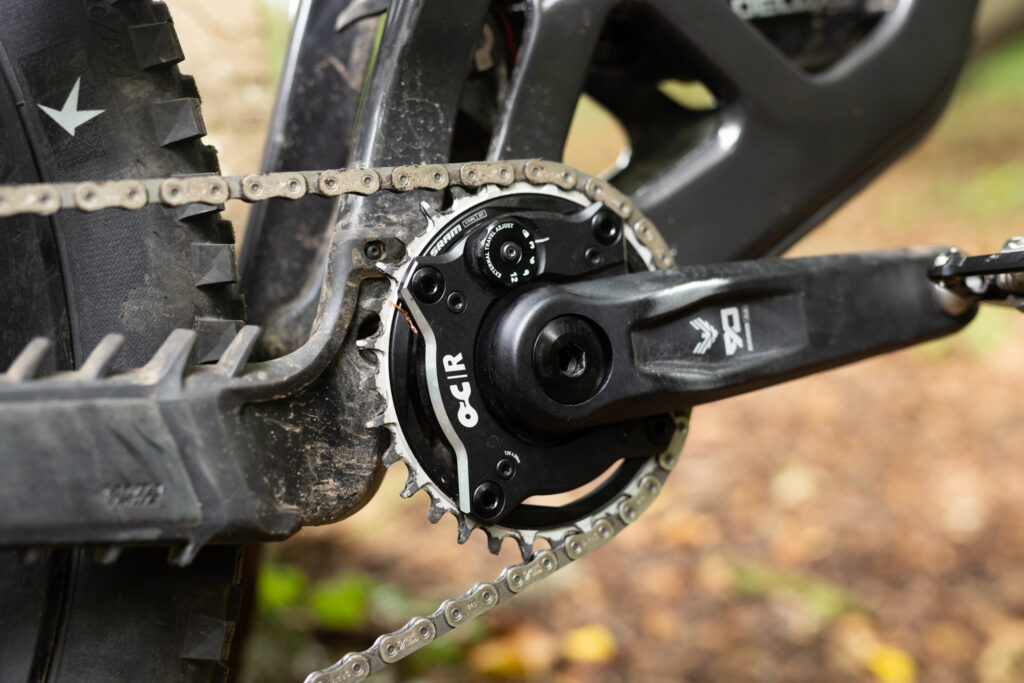
@Xenophon2 "That’s a lot of batteries to keep track of, to the point that I have a dedicated charger with 3 m USB-C cable in my office, another one at home. Can’t imagine having to deal with another battery such as on the Flight Attendant."
Top tip: In reality most of the SRAM stuff lasts a month or two even with pretty heavy usage. I just charge all the batteries on the last Sunday of every month and have yet to be caught out. The SRAM batteries are so cheap / small / light it's also worth keeping a spare in a saddle bag or similar.
@chrisonabike
There does seem to be evidence that 20 mph limits work on roads that already lend themselves to such low speeds, and I do think the lack of a 25 mph limit option is an issue for some roads.
Speed limits should especially not be set very low in the hope that many or most drivers will only exceed them by a set amount because, not only is it not true that many people drive like that, the opposite can happen. Instead of targeting the drivers most likely to cause harm, you're putting the prohibition onto the behaviour of more sensible drivers and forcing the police to target them. The DfT guidance used to have a paragraph calling out this presumption.
The extent to which road design and conditions at the time dictate traffic speeds is too stark to ignore. I've seen urban roads with signed 40 mph limits have lower average speeds than some roads with posted 20 mph limits. And yes, that road in Gloucester has signs openly inviting drivers to go faster, and almost none of them do: the non-compliance was about 2%. Compare that to over 99% non-compliance on some roads in Wales.
What I'm mainly talking about is the increasing imposition of 20 mph limits on much higher-standard main roads. That's where you see extreme levels of non-compliance. In some cases, the average speed has even been known to go up after the limit has gone down. Showing such contempt just brings speed limits into disrepute and my contention is that drivers should take speed limits seriously.
@chrisonabike
There does seem to be evidence that 20 mph limits work on roads that already lend themselves to such low speeds, and I do think the lack of a 25 mph limit option is an issue for some roads.
Speed limits should especially not be set very low in the hope that many or most drivers will only exceed them by a set amount because, not only is it not true that many people drive like that, the opposite can happen. Instead of targeting the drivers most likely to cause harm, you're putting the prohibition onto the behaviour of more sensible drivers and forcing the police to target them. The DfT guidance used to have a paragraph calling out this presumption.
The extent to which road design and conditions at the time dictate traffic speeds is too stark to ignore. I've seen urban roads with signed 40 mph limits have lower average speeds than some roads with posted 20 mph limits. And yes, that road in Gloucester has signs openly inviting drivers to go faster, and almost none of them do: the non-compliance was about 2%. Compare that to over 99% non-compliance on some roads in Wales. So no, when speed limits match the road, compliance is much higher, but speeds are not.
What I'm mainly talking about is the increasing imposition of 20 mph limits on much higher-standard main roads. That's where you see extreme levels of non-compliance. In some cases, the average speed has even been known to go up after the limit has gone down. Showing such contempt just brings speed limits into disrepute and my contention is that drivers should take speed limits seriously.
@jaymack Yes...to an extent, and I'm happy at the moment with my twelve-year-old Dura Ace mechanical, but I must admit when I had Ultegra Di2 I did notice not so much the ease of shifting but the perfect trimming of the gears after every shift so that the chainline was always absolutely perfect and that did enhance the simple pleasure of being outside, for me anyway. At least until that day I forgot to charge the battery which died at the turnaround on an eighty-mile ride and had to ride a very lumpy forty miles home stuck in 50x14...
@Daclu Trelub Well no, given that I object to the use of derogatory slurs against people with mental health issues I think I'll "bother" the person who's using derogatory slurs against people with mental health issues.
Have a little think, if capable: if your mother or someone else close to you had dementia or mental health issues, would you be happy for people to be pointing at them mockingly saying, "Looks like she's a few chips short of a fish supper"? Stop it.












5 thoughts on “Live blog: Michael Woods dedicates Vuelta stage win to stillborn son, law firm says cycle safety review means more cash for infrastructure + more”
What a great idea from
What a great idea from Edinburgh Council. Built a new velodrome in Craigmillar. You’ll cycle there, have your bike nicked by the local neds and then have to get a new one, which will then be nicked by the local neds. And so on.
Edinburghhas planety of parks. Why build the centre in a place a lot of people won’t want to go? Err, just because it’s cheapest?
OldRidgeback wrote:
Because it could also be a catalyst for the area’s regeneration. This in itself is good, but from the councils perspective, it may also open up grant funding opportunities (although thanks to Brexit, the EU related regeneration/depreived area grant schemes are no longer going to be available).
If new stuff only ever gets build in ‘OK/good/low problem’ areas, inequality widens which in time results in more crime and other social issues.
Hmm: Crack down on those
Hmm: Crack down on those dangerous cyclists vs Throw money at those car tax dodging bl00dy cyclists… I suspect that the Govt would prefer to be seen to be cracking down rather than building infrastructure.
Quote:
How charmingly naive! Or cynical: yes, the Government may “promise further funding” but the chances of this being delivered, and particularly this actually resulting in additional high-quality infrastructure rather than just more of the existing crap, is very low.
While I’m fully in favour of
While I’m fully in favour of optimism, I’m afraid “Leading law firm DAC Beachcrofts” suggestion that we’ll be getting better infrastructure is unlikely, and experience says otherwise, but I suppose they only say that the government will promise more infra, not actually deliver it. Still, the proof of the pudding etc, and we could end up with cycling strategy worth the title rather than the almost useless CWIS.
I really hope I’m wrong and they are right, but remembering what started this review of cycling safety, the Alliston case, and all the previous failures, my optimism is tempered with huge slices of reality.