


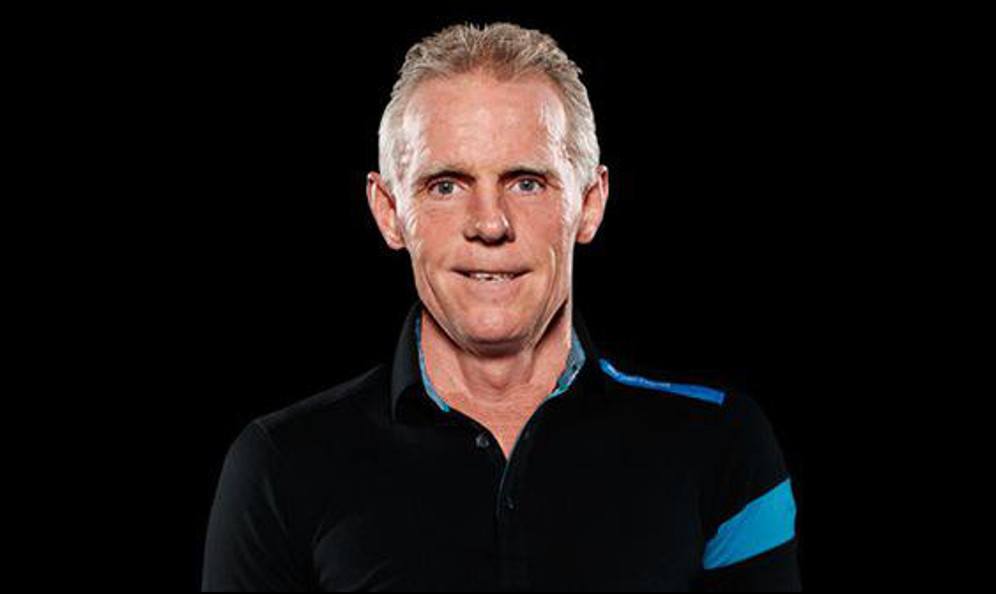

Disgraced former technical director at British Cycling Shane Sutton has said he is ‘still loved’ by the organisation’s staff, despite leaving amidst bullying and discrimination allegations last year.
Back at the National Cycling Centre in Manchester in his new role as head coach of China for the Track Cycling World Cup, Sutton has said he had an ‘overwhelming reception’ from former colleagues.
“That’s been a bit tough to take because it brings all the memories back,” the 60-year-old told BBC Sport.
“People criticise me from a distance but when you get down here into the nitty gritty of the day to day I was pretty much loved by the staff, I’ve treated them well and that’s shown in the reception I’ve had.
“It’s nice to hear them saying you’re being missed.”
An internal investigation following complaints from cyclist Jess Varnish found that he used sexist language towards her – the word “bitches”.
Asked about the “bitches” comment, Sutton said: “People don’t know the circumstances where I used that comment.
“It was used as a general comment – a couple of people playing up on the day. That’s not actually going up to an athlete and saying you are a ‘whatever’. That wasn’t the case. I think people need to know that.
“At the end of the day I can sleep of a night. I’ve got no problem with it all.”
He was cleared of other charges, but Varnish is now suing British Cycling and UK Sport.
Sutton said: “I think it’s just someone trying to keep a profile.
“There’s a very small athletic profile there so if you can get yourself in the media: fantastic.
“But for me it’s all done and dusted and I just wish British Cycling all the best going forward, because the majority of them don’t forget I brought them here.”
Yesterday we reported how the Digital, Culture, Media & Sport (DCMS) select committee is to question sports minister Tracey Crouch over what it perceives as ‘intimidation tactics’ towards Jessica Varnish. The matter relates to her case against British Cycling and UK Sport in which she is alleging sex discrimination and unfair dismissal.
If Varnish’s case is successful, it is likely to have major implications for all UK Sport-funded athletes. She argues that athletes should legally be classed as employees, which would among other things mean the agency was obliged to start paying pension and national insurance costs.




















20 thoughts on “Shane Sutton says he is still “loved by the staff” at British Cycling”
Sutton: “staff love me!”
Sutton: “staff love me!”
Bitches, gimps and wobblies: “errr….”
Interesting how he only
Interesting how he only remembers Jess speaking up, yet as I remember it, a good number of riders sided with Jess on this one. BC and Sutton were given some specific points of constructive critisism, and seem to have ignored them all. A bit of a wasted opportunitiy for Sutton and BC.
I wonder what ”motivational” Chinese words he uses to encourage the Chinese riders nwo … he’s probabaly safer coaching a team who doesnt speak the same language he does.
SNS1938 wrote:
What is a “good number”, how many out of the total people involved have backed her up/sided with her as a %, 90, 75, 50, 30% … less?
Your point seems to suggest a majority/large number, do you have some actual facts to back that up as to who is siding with whom just for accuracy.
SNS1938 wrote:
Well that was precisely the flaw of the BC disciplinary hearing … only speak to the ones that had some kind of ‘issue’ with Shane Sutton, while ignoring the majority who didn’t. This in life is known as a ‘lack of balance’.
And – I can’t quite remember – wasn’t the guy dismissed one just one count of ‘sexist behaviour’, while the other nine ‘charges’ were unfounded? Hardly ‘disgraced’ as this bunch of Libtard social justice warriors who write Road.CC like to claim.
Valbrona wrote:
Well that was precisely the flaw of the BC disciplinary hearing … only speak to the ones that had some kind of ‘issue’ with Shane Sutton, while ignoring the majority who didn’t. This in life is known as a ‘lack of balance’.
And – I can’t quite remember – wasn’t the guy dismissed one just one count of ‘sexist behaviour’, while the other nine ‘charges’ were unfounded? Hardly ‘disgraced’ as this bunch of Libtard social justice warriors who write Road.CC like to claim.— SNS1938
More drivel; the draft report called it as it is. The final report is what has forced Varnish to go legal; a whitewash supported solely by BC sycophants!
Now joined my select list of
Now joined my select list of people who you’d just wish would shut the frack up.
I’m on the ex coaches side.
I’m on the ex coaches side. Truth is Varnish wasn’t up to the mark. Hence sour grapes and raking muck up on her part.
Shane has done a great job for British Cycling. Hard choices have to be made to get a winning team. All this PC correctness has gone way too OTT.
Jimnm wrote:
If only you’d release the data and put a lid on this whole thing – why are you making us all suffer like this?
Jimnm wrote:
At the root of this isn’t a dislike of being shouted at by coaches: it’s the lack of a management structure whereby the wrong decision, or an inadequate explanation of a decision, is just expected to be accepted, and a culture of coaches ruling by fear has been tolerated.
It reminds me of the recent sexual harassment claims in parliament. Fallon’s resignation said things that were acceptable 10 or 15 years ago are no longer acceptable. Spectacular missing of the point: they weren’t acceptable then – there just wasn’t the culture of calling that unacceptable behaviour out like there is today.
The failing is all BC’s.
Shane did a great job for
Shane did a great job for British Cycling maybe he was too tough for a few but in pro sport there is no room for also rans.
Our loss is China’s gain the new CEO seems to be falling over herself to set BC up for a claim from Varnish if she does permit a bundle of cash to be handed over I shall be cancelling my membership I do NOT pay out my hard earned money to had it over to snowflakes I want it to go to an organisation that wants to produce winners.
WashoutWheeler wrote:
Keep banging that drum, mate. Somebody, somewhere, will give a fuck one day.
Rapha Nadal wrote:
Milksops gotta love em.
WashoutWheeler wrote:
Maybe your work environment is one where you get dropped or passed over for career-making opportunities, and management never have to explain why.
Maybe you can get discriminated against, or management can insult you, without any comeback.
That would seem like a good fit. But the rest of the country has moved on, and most of Varnish et al’s generation expect a bit more from management these days – as does the law. If you don’t like that, by all means continue to piss into the wind, but don’t be surprised when you get wet, and smell a bit pissy.
davel wrote:
Keep banging that drum, mate. Somebody, somewhere, will give a fuck one day.
— WashoutWheeler Milksops gotta love em.— Rapha Nadal Maybe your work environment is one where you get dropped or passed over for career-making opportunities, and management never have to explain why. Maybe you can get discriminated against, or management can insult you, without any comeback. That would seem like a good fit. But the rest of the country has moved on, and most of Varnish et al’s generation expect a bit more from management these days – as does the law. If you don’t like that, by all means continue to piss into the wind, but don’t be surprised when you get wet, and smell a bit pissy.— WashoutWheeler
Mostly agree, the ironic trouble is that when Westminster has yet to work within the law and is politically incorrect, that others lower down the food chain feel they can behave in a similar manner.
Funny how all the really
Funny how all the really successful ones have no bad words.
Yorkshire wallet wrote:
Really? What rock have you been living under? Perhaps you should have a chat with Victoria Pendleton.
… Nicole Cooke: she’s
… Nicole Cooke: she’s really successful, and is pretty much all bad words.
Shane Sutton is still loved
Shane Sutton is still loved by Shane Sutton, basically.
Funny how often in ‘women’s
Funny how often in ‘women’s sport’, when someone who doesn’t get picked for the team, they immediately pull the ‘sexist’ or ‘racist’ card or any other form of discrimination they can think of. It’s never, ever their fault or lack of perfomance.
Meanwhile, back at the ranch, blokes in sport hardly ever feel they’ve been discriminated against other than on their own performance.
How come?
I’m going to hazard a guess,
I’m going to hazard a guess, @Joeinpoole, that you’re a white male.
Well, you’re in luck. UK seaside towns are particularly deprived, and a subset of white males are the worst performing in education.
You could ask what Liam Phillips and Tre Whyte think of British Cycling. Ask Aaron Cook whether he now competes for Moldova because of a long-lost Grandma and a new-found respect for that country. Ask the males currently complaining about British Gymnastics whether they’re just getting in touch with their feminine side. Ask Zlatan Ibrahimovic what he thinks of Pep Guardiola. Ask David Beckham, Roy Keane and Jaap Stam whether Fergie booted them because of ‘their performance’ and how they just accepted it. Ask Don King’s boxers whether they got the fights or money they deserved and whether they just shrugged and carried on as it was the macho thing to do. Ask countless England (and beyond) football players who ‘retired from international football’ under a cloud because they couldn’t get another few games under the current manager, whether they just sucked it up, because ‘bloke’.
Or, next time you come out with something as monumentally thick as your post up there, you can just play the white seaside boy card. Convenient, eh?