


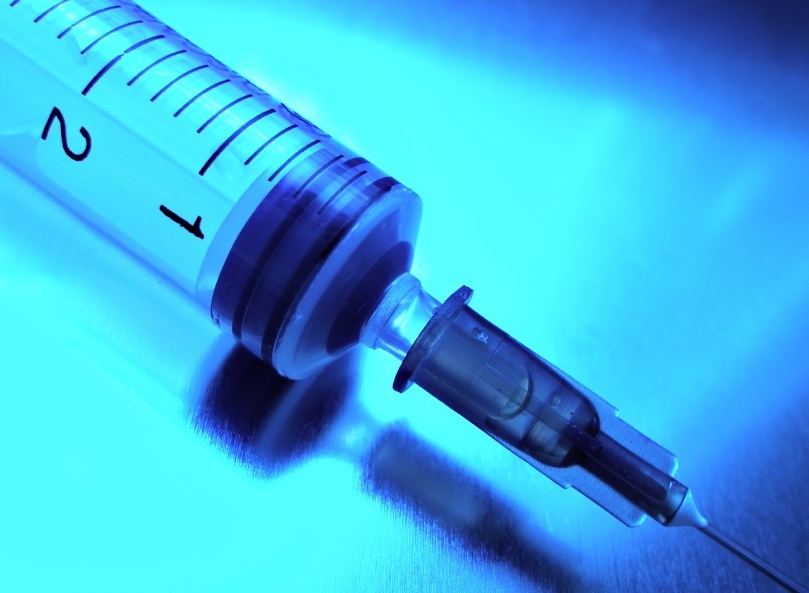

A study published today in The Lancet Haematology has found that EPO has “little effect” on the performance of amateur cyclists during road races.
Researchers from the Centre for Human Drug Research (CGDR) in Leiden, the Netherlands, undertook a double-blind, randomised trial involving 48 well-trained male amateur cyclists aged between 18 and 50.
They said that there was some improvement in performance among those who took EPO in high intensity tests laboratory conditions.
But in a laboratory time trial test and a road race staged as part of the research that finished on Mont Ventoux in June last year, “the performance enhancing effects were mostly undetectable.”
The three-month trial saw participants make 15 three-hour visits to the CHDR and take an eight-week course of EPO or a placebo, while continuing to train normally.
Amateur cyclists were used in the study because it would have been impossible to use professionals, given the fact they are subject to anti-doping rules, including testing.
The study’s authors say that their findings may reduce the incentives for athletes to use EPO.
Jules Heuberger, who led the study, commented: “The scientific evidence behind doping is relatively weak, partly because it is not possible to do trials of performance enhancing drugs in elite athletes who are subject to World Anti-Doping Agency regulations.
“Our study was designed to apply the gold standard of clinical trials to doping research, and we found that while rHuEPO increased performance in a laboratory setting on high intensity tests, the differences largely disappeared in endurance tests, and were undetectable in a real-world cycling race.
“While these findings also applied to the highest performing cyclists in our study, the question remains as to whether these findings can be applied to professional cyclists,” he added.



















20 thoughts on “EPO has “little effect” on performance of amateur cyclists in races”
Ho hum, that’s that out then.
Ho hum, that’s that out then. Back to the usual grind of training. Or, just focussing on 10 second sprint events….
Surely you take drugs to
Surely you take drugs to allow you to train harder and therefore get faster / stronger which makes this study pretty pointless?
“Amateur cyclists were used
“Amateur cyclists were used in the study because it would have been impossible to use professionals, given the fact they are subject to anti-doping rules, including testing.” – aren’t we amateurs too, if we race?
So Lance Armstrong really did
So Lance Armstrong really did win the TDF!
Give that man back his titles!
Yorkshire wallet wrote:
I’ve corrected your comment for Wikipedia.
Yorkshire wallet wrote:
Of course he did regardless of what he took he was leagues ahead of anybody before or since his 7 time wins.
SingleSpeed wrote:
He was certainly leagues ahead when it came to doping, blood transfusions, being a pathological liar and a sociopath who would happily ruin the reputation of anyone who questioned his performances.
I’m not a statistician (for
I’m not a statistician (for some things we should all be grateful), but…
If pro-cyclists are all trained to achieve their maximum capacity, then adding EPO to a few will generate improvement in comparison to the rest. You have a notional benchmark of all being trained to achieve the same because their livelihoods etc depend on it.
If you take a group of ‘fit’ amateurs and add EPO to a few and then take an average of the results, then the average ‘no difference’ could be accounted for by any number of variables, especially as the participants should be non-racers and therefore probably not operating at their physical limit (i.e. there is scope for improvement/decline due to other causes).
nniff wrote:
But the results aren’t compared across the whole of the group, they’re compared between the 2 groups, those who took, and those who didn’t.
If you read the study, the protocol seems sound, and actually the point of the study (as so often is the case with media reporting) was not to find if Epo works or not, it was to find if studies on Epo could be safely done in the sporting context. The primary point of the study was to see if there were negative effects on the particiapnts of the study to see if it can be studied in more depth in the future.
madcarew wrote:
That was part of the conclusion. The first part was that EPO had no effect, because although the EPO group had a 5% improvement in its LT power while the placebo group had none, “for an effect of doping to be relevant fro cyclists, in should have a clear effect on time trial or race perfromance. The absence of an effect of rHuEPO tratement on both a 45-min submaximal exercise test and a road race indicates that the effect is at best very small, and disappears in all other variability that is present in a road race.” This is because, a “the goal of using rHuEPO in professional sports is to improve performance during road races, no in maximal exercise tests”. Or an LT test, apparently. No, the way to test this is a one-off race up Ventoux with a 40kph wind, apparently drafting, where four study participants bugged out (with no stated effect on the baseline, which previously told us that the placebo group was 10W more powerful to begin with and lost 2kg during the period vs no loss for the EPO group). That’s going to give you real answer, according to the experiment engineers at ACME. Who also think it is proof enough to go on to state (in the news story, The Lancet does have some standards) “It’s just tragic to lose your career for something that doesn’t work, to lose seven yellow jerseys for a drug that has no effect.” Since they have apparently conclusively proven that a) EPO “has no effect”, and b) somehow also conclusively proven that Testosterone, HGH, Cortisone and so on “don’t work” either.
So yeah, all this study does is help support the argument that a) EPO works, B) The Lancet will publish almost anything as long as it supports its political views and commercial interests, where drugs are good (bar alcohol, obviously) and punishing people is always bad (except for Israelis, to hell with them).
Carton wrote:
We’re off on a tangent here, but I lived in Israel for 2 years, just 15 km from Gaza and went there regularly when I needed drugs (for animals…). What Israel does there may not technically be war crimes, but it is a crime against humanity, as is their treatement of palestinians generally. It is truly appalling. However, we digress. Loved your round up 🙂 I thought the race up Ventoux (couldn’t read the study, just the cover page) was pretty pointless as a test.
Yeah, amateurs might be
Yeah, amateurs might be subject to far higher levels of random variation in performance – essentially ‘noise’ – making it hard to find any ‘signal’ from the effect of EPO. With professionals already at maximum peformance, probably being far more consistent, it might not be the same. And isn’t this essentially what ‘marginal gains’ means?
I bet the effect is still
I bet the effect is still greater than aero computer mounts, watt-saving chain coatings, or electronic shifting, and there are people who’ll happily spend money on those.
I’m sure there’s a good joke
I’m sure there’s a good joke around C3eePO, but am buggered if I can figure it out…
Let’s be honest, nobody is
Let’s be honest, nobody is going to risk their career if it didn’t work.
drosco wrote:
Pro cyclists aren’t scientists and waste huge amount of money and effort ( and risk their careers ) on things that don’t work. Compression clothing, ice baths, xenon dosing, stretching, altitude tents, amphetamines, caffeine, paracetamol, tramadol, electrolyte tablets, sports drinks.
Some of these things have , at one time or another, been illegal in endurance sport. Not one of them has been shown in rigorous studies to make the first bit of difference, but all of them have been, and continue to be used.
Epo use, as an improved oxygen vector, has failed in multiple studies to show an improved endurance response. However, Epo use has shown in multiple studies to show an improved endurance response, so it doesn’t take a rocket scientist (perhaps a biologist) to realise that the improvements due to Epo aren’t through an increased oxygen vector modality (just wanted to use that word). Science of sport (.com) discusses this at depth, and actually the improvement due to Epo is probably due to improved recovery, enabling an athlete to do more intense sessions more frequently, hence adding a training advantage.
In this test as the athletes followed the same training program, it negated the most likely effect of the Epo.
Having said that, science is the sport of averages and always there will be responders, non-responders, and super responders. It would appear that the average response to Epo in this test was almost nil, but inevitably there will be some people for whom it works well, and probably some that it makes an enormous difference to, and some that it has a negating effect on. Myself, I’m a super responder to altitude training, Jesse Sargeant was a negative responder. YMMV
The more you train doesn’t
The more you train doesn’t your hematocrit go down and taking Epo keeps it up so you can train hard and race hard, especially beneficial if you are racing for 3 weeks and can get top ups?
And wasnt this reported on last year too? With the same race up mvt?
check12 wrote:
In very hard training / racing, yes, your Haemo values will decrease, and Epo may have a role in supporting them (that’s what it was developed for, in surgical cases).
The date of the trial was April 2016 so may have been reported on. Has simpy been published in Lancet now (premier level journal) so that is why it’s receiving some more attention
The study didn’t find that
The study didn’t find that “epo has little effect on the performance of ameteur cyclists in races” It found that the effect of epo use had indiscernible ‘adverse events’ in study participants so seems to be safe for further study. The study didn’t try to establish whether or not epo improved racing ability. It did find that it was associated with increased maximum power output over the training period, but not with submaximal power or race results in a particular race. If simple max power output and VO2 max (also higher in the epo group) were predictors of race results we would be able to simply take the erg and lab results of our pro cyclists and predict the race winners. We know that’s not true. We do know that without a max VO2 of 70+ you are extremely unlikely to make it as a pro cyclist, we know that without a FTP of about 400W you are unlikely to make it as a pro cyclist, and we know that if you can’t put out about 15 -17 W/kg for 1 min, or about 6W/kg for 20 min you are very unlikely to make it as a pro cyclist, but given those figures we can’t say how likely you are to win the TdF or Paris – Roubaix.
http://www.velonews.com/2017
http://www.velonews.com/2017/07/commentary/commentary-new-epo-study-has-serious-flaws_442870