


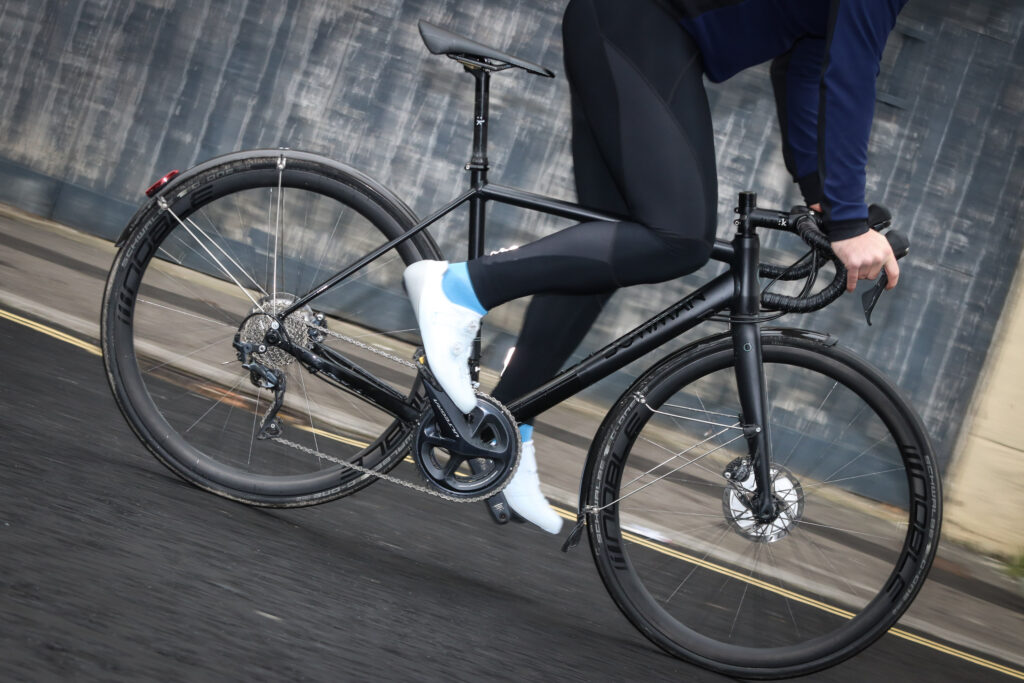

Being more ‘pro’ is seen as a good thing in the world of cycling but just because something is right for top-level racing doesn’t mean it’s right for the rest of us. Here’s when it’s best to strike out on your own.
Don’t slam that stem
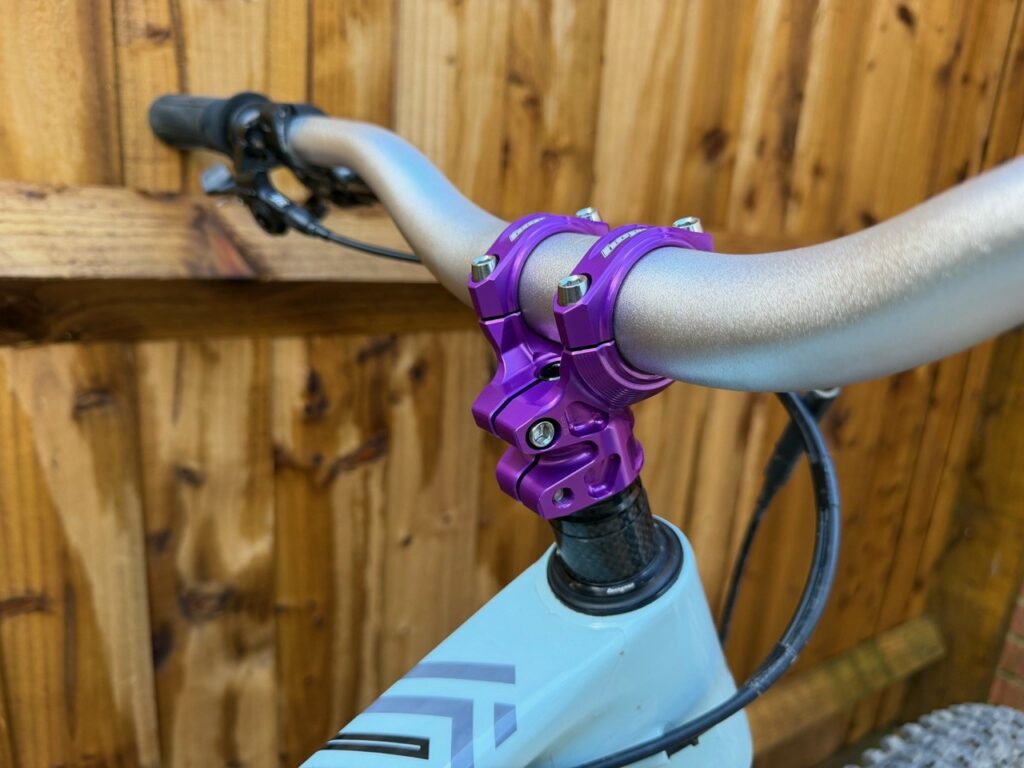
Loads of pro riders have their stem slammed right down on the headset to keep the bike’s front end as low as possible. Ideally, the stem will be at least 130mm long too! Pro riders are fast, so you’ll be fast if you copy them, right?

It doesn’t work like that. Pro riders spend years developing a race position that works for them and many, many hours a week training in that position. If you simply copy a slammed stem position you could end up with an achy back and neck and spend the whole time riding with your hands on the hoods, never on the drops.

Our advice would be to set your stem height – and every other dimension – on the basis of a professional bike fit. That could result in a slammed stem… but it probably won’t.
Check out our video on the importance of getting a bike fit
No need to be a weight weenie
Pro riders want their race bikes to be as close as possible to the UCI’s 6.8kg minimum limit for racing – ideally bang on. Fair enough, all other things being equal a lighter bike will be faster than a heavier one (although being more aerodynamically efficient is often of greater importance).

Lightweight v aero: which is best?
Bear in mind, though, that pro riders care only about performance. A bike or component is durable enough as long as it makes it to the finish line.

When pros aren’t racing, other factors come into play, as they do for the rest of us. Longevity is a consideration, for example. You can drop three grand on a 1,100g pair of carbon wheels but they won’t necessarily outlast the cheapo wheels that came fitted as standard on your everyday bike. Comfort is important to all of us too, as are price and value.
It’s certainly fun to upgrade your bike to improve the performance, but obsessing about weight doesn’t make sense for most of us, and materials other than carbon-fibre are acceptable!
Fit sensible tyres
The majority of pro riders spend most of their race time on skinny tubular tyres. Chances are that you’re not using tubs the whole time but you might well be on lightweight 25mm-wide clinchers.

Most (not all) modern road bikes will take at least 28mm tyres and the same is true of the majority of newer rim brake callipers. Going for extra width can add comfort and grip while reducing rolling resistance.
Why you need to switch to wider tyres
A proven puncture protection system might add a little weight to a tyre but it’s certainly worth considering as a means of keeping you on the move.

Another option is to make the leap to tubeless tyres and use sealant inside that will plug most holes without you even knowing about them.
Road tubeless: everything you need to know
Embrace mudguards
You won’t see mudguards in the Tour de France but they’re hugely practical for most types of riding, helping to keep you, your bike and anyone behind you dry.

Check out 20 of the best mudguards for any type of bike
Unless it’s raining properly, spray from your wheels is what gets you really wet… unless you’re using mudguards. If you’ve not fitted them before, you’ll be amazed at the difference they make.

Pros know this too, of course, which is why you’ll see plenty of them using mudguards in training. You’ll also spot them riding with seatpacks, daytime flashing lights and other concessions to practicality when there’s no team car following behind.
You don’t have to ride a road race bike
Just because you ride on the road doesn’t mean you should be on a road bike – or at least not on the type of road bike raced by professionals. Non-race road bikes make more sense for many people, even those who like to ride fast.

Take the Mason Definition that we reviewed here on road.cc, for example. It’s made from aluminium, the geometry isn’t aggressive, you get eyelets for a rack and mudguards, there’s clearance for mudguards with 30mm tyres…
In other words, it’s unlike a race bike in many ways, yet we still described it as “fantastically speedy” and it has the bonus of being versatile enough to ride over many different types of road – not just tarmac – and to handle a British winter without any problems.
Pick the right tool for the job rather than the bike you’ve seen on TV.
Check out our bike reviews for other ideas
Go steady on the gels and sports drinks
Gels and sports drinks definitely have a place. They provide concentrated and easily quantified energy for when performance really matters. However, they mostly serve a purpose rather than giving you a whole lot of pleasure, and they’re certainly not the only option when you’re riding.
Malt loaf, flapjacks and bananas are popular options for providing the energy you need without being too bulky, and they taste like normal, everyday food.

How to get the right food to keep your energy levels up and avoid the dreaded bonk
Don’t rely on the jet washer
You see team mechanics jet washing pros’ bikes all the time so it must be okay, correct?
There are a few things to say about that. First, those team mechanics need to clean a helluva lot of bikes on a daily basis so speed is the number one priority.

Second, pro teams have sponsorship agreements that mean they’re not short of equipment. If they accidentally spray water past a hub seal they have plenty of other wheels they can use instead.
Third, team mechanics have the expertise and the equipment necessary to service any bearing that gets a soaking, which you may or may not have.
How to clean your bike – from a quick lick to a full makeover
A jet washer can also blast off decals and even paintwork in certain cases.
Many people believe you should never go anywhere near a bike with a jet washer. We wouldn’t go that far, but if you do decide to, make sure you keep the spray well away from bearings and be very careful with the finish.
Relax and enjoy the ride
You don’t need to go full-gas every ride. Even the pros have plenty of steady sessions in their training programmes so you can definitely afford to back off, at least sometimes.
Things you only see on pro race bikes

It’s easy to get caught up in the numbers – speed, cadence, time in the saddle, power output, training zones, and so on – but don’t lose sight of the fact that we’re riding bikes for fun and it’s great to just get out there and savour the experience.

-300x199.jpg "“He wants bikes in traffic lanes. Give him what he wants”: Cyclists urged to “slow every street down to bicycle speed” and ride in middle of lane amid premier’s war on cycle paths + more on the live blog")








29 thoughts on “8 ways you don’t need to copy pro cyclists”
Also, no need to maintain tan
Also, no need to maintain tan lines by wearing cycling kit to the beach!
Great Article. However,
Great Article. However, surely there needs to be a section about leg shaving? I mean really whats the point? Most people who ride a bike: a) don’t race to a high standard; therefore don’t need the aero benefits (b) don’t have regular massages post race, (c) don’t fall off regulary and have road rash. So whats the point? Is it just to look like a Pro?
richtheblade wrote:
Personally I shave mine for the sake of vanity.
As a middle-aged man, I suffer from male pattern baldness, but on my legs. The outside of the calves are almost bald while the insides are mostly hairy, but a bit patchy, which means they look ridiculous when I wear shorts (which is most of the period between April and October) and when I am out on the bike. So out comes the razor.
Also … my wife likes them that way …
richtheblade wrote:
Shaved legs slide, hairs tear.
Road rash not chunked and gashed.
I like the wide tyre bit.. I don’t Watt anywhere near a pro hence with wind force tripling the exponential factor, if happy averaging lower speeds they’re fantastic. A budget build over-sized sort of wind tapered frame and loving wider tyres. Sort of a care less ride.. If speeds are slower, pump ’em up. Rim durability increased too.
I think aero works. We might not be fast but still get head winds. Tyres less important though because if he’s blowing, they’d probably blow too.
🙂
Dude.. Wax, sugaring, more environmentally friendly. 😉
richtheblade wrote:
…and then you go and spoil it all by saying somethng stupid like…
…surely there needs to be a section about leg shaving?
There is always a possibility
There is always a possibility of road rash, unfortunately.
And unless you are in an
And unless you are in an *actual race* take the moment to wave hello to other riders when you are out in the sticks. The number of riders who think doing 35kph on a Canyon Aero and wearing head to foot black makes them look cool enough to not acknowledge others out on the bike…
alotronic wrote:
Why do you need to be acknowledged this way?
rtw wrote:
It’s not about being acknowledged. It’s about being friendly!
fincon1 wrote:
Do you wave at everyone driving the same make of car as you? Or everyone in the supermarket?
I mean, don’t get me wrong, I’ll acknowledge most riders most of the time depending on things like practicality (traffic, weather, speed) but trying to wave at every rider round Richmond Park for example would mean your right hand was off the bars the entire time!
If I’m doing 40mph down a hill, I won’t be waving or even glancing across at a rider going uphill on the other side!
crazy-legs wrote:
Yeah fair point. Maybe it’s just my London life which is so anon, I pass dozens of riders every day and no one says hi. Call me a bit of an of fashioned romantic but I guess I like to think of cyclists as having something of a community spirit. So yeah, naive as fuck I guess. Also I am a kiwi so grew up waving to people and, beleive it or not, people with the same cars did used to acknowledge each other. So maybe there’s some cultural difference in there too and I am expecting a bit much from the avergae busy Brit (flame wars start! Go back home if you don’t like it etc etc etc)
I’m a Kiwi too.
I’m a Kiwi too.
I seem to be the only one who waves to other riders here in Auckland now.
I’m in two minds about it but I still do it I’d rather be nice to someone than not.
Same make of car – as an MGB and VW Beetle (a real air cooled one) owner (and past Porsche owner) we wave to each other 😉
rtw wrote:
Common courtesy.
rtw wrote:
Surprised this is even up for discussion. Strangers all over the world smile and acknowledge each other, it’s part of a basic human requirement to be recognised in a positive light by others, by offering a simple positive action, like smiling, or waving.
Agree though that sort of ‘breezy wanton’ behaviour might not go down so well in London* though… no one seems to ever smile or says good morning to each other in our great nation’s capital.
I’ll keep on waving to other cyclists they are all brothers and sisters of the saddle to me!
(*other miserable and or busy cities are available)
These are all very good
These are all very good points, especially the last one.
The absolute state of the rear Crud Raceguard on that Jumbo Vismo rider, though! Some people clearly need the mechanics to do everything for them…
jollygoodvelo wrote:
Except that fitting the race guard like that means there is no rub on the rear wheel, and is thus quieter, and is quicker/easier to fit because you don’t need to try and squeeze it between the tyre and brake and affix around the brake bolt with a zip tie (which if you’ve done it you’ll know can be a right hassle).
It does hurt the eyes though!
It does hurt the eyes though!
Long story short..
Long story short..
Spin to win and at moment beyond grin, spun too much and bust some dust.
There’s a fraction of faction with fiction of friction.
Hence. Shave to graze or wear hair and tear.
Aero? Who cares, hurts less.
Edit:
Wax to max with sugaring to make the wind sing.
😉
All good points. It makes me
All good points. It makes me chuckle when I see a tubby, hairy legged, faux pro, trying to give it billy big bollocks. ” out of my way, I’ve got a ( insert ridiculously OTT bike) I’m a cat two I’ll have you know, A CAT TWO DAMN YOU”
To get the best comfort out
To get the best comfort out of 28mm tyres I think you either need to be a whippet or go tubeless. A 100psi 28mm is just as rock hard as a 25mm one…
kil0ran wrote:
Why would you run 100psi in a 28mm tyre? I’m around 85kg and run 65-70psi which is notably more compliant than 100psi in a 25mm tyre.
Great article and spot on.
Great article and spot on. But the bicycle industry marketing departments would possibly disagree with your column. Spend your money peeps, and if you can’t be Pro at least look Pro. And keep those corporate dollar wheels spinning.
Grant Petersen wrote a whole
Grant Petersen wrote a whole book about what he considered to be the bad influence of “cycle racing” on “cycling”.
http://cycloculture.blogspot.com/2012/07/grant-petersen-on-just-ride.html
Don’t push situations like
Don’t push situations like every second counts, don’t leave braking til the last second/metre, pros/competitve riders push and push until they crash, this is inevitable, your riding doesn’t have to be like that.
MUDGUARDS!!
MUDGUARDS!! Couldn’t agree more.
Riding in the rain is so much better when you’re only getting the clean water falling from above and not the filthy muck coming up from underneath.
Agreed
Agreed 😉
God’s bike cleaner dropping from the sky…..not the Devil’s grunk coming from below!!
I’m old, and I’m slow, but I
I’m old, and I’m slow, but I have what is regarded as a posh pro style bike. Why? Because I enjoy riding it. I also have an aluminium winter bike with mudguards and disc brakes, and you know what I hate riding it, it’s slow, it’s heavy, and it just isn’t fun going up hills.
So I’m not a pro, I don’t care, I’d still take the summer bike out in preference, and tbh I think it’s snobbery to say you shouldn’t have such and such a bike unless you’re a pro
If something the pro’s do
If something the pro’s do works for me, I’ll do it. If it doesn’t, I won’t
FTFY: if somethingt I do
FTFY: if something I do works for the pros, they’ll do it. If it doesn’t, they won’t.
😉