


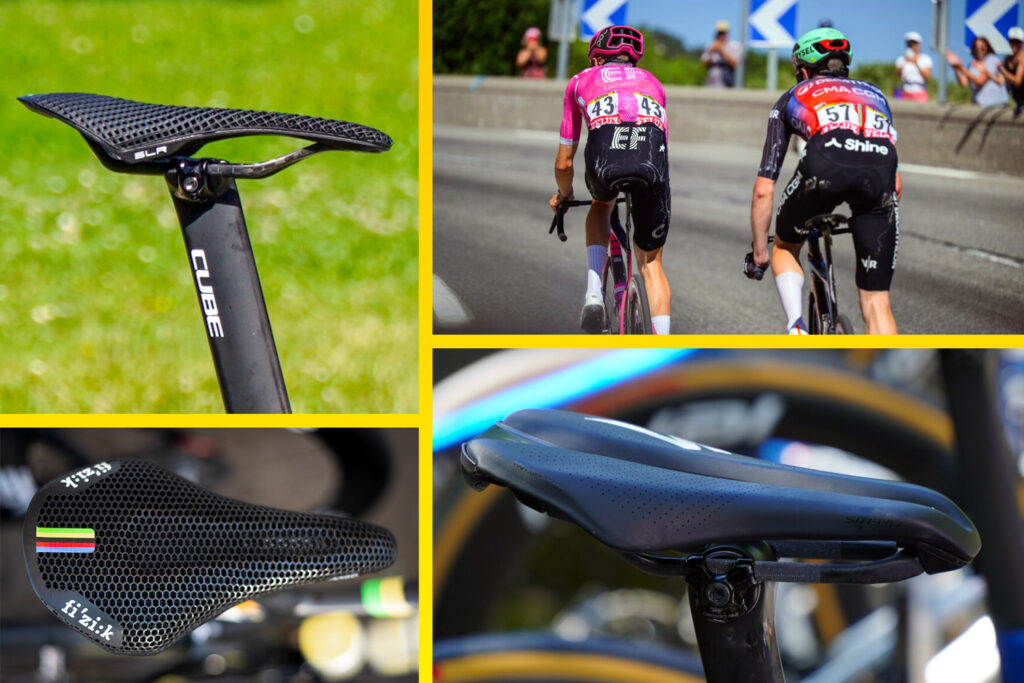

Covering over 3,000km in just three weeks, Tour de France riders can’t afford to overlook saddle comfort; it’s a crucial part of surviving the race. We’ve taken a closer look at what the pros (or their sponsors) actually think are the best saddles to keep their bums comfy through every kilometre.
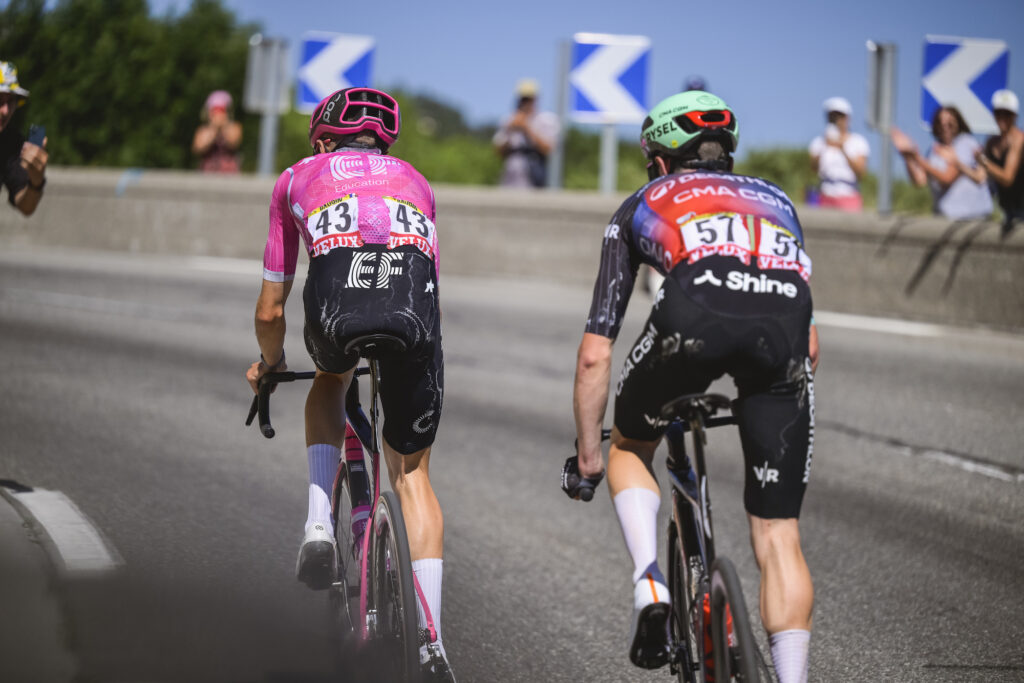
We must add that most riders don’t have full freedom when it comes to choosing saddles, as teams are tied to specific sponsors. This means that, unlike us, pro riders don’t get to choose from every saddle out there; they do get to choose their favourite saddle from within their sponsor’s range.
That said, most saddle brands offer extensive ranges and even custom options, with the emergence of 3D-printed bespoke saddles offering a more personalised fit than stock options from years gone by. While we do see star riders using sponsor-incorrect saddles with the logos blocked out, that’s increasingly rare these days. Most stick with what’s available through their team’s official partner.
So what are Tour de France riders using in 2026?
Tadej Pogacar’s 3D Fizik saddle
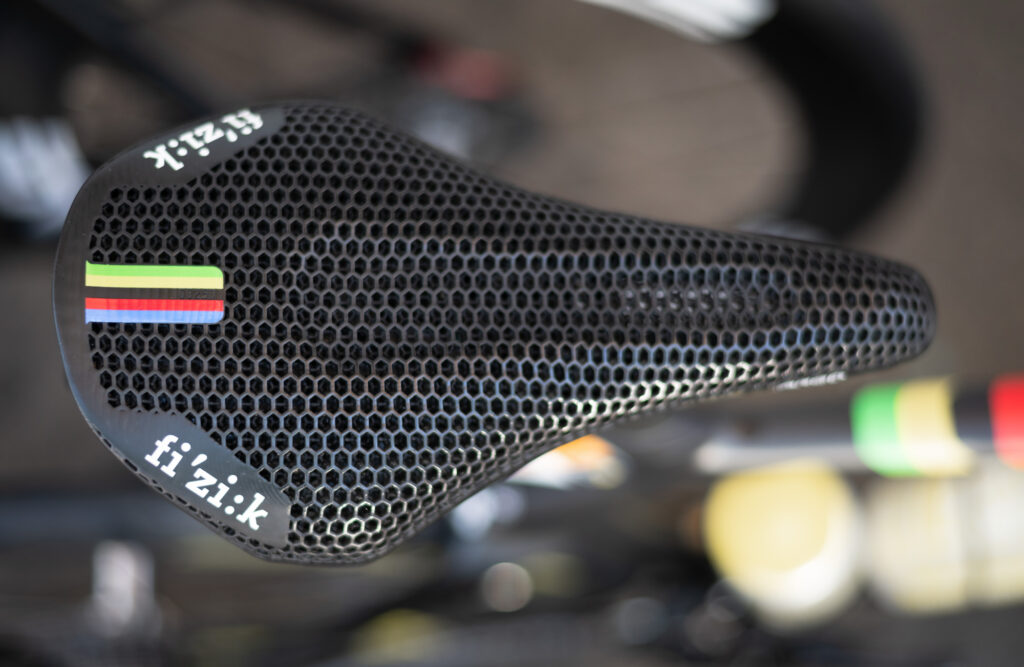
Italy’s Fizik provides the saddles for UAE Team Emirates – XRG riders, including four-time Tour de France winner Tadej Pogacar. Pogi has won the World Road Race Championship for the past two years as well, hence the rainbow stripes at the back there. Well, you would, wouldn’t you?
Fizik offers its Adaptive line of 3D-printed saddles made with tech from Carbon, a US company that has also worked with Specialized, Selle Italia, Prologo, and Selle San Marco.
“Adaptive padding is created through a process known as Digital Light Synthesis,” says Fizik. ”DLS uses digital ultraviolet light projection, oxygen-permeable optics, and programmable liquid resins to essentially “print” saddle padding that is comfortable, supportive, and incredibly resilient—resistant to both UV exposure and prolonged, repeated use.”
Pogacar uses a custom 3D-printed saddle, which is an option that Fizik began offering to the public a couple of years ago.
> Fizik introduces 3D-printed saddle service
Fizik’s One-to-One service sees the Adaptive line of 3D-printed saddles completely custom-made, allowing “cyclists to have their own, truly unique 3D-printed saddle”.
The first step in the process is a personalised measurement session to pair the rider with the most suitable saddle in the Adaptive range. Then a pressure mapping session focuses on pressure hotspots, instabilities and asymmetries. This data is then analysed to design a custom 3D-printed padding structure.
You’ll have guessed that a one-off saddle isn’t cheap, but we were impressed with the results when we tried it out.
> Read our review of Fizik One-to-One custom 3D-printed saddle
EF Education – EasyPost Fizik Argo Adaptive
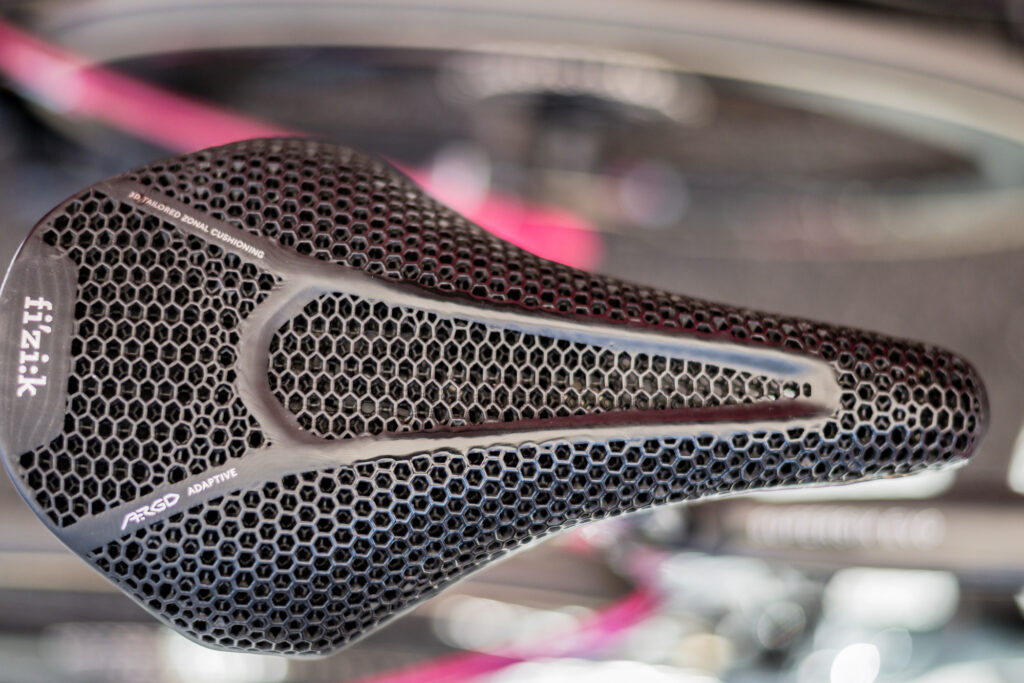
Like UAE, EF Education – EasyPost use saddles from Fizik. This is a short-nosed Vento Argo and, as you can see, it uses 3D-printed padding.
> Read our review of the Fizik Vento Argo 00 Adaptive
The Vento Argo is available in various forms, with different padding, shell and rail materials. Most of the pros go for a top-end model with a full carbon shell and carbon rails. A standard (non-custom) model is £399.99.
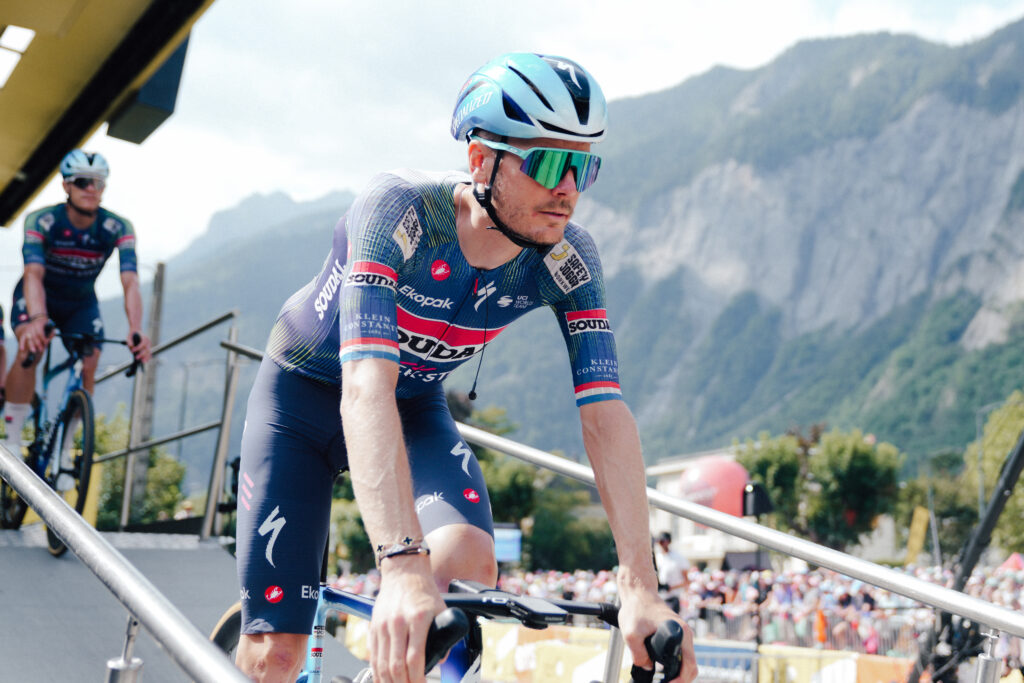
Soudal Quick-Step Specialized S-Works Romin EVO with Mirror
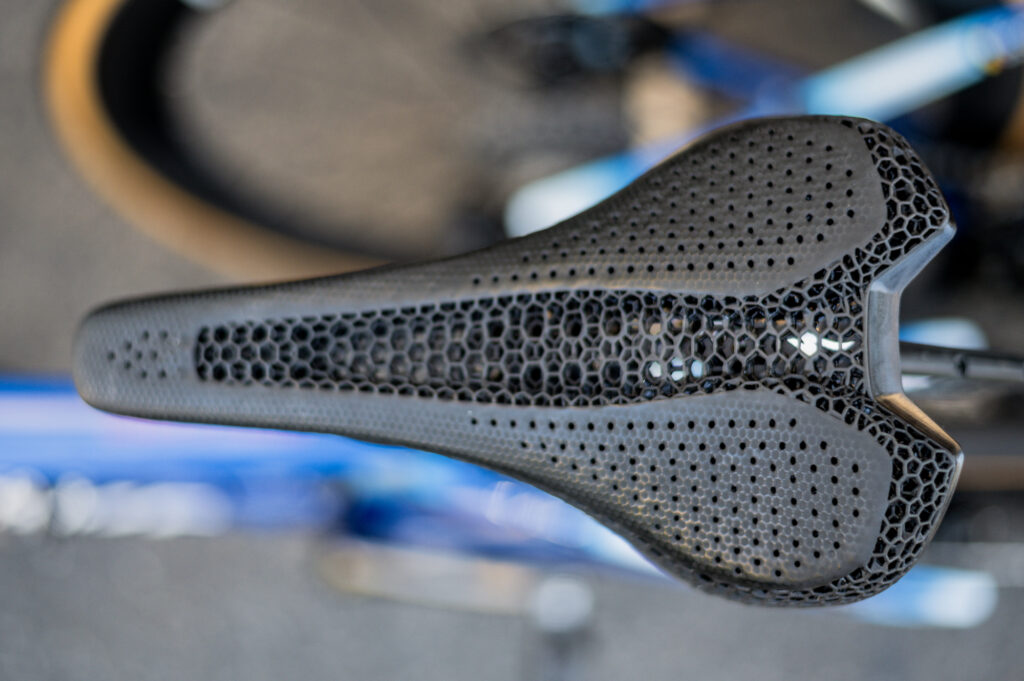
Specialized provides the bikes and many of the components, including the saddles, for Red Bull-Bora-Hansgrohe and Soudal Quick-Step.
Like many other brands, Specialized works with 3D-printing pioneer Carbon on its Mirror saddles.
As with other teams, the riders can choose the model that best suits them. Some riders use the S-Works Power with Mirror or the S-Works Phenom with Mirror, but this is an S-Works Romin Evo with Mirror.
“By replacing foam with our Mirror technology, we’ve reduced sit bone pressure up to 26%,” says Specialized.
If you want a couple of facts to impress your friends, the 3D-padding features 22,200 struts and 10,700 nodes (points where the struts meet). We’ll take Specialized’s word for that.
> Read our review of the Specialized S-Works Romin Evo Mirror saddle
A Specialized S-Works Romin EVO with Mirror will set you back £350.
Yet more 3D printing from Selle Italia
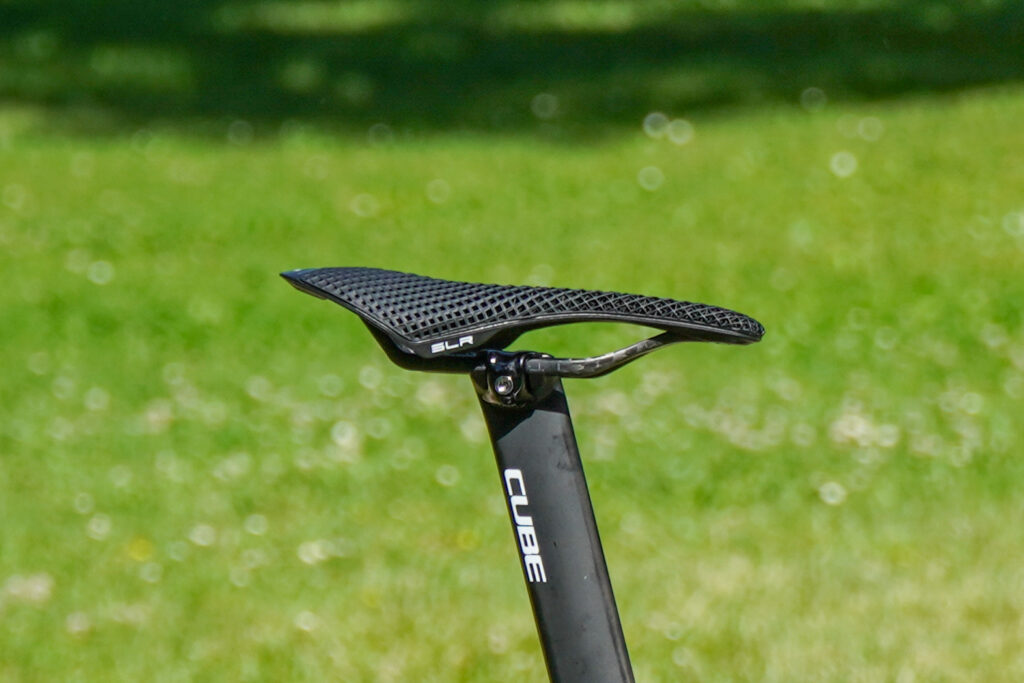
TotalEnergies Mattéo Vercher was using a Selle Italia SLR Boost 3D saddle on his yet-to-be-release prototype Cube Litening Aero road bike at the Tour Auvergne-Rhône-Alpes. He’s also racing the Tour de France. Selle Italia is another of the brands that uses DLS technology from Carbon to create a lattice structure with various cushioning zones designed to absorb shock and distribute pressure.
The lightest version of the SLR 3D Carbon comes in at a claimed 137g, which is pretty darn feathery. It’s priced at £409.
Mathieu van der Poel’s Selle Italia Flite
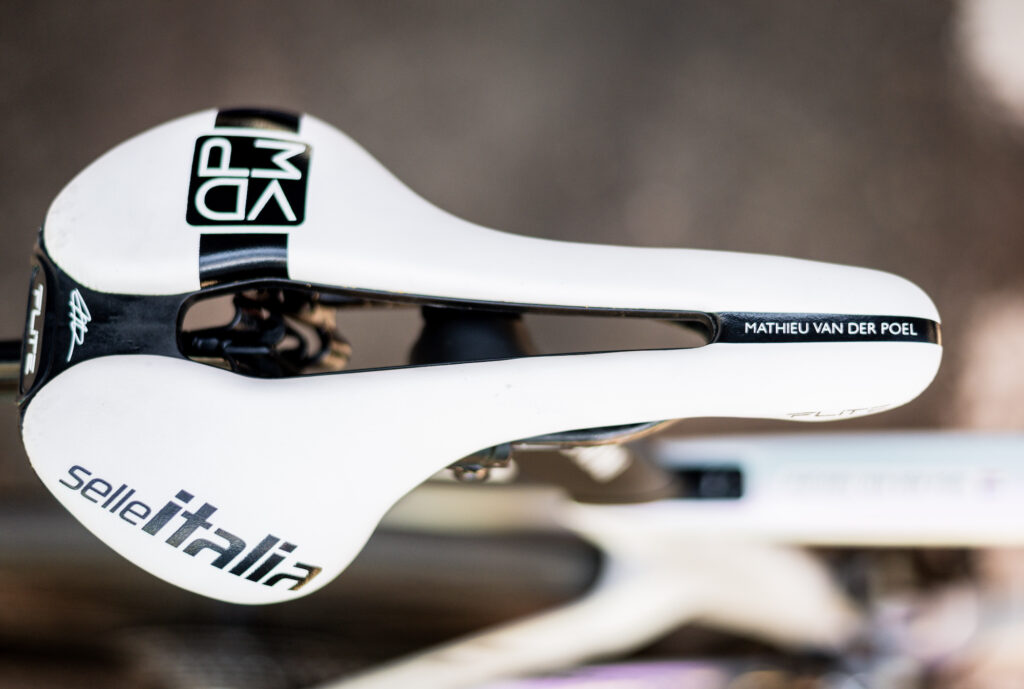
Although we’ve grouped a load of them together (above), by no means do all of the pros go for 3D-printed saddles.
You know you’re a big shot in the cycling world if you have your own signature saddle, and multi-time Classics winner and cyclo-cross world champion Mathieu van der Poel is certainly that.
The Flite has been in the Selle Italia range since 1990, and although it has been updated over the years, it’s a classic.
> Design Classic: Selle Italia Flite saddle
“Harness the power of Mathieu Van Der Poel with the Flite Boost Superflow Kit Carbonio MVDP Edition saddle,” says Selle Italia.
If only it were as simple as that… but that’s marketing for you.
“The flat seat and short, aerodynamic style is the perfect platform to provide stability and comfort on the longest of cycles,” says Selle Italia. “The Superflow cut-out relieves pressure from the perineum while the extra-long carbon rails allow for more adjustability.”
It comes with a claimed weight of 162g – so light but not ultralight. Comfort is a key consideration too, of course, especially when you’re racing over 2,000 miles in three weeks.
It’s £339.99 for the Selle Italia Flite Boost Kit Carbonio with Mathieu van der Poel graphics.
Climber Paul Seixas goes for light weight
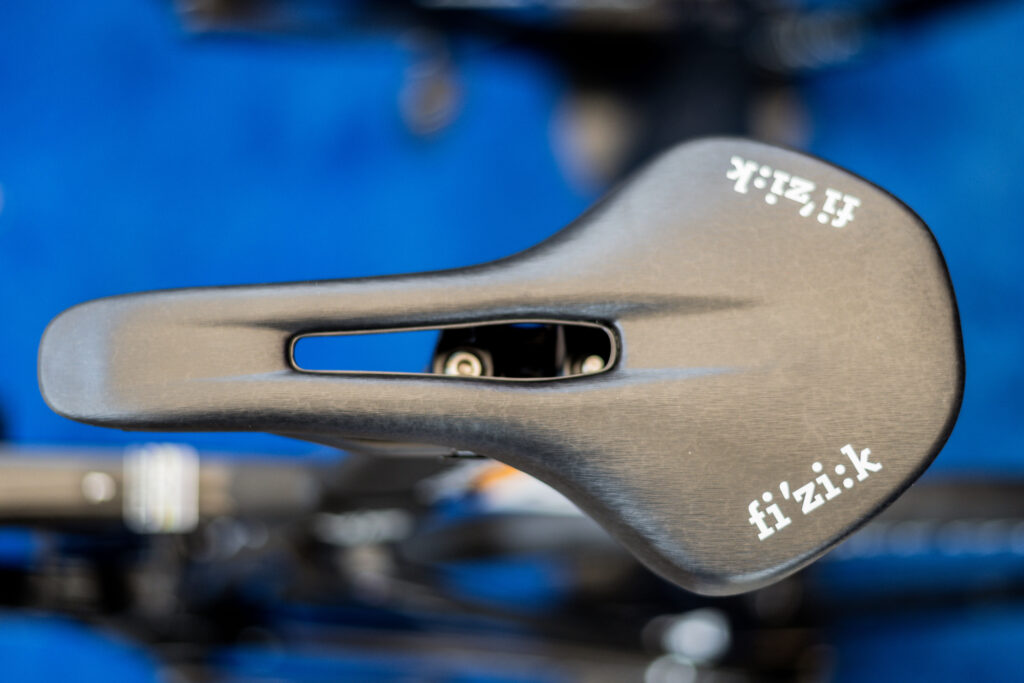
French cycling’s rising star Paul Seixas and his Decathlon CMA CGM Team use saddles from Fizik. This looks like a Fizik Vento Antares on Seixas’ bike, with a full carbon shell and rails and EVA foam padding.
Measuring 270mm, it’s a lot longer than some of the short-nosed saddles here, but Fizik claims weights are as low as 118g, which is seriously light for a padded saddle. The top-end model is £279.99.
Isaac del Toro’s Fizik Vento Antares 00
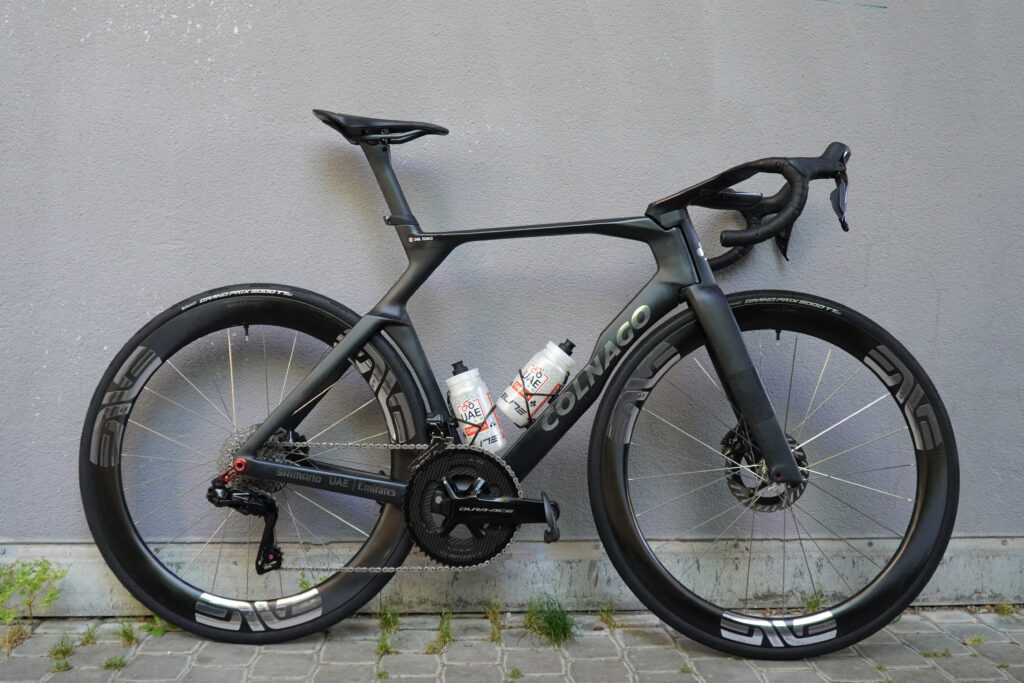
Pogacar’s UAE teammate Isaac del Toro also goes for the lightweight Fizik Vento Antares 00 with a full carbon shell, carbon rails, and EVA foam rather than 3D-printed padding. Why? It’s personal preference, although the light weight can’t hurt a climber like Del Toro.
Prologos are everywhere
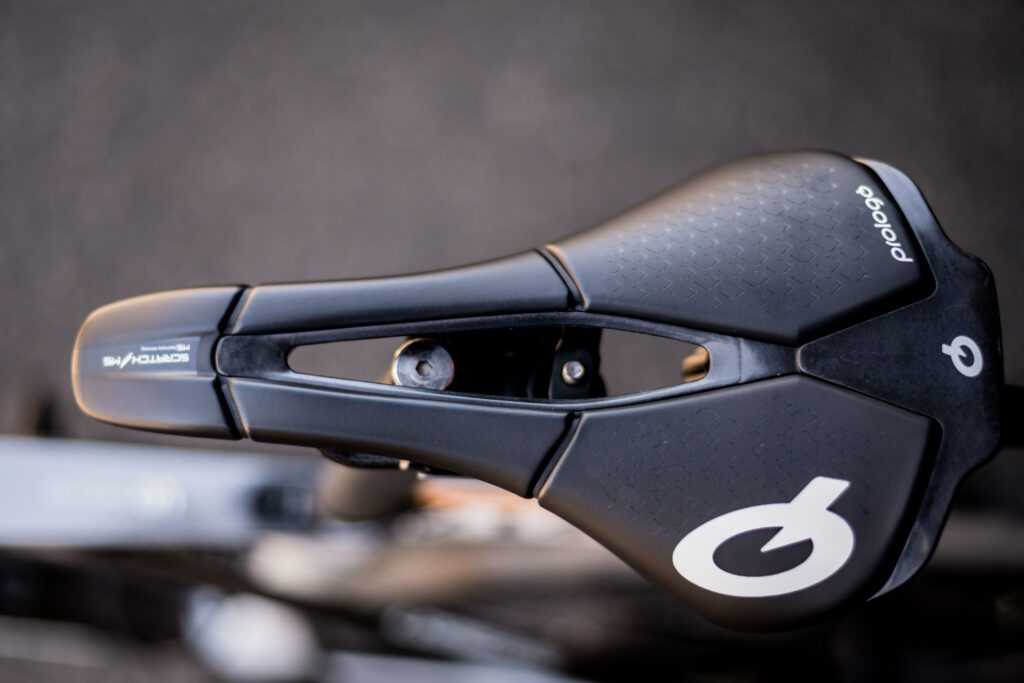
Prologo is the best-represented saddle brand in the Tour de France, partnering nine of the 23 teams.
This Pinarello-Q36.5 rider is using the Prologo Scratch M5 PAS, priced £139 with steel rails or £219 with Nack (carbon fibre, Kevlar, and aluminium filaments) rails.
What are those separate areas of the upper all about?
“The MSS (Multi Sector System) seating system, designed in collaboration with the Polytechnic University of Milan, helps improve comfort and performance,” says Prologo. “The active, separate foams create five zones that work intelligently and individually, promoting normal pedalling motion during both push and pull.”
The PAS in the model name refers to Prologo’s Perineal Area System, the central channel “designed to eliminate pressure peaks and numbness, improving blood flow”.
Prologo claims a weight of just 131g for the Nack-railed model.
Bahrain Victorious’ Prologo Dimension R2
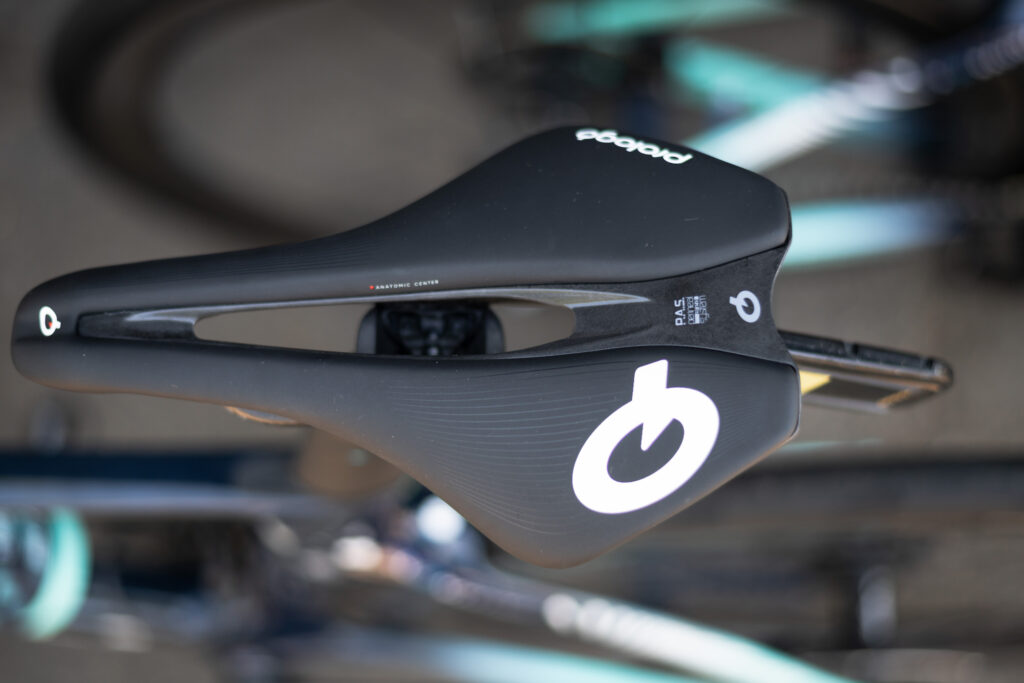
This Bahrain Victorious rider is using the Dimension R2 saddle, which has a short 245mm length and a 40mm-wide nose that’s designed to spread the pressure. Prologo claims weights as low as 135g. The carbon-railed model is £249.
TT saddle on a road bike
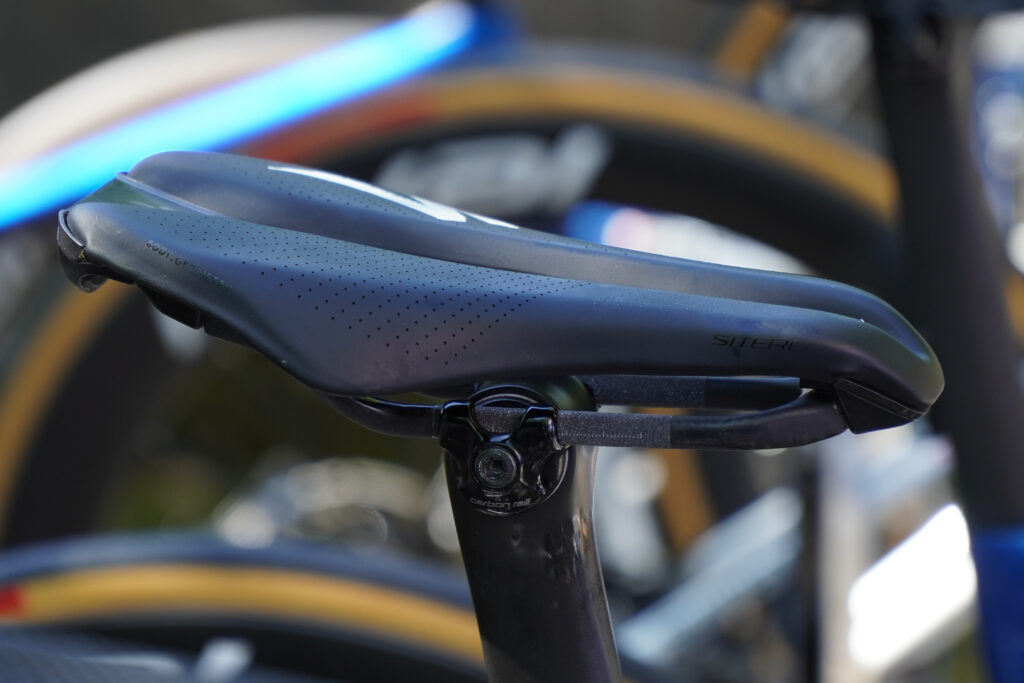
Britain’s Ethan Hayter, who rides for Soudal–Quick-Step, isn’t riding the Tour de France but we spotted him using a Specialized S-Works Sittero Pro saddle on his road bike at this year’s Tour Auvergne-Rhône-Alpes (the Dauphiné to you and me).
Although the S-Works Sitero Pro is marketed as a time trial/triathlon saddle, riders like Hayter sometimes use it on their road bikes because their riding position is unusually aggressive and forward-rotated, making a TT-style saddle a better fit than a conventional road saddle.
Sponsor-incorrect saddles still exist
We said up top that the vast majority of pros behave and use saddles from their team sponsor. These days, most saddle brands have huge ranges catering to all butt shapes and sizes, and it doesn’t look great if a rider decides to go elsewhere.
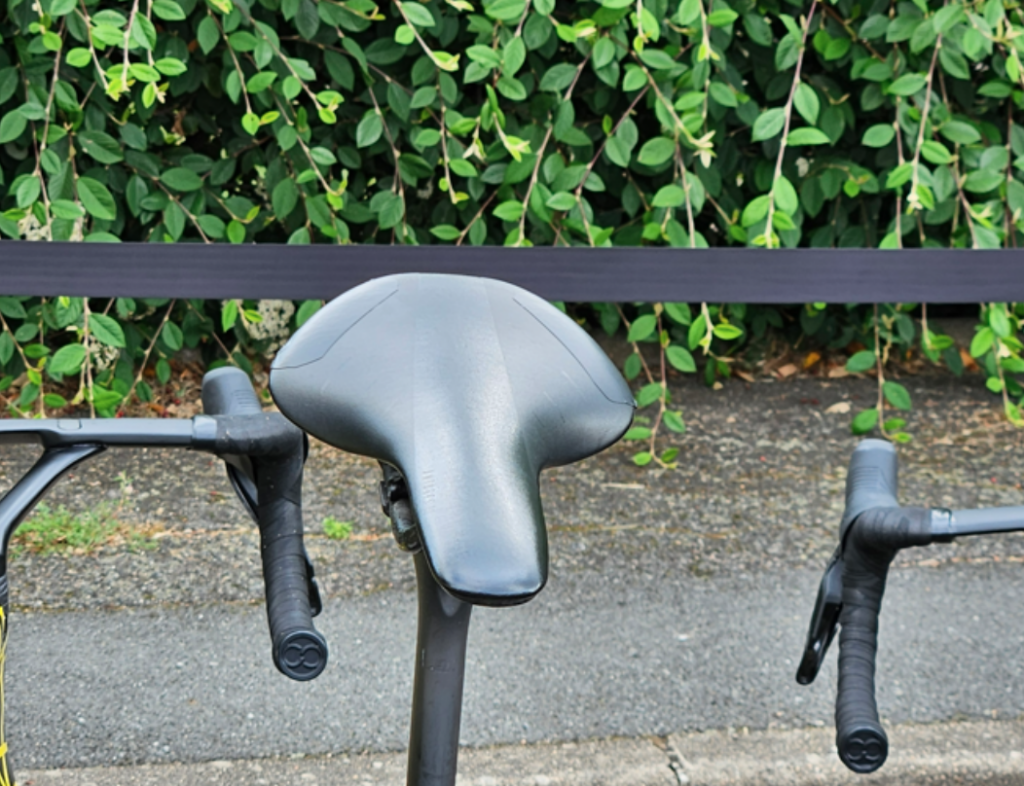
Just occasionally, though, you’ll spot a rider using a saddle from a brand other than their sponsor. Pictured above is Matteo Jorgensen’s saddle from 2025, which appears to be a long-nosed Fizik model with the branding covered. Fizik sponsored his Visma–Lease a Bike team in 2024, so we imagine he got a taste for it.
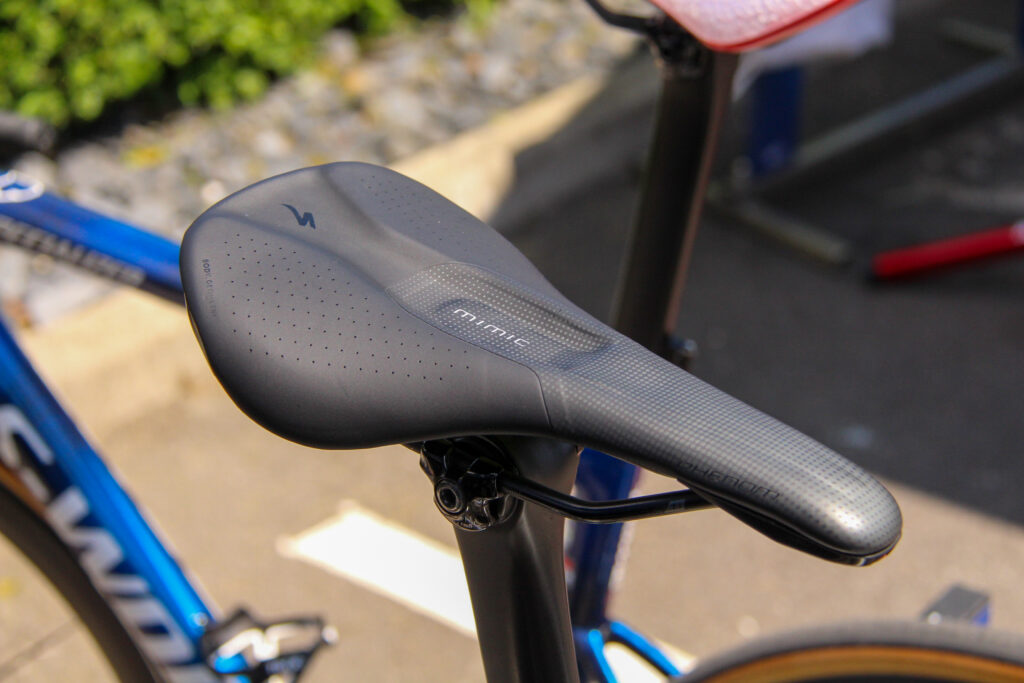
At last year’s Tour de France, we saw Belgian sprinter Tim Merlier using a women-specific S-Works Phenom Mimic. Soudal–Quick-Step mechanics told our reporter on the ground that it had been a popular choice in years gone by, but Merlier was the last rider still using it. If ever there was a prime example of how saddle choice is very personal and not about how it’s marketed, this is it. We’re not sure if he’s changed models in 2026.
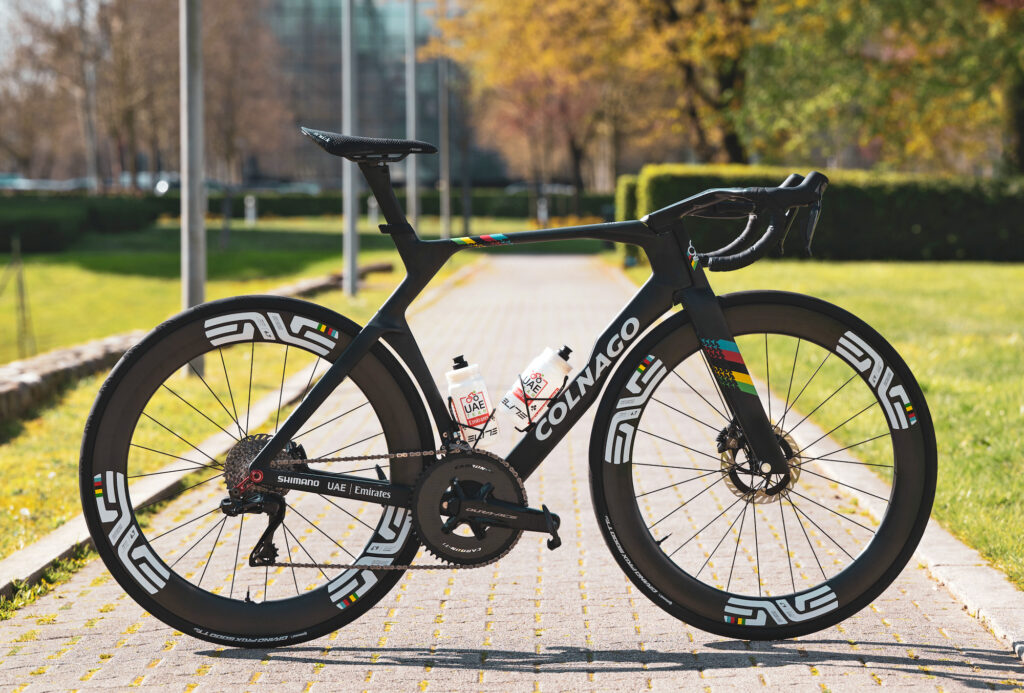
From the above, we can draw quite a few conclusions on what the pros demand from their saddles. It’s a no-brainer that comfort is key – but what that means depends on each rider’s position and personal preferences.
Most of the saddles in the pro peloton are top-of-the-range models, featuring the most advanced material technologies that keep the weight low and even add some aerodynamic advantages. Cutouts are present on most riders’ saddles to relieve pressure on the perineal area. Most riders also ride short-nosed saddles, but even these come in varying lengths ranging usually from about 240mm to 250mm in length.
When it comes to materials, the pros prefer a stiff saddle with often quite minimal and firm padding, with carbon rails and shells.
> How to avoid saddle pain and get comfortable on the bike
Whether you should follow the pros’ footsteps (or should we say, bum shapes) is up for debate. None of the above saddles is a bad choice, but most of them cost more than £250. While they can shave grams from your setup, and look the part, you are likely going to be as comfortable on your non-carbon-railed saddle.
That said, it’s clear that saddle choice remains highly personal – what works for one rider may be completely wrong for another. Interestingly, we are seeing far fewer sponsor-unfriendly saddles in the pro peloton these days, likely due to brands offering 3D-printed options, meaning most riders can now find something comfortable within their sponsor’s range.










9 thoughts on “What saddles are the pros using at the 2026 Tour de France? It’s 3D-printing and cutouts galore as we look at what the fastest riders are sitting on”
I’m curious if 3D printed saddles actually offer noticeably more comfort than traditional saddles or are just different. Unfortunately my wallet won’t let me experiment to find out as 3D saddles are so expensive.
Being able to print a custom saddle that is fit to the rider is an obvious advantage, but for off-the-shelf models, does the cost-benefit analysis pan-out?
@PoorInRichfield – 3D saddles are super comfortable, don’t have to be printed for you specifically and cost next to nothing (from 50 euro’s) on AlieXpress and the likes. Well worth a try, i have them on all my bikes.
(Mine are Ryet – there are several models – i recommend to pick one with a cut out)
@KnightBiker Thanks. I’ve looked at the Ryet saddles and here in the USA, the model I’m interested in is well north of $100 which is approaching the price I paid for my SQLab 612 saddle. I have no real gripes with my existing saddle, but my tooshie keeps saying there’s no such thing as “too comfortable” 😀
Aren’t most saddles 3D?
@mdavidford The Specialized BG Toupé that came on a Langster I bought years ago was distinctly 2D – flat and barely any padding at all. Ouch.
Note: These saddles might not work for you if you don’t meet all of these requirements: A. Ride at least 30 hours per week. B. Have a minimal amount of your weight on the saddle because 1) your bars are super-low for maximum aerodynamics, 2) you’re pushing 300+ watts into the pedals most of the day, 3) you weigh at most 65 kg. If these things aren’t true for you, then you should ignore what saddles pro’ riders are using and find something that’s more appropriate for your type of riding style, frequency and physique.
@Chris RideFar
Better tell the 75kg Matthieu Van der Poel that…I have a Fizik Antares that came with my bike when I bought it secondhand (it previously belonged to a Paralympic gold medallist who fulfilled all your criteria), I’m 85kg, ride fifteen hours a week, don’t have an aero position (saddle is only 8cm higher than stem) and very definitely don’t push 300W for most of the day and it’s the most comfortable saddle I’ve ever had. It’s a very personal decision of course and won’t suit everybody but too many people are put off pro racing saddles because they think, as you say, they’re only for pro level riders when they could suit perfectly.
@Rendel Harris That’s great. If you read the section of my comment that you quoted, I said “These saddles *might* not work for you if…” I did not say “*will* not work”. Yep, everyone is different.
@Chris RideFar You also said “If these things aren’t true for you, then you should ignore what saddles pro’ riders are using”, so you were rather definitively saying that people over 65 kg with non-aero riding positions who don’t ride 30 hours a week and don’t put out 300 W for hours on end shouldn’t consider the saddles pros use.