




As the nights draw to their longest, rain hammers against my window and icy drafts sneak into my poorly insulated house, I cast my mind forward to those warm summer days ahead. It is no wonder then, that December, and more specifically, the festive period, is a time for quiet reflection and gentle consideration. I’ve used this time for the most important consideration of all. How to be marginally faster on a bike next year.
But while I could happily spend tens of thousands on a new bike, such funds are not available to me, so I wanted to make this a relatively sensible build, with choices that pack a punch when it comes to value.
Frameset: Giant Propel Advanced Pro (£1,539)
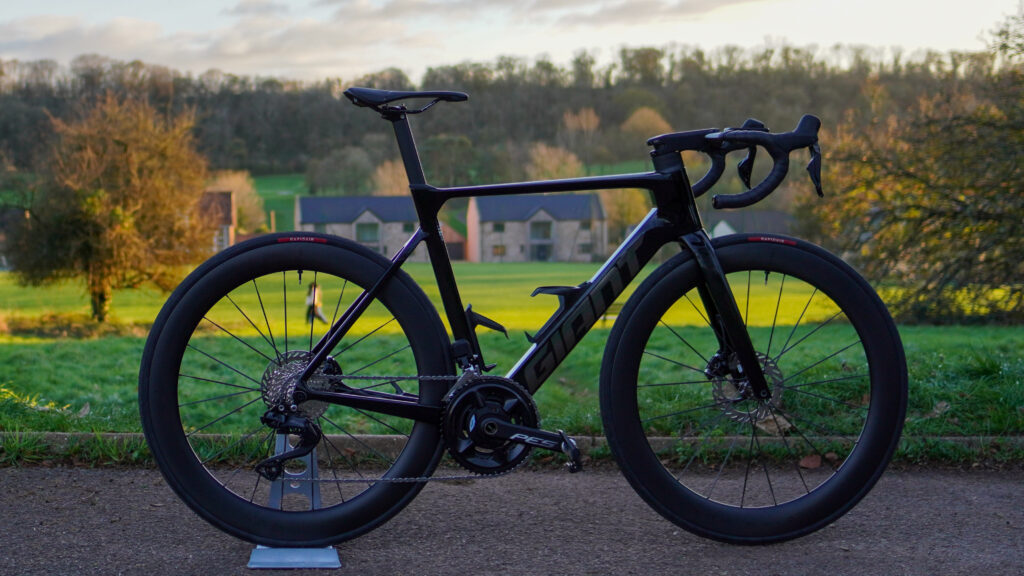
Given my intentions of creating a speedy race bike for racing and group rides, the only place to start was with an aero frameset. Giant’s Propel Advanced Pro is one of the best deals on the market, even at RRP.
This 2025 model, however, is an even better bet at £1,539.
Giant developed the Propel for its World Tour racers, and the majority of the aero trickery has found its way down to this model. That means it should be plenty fast enough for group races and a spot of racing.
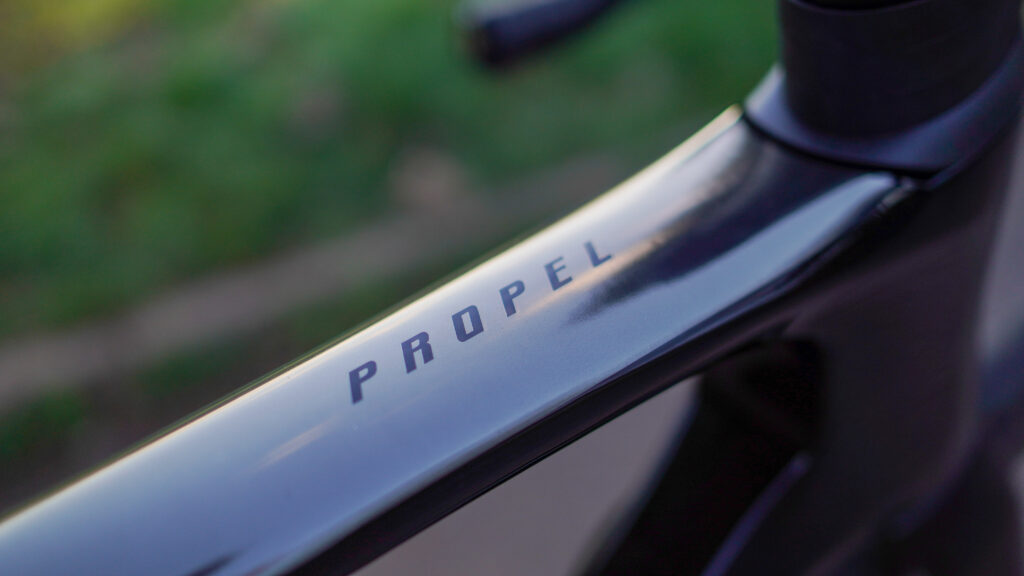
While we’re on the frameset, I’ll also say that this was an incredibly easy frame to work on. Everything was easy to put together and Giant had evidently given the brake routing some thought, because I had the callipers installed quickly.
Wheels: Yoeleo QianKun CS60 (£1,052)
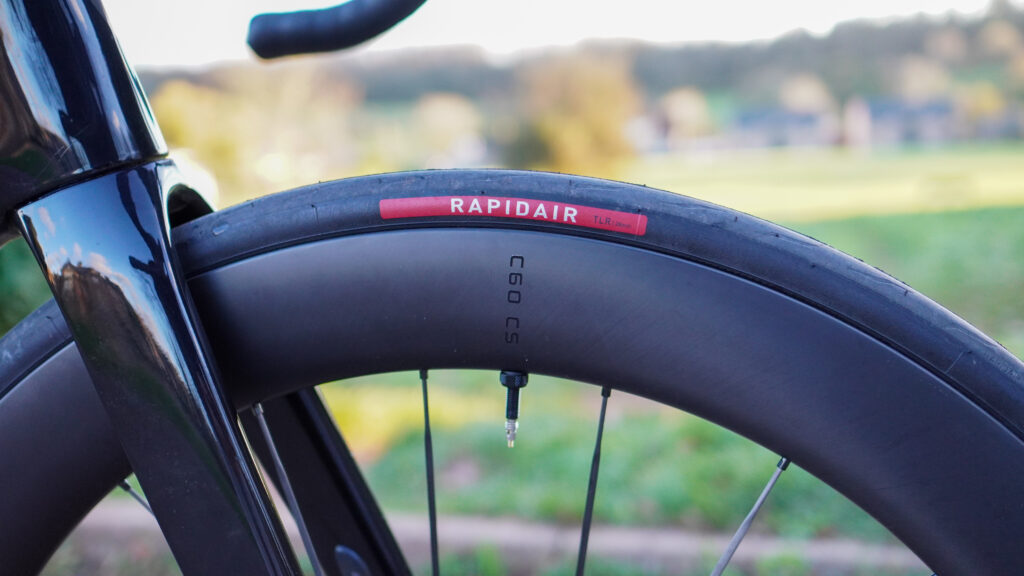
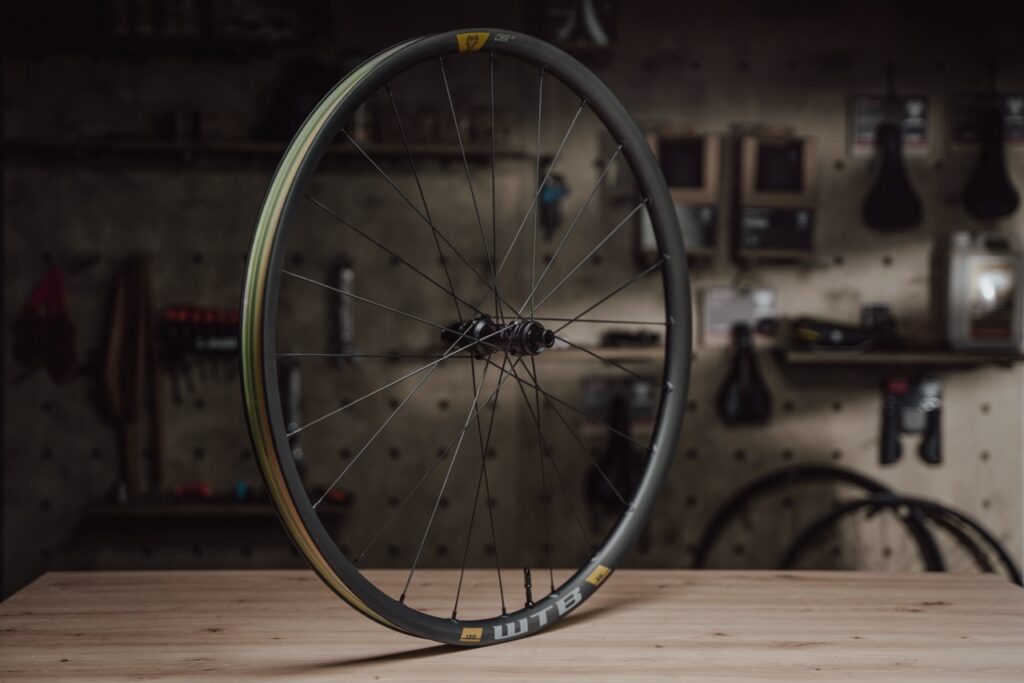
A deep set of wheels perfectly complements an aero frameset and Yoeleo provided their 60mm hoops with carbon spokes.
While you might think splashing out for carbon spokes is an expensive choice, they have a massive benefit when it comes to weight, with Yoeleo claiming the QianKun C60s weigh just 1,285g without tape.
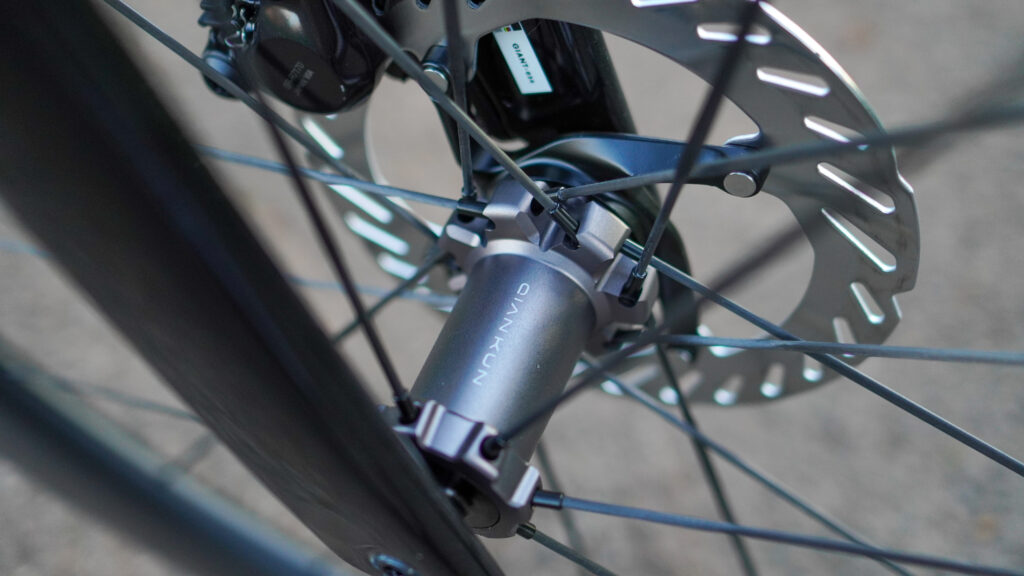
The rims are fully up to date with current trends, using T1000 carbon to form an internal rim width of 23mm, ensuring they work well with 28 and 30mm tyres. This is also a hooked tubeless-ready rim, giving you a huge choice when it comes to selecting tyres.
Everything spins on Yoeleo’s own hubs that feature a 36T angular ratchet system for improved contact surface. For fans of a loud freehub, these really scream at speed.
Groupset: Shimano 105 Di2 (£849)
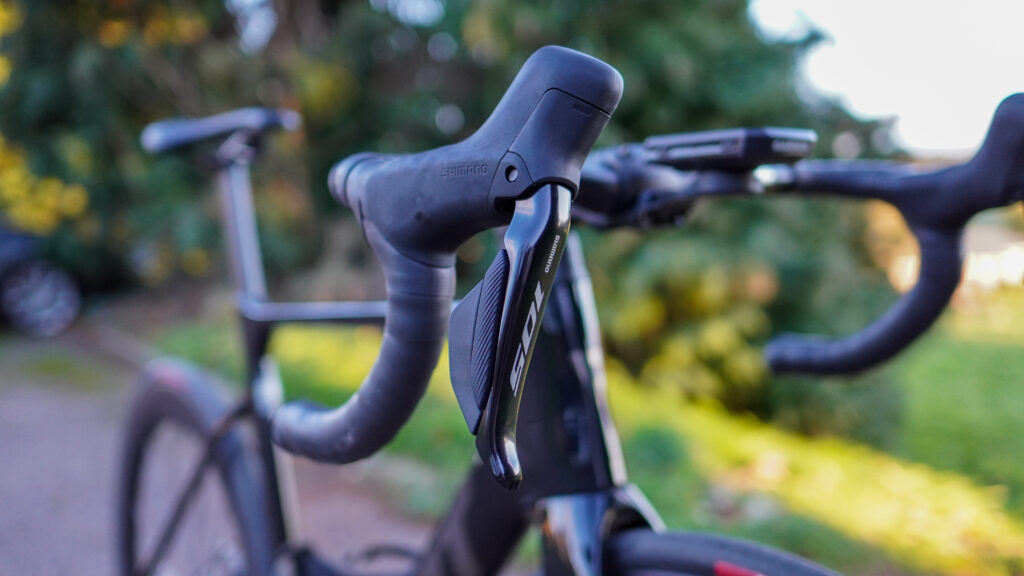
Shimano’s 105 groupsets have long been a popular choice in the lower echelons of the racing world. The fact is that, in bunch racing, crashes occur relatively frequently and this is why I’ve gone for the slightly more value-focussed 105, rather than Ultegra or Dura-Ace.
Should I have a little mid-race sit down, I won’t be too fussed about scratching these levers, and replacing a 105 Di2 rear derailleur is quite a bit cheaper than Shimano’s bigger brothers.
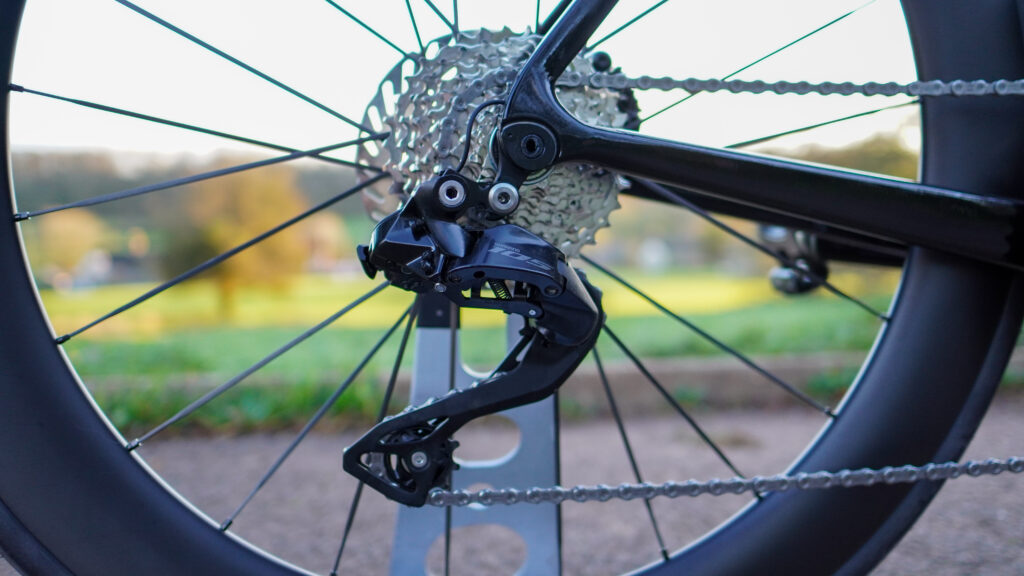
What also makes this groupset perfect for racing is the gearing. A 52/36T chainring combination pairs well with the 11-34T cassette to mix the fast stuff I need for group rides, with the bailout gears I’ll turn to when the road rises up.
Tyres: Specialized S-Works RapidAir TLR Race (£150)
Where I have made a slight mistake is in my tyre selection. I had a set of the S-Works RapidAir TLR Race tyres lying around, and in the spirit of saving money, I decided to use them.
Despite inflating easily and offering a comfortable ride, I haven’t found confidence in their grip levels, and so I would be looking to swap these come the spring.
But the point I was trying to make (mostly to myself) is that a new bike build can always make use of spare parts that you might already have. As we approach the finishing kit, this point will be back with more success.
For now, I have assigned £150 for a set of race tyres.
Power meter: Magene P515 (£299)
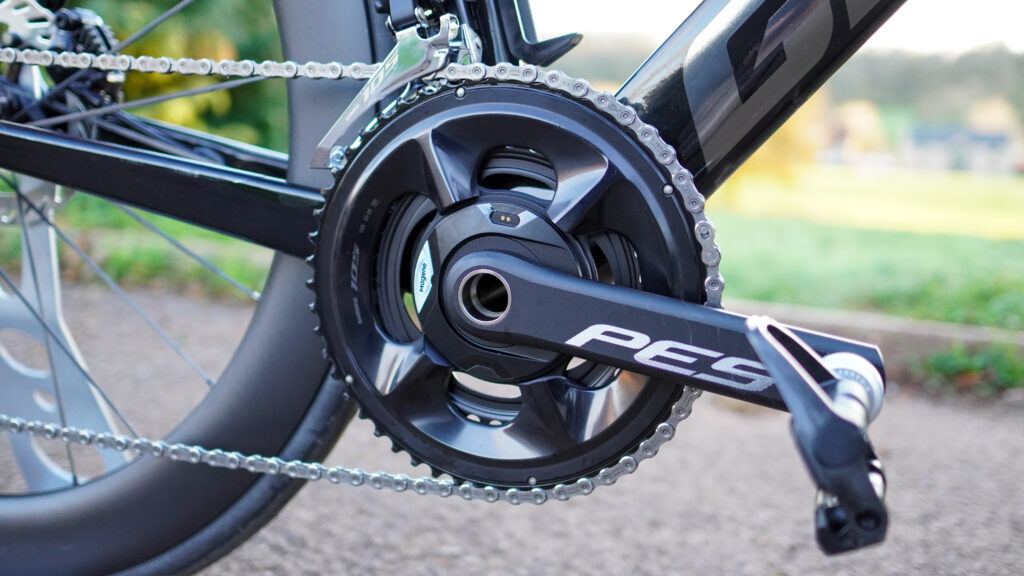
But first, we need to cover the most effective way to make yourself faster. Fitting a power meter to your bike will not make you faster, but training effectively will have a massive impact on your speed.
There are a number of different power meter solutions on the market, with pedals being an increasing subtle and popular option. But I have always appreciated the robustness of a chainset spider power meter.
They generally offer dual-sided data, long battery life and because the tech is established, reliability is more often guaranteed.
Finishing kit (£120 total spend)
To finish the bike, I was keen to save money, so I turned again to my parts bin for some ‘freebies’.
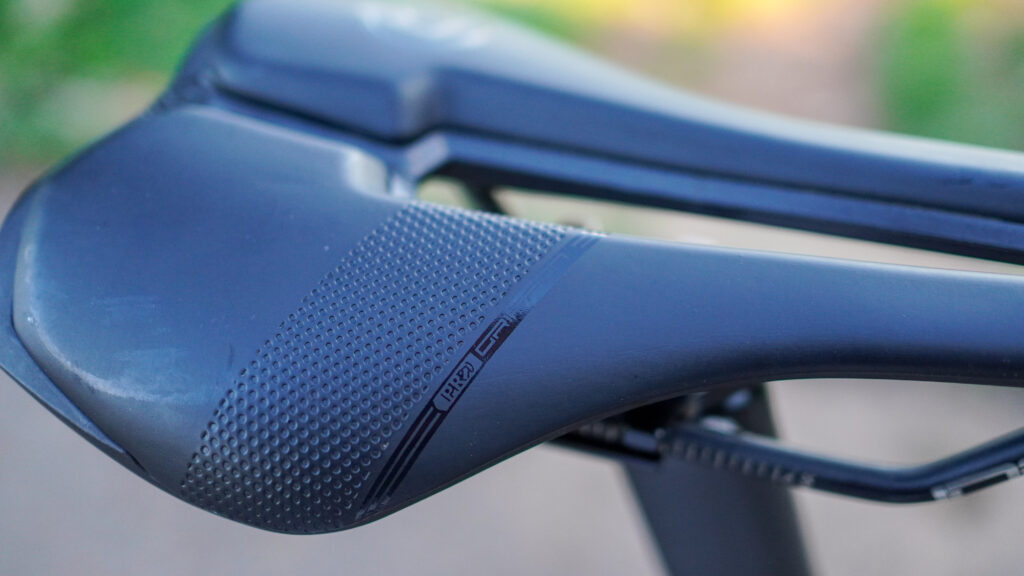
A basic Pro saddle is ideal for such a bike. I find it comfortable and should I ever damage it in a crash, I wouldn’t be sad about it breaking. Yes, there are much lighter saddles on the market, but this isn’t a weight weenie build.
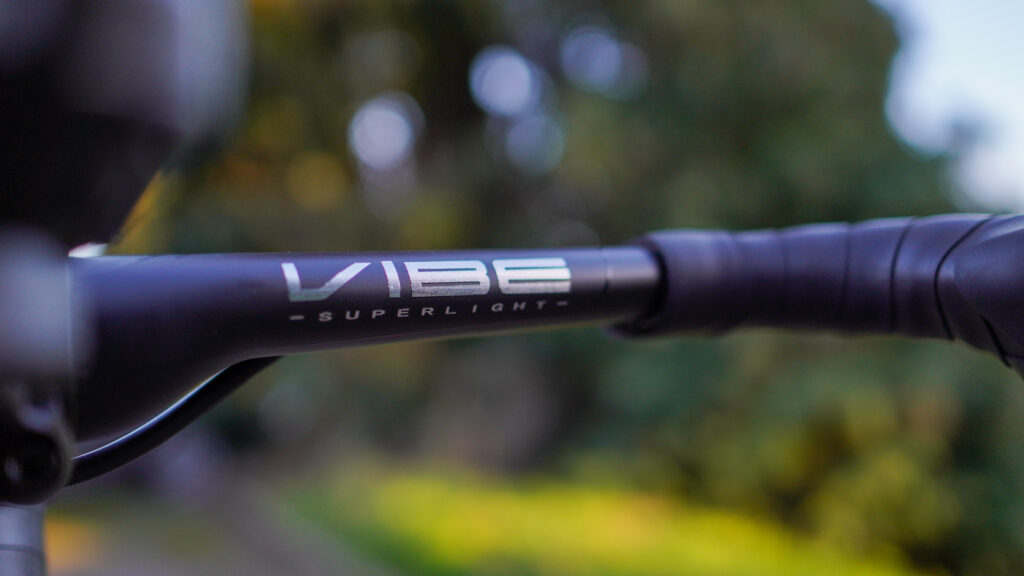
The handlebar, too, is from Pro in the form of a Vibe Aero Superlight. Retailing at £290, this is not a budget-friendly option, but I had it left over from breaking down a previous bike, so I thought putting it to good use here would be a sensible step.
Carbon, however, would not be my first choice for a race bike. If I needed to buy a bar for this build, I would select a basic alloy bar. It might fare better should the bike hit the tarmac and really, the most important aspect of a bar for a race bike is the fit.
Spending a little money on some grippy tape is a nice way to make any bike feel a bit more special. I opted for a roll of M Part tape from my local bike shop, but BBB’s Gravel Ribbon is another excellent choice around the £20 mark.
I have chosen to assign £120 to the finishing kit as not everyone will have spare parts, but really, you don’t need to spend more.
Economising further
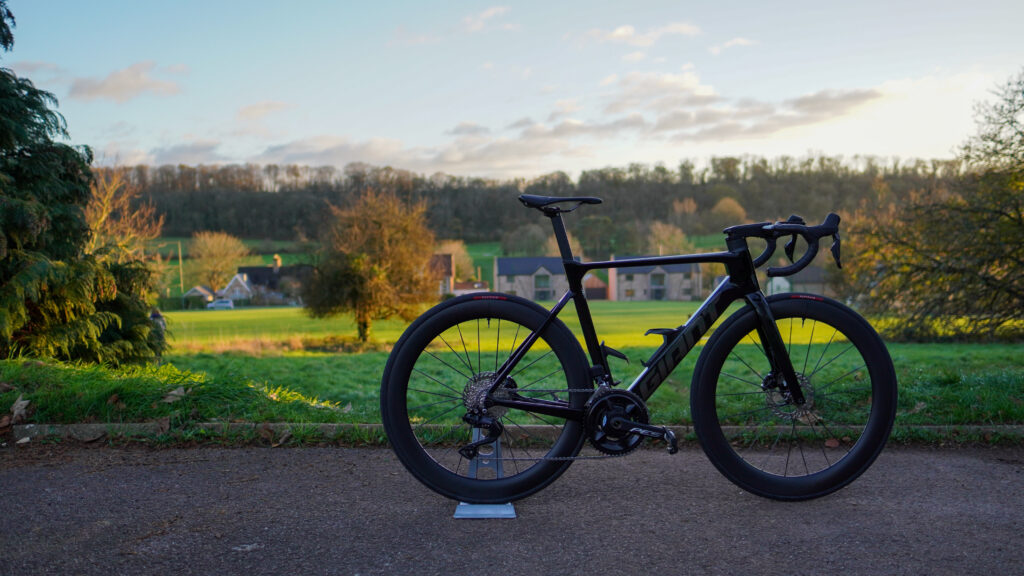
This brings the total to £4,009. While such a price represents a saving over complete bikes like Canyon’s Aeroad CF SL SLX 7 Di2 at £4,199, there are ways to bring such a build in at an even lower price.
Firstly, starting with a used bike is a brilliant way to stretch your money further. This is a little difficult to accurately budget, as bike availability changes all the time. You’ll also need to have some cash set aside to replace any worn parts.
Doing work on a used bike can also be a barrier for newer cyclists, but as someone who learned to strip a bike via YouTube videos, I’d strongly encourage you to have a go. Do consult a professional mechanic if you’re uncomfortable working on your bike, though, and do get a basic safety inspection from a professional at the very least.
Secondly, being even more sensible with component choices could drastically reduce your costs. Electronic shifting, for example, is something of a luxury. Having mechanical gears will not be the reason I lose a race, and replacing a mechanical rear derailleur will be significantly cheaper.
All in all, I think I’ve built a cracking race bike if I don’t say so myself…
What would you change, and what would stay the same if this was your bike? Let us know in the comments




8 thoughts on “Making an affordable race bike for 2026 is harder than you think — but there are some smart ways you can save with compromising performance”
No particular comments on the
No particular comments on the resulting build, but with regards to the premise:
You either need the skills and tools to build a bike yourself, or need to factor in paying someone else to build it for you.
It’s possible to find some steep discounts on fully built new bikes, especially Giants. You can buy a brand new Propel Advanced Pro 0 for <£4,000 which gets you an equivalent or better bike (main difference is Ultegra on the full build vs. 105 on Liam’s) and with none of the faff of building it yourself. You might have to shop around a bit to find the right size. The slightly lower spec Propel Advanced Pro 1 is available for less than £3k and ticks most of the same boxes – although you might need to source your own power meter if that matters to you (and again might need to shop around for other frame sizes, although still wouldn’t expect to pay more than ~£3.5k).
Not going to scour the internet for futher examples, but in general I would say it’s possible to buy a race bike of equivalent specs for less than Liam’s “affordable” build.
One caveat is that I do think there is merit in building a bike to your preferred specs from the frame up. I don’t like the idea of buying a full build only to swap the saddle, wheels, tyres, stem handlebars etc. to get ones you like and get the fit right. It can still work out cheaper (if you sell off the swapped out parts on eBay) but doesn’t stop it being annoying. The corollary is that getting the right parts may be antithetical with saving money using parts you have lying around in the “parts bin” – maybe if you’re a full time cycling journo your parts bin is a bit better stocked than mine, but mine is basically stuff I didn’t get on with and therefore replaced.
OnYerBike wrote:
Not sure that would have worked for the article sponsor though
Some people like assembling
Some people like assembling bikes.
As to this build, he needs to select chainrings that better match the powermeter.
I hope I’m not being too
I hope I’m not being too picky in observing that this “race” bike will not be very fast at all without a bottom bracket, pedals, or a way to keep air in the tires!
my takeaway from this is buy
my takeaway from this is buy Chinese wheels and cranks lol. And it’s actually for real, ’boutique’ Chinese wheels like light bicycle and elilee cranks are really quite good, and they seem to be experimenting and innovating in ways that are too expensive for western brands to easily do.
my takeaway from this is buy
my takeaway from this is buy Chinese wheels and cranks lol. And it’s actually for real, ’boutique’ Chinese wheels like light bicycle and elilee cranks are really quite good, and they seem to be experimenting and innovating in ways that are too expensive for western brands to easily do.
£4k on a “budget bike”. No
£4k on a “budget bike”. No wonder the industry is struggling and races are not being entered
But, pray tell, what is smart
But, pray tell, what is smart about compromising performance?