



Commuting to work by bike offers plenty of benefits, from getting fresh air and exercise at the start of your day to often being quicker – or at least more enjoyable – than driving or getting public transport. But can riding to work save you money on your commute too?
How much does the average person spend commuting to work?
> A beginner’s guide to cycling to work
Unless you work from home, chances are you spend some money getting yourself to your place of employment. According to the Office for National Statistics (ONS), the average commuter in the UK spends £2,616 per year just getting to work. This figure is based on the total cost of commuting, including expenses like fuel, train tickets, and parking. Those who use trains as their primary mode of transport spend even more on average – £3,454 per year.
According to the 2020 National Travel Survey, the average worker spent £17.23 per day on car-related commuting costs. This figure reflects the costs associated with fuel, parking, and other expenses directly related to using a car for commuting, but doesn’t include other costs like insurance, road tax, and maintenance. That is a pretty significant amount, and the cost of commuting is only going up.
How far do people commute?

> How to save money on a bike with a Cycle to Work scheme
According to the ONS, the average commute in the UK was 27 minutes in 2021. This ranged between 63 minutes on average for those travelling by rail, and 15 minutes for those walking to work. In England in 2023, 70% of all commuting trips outside of London were made by car, rising to 81% in rural areas.
A typical commute in the UK for car drivers is 19.5 miles each way. And while that might not be achievable for all cyclists, many commutes are much shorter than this.
So how much does it cost to cycle to work?

> 9 reasons to get to work by bike plus top tips to get you started
There are a few things to look at when totting up the cost of cycling to work. There are obvious expenditures like the purchase of the bike itself, and then servicing and maintenance costs. But there’s also the addition of kit, if you want to wear anything specific for riding (but you don’t need to) and – don’t laugh! – the potential for increased snacking requirements if you’re burning more energy getting to and from work.
When it comes to buying a bike, there are a few ways to make it as cheap as possible. Firstly, you can buy secondhand. You’ll be able to get something in reasonable nick if you know what you’re looking for.
If you don’t, and you’re an employee rather than self-employed, there are salary sacrifice Cycle to Work schemes. We’ve covered how it works in our guide here, but essentially, you sacrifice a part of your salary to pay for a bike in monthly instalments. This is taken before tax and National Insurance, so you end up paying less of both.
Nowadays, you can buy pretty much any bike you like through various schemes, depending on which one your employer has signed up to. This includes e-bikes, which can certainly make commuting more appealing if you have a particularly hilly route.
So… how much can you save by cycling to work then?
> Cycling to work, your ultimate commuting kit list
Let’s mock up an example. If Simon has a £25,000 salary and he chooses an £800 bike through Cycle to Work, a helmet at £50 and lights and other accessories for £150 to bring it to a total of £1,000, his monthly payments and final ownership fee after four years will end up costing him £750 overall. This results in a 25% saving on the RRP. And the more you earn, the more you’ll likely save due to the savings on tax and National Insurance contributions.
Let’s say that the average commuter spends around £1,000 on their bike, helmet and lights. You’ll also want to consider some basic tools and a puncture repair kit, which could set you back £20+. Then, you might want a new backpack or some panniers. You can spend a lot on these, but basic waterproof panniers can be around £40. We’ve put together an ultimate commuting kit list you can read to get a better idea of what you might want for riding to work.
A bike service costs between £40 and £200, depending on what’s included. You’ll want to get a service done at least once a year, more often if you ride a lot of miles and in all weathers, so you should factor in consumable parts like brake pads and tyres, too.
In total, cycling to work could cost around £1,200 for an entire year, and that’s including the price of a new bike, paid in monthly instalments; it’ll be less if/when your bike is fully paid for (until you get the bug and buy another one).
In other words, you might well be paying less than half of the average commuting costs by making the switch. This is, of course, a very rudimentary figure. You can work out a more accurate calculation for your own circumstances, but the result is clear: cycling to work can save you some serious cash.
On average, UK car owners spend £3,800 per year just to keep their cars running. With increases in insurance premiums and vehicle excise duty (VED), plus the fact that it can cost hundreds of pounds for a basic service at the garage, owning and running a car is undoubtedly expensive. Imagine if you could swap out just a few days of driving to work a week for riding, and how much that could save you on fuel, parking and wear and tear costs.
Should everyone commute by bike?
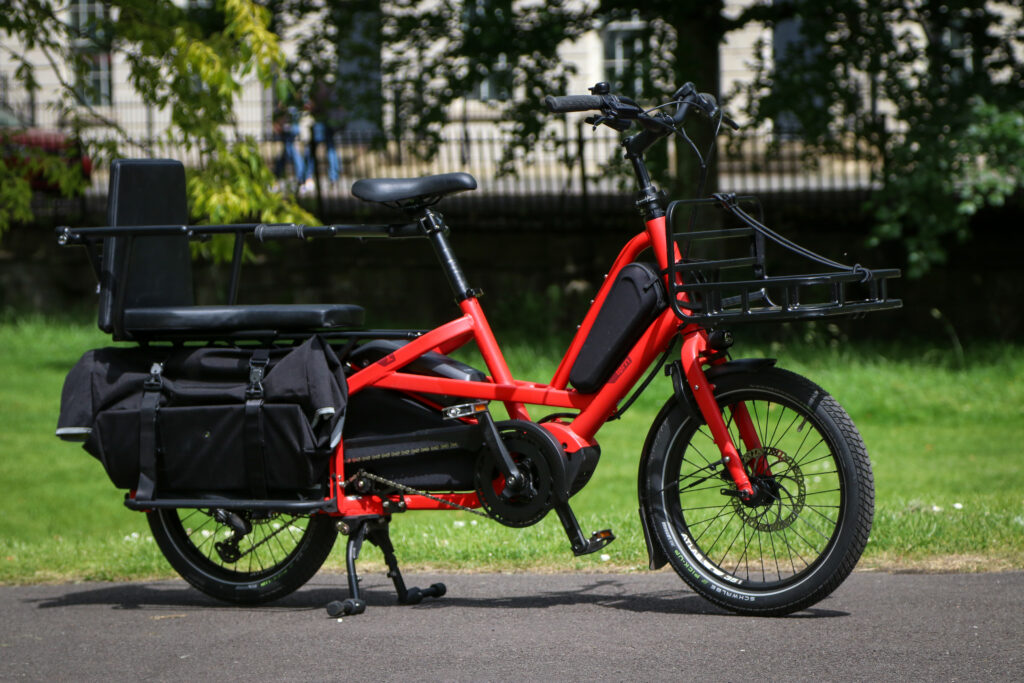
Of course, commuting by bike just isn’t feasible for everyone, whether that’s due to sheer distance, the type of work you do, or the need to carry a lot of equipment (although you could invest in a rack and panniers or an e-cargo bike). Plus, not everyone wants to cycle to work or is physically able.
That said, you could see some significant savings even if you swap the car, train or bus for the bike just once or twice a week. You’ll likely feel fitter and get to feel smug when you get to the office, too.
Let us know how much you save by cycling to work in the comments, and any tips for keeping your bike commute as cheap and cheerful as possible.



















49 thoughts on “How much money can you really save by cycling to work?”
My household fuel bill has
My household fuel bill has gone from £120 a month to £30 a month since I started cycling to work and my missus works from home.
If I got the bus everyday it would cost £80 a month.
GrumboNumber5 wrote:
Do you turn the heating off when you leave?!
If your including the cost of
If your including the cost of the bike to the total cost shouldn’t you also include the cost of the car in your total cost as well
Seriously, in both cases,
Seriously, in both cases, treat vehicle as depreciating asset. £1,000 bike has a resale value. Cost per year is the depreciation you allot. Say £200 pa.
Our previous car had virtually no resale value and no depreciation due to being worthless. Excellent purposeful van with seats. Ironically, based on resale or trade-in values, my bikes have depreciated more than the car. Gave it to a lady opposite. Still going strong after 20+ years, over 120,000 miles, and ULEZ compatible.
Even if it’s worth next to
Even if it’s worth next to nothing, there is still the matter of the hundreds (or thousands) of pounds a year it costs to insure, tax, service and park the thing.
That’s why I thought. They
That’s why I thought. They cite a ~£17 daily car cost that doesn’t include the cost of owning the car. So why include the cost of owning the bike?
Nevermind that most of us here already own a bike.
Don’t forget locks and
Don’t forget locks and insurance.
Don’t forget the cost of
Don’t forget the cost of keeping your bike in good condition and a service. It’s probably a couple of hundred a year to keep things smooth and get a service. Much cheaper than other options even with insurance.
Alas, I found the second
Alas, I found the second breakfast usually ate up the savings on train fares.
And I found the journey took
And I found the journey took me twice as long as by train and three times as long as by car, thanks to all the traffic lights, etc. I decided I’d rather spend that time working, which was more pleasurable, as well as more lucrative.
The trick is realising you
The trick is realising you don’t need the second breakfast. Fight the temptation. 2nd breakfast and other food (often carb loaded) after big workouts ended in a massive heart attack and 3 resuscitations for me. Core fitness helped me survive the event and work with the ambulance crew and surgeon. Also helped my rehab (on line during lockdown, everyone in the group had done lots of exercise: no couch potatoes, smokers, heavy drinkers; but all carb loading fitness fans)
Elite Marginal Gains.
Elite Marginal Gains.
In Toronto, Canada, bicycle
In Toronto, Canada, bicycle commuting can be a real bargain on shorter commutes. The city bike share system gives unlimited rides of up to a half an hour at a cost of $105.00can for a year. You do need to have a credit card. Compared to the next cheapest cost of an annual transit pass for one year @ $143.00can paid monthly. No lock, no maintenance , no capital up front.
My potential annual savings
My potential annual savings are £259 in bus fares or £264 in rail fares.
Have you taken into account
Minus the cost of the extra wear and tear your bike etc. will be subjected to?
Bought a Daws Karakum in 2006
Bought a Daws Karakum in 2006 and have had very little trouble with it. Invested in Schwabel tyres a few years ago and haven’t had one puncture since. Going in for a refurbishment in January, so that’ll add a few years of life onto it.
My commute of 80miles (now
My commute of 80miles (now 70miles after an office move) is too far too far to do on bike regularly (I did it once to the old office) but I saved circa £6 by not taking a branch line and after including the wait and walk I was faster. But I only in the office twice a week. At the new office I’ve a similar saving by getting off the train two stops early but its not faster, it is more pleasureable though. Even on days like today when it was solid rain and a lot of flooding I reckon at most I save around £500pa in rail fares but as I say its more pleasurable and the health benefits are worth more
One thing’s for sure. We’re
One thing’s for sure. We’re the only road users who don’t have to worry about fuel duty, pay-per-mile or vehicle excise duty as regards the coming budget.
Are they going to add this
Are they going to add this for electric vehicles then?
They’re adding VED for some
They’re adding VED for some electric vehicles.
https://www.gov.uk/guidance/vehicle-tax-for-electric-and-low-emissions-vehicles
Nothing to do with the coming budget, which doesn’t mean there won’t be further changes.
Its inevitable as tax receipt
Its inevitable as tax receipt from fuel duty collapse
Been cycling to work for 10
Been cycling to work for 10 years and not had a car for the last 3 years. I also do other journeys to shops and round about by bike.
i reckon I save about £400 per year on fuel, and about £1200 per year on running costs.
i have just spent £600 on a new bike to replace a 9 year old on which I’d done 9000 miles on so overall makes me a lot better off, as most of the kit I have lasts a few years, and I also ride for fun.
This is an interesting
This is an interesting feature actually; I reckon the savings are probably zero unless you exchange the car for a bike and be very resolute about the whole thing, and also do your own servicing. The bigger benefits are probably health and sanity.
Really? I would have thought
Really? I would have thought the maintenance costs caused by lots of commuting miles will be much higher for a car, plus the petrol costs.
I agree there’ll be a big range for cyclists; one on a fixie they paid nothing for who does all all their own maintenance at one end of the spectrum and another on a fancy bike who pays a mechanic to do everything at the other end.
Garages often argue cars that
Garages often argue cars that do less miles cost more to maintain, as fluids and lubrication tends to dry, leading to increase wear and damage on components.
It’s abit like your car is actually more fuel economical to run if you consistently drive long mileages, whilst less frequent short journeys use more petrol per mile in comparison.
Jimthebikeguy.com wrote:
I’d agree that the mental and physical health benefits were (and still are) the most significant part for me. Covid times 2020-on were particularly demanding and the ride home helped my head better than any drug could have done.
I started commuting by bike in 2006. Since I still owned a car the saving was not huge. However, my car’s annual mileage dropped, which meant that, as well as using less fuel, some parts lasted longer; more importantly for me, the car itself lasted longer before it had to be replaced, a few weeks before its 25th birthday. Using the bike also means that I can be flexible and have no difficulty getting to work when the car needs servicing or repair work.
My original commute was 5 miles each way but heavy town centre traffic meant the time for each mode of transport was very similar. I enjoyed riding far more than the frustratingly slow car journey. My old MTB required very few parts over the next 3 years.
When the office moved to 8 miles from home I should have been saving even more money but I joined a club and started time trialling shortly afterwards so my riding and bike-related riding spending both increased.
Thing is – the government has
Thing is – the government has a lot of control here! They can influence the balance of fixed costs and variable ones. Currently we have essentially fixed cost taxes that you pay however far you drive – even with tax on fuel it’s still very cheap.
If we get a bigger fraction of electric vehicles the government should be motivated to look again at something to replace VED. So it’s just possible we could see tweaks to the system such that people aren’t so motivated to rather than use other modes *once they have a car*.
It’s not just the money saved
It’s not just the money saved – it’s the time saved. (And time is money)
We’ve saved an astonishing
We’ve saved an astonishing amount since binning the car, about £3000 a year on car maintenance, insurance, parking permits and fuel, £1800 a year on Mrs H’s commuter train fares, about £2000 a year on other train fares, £500 a year on Mrs H’s gym membership (if you ride about 200km a week just in commuting you really don’t need a gym)…we already had two bikes each and the commuter bikes cost £1700 between them (secondhand), we don’t spend more than about £200/300 a year on tyres and chains etc and the rest is pure savings. It’s been a major contributor to the fact that we’re going to pay off our mortgage around the turn of new year, plus we’re fitter and happier, what’s not to like?
(Caveat: we do live and work in London with a dozen bus routes and three train stations within half a mile of the front door, I realise it’s not going to be as easy for everyone as it is for us)
Thanks for sharing details –
Thanks for sharing details – also nice pointer for “why” eg. stop renting from the bank sooner!
Now the UK’s provision of public transport is really patchy (never mind active travel) – particularly “out of hours” and across urban boundaries. And access to amenities is also really variable (because we have literally, deliberately built in motor dependency – in fact we’re still doing so!) …
… BUT the UK population is in fact predominantly urban and increasingly so. And much of that is in bigger conurbations.
https://www.statista.com/statistics/984702/urban-and-rural-population-of-the-uk/
It’s actually a good time to add an alternative to private motor transport!
I’d say I save £600 on fuel
I’d say I save £600 on fuel per year. Whether that or more is then spent on new bike things, kit, tech, tyres, wheels etc…
It makes you feel better though, and you never have to worry about traffic jams, just the idiots who want to drive into you
Just the health benefit alone
Just the health benefit alone of one extra hour of sunlight and exercise a day, is priceless.
The way these statistics are
The way these statistics are reported bothers me.
If the average commuter spends £17.23 a day, and the average commute is 27 minutes, how on earth are they spending that much?
The £17.23 looks like a basic mean – the total cost of commuting divided by the number of commuters. This number is essentially meaningless because it doesn’t take into account the skew resulting from a few very expensive commutes.
To report correctly what the cost to the average commuter is you first need to work out who the average commuter is, and you might do that by categorising commute lengths and types and finding which category contains the greatest number of people. You might then find the median cost of the people within that category and then report that number as the daily expenditure of the average commuter. You might choose a different method, but if you’re just going to report a mean without any context you might as well not bother.
Edited, thanks to sanity check from the posters below.
bensynnock wrote:
What you’ve described is a mean, not a median.
You are correct, but pointing
You are correct, but pointing it out is just median.
mdavidford wrote:
Just an average day for me.
Dnnnnnn wrote:
You are correct, but pointing it out is just median.
— Dnnnnnn Just an average day for me.— mdavidford
Fair to middling?
Thanks. I must have been
Thanks. I must have been having a moment.
My office is 16 miles away,
My office is 16 miles away, 270m climbing, hilly cross country route so not an easy cycle… 1km 15% hill to start with.
My office has no shower facility so a dry day is important as I can only wipe down with a flannel before getting changed into clothes I bring in the day before
However, doing it once a week during the British summer time months on a Friday saves roughly a gallon of fuel a week plus wear and tear on the car…. call it £200. Plus I really look forward to it!
If the cost of a new car is
If the cost of a new car is equal to six months net income and you keep it for six years then it needs to reduce your commuting time by 1 month per year to pay back the time spent working for it.
We sold our car 7 years ago
We sold our car 7 years ago and I just got Ai to tot up some sums. The average cost of car ownership is £3500/year. Over 7 years and with 6% compound interest (what the stock market would typical return) that’s £29,400 that we’ve saved.
AND that is calculated with the capital depreciation of the car costing per year, normally people have to front the money for the car which means the actual savings due to compound interest would be higher.
Though we have spent £5.5k on fuel/rental cars over that period.
Over 90 % of new cars are
Over 90 % of new cars are bought on some form of finance, so few people pay upfront.
True, but we would never have
True, but we would never have done that, as a principle we don’t like funding ourselves with debt. The mortgage is the obvious exception because there is no alternative.
Not many people take that
Not many people take that view anymore and end up locked into agreements giving rise to claims of car poverty when they struggle to meet the payments!
It has been mentioned but I
It has been mentioned but I think possibly the major cost of cycle commuting – if you don’t do it yourself – is likely to be servicing and repairs.
It also depends on the type of bike and riding you do – internal cabled, un-mudguarded, lightweight-tyred road bikes ridden with dirty or dry crossed chains on 10+ speed cassettes which are shop maintained will cost a lot more to run than a simpler, cheaper (but still good) bike you look after yourself with parts bought online.
I suspect a downside of the C2W scheme is that it tempts new riders into the former approach (no doubt encouraged by the retailers) and might end up putting some off cycling in the longer-term when they get hit with big bills for labour and parts at RRP.
Sadly, and for many, the cost of having to replace a stolen bike (more likely to be the shiny £1k C2W one) is also a significant potential cost.
Basically, hurray for ‘beater bikes’!
Dnnnnnn wrote:
I thought it was cake. 🤔
mdavidford wrote:
For me it is the cost of suitable attire. The beret and hooped jersey are not too bad, but constantly replacing the onions is more expensive than I first imagined.
Time is more important to
Time is more important to myself than the money.
One and a half hours sat in a tin can every day, or twenty-five minutes on a bike (popping wheelies and doing bunny hops)?
I know some competitive
I know some competitive cyclists who use the work commute as a training opportunity, otherwise they would struggle to fit it into their daily routine.
In some cases they take an extended route to increase their training mileage.
Obviously this works best if most of the journey is on rural roads.