



According to the Bladder & Bowel Community, the average person goes for a wee six to seven times every 24 hours, though that number can happily reach 10. That’s once every 144 minutes or two hours and 24 minutes. The longest stage of this year’s Tour de France, is the 209km second stage which was won by Mathieu van der Poel.
If the Dutchman is a prolific urinator, that’d mean two peeing stops en route to victory in Boulogne-sur-Mer, factoring in the pre-race faffing and neutralised zone. Which is a long-winded way of asking the question of questions: how on earth do riders wee during the Tour de France? Stage one of this year’s race gave us a viral clip that explains the bizarre spectacle quite well, but the post-breakaway mass-piss is the easiest of the toilet stops and there’s plenty more to be explained.
Breakaway is gone. Pee stop for the bunch. pic.twitter.com/kGoVWbta2o
— Thomas De Gendt (@DeGendtThomas) July 5, 2025
(Not) as nature intended
Well, our urinary adventure started 12 months ago with Lotto Dstny women’s rider Mieke Docx, who liked a post of a male Lotto Dstny colleague rather impressively urinating into a bidon at last year’s Tour. Unfortunately when we returned to the Twitter scene of the crime the next day, it’d gone. We suspect the powers that be deemed liking a piss not in tune with the clean image they’re looking to project. Will Victor Campenaerts be seen relieving himself into the appropriately yellow bidons of his new team Visma-Lease a Bike this year? Or should that be Pissma-Lease a Bike or Visma-Pees a Bike? I’ll see myself out…
Instead, let’s begin with the urinary rules; in other words, no indecent exposure; in other words, no weeing in (sight of) public. Every year there are always a few names on the daily fines list, amusingly having been caught giving some poor French family an accidental roadside eye-full.
That’s what resulted in Tour organisers ASO penalising Wout van Aert (now a teammate of the aforementioned bottle-filling Campenaerts) and the now-retired Luke Rowe at the 2021 edition for “inappropriate behaviour – urinating in public”. Each were fined 200 Swiss francs for openly letting it flow. That’s not as bad as Belgian rider Johan Vansummeren, who faced the wrath of ASO three times at the 2010 Tour. Thrice almighty. That really is taking the piss.
Penalty peeing isn’t confined to the world’s biggest cycle race. British rider Alexandar Richardson, then racing for Alpecin-Fenix, faced the wrath of Kernow after a picture emerged of him urinating in public during the opening stage of the 2021 Tour of Britain from Penzance, through St Ives and onto Bodmin.
A communique released by the race organisers read, “A complaint was received from the Mayor of St Ives, who produced a picture of the rider Alexandar Richardson urinating in public, which subsequently found its way onto several social media channels.”
Richardson was fined £700. But forgiveness comes in many forms, in this case Richardson later raced for Cornwall’s finest, Saint Piran (plus, considering he put his stockbroker career on hold to pursue cycling full time a few years back, £700 is probably pocket change).
Whether former Madison Genesis rider Taylor Gunman will ever forgive retired kitchen designed Steve Hines remains to be seen. Hines went to watch the 2017 Tour of Britain and got more than he bargained for when, after firing off a series of rapid shots, snapped Gunman’s unfurl-and-spray technique. “Well, when you’ve gotta go, you’ve gotta go,” Gunman joked to The Sun.

Technique and etiquette: how do they actually do it?
So, we can see what you can’t do when your bladder’s at bursting point. But what can you do?
“It’s different for every rider,” 35-time Tour stage winner Mark Cavendish told GQ 10 years ago. “Some riders maybe take two, three, four pisses during the race. I go right at the beginning of the stage.”
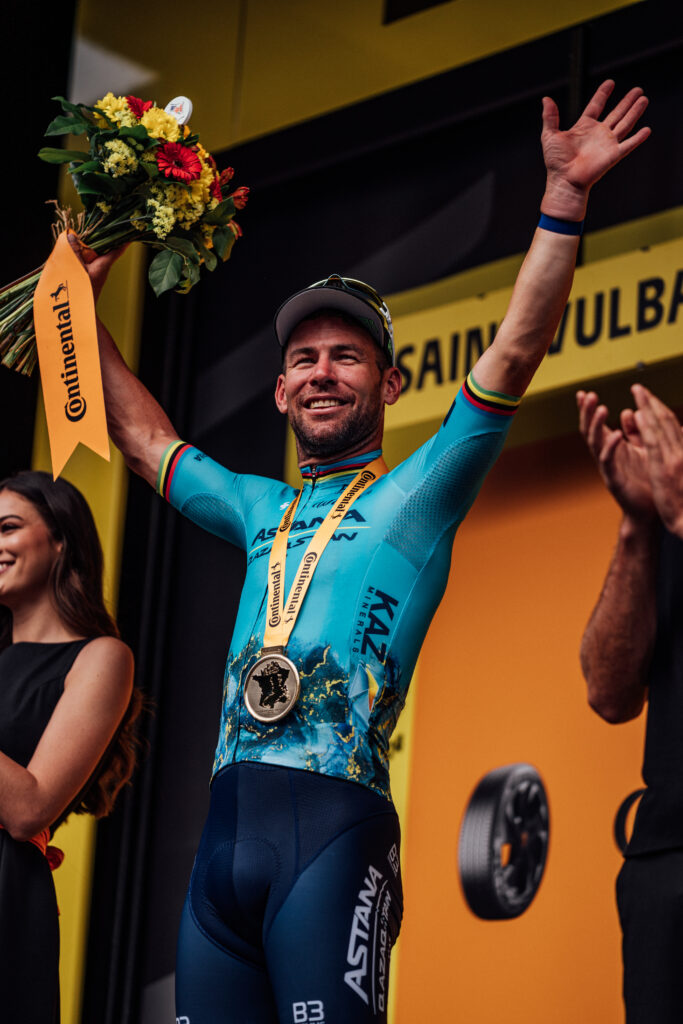
That early evacuation’s common, especially on sprint stages where there are kilometres and kilometres of smooth tarmac to reel back the breakaway. I recall team-car time with Trek-Segafredo years ago where, only 10km in at a Tour stage, we drove through a cast of riders on either side of the road who were emptying their bladders. It seemed early but, as the DS told me, “They’ve been hanging around at the start, then riding the neutral zone. They’ve also inevitably drunk more when not hanging around.” It’s also a good time to avoid onlookers as the TV cameras’ focus is elsewhere.
As for technique, in this uniform urinal, it’s simply a case of dismount, stretch bibs down and offload. If it’s later in the stage, there’s a Grand Tour tradition that if the GC leader goes, no-one should attack (albeit if they do, inevitably Tadej Pogačar would reel them in).
It’s all quite orderly on the flat or early on. But, as the mountains hone into view or key sections await, the pace cranks up, making dismounting not an option. What happens then? “People have different ways,” Cavendish continued. “Some guys lift up their shorts and go. Normally, if you’re on a slight downhill, you can kind of just move to the side of the group and continue while you do it on the bike. Or you can get a teammate to push you.”
Cav’s underplaying the technique at play, which is keeping one hand on the bars with one leg nestled against the top tube. If you want to try this on your next group ride – a surefire way to lose popularity – ensure you keep your eyes looking ahead.
Where you unleash your penis depends on your bib’s elasticity, so either roll up a short leg or through the top of the bib short. And, of course, make sure wind direction is on your side (and not on your face). It’s not one for crosswinds.
Of course, if you have no other option, just let nature happen and urinate in your bibs. It can sometimes have its advantages. “In races that are soaking wet and freezing cold, I like to piss myself,” said Cavendish. “It warms me up for a split second. You get warm and you don’t have to fuss around.”
What about women’s bladders?
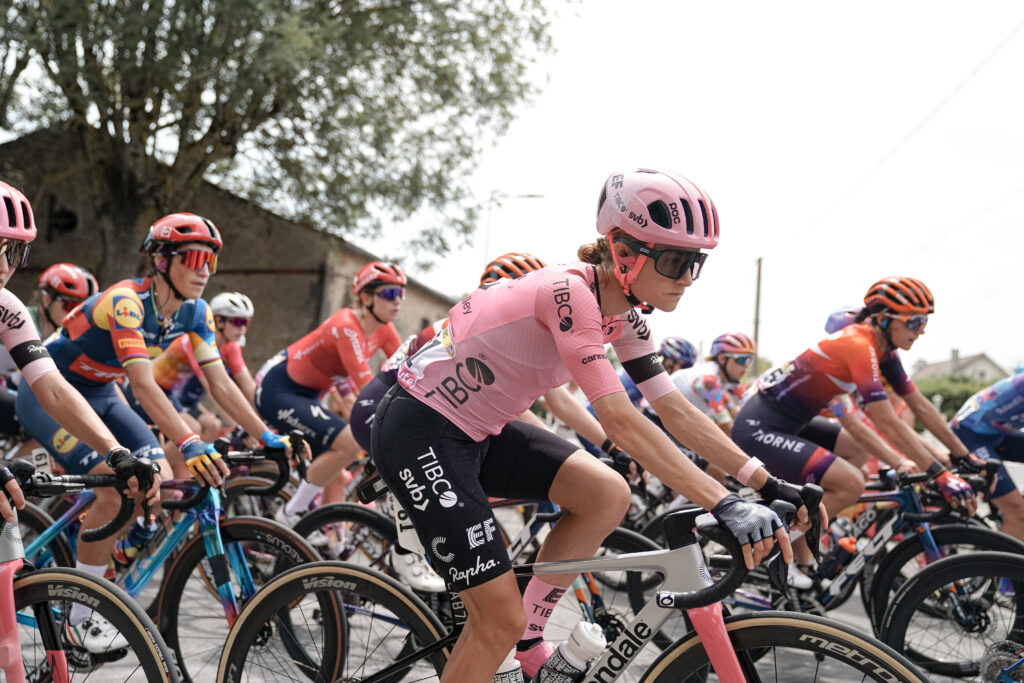
So, for the men urinating on the fly isn’t ideal. For the women, it’s not really an option. Their stages might be shorter, and arguably more exciting, than the men’s, but they’re still out there for many hours. Take Demi Vollering, the favourite for the women’s Tour later this month who, won La Vuelta earlier in the spring. Her longest day came on the final stage where she rode for just under four and a half hours. If Vollering’s a 10-a-day urinator, she’ll need to go during the stage.
Or, as AG Insurance-Soudal-Quick-Step rider Ashleigh Moolman Pasio told GCN, “It usually starts off with someone going, ‘I need a pee, do you need a pee?’ You then try and gather people across different teams to all stop at once to sort of neutralise the race.”
As for technique, “In a race, I’m the sort of rider who tries to pull the bib shorts wide enough so you don’t have to undress. But there are plenty of girls who are uncomfortable with that because they’re worried about what happens if it goes wrong, that they’re going to wet themselves, so some completely strip down. Others pull the bibs and try and pee that way.”
Monitoring urine colour
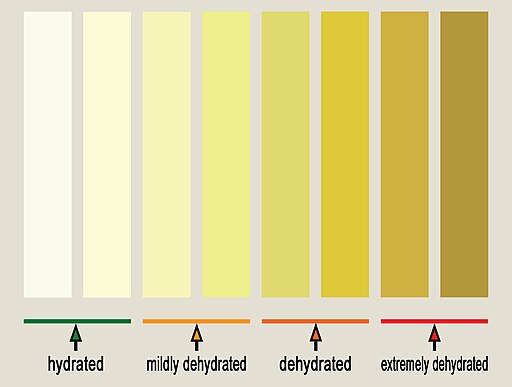
Whether they hold it in or let it out, urination’s not solely a logistical issue. Urine – more precisely, urine colour – is broadly monitored before and after every stage to check hydration levels. Most teams use a simple urine chart, but some might also use the urine-specific gravity test, especially when they have a little more time like rest days.
This involves dunking a dipstick made with a colour-sensitive pad into a rider’s urine sample. The colour the dipstick changes tells the doctor the specific gravity of their urine compared to the density of water. The normal range for urine-specific gravity is 1.005 to 1.030. Normal value ranges may vary slightly among different laboratories. A higher number than that is associated with high sodium levels, which often means dehydration.
They’re more accurate than the colour chart, says former performance nutritionist at MTN-Qhubeka, Dr Rob Child, who once regaled us with a tale from a stage at the 2014 Tour where temperatures tipped over 40°C in the shade.
“That was a crazy hot race,” he said. “I always get feedback on the riders’ hydration levels, but it wasn’t as simple as saying your urine is this colour, so you’re dehydrated. Take B vitamins, for example. They’re heavily pigmented so a strong colour and give the riders’ wee an orange hue. It’s also difficult to tell between dehydration and beetroot juice because both can elicit a darkish red tinge.”
The wrong urine
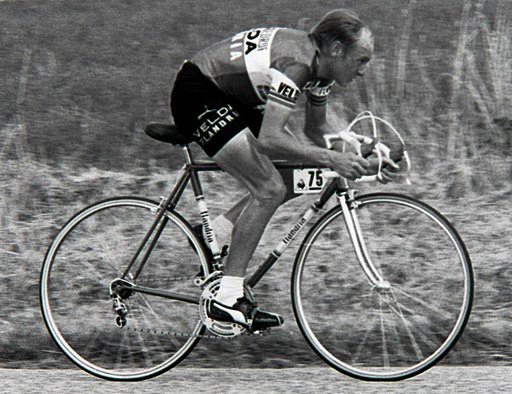
All in all, there’s a lot more to rider urine and urination than meets the eye. There are some complex solutions to the most natural of processes. But these processes aren’t always that natural. In fact, the Tour de France and urinary antics have often crossed swords. Take the case of Michel Pollentier. In 1978, the Belgian arrived at the Tour in the form of his life after winning the Critérium du Dauphiné Libéré and his national championships.
Come stage 16, he attacked on Alpe d’Huez, taking the day’s victory and with it the yellow jersey. Or he would have. His stage-winning exploits meant he had to visit doping control, but he was nowhere to be seen. Meanwhile, a fellow cyclist was caught at doping control with someone else’s urine swilling around a condom tucked into his armpit with a tube weaved down his bib shorts and out the chamois. His fraud was discovered by the race doctor, who then checked all the riders in doping control. When Pollentier was finally found, he too had a condom nestled in his armpit.
Pollentier was disqualified and later explained that he’d tried to evade the controls after taking amphetamines for a breathing issue. The irony was that his own urine tested negative.
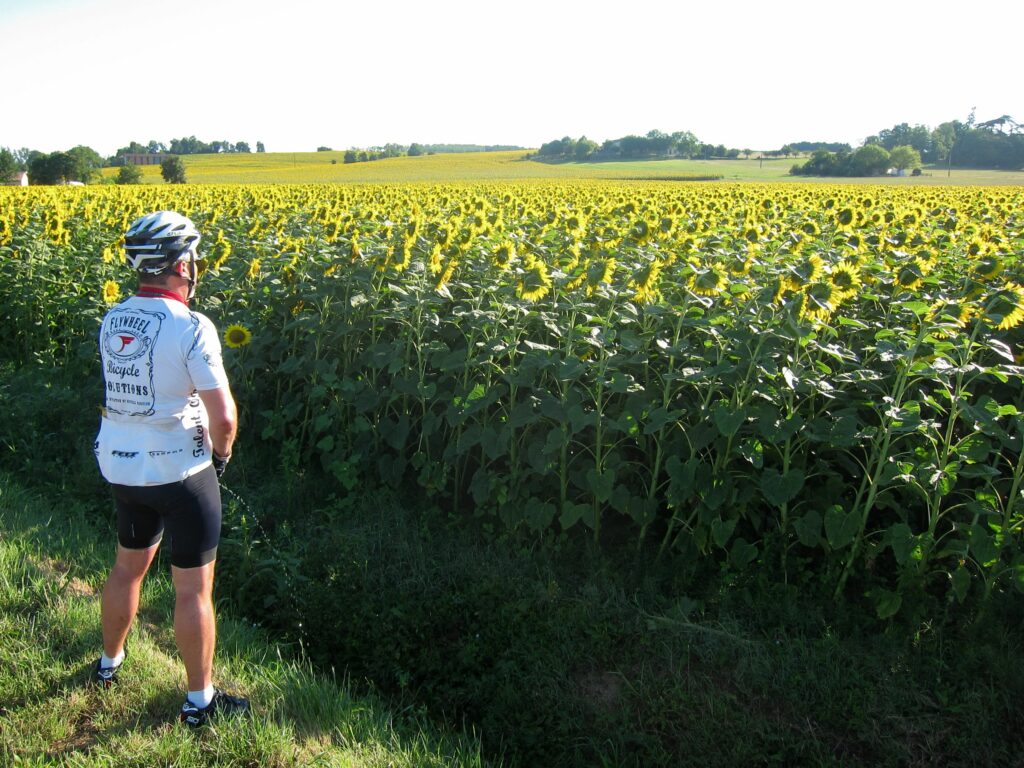
So, there you have it, the inside story on professional pissing in the peloton. If that doesn’t impress your mates over a pint of golden amber down the pub, we don’t know what will…



















11 thoughts on “How do Tour de France cyclists pee on the bike? Your comprehensive guide to in-race relief”
Speaking as an over 70,
Speaking as an over 70, peeing only 10 times a day is a distant memory.
Quote:
I thought a big part of the issue was they don’t have a fly.
As inconvenient as it can be
As inconvenient as it can be trying to find somewhere discreet to go when on a ride, the bigger personal annoyance is I obviously go before kitting up, but before I head out, I end up going one or two more times! I put it down to either or both of pressure from the shorts on my lower abdomen making me feel the need, or simply a subconscious effect of the anticipation and energy rush of getting set to ride. Whatever it is, it’s a nuisance ?
Most of the photos above remind me of a sitcom (I forget which one right now) where a female character asks why men always have to pee [I]against something[/I]. It’s a good question. Perhaps we’re living out our historical role as hunters, needing something to aim at! Though, as women will attest, a great many men need more practice at that! ?
Most of the photos above
As a former festival market trader who spent many summers watching people of all genders weeing up my tarps that I had to handle on Monday morning when there was a perfectly good few hundred acres of open field to urinate in, this used to absolutely boil my p*ss!
Cayo wrote:
Pure guess but I would imagine it’s because when micturating one is obviously in a quite vulnerable position and so facing something – a wall, a tree, Jack’s festival tent – gives a feeling of security as at least one can’t be attacked from the front, with what is facing the front being the part one would be most anxious to defend.
Don’t ask about triathletes!
Don’t ask about triathletes!
Years ago, for a feature I
Years ago, for a feature I was writing, I spent a stage of the Tour de Langkawi in the Linda McCartney team car with DS (not detective sergeant) Sean Yates and the team mechanic.
Partway through the stage Sean needed a pee, as did I, so I was thankful for the opportunity. So, we were out the car, had our pee against a rock face and were back in the car as quick as possible.
I wouldn’t have had much to drink before the stage but I’m guessing Sean would have had a few coffees (pro riders love their caffeine) and as an ex-pro he knew he could have a super-quick ‘nature’ break.
The poor mechanic couldn’t pee on demand so stayed in the car and had to hold it until the end of the race!
Is a Tour de France cyclist
Is a Tour de France cyclist the same as a Giro D’Italia cyclist, or Ronde Van Vlaandaren cyclist? Or do they only ride in the Tour?
So many cycling media trot out the ‘Tour de France cyclist’ as though they are a single type of pro cyclist.
Ah, the Brits clutch their
Ah, the Brits clutch their pearls while the Europeans lounge about in saunas naked, whip everything down on the beach to get changed and in certainly in France pee freely at the roadside (the men, anyways). It literally says Tinkoff on his jersey!
If you’re clutching your
If you’re clutching your pearls while peeing, you’re doing it wrong.
It’s time proper stops are
It’s time proper stops are organised with appropriate facilities. The issue is that so many Sunday riders see the pros do this and follow their example. On big cycle events we would regularly see people urinating in people’s gardens when there was a rest area 200yds up the road. How would you feel if someone stopped and urinated in your front garden!!