


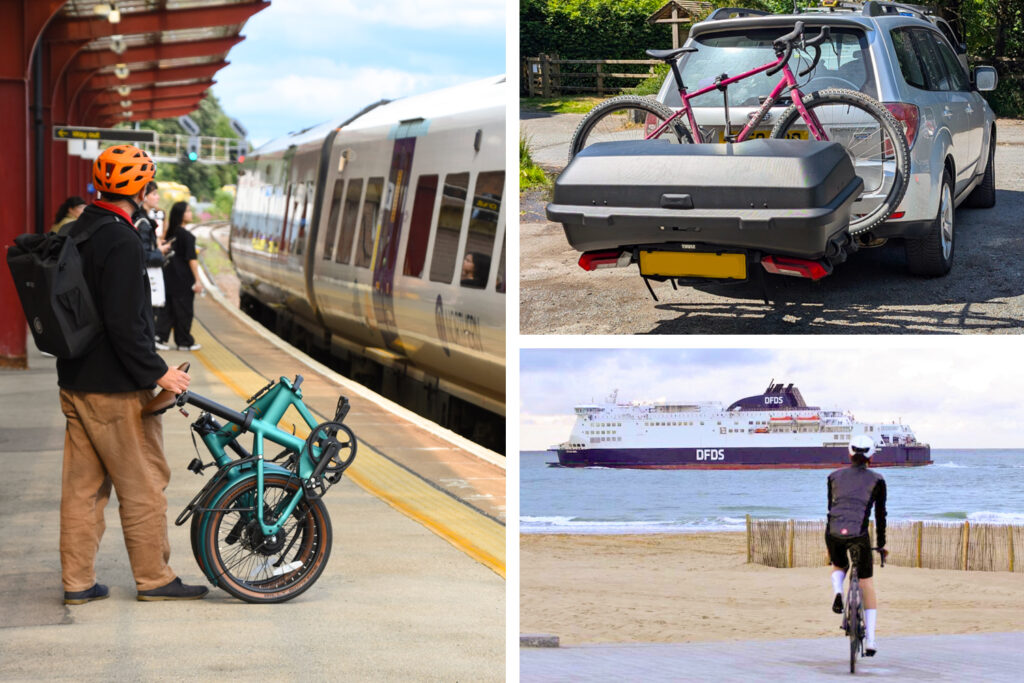

So, you want to go on a cycling holiday without taking your bike on the plane this summer? Flying with a bike is fraught with risk, and there’s also the environmental concern – both of those were factors in our parent company deciding road.cc would no longer fly to attend product launches. The no-fly movement is gaining pace, so we’ve come up with some alternative ways to go on a cycling holiday that won’t incur a guilt trip.
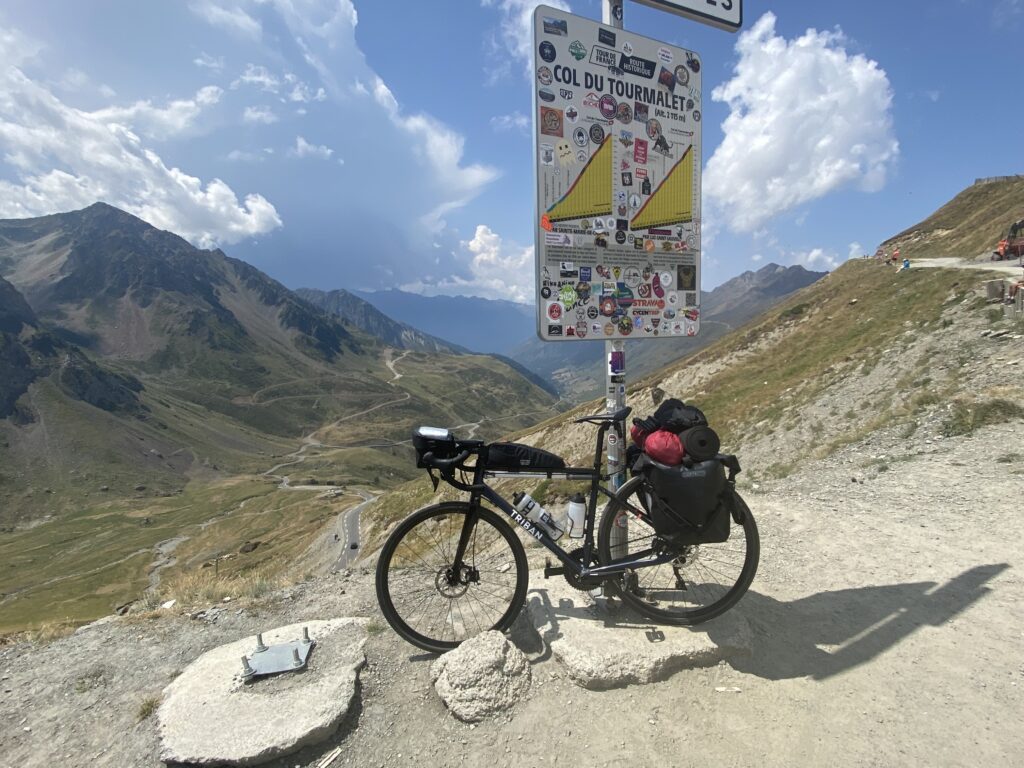
According to Friends of the Earth, flying is “one of the most climate-wrecking modes of transport” and it points to the solution being to choose others methods of transport, or simply to holiday closer to home. Below we have looked at the alternative options from getting the ferry to travelling by train, and also cycling touring.
If you do want to fly with your bike, here’s our no-hassle guide with top tips to save you money, and also stuff they never tell you about flying with your bike.
Get the train
If you’re determined to holiday abroad, it’s surprisingly easy to travel by train. From London, you can get the train to Belgium and France and from there you can travel to Spain, Italy and Germany and other European destinations. Most train services provide facilities for taking your bicycle, but you do need to plan ahead.

An early Eurostar from London gets you into France for lunch and from there you can hop on the TGV high-speed train and be in Bordeaux or Avignon by evening, ready for a weekend of lovely cycling.
Eurostar allows you to take a folding bike aboard.
“You can bring a folding bike, folding electric bike, or children’s bike or scooter on board as long as it’s no longer than 85cm in length and it’s carried in a protective bag that covers the whole bike,” says Eurostar. “This is to protect your bike, other people and their luggage both at the station, on board and going through security.”
What about a non-folding bike?
“We can only transport fully assembled bikes on trains travelling between London and Brussels,” says Eurostar. “If you’re travelling between London and Paris, your bike must be disassembled and in a box or bag when you drop it off.
“You will need to drop your bike off at our luggage area before heading to departures. When you arrive at your destination, your bike will be handed back to you on the platform, so make sure you only bring what you can carry safely.”
“To check if this service is available on the trains you’ve booked, you can log into ‘Manage your booking’ and click ‘Add extra luggage’.”
It’ll cost you, though: at the time of writing, it’s £45 each way if you book more than 48 hours before departure, or £60 each way after that.
Here’s a map of the TGV network to give you some ideas.
There are two options for taking your bike aboard the TGV. You can either fold or disassemble your bike and bring it on board for free, or you can store in the dedicated area of the train. You can book a ticket with a bicycle here.
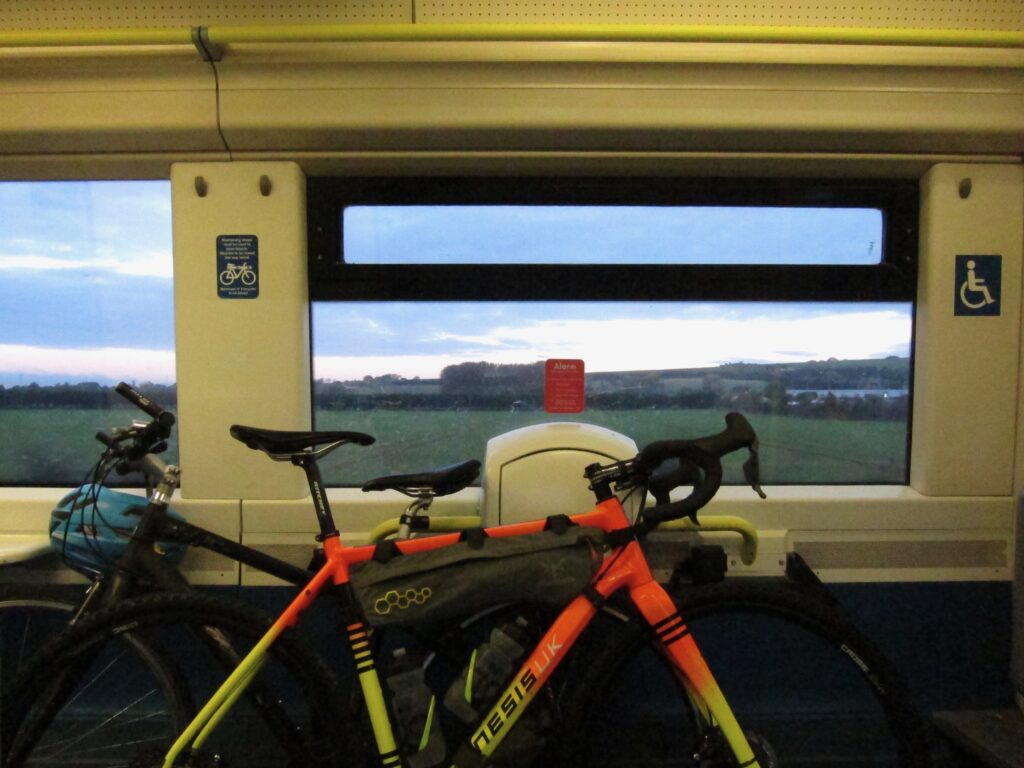
If you want even more information on travelling by train, Seat 61 is a very good resource that has even more detail than we’ve space to go into here.
Staying closer to home, you can be in the Lake District via train in just a couple of hours where some of the UK’s best cycling awaits you. Avanti West Coast will whisk you from several stations to Oxenholme in the Lake District and you can reserve a space for your bike.
Once there, you can either plan your routes or pay for a guided weekend. Saddle Skedaddle runs a guided cycling weekend that will show you the best roads, and include six of the major passes, and ensure you get the best food, for £355 pp which includes two nights hotel accommodation, vehicle support, breakfast and lunch and transfers to the train station.
Get the ferry
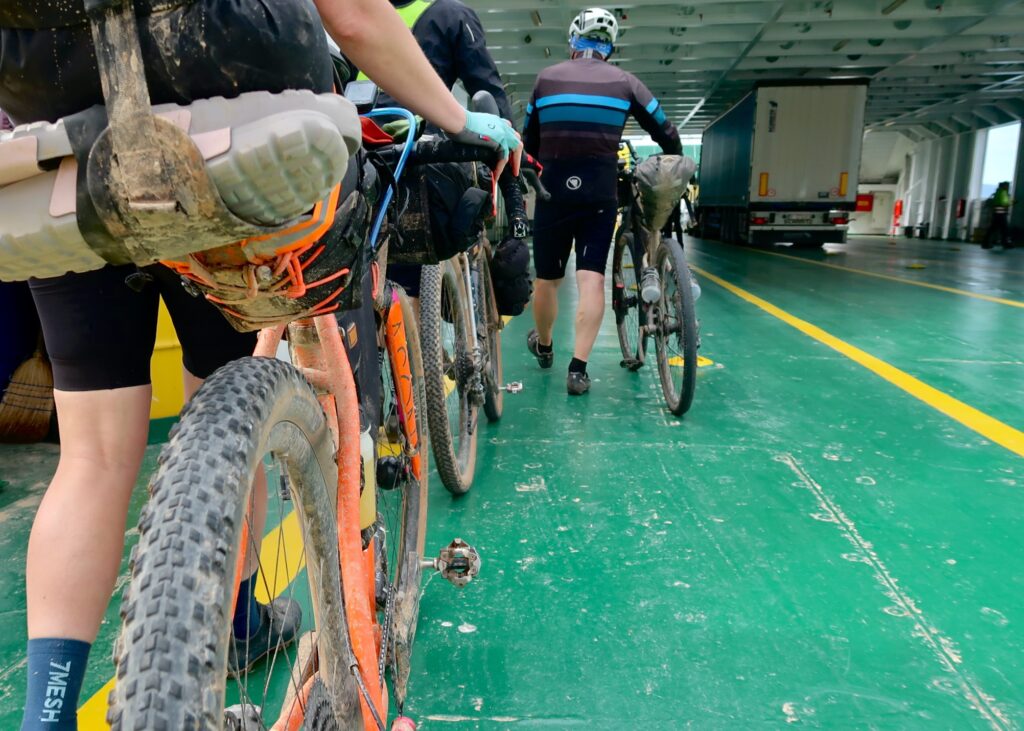
Travelling by water is another option, with ferry services from most big ports easily taking you to Holland, Belgium, France, Ireland and Spain.
You can book a ferry from the UK’s busiest port, Dover, from as little as £30 each way, which is certainly cheaper than most low-cost flights once you add all the extras and especially the massive surcharge for adding a bike to the flight.
Dover to Calais is the quickest ferry route from the UK to France; it takes about 1.5 hours and there are lots of sailings every day. It’s worth bearing in mind that the cost of crossings goes up considerably during school holidays and bank holidays, so check the calendar before you book.
Taking your bike on the ferry can be done either by car with your bike in the boot or on a rack, or you can cycle straight onto the ferry.
How about this for another option? You could travel from Portsmouth to Santander in Spain, with a journey time of 23 hours, allowing you to relax on board and prepare yourself for a dream cycling holiday around northern Spain. This map shows a wide choice of routes to pick from not far from the city.
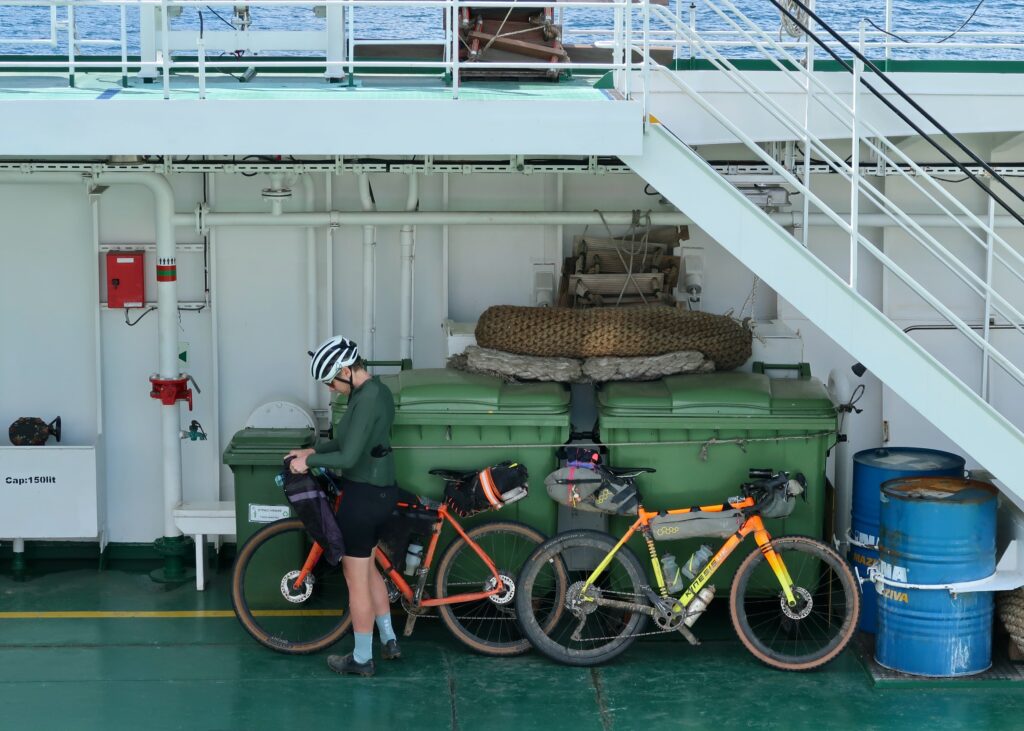
It’s also entirely possible to cycle straight onto the ferry, so you can leave your car at home or a car park at the ferry port, depending on how far you are from the port you want to use. That gives you the benefit of being able to cycle off the ferry (well they’ll make you walk down the ramp) and get straight into your cycling holiday.
A bicycle counts as a vehicle so needs to be booked in advance. The P&O Ferries website has a helpful guide for travelling with your bicycle which is worth a read.
Your bike will be stored safely on the ferry after you’ve boarded ahead of all the cars and trucks. Leaving a ferry port can be tricky as they’re largely designed, as I found out at Calais once, for cars and trucks, not bicycles. You don’t want to end up on the motorway!
Take the car
Got a car? Hopping in the car with your bike is probably the easiest alternative to flying. Advantages include: you’re free to travel when you want, you can choose your route, and you don’t have to worry about packing your bike into a tiny box. The downsides are the hours sitting behind the steering wheel, and you’ll likely arrive at your destination pretty tired.
LeShuttle – formerly Eurotunnel Le Shuttle – whisks you from Folkestone to Calais in just 35 minutes and from there you have your pick of destinations. It comes down to how long you want to spend driving. The French Alps can be reached in a very long day, Italy is a two-day drive, or there are closer destinations in France, Belgium and the Netherlands that all offer prime cycling.
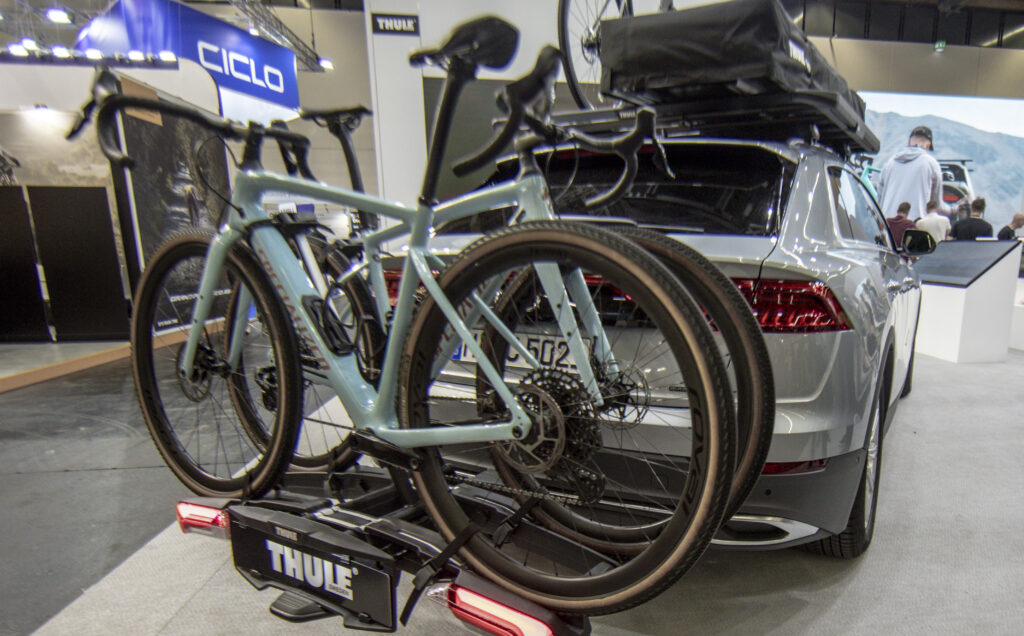
Taking a bike externally on a car with LeShuttle can incur an extra charge.
“Anything extra on the top or rear of your car will change the dimensions and what space your vehicle takes up, therefore, this could change where you are allocated and the price you pay,” says LeShuttle.
“If you decide after booking to add any kind of accessory [such as a bike rack], you must let us know prior to travel as we may not be able to allocate you a suitable space in the same time slot.”
Something you need to factor in when travelling on motorways in Europe is tolls. The fastest route from Calais to Bordeaux will rack up €81 of tolls, so you’re looking at €162 all in to add to the cost of your trip. That’s according to the ViaMichelin website which also suggests fuel costs and alternative routes.
The toll roads though are very good quality with plenty of service stations and rest areas for comfort breaks and picnics.
You can dodge the tolls if you want – you can tick ‘avoid tolls’ in your route preferences on the ViaMichelin website and on various other route planners – but while you might save some money, your journey time will be longer. That’s fine if you want to take the scenic route, but if you just want to get to your destination, using the toll roads is usually the quickest option.
You might want to consider the cost of a hotel to break up the journey if you’re going to the south of France, the Alps or Italy. While you can do it in one go if you live in London and the South East, from most other parts of the UK you’ll have racked up a few hours already by the time you arrive in Calais.
This website has a list of hotels that are near to the fastest route from Calais to the south of France.
If you don’t have a car, you can always look at hiring one. There are all the obvious car hire companies, but there are alternatives.
Turo lets people hire out their cars and it can be a lot cheaper than the conventional car hire companies. There might be a car that is located close by to save you from travelling to a hire car company.
Stay at home and go cycle touring
Why travel when you could explore your local area? With the rise of bikepacking helping to make the idea of travelling with luggage (aka touring) popular once again, you can easily plan a cycling holiday from your front door.
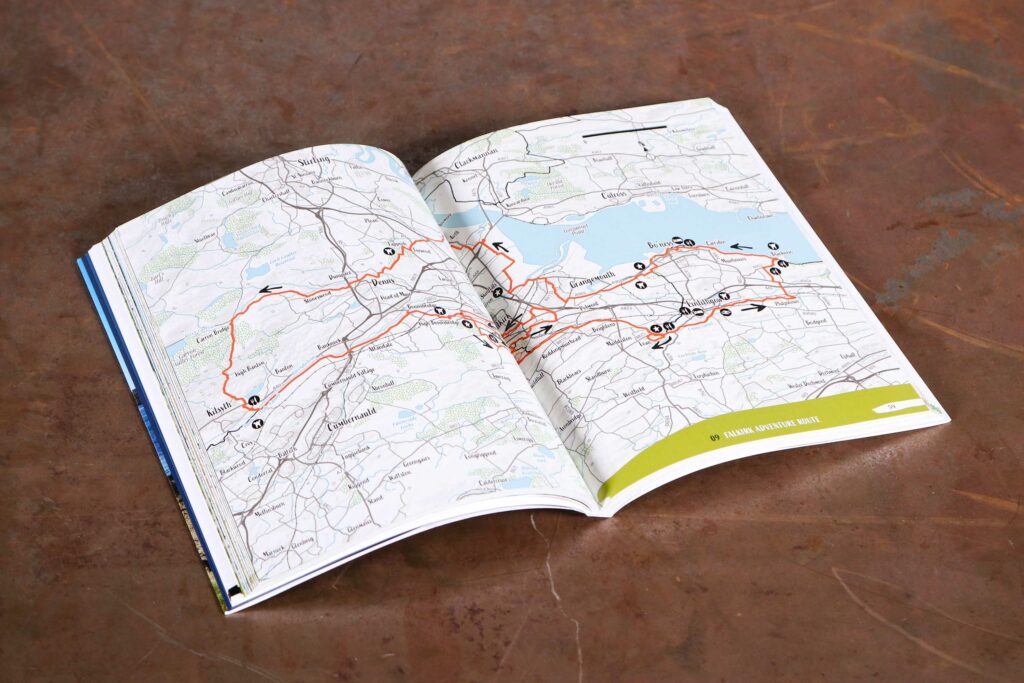
> Here’s our guide to bikepacking to get you started
Simply get a map and pick a destination, plan some overnight stops and make the distance as mammoth or enjoyable as you want. You’ll be surprised just how much distance you can cover when you’ve got the whole day spread out ahead of you.
You don’t need to spend a fortune on specialist gear either. A backpack is all you need, but if you want to do it more comfortable, strapping bags to the bike will be nicer over long distances. If your frame will take it, a rear rack and panniers are the traditional way of carrying your essentials with loads of space for everything you might need.
If you frame won’t take a rack, you can choose from a wide range of packs that strap directly to a frame. You can comfortably spread everything you need between a frame and seat pack. How much stuff depends on whether you plan to be wholly self-sufficient and camp or bivvy, or credit card it with overnighters in B&B or hotels.
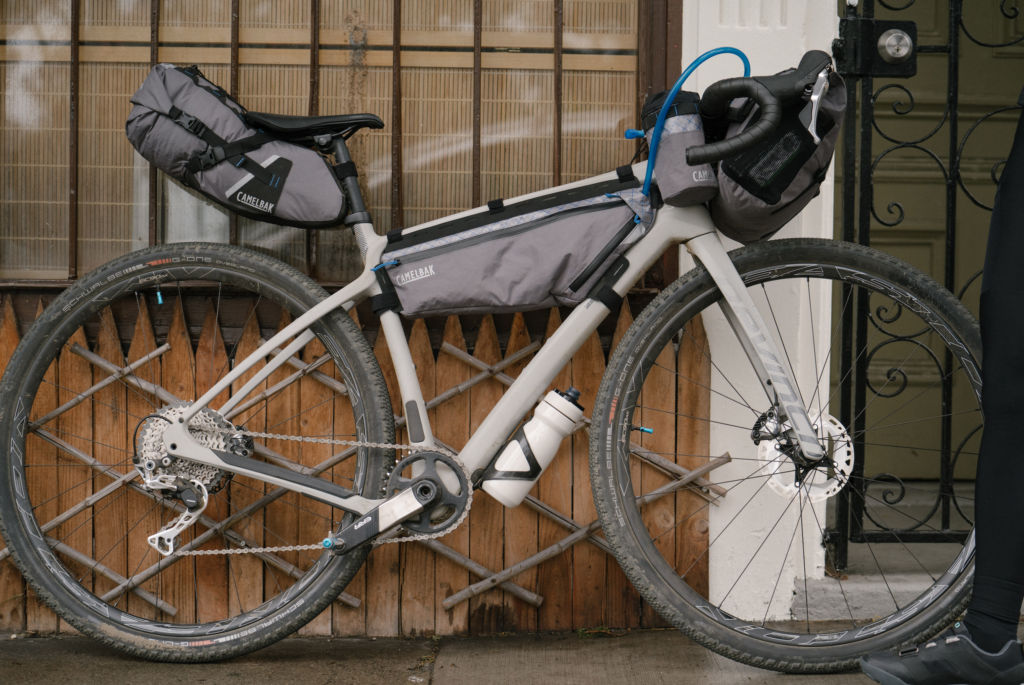
> Here’s a useful guide to carrying stuff on the bike
We hardly need to remind you, but the UK has loads of spectacular places to visit, and it’s unlikely you’ve discovered every corner of the country. From the Isle of Wight to Kielder Forest, the Scottish Glens to Eryri (Snowdonia), there are many beautiful places to discover by bike that are right on your doorstep. Okay, some are a bit further away, but the point is that your cycling holiday doesn’t have to mean a trip abroad.
Are you planning a cycling holiday this year without flying? We’d love to hear from you, so do please share your stories down below.







11 thoughts on “The no-fly guide to taking your bike on holiday: ferries, trains, cars and touring options to enjoy riding abroad without needing a plane ticket”
I really appreciate an article on how to go on cycle holidays without flying, thanks.
Matt, please can you do a story on Eurostar’s failure to improve provision for fully assembled bikes to Paris and Amsterdam? According to CyclingUK’s on the subject, originally posted in 2023:
https://web.archive.org/web/20230608153508/https://www.cyclinguk.org/article/eurostar-re-opens-cycle-carriage-brussels
“The train operating company has also told Cycling UK it is hopeful to offer a similar service for fully assembled cycles to Paris in the near future and Amsterdam by 2025 following station developments.”
There has been no news on this in almost three years. I contacted Eurostar in 2024 and they said “We do not have a timeline of when we can accept fully assembled bikes on the Paris route.”. I’ve given up with them now, but it’s deeply frustrating and I’d love to see RoadCC take them to task on this.
Thanks for compiling and sharing this information. When are you going to travel from London to Avignon via Brussels and back over a long weekend in order to confront the info you share with the reality? Eurostar and TGVs.are designed to carry passengers at high speeds. Not cargo or bicycles. With 135 x 85 x 30 cm, the volume allowance sounds generous. The challenge starts with finding a luggage rack of that size.
Why would they want to do that when they haven’t suggested anything of a sort? If you want to go London to Avignon, put your bike in a bag (135 x 85 x 30 cm, easy fit for just about any bike with wheels off and bars removed) and get it on the London-Paris Eurostar, reassemble it at Gare du Nord, ride across to the Gare de Lyon and catch a TGV INOUI, having booked your assembled bike space in advance (I know, weird huh, TGVs are designed not to carry bicycles yet they have dedicated spaces for fully assembled bikes available for a very reasonable €10), to Avignon.
It’s lovely in theory, but very much needs an Except For Viewers In Scotland disclaimer. I’ve been trying to put together a minimum-carbon trip to the Netherlands and if you don’t happen to live within striking distance of Dover it’s nowhere near that cheap or easy if you want to take your own bike.
The closest ferries are in Newcastle, but the only direct trains use those terrible “hang your bike by a wheel” storage closets; not great for a big heavy ebike or if you have an adapted cycle. If you want to try chaining more local trains that have better roll-on roll-off cycle bays then your best option is to take a Scotrail train as far East as you can and then do a two day cycle down the coast to the closest station in Northumberland that picks up their local services, which is Chathill near Bamburgh where you can catch a grand total of…one single train per day at around 7:30pm. Then you get to the ferry itself, which is not even close to 30 quid up here, try a couple of hundred for both ways, and that’s if it’s convenient to get a daytime crossing because if you have to take an overnight one the ferry companies mandate you buy a cabin(whether you intend to sleep or not) which pushes the price up north of 600 quid for a return ticket one week apart. Oh and that’s for the cheapest interior cabin incidentally, essentially a cupboard with a bunkbed in it.
You could try all-rail, but the same issue with the hanging storage crops up on trains down to London, and then as you note if you want to pay to take your bike it’s Brussels or nowhere. It is at least price-competitive with the daytime ferry option while being faster overall.
Still it’s sad that the cheapest and easiest way to avoid flying is still just to hop in a car and burn half a ton of old trees.
Only if you want to take your fully-assembled bike, with minimal disassembly (take off wheels and bars) you can use any Eurostar by putting it in a bag. Prices are iniquitous though, at a minimum £45 each way for the bike. Taking the Caledonian sleeper up to Inverness last year I was delighted to find that bikes go free (and although they have hangers nobody seemed to object to an elderly couple with ebikes (not us!) leaving their bikes at ground level) – would that not be an option for you? £65 each way if you don’t mind a seat rather than a cabin, £15 each way London to Harwich, ferry to Hook of Holland £65 each way, I reckon you could do it in 24 hours for around £300 return. Alternatively Eurostar to Amsterdam can be picked up for as low as £51 ew but then you do have to pay for the bike.
(Prices based on random choice of June 11th, not school holidays but still prime holiday season, might be cheaper in spring/autumn)
My bike is a big heavy belt & hubgear with mid-drive ebike, taking it apart and putting it back together is a job only ever undertaken by the bike shop that built it for me. No point paying 80+ quid to go to Harwich when Newcastle is much closer and cheaper; the main issue with the direct train is the shoggly closet storage rather than the price, and I’m not adventurous enough to plan a trip I pay for in advance with the hope the train staff will go against company policy – sweet old couples is one thing, lumbering middle aged metalheads usually aren’t given quite as much accommodation 😛
I agree with this article that in theory once you’re on France’s TGV train network, taking your bike shouldn’t be complicated. In practice, that’s far from the truth. I live just outside of France in Switzerland and would use the TGVs with my bike a lot more if it was easier. First, every few years they change the rolling stock or train compositions, so routes that used to take fully assembled bike no longer do, and even on the ones that do it can be difficult to reserve a spot especially at peak times. You can always take a broken down bike in a bag, but the main problem with that is if you’re not one of the first people to board the train at the first station that the train departs from, then all the luggage space is full and there’s nowhere to put the bike. In summary: It’s almost never easy, and although I have had some good/successful experiences, I’ve also had many frustrations and problems.
CRF and yodhrin should both be congratulated on their comments. A very important feature of topics such as this is that cyclists who have actually braved these ‘travelling with a bike’ difficulties are encouraged to tell the rest of us (I especially encourage cycle tourists!) how they did it and how it went. Cycle tourists are not ‘glam’ and are not zooming up hills on deep carbon rims, and can’t fly and hire a touring bike out there- so tell us how you did it! I have recently performed 4 laboriously slow 6-8 hour 16kph average trips on the Garstang Leeds run and I don’t think I saw a single loaded-up fellow cyclist. Yesterday was a pleasant day and there were lots of zooming cyclists between Otley and Clitheroe, but no toiling labourers!
Last year I did the Loire a Vélo without flying – train from London to Portsmouth, ferry to St Malo, three trains to St Nazaire; on the way back, train from Nevers to Paris, cycled across Paris, train to Caen, cycle to Ouistreham, ferry to Portsmouth, train home. It was fun and doable but the ferry wasn’t cheap.
This year I am going to Provence in the summer and really wanted to go with my bike, ideally without needing a bag or box for it – especially to make getting across Paris easier. I looked at taking the ferry or Le Shuttle with the cycle shuttle option to Calais, then various options for assembled bikes south to Orange. Nothing connected easily, especially as you have to take the slow routes south because the TGV doesn’t take assembled bikes on the Paris-Avignon route. And the costs and time required were adding up. So eventually I gave up and booked flights to Marseille, and then I’ll get a train to Orange and a bus/cab to my final destination. And yes, I guess I could have gone Eurostar with a bike box, but then I don’t gain the advantage of not having to pack my bike, with the time disadvantage and no cost saving. It should not be as complex as it really is.
Great stuff! Did you have to book each train well before your trip began last year? This year, is your bike going in a hard box on the plane? Are you staying in one centre for the holiday?
Thanks for your comment. As a result I have discovered the French Cycle Tourism website:
https://en.francevelotourisme.com/