
Lightest road bikes June 2026
Lightweight road bikes (Image Credit: Farrelly Atkinson)

Lightest road bikes 2026 — fantastically featherweight rides that barely tip the road.cc Scales of Truth

Check out the best featherweight road bikes we’ve reviewed at road.cc – the models that prove low weight and real-world performance can go hand in hand
UPDATED Mon, Jun 15, 2026 11:47

First Published: May 9, 2023

19
This article contains links to retailers. Purchases made after clicking on those links may help support road.cc by earning us a commission but all of our reviews are fully independent. Find out more about road.cc buyer’s guides.

A few years back, riders in the professional peloton were sticking weights on their frames to bring the bikes up to the UCI’s minimum weight limit of 6.8kg (15lbs); and while the adoption of disc brakes and electronic groupsets has reduced the need for that, there are still some very light road bikes available on the market… as long as you have the funds, because shedding weight often doesn’t come cheap. 
Cube Litening Air C:68X - SLX
Best lightweight road bike for value: Cube Litening Air C:68X - SLX
Scott Addict RC Pro
Best lightweight road bike for climbing: Scott Addict RC Pro
Liv Langma Advanced Pro 1 2025
Best lightweight bike in a women-specific design: Liv Langma Advanced Pro 1
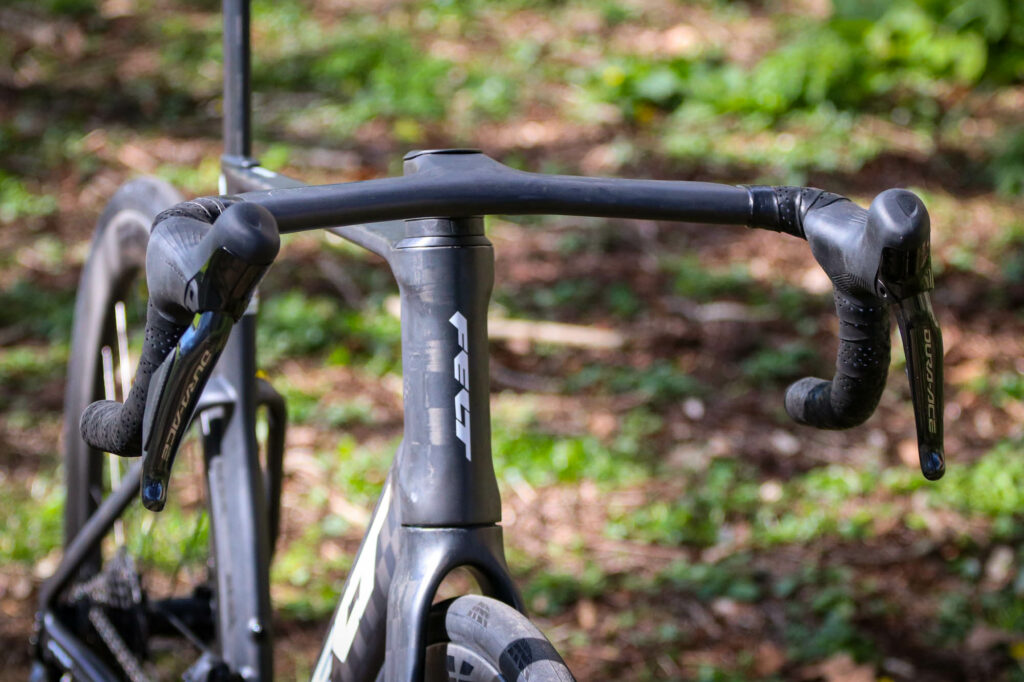
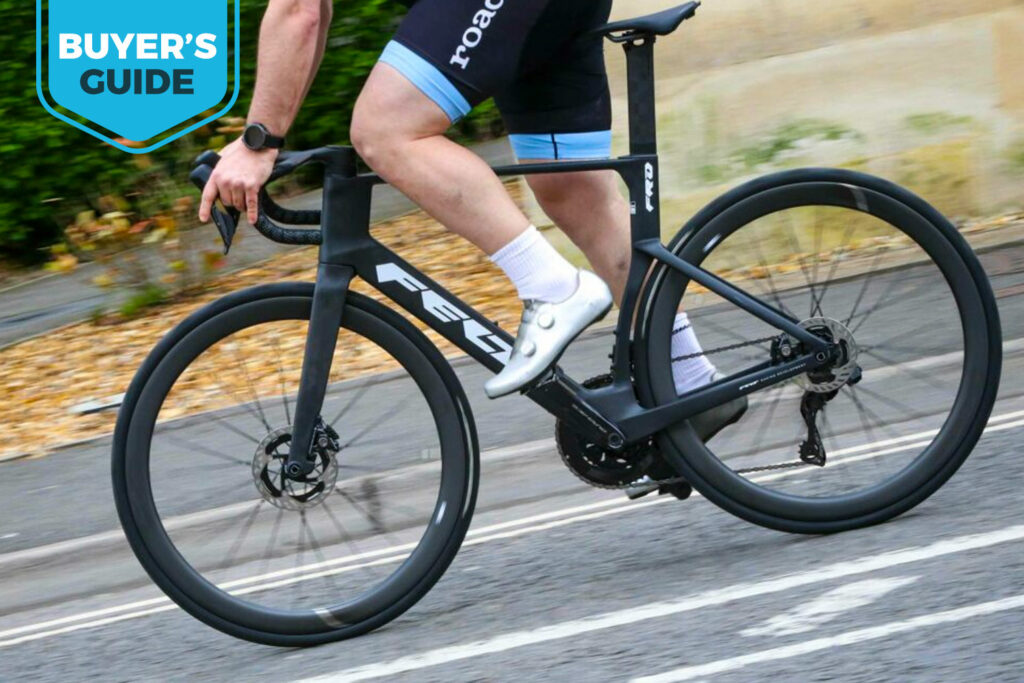
Felt Nexar FRD Shimano Dura-Ace Di2
The lightest aero bike we've reviewed : Felt Nexar FRD Shimano Dura-Ace Di2
Specialized S-Works Tarmac SL8
You want aero and low weight: Specialized S-Works Tarmac SL8
Canyon Ultimate CFR AXS
A dream bike in every sense: Canyon Ultimate CFR AXS

If you are a frequent reader of our bike reviews, you’ll know that a bike’s weight isn’t the be-all and end-all, often trumped by aerodynamics or comfort in the real world. That doesn’t stop many of us from wanting the lightest machine we can afford, though, especially those of us who live in hilly areas. Plus, we all know that at some point someone (even a non-cyclist) is going to do the ‘car park pick up test’ so that they can gauge just how light a modern road bike is, and you want to impress them.

As a general trend, bikes have got a little heavier over recent years with the inclusion of disc brakes and derailleur motors on bikes with electronic gears, but on the whole, road bikes are still very light. In fact, some of the models below aren’t even anywhere near top-of-the-range, but still tip the scales at less than 8kg.

As you’ll see from our list, carbon fibre is king. When it comes to reducing weight, other materials often struggle to compete, especially when trying to balance stiffness and longevity too.

How we review road bikes

We take bike reviews seriously here at road.cc (although we have a lot of fun riding them) and make sure reviewers have full access to their test bikes for at least a month, ideally longer, to ensure they can come up with detailed and thorough observations about their experience.

We’ll never publish a full review based off a test ride or two in an exotic location, preferring to allow reviewers to ride test bikes in their usual riding environment. The test report asks reviewers to assess quality, comfort, stiffness, value and numerous other metrics, before asking for a final score.

If a bike is marketed as lightweight, we’ll rate it against other light bikes on the market, comparing how it performs and how it’s priced, factoring this information into the overall score.

Why you can trust us

All our reviewers are experienced cyclists, especially so when it comes to bike reviews. We think it takes a bit more know-how to review a bike rather than a pair of socks, say, so most of our bike reviewing gets done by our most experienced staff members and freelance contributors. We also have a rule that we only dish out review products to reviewers who would actually consider buying the item in question; we’ll never give an aero road bike to a reviewer who only ever rides gravel, for example.

Also, we only ever recommend bikes that fared well in reviews in our buyer’s guides, so you’re not just seeing a list we’ve plucked from our backsides. We might recommend a different spec to the exact bike we’ve reviewed, but we’ll only do so if we’re familiar with alternative parts used on the other model.

A disclaimer…

It’s worth noting that our top picks are not necessarily the lightest bikes full stop. We’re well aware of that before you tell us in the comments. This guide is a selection of fully built light bikes that are available to buy, mostly off-the-peg and, crucially, bikes that we’ve reviewed ourselves so we can recommend them to you.

If you’re an extreme weight weenie and would rather build a bike yourself with the lightest bike frames and components in the world, check out this feature instead. If you want to drop some weight from your current bike, see our article on how to make your bike lighter. There’s also some more info on how to buy or build a super-lightweight custom bike in the FAQ section towards the bottom of this page.

We’ve selected our favourite light road bikes first, which you can find in the quick links, and there are plenty more recommendations further down the page.

The best lightweight road bikes: our top picks

Cube Litening Air C:68X - SLX
Cube Litening Air C:68X - SLX (Image Credit: Farrelly Atkinson)

Cube Litening Air C:68X - SLX

Best lightweight road bike for value

High-quality carbon frame

Low, UCI-bothering weight

Performance and handling

Unrivalled value

Lacks brand cachet

Pumping tyres can be an issue if you lose or don’t have the correct valve tool

Reviewer Aaron Borill described the Cube Litening Air C:68X – SLX as one of the lightest and most responsive road bikes he has ever ridden, hitting the scales at just 6.55kg.

This is a bike that rides like a dream and makes light work of the hills; it puts forward a strong case for itself if you’re a racer who’s looking for a lightweight climbing bike. It also has enough aerodynamic features to make sure it can keep up on the flat too.

With SRAM’s top-level Red AXS groupset and Newmen Streem C.35/38 Vonoa carbon wheels on the model we reviewed, you get a strong component spec too.

The other key factor to bear in mind is that Cube generally offers incredible value across its range at the moment. £8,000 is a lot of money, of course, but this is a pro-level bike and many rivals are about 50% more expensive. Considering what you’re getting here, the value is excellent.

Scott Addict RC Pro
Scott Addict RC Pro (Image Credit: Farrelly Atkinson)

Scott Addict RC Pro

Best lightweight road bike for climbing

Good ‘relative’ value

Incredibly responsive ride

Smooth ride quality

A very firm saddle

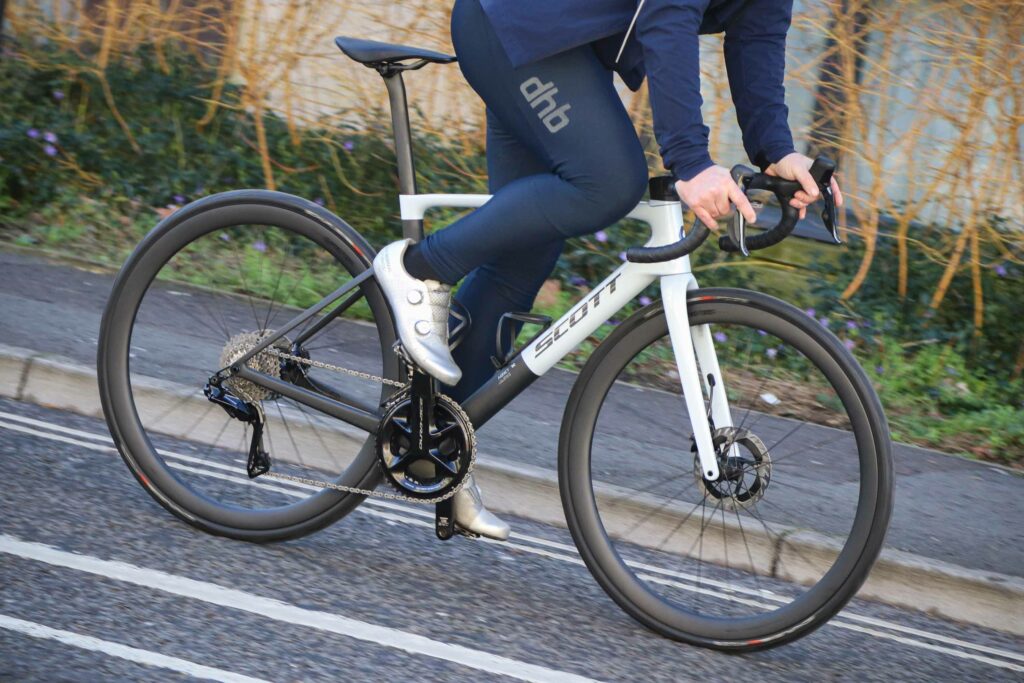
The Scott Addict RC Pro puts a huge premium on saving weight, the model we reviewed hitting the scales at just 6.58kg.

Our man Stu Kerton said, “It’s very light and hugely responsive, and also has one of the best ride qualities I’ve found on a super-stiff, pro peloton race machine. It’s a classic all-rounder, and while it’s a big investment, in the current marketplace it’s very well specced for the price.”

The weight on the scales might immediately grab your attention, but it’s the ride quality that most impressed us about the Scott Addict RC Pro; it’s stunning.

The frame feels stiff around the bottom bracket and head tube, the fork legs resist flex under heavy braking, and the ride is certainly on the firm side, but Scott has managed to bring in just enough compliance to offset any harshness, resulting in a relatively smooth ride, even on less-than-perfect road surfaces.

Liv Langma Advanced Pro 1 2025
Liv Langma Advanced Pro 1 (Image Credit: Farrelly Atkinson)

Liv Langma Advanced Pro 1

Best lightweight bike in a women-specific design

Exceptional climbing ability

33mm tyre clearance

Women-specific geometry and contact points

No smaller options for bars and cranks

Liv is a dedicated women’s cycling brand and a sister company of Giant, the Langma being effectively the equivalent of the Giant TCR.

Coming in at 7.24kg on the road.cc Scales of Truth, the Liv Langma Advanced Pro 1 is an exceptional lightweight road bike with a racing pedigree, yet it has the ability to remain stable (and fast) on the flats. It’s a great all-rounder, and competitively priced, too – especially now that Liv has reduced it to £3,999 (it was £4,899 when we reviewed it in 2025).

Reviewer Rebecca Bland described the ride as ‘sublime’. What she really enjoyed was the superb power transfer. Climb out of the saddle and it responds beautifully, and the acceleration is direct.

“It’s just a joyous machine to pedal, particularly when the road points up,” she said.

The Liv Langma range covers prices from £2,299 right up to £10,499.

Felt Nexar FRD Shimano Dura-Ace Di2
Felt Nexar FRD Shimano Dura-Ace Di2 (Image Credit: Farrelly Atkinson)

Felt Nexar FRD Shimano Dura-Ace Di2

The lightest aero bike we've reviewed

Relaxed geometry creates versatility

Great ride quality

Good spec for the money

Quite shallow wheels as stock

The Nexar FRD sits at the top of Felt’s range of aero road bikes, and the good news is that it’s quick, easy to ride and surprisingly comfortable too. The model that we reviewed hit the road.cc Scales of Truth at just 6.62kg – which is seriously light for an aero bike.

Lightweight bikes with huge, stiff aero tubes aren’t renowned for their ability to absorb vibrations, but this is among the Nexar’s standout features.

Plus, although most aero bikes put you into a long-and-low ride position, Felt has given the Nexar a slightly higher stack height than normal, and a shorter reach, allowing you to hold speed in the real world.

“I felt like I was on a high-performance race machine and could easily get low enough for efficiency and cheating air resistance, but I could also hold that position for a long time,” said reviewer Stu Kerton. “Being less stretched out, even by a few millimetres, made a massive difference to comfort.”

If the top-end price puts you off, the Felt Nexar range starts at £4,675 – although the weight goes up as the cost comes down.

Specialized S-Works Tarmac SL8
Specialized S-Works Tarmac SL8 (Image Credit: Farrelly Atkinson)

Specialized S-Works Tarmac SL8

You want aero and low weight

It’s a proper do-it-all race bike

Excellent geometry

It really is stupidly light!

The price

At the time of writing (May 2026), all the signs are that Specialized is about to launch an updated Tarmac, and that might already have happened by the time you’re reading this. Either way, the Tarmac SL8 is likely to be available for a while yet, as long as you’re prepared to look around.

Specialized shed weight from its flagship do-it-all road racing frame, the SL8 coming in 120g lighter than the SL7 at an impressive 680g. It meant our top-of-the-range test bike was just over the UCI weight limit with mid-depth aero wheels, so there was scope to cut the weight even further.

The SL8 also saw a big change at the front with the addition of the Speed Sniffer head tube, said to improve aerodynamics. Specialized says the SL8 is faster and more compliant than its predecessor (when have you heard anything else) and our reviewer was also very impressed with the stiffness, considering the bottom bracket area has been slimmed down.

With top-end Roval wheels in depths of 51mm at the front and 60mm at the rear plus SRAM eTap AXS 12-speed shifting, the S-Works SL8 is a no-compromise racing machine suitable for elite riders, but with comfort and lightness that will appeal to all. If money is no object, this is one superbike that won’t disappoint.

Canyon Ultimate CFR AXS
Canyon Ultimate CFR AXS (Image Credit: Farrelly Atkinson)

Canyon Ultimate CFR AXS

A dream bike in every sense

Great spec

Very light and responsive

Stunning performance

Hookless Zipp wheels limit tyre choice and pressures

With a very low weight (6.75kg without pedals for our review bike) and top-end components like SRAM’s Red groupset, the Canyon Ultimate CFR AXS is a stiff and agile race bike that puts in a stunning performance.

Some lightweight bikes can feel skittish, but the Ultimate CFR delivers a smooth ride.

“You are getting one of the best bikes money can buy,” said reviewer Stu Kerton. “It’s light, nimble, very stiff and an all-round great bike to ride.”

The Ultimate was last redesigned in September 2022, meaning that it’s about due for an update if Canyon sticks to its usual product cycle. It also means you could get a good price on the existing version if you keep your eyes on Canyon’s website.

The best of the rest: more lightweight road bike recommendations

Giant Defy Advanced SL 0
Giant Defy Advanced SL 0 (Image Credit: Farrelly Atkinson)

Giant Defy Advanced SL 0

High-end spec

Light

Comfortable

Excellent frameset

Tweaked geometry won’t suit all

Not many people will spend this amount

Weighing 7.2kg and offering supreme comfort, the Defy should be high on your wishlist if comfort over long distances is your priority. There are much less expensive build options of course, if your budget doesn’t stretch this high

Our reviewer praised the lovely amount of flex from the D-Fuse technology, and the chunky 32mm tubeless tyres increase comfort further. It’s a very smooth ride, and the tweaked geometry – offering a slightly shorter head tube than the previous version – makes the Defy a touch racier. With full internal cable routing and semi-aero wheels, there’s no need to swerve the Defy if you want to go fast.

While the price is high, the Defy does everything it says it will do and is surprisingly lively for an endurance bike. You’ll get most of the benefits of this hero model further down the range, too.

Factor O2 VAM
Factor O2 VAM (Image Credit: Farrelly Atkinson)

Factor O2 VAM

Top-line finishing kit

Comfortable ride

A good climber

Light and stiff

External seatpost looks a bit bulky

“A master of climbing,” according to our reviewer, the Factor O2 VAM we had in weighed 6.99kg with a second-tier SRAM Force groupset, so there’s scope to drop the weight even lower. It’s also available with a Shimano Ultegra Di2 groupset at a slightly lower price.

Fast and light, the O2 VAM has no twitchiness about it and can be chucked into corners or sped up on the flats as aggressively as an aero road bike.

Everything is fully integrated and you get a top-end finishing kit, including a Black Inc cockpit and wheels. The ride quality is excellent, and Factor has done a great job of creating a frame that feels very planted and joyous to ride.

Merida Scultura Team
Merida Scultura Team (Image Credit: Farrelly Atkinson)

Merida Scultura Team

Precise handling

Shimano Dura-Ace Di2 works like a dream

Great ride quality

Integrated cockpit limits adjustability

This Team model uses the fifth generation of the Scultura frameset, which shares the geometry of Merida’s aero race bike, the Reacto, and shares some of the wind-cheating design features too.

There is a huge amount of stiffness throughout for coping with explosive leg power, while the handling is fast, and very precise indeed. We did find the top half of the frame and the fork to give a very comfortable ride too, which wiped out any road buzz without muting the feedback.

At 7.1kg this build feels impressively quick when accelerating or maintaining speed on the flat, and it climbs well for a bike with decent amounts of aero tube shaping. It also looks the business with its smooth lines thanks to full internal cable and hose routing, plus an integrated seatpost clamp.

Reilly Fusion
Reilly Fusion (Image Credit: Farrelly Atkinson)

Reilly Fusion

Choice of logo options

Comfort isn’t sacrificed

Great stiffness throughout

Excellent finish quality

It’s a big ticket build

As you can see from the bikes in the list above, carbon pretty much rules when it comes to keeping the weight down. That’s not to say that the various metal alloys can’t compete.

> Best titanium road bikes – are they worth it?

One of the lightest metal bikes we’ve recently reviewed is this Reilly Fusion, at 8.27kg including the electronic groupset and deep-section wheels, so you could still cut some grams if you wished.

Apart from weight, the other reason it is on this list is thanks to the ride quality – a blend of stiffness and comfort which easily matches that of a sorted carbon fibre frame.

Complete Reilly Fusion bikes start at £5999.

Ridley Falcn RS
Ridley Falcn RS (Image Credit: Farrelly Atkinson)

Ridley Falcn RS

Light & aero wheels boost performance

Good tyre clearance

Frameset gives an involving ride

No power meter, unlike similarly priced competition

While not the lightest bike available at 7.4kg, Ridley’s Falcn RS has aero wheels and a SRAM Force groupset, so could easily go under 7kg with some lighter components and finishing kit.

The Falcn is very much an all-rounder, with a fast and light frameset that is capable of taking up to 34mm tyres. Our reviewer said the frame offered an involving and responsive ride, and it’s bang in the middle of fast and comfortable.

The Falcn looks modern with very neat integration, and is well worthy of your consideration if you want a do-it-all road bike.

Scott Foil RC Pro
Scott Foil RC Pro (Image Credit: Farrelly Atkinson)

Scott Foil RC Pro

Light

Stellar handling

Great climbing efficiency

Super-fast in all situations

No power meter included

Aero bikes aren’t renowned for their low weight, but even built with its oversized tubing, electronic groupset and deep section wheels, this model is about half a kilo over the UCI weight limit at just 7.35kg.

When Aaron reviewed this bike for road.cc, he described it as one of the best all-round aero road bikes that is available right now due to it being ridiculously fast yet super-easy to live with as an everyday bike, the highlights being a very stiff frame which also passes on plenty in terms of feedback to the rider, and a front end geometry that gives fun and direct handling in the bends.

It may not be the top-end bike in the Foil line-up, but this Pro model still comes equipped with the latest Shimano Dura-Ace Di2 groupset, fully integrated carbon fibre handlebar and stem, plus Syncros Capital 1.0S Aero 60mm wheels.

If aero is your thing but you don’t want a weight penalty, then this offering from Scott does tick a lot of the boxes when it comes to performance. Your only issue might be getting your hands on one; last time we checked, stock was low.

Pinarello Dogma F Dura Ace Di2
Pinarello Dogma F Dura Ace Di2 (Image Credit: Farrelly Atkinson)

Pinarello Dogma F Dura Ace Di2

Excellent handling at all speeds

Incredible weight for ‘aero’

Very eye-catching paintjobs

Great component spec throughout

Painted seatpost scratches

If you’re spending £13,000 on a bike, you’d expect it to be near perfect, and the Pinarello Dogma F Dura Ace Di2 doesn’t disappoint

“Subtle tweaks have honed the performance, handling and efficiency to a level that it really can’t be faulted,” said our reviewer, Stu Kerton. It must be said, though, that there’s tough competition for a lot less cash.

Our review bike weighed 6.82kg (without pedals), which is just a touch over the UCI’s minimum limit, so you’ll have no trouble with the commissaires if you ever find yourself racing in the Tour de France… You never know.

This bike is ridden at the highest level by Netcompany-Ineos Cycling Team so it’s no surprise that its main focus is on stiffness and efficiency, with comfort less of a priority. If you’re not a fan of a firm ride, you might prefer Pinarello’s endurance version, the Dogma X.

If you want a full-on race bike, though, this one puts in an incredible performance.

Giant TCR Advanced Pro 0 AXS
Giant TCR Advanced Pro 0 AXS (Image Credit: Farrelly Atkinson)

Giant TCR Advanced Pro 0 AXS

Light

Efficient

Very good value

The Giant TCR Advanced Pro 0 AXS is an excellent all-round race bike that’s light, efficient, and offers a superb ride quality. It comes complete with some very good components, including a wireless SRAM Force AXS groupset with a power meter.

Our large-sized review model weighed in at 7.26kg and Giant claims a frame weight of 800g. That’s not as light as the top-level TCR Advanced SL frame (690g), but it’s still impressive, especially for something that offers a high level of stiffness along with ‘truncated ellipse tubing’ designed to improve aero efficiency.

As you might expect, the Giant TCR Advanced Pro 0 AXS is superbly reactive when you crank up the power, and it offers loads of comfort too, as long as you’re flexible enough to handle the race bike fit.

It offered great value when we reviewed it at £6,699, while the 2026 version is £1,000 cheaper.

Orbea Orca Aero M10iLTD
Orbea Orca Aero M10iLTD (Image Credit: Farrelly Atkinson)

Orbea Orca Aero M10iLTD

Real-world fast

Great handling

Heavier than the competition

Aero handlebar makes fitting tri bars tricky

Although Orbea’s Orca Aero focuses on reducing drag, the straight Orca is all about being as light, stiff and efficient on climbs as it possibly can be, the M10iLTD PWR that we reviewed coming in at 7.04kg.

As long as you aren’t racing against the clock, it feels incredibly efficient, purposeful and lots of fun. You can also specify frame colours and components to give some degree of personalisation. After all, if you are spending a lot of money on a bike, you’d like it to be distinctive and exactly what you want.

Reviewer Stu Kerton remarked on how tight the bottom bracket area of the Orca’s frame felt, while the chunky chainstays keep the rear wheel in check when powering hard out of the saddle.

It doesn’t suffer from skittishness over poor road surfaces, and while the geometry is race-orientated, the Orca handles very well, allowing you to take corners at speed.

If you’re looking for a lightweight, high-performance road bike, the Orca should definitely be on your shortlist.

Specialized Aethos 2 Expert
Specialized Aethos 2 Expert (Image Credit: Farrelly Atkinson)

Specialized Aethos 2 Expert

Sublime ride quality

Impressive weight for the build

Great handling on the descents

Tyres are average performers

Pushed on pricing by competitors

Whereas the Tarmac is Specialized’s principal road-race bike, the Aethos 2 is its even lighter sibling, our review model coming in at 6.96kg. Although priced at £5,499, this is the entry model in the Aethos 2 range, built up with Shimano’s second-tier Ultegra Di2 groupset and Roval C38 wheels.

Specialized has made some geometry tweaks compared with the original Aethos, adding a little height to the front end and, in the process, making the bike suitable for a wider range of riders.

Reviewer Stu Kerton described the ride quality as “smooth-but-connected”, and he found that he could comfortably ride the Aethos for hours at a time because none of the contact points was beating him up. Chunky chainstays and a large bottom bracket area create stiffness where it’s needed, and a sub-metre wheelbase makes for a nippy and nimble feel.

It’s the perfect bike if you ride a lot of hills, and the now slightly more relaxed geometry is very comfortable on the long climbs. That lack of weight certainly helps too.

How to choose from the best lightweight road bikes

Is a lighter road bike better?

On the whole, the lighter a bike is, the more enjoyable it’ll be to ride. Not only will it climb better, but it’ll be more responsive to your inputs, so acceleration will feel quicker and pulling away from a standing start will become less of a chore on your legs.

It also comes down to what kind of riding you do too. If you live somewhere hilly, or you like to head off and spend time scaling mountain passes then every gram you can drop will be a bonus.

For those of us who ride on the flat or rolling terrain, though, having a more aerodynamic bike can be more efficient even if it is carrying a kilo or so extra, especially when you are up to speed.

As you can see from our list though, many of the latest aero or do-it-all bikes are also pretty light too.

What is the lightest bike available?

Often touted as the lightest road bike is a 2008 creation by Gunter Mai using custom-made parts, including the carbon fibre frameset, weighing around 3kg. It was then rebuilt by a new owner who managed to get that weight down to an incredible 2.7kg.

AX Lightness hit the cycling headlines back in 2015 with their Vial Evo Ultra, a production-ready rim-braked road bike that was equipped with many of AX Lightness’ own components to tickle the scales at a mere 4.4kg.

AX Lightness Vial Evo Ultra  - 9
AX Lightness Vial Evo Ultra - 9 (Image Credit: Farrelly Atkinson)
The AX Lightness Vial Evo Ultra, just 4.4kg

The UK’s hill climb season isn’t governed by the UCI, which often makes it a breeding ground for the pros and amateurs to tweak their off-the-shelf-bikes in weight weeny, gravity-defying machines. When we took a look around Andrew Feather’s British National Hill Climb-winning Cannondale SuperSix Evo Hi Mod back in November 2022, the full bike weighed just 5.39kg. It was based around a 2019 rim-braked version of the SuperSix Evo and was fitted with exotica like Hunt’s Hill Climb wheels at under 1,000g and a Schmolke saddle that weighed a svelte 63g.

By 2023, Feather had upgraded to the SuperSix Evo LAB71 frame with disc brakes for a slight weight penalty but – according to experts he’d consulted – a worthwhile aero benefit, much to the horror of many rim brake fans. While this is our guide to the lightest road bikes, we’re happy to admit that bike weight is far from everything, and Feather’s choice to switch to a ‘heavier’ bike is a great example, especially since he comfortably defended his title.

What is the UCI weight limit, and why?

At the turn of the century, the UCI (the world governing body of cycle sport) brought in a minimum bike weight limit of 6.8kg (15lbs) for a couple of reasons, the main one being safety concerns over the reliability and durability of bike framesets and their components in the never-ending quest for dropping weight.

Newer materials in bike building were becoming more commonplace, too, like aluminium alloy and carbon fibre. Both could see catastrophic failures if not manufactured into frames, forks and components properly.

Another reason was that it created a kind of level playing field. Riders for big-budget teams on the lightest, most expensive bikes had a big advantage over smaller, less well-funded teams, especially those from outside of Europe or the USA, and the idea was that the weight limit would level this out.

With today’s manufacturing techniques and tolerances, failures are rare (when crashes aren’t involved) so there have been many calls for the UCI to lower or scrap the limit altogether.

It’s worth bearing in mind that if you aren’t riding in UCI-sanctioned events then the weight limit doesn’t apply to you.

What's the best way to lighten my bike?

If your budget doesn’t stretch to buying a range-topping lightweight model straight away, you can easily and relatively cheaply remove weight from a bike that sits lower down the range, or from your existing bike.

> How to make your bike lighter

The quickest way to drop the grams is usually to swap out the wheelset, as even mid-range road bikes tend to come with hoops that sit a few rungs down the lightweight ladder than the frame probably deserves.

> Find the best road bike wheels whatever your budget

For six or seven hundred quid, you could easily shed 300 to 400g from your wheelset, and an upgrade to some race tyres can also drop another 100g or so from each wheel.

You could drop weight by another few hundred grams by upgrading your groupset as parts wear out. For instance, the difference between Shimano 105 Di2 and Shimano Dura-Ace Di2 is around 500g, with Ultegra Di2 sitting in the middle; although top-of-the-range groupsets are expensive, so a groupset upgrade is nowhere near the most affordable way to shed weight.

You can also upgrade aluminium components (think seatpost, handlebar, etc) for carbon, although the gains will be small.

Of course, your other option is to lighten yourself… but that’s a whole other subject!

> Cycling and weight loss — Top tips for pedalling away the pounds

Since writing his first bike review for road.cc back in early 2009 senior product reviewer Stu has tested more than a thousand pieces of kit, and hundreds of bikes. With an HND in mechanical engineering and previous roles as a CNC programmer/machinist, draughtsman and development engineer (working in new product design) Stu understands what it takes to bring a product to market. A mix of that knowledge combined with his love of road and gravel cycling puts him in the ideal position to put the latest kit through its paces. He first made the switch to road cycling in 1999, primarily for fitness, but it didn’t take long for his competitive side to take over which led to around ten years as a time triallist and some pretty decent results. These days though riding is more about escapism, keeping the weight off and just enjoying the fact that he gets to ride the latest technology as part of his day job.

19 Comments

19 thoughts on “Lightest road bikes 2026 — fantastically featherweight rides that barely tip the road.cc Scales of Truth”

  1. Is it still 2003?  Has no one

    Is it still 2003?  Has no one told you about the fact that reducing bike weight by teeny amounts is nothing but a marketing scam?  Have y’all been a-boo-boos for 20 years? Have a read of this and wake up:

    Why We Should Stop Our Obsession With Bike and Gear Weight

    Carrying 5kg (11lb) on a 15.37km Circuit with 276m Climbing
    Run 1: 39:55
    Run 2: 39:25
    Average: 39:40

    Carrying 15kg (33lb) on a 15.37km Circuit with 276m Climbing
    Run 1: 41:26
    Run 2: 41:22
    Average: 41:24 (+1:44 with 10kg extra)

    Carrying 25kg (55lb) on a 15.37km Circuit with 276m Climbing
    Run 1: 42:40
    Run 2: 42:24
    Average: 42:32 (+2:52 with 20kg extra)

    The numbers from my test are a little abstract, so let’s extrapolate them out to 100km to see how closely they match Bike Calculator’s prediction of 78 seconds per extra kilogram.

    Extrapolated Data: 100km (62mi) with 1796m (5892ft) elevation gain
    5kg Load: 4 hours, 18 minutes, 4 seconds
    15kg Load: 4 hours, 29 minutes, 17 seconds – 67 seconds per extra kilogram (+11:13)
    25kg Load: 4 hours, 36 minutes, 47 seconds – 56 seconds per extra kilogram (+18:43)

    The data is quite clear; bike weight is not as important as you think!

    My real-world testing, along with the numbers from the mathematical models, suggests that a kilogram extra weight will likely add one or two minutes on a hilly 100km bike ride. And on a flat route, a kilogram is likely worth 10 or 20 seconds over 100km.

    This is worth thinking about if you find yourself obsessing over bike and gear weight.

    • Your times suggest that even

      Your times suggest that even a few hundred grammes could make a significant difference in a race. Anyway, a lighter bike feels nicer.

      • Agree re: feel. Admittedly I

        Agree re: feel. Admittedly I don’t have two otherwise identical bikes of different weights to make a truly fair test, but my lightest bike (c. 7.5kg, so not a total weight weenie) feels nicest.

        • I had done something sort of

          I had done something sort of comparison, when I started carrying my D-Lock on a bike mount and the bike seemed to be obviously slower to change direction. When put in a belt holster, the bike felt again light and sometimes I think I have forgotten it home, despite having the same overall bike and rider weight.

          So a lighter bike is indeed more fun when riden, but to be honest for many riders it would be better for their wallet and the environment to try get thinner instead of becoming weight weenies.

          • The effect is even clearer if

            The effect is even clearer if you hang a couple of bags of shopping on the ends of your handlebars.

          • @cyclisto I wonder if there is a similar effect as with cars and motorbikes regarding unsprung weight?

            ie weight attached to the bike has to be hauled up and down every imperfection in the road requiring additional effort whilst weight carried on the body – which has absorbed and smoothed out the undulations either through the flesh or the saddle – is less affected.

    • I did some completey

      I did some completey independent, mathematical modelling on this topic. I also found that the difference on a course involving moderately rolling terrain was about 1 minute for 1 extra kg per 100 km ridden. I would like to take a poll to know what an average cyclists expects the difference to be, becuase I’d guess they would think 5 or 10 times the real value.

        • Naturally we who have been

          Naturally we who have been duped into spending hundreds or thousands on a bike part or three to reduce the weight by 491 grams will feel some mental resistance to the data revealed by the experiments mentioned, particularly when the real world experiment is backed up by use of a mathemeatical model giving the same results. No one likes to admit they’ve been fooled by nothing more than some advert lies.

          The mathematical model used in the experiment to add weight (‘scuse pun) to the real world results was Bikecalculator.

          http://bikecalculator.com/

          The article also allows that there are some situations in which a lighter bike has advantages. Some quotes:

          1. You do actually race (be honest).
          The difference between winning and losing is sometimes measured in millimetres. One kilogram less is going to help here, and the benefits of that weight saving only increase the longer and more mountainous your race.

          2. To improve bike handling and feel.
          Heavy bikes don’t feel as snappy or responsive when accelerating or cornering, making them feel a little less inspiring to ride

          3. To use a bike that isn’t designed to carry heavy loads.
          Touring bikes are stiffer, and are built with a slew of overbuilt components (stronger wheels!) specifically to handle high luggage weights.

          4. To make lifting your bike and luggage easier.
          There are many instances where you might need to carry your bike. For example, I’m often carrying my bike on hike-a-bike sections of trail, as well as up and down stairs in apartment blocks, hotels, and train stations.

          5. To make flying cheaper.
          A few extra kilograms can really add up when you get to the airport. Make sure to keep your bike light enough so that you don’t get caught out with crazy fees!

          Personally I ride bikes of various weights, determined largely by their functional design parameters. It’s now around ten years since I bought any improving component based on its weight, since every worthwhile improvement (in comfort, reliability, fixability, mechanical efficiency and even speed-per-effort) tends to require a slightly heavier component.

          Does a lighter bike feel nicer?  Not if the weight reduction has compromised the functional performance by making the thing too flexy, fragile or inclined to generate mechanicals on a regular basis. My best-feeling bike weighs 13.5 kg. Mind, it has an electric motor, which does add greatly to the pleasures of the ride (at the cost of +5kg over the umotored version).

          ***********

          It’s astonishing how much misinformation has been generated & swallowed in the efforts of business to make us buy stuff we really don’t need or benefit from.

          • Which “experiments mentioned”

            Which “experiments mentioned”? A mathematical model isn’t an experiment. It’s a model someone has dreamt up.

            You might feel you are the victim of some big deception or fraud, but you shouldn’t draw conclusions from that about other people. 


          • Read the article that the

            Read the article that the link in the first post provides. It contains details of “the experiment” as well as the mention that many mathematical models constructed to estimate various effects and their relationships whilst cycling agree with the results of the experiment.

            We’re all victims of all sorts of marketing scams.  Just because you want to pretend that you made a fully-informed and free choice to buy something based on misinformation and a dollop of glamour in yer eye doesn’t make you any less of a victim in practice. 

            Still, if you insist on sticking to daft beliefs about lightweight bike parts being somehow able to magically make your cycling significantly faster, who am I to deny you your wee delusions.  🙂

          • Your assumptions about my

            Your assumptions about my “beliefs” must also based on the results of your mathematical models. I’ve never bought bike parts because of what they weigh.

  2. Am I the only one who thinks
    Am I the only one who thinks the prices for these bikes is utterly ridiculous? For an item with not that many components compared to a motorbike with infinately more, the value for money is atrocious, cue comments re. manufacturing costs, supply and demand etc but however you look at it, it just doesn’t add up.

    • To be fair, they’re a lot

      To be fair, they’re a lot better in other ways too. Would you really want to go back to 6 gears, downtube shifters, tyres that puncture every week and need to be glued on,, and bendy bars and stem?

Leave a Comment


Read more...

Read more...

Read more...