


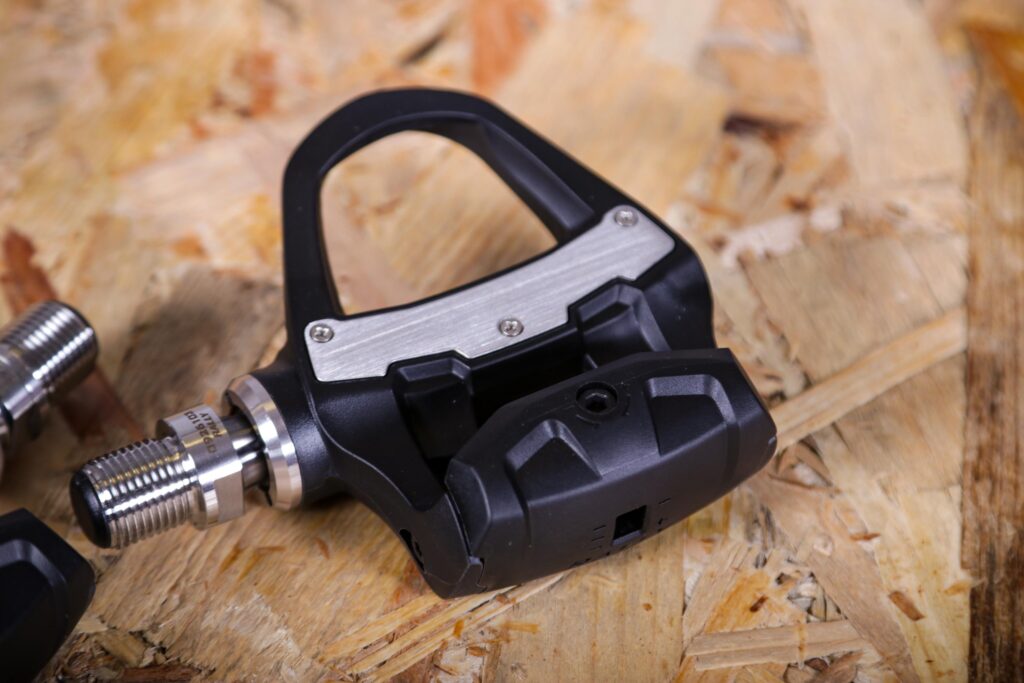

Over the last few years, using a power meter to measure your training effort has become more and more popular. Power meters have become cheaper as new manufacturers have entered the fray and there are more tools available to help you train with power. With credible power meters now available for as little as £224, is it time to power up?
-
Power meters use electronic strain gauges to measure how much force you’re putting into the bike and from that calculate your power
-
Cranks and pedals are the components most often used to house a power meter, but you can get power-measuring hubs, power meters that measure air flow and even a power meter valve cap
-
You’ll need a bike computer to record data from your power meter; almost all power meters use ANT+ for communication, some also use Bluetooth which you’ll need if you want to use, say, Strava on a phone to record your data
-
The latest power meters need recalibrating less often than was the case a few years ago and are easier to install and set up, but it’s still worth thoroughly reading the manual
Our top power meter choices
- The best power meters
- Favero Assioma Duo pedals — £579.00
- Garmin Rally RK200 Dual-sensing pedals — £805
- Shimano Dura-Ace FC-R9200-P power meter cranks — £1,200
- Stages Cycling crank — £275 – £964.99
- FSA PowerBox — £383.99 – £462.99
- 4iiii Precision Power Meter — £224.00-£719.00
- SRM cranks — from £1,299
- Verve Cycling InfoCrank — £1,104
- Rotor — from £629
- SRAM Rival AXS Power Meter — £207.99
- Things to know about power meters
The best power meters
Favero Assioma Duo pedals — £579.00
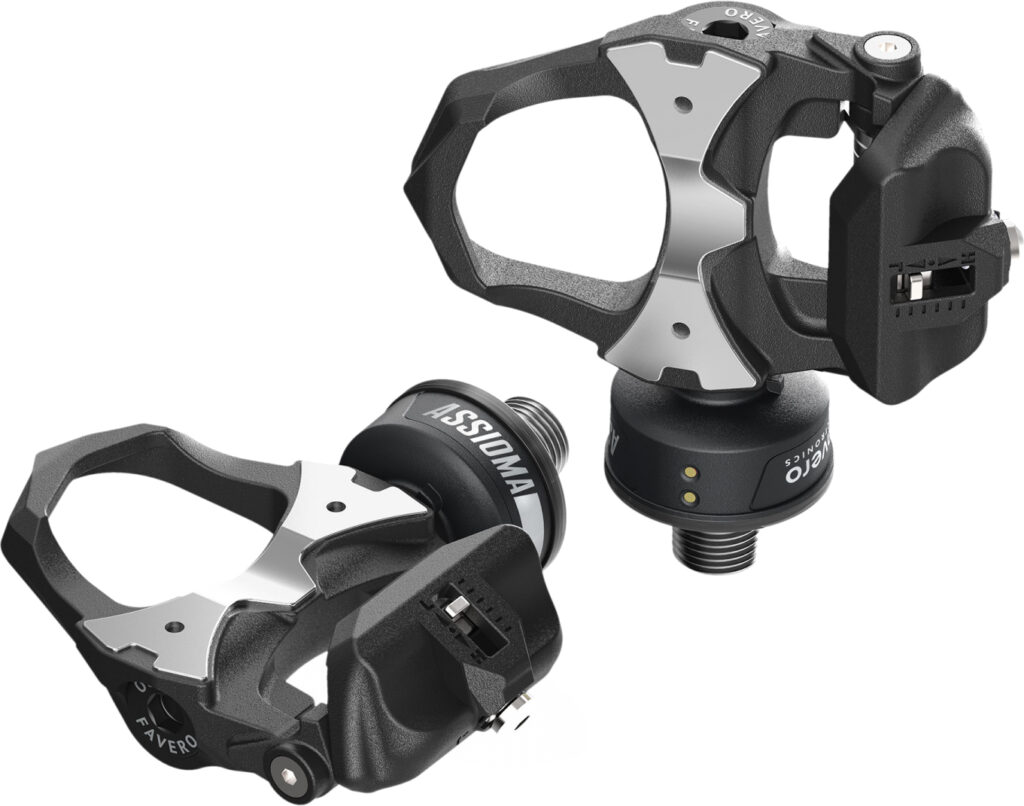
This is Italian electronics manufacturer Favero’s second go at power-measuring pedals after the BePro pedals. The spec is like a wishlist of power pedal features: no external pods, so swapping between bikes is easy; Bluetooth and ANT+ communications protocols; left and right power; torque efficiency and pedal smoothness; Look Keo cleat compatibility; rechargeable; apps for iOS and Android; and a weight of 300g/pair.
Tester Jack writes: “To ride, the Assiomas are perfectly stable underfoot and comparable to any other lightweight road pedal. The Q-factor (the distance between the pedals) is 54mm, 1mm more than Garmin’s new Vector 3s, so the pods don’t really make any practical difference to the ride whatsoever in my experience. Each pedal weighs just under 150g, the lightest power pedals you can currently buy. They’re also completely waterproof, and after using them in all conditions including bucketing rain for a couple of months, I can report they’re still in perfect working order.
“I used the pedals alongside a Powertap hub outdoors and a Wattbike Atom indoors to compare the results. On the graphs you can see here, against the Wattbike with three short interval bursts, the Assiomas are very consistent but run slightly low during the peaks in power and for the average power overall.
“Cadence is nearly identical too, and on my rides against the Powertap hub I got very similar results, with the Powertap just recording the wattage slightly more generously each time.
“Overall, though, I was very impressed with the Assiomas and at the moment, factoring in value, accuracy and usability, I’d say they’re the best power pedals you can buy. Perhaps those black pods could shrink a bit in the future, and accuracy can improve, but the style and function are top notch.”
There’s also a single-sided version, the Assioma Uno, for £395, and Assioma currently has a special offer on the Duos for just €489.
Garmin Rally RK200 Dual-sensing pedals — £805

The Garmin Rally RK200 Dual-sensing Power Meter pedals perform incredibly well, providing reliable and consistent power readings while also proving to be weather resistant, so far.
The Rally RK200 is virtually identical to the previous Vector 3 model, except you can now choose Look Keo, SPD-SL or two-bolt SPD compatibility. You can buy extra pedal bodies and swap the power-reading spindle from road to off-road pedals, for accurate data across disciplines. That said, a pair of SPD pedal bodies costs £219, which is more than a pair of Shimano XTR pedals or even a set of Xpedo M-Force 4 Ti, the most expensive SPD-compatible pedals we’re aware of.
Garmin claims the Rally power meter pedals are accurate to within +/- 1 per cent to the unit itself. If you’re putting out 300 watts, the readings should always be between 297 and 303 watts. This is enough accuracy for keeping in the intended training zone for riding at the right intensity to get the benefits you’re after for that workout.
Benchmarked against an Elite Direto smart turbo trainer and Quarq DZero power meter cranks, the Rally pedals read consistently between the two and are very quick to detect that’s you’ve stopped or started pedalling.
Overall, the Garmin Rallys really impressed, but at that sky-high price you’d expect nothing less. Data accuracy is consistent and reliable for training and racing use, as well as measuring your efforts across different terrain. We’ve also been caught up in some heavy summer downpours during the test period, and haven’t noticed any unusual readings since – with the new metal thread for the battery door closure, the Rallys appear to be much more reliable after rainy rides than the previous Vector 3 generation.
For multi-discipline riders, the Rally pedals are certainly an appealing system and this USP could justify the high price.
Read our review of the Garmin Rally pedals
Find a Garmin dealer
Shimano Dura-Ace FC-R9200-P power meter cranks — £1,200

The Shimano Dura-Ace R9200-P power meter is the redesign that many of us have been waiting for. Setup is dead simple, the design is compact, and there are smaller improvements such as a replaceable battery door and the fact that it uses the same magnetic charging cable as Di2. But the big thing is that the R9200-P doesn’t throw out the weird data that some users found with the previous model. Everything is consistent and the L/R balance is spot on.
Our testing put the R9200-P up against Garmin’s Rally pedals. We’ve compared the power data, cadence figures and the left/right balance scores of both, and the results suggest that Shimano’s design provides reliable data.
Shimano’s Dura-Ace R9200-P power meter is a much improved design that delivers consistent power, cadence and L/R balance data that is perfectly usable for daily training. The unit is very easy to live with thanks to the quick connection to head units, and an improved Shimano eTube app makes updates a doddle. These improvements come alongside the fact that the price has stayed the same. There’s a lot to like.
Read the full review of the Shimano Dura-Ace FC-R9200-P power meter cranks
Find a Shimano dealer
Stages Cycling crank — £275 – £964.99
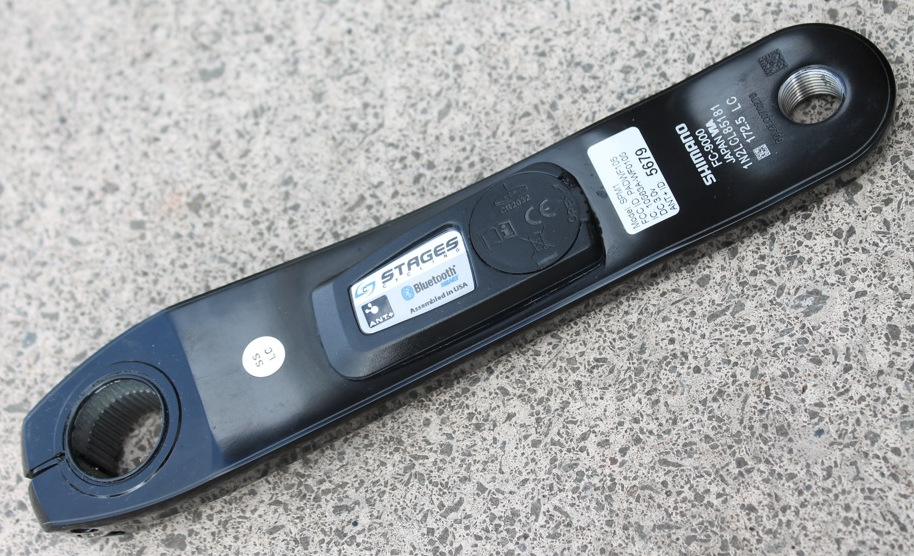
The Stages Power meter is lightweight, easy to fit and, according to our tests, it gives results that are comparable with every other power meter out there.
You can either buy a single-sided meter, housed in the left-hand crank, a complete chainset with sensors in both cranks, or if your bike has very tight clearances, a right-side Shimano Ultegra or Dura-Ace crank.
If you’ve already bought a left-side unit you can use the right-side cranks to upgrade to a double-sided meter. Stages offer various different models for Shimano, SRAM FSA, Campagnolo and Cannondale cranks. There’s even a unit for Shimano’s 7710 Dura-Ace track cranks, making Stages the only power meter we’re aware of that will fit an Octa-Link bottom bracket.
FSA PowerBox — £383.99 – £462.99
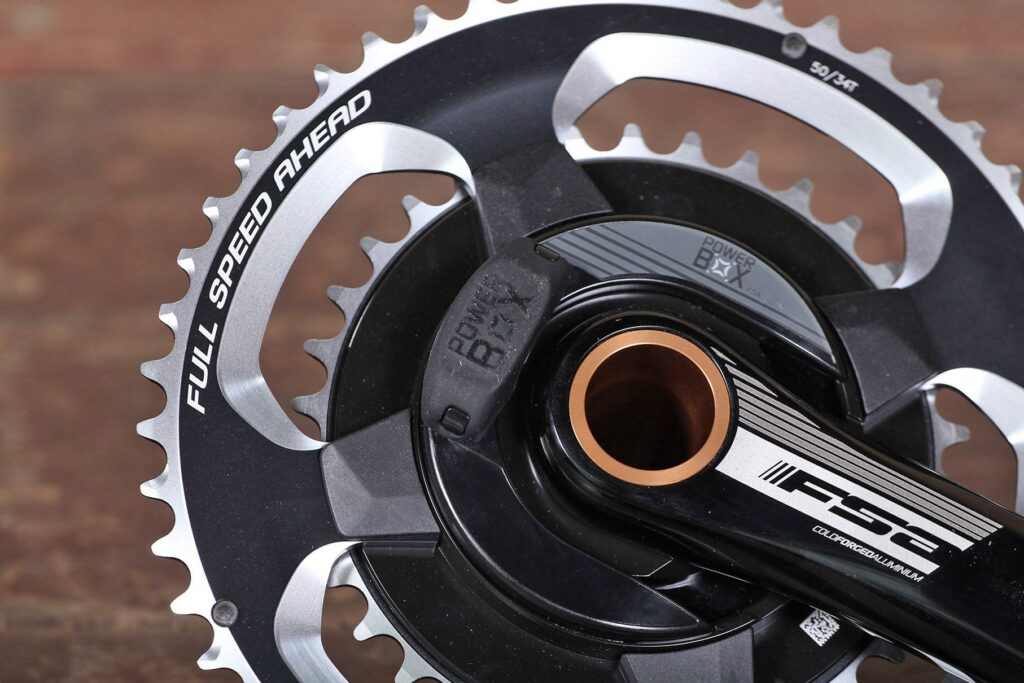
FSA’s Powerbox power meter crank borrows power2max technology and has an RRP of £599 for the aluminium version (including chainrings), though it can be found for considerably less. That makes it one of the cheapest crank power meters we’re aware of, and the cheapest meter that measures power from both sides. It communicates using the ANT+ protocol and battery life is a claimed 300-400 hours from a CR2450 button cell. A recent free firmware upgrade allows you to see the left and right hand readings separately, and enables Bluetooth communication.
Tester Dave Arthur writes: “I’ve put the power meter through its paces in all sorts of conditions and long enough to uncover any hidden gremlins. I can report that there have been no issues at all, in fact performance has been flawless. I’m very impressed.
“The PowerBox has delivered consistent power measurement at all times. The claimed +/-2% accuracy precision appears on the money during comparative testing with other power meters (a Wahoo Kickr and PowerTap P1 pedals) with no random spikes or anomalies to report.
“All things considered, the FSA PowerBox is a highly impressive power meter, and the price, performance and reliability make it extremely easy to recommend.”
If the PowerBox Aluminium’s not-unreasonable 750g weight is too much for your best bike, there’s a 585g version with carbon fibre arms for £729.
4iiii Precision Power Meter — £224.00-£719.00
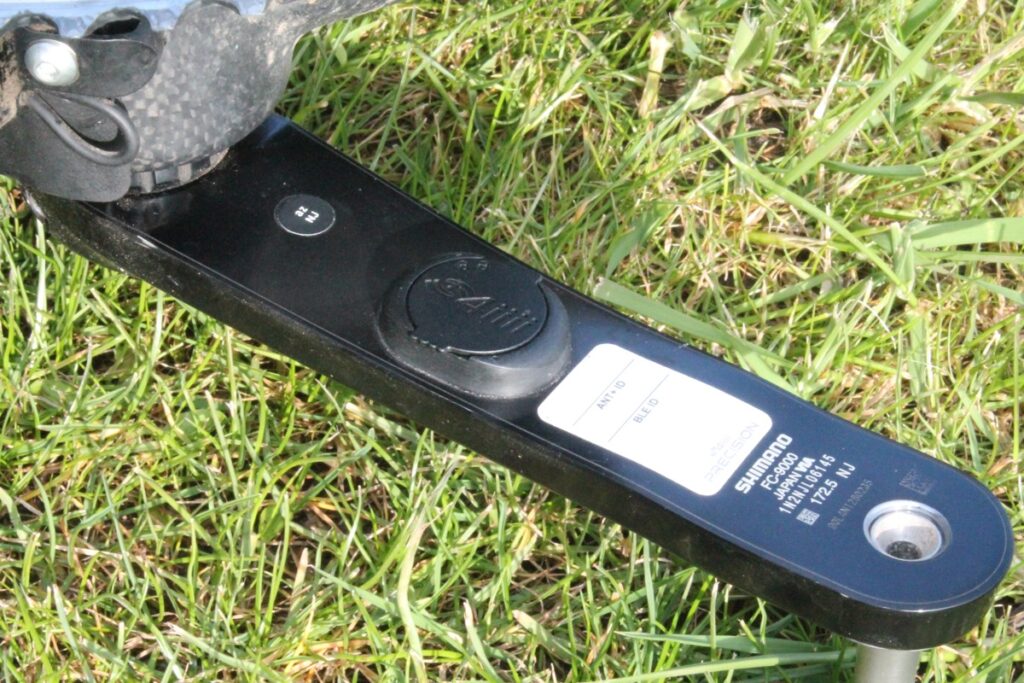
The 4iiii Precision is a crank-based power meter that delivers sound, usable data. For a long time 4iiii only offered single-sided units, but you can now get double-sided devices built into Shimano 105, Ultegra and Dura-Ace cranks for £579, £689 and £899 respectively.
The Precision system consists of a tiny pod that’s bonded to a the crank arm. In that way it’s similar to a Stages unit. We used the Shimano Dura-Ace version (they’re all Shimano) and it weighed just 9g more than the crank we took off, and that includes the battery. A Shimano 105 version is £299 RRP, and a Shimano Ultegra version is £349, or you can get a pair of 105 cranks with the 4iiii meters installed for an RRP of £579.00 and a current market price of £459.
The pods are powered by CR2032 cells that you can replace without tools, so that’s convenient.
It produces readings that are usually within 3% of other power meters, that is, within the margins of error you’d expect. Our experience is that the 4iiii Precision offers sound data across a variety of situations with no obvious flaws – other than the single-sidedness of the single-sided version.
SRM cranks — from £1,299
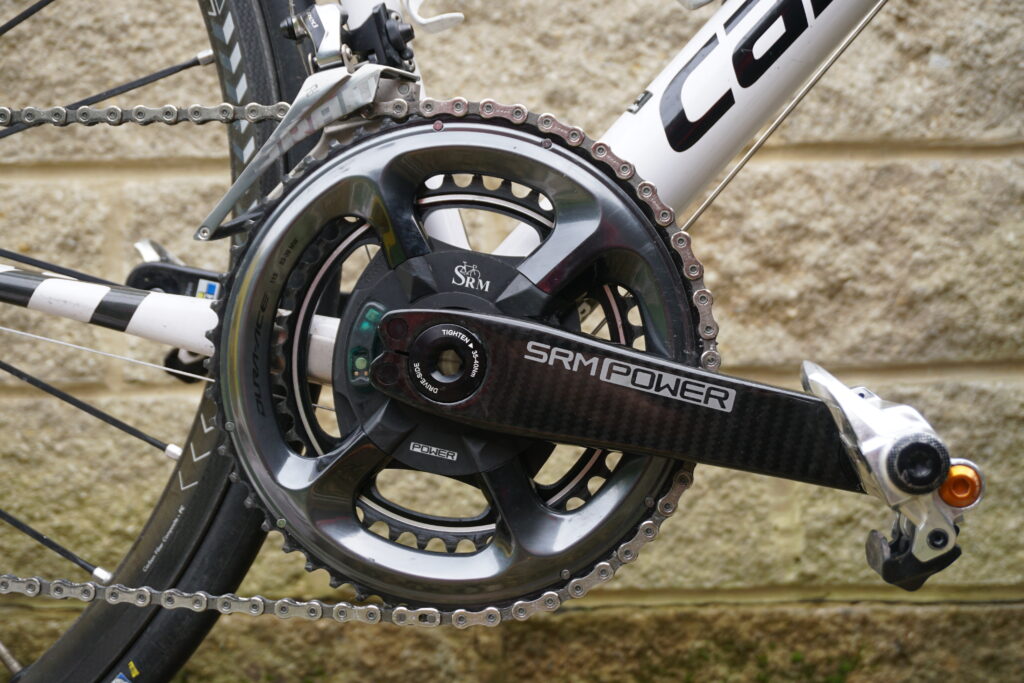
SRM — it stands for Schoberer Rad Meßtechnik, TLA fans — makes a wide range of power meter cranks, taking the original manufacturer’s right hand crank and installing its measurement unit in place of the crank spider. It’s a robust design with an excellent reputation for accuracy and reliability, backed by a three-year guarantee.
The £2,800 SRM Origin PowerMeter brings all this expertise into a stiff, light and smart-looking crankset with a rechargeable battery, choice of three crank lengths and compatibility with different bottom bracket axle standards. It works brilliantly with a flawless performance, the power data is accurate and consistent, but it looks extremely expensive in today’s power meter market.
SRM claims +/-1.5% accuracy, developed using a 144-point calibration protocol against a known mass measured to the exact gram. You can change the chainrings without affecting the calibration. It’s in line with other high-end power meters.
Tester Dave Arthur writes: “I found the data is accurate and consistent and showed no anomalies during a variety of testing conditions. It never over or under-read power during testing, when compared to other power meters like PowerTap pedals and a Wahoo Kickr indoor trainer, both claiming 1.5% accuracy just like SRM. The Origin handles temperature compensation with an auto offset feature so you don’t have to manually zero offset before a ride, but I always do as a matter of course.
“Choose the SRM Origin if you want the best, have deep pockets and you want to be able to fit it to any bike and choose different crank lengths. The performance is flawless and I particularly like the easy recharging compared to the constant replacing of batteries with some other power meters. You get a three-year worldwide warranty too.
“But if the price is a factor, which let’s be honest it will be for most, then there are certainly more wallet-friendly options to choose from that will still deliver everything most cyclists are looking for in a power meter.
Verve Cycling InfoCrank — £1,104
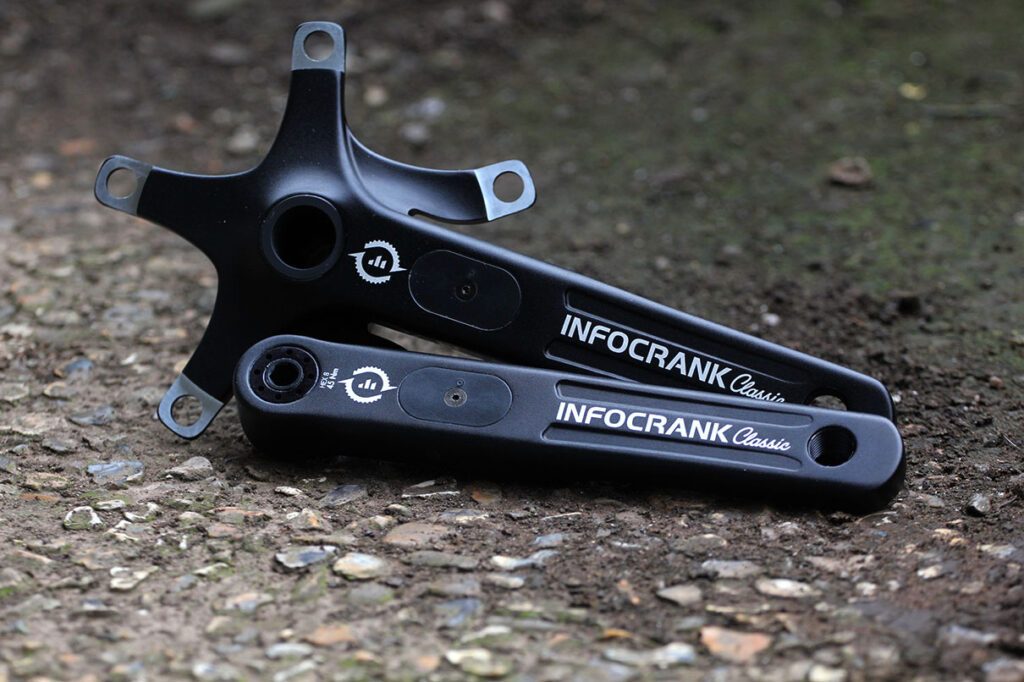
The Verve InfoCrank is a reliable crank-based power meter that supplies data for both your legs independently. It’s not the cheapest option out there, but once set up there’s virtually nothing to think about.
InfoCrank is available as a 2D forged chainset (chainrings included) with a 30mm or 24mm axle, compact (50/34-tooth) and mid-compact (52/36-tooth) and old-school racing (53/39-tooth) options, and a choice of bottom brackets to suit different bikes. You can have it with 110mm bolt circle or 130mm if you choose the bigger chainring pair.
InfoCrank couldn’t be easier to use. You spin the cranks to wake them up – LEDs flash to show they’re working – and that’s it. There’s never a need to calibrate, so there’s no protocol to get wrong, and Verve says there’s no drift with temperature.
We rode InfoCranks alongside a PowerTap G3 hub and the differences in readings were within the published margins of error of the two systems. Overall, the InfoCrank is a very good system. It’s easy enough to install, and once set up, that’s it. You don’t need to do anything else until the batteries run out, and that’s likely to be many months down the line. It’s unobtrusive, reliable, and super-easy to use.
Rotor — from £629
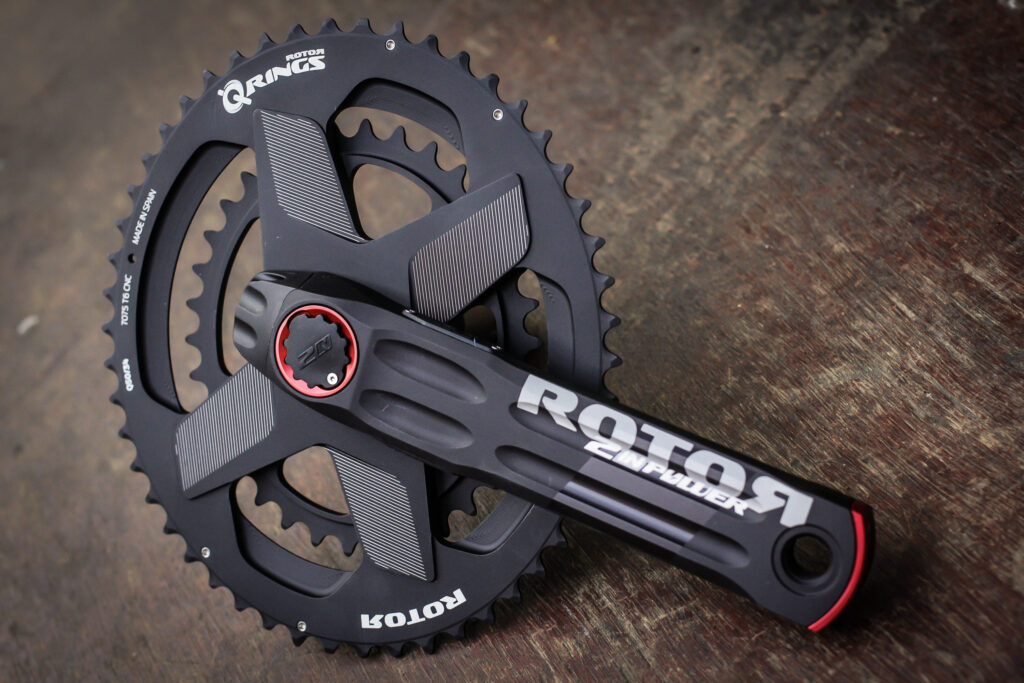
Rotor makes several models of power meter, both double- and single-sided as well as the stealthy Inpower meter whose electronics are tucked into the bottom bracket axle to protect them from damage. Rotor non-power cranks are among the lightest on the market, and the company has tried to keep the weight of its power meters down too.
The Rotor 2InPower DM Road system is nicely made, the power numbers are credible and repeatable, and you get the option of oval or round rings on an easy-to-swap direct mount interface.
Testing against Garmin pedals, Dave Atkinson found about a 2.5% discrepancy. Both systems are accurate to a claimed +/- 2%, so if the Garmin pedals were reading slightly under (but within that accuracy range) and the Rotor cranks slightly over, that would easily cover the difference.
He added: “Is the difference an issue? Not really, so long as the results are repeatable, and they definitely seem to be. Freshly calibrated, the Rotor cranks have read slightly higher than the Garmin pedals on each occasion. They both read higher than my indoor-benchmark Tacx Neo 2 trainer but that’s understandable because that’s measuring something slightly different; both the Rotor crankset and the Garmin pedals are measuring direct rider force (minus some tiny pedal bearing losses in the case of the cranks), whereas the Neo 2 is measuring power at the wheel, after the losses in the drivetrain which are more significant (generally 2-4%).”
Overall this is a good quality crank-based power meter with lots of chainring options and plenty of data on tap.
Read our review of the Rotor 2InPower DM Road crankset
Read more about the Rotor Inpower crank
Read more about the single-sided Power LT power meter
Find a Rotor dealer
SRAM Rival AXS Power Meter — £207.99
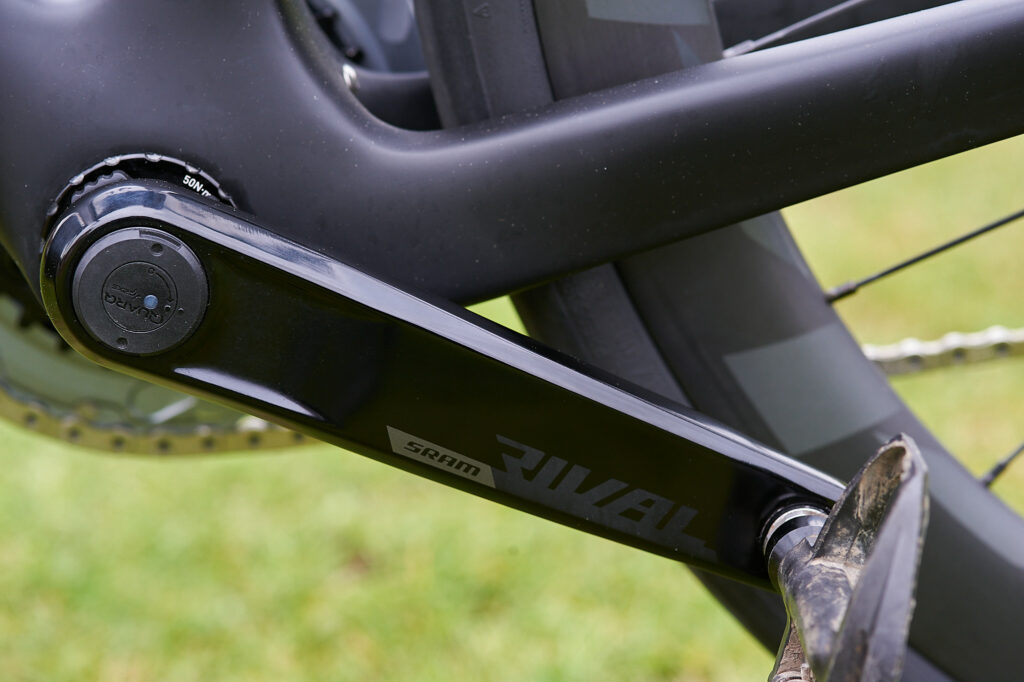
If you have SRAM Rival AXS crankset, here’s a very reasonably priced way to upgrade it to a power meter. You can also buy it as a complete chainset for an RRP of just £322.
It’s a single-sided design, measuring the power you put in with your left leg only. It’s similar to many other power meters in this respect; Garmin and Assioma offer single-sided pedals, for example, and there are many options from Stages, although you can get dual-sided designs from these brands too.
Tester Mat Brett benchmarked the Rival power meter against a Garmin Vector 3S (also single-sided) and found it consistently read lower than the Garmin by 2-4%. He concluded: “Much more importantly, the results have been pretty consistent and there have been very few anomalies, leaving me to think that you’ll easily be able to base your training on the SRAM system and gauge the development of your fitness over time.
“Overall, the Rival AXS Power Meter is a really impressive option for the money, although it makes the most sense as an upgrade for those who already own a SRAM Rival system.”
SRAM offers a large range of power meter chainsets from £498. They all use similar technology to the Rival unit so we’d expect similar results.
Read our review of the SRAM Rival AXS Power Meter
Find a SRAM dealer
Things to know about power meters
What is a power meter anyway?
When you ride a bike, you do work to overcome the forces of air resistance, gravity and tyre rolling resistance. Power is the rate at which you work, so the more power you can put out, the faster you’ll go. And after all, that’s the objective of training.
The problem is, many things affect how fast you go, so it’s hard to monitor your progress. Even if you test yourself on the same course every time, variables like the weather can make a difference.
This is less of a problem in other sports. Swimmers, for example, can use timed laps of the pool to measure their fitness, as the resistance of the water is more or less a given. Runners can similarly assess their training progress by measuring pace on a track.
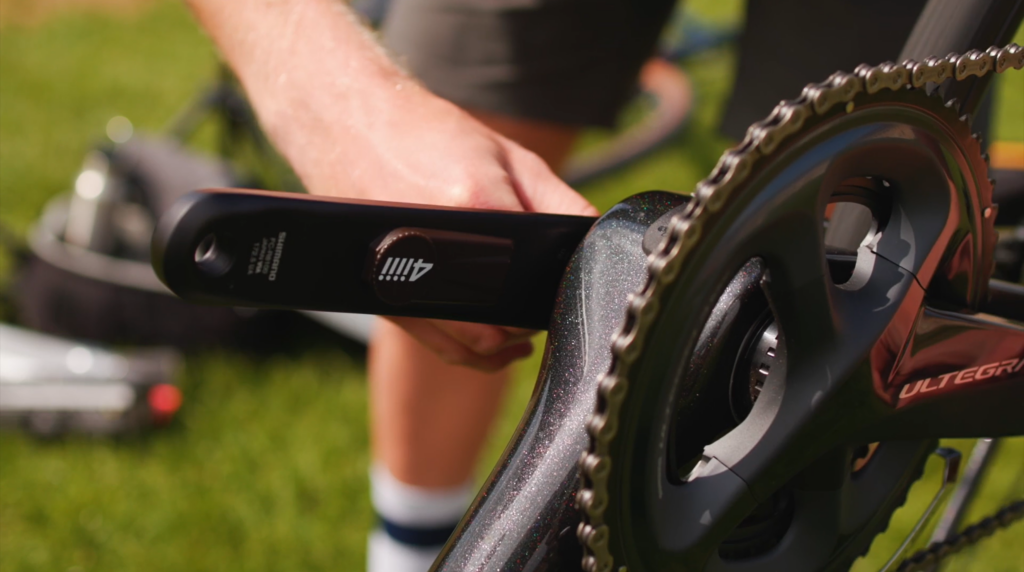
Measuring your power output gives you a way to directly measure your fitness. A power meter is a device that does just that.
A complete power meter system has two parts: the measurement device itself and a handlebar-mounted ‘head unit’ that reads your current power and stores ride data for later analysis. Power meter manufacturers make head units, or you can use a bike computer such as a Garmin GPS that has the capability to work with a power meter.
Why use a power meter?
Coach and training with power advocate Joe Friel calls a power meter “the most effective tool you can get to go faster on a bike”. Because a power meter measures how hard you’re working it enables you to train very precisely, and to measure your progress.
Before power meters became popular, cyclists relied on heart rate as a proxy for training effort. But heart rate can be affected by more than just how hard you’re working, and the objective of training isn’t just to develop your heart. Rather, you’re aiming to go faster, and that means, all else being equal, generating more power. It’s therefore more efficient to measure power.
It can also save you time. Friel points out that it can take time to get up to a target heart rate even though you’re working as hard as you need to in a training session. With a power meter you can tell instantly that you’re putting out your session’s target power and stay there. If you’re strapped for time, a power meter lets you get the most out of your limited training hours.
Types of power meter
Power meters use tiny electronic devices called strain gauges to measure the force you’re exerting on part of the bike’s transmission. From those raw measurements, supporting electronics calculate your power, which is then transmitted to the head unit, usually by a low-energy small area wireless protocol such as Garmin’s ANT+ or Bluetooth.
Power meters have their strain gauges at different points in the path between your feet and the tyre that your effort travels along to propel you forward. The most common placements are in one or both pedals, one or both crank arms, in the chainring spider, or in the rear hub.
Crank meters
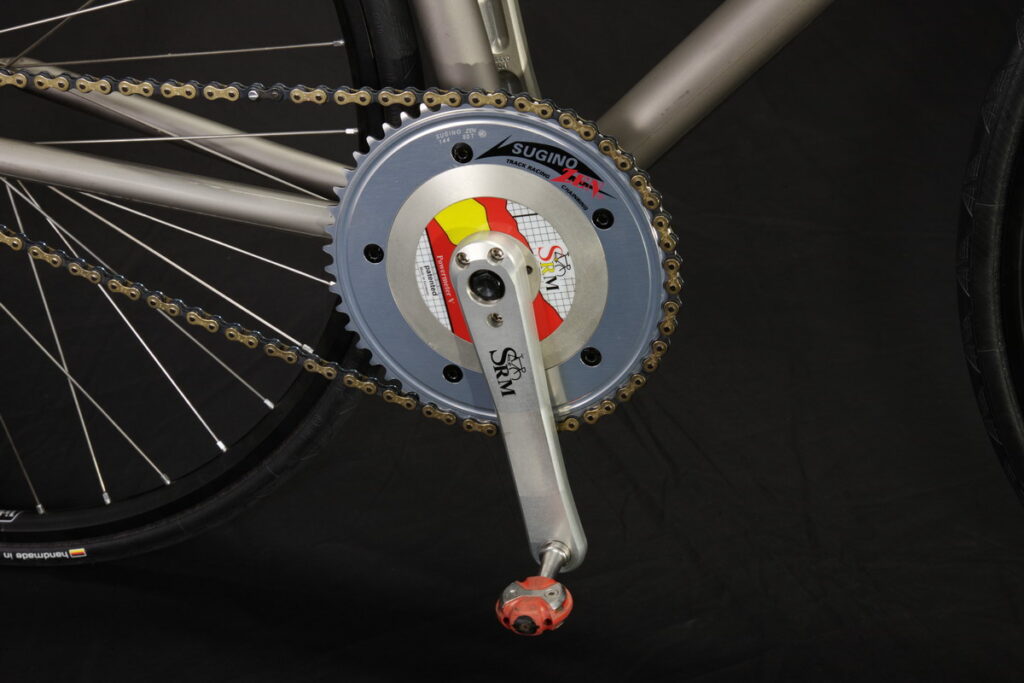
SRM crank (CC BY-NC-ND 2.0 by Kevin G Saunders:Flickr
The first widely-available power meter, from SRM, has its strain gauges in the crank spider, between the right hand crank and the chainrings. That means all the forces from both cranks go through the meter to be measured.
SRAM’s Quarq power meter also has gauges in the crank spider.
An alternative that allows for a less-expensive power meter is to measure the forces in the left hand crank. In theory this might give incorrect data as it’s only measuring the power from one leg, but in our tests the Stages Cycling power meter, which uses this design, gave readings consistent with a PowerTap hub meter and Garmin Vector pedals.
A claimed advantage of power meters with the gauge in the crank arm is that they can be more accurate. The makers claim that the position of the gauge allows it to just measure the forces that propel you forward and not the twisting of the crank or other components. Verve Cycling takes this to its logical conclusion with its InfoCrank that has a measurement unit in each crank arm; Rotor’s dual-sided system works similarly as do the latest systems from Shimano and others.
In the US, 4iiii will install its Precision power meter in your existing left-hand crank arm.
Bottom bracket
The only ‘universal’ bottom bracket power meter, from Ergomo, was available to fit square taper or Shimano Octalink cranks. It used wires to carry data to its own proprietary head unit, but was an inexpensive entry to power measurement if you had a set of older cranks to hand.
Rotor’s INpower also tucks the strain gauges and electronics into the crank axle, but you have to use Rotor cranks with it and similarly the Easton/RaceFace Cinch power meter measures power from the axle.
Pedals
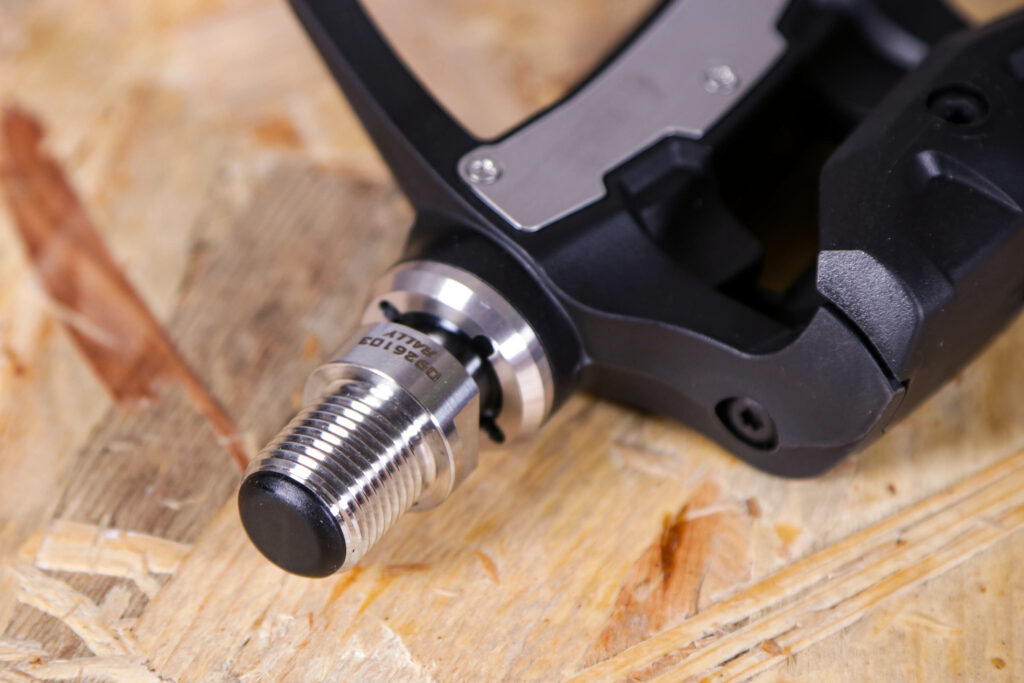
Look and Garmin are the two longest-established manufacturers of power-measuring pedals. This design allows for easy swapping of the meter between bikes. Refinements to these pedals in the last couple of years mean that with the latest models it’s as trivial as just reaching for a pedal spanner.
Favero also has a pedal-based power meter.
Power-measuring pedals offer the ability to measure each leg’s power independently, and some are able to analyse your pedal stroke too.
On the same principal as left-crank meters, most pedal meter makers offer a single-pedal system that provides power data at lower cost.
Explore the complete archive of reviews of power meters on road.cc








13 thoughts on “Best power meters for cycling — maximise your training with the essential data”
Garmin Vector 3s have
Garmin Vector 3s have significant reliabity problems. Check out Garmin user forum before buying.
To be fair to Garmin…there
To be fair to Garmin…there were problems, they have just released a second fix, a complete redisgn of the battery holder (Go mine new parts at the start of May 2020, free as part of the Garmin Support and I got my Pedals early 2018).
If you know about the issues, the new design “looks” like it should address them. Basicaly the housing was not tight enough to hold the battery in place in real life conditions.
Only had one ride with them on….they worked, time will tell. But at least the after care service has been good….no “replacement”, but a redesign and then send you the new part, as the replacement.
This might be the most
This might be the most worthless article on the subject in some time.
I went for the Powerpod last
I went for the Powerpod last year, the BLE version was on sale.
I’m very happy with it. The only time it crapped out on me was when I was caught in a biblically heavy downpour on an after work training ride. Apparently the air intake doesn’t like / can’t handle being partially blocked by flying water. Other than that I couldn’t be happier.
I’m strictly a commuter / occasional weekend warrior who does two / three sportives a year and just wanted some simple metrics to base my training on, rather than a pin sharp super focused representation of my real power output. Although I am told that if you have all the gear and the know how, the Powerpod can be used to do all sorts of things relating to your bike position / aero etc…
I’ve often wondered if Garmin
I’ve often wondered if Garmin etc could not use live weather data combined with elevation/grade, speed etc to calculate a real-time estimate of your power, much like the Strava est power, but with some attention paid to wind conditions. From what I’ve read, the Strava power works out closer than might be expected.
Clearly no use to the ‘6 training zones’ brigade, but it would be something (and free!)
I’ve been using an Avio
I’ve been using an Avio Powersense for a few weeks now, my first power meter experience and it’s great, opened up a whole new world of stuff to think about. Getting PBs from understanding better how to regulate my efforts.
notjustacyclist wrote:
I got one of these too! Factory fit for 250 quid! bargain!! Its cheaper than my shoes…
notjustacyclist wrote:
I’ve been using the Avio Powersense for just under a year now. I don’t think it handles cold weather (near 0deg) well, my initial unit was either reading as zero or superman. Shai (Avio) refitted a new PM and the new doesn’t read superman although it does drop out or underread into a cold icy wind. But since the temps have warmed up its read nice and consistent and for the money I’m pleased with it.
I eventually replaced it for
I eventually replaced it for a 4iiii as it was a bit random in its starting after a cafe stop and the seal failed (I eventually got a replacement seal, like everything it was delayed by this 2020 thing but by the time it turned up I’d replaced it with the 4iiii). Comparing it to the 4iiii numbers the Avio produced remarkably good data. It was however, a factory fit to a shimano crank, I’ve heard of problems when it is not. I think though I’ll use it again at some point, on a 2nd bike or over winter.
Aparently they’ve updated their seal design too, to hopefully make it more robust.
Great artical John and thanks
Great artical John and thanks for the IQ2 info.
I bought a Power2Max NGEco
I bought a Power2Max NGEco SRAM spider recently and I’ve been impressed with it so far. It was really easy to fit though you do need a torque wrench to do so as it only needs 2Nm. You can upgrade it via firmware purchases to the full NG spec, but out of the box it provides enough data for my purposes.
Given this article is updated
Given this article is updated one, my 2021 comment is a tick for Favero Assomia’s. I’ve used the dual sided version for c18 months now and they are great pedals giving me all the data I want to see.
Just unfortunate the data tells me a pro career is not on the cards!
Thanks John. Have you used
Thanks John. Have you used/tested the Rally XC model yet? This looks to be about the only powermeter I could use ‘out and about’, so very interested in these. My Powertap P1s are fab on the turbo but I can’t use them IRL for health/biomechanics reasons. I know I might be a bit ‘niche’ in terms of needing a dual-sensor *and* double-sided platform for MTB-style cleats, but I’m sure I’m not the only one interested 😉 Cheers