



Chris Froome moved from the Ineos Grenadiers (formerly Team Sky) to Israel Start-Up Nation for the 2021 season, and he’s done more than change his jersey. Froome has also switched from Pinarello to Factor bikes, a move that will see him racing on disc brakes for the first time in his career.
But in a video where he tried his hand at reviewing his new Factor Ostro VAM, Froome wasn’t singing the praises of disc brakes. Despite saying that the performance in both wet and dry conditions impressed him, he didn’t feel the same way about all aspects of his new components. It’s a very honest review of the bike which is certainly refreshing from a pro rider, most of whom usually repeat the lines that the marketing department has given them.
> 8 reasons not to get disc brakes — find out the hassles before you switch
We’ve re-watched Froome’s review, paying particular attention to his comments about what he doesn’t like about those disc brakes, and we’ve noted the likely causes, the fixes, and how to avoid the issues in the first place. You can thank us later, Chris. Maybe in your Tour de France winner’s speech.
Froome makes a valid point regarding disc brakes being something that many racers wouldn’t have chosen had the manufacturers not pushed them. Froome says that they “are going to have to adapt and learn to use them, because if you’re not on disc brakes already it’s only a matter of time before you’re made obsolete and forced onto them.”
Froome’s points are also common issues that many riders that are new to disc brakes will encounter, so it is certainly useful to explore the tips and tricks that will make the disc-brake user experience better if you too have just switched over.
Before we dive in, we’re not about to bash either rim brakes or disc brakes. Each system has good and bad points and has been used in and out of the racing world just fine for years.
Right then, let’s get into the issues that Froome cited in his video, and see if we can help fix them.
A downside to disc brakes is the constant rubbing
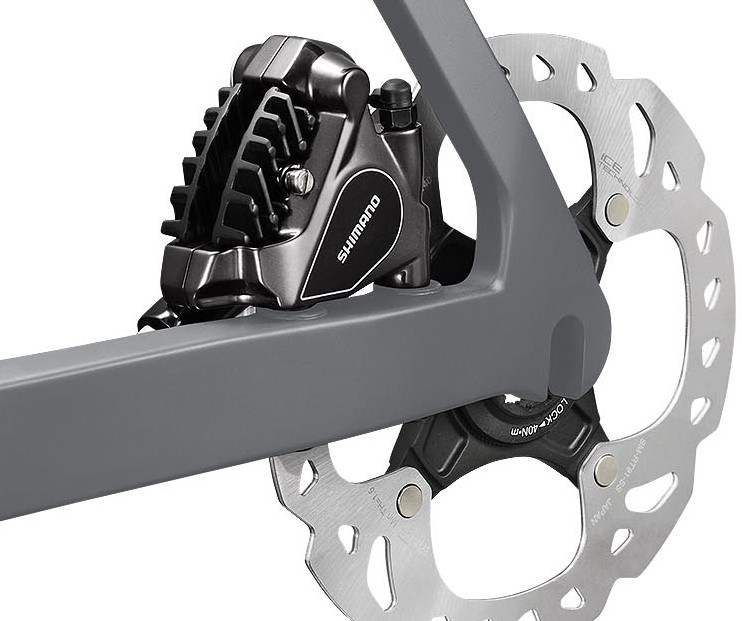
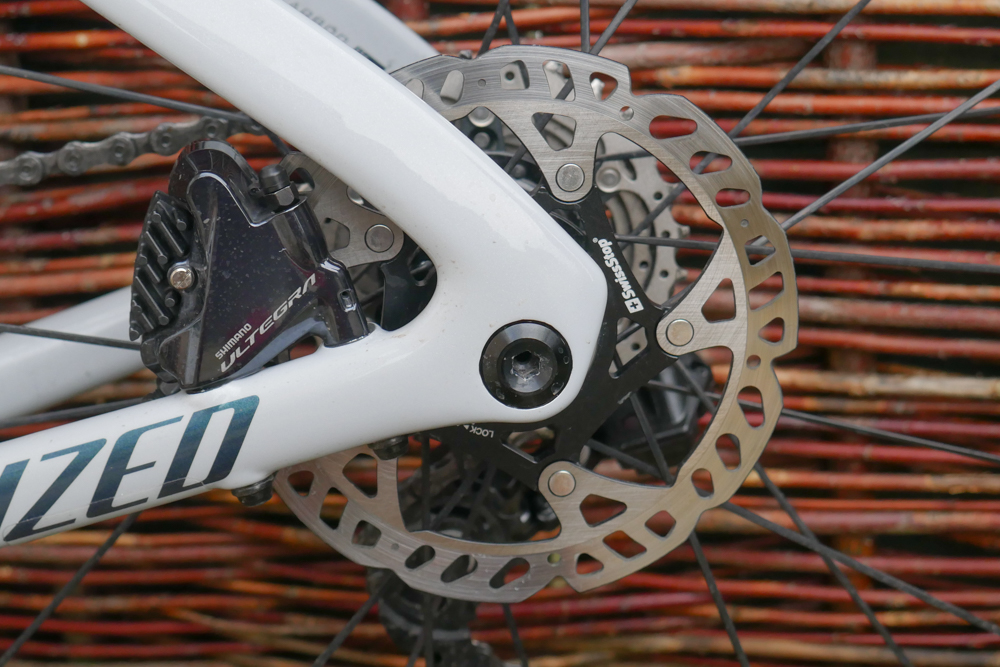
Yep, just like a rim-brake, a disc system will rub if incorrectly set up. If the rubbing is constant and you can hear the noise through the whole rotation of the rotor, the calliper needs repositioning. Check the thru-axle is tight first.
> How to look after disc brakes — 7 ways to get the best performance
If you can hear a noise at only a certain point in the rotation, the rotor is likely bent/warped. Straighten it with a disc brake rotor truing tool.
Potential for mechanicals
What can go wrong with a hydraulic disc brake system out on the road? There are a few things like a loss of braking power caused by a leak in the system, the brake rubbing, or even just noise caused by contamination.
Fixing these problems while out training or on a leisurely ride is a case of riding home with one working brake, attempting to straighten the rotor, or simply putting up with the noise.
> Everything you need to know about disc brakes – read our definitive guide
If you’re a pro in a race, you can switch to your spare £11,000 bike at a quiet moment, but an issue with a rim brake setup would likely have you dropping back to the team car anyway.
We’d say that a snapped brake cable and a loss of pressure in a hydraulic disc brake system are equally rare. To avoid issues with either system, check your brakes regularly and keep on top of cleaning and maintenance.
Overheating
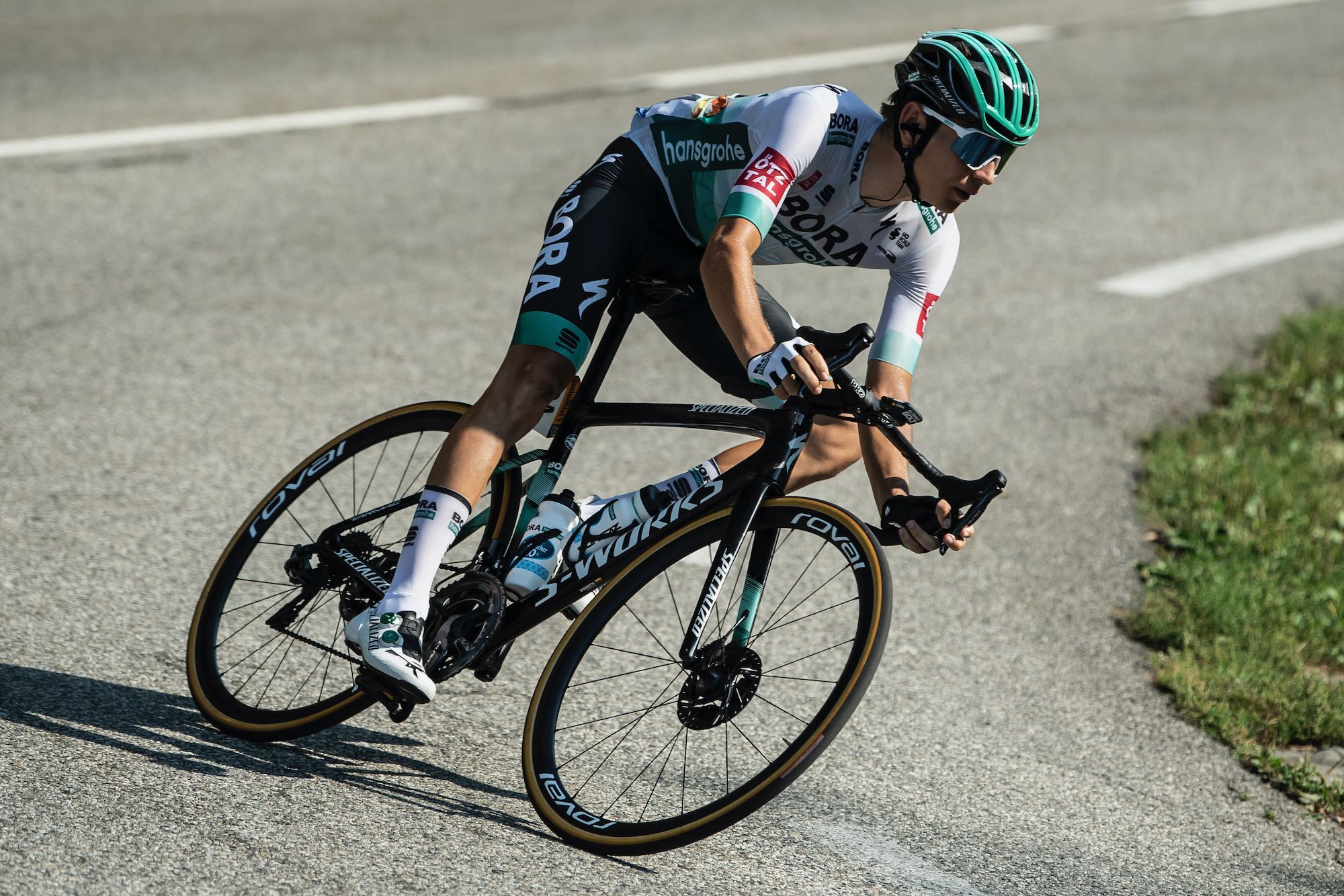
If you drag any brake system – ride with the brakes engaged – you’ll eventually overheat a certain part of that system. On a rim brake bike, you could end up exploding the tyre’s inner tube, melting the tubular glue if you’re on tubs, delaminating the carbon brake track, or something else equally disastrous.
Disc brakes, on the other hand, simply fade (they lose power) – but it takes a very steep hill, a lot of weight and a long time dragging the brakes to do this. The air temperature is also a factor.
On both rim brakes and disc brakes, the answer is simply to avoid dragging your brakes. Actuate them one at a time, allowing each to cool off a bit before you next use it.
The discs become warped
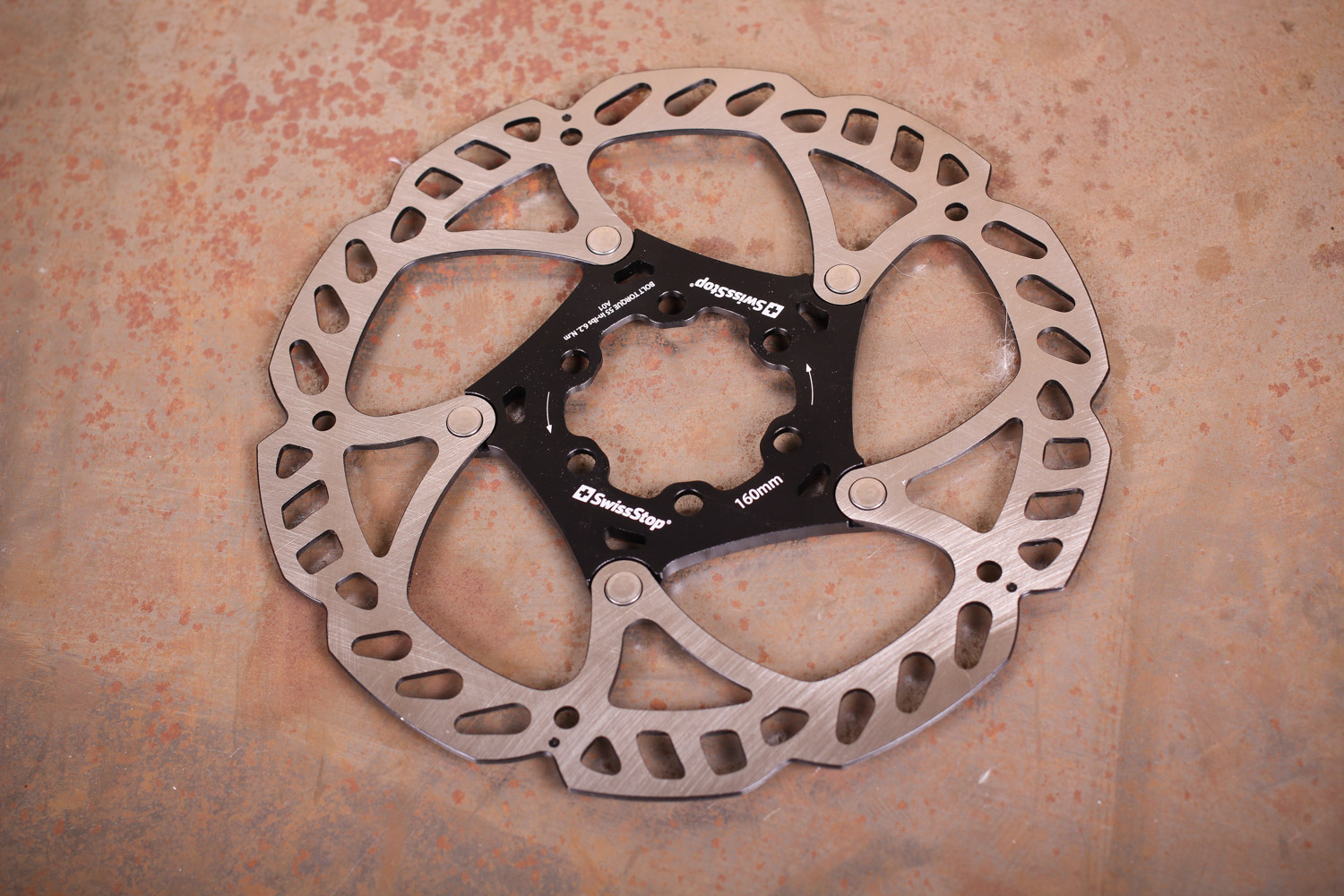
This is a really annoying one. Under really heavy, repeated, or consistent braking, disc rotors can warp, or in simpler terms, go a bit wonky. They need straightening with a proper disc brake rotor truing tool. It might be a good idea to add one to your saddlebag; they’re not heavy.
One piston firing more than the other
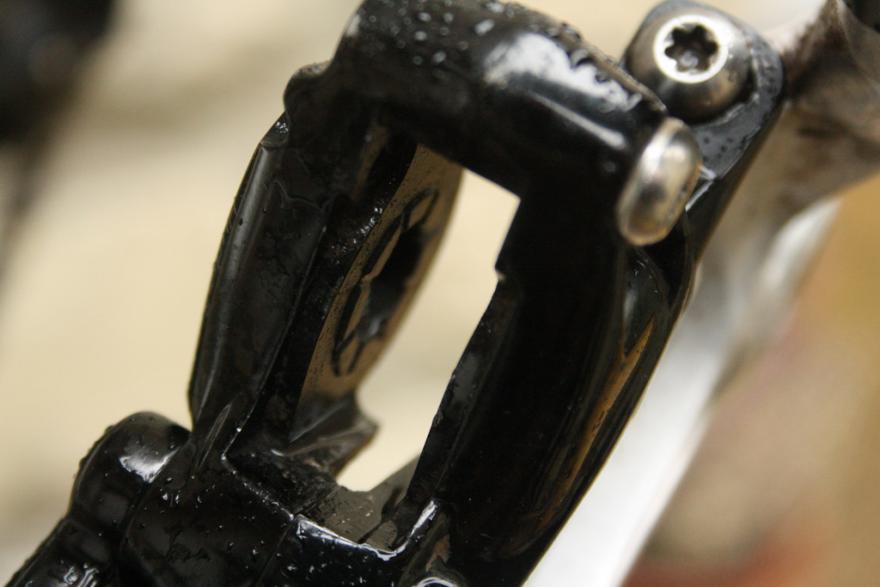
This is a dastardly problem that is tricky to spot unless you’ve got the pads out, exposing the pistons.
One piston that moves less than the other can be caused by brake dust that gets deposited on the piston’s rim. If this contamination gets trapped between the calliper and the piston, it can cause friction, stopping the piston from moving freely.
To avoid this, don’t press the pistons back into the calliper if they’re dirty.
> What’s the best way to clean disc brakes on a bicycle?
If you have done this, the fix is to clean the brake dust off. You’ll need to expose the piston by actuating the brake lever without the pads in the calliper. Go careful, you don’t want to press the pistons out.
Next, clean the piston rim using cotton buds and something like acetone. Before you press the pistons back into the calliper using a proper piston press, apply a little brake fluid to the piston rim using a clean cotton bud.
You can take this chance to ‘exercise’ each piston individually by actuating the brake while holding the opposite piston back with a plastic tyre lever. Repeat this until both pistons move equally.
Will Froomey be a contender in 2021 if he gets his brakes sorted? Let us know what you think.






84 thoughts on “What’s wrong with Chris Froome’s disc brakes?”
Bike disc brakes are surely
Bike disc brakes are surely ripe for the addition of servos (microprocessor controlled with LEDs to detect gaps) for continous calibration. Would still work if the battery failed, since they’d still use hydraulics.
Hydraulic discs already
Hydraulic discs already automatically calibrate themselves. And of course, you’d never use cable discs…
So why is it that the pistons
So why is it that the pistons fire unequally?
slappop wrote:
Usually it’s due to one of the pistons being a bit stuck and needing more force to get it to move.
The ‘calibration’ for pad wear is to do with a little hole which allows fluid to pass from the reservoir to the system when the lever isn’t pulled, but which is closed when activating the lever which allows the pressure to be passed to the two pistons. As the pressure is applied equally to the pistons, the system is relying on both pistons working with similar friction.
So as I said, this is ripe
So as I said, this is ripe for the addition of servos. In fact, not just for calibration – servo assist of the braking action itself would enable a wider gap and possibly goodies such as ABS and dynamically configurable feel.
Because one of them is
Because one of them is meeting resistance, usually from crud build up. It is pretty rare for one to sieze solid if used regularly and cleaned every so often.
PP
They automatically adjust for
They automatically adjust for wear, but for lazy pistons?
I find it frustrating how
I find it frustrating how many of these issues are solved by ‘buy this dedicated tool for a job that didn’t previously exist’. Don’t get me wrong, I think discs are the way forward in terms of amateur cycling (having never beena pro I have no opinion there!) but it would be nice if manufacturers could settle on some standards rather than just making a ‘new’ thing so they can keep flogging their specific branded equipment.
I use a flat-head screwdriver
I use a flat-head screwdriver to push pistons back in a bit, but I leave the pads in place so any damage is done to the pads and not the pistons. I have pushed the pistons themselves in the past, so I switched to using plastic tyre levers to minimise the damage. Personally, I don’t see why damage to the face of the piston would make much difference as long as they move in and out properly.
Damage to the piston face
Damage to the piston face could spread through the piston as it expands & contracts with the heat.
Thanks – I’ll look out for
Thanks – I’ll look out for that. I did trash one front caliper piston by pushing it out too far whilst I was botching a repair (IIRC I’d finished bleeding the brake and was pumping the brake a few times to get it calibrated, but hadn’t remembered to put the front wheel back). I ended up replacing the whole caliper (approx £50) so at least I learnt how to do that.
Edit: remembered that that wasn’t what broke it – I’d put the wheel back in and hadn’t put the brake pads back in, so when I tried the lever on a spinning wheel, the pistons were pushed directly onto the spinning rotor. Dumb thing to do.
With ceramic pistons, you can
With ceramic pistons, you can crack the piston – did that once using a big flat screwdriver and learnt my lesson! I now use the same screwdriver, like you do though I leave the old pads in to do it, then remove and discard them.
Oh and regarding dedicated tools, the only dedicated tool you need for Shimano hydraulic discs is a bleed kit – 6 bolt rotors use either an Allen key or Torx and centre lock use a Shimano cassette tool. The hose can be cut square with a sharp craft knife, the insert hammered in with a small hammer if you don’t have a dedicated press and the hose is tightened using an open ended spanner. Not sure which dedicated tools fwhite181 is actually complaining about?
PP
I had to get a special tool
I had to get a special tool to undo the centrelock rotors as my cassette tool couldn’t deal with the thru-axle hub and yes it’s easy to hammer in the hose insert.
But that’s the whole *point*
But that’s the whole *point* behind disc brakes. To create new problems so they can sell us new solutions. We can now look forward to a decade of annual “this year’s brakes are X% ligther and Y% more aero.” They’d already milked all they could out of wheels and frames so time to create new problems. I bet most people never knew they had braking problems until Specialized, Trek, et al decided they needed a boost to their bottom line.
I suffered through an
I suffered through an unfortunate week of ‘Alpine disc warp’ , 2 years ago. My Cannondale was purchased with factory supplied Shimano 140 mm discs that were simply overwhelmed by the length and steepness of the descents. (I’m 194lbs/88kg and did not overly drag my brakes). They overheated so much that my LBS commented on how the discs looked annealed .I have now upgraded to 160mm discs but have yet to try them in a similar setting .
It would seem that Froome and co. can and does overwhelm the 160mm discs and contrary to the advice in the article , the discs do not require straightening with a tool as they will return to true when they cool.
I do think discs are the
I do think discs are the future (whether I personally like it or not) but I also agree that manufacturers need to do a lot more.
I don’t buy the ‘they only squeal if contaminated’ excuse, they can make an absolute racket as soon as the rotor gets wet, something I notice that none of the usual ‘how to’ articles seem to acknowledge or address.
Also I have a set of relatively new Shimano brakes that developed warps and wibbles in the rotor just during bedding in (no, I’m not THAT much of a heavyweight) and I’ve had pistons stuck out even though the brakes were relatively new and had been regularly skooshed with isopropyl spray. Especially infuriating on a gravel bike when you might still end up on long road sections and maybe don’t want to hear a constant tsk tsk tsk of a rubbing/warped rotor.
I need to move to discs on my CX bike, rim brakes were fine for summer gravel but I’ve just destroyed my rims in 3 months of muddy winter riding. I’ll be going TRP Spyre because I don’t care about absolute power but do appreciate being able to back pads off for muddy rides, and no lazy pistons!
I’ve got Spyres on my gravel
I’ve got Spyres on my gravel / winter bike. Not as nice feel or power as hydraulic (which I have tried a couple of times on borrowed bikes) but a very good compromise and enough stopping power to test the tyres.
No bleeding, none of this stuff about needing to push pistons back in or cleaning deals with cotton buds. Each pad’s distance from the disc is controlled by a screw, so the cable needs no adjustment. I can’t say I adjust them any more than rim brakes – it’s not often. They do howl in the wet. Grease on the back of the pads helps a bit. I haven’t descended the Mortirolo fully laden (or indeed at all) but no issues with warped discs either.
Compared to the rim brakes on my summer bike (nothing high end) they’re good enough, and the only slight irritation is having to be more careful when refitting a wheel as the disc, pads and caliper are less robust. I can’t just pop the wheel back and wiggle it past the brake blocks.
I’ve had seized pistons and nasty rub on motorcycle hydraulic discs and it drove me crazy. Not keen to go back there.
Quote:
This was my fear. For winter CX I’m hoping they’ll be so full of mud and grit that it might dampen the squealing a bit!
I’m going to try 140mm Swissstop catalyst rotors, they’re apparently very quiet. I’d also experimented in the past with fitting anti-squeal tape from automotive brake pads. It fits, but only if you take out the pad adjusters (they unscrew from the inside) so that lack of fine tuning will compromise performance. Worth a go, I’m a tinkerer at heart!
I’ve got Spyres on my gravel
I’ve got Spyres on my gravel bike & they dont howl, so ymmv,I think different pad compounds do make a real difference on that point.
I’d happily swap my rim brakes out on my all weather commuter for Spyres instead, (the frame will take them it’s just the total cost makes a new bike far more appealing) But just riding on UK roads in winter and not even with any hills or heavy braking points,it would be weekly maintenance to keep rim blocks working,almost daily rim cleaning to remove pickup,and I’d get through rim blocks like they were made of butter, my Spyre maintenance regime is I turn a screw every so often when the lever travel feels too long.
Which pads are you using? I’d
Which pads are you using? I’d love to fix this and have tried several pads from different brands but all that varies is the note they sing…
Which pads are you using?
Which pads are you using?
The originals on the Spyres lasted a year and I’d have bought them again if I could. As it was, I bought whatever was on offer from Chain Reaction which turned out to be EBC which also seem excellent- I can’t yet tell if they’ll last a year as well!
I’ve got Shimano organic in
I’ve got Shimano organic in the front caliper and EBC in the rear; they just howl at different pitches. I added copper grease to the back of the rear pads and it helped for a while. Might try that again.
they are currently RWD
they are currently RWD organic,though they seem to be out of stock everywhere at the moment, but the key rather than the brand,though Id never buy purely on price alone, for me was just picking organic compound pads.
the original pads that came with the bike werent very good and I swapped to organic and it fixed alot of the issues Id had with them
my Spyre maintenance regime
my Spyre maintenance regime is I turn a screw every so often when the lever travel feels too long
You missed out the appalling and arduous task of changing the pads once a year after a lot of heavy use on big hills with a heavy trailer. I don’t know how I’ve managed to cope, what with the occasional squeal on first braking in the rain, which then mostly disappears with subsequent braking. I really must go back to all those carefree rainy Lancashire days with all the mud and grit grinding away the rims while braking hardly works!
there arent any big hills in
there arent any big hills in East Anglia 🙂 I replace front pads maybe once a year, rears last maybe twice as long & its so simple a job, whereas my rim blocks constantly picking out ali pick up from the rim,literally seeing your rim disintegrate in front of your eyes, assuming it hadntly already jammed in the groove wear indicator of the rim, and trashed the blocks on your commute home.
front pads maybe once a year
front pads maybe once a year, rears last maybe twice as long
That’s interesting- I ave only a 1 1/4 year experience of discs, but both front and rear wore out at precisely the same time- the indication was a curious clicking noise from both. I couldn’t work out the cause but it instantly resolved after quick pad change, and they were all equally worn.
On cable discs that click can
On cable discs that click can be the return spring over-compressing. This can be solved with the pad adjusters on the Spyres. It happened to me on a serious descent – Kenmore Hill, 4 km average 9% and a really steep finish. Glad that the rear brake was still working.
I had been using barrel adjusters on the cables instead of the caliper screws to take up the pad wear, and that’s wrong.
Tbf it’s just an indicator of
Tbf it’s just an indicator of my own braking style,in that i bias to the fronts way more than the rears with discs,just because I find it easier to ride like that.
Consequently get very little wear on the rear pad.
Weirdly rim brakes totally different, I grab at both mostly equally,but with more rear bias instead.
Awavey wrote:
I often find I start by applying boith equally, but if going downhill or braking hard I soon have to back off on the rear brake or the rear wheel locks up. Due to the weight and turning moment reactions pushing more weight onto the front wheel. I suppose backing off both brakes might also resolve the rear wheel locking while providing the same deceleration.
Perhaps if riding on the flat and always braking early and gradually wear might be more even. But then arguably rim brakes would be fine. Or conversly the lower levels of braking available on rim brakes reduce the weight transfer onto the front wheel, allowing more equal braking.
I’ve never locked up the front wheel unintentionally.
“A downside to disc brakes is
“A downside to disc brakes is the constant rubbing”. Except if you fix it then it’s not constant rubbing is it. Jesus wept.
Froome saying that the “technology isn’t where it needs to be” (or similar) needs to be expended upon. What tech are you looking for, Chris?
The technology he’s looking
The technology he’s looking for is rim brakes.
Followed by having to flip
Followed by having to flip flop his rear wheel to get to his climbing gears?
Excellent comment
Excellent comment 😉
Disc brakes are totally
Disc brakes are totally unnecssary on a road bike, mountain bike yes but road bike no.
If you want them that is fine, that is your choice, but anyone who claims you can stop better with disc brakes, has either had crap rim brakes previously or did not know how to set them up properly.
Add that to the fact that disk brakes make a road bike look like a tractor and add weight and the only thing you have left is gullible people easily fooled by marketing hype and people who like to be fashionable.
Sorry, but like it or not this is the truth of the matter.
Sorry, but like it or not
Sorry, but like it or not this is the truth of the matter.
Not sorry and no it isn’t.
It is the truth.
It is the truth.
Truth is a three-edged sword.
Truth is a three-edged sword.
Lots of people have tried both (including me) and generally agree that disc brakes offer much better stopping control (especially in the wet). I don’t think it’s really a fashion statement but more pragmatism.
The other benefit is that you can then use wheels that don’t need to be designed to have a braking surface which can hopefully lead to better aerodynamics (or possibly a small reduction in weight, though that’s far less important).
I sometimes wish my bike did look like a tractor – cars would give me a bit more room.
Make your bike look like a
Make your bike look like a tractor? hardly a truth more a matter of opinion, I like the look of disc brakes, if you don’t fair enough but don’t claim it as a truth.
Rest of your post is also debatable.
Exactly. Beauty is in the eye
Exactly. Beauty is in the eye of the beholder. I think my disc braked Colnagos look fabulous. My disc braked winter bike (Felt F65X with full guards etc) got a ‘supernice’ on GCN, so can’t be that tractor like…..! And it’s an aluminium lump that weights a tonne, but gets the job done….
I don’t look at it and think, my god that bike is ugly, looks like a bloody tractor.
PP
That bike really does look
That bike really does look like a tractor tbf. As does any properly set up winter bike.
I see that bike and I want to
I see that bike and I want to ride it, on a cold winter’s day. It’s beautiful to me because I wants to ride it.
Pepperami wrote:
I think you’re replying to the wrong person
If they give even marginally
If they give even marginally better stopping power or modulation, have the smallest aero advantage and the bike still comes in bang on the lower weight limit, what is the rider losing?
Quote:
Edit: didn’t read last post properly
Disc brakes have a big aero
Disc brakes have a big aero penalty
check12 wrote:
Yeah, on an old frame adapted for discs, maybe, but the newer frames designed for discs have become more aero than rim-brake frames because they can be designed to be so and don’t need to contend with big chunks of aluminium such as rim-brake calipers in wind-catching areas.
That’s just not true, it’s
That’s just not true, it’s what bike brands want you to think, so you swap your *insert expensive rim road bike* for the new 2021 disc brake version.
better braking in the wet and bit better in the dry yes, but also more faff and less aero.
No, not a bit better in the
No, not a bit better in the dry, read on and I will tell you what a friend and I did. When this test was done I did not own a disk brake bike, since then I do own one only because the bike came with them, but anyway here was the test.
My friend had a newish road bike with Shimano Ultegra hydro disk brakes and my 5-year-old bike at the time of the test had Shimano 105 rim brakes; his bike was fitted with Continental 4000S 25c tires and mine had Vittoria Rubino 23 tires, we put the exact same amount of air in our tires because with the weight of the bikes and riders we were within 2 pounds of each other; this was a dry day about 80 degrees outside. So the test was that we had to stay seated and not slide our butts rearward to get more weight over the back tire, there would be 3 sets of 3 runs each set, first set was 15 mph, the second set was 20 mph, and the last was 25 mph. We took turns yelling stop so as to eliminate pre-knowing reaction time, and these were to be full-on panic stops. In the first two sets, we stopped within a foot of each other, sometimes I stopped a bit shorter and sometimes he did, we called it a tie, but something interesting happened in the 3rd set, the first stop I was a foot shorter, we blew that one off thinking I reacted faster, the 2nd stop I stopped about 3 feet shorter, and on the 3rd stop I stopped about 6 feet shorter! We determined he had brake fade, so he touched his front rotor and singed his finger, but wasn’t able to singe his other finger on my front rim though it was hot, just not that hot, I wish I had one of those laser temperature thingys.
So while I know this was not very scientific but we did the best we could with what we had, I would have thought that on tires alone his would have stopped better than mine since mine were cheaper tires and narrower tires.
My new bike is a touring bike and it came with mechanical disk brakes, my old 29-year-old touring bike had the original cantilever rim brakes, other than the smoothness of how the new disk brakes actuate I can’t say for sure if they stop better than the old cantilevers, and I can’t test them with loaded weight since the old one was destroyed in an accident and unrideable which is why I had to buy a new one. But they don’t seem to stop any better from what I remember, they just are a lot smoother.
Anyway, that’s my story.
The biggest aero penalty on
The biggest aero penalty on disc brakes is actually from the additional spokes required, not the callipers
True, but again we are
True, but again we are talking about things which in the real world, for your average rider who is not racing at any sort of high level, is of sod all relevance. I ride for sport/ exercise/ health and well-being. I like quality bikes and riding relatively quickly (for me) most of the time I’m out, which includes doing massive summer day rides of several hundred KMs. When I’m riding with mates, who are all quite dedicated, with varying quality of bikes from a couple of grand up to several thousands, spoke counts, rim vs disc, aero helmet vs non aero helmets etc make sod all difference. We aren’t racing…..even when we are!
The current CTT 100-mile comp
The current CTT 100-mile comp record was set by Marcin Biablocki in 2019 with a 31mph ride. He was on a Pinarello Bolide with disc brakes. Where was the aero penalty? Quite the reverse if anything.
Someone setting a record on
Someone setting a record on disc brakes doesn’t prove they are more aero than rim brakes
check12 wrote:
seems likely that someone trying to break a record for a time trial would consider the most aero bike they could use. Otherwise someone else would come along and break te record by rusing the significantly more aero rim brakes.
But equally, aero benefit/
But equally, aero benefit/ disadvantage of disc brakes is of little consequence to just about everyone riding who is not racing. I’m not sure why people go on about it so much.
Most people would make far more aero gains if they just set themselves up slightly lower at the front and did some flexibility/ strength training to be able to sustain such a position. Then they would just have to wait longer for their mates at the next junction than they currently do….
Claiming the difference between caliper and disc aerodynamically makes a difference to your average punter is just pointless unless people are looking at just about everything else first, such as their position, helmet/ clothing, frame, fork and wheels…
PP
Big ? It’ll be immeasurable
Big ? It’ll be immeasurable I’m the real world. The not very aerodynamic rider is by far the biggest drag factor. Braking systems – naah.
yupiteru wrote:
Errrrrrrrm no, no it isn’t.
Quote:
you choose your favourite carbon rims and rim brakes, i’ll choose my favourite carbon rims and disc brakes, we’ll head to a steep uk hill in the pissing rain and see who stops first. game?
When I learned in November
When I learned in November that I was not going to get a replacement (anytime soon…) frame for my Ultimate Commuter, (with it’s excellent Hope Tech 3 E4s), I got a set of Mavic Crossmaxxes so I could keep some life left in my last set of 26 inch XC717s on my Getting to Work Bike. I ride through a huge amount of filth on my commute.
Every time I use my quite well set up Curve Cantis I can hear the grinding and wear. Kool Stop Salmons too.
The rims have lost more than half of their “meat”. They were only purchased for the winter, they might make it.
yeah, for mud and the like,
yeah, for mud and the like, disks are the best.
do keep an eye out for pad wear though, easy to miss that they are getting thin until you end up metal on metal. and it can happen fast-one descent in morzinr after rain was enough to destroy a set.
Two riders with equal ability
Two riders with equal ability…..the rim braked rider will beat the disc braked rider up.
On the way down – if the rim brake has the correct pads there will be
next to nothing in it.
You are saying in heavy rain
You are saying in heavy rain the stopping distances will be the same ?
not with bloody carbon rims
not with bloody carbon rims they won’t be!
PP
NZ Vegan Rider wrote:
UCI minmum weight limits can be met by bikes with disc brakes, so why would they be slower?
Or are we comparing non UCI legal rim brakes superbikes?
Aerodynamics at climbing
Aerodynamics at climbing speeds makes no difference. Bearing in mind disc and rim braked bikes can meet the UCI minimum weight limit, there will be no weight difference between the two riders either.
What exactly is the point you are trying to make? That a non UCI race, with no limit would see a difference? And who exactly will that have relevance to?
PP
dave atkinson wrote:
you choose your favourite carbon rims and rim brakes, i’ll choose my favourite carbon rims and disc brakes, we’ll head to a steep uk hill in the pissing rain and see who stops first. game?
I’m waiting for the road.cc head-to-head comparison. Get a few numbers down for weight vs aero vs stopping distance wet and dry.
And you could keep repeating
And you could keep repeating the test and see whose rims fail first?
i think they are somewhat
i think they are somewhat overkill on a fair-weather-only bike, but for a UK all season machine they are wonderful
i have my commuter and my Bike Friday 20″ folder set up with (cabled) front disks, for the smaller 661 rim it removes the risk over overheating the tyre on the big downhills it encounters when i take it abroad
but, there’s some downsides
like I said: i love them for year round use My spouse’s fair weather machine -overkill. i was pushing for a good set of ultegra rim brakes, but no, she was convinced that disks were it. i got to pay the premium for something which we unlikely to encounter the conditions where disks make a difference
Just because you don’t know
Just because you don’t know how to ride a bike doesn’t mean others don’t.
yupiteru wrote:
So if you believe that discs are no more effective than rims, why do you believe that they are necessary on MTBs?
Why is “looking like a tractor” relevant? Even if that is “the truth of the matter” (which I certainly would not wish to defend), surely you are putting form before function on this point making it irrelevant.
That leaves only weight (in your OP), and as others have mentioned, if it falls within the minimum weight, again irrelevant.
At worst it seems that on high-end bikes at least, this either-or rather than no-contest.
Oh and look what I’ve just
Oh and look what I’ve just read on road.CC just to piss even more on your fire! Even a bloke who had his calf sliced open says how much better disc brakes are than rim….when racing….
Disk brakes all the way, it’s
Disk brakes all the way, it’s the same reason cars have disk brakes and not drums anymore because drum brakes are as poor as rim brakes. I was rear ended by my mate on his rim braked bike, damaged both of our bikes, he was trying to brake at the same point as I did, no chance.
Billy1mate wrote:
False analogy, firstly car brakes need to stop 1.5 tonnes of metal, not >100kgs worth of bike + rider, and drum brakes are demonstrably massively worse than discs on motor vehicles – but rim brakes aren’t drum brakes (in fact what people tend to forget is that rim brakes actually are disk brakes, just the disk is the wheel).
Funny, I’ve never seen any of the rim-braked INEOS riders rearend their disk-equipped rivals even on the fastest descents, have you? I’d respectfully suggest that’s more to do with your mate’s lack of skill than his choice of brake.
If you want them that is fine
If you want them that is fine, that is your choice, but anyone who claims you can stop better with disc brakes, has either had crap rim brakes previously or did not know how to set them up properly
Sorry, but like it or not this is the truth of the matter.
[/quote]
what utter rubbish you talk, disc brakes will out brake rim brakes all day long, that’s the reality and truth
Perhaps the big technological
Perhaps the big technological leap that would keep Chris an many others happy, would be ABS? I’ve no idea how or even IF it will be possible to reduce the size and complexity of an ABS system such that it would be appropriate on a lightweight road bike that has no built in source of power (like cars, motorbikes and even now a few eBikes do for their ABS systems) but that would certainly be a game changer if it could be made to work.
Good point
Good point
The biking industry is going
The biking industry is going to wait before they introduce ABS, they’ll wait till the sales of bikes slow down, then BOOM, out will come the “new” ABS brakes with the intention that people will rush out and buy new bikes again so they get the latest newest technology, this is how the game is played, it’s all about money.
I’m guessing you enjoy riding
I’m guessing you enjoy riding your 5 speed with downtube shifters still?
Raleigh Olympus?
Raleigh Olympus?
The thing for me is that I
The thing for me is that I want to be the one who makes the choice. I do not want to be guided/forced by some marketing guru who is probably great at marketing, but less so at riding a bike.
I love my rim brakes. I especially love the brakes on my touring bike. I have toured in parts of the world where disc brakes are a bit like space travel or running water in your house. Good luck when your disc brakes play up!
Just allow choice.
I loved my choice of a triple on my tourer when the rear mech failed: I survived the rest of the day on my 3-speed!
Just allow choice.
I loved riding without a helmet in a very hot place where a car might pass every hour.
Just allow choice.
Etc. etc.
You can, and will still be
You can, and will still be able to buy bikes with rim brakes for years and years to come. Probably as long as there are bicycles around. Why? Because there will always be a market wanting them (people like you). It may be that the mass manufacturers stop supporting them, but somebody will. So you will still have the choice.
PP
Thanks Pilot Pete, all very
Thanks Pilot Pete, all very reassuring. I am 61 and aiming for a whole bunch more years of cycling. I reckon cycling/exercise has got me this far, so here’s hoping rim brakes last the pace.
Oh, and the other longevity ingredient…. luck!
Quality hydraulic disc brakes
Quality hydraulic disc brakes are great but perversely, I prefer the simplicity of cable rim brakes; there’s a good reason hydraulic disc brakes are used with motor vehicles – they are far superior to cable, rod and hydraulic drum brakes.
There’s another discs thread
There’s another discs thread somewhere, but this one still seems to be going so I’ll put it here. I was out this afternoon and was caught out in the North Lancs. hills by a downpour just short of torrential. I forgot about the trusty TRP Spyres because they were just working well, until I realised the much talked-about squeal had not been present at all in the blitzing rain (not uncommon here, for foreigners), not even an initial squeal which I find is not uncommon, but not invariable either, in ordinary rain. I was out for 90 minutes with no squeals at all- and reliable braking down steep hills. The Joy, The Joy!
Disc brakes sound a bit like
Disc brakes sound a bit like tubeless tyres…..great – until they are not. And then that quick job of changing an innertube becomes a messy nightmare.