



Motorists are most likely to experience feelings of surprise or happiness when encountering and having to overtake horses and horse riders on the road – but anger, frustration, and anxiety when faced with the same situation involving a cyclist, a new study examining the role of mindfulness when passing vulnerable road users has found.
The research, carried out on behalf of the British Horse Society, also found that 80 per cent of drivers agree that motorists are held up by cyclists when in a rush, while seven out of ten drivers surveyed agreed that cyclists are unpredictable, can appear from nowhere, and don’t obey road rules.
Published last week, the Road Safety Trust-funded project was undertaken by David Crundall, Editha van Loon, and Katherine Bailey from Nottingham Trent University, and surveyed over 1,000 drivers on how they feel, think, and behave around vulnerable road users such as cyclists and horse riders in a bid “to better understand their emotions, attitudes, and behaviours”.
> Cycling UK and British Horse Society issue guidance to cyclists on how to overtake horses safely
As part of the study, the 1,006 drivers from across the UK who took part in the online questionnaire were asked how often they feel a range of emotions – including frustration, happiness, surprise, anger, contempt, and anxiety – when “faced with cyclists, horse riders, or motorcyclists in the road ahead”.
32 per cent of those surveyed reporting feeling frustrated towards cyclists “often” or “nearly always”. 20 per cent, meanwhile, reported the same frequencies of anxiety around cyclists, and 16 per cent said they were often or nearly always angry at people on bikes on the road.
In comparison, only two per cent said they were often or nearly always angry when faced with horses and horse riders on the road (though those behind the study noted that this still amounts to 24 of the 1,006 drivers surveyed, described as a “sizeable minority with extreme views”).
Over three-quarters of those surveyed said they felt frustration towards cyclists at least sometimes, with almost half experiencing anger occasionally. Under a quarter of respondents, meanwhile, said they never or almost never felt angry when passing a cyclist on the road.
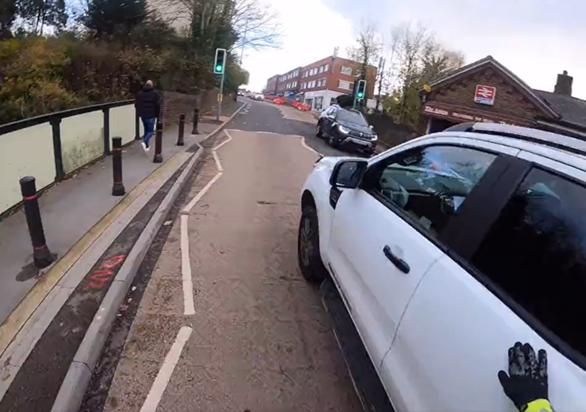
The motorists were then asked to share how often they engage in risky or aggressive behaviour around vulnerable road users. 24 per cent said they shout or gesticulate at cyclists at least sometimes, with two per cent admitting that they frequently or almost always shout at cyclists.
Around a quarter of the drivers also said they sometimes follow cyclists at or less than a car’s length behind them (with around 15 per cent revealing that they frequently or almost always follow cyclists at close proximity), with roughly the same number admitting they leave people on bikes less than 1.5m space when passing. 40 per cent admitted overtaking cyclists at or above the speed limit for the road.
Between 20 and 30 per cent of drivers also said they sound their horn or rev their engine at cyclists before passing them.
Horses, however, appear to evoke much fewer instances of negative behaviour, with an average of 97 per cent saying they never engage in aggressive behaviour towards the animals and their riders on the road.
> Look out for horses — here’s how to pass horse riders safely
Finally, when focusing on attitudes towards cyclists, 81 per cent said they strongly or somewhat agree that drivers may be in a rush and are held up by cyclists, while around 70 per cent agreed that cyclists are “unpredictable” and “can appear from nowhere”.
68 per cent also agreed with the statement that “cyclists don’t obey road rules” and around 55 per cent agreed that drivers may be stressed about something else and take it out on cyclists, that packs of leisure cyclists can be intimidating, and that cyclists “act arrogantly”.
Just under half (48 per cent) also strongly or somewhat concurred that cyclists should pay “road tax” (despite the fact it doesn’t exist) and 26 per cent agreed that cyclists “shouldn’t be on the roads”.

In their free-form text responses to the questionnaire, some drivers expressed annoyance that cyclists “are slowing down traffic”, with one noting that “I am often in a rush and with time deadlines to get somewhere, so the hold-up of staying behind a cyclist holds me up far too long”.
Road position and riding two-abreast also formed a significant portion of the responses, with some arguing that “commuting cyclists… ride in the middle of the road making it hard to pass” and that “cyclists are very rude and ride in the middle of the road so that you can’t overtake”.
“Recreational expert cyclists often ride deliberately next to each other to slow other [road] users down,” another respondent said.
Other responses were even more forthright, and included claims that cyclists – or “Lycra warriors”, as one respondent described them – “are selfish and dangerous and think they own the road at times” and are “arrogant arseholes”.
“When there is a cycle path and it’s not being used, we always shout ‘use the cycle path psychopath!’” one of the motorists added.
This data was subsequently assessed by mindfulness experts, with a group of drivers then treated to a four-week training intervention, where they were shown newly crafted scripted videos which aimed to tackle a lack of knowledge about unsafe passing behaviours by providing information on how to overtake vulnerable road users, provide persuasive arguments to reframe motorists’ attitudes towards cyclists, and offer mindfulness techniques to combat in-the-moment emotions such frustration and anger.
According to the report, the four videos had a positive effect on the attitudes and emotions, particularly concerning frustration, of the drivers towards cyclists, and that their intended future overtaking speeds have decreased, along with a decrease in their unsafe passing behaviours.
The motorists who took part in the online course also said the videos would be of great benefit for other drivers, reckoning that their knowledge, attitudes, and level of control when overtaking had improved, and that they would use the recommended safe passing and mindfulness techniques in practice.




107 thoughts on “Drivers “surprised and happy” to see horses on the road – but “frustrated, angry, and anxious” when overtaking cyclists, new road rage study finds”
I’ve been tempted to have a
I’ve been tempted to have a sign made up to stick on my back that asks motorists to ‘pass me like you’d pass a horse’ but then I looked up the stats and was surprised at how many collisions there where involving motorists and horses and their riders.
i still believe that motorist’s behaviour towards horses is nothing to do with them caring more about them but more to do with assessing the potential risk a horse could do to the motorist’s vehicle if spooked.
Don’t wear that round the New
Don’t wear that round the New Forest…
100% agree.
100% agree.
A startled horse is likely to cause much more damage to a vehicle than if a driver hits a cyclist.
And drivers know it.
Reciprocal Road danger has
Reciprocal Road danger has safety value.
HazChem signs are available and required for the safe transport on the public highway depending upon the chemical you may transport.
For example Corrosive or Explosive or Inflamable. Your choice..
Were the same drivers tested
Were the same drivers tested on their knowledge of the highway code?
It would be interesting if
It would be interesting if those included in the survey were also asked some questions as to how they rated themselves as drivers and their driving behaviours. The correlation of answers would be interesting.
I often “appear from nowhere”
I often “appear from nowhere”.
Though I do also go by “The Amazing Teleporto” on weekends, my ‘appearances’ often seem to coincide with drivers actually actively looking / their conscious catching up to the fact that I’m there – flashing lights, bright clothes & all.
That’s a pretty good video
That’s a pretty good video BTW
I’m waiting for the updated
I’m waiting for the updated road.cc review criteria which assesses new bikes according to their weight, riding pleasure, comfort, price, and ability to teleport
extra points for elecronic vs
extra points for elecronic vs manual teleporting of course. I heard that *insert name of bike manufacturer* are bringing out 14 speed Di2 teleportation on some new models. With disc brakes obviously, I mean you’d need some serious rim brakes to cope with that.
Gravel specific version to be available within months.
Would I be able to teleport
Would I be able to teleport from Preston to Essex?
I hope the UCI bam such
I hope the UCI ban such devices, or Grand Tour spectating could become quite dull.
GrandTourer wrote:
even more so?
Clem Fandango wrote:
Just make sure there are no flys on the bike before teleporting. bad things can happen.
Clem Fandango wrote:
I just need to arrange for drivers to pull out without looking properly at my workplace just as I am leaving home, so I can appear from nowhere instead of actually having to travel between two locations.
Deep down, even the biggest
Deep down, even the biggest petrolhead knows that cars are massive local polluters, contribute not insignificantly to global warming, and kill thousands per year. They certainly must be conscious of the fact that, the moment they bought their first car, they essentially opened their wallets for the petrochemical industry, the insurance industry, and the government to take as much as want out whenever they feel like it. And they know that cycling is, or could be, a viable alternative for most people. But nobody, on any level, feels embarrassed that they aren’t riding a horse to work.
I would also assume that
I would also assume that riding horses takes a long time to learn and costs more (in terms of horse maintenance etc) than riding a bike.
So some drivers might actually be jealous of us cyclists who have chosen the cheaper and easier option
We are also showing drivers that we aren’t as scared of cycling on roads as they probably are.
I don’t think they know or
I don’t think they know or accept those things at all.
parrotgone wrote:
100 years of big auto and big oil
propagandamarketing will do that!when those drivers said that
when those drivers said that cyclists don’t follow road rules, they actually mean their particular road rules
(thinking of the rude man who sounded his horn at me yesterday because I wasn’t in the cycle lane. Which was of course blocked with parked cars)
Much like the bus driver who
Much like the bus driver who told me that cyclists have to stop at a bus stop and look around before proceeding, to justify her close pass mere metres before a bus stop:
https://www.youtube.com/watch?v=SF4u42-lx84
My sister rides horses and
My sister rides horses and she might dispute that assessment of happy drivers. She has experienced the aggression and ignorance that cyclists feel.
I think the drivers don’t
I think the drivers don’t particularly like the human on top of the horse, but are less resentful towards the horse underneath the human. At least, that’s the impression I get from the wording of the questions and responses.
Her impression comes from
Her impression comes from infuriating encounters with stupid drivers.
Miller wrote:
Fixed it for you.
If your sister was accompanied by a big bloke with a gun, or better still it was the driver’s own child was on the horse, then you can be sure that each driver would suddenly have all the time in the world to wait before passing slow and wide. They’d display as much courtesy and consideration as you could ever hope for.
I wouldn’t hesitate to guess
I wouldn’t hesitate to guess that some impatient drivers are more carefull around horses as if the horse is startled then it can do much more damage to a car than if the driver hits a cyclists.
Miller wrote:
A lot has to do with exposure. If 2% of drivers are angry about horses, when she goes for a ride and gets passed by 100 cars in an hour, she’ll likely encounter one or two of them on that ride.
Meanwhile, each driver has passed only one equestrian on their three mile drive to the pub.
Hint taken. I shall start
Hint taken. I shall start going at 2-3 miles an hour and shitting on the road. Clearly that will garner me more respect and make my cycling safer.
I swear that everyone who has been contacted by the police for dangerous driving around cyclists should be forced to go on a specific cycling related course. It would cover:
I’d go further than that.
I’d go further than that. Given the chance, I’d make compulsory cycle training a part of the driving test. I’d also make it compulsory for every driver renewing a licence. Anyone unable to ride a bicycle would be offered the option of a tricycle or handcycle with power assist. The exception would be for those with a major disability, though I don’t think there would be many disabled drivers (if any) unable to operate a motor assisted hand cycle.
Research tells us cyclists (and motorcyclists) make better car drivers, with more hazard perception skills and greater understanding of road conditions and hazards.
OldRidgeback wrote:
The Institute of Advanced Motoring agrees and hosts events when riders / drivers can sit in an HGV or PSV cab to see what can be seen and hear from the licenced operators what their concerns and challenges are. It’s good to talk!
mctrials23 wrote:
You may want to rethink that :-
https://www.gazettelive.co.uk/news/teesside-news/middlesbrough-man-accused-pulling-down-29367211
Mr Hoopdriver wrote:
Double standards.
“…….around 70 per cent
“…….around 70 per cent agreed that cyclists “can appear from nowhere”.
So we know that 70% of drivers don’t look properly, otherwise the cyclists wouldn’t appear from nowhere. That’s a terrifyingly huge proportion of incompetent drivers. No wonder so many juries acquit other drivers.
This is something that is
This is something that is entirely missed from the discussion around road deaths. Juries rule and judges sentence based on their beliefs, views and understanding of what is reasonable. Most people don’t think that stabbing someone 20 times is reasonable. Most people can think of many times they nearly crashed because they didn’t look before pulling out or when a “cyclist came out of nowhere”.
They are clearly reasonable, normal people so it could have happened to them and it would clearly have been an accident if it happened to them so it must have been the same for the driver. Most bad driver behaviour can be excused because its so normal and so many people do it.
mctrials23 wrote:
This is why there should be an expected standard of driving set by the court with a driving test examiner detailing whether or not the driving would be an instant fail on a driving test. The judge could then remind the jury that the driving test is the MINIMUM skill level required of drivers.
Prosecution negligence not to
Prosecution negligence not to have the relevant Expert Witnesses in the Road Traffic Act offences being a DVSA Examiner.
Problem solved
Problem solved
better still
better still
https://road.cc/content/news/71094-trotify-turn-your-bike-horse-or-make-it-sound-one-anyway
“when in a rush”
“when in a rush”
Given that cars are so dangerous, this should be intensely frowned upon.
marmotte27 wrote:
Horse riding is rarely a form
Horse riding is rarely a form of transport and is therefore not a perceived threat to the motor and oil industry. The UK ‘local’ news sites are all owned by the same huge US corporation, whose business model is selling advertising. A lot of that advertising comes from the motor and oil industry. Hence why these ‘local’ news sites have articles intended to incite negativity towards cyclists, and likely employ bogus commenters who continuously inflame the comments to get more clicks. This contributes to why so many motorists in the UK are aggressive towards cyclists. I wonder how many local news sites in Europe are owned by US meganews corps. There should be a proper independent news ombudsmen and a review similar to monopolies to ensure that huge corporations cannot influence public opinion as much as they do. We probably wouldn’t have Brexited, locked down as much, spanked as much on PPE, been so incensed about immigration, etc. if this corporation wasn’t influencing public opinion for it’s creditors purposes.
Muddy Ford wrote:
I don’t dispute that news sites are influenced by the motor/oil industries, but in the UK, the largest owner of local news sites is Reach Plc (a UK company founded in 1903): https://en.wikipedia.org/wiki/Reach_plc
hawkinspeter wrote:
News UK Newspapers is the largest owner of national newspapers, and is a wholly owned subsidiary of US company News Corp.
The majority of local news sites are owned by Gannet, another huge US news corporation.
https://www.mediareform.org.uk/wp-content/uploads/2019/03/Who_Owns_the_UK_Media_2019.pdf
I wouldn’t hesitate to guess
I wouldn’t hesitate to guess that some impatient drivers are more carefull around horses as if the horse is startled then it can do much more damage to a car than if the driver hits a cyclist.
mitsky wrote:
And I suspect more worried about the backlash if they injure the horse.
Apparently a cyclist was hospitalised by the army horses a month ago. The horses are out of hospital and back on duty or having some extra recovery time in a field in Hampshire.
No ideas whether the cyclist is still in hospital or not. I suspect they’re keeping a low profile because …
cyclist
and they’re worried about being charged with animal cruelty, riding in the horse lane and leaving the scene of an accident – even though it was in an ambulance.
Indeed. The clip clop noise
Indeed. The clip clop noise allows even the most ignorant drivers to imagine the effect of metal hooves on their vehicle.
I conclude that reciprocal road danger has safety value so carrying HazChem signs is not only responsible road use but makes everyone safer.
Baked Beans for breakfast, HazChem Explosive…
Was the qualifying question,
Was the qualifying question, do you read the Daily Mail?
It’s hard to believe this
It’s hard to believe this stuff, it seems everybody has it in for cyclists.
I have a horse riding friend who hates cyclists but has no problem with motorists. This DESPITE 70 to 80 horses killed every year by motorised vehicles!
I can’t find even one instance of a horse being killed by a cyclist.
I really wonder if there’s a jealousy aspect at work here. All these fit cyclists, getting the exercise, no fuel to pay for etc etc.
Yeah, I think its a
Yeah, I think its a perception thing, they have just judged us as self righteous fit as a butchers dog types. That and its good sport to some of them.
My rear facing camera helps with the close passes and the police getting in touch with them.
If horses with riders were as
If horses with riders were as prevalent as cyclists I would be pretty certain what the outcome would be when it comes to the right wing press.
With the reaction of drivers I am not surprised basically the average driver is that average 5 out of 10 which is pretty crap when it comes to competency. They can get in the car , start it , stop it ( some times ) and maybe grasp some of the fundamentals of driving and how they should behave. Personally with the advent of online accessibility we should now stipulate every 10 years a re test that reviews the HC and hazard perception fail it 3 times you lose your license and you are out with a driving instructor or something along those lines??
Cyclo1964 wrote:
The safest form of transport, Aviation, has a safety first mantra so that aircraft operators must know the aircraft (certification on Type) and must be Current with key procedures eg take off, landing.
Thus a bumpy landing is likely to be manual so that the pilot or first officer keeps their currency up. The old Instrument Landing System radio approach is augmented with GNSS and INS for super smooth automatic landing. The so called glass cockpit aircraft have inbuilt physics modelling to ensure that all flight procedures are within the rated flight envelope. Clear air turbulence somewhat excepted!
So if there were a genuine commitment to road safety, there must be regular education and testing along with currency obligations.
The check flight is how pilots verify their lapsed currency with an instructor to observe and improve their performance.
Fly Safe! A pilot..
Topically twitter has this
Topically twitter has this
https://x.com/owdrider/status/1802711042792833050
Comments are the usual lack of understanding of the video, the HC and poor observation.
For those not on twitter cyclist overtakes 2 horse riders whilst driver tailgates and then close passes cyclist. Rear view camera shows it all very well.
Incredible. And they sh1t on
Incredible. And they sh1t on the roads! Maybe we should try a bit of that too then to get the drivers looking at us with affection? That or neighing loudly.
stevemaiden wrote:
cocnuts, it’s all about the coconuts
Like all cyclists i have been
Like all cyclists i have been on the receiving end of lots of bad driving, but this survey does not reflect my personal experience. Of course we can never know what the drivers we are sharing the road with are actually thinking, but …
“24 per cent said they shout or gesticulate at cyclists at least sometimes, with two per cent admitting that they frequently or almost always shout at cyclists.”
This is just not true for me, two percent of motorists do not shout or gesticulate at me and I suspect this is the samefor cyclists in general.
My village recently had a police “Close Pass Operation” and the Police Facebook page got more comments from Horse riders than cyclists.
“Can you do this for people on horseback please ?! I’ve been in Cheshire for years now and rarely a car even slows down for us”
“The drivers on the Cheshire roads are horrendous and so many don’t slow down for horse riders . Many too seem to resent us being on the roads are not aware of the rules regarding passing horse riders”
150 cyclists are killed each
150 cyclists are killed each year by drivers, zero horse riders. Nuff said.
stevemaiden wrote:
In point of fact, three horse riders were killed on UK roads in 2023, with 66 horses also killed (source: Horse & Hound). Figures don’t seem to exist for the number of people riding horses on the road or their mileage but empirical observation suggests that it is a very considerably smaller number (e.g. cycling in Surrey and Kent on a weekend I would expect to see between five and ten horses out on the roads and maybe a hundred or more cyclists in a three hour ride).
Cycloid wrote:
I’ve watched drivers pass me close, and then move out and slow down for the horse ahead.
Also, my most terrifying close passes have all been horse boxes, so clearly horseists don’t believe close passing is a problem.
I have also had many bad
I have also had many bad experiences with horse boxes.
I put it down to the fact that the drivers are reluctant to make sudden changes in speed or direction because they want to protect their prescious cargo. Horses before cyclists!
Would those be horse trailers
Would those be horse trailers attached to a car, or horse boxes that are purpose built lorries?
I’m guessing that people who rarely use a vehicle are more stressed by that so not thinking about the wider picture as they should.
Since lorries are HGV and require a specific licence, I’d expect greater competence and consideration (Hierarchy of Responsibility)
lonpfrb wrote:
I’m guessing that people who rarely use a vehicle are more stressed by that so not thinking about the wider picture as they should.
Since lorries are HGV and require a specific licence, I’d expect greater competence and consideration (Hierarchy of Responsibility)— lonpfrb
both types, the trailers are worse though as it doesn’t appear to occur to the horse lovers that the trailer is wider than the car and they need to give more room.
“Also, my most terrifying
“Also, my most terrifying close passes have all been horse boxes, so clearly horseists don’t believe close passing is a problem.”
This. Living near the New Forest / rural Hampshire I’ve had terrifyingly close passes from cars towing horse boxes on any number of occassions. Often at speed. I’ve never bee able to get my head round it.
This vid springs to mind. For
This vid springs to mind. For goat, substitute cyclist, lycra-lout or horsey type
I would be interested to see
I would be interested to see the location of the survey results. My guess is town and city dwellers are positive to horses but in the country cyclist are preferable.
As a cyclist and driver in the south west, I don’t have an issue with cyclists or cycling, apart from old people in Peugeots who seem intent on killing me, but horse tend to be very slow and take up much more road space. On narrow twisty roads horses are certainly more risky and tend to get spooked when cycling past them, they don’t hear bikes coming and jump when we pass.
Chris1969 wrote:
Which is why you should slow down to walking pace a good 20 or 30 yards back and call out to the rider “Wave me through when you’re ready.” This gives them a chance to prepare their horse for the overtake and if you ride through slowly, right over to the other side of the road if feasible, it’s very unlikely that the horse will be spooked.
Rendel Harris wrote:
Which is why you should slow down to walking pace a good 20 or 30 yards back and call out to the rider “Wave me through when you’re ready.” This gives them a chance to prepare their horse for the overtake and if you ride through slowly, right over to the other side of the road if feasible, it’s very unlikely that the horse will be spooked.— Chris1969
I always call out when approaching from behind and pass wide, but one time I had a guy berate me for not talking as I approached his horse. I was surprised because I was approaching from the front and he and the horse could both see me.
It would seem quite obvious to me, that if he wished me to speak as well as the horse being able to see me, this is best achieved by asking a question (small talk not pub quiz, but we can discuss the speed of laden sparrows if it helps) rather than snapping “well say something”
I’d have been tempted to say
I’d have been tempted to say something alright.
I experienced something similar on Epsom Downs. To the unfamilar, this is a massive open space that horses can roam around on but us cyclists are supposed to stick to the marked paths. I encountered a horse & rider the other day, approaching from in front on the main path. So, I pulled over to one side, a good few metres off the path & prepared to offer a sunny “good evening”. However, the rider looked down her nose at me (got the distinct impression she thought I was off to rob her local post office – but that may be a me problem) and spat out “No. Further.” One would proffer that there may have been better opening gambits in that situation.
To be fair, horseists are like any other group. Most of them are lovely people, but some of them are just arseholes/having a bad day/taking a previous bad encounter with a #bloodycyclist out on you.
I find the horseists on Epsom
I find the horseists on Epsom Downs to be a special case in terms of snottiness and aggression towards cyclists. I think it’s probably because many of the riders are professionals – stable lads/lasses, trainers, jockeys etc and they (wrongly) regard the downs as their professional workplace where pedestrians and cyclists are interlopers. Definitely more problems with horses around that area than in many other parts of the Surrey countryside.
I don’t disagree. Most of
I don’t disagree. Most of the more negative encounters I’ve had locally have been up there. They’re not all bad though. Once whilst riding back towards Langley Vale from Headley (road ride this one) there was a small procession of race horses crossing the road up by Shepherd’s Walk. I came to a halt & waited a good 20-30 metres away whilst they crossed – no great drama.
As the last animal & it’s
gnomejockey made its way off the road, I clipped back in & slowly started off again. Only to be instantly greeted by some furious arm waving and shouting from the jockey in question because I was apparently too close and going to spook the horse. The speed of his reaction told me that he was just spoiling for an excuse to have a go at me (cyclist innit).The horse itself looked totally unbothered (possibly stoned). The jockey on the nag in front of my new friend turned around, looked at me, looked back at his angry mate, looked puzzled, asked the shouty one what the problem was (pointing out that I was still some way off) & shrugged at me. I just had to laugh at him. It actually brightened my ride up a bit.
The best bit of absurdity I
The best bit of absurdity I’ve come across up there didn’t happen to me but to a friend: he was following an open horsebox, one of those ones where the horses can look out the back, off the downs down towards Epsom. The driver was gesticulating out of the window at my friend, who couldn’t work out what he was doing wrong. When they got to a traffic light the driver got out in a rage and told my friend that he should turn his flashing daylight running front light off “Because it will scare my horses.” He was asked why if that was the case the horses (who didn’t seem at all bothered) didn’t get spooked by daylight running lights or indicators on cars, and furthermore if he thought the horses would be spooked by such things why didn’t he cover the back of the box or put them in the other way round so they couldn’t see out. The answer, coming from someone who expected other people to turn off a safety device for the supposed annoyance it was causing his horses, was classic: “It’s not my job to accommodate you, you think you own the bloody road.”
Clem Fandango wrote:
They can’t really help it, unless you’re on an ordinary and they’re on a Shetland pony…
It’s when the horse looks down its nose at you, that’s real disdain… (or you’re just about to get blasted with a sneeze, leaving you looking like you’ve had an encounter with a Ghostbusters slimer).
Having just finished Ed Yong
Having just finished Ed Yong’s excellent book about animal senses, I feel that I must pick you up on the point that horses, being prey animals, have eyes on the side of their heads giving them a visual umwelt of over 300 degrees. So no looking down their noses, more alongside…
You have a point there – all
You have a point there – all I know is it doesn’t impede them shotgun-sighting their nose and giving you both barrels…
I encounter a lot of horse
I encounter a lot of horse riders locally too – on the road & off. I always make sure to call out to horse riders to alert them to my presence. A simple “Hi” or “morning!” seems to work well enough. Generally once they and the horse know you’re there, things go pretty smoothly if give them the requisite amount of room & slow to a reasonable speed. On properly narrow roads I’ll just wait a safe distance back from them if there’s genuinely no safe way to overtake. Or wait for the rider to find a safe spot to pull up & allow a pass.
If a horse is particularly skittish, the rider will let you know (& you can adapt accordingly) – after all it’s not in their interests to be thrown off.
I also find that horse riders
I also find that horse riders are far more likely to be appreciative of people taking care around them than pedestrians or motorists, very rare to slow/stop/ride on the other side of the road for them and not get thanks.
That’s a very good video. It
That’s a very good video. It covers a lot of important points.
A whopping 0.3% of people in
A whopping 0.3% of people in the UK own horses.
There are over 76,000 separate bridleway routes with a total length of over 25,000 miles. Many of these are unuseable for cyclists as they are churned up by the aforementioned horses.
47% of people aged 5 and over owned or had access to a cycle in 2021.
There are 5,220 miles of traffic-free cycle paths and 7,519 miles of unsegregated road lanes.
Its about time the masses were catered for and not just the few.
The horses were there first.
The horses were there first.
This sounds suspiciously like the kind of arguments that people use for demanding cyclists are removed from the roads.
Weird logic. At a time when
Weird logic. At a time when proportional representation has never been more relevant, you seem suspicious of a list of facts highlighting the lack of cycling infrastructure and investment.
Bustacrimes wrote:
If that’s all it had been doing, I would have been in violent agreement. But instead it was arguing for taking provision away from one marginalised mode to give it to another, ignoring the four-wheeled elephant on the tarmac.
[It also ignores that most of those bridleways are used significantly more by bipedal denizens than by four-footed ones, and they outnumber the two-wheeled ones.]
Your projection is way off
Your projection is way off the mark – & i dont want to “argue” with anyone. As i tried to explain in a further post, repurposing a large network of existing infrastructure for the masses makes perfect sense. If you think we are going to get anything better, then history of investment in cycling would suggest otherwise.
I didn’t say ‘argue with’, I
I didn’t say ‘argue with’, I said ‘argue for’.
It makes perfect sense to you; not so much to those who would lose out. Just as it would make perfect sense to those who drive but don’t cycle to ban bikes from the roads.
I’m not particularly optimistic that we’re going to get anything significantly better in the near future, but I also don’t see the value in ‘kicking down’ by taking provision away from others who’ve been marginalised (especially for something that wouldn’t be much of an improvement on what we already have). And I don’t entirely buy the council of despair – it may be a long hard slog of tiny incremental wins and ninety-nine steps forward and ninety-eight back, but cannibalising the bridleway network distracts from even that minimal progress.
Agree – bridleways are far
Agree – bridleways are far from just the preserve of “priveleged horseists”.
It’s always a balance. And in our predominantly urban lives (in the UK) decisions about the countryside are even more tricky. While it would be nice not to build over more land (in the countryside or in urban areas) it seems we’ll have to do some of that. At least until the priorities change vis-a-vis how we allocate space. I have some (small) hopes regarding that – it has happened in lots of places – and we’re just starting to see this in a few places in the UK. And looking down the line even reversing roadbuilding can happen [1] [2].
OTOH bridleways are a good non-paved resource and enjoyed by many for that reason. Is there a case to upgrade some (either hard surface or fully pave)? Possibly (perhaps “equalities” – for access by those with disabilities / by our increasingly aged population). What “returns” would we get from doing the lot? I’m unclear and like you I think it could easily be as much a loss as a gain.
Bustacrimes wrote:
Now, where could we locate a large network of infrastructure that could be repurposed for the masses, preferably a network that actually goes places that people want to go, and don’t turn to impenetrable slop for a large part of the year?
I can wait, if it’s taking you a while…
If it wasn’t for the horses
If it wasn’t for the horses there wouldn’t be bridleways.
And it depends what sort of bicycle you are using, I myself require low pressure 3 inch Surly Dirt Wizards for the swampier months.
Yes, horses were very popular
Yes, horses were very popular modes of transport. Personally i dont see them as a solution to modern day problems of the mass movement of people, and the fitness benefits seems to mostly apply to the horse.
It seems like we have a massive resource that without much effort could be better utilised. Kudos for riding in the slop. I cant ride the trails here in the winter as they are approximately 6″ deep with mud.
Six inches, luxury.
Six inches, luxury.
One evening earlier in the year my lights picked out frogs doing their froggy thing in some of the puddles.
Bustacrimes wrote:
Still not quite sure about how fighting with horseists over (muddy) scraps (“massive resource”?) going round fields in the countryside is going to solve our issues of mass transportation? Unless that Day Today Chris Morris news satire piece about horses taking over the London underground tunnels was true?
I’m for a) (wild dreams) addressing the issue of “resilience, nicer places, happier and healthier people” via trying to get something like mass cycling in urban areas. b) Conscious that this leaves some notty problems in more rural areas. But they’re actually a lot bigger (and of longer duration) than just “but cars”. c) Would like to see better cycle options in the countryside also, but much of this should come from taking space from roads – or by providing cyclepath you can also walk on alongside them, like they do in NL.
I think the history of
I think the history of investment by succesive governments into cycling infrastructure means your wild dreams are likely never going to come to fruition. I think the tiny fraction of people that ride horses should not have such a resource dedicated purely to their needs – as per Chris Morris, no-one is commuting by horse. Resurfacing these areas would make for an excellent network, and their design was to connect population centres, not provide recreaional space for “horseists”.
City centre cycling is almost a problem in of itself that wont ever be solved until more cycling voices are heard by those in positions to make a difference. I think small steps could get us there, but it wont happen if there is a lack of space for cycling.
Agree with parts of the above
Agree with parts of the above e.g. safe space for cycling is necessary, if not sufficient. And rural cycling is much less appealing to most than it could be due to “fast roads” and often no footway.
However I’m still not seeing how turning bridle paths into paved routes will do much. No doubt some of the current (few) cyclists there or on the edges of bigger urban areas will enjoy their recreational potential…
An excellent network? And is it the case their “design was to connect population centres”? How many people are looking to travel around between these smaller places in the country – and would swap car for bike given the distances? I suspect that while some people certainly do use country cycle paths in NL most longer distances are still covered by other means.
I’m in favour of providing safe connections for cycling in the countryside but I think the numbers (and proportions) using are going to be small. (Possibly Interesting note – someone here posted that the Dutch cycle path infra may have been kept going / received a boost from being a way to provide safe space for motor scooter riders back in the day).
EDIT – generally the roads take “the routes people want to go” (subject to terrain, landowners, history etc). That’s the reason why the cars are driving on them and we haven’t converted the remaining bridleways for their use! That of course makes the roads (or next to them) less pleasant for cycle use of course… and yes, it can be a good strategy to send the bikes and the cars different routes. That doesn’t work so well if the result is longer bike routes though.
Bustacrimes wrote:
Let’s be honest, cycling on bridleways isn’t a solution to modern day problems of the mass movement of people either. That requires proper cycle paths that are usable throughout the year. Turfing horses off bridleways would benefit nobody except perhaps the few gravel riders and MTBers who aren’t prepared to slow down and share.
In terms of fitness, I’ve only ridden a horse probably half-a-dozen times in my life, if that, but by God it’s hard work on the legs, they would definitely get stronger if you rode regularly. Regular horse riders are also notable for having strong core muscles, and riding at anything above walking pace certainly gets the heart working. It’s definitely exercise
Appreciate your honesty. I
Appreciate your honesty. I think adapting this underused resource would make for a fantastic network of cycling routes. I’d happily cycle a bit further if it removed cars from the equation, and the scenery is usually stunning.
Bustacrimes wrote:
I don’t quite see how your proposed vision would pan out: if you just want to ban horses and use bridleways for cycling only, I don’t think that would make a lot of difference, most people are not going to commute, shop or otherwise use bicycles for transport on muddy bridleways in autumn/winter/spring and removing horses from them would not improve their condition significantly – for example last month I rode 109 km from Reading to London primarily along the Thames Path, horses don’t use the path but large sections were still massively churned up (mainly by bikes) and definitely not suitable for mass transit. If you mean resurfacing bridleways with suitable packed gravel or tarmac paths that could be used throughout the year, that would be brilliant assuming one could find a government/local authority willing to fund it. However many/most bridleways are wide enough to allow for a gravelled/paved section for cyclists and a corridor for horses as well, so as long as we are all prepared to be sensible and share nicely there’s no reason we have to turn the horses off the bridleways in order to use them effectively ourselves.
Most of my local bridleways,
Most of my local bridleways, however muddy / frequently used by horseists, wouldn’t be much use as part of mass movement solutions anyway. I can’t think of one that would help get me to work/the shops/the pub/little Martin’s cello lesson etc
They are are great resource as they are for leisure riding / the odd accasion where I can fit them in on a MTB/gravel forray to somewhere. Plus MOST of the encounters I get with walkers / dog walkers / horsey types are fairly pleasant. They don’t need to be convereted into bike paths IMHO – you just need to accept the mud/insects/brambles/nettles and plan accordingly.
A bridleway I used to walk
A bridleway I used to walk regularly as a teenager is virtually unpassible now because of the increase in its use tor exercising by local studs and stables expanding like fungal growth ever further from 8 mile distant Newmarket.
Bustacrimes wrote:
If you think that riding a horse doesn’t require a level of fitness, then I hope no horsey folk are reading this, or you may find yourself facing a challenge (fingers crossed)
P.S. explored some new (to me) Bridleways on June 1st – I seriously thought I’d taken a wrong turn and ended up in February
It’s been a little damp…
It’s been a little damp…
Bustacrimes wrote:
Oh yes they can be better utilised.
But that is a matter of politics and policy, the removal of physical barriers, appropriate policing and investment / maintenance.
I’m optimistic for an improvement over the next decade, now that we are flushing the current Government of Turds down the toilet. I am not sure just how far that improvement will go.
ktache wrote:
my legs are short, but I can’t imagine riding a 3″ bike
Bustacrimes wrote:
…and a lot of those Bridleways just finish, in the middle of nowhere.
Anyway, if horses are so uncommon, then the occasional need to deal with them shouldn’t be too onerous – for a reasonable person.
They are – that’s why we get
They are – that’s why we get to use bridleways as of right.
There are also thousands of miles of multiuser paths which are not in the PROW network.
Bustacrimes wrote:
I cycle a few bridleways and have not had difficulty, maybe bike choice matters?
My commuting bridleways are
My commuting bridleways are essential no matter the state, but there is a particular bridleway on my hour loop, so recreation/exercise that I avoid when wet as it is so properly horsy I believe there is a polo field next to it.
My morning commute uses a bridleway across common land that is also unfortunately a BOAT, and those green laners do far more damage than any number of horses could do.
Starting with Iain Duncan
Starting with Iain Duncan Smith, what is needed is mass screening of all drivers followed by therapy for cyclophobes, driversaurs, petrolheads, speedophiles, carseholes, petrosexuals, autoholics and motor supremacists.
Unsurprisingly worrying
Unsurprisingly worrying statistics in that survey. More so if you consider that (IMO) people’s answers to any survey about their behaviour, attitudes or feelings on a subject are probably toned down compared to what they are in reality. Even when a survey is anonymous, people want to give a good account of themselves, so chances are (again, IMO) the respondents behaviour is worse than the survey results suggest.
And as I’ve said in previous discussions, angry people should not be in charge of lethal machinery…
My personal interactions with horse riders are generally positive. Living in a suburban area and only a short ride into the countryside, I will encounter the occasional horse. If approaching from behind, I take a similar approach as for pedestrians: stop pedalling and see if the clicking of the freewheel is enough to attract the rider’s attention. If not, a gentle “coming through” call and taking as wide a pass as possible, right over to the opposite verge where practical, at no more than brisk walking pace, saying hello or making a polite comment when alongside. Sometimes I get a thank you, sometimes pretty much zero acknowledgement of my existence, but to date no actual negativity that I can remember. I’d certainly rather encounter the average horse rider than the average driver.
Many good points,but
Many good points,but commuting in London and surrounding areas I see lots of terrible behaviour by cyclists as well.
Drivers demonise ‘lycra louts ‘ (good alliteration) but most of those who ignore red lights and zig zag across the road are on shabby old bikes in ordinary clothing often with no helmet.
Change the mindset,respect the red and take pleasure in chasing down and overtaking those who have gone through the red.
Most of us are drivers too and have encountered bad cyclists while driving.
Well … dunno if that’s a
Well … dunno if that’s a “but I’m a Good Cyclist, Mr. Driver”? And probably statistically the largest number of those who ignore red lights are on 4 wheels (because there are a lot more journeys driven than cycled, and those also tend to be longer so more lights to pass) …
I quite agree – there are plenty of pillocks pedalling out there. The UK doesn’t have mass cycling, so there will be demographic differences between “people who drive” and “people who cycle” (despite very considerable overlap e.g. many cyclists also drive, though few drivers also cycle on the roads).
But… I’m not sure whose “mindset” is to be changed (how? By whom?). Or who should take pleasure chasing down whom? Should I (on a bike) take pleasure in chasing down an amber gambler (or red-light runner) – and should I go through red to do so? If it’s someone in a motor vehicle I suspect they are “better armoured” – perhaps I should steer clear? If a “yob on a bike” (clearly not one of us cyclists…) maybe it’s not wise to get on their radar either (they’ve already shown lack of respect for rules)?
It’d be nice if everyone followed the rules. I’d note the dangers from and risks to cyclists and drivers are rather different (as are the light-jumping styles) so perhaps tackling these differently is advisable. In the future I hope we might be able to fix it so our safety systems work with human nature – the normal, casual, impatient people we are – because training / enforcement has its limits (one would be “mass transport”).