


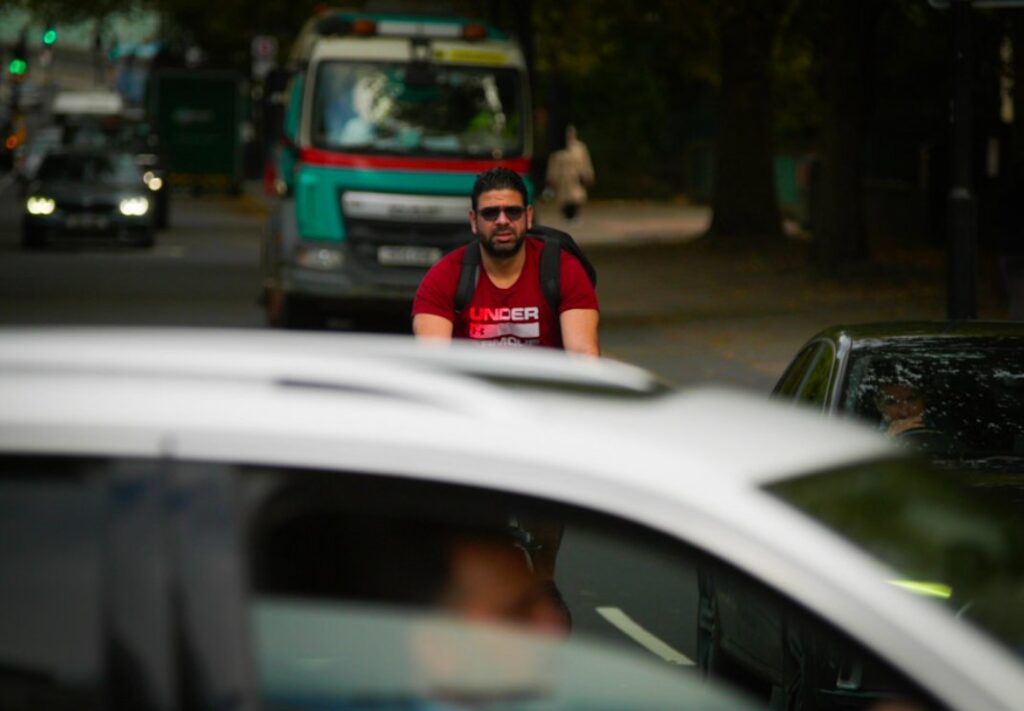

Update: We have had a huge response to this article, including many emails from people asking for clarification on Highway Code rules regarding cyclists, and we have answered the most commonly asked questions in a separate article which you will find at the link below.
> Highway Code changes: ‘What about cyclists, or do the rules not apply to them?’
The Department for Transport (DfT) yesterday laid documents before Parliament outlining proposed changes to the Highway Code aimed at protecting cyclists, pedestrians and horse riders.
Among the forthcoming changes are new guidance on safely overtaking cyclists, encouraging vehicle occupants to use the Dutch Reach technique to avoid dooring riders, and giving cyclists and pedestrians priority at junctions without traffic signals.
The new rules, which also include establishing a hierarchy of road users aimed at making the roads safer for the most vulnerable, are due to officially become part of the Highway Code next month.
They were approved by the Department for Transport (DfT) following the review of a consultation which closed earlier this year.
The rules were yesterday laid before the House of Commons and House of Lords as a Statutory Instrument so they can be scrutinised by MPs and peers, and all being well will become law and officially be added to the Highway Code after 40 parliamentary days.
Full details of all the proposed amendments can be found in this document published by the DfT, including a series of new rules prefixed with the letter H which outline the hierarchy of road users and which are shown at the end of this article.
We also show the new wordings (with revisions in italics) of the relevant parts of Rule 163, which governs overtaking, and Rule 239, which introduces the Dutch Reach technique.
Cycling UK has campaigned for the changes for a decade and Duncan Dollimore, the charity’s head of campaigns, said: “These amendments bring not just much needed clarity on key areas of reducing danger on our roads, such as safe overtaking distances of people walking, cycling or horse riding, but also through the new ‘hierarchy of road users’,” which he said “challenges the current mindset that ‘might is right’ on our roads.
“It enshrines in law the need for those who present the most risk on our roads to look out for those who are the most vulnerable. This can only make the roads safer for everyone.”
“Over 16,000 people backed the amendments Cycling UK called for when the government consulted on improving the Highway Code for vulnerable road users in 2020,” he added.
“Today we’re seeing many of these a step closer to becoming a reality, and we commend the Department for Transport for listening and making these important changes.”
Hierarchy of Road Users
The ‘Hierarchy of Road Users’ is a concept that places those road users most at risk in the event of a collision at the top of the hierarchy. The hierarchy does not remove the need for everyone to behave responsibly. The road users most likely to be injured in the event of a collision are pedestrians, cyclists, horse riders and motorcyclists, with children, older adults and disabled people being more at risk. The following H rules clarify this concept.Rule H1
It is important that ALL road users are aware of The Highway Code, are considerate to other road users and understand their responsibility for the safety of others.
Everyone suffers when road collisions occur, whether they are physically injured or not. But those in charge of vehicles that can cause the greatest harm in the event of a collision bear the greatest responsibility to take care and reduce the danger they pose to others. This principle applies most strongly to drivers of large goods and passenger vehicles, vans/minibuses, cars/taxis and motorcycles.
Cyclists, horse riders and drivers of horse drawn vehicles likewise have a responsibility to reduce danger to pedestrians.
None of this detracts from the responsibility of ALL road users, including pedestrians, cyclists and horse riders, to have regard for their own and other road users’ safety.
Always remember that the people you encounter may have impaired sight, hearing or mobility and that this may not be obvious.Rule H2
Rule for drivers, motorcyclists, horse drawn vehicles, horse riders and cyclists
At a junction you should give way to pedestrians crossing or waiting to cross a road into which or from which you are turning.
You MUST give way to pedestrians on a zebra crossing, and to pedestrians and cyclists on a parallel crossing (see Rule 195).
Pedestrians have priority when on a zebra crossing, on a parallel crossing or at light controlled crossings when they have a green signal.
You should give way to pedestrians waiting to cross a zebra crossing, and to pedestrians and cyclists waiting to cross a parallel crossing.
Horse riders should also give way to pedestrians on a zebra crossing, and to pedestrians and cyclists on a parallel crossing.
Cyclists should give way to pedestrians on shared use cycle tracks and to horse riders on bridleways.
Only pedestrians may use the pavement. Pedestrians include wheelchair and mobility scooter users.
Pedestrians may use any part of the road and use cycle tracks as well as the pavement, unless there are signs prohibiting pedestrians.Rule H3
Rule for drivers and motorcyclists
You should not cut across cyclists, horse riders or horse drawn vehicles going ahead when you are turning into or out of a junction or changing direction or lane, just as you would not turn across the path of another motor vehicle. This applies whether they are using a cycle lane, a cycle track, or riding ahead on the road and you should give way to them.
Do not turn at a junction if to do so would cause the cyclist, horse rider or horse drawn vehicle going straight ahead to stop or swerve.
You should stop and wait for a safe gap in the flow of cyclists if necessary. This includes when cyclists are:
• approaching, passing or moving off from a junction
• moving past or waiting alongside stationary or slow-moving traffic
• travelling around a roundabout.Rule 163
Overtake only when it is safe and legal to do so. You should …
• stay in your lane if traffic is moving slowly in queues. If the queue on your right is moving more slowly than you are, you may pass on the left. Cyclists may pass slower moving or stationary traffic on their right or left and should proceed with caution as the driver may not be able to see you. Be careful about doing so, particularly on the approach to junctions, and especially when deciding whether it is safe to pass lorries or other large vehicles.
• give motorcyclists, cyclists, horse riders and horse drawn vehicles at least as much room as you would when overtaking a car (see Rules 211 to 215).
As a guide:
─ leave at least 1.5 metres when overtaking cyclists at speeds of up to 30mph, and give them more space when overtaking at higher speeds
─ pass horse riders and horse-drawn vehicles at speeds under 10 mph and allow at least 2 metres of space
─ allow at least 2 metres of space and keep to a low speed when passing a pedestrian who is walking in the road (for example, where there is no pavement)
─ take extra care and give more space when overtaking motorcyclists, cyclists, horse riders, horse drawn vehicles and pedestrians in bad weather (including high winds) and at night
─ you should wait behind the motorcyclist, cyclist, horse rider, horse drawn vehicle or pedestrian and not overtake if it is unsafe or not possible to meet these clearances.Rule 239
• you MUST ensure you do not hit anyone when you open your door. Check for cyclists or other traffic by looking all around and using your mirrors
• where you are able to do so, you should open the door using your hand on the opposite side to the door you are opening; for example, use your left hand to open a door on your right-hand side. This will make you turn your head to look over your shoulder. You are then more likely to avoid causing injury to cyclists or motorcyclists passing you on the road, or to people on the pavement.








57 thoughts on “Highway Code changes aimed at protecting cyclists to become law next month”
No point having all these new
No point having all these new rules when police are only going to enforce them when they are in the mood to or if they feel like it.
If police were more serious and proactive about cracking down on shoddy driving then it wouldnt be as big of a problem as it is.
Youre only guilty if you get caught as they say.
These new rules wont make a blind bit of difference
These new rules wont make a
These new rules wont make a blind bit of difference
There aren’t any new rules about close-passing, which is the greatest hazard for cyclists.
Yes there is – leaving at
Yes there is – leaving at least 1.5 metres at less than 30mph, more if above 30mph.
At the moment it says words to the effect of “leave as much room as you would a car” which clearly gets interpreted as ‘I happily clip exterior mirrors of parked cars and oncoming vehicles, therefore I have abided by the HC if I occasionally clip a cyclist too.’
It still says “as much room
It still says “as much room as for a car”, but now it adds some guidance as to what that might look like. (Confusingly, whilst the motorist is enjoined to pass with “as much room as for a car” in all cases, this room is different in each case)
[i]• give motorcyclists, cyclists, horse riders and horse drawn vehicles at least as much room as you would when overtaking a car (see Rules 211 to 215).
As a guide:
─ leave at least 1.5 metres when overtaking cyclists at speeds of up to 30mph, and give them more space when overtaking at higher speeds[/i]
To be honest, that is pretty weak – “should” not must, and “as a guide” but not a rule.
Moreover the difference between “at least 1.5m” (up to 30mph) and “more than at least 1.5m” (over 30mph) is semantics plus a gnat’s dick.
In earlier drafts of the
In earlier drafts of the proposed wording there was an additional line in that section that said:
─ leave a minimum distance of 2.0 metres at speeds over 30 mph
That must have been cut during the development/consultation process.
Interestingly, in the same section of that draft, the advice to pass horse riders suggested a maximum speed of 15mph, but in the final version it is 10mph.
Maybe the horsists are more effective lobbiers than us cyclers!
Draft here for ref: https://www.gov.uk/government/consultations/review-of-the-highway-code-to-improve-road-safety-for-cyclists-pedestrians-and-horse-riders/summary-of-the-consultation-proposals-on-a-review-of-the-highway-code
Creakingcrank wrote:
depends where they are measuring from, if they are measuring from my shoulder, then 1m up to 30mph and 1.5m above 30mph feels fine to me. If they are measuring from the wheel line then 1.5m / 2m would be better.
Sriracha wrote:
I agree to a point. The problem is when it gets to court, the prosecution would have to be able to [b]prove[/b] that the driver had not left a minimum of 1.5m of space, and I can imagine many prosecutions failing just because of that.
I would also suggest that in icy/wintery weather, even 1.5m might not be enough given the potential for both bike and car to slide on the road surface.
Not specifying in law gives the police room to make a judgement call … though that is not necessarily a good thing with some police forces.
The problem is when it gets
The problem is when it gets to court, the prosecution would have to be able to prove that the driver had not left a minimum of 1.5m of space, and I can imagine many prosecutions failing just because of that
No, we can prove it all right!- the problem is the corrupt b*****d Lancashire police ensuring that the cases don’t get anywhere near any courts. Female driver of white Peugeot 208 MC65 NDF decided 10-20 cms was enough, and Lancashire Constabulary agreed
Sriracha wrote:
thats a good point 1.51m is “at least 1.5m”, and 1.52m is “more” than that, but that centimetre won’t make me feel any safer.
tbh I wouldnt be unhappy with
tbh I wouldnt be unhappy with 1.5m over 30mph, depending on the type of vehicle of course, because the reality is I feel lucky to get 1m most of the time and sometimes it feels alot more like .5m instead.
Ill be interested to see how or if the police approach changes on close passes.
Yes there is – leaving at
Yes there is – leaving at least 1.5 metres at less than 30mph, more if above 30mph
No there isn’t. It’s still the same useless ‘guide’ which the cyclist-hostile forces like Lancashire use to justify never prosecuting for close-passing.
I understand your cynicism,
I understand your cynicism, but the fact that the guidance on passing distance is now expressly incorporated into a rule in the Highway Code (even if it’s just a ‘should’), rather than sitting outside the Highway Code, will surely make a difference to enforcement attitudes.
IanMSpencer wrote:
No no no, you don’t understand they only avoid hitting other things because it damages THEIR car!
Now: just need to fit a 1.2
Now: just need to fit a 1.2 metre long copper pipe with a reflective/fluorescent flag on the end, sticking out from the right side of my bike… 😉
“But it can’t have scraped your car – it’s less than 1.5 metres long, so you’d have to be passing me even closer than that… and that’s not right, surely?”
brooksby wrote:
I’ve been researching what this new guidance means in practice, though with a white plastic pipe, not heavy copper. Obviously that restricts the rider to B position so as not to encroach on the other lane, but that’s a reasonable compromise.
So far only one pipe collision on rural roads, probably eyesight related given that the other lane was clear.
brooksby wrote:
Surely if the pipe is affixed to your bike, it becomes part of your bike, and they now have to pass at 1.5 metres from it.
You need a 1.5 metre pipe on the end of your 1.5 metre pipe… ad infinitum.
Just safer to remove cars
Just safer to remove cars form the road
GMBasix wrote:
Enjoy paying your cyclist road fund license…
Skalamanga wrote:
Just safer to remove cars form the road
— Skalamanga Enjoy paying your cyclist road fund license…— GMBasix
Are we going back to the 19th Century as that’s when cyclists were the first to lobby and pay for decent roads: https://www.theguardian.com/environment/bike-blog/2011/aug/15/cyclists-paved-way-for-roads
AKA Council Tax.
AKA Council Tax.
Skalamanga wrote:
Just safer to remove cars form the road
— Skalamanga Enjoy paying your cyclist road fund license…— GMBasix
Bring it on. Considering riding on closed roads will typically add £100 to the price of a sportive. If I could pay £100 to cycle on traffic free roads all year, i would take that deal in a second.
brooksby wrote:
I ws just taking my leaf rake home from the garden centre/taking my leaf rake to my friend/colleague who wanted to borrow it
I remember, and this is the
I remember, and this is the only time I will praise Lancashire Police, back in the 1980s my local traffic police had a fearsome reputation. They would prosecute you for the slightest misdemeaner. Many peaople hated them. But the roads were safer, people didn’t drive as recklessly in my area because they knew there was a high probability they would be caught. Sadly, with all modern technology, it is much worse today because the police cannot be arsed, even when presented with irrefutable evidence.
it is much worse today
it is much worse today because the police cannot be arsed, even when presented with irrefutable evidence
I’m sure you knew I couldn’t resist this one! Just after I posted a picture of a 32 tonne tipper truck crashing through red lights at 50+ mph, here’s another one which also received the ‘nudge, nudge, we sometimes we just forget to do anything about cases like this if your licence is important to you, wink, wink!‘ treatment. This is MV18 UJT, owned by W Robinson Haulage, of Bilsborrow near Preston- who presumably paid ‘the administrative fee’
I had a mentally close run in
I had a mentally close run in on Station rd, Bamber Bridge, whilst cycling to work with a Robinson Haulage truck. He overtook me on the zebra crossing with another vehicle approaching. He was so close, as in inches away, and moving closer. I saw the dropped kerb on the crossing and went on the pavement. Split second decision, as to stay on the road would have certainly resulted in a maiming or premature death. Police not interested, even with camera footage, so I contacted the firm who apologised. I have no idea if they took it up with the driver, from your experience, it appears not.
I think that Lancashire
I think that Lancashire County Council (Highway Maintenance lorry going through red light) and Wyre Council (mega Transit very close pass on the Blackpool Death Road) probably genuinely give the drivers a talking-to, but with Stagecoach and these other bus and lorry companies they just have a good laugh with the driver. So, I don’t bother sending to them anymore.
I’m gobsmacked that
I’m gobsmacked that Lancashire Constabulary don’t even have the online ability to post issues/videos concerning bad driving (mobile phones/drinking chocomockalattefapacino whatsits/etc.). Lancashire must be one of the most cycle oriented counties in the UK, judging by the number of clubs and their online presence. Yet Lancashire Constabulary are in the Dark Ages when it comes to promoting general road safety, let alone cycling safety. Boils my p!!!.
and will be actually followed
and will be actually followed by most road users some time in the 2030s…
brooksby wrote:
You may have confused this with “never” having listened to similar dates being discussed at COP26.
Quote:
Especially in Sheffield, as I recall from that video t’other week…
[quyote]
And that’ll set the cat among the top-ranked pigeons! 😉
Overall these are sensible
Overall these are sensible changes which should make it easier to prosecute drivers who put cyclists at risk.
There are areas that aren’t perfect but it’s definitely several steps in the right direction.
Kudos to the DfT.
Indeed. But in practice, it
Indeed. But in practice, it will remain for the vulnerable road user to exercise all the caution, which in turn will mean that the motorists will not change behaviour.
When you first drive in a foreign country, you tend to treat junctions with great caution and hesitancy, since you are unfamiliar with the rules. There is no substitute for going slowly and looking everywhere.
But strangely, changing the rules here won’t generate the same sense of caution, albeit the rules are just as new and unfamiliar as abroad. And the more cyclists accommodate the drivers (for the preservation of life) the more drivers won’t feel the pressure to adapt to the new rules.
Unfortunately basic physics
Unfortunately basic physics means that the danger will always be to the vulnerable road user.
All the law can do is to increase the legal consequences for the driver. These changes help to get us closer to that.
We just need some new sentencing guidelines now…
Rich_cb wrote:
I must get some of your optimism – or maybe stop reading what wtjs posts. Or alternatively are you slyly suggesting that “make it easier to prosecute drivers…” is missing a “…if they bother bringing charges”?
Agree this is sensible. Read the draft changes and I’m pleased about the mentions of “hierarchy of users”. Unfortunately there doesn’t actually seem to be much (any?) new enforceable stuff here – it’s all “should” rather than “must”. Maybe they’re saving it for that review that’s supposed to be happening… The guidance (again “should”) on cyclist priority when going straight on at junctions (H3) is certainly nice, but… Just for perspective here’s a rather old video of what we actually want for safe cycling for everyone at junctions rather than guidance. Yes I know that was about designs not law or the highway code…
So overall more of a “lean” in the right direction than an actual step. Preparing for a step? Possibly good for improving awareness in learner drivers and it removes some obvious fudge from the
rulesguidelines.Generally the CPS only charge
Generally the CPS only charge if they believe there’s a 60%+ chance of securing a conviction.
This updated guidance will, hopefully, put many more instances of dangerous driving over that, admittedly arbitrary, threshold.
Rich_cb wrote:
I hope so but I’m just concerned we regularly choose to “improve” things with wording (“guidance”, not “rules”) which is not just arbitrary but wooly or subjective. “Weasel words” if you will.
Rich_cb wrote:
I don’t see how it will make a difference when
a) juries are largely drivers
b) most drivers will not read the revised highwy code
c) judges can often instruct juries to consider their own
prejudicesexperience of being a careful and competant driver, above what is actually written in the code.chrisonatrike wrote:
Doesn’t a must/must not in the code reflect where there is already legislation on an issue. So reflecting the legal requirements, rather than setting out how people should behave.
wycombewheeler wrote:
That was kind of my point. I know the code isn’t the law (“more of what you’d call ‘guidelines’ than actual rules”). I’m very happy that there’s more “cycling” in it. But when people say “great – that’ll solve it” or – to be fair to rich_cb – “make it easier to prosecute drivers who put cyclists at risk” I think it’s clear that this by itself won’t. And it actually does very little overall.
Meta-issue: yes you could say it’s a “first step”. But (totally confusing metaphors) we’ve been taking baby shuffles for decades (“encouraging active transport” – with minimal money or change) while waving through the motor traffic.
The UK has a particular “laissez faire” tradition towards the bad as well as the merely different. It’s being proud of our empathy with the victims but not really punishing the perpetrators. Admiring our perceptiveness in identifying an issue – and then doing very little that is effective about it.
Hopefully this introduction
Hopefully this introduction of “Hierarchy of Road Users” to the HC will have a knock on effect as to how crash investigations are undertaken ie looking at the incident from the pov of the cyclist not the poor time starved/must get in front driver (pp&ppppp as the army used to say)
Also will it not open the door for reforms to insurance and automatic liability in the case of an RTC.
Let’s hope so.
Let’s hope so.
It concerns me that, by
It concerns me that, by moving to colloquialisms, the Highweay Code introduces vagueness and confusion in some instances.
The pavement (more properly, the footway) is also part of the road, just not the carriageway. So, in the terms of the new rule, cars should pass pedestrians on the footway at a low speed (which does make sense, it’s just not what was intended).
Before anybody suggests that ‘we know what we mean by “in the road”‘, let’s realise that any time we refer to ‘road’ when we mean ‘carriageway’, we reinforce the idea that people not in the carriageway are somehow not road users, or are less entitled to consideration.
There are a lot of
There are a lot of interesting points made in the the document for all road users, including cyclists and pedestrians.
The only road user group to strictly follow the highway code are equestrians.
Apart from when they can’t
Apart from when they can’t control their horse or ride on the pavement.
Skalamanga wrote:
Citation please
Skalamanga wrote:
Rule 52:
Before you take a horse on to a road, you should:
– ensure all tack fits well and is in good condition
– make sure you can control the horse.
Part of the reason (apart from basic good manners) I’m always hugely cautious around equines on the road is that it is very frequently obvious that the rider is not, in fact, capable of controlling the horse.
Where are the lights and high
Where are the lights and high vis for horses and riders?
Rendel Harris wrote:
And hats off to you for exercising such caution and courtesy.
But this thing about “controlling” a horse has to be seen in the context of the situation. It is a misconception to think a horse can be “controlled” in all situations, it is a prey animal, not a machine, and no amount of skill or training changes that. So if a horse is startled or feels threatened its prey reflexes kick in.
Age, experience, training and rider skill will all temper the horse’s reactions. Back when more people came into contact with horses they recognised the difference in temperament between a young inexperienced filly/colt and a sedate old dobbin, and understood how to behave around them. Sadly these days some people just blame the impact of their own ignorance on the rider.
If a horse can’t be
If a horse can’t be controlled in all circumstances, then probably shouldn’t be allowed on the public highway Who are these “people came into contact with horses they recognised the difference in temperament between a young inexperienced filly/colt and a sedate old dobbin,” What specific training did they have and what % of the population did they represent ? And what decade or century is this ?
hirsute wrote:
Well, cars can’t always be controlled in all circumstances (e.g. ice, mechanical failure, lack of driver focus) so let’s scrap them too.
hirsute wrote:
First they came for the horse riders. Not only did I do nothing, I actually joined in…
If cyclists can not recognise the common cause of everybody in the saddle then they are fools.
As to recognising equine temperament, maybe take inspiration from the popular notion that the driving licence should be contingent upon having some cycling proficiency – get yourself some riding lessons and experience at the stables, you clearly need some.
I don’t need riding lessons
I don’t need riding lessons as I don’t intend to ride a horse.
I have read countless stories of horses being scared by the most trivial things despite people’s care around them. I can read all the theory and have lessons but that won’t stop a horse from bolting as you noted from your previous description of them.
Not always the ones towing
Not always the ones towing horse boxes though.
In the interests of education
In the interests of education what exactly does the new Highway Code say about riding two abreast?
In rule 66 (part of “Rules
In rule 66 (part of “Rules for cyclists”):
• be considerate of the needs of other road users when riding in groups. You can ride two abreast and it can be safer to do so, particularly in larger groups or when accompanying children or less experienced riders. Be aware of drivers behind you and allow themto overtake (for example, by moving into single file or stopping) when you feel it is safe to let them do so
And in rule 213 (Part of “Road users requiring extra care”)
On narrow sections of road, on quiet roads or streets, at road junctions and in slower-moving traffic, cyclists may sometimes ride in the centre of the lane, rather than towards the side of the road. It can be safer for groups of cyclists to ride two abreast in these situations. Allow them to do so for their own safety, to ensure they can see and be seen. Cyclists are also advised to ride at least a door’s width or 1 metre from parked cars for their own safety.
Whether it is safe for a
Whether it is safe for a motorist to overtake a cyclist comes down to the cyclist deciding that they think it’s safe and choosing to move over; there’s no obligation on them to do so*.
*I could hear motorists’ heads exploding all over the country when that little titbit hit the newspapers… 😉