


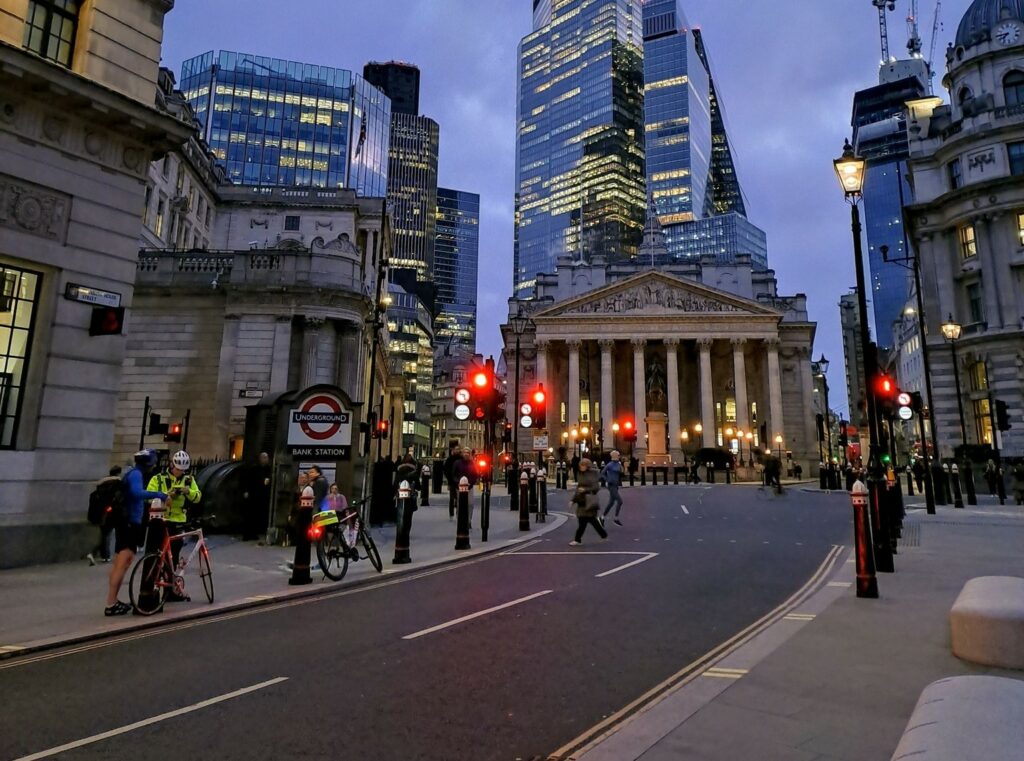

A major London property association has taken to the press to argue for “urgent” changes to cycling requirements for new office buildings in the City — demanding “more flexible policies better suited to actual cycle use” and bizarrely claiming that “providing cycle facilities at the scale” mandated “comes with huge carbon cost” and could lead to a “spectacular eco-own-goal”.
These are the comments of figures from the City Property Association (CPA) who spoke to City AM and the Telegraph in recent days, lobbying for “more flexible” cycling policies and arguing cycle parking requirements are holding back new developments.
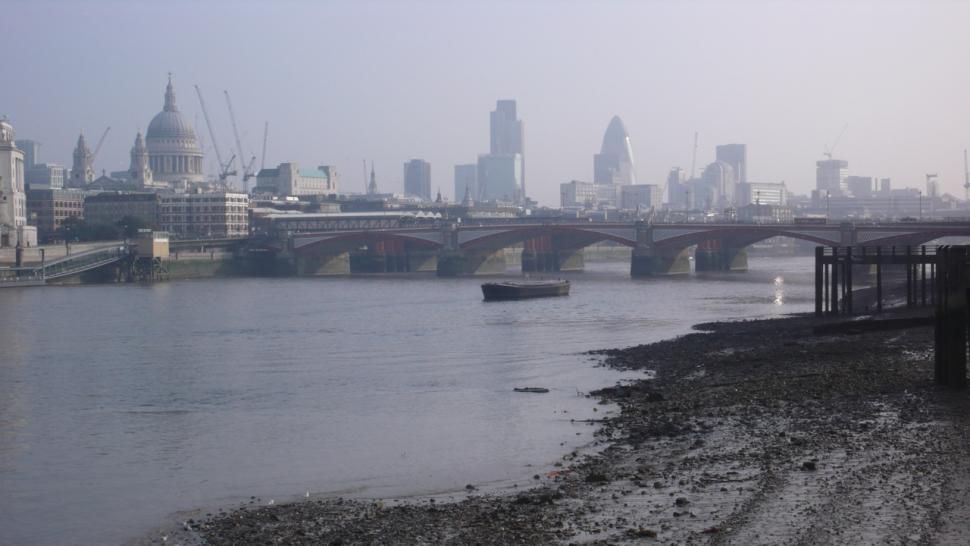
Perhaps most eye-catching was the claim that “well-intentioned” London Plan requirements for new developments to meet certain levels of cycling provision could be a “spectacular eco-own-goal” and lead to greater carbon production.
While the CPA appeared to avoid mentioning the longer-term benefits that encouraging more people to cycle to work could have, the housing association claimed that London Plan requirements — which mandate the provision of one cycle parking space per 75sqm of gross external building area — come “with a huge carbon cost” and an “environmental impact” that “risks undermining viability of new schemes”.
Ross Sayers, Chair of the CPA and Head of Development Management at Landsec, said: “We need to ensure cycle parking requirements accurately reflect the needs of the City… Providing cycle facilities at the scale required by the London Plan comes with a huge carbon and capital cost, with tall buildings disproportionately impacted. The costs are so high that the financial and environmental impact of un-required space risks undermining the viability of new schemes.”
However, the London Cycling Campaign has this morning responded to the comments and pointed out “to enable more City of London workers to travel in by cycle we need more secure cycle parking”.
A spokesperson told us: “In the City of London’s neighbouring borough of Hackney 15 per cent of workers commute by cycle; in Amsterdam a third of all trips are by cycle. To enable more City of London workers to travel in by cycle we need more safe cycle routes to destinations, in addition to the cycle lanes in Upper Thames St and Farringdon Road; and we need more secure cycle parking especially for those in older buildings, which could be achieved by new office blocks renting any currently spare cycle parking space to neighbours.”
The CPA had said that the cycle parking policy is based on an “unrealistic” estimation that one in five City workers cycle to the office, something the LCC notes has already almost been achieved in Hackney. The property association also claimed its research suggested 86 per cent of cycle bays in new City developments were unused and 64 per cent of workers live further than 10km from the office (“too far away” to cycle, the CPA says) and are more likely to use public transport.
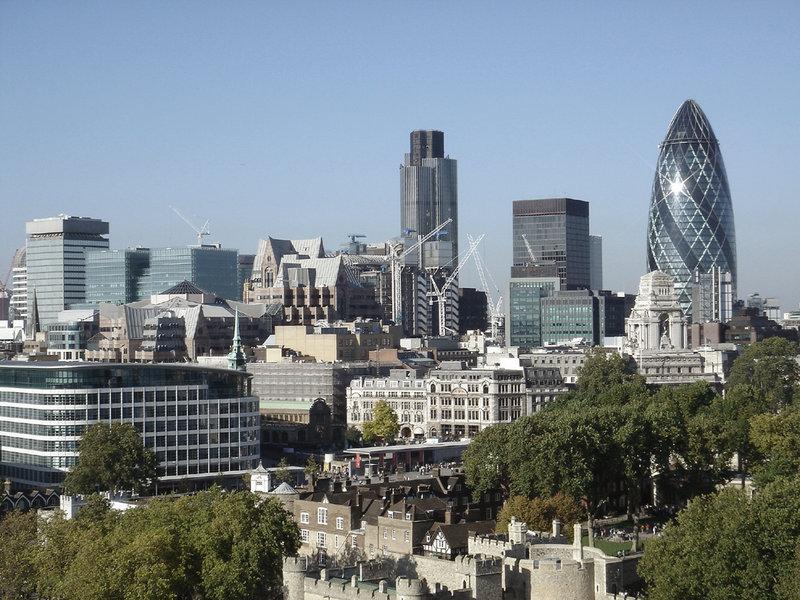
The CPA told the press each cycling space produced 1.29 tonnes of carbon and the total impact of 2040 targets would be 21,500 tonnes, apparently the same amount of carbon that seven all-electric City office buildings would produce over five decades. Again, no comparative figures were given for the consequent carbon impact of other commuting modes if City office workers were put off cycling as their buildings did not offer a secure place to park their bike.
The comments and claims all come to the context of the City of London’s target to build 1.2m sq metres of new office space by 2040, something the CPA suggests would mean 25,000 cycle parking spaces totalling 42,500 sq metres.
“The specific characteristics of the City of London mean that there is little prospect of today’s policy compliant levels of cycle parking ever being achieved,” David Hart of the CPA added. “In order to reduce the overall carbon footprint of City buildings, it is clear that we need to support active travel without constructing significant basement space that will be underutilised.”
He said there are “great swathes of unused cycle parking” across buildings’ basements across the City.
> Objections raised to office bike parking scheme – because it will cause “bottlenecks and noise”
A spokesperson for the Mayor of London told the Telegraph it is right to support the “huge increase in cycling” London is experiencing.
“We want more people to walk and cycle because it is vital to a greener transport network in the capital, and the Mayor and TfL will continue to work closely with London’s boroughs to invest in high-quality infrastructure that allows more people to choose sustainable forms of transport.”
A City of London Corporation spokesman added: “We acknowledge the concerns set out by the City Property Association and are engaging with both them and Transport for London to reach a pragmatic solution, as we have done for recently approved schemes.”




















16 thoughts on ““Unrealistic” cycling targets and “great swathes of unused cycle parking” holding back new London developments, property association claims”
The big issue with parking
The big issue with parking isn’t 1 in 5 office workers cycling to the office.
Its 1 in 5 office workers cycling to the office on a summers day when the tube is on strike…
(Would also note that apparently the bike racks at my office at work are in a very wide basement corridor; With a machine room (big boilers presumably) at one end and service elevator at the other. I wonder how likely it is that its so wide because that lets them manouvre large boilers etc down it once every 20-30 years (even if they have to temporarily remove the bike racks to do so).
IMHO the solution is tell businesses if they don’t have the right ratio of bicycle racks then any employee who cycles in to full racks can take the day off…
This is a novel approach to
This is a novel approach to getting out of providing cycle storage. – Blame cycle parking for CO2.
I’ve worked in places where it’s underused and in places where it’s overused. Quality is the biggest factor.
People need to have high quality options available to store their bikes – If you put something bad in ‘because you have to’ it won’t get used.
Also it’s not all on
Also it’s not all on businesses – they can’t do much about how easy it is for employees who might cycle to get to them in the first place (e.g. provision of cycle infra…) Although they could push councils (e.g. a firm the size of Brompton or bigger might have a bit of leverage).
Absolutely. It’s the usual
Absolutely. It’s the usual chicken and egg – if there isn’t much (continued, loud…) demand then businesses won’t create it, won’t create good quality stuff or won’t maintain it. But if it doesn’t exist or isn’t high quality people won’t use it…
Because cycle parking is almost always an afterthought (at least in existing buildings) it tends to end up in “spare space” which is hidden away in corners and basements. That then feeds into other issues such as social safety and “reliability”. If you turn up and find you can’t lock up your bike, you’re likely not going to be cycling in again (if nothing else you’re probably going to be late AND you may lose that bike…)
Probably many others here will have had experience of turning up on your bike and suddenly finding e.g. access doors shut and locked. Or your security pass suddenly doesn’t let you through. (I once got stuck in a basement parking garage – where cycle parking was also. I’d ridden in following a car but found the lift had stopped letting me use it. Somebody had done a review and removed access for everyone not registered as a driver…)
It also includes “social safety” (see above).
And things like training staff – especially security / building maintenance and operation staff. They don’t tend to get much training as they’re usually at the bottom of the status scale. And in bigger organisations they are probably agency staff.
“He said there are “great
“He said there are “great swathes of unused cycle parking” across buildings’ basements across the City.”
I’m not sure what else the CPA would like to put in the basement instead as the options are limited. Car parking now sensibly is very restricted, gyms need quite a bit of extra facilities, and a few have a conference centre.
Older office buildings in the city tend to have rubbish cycle spaces tucked away in poor locations that are often full, newer ones have larger better located ones that still well used.
“64 per cent of workers live further than 10km from the office (“too far away” to cycle, the CPA says) and are more likely to use public transport”
As someone who cycles over 22KM to work on some days, I’d day there are plenty of people coming in from over 10Km looking at the cycle bays in my city office.
Since Covid, bike parking in
Since Covid, bike parking in my office has been like a war zone – good way to get people in the office early – no-one to park your bike if you aren’t!
We are by no means and “old office” – the main building was finished in 2017, but cycling provision isn’t even close to meeting demand (both bike storage, lockers, showers etc.)
Carior wrote:
My building has three sheffield stands round the back, and they’ve just put in a covered shelter. Except the covered shelter has (I think) 6 or 7 wheel benders instead of proper stands.
The building has sixty offices in it, each for between 2 and 8 people
I’m always in early so I get a space on a sheffield stand, but I dare not use my bike at lunchtime because I couldn’t guarantee having anywhere to park it when I come back.
Dan Alexander wrote:
Seems CPA is asserting quite a lot of truisms without any real evidence and without allowing room for growth.
Failure of workplaces to provide for and activley encourage active and public modes of transport represents a failure to reduce car dominance, which is the real cost of carbon costs. As for capital costs, cycle provision is a really flexible option. It can be used for other purposes in a controlled manner while provision is underused – or, as the article says, rented to neighbouring properties who cannot make appropriate provision. If you can’t make that stack up financially, perhaps the property development market isn’t the right place for you.
As someone who deals with
As someone who deals with property developers on a regular basis, them complaining about the unfairness and unreasonableness of anything that might very marginally impact on their profit margins is their default approach.
They’ll make a string of baseless, but sympathetic sounding claims to prop up their argument, putting the onus on the regulators to demonstrate they are wrong, and hoping that somewhere along the line that some of it sticks and concessions will be made.
Quote:
.
“64% live further than 10km
“64% live further than 10km from the office”. This ignores those who, like me, live further than 10km away but still arrive by bike, having got the train most of the way and cycled the rest. And I’m not the only one, judging by the number of folding bikes on the train in rush hour.
Yup. How do other places
Yup. How do other places manage this impossible thing? To get people to travel more than
500 metres3 miles6 miles – in a major metropolitan area! – without having to drive? And where would they put those bikes, may I ask? [1] [2]Quote:
Sounds massive, doesn’t it, but whilst we should obviously be aiming for as little carbon release as possible that’s the equivalent of what approximately 4200 average cars produce in a year, in a country with more than 30 million of the things. Of course that figure doesn’t tell the whole story because once the cycle spaces are built they become more or less carbon neutral over their lifetime (obviously a certain amount of lighting et cetera is required). Most modern skyscrapers, as I understand it, are built to last at least a century, so the carbon cost of providing all of those 16,600 new cycle spaces will be, per year, the equivalent of about 42 cars. Which doesn’t sound that big a deal, really.
*All of this assumes, of course, that the developer figures of 1.29 tonnes of CO2 per cycle space are accurate, they sound to me like a gross overexaggeration based on the total floorspace of the building divided by the notional square meterage of a bike space as if they had their own floor built specially; as qwerty360 points out below, bike storage can often be incorporated into spare space, e.g. boiler room access, that would otherwise lie empty anyway.
On the subject of cycle
On the subject of cycle parking, I’m currently talking with a local parish council which has a Centre: with no cycle parking. Not only no cycle parking, but a notice prohibiting cycling in the car park.
The reason given for not having cycle parking is that no-one cycles there: I wonder why?
The reason given for banning cycling is that kids used to ride around the car park, doing wheelies etc, so they might injure someone: but cars are fine.
The village I live in has a very nice community centre, with a nice big car park: no cycle parking. Our District Council recently gave grants for Active Travel, so I asked them to apply for one for cycle parking: couldn’t be done because they’d lose a parking space.
There are days when I doubt not only my own sanity, but everybody’s.
Chris Boardman mentioned in
Chris Boardman mentioned in one of his talks in the last year (video, starting here – this part is a couple of minutes) that our lower-level bureaucratic cost/benefit measurements may be consistently working against active travel – or even “alternative to motoring” schemes – every time.
Councillors / department heads depend on their staff, who will just apply the procedures and produce the analysis. That can then can block things even when there is political will at a higher level.
(We’ll skip the fact that some leaders seem to play fast and loose with the rules…)
The bureaucracy (e.g. DfT / agencies – presumably down to council departments) all have metrics they apply to evaluate proposed changes. For example a cost/benefit when making business cases. And presumably sometimes simply whether a particular design is permitted under current rules.
If those measures generally give positive scores for preserving or increase motor traffic capacity” (which they do!) and don’t have anything which gives a positive measure for active travel (which they often don’t) – the bureaucratic machine says no!
In the video linked Chris Boardman mentioned that “journey time saved” has taken on major importance – and this usually seems to evaluate to “more motor traffic capacity”. BUT things like “heath impacts” don’t feature!
Twas ever thus.
Twas ever thus.