


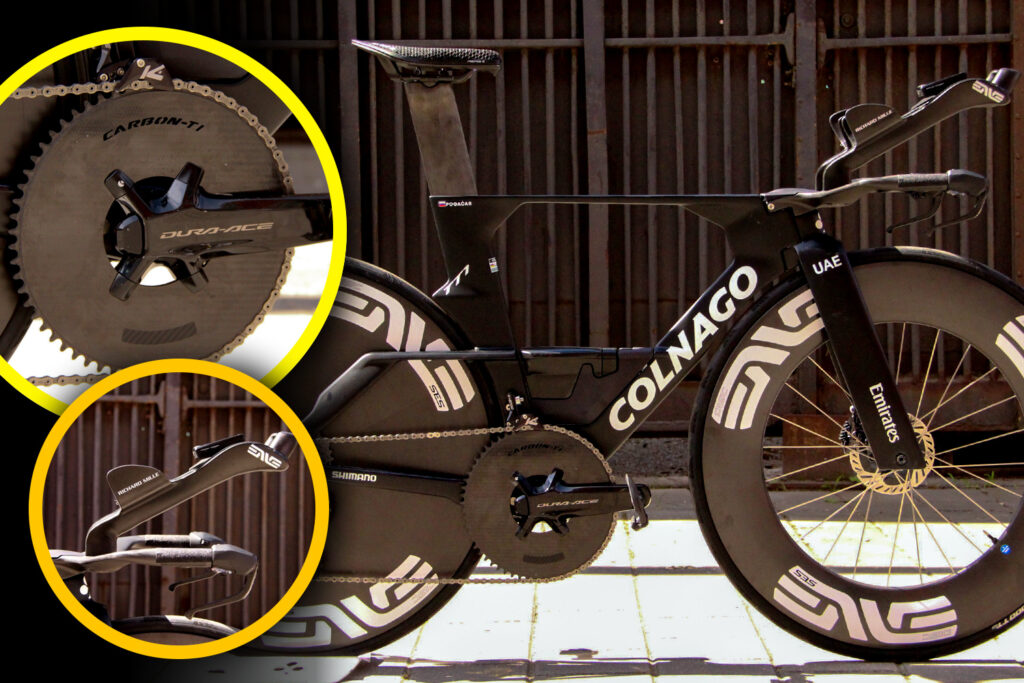

The first individual time trial in this year’s Tour de France took place on Wednesday 9 July which, as expected, led to a shakeup in the General Classification. That shakeup involved Tadej Pogacar (of course) who limited his losses to emphatic stage winner Remco Evenepoel to put himself in the yellow jersey, with arch rival Jonas Vingegaard now trailing by over a minute. Here’s the Colnago TT1 that Tadej Pogacar used to great effect today in his search of a fourth yellow jersey.
There are two individual time trials in this year’s Tour de France: the 33km (20.5 miles) TT around Caen that happened today, and then Stage 13, which is just 10.9km (6.8 miles) in length but up a 1st category climb (Peyragudes in the Pyrenees). It’ll be interesting to see what bikes and setups are used for that one.
There were two individual time trials in last year’s Tour de France, too. Tadej Pogacar finished second in one and won the other on his way to the overall victory.
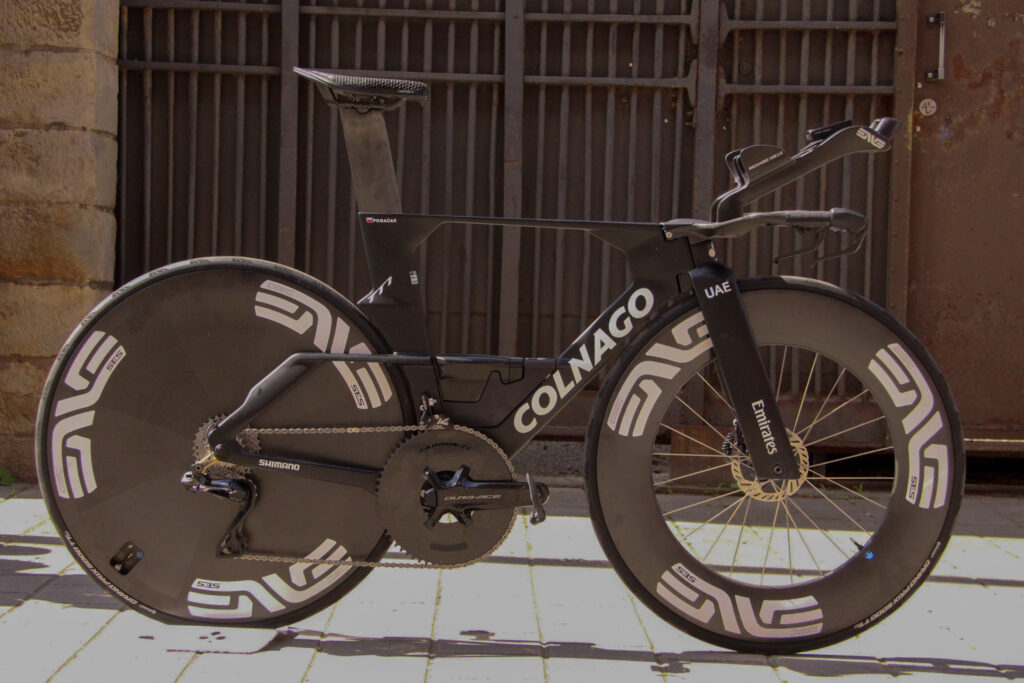
We had a quick look around Pogacar’s Colnago TT1 before the race started in Lille at the weekend.
Naturally, Colnago claims that the TT1 is the fastest time trial frame in the WorldTour. You’d expect nothing else, would you? As you can see, the TT1 uses a bayonet fork to reduce the frontal impact of the frame, and a monocoque carbon fibre base bar.
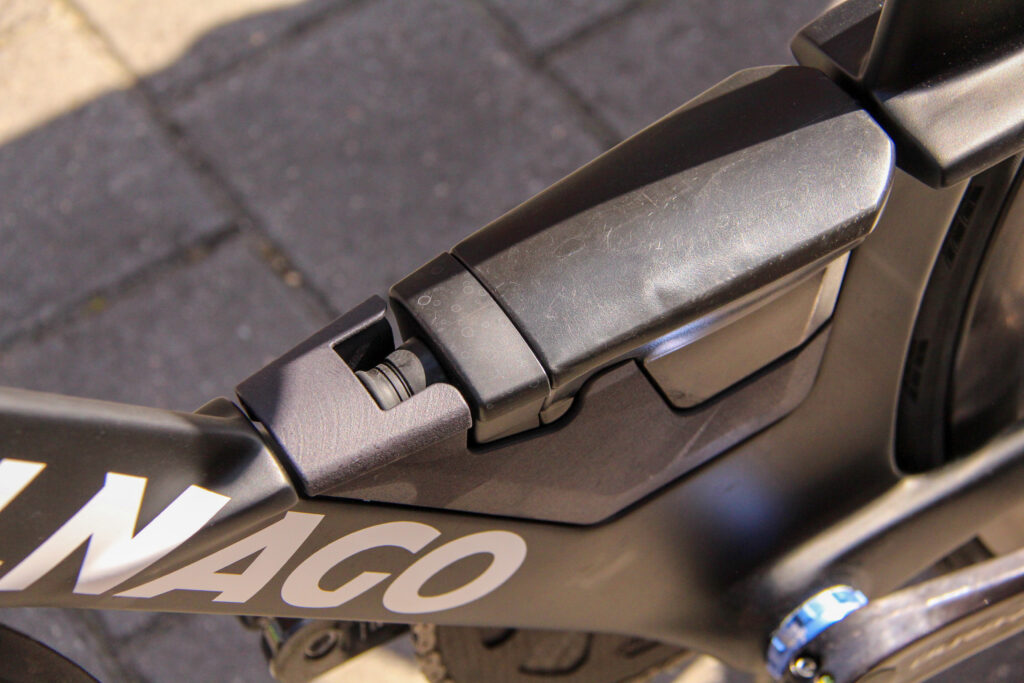
It features a bottle holder and bottle kit incorporated into the aerodynamics of the frame.
Colnago has gone for a very short head tube to keep the frontal area small, and Pogacar has aero extensions that angle upwards to provide him with a ride position that’s aero while still being able to deliver maximum power.
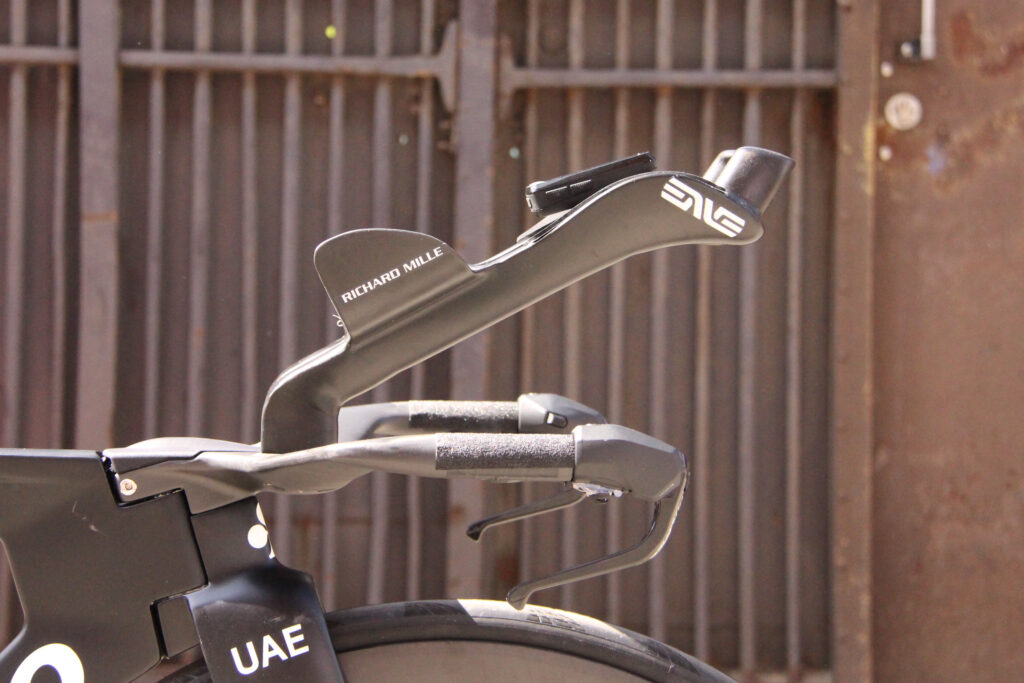
Although those aero extensions are labelled ‘Enve’, these look like they’ve been made especially for Pogacar. Don’t let that Richard Mille logo throw you off the scent, by the way. That’s the name of the watch brand that sponsors UAE Team Emirates XRG, nothing to do with any of the components.
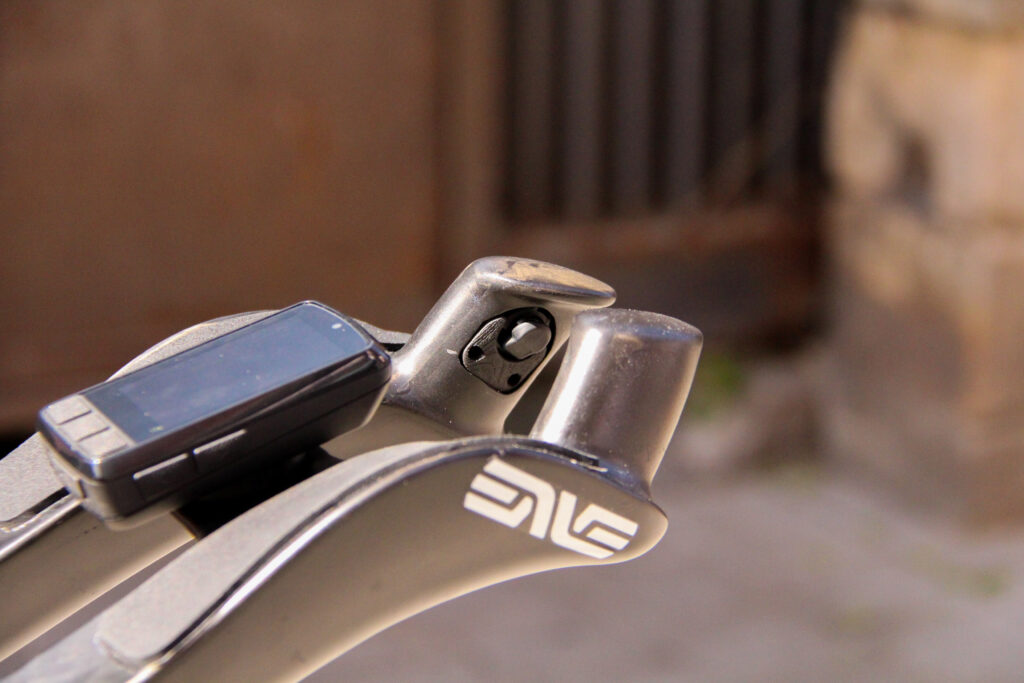
Pogacar’s Wahoo Elemnt Bolt GPS sits on a mount right between his hands. He can shift gear both from the extensions and from the base bar. He has the upshift button on one side and the downshift button on the other (there’s no need for front shift buttons because this is a 1x setup)
The top tube of the Colnago TT1 is horizontal, as are the seatstays along half of their length before kinking down towards the dropouts.
The TT1 is designed exclusively for electronic groupsets, UAE Team Emirates XRG being one of the many World Tour teams that use Shimano Dura-Ace Di2.
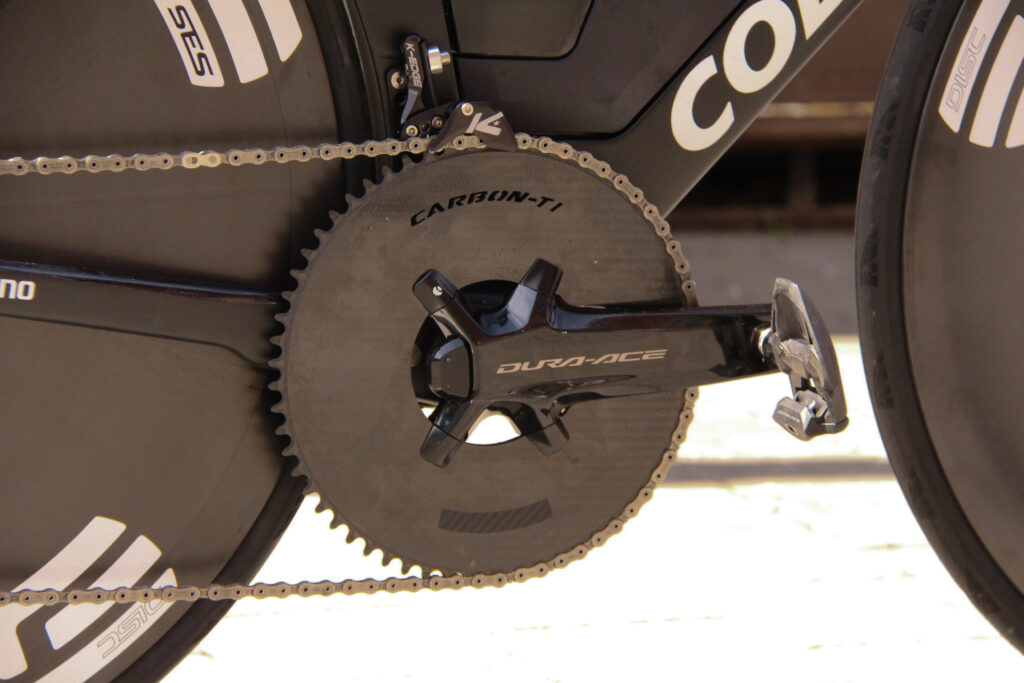
One noticeable exception to the Dura-Ace theme is the chainring from Carbon-Ti: carbon fibre with aluminium alloy teeth.
Speaking of teeth, this is a massive 62T single chainring (there’s no front derailleur; the chain is held in place by a K-Edge 1x Race Chain Guide).
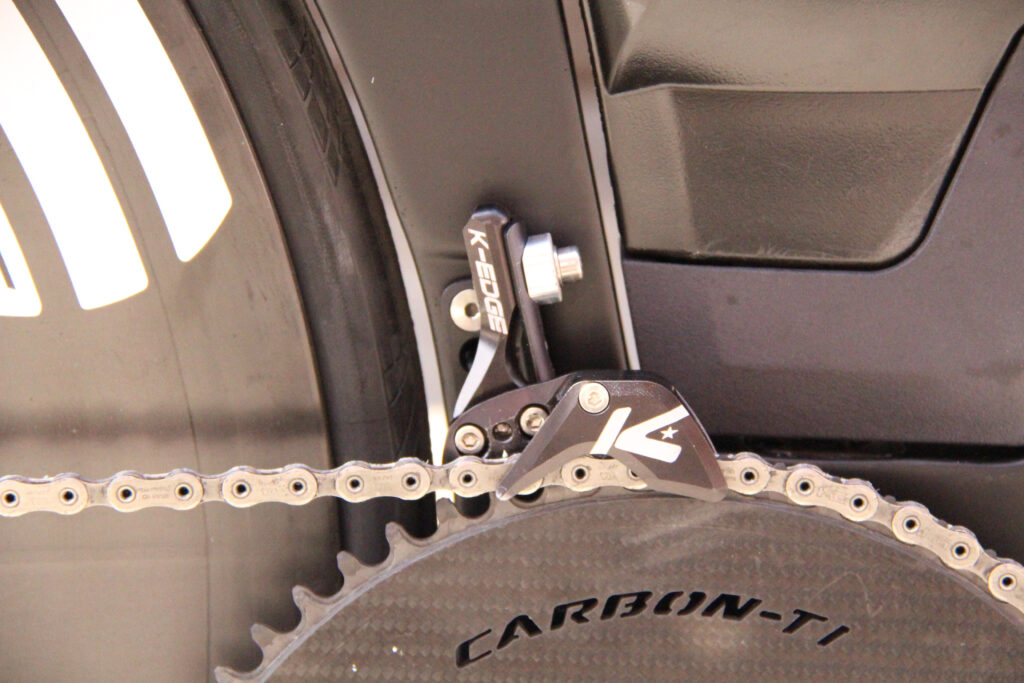
The idea of such a large chainring is efficiency. Incredible athlete though he is, Pogacar isn’t going to spend a whole lot of time (if any) turning a 62 x 11 gear. The idea is to allow him to use the larger sprockets at the rear and have a straighter, more efficient chain line with reduced articulation.
The seatpost looks very much like the Darimo post that Pogacar was using last year, but we can’t be certain. We guess – and it is a guess – the idea is to save weight.
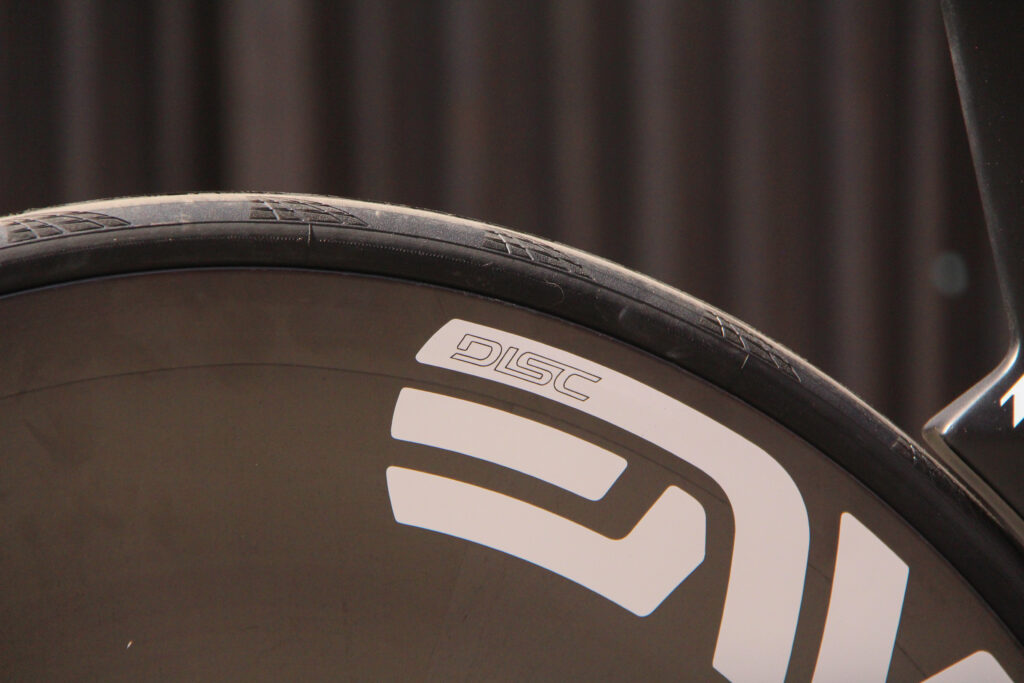
UAE Team Emirates XRG use wheels from Enve, and these are certainly branded Enve, but that doesn’t mean they are. The deepest Enve wheels that appear on the UCI’s approved list have a rim height of 71mm. The front wheel here, which UAE riders have used a lot in the past, looks much deeper than that, so it’s either new and awaiting a formal release or a rebadged model from another brand.
Enve has had a disc rear wheel in its range in the past, and this could be it, but again, it could be a yet-to-be-released option or a rebadged model from another brand. Either is possible. UAE riders have certainly used wheels from other brands in the past.
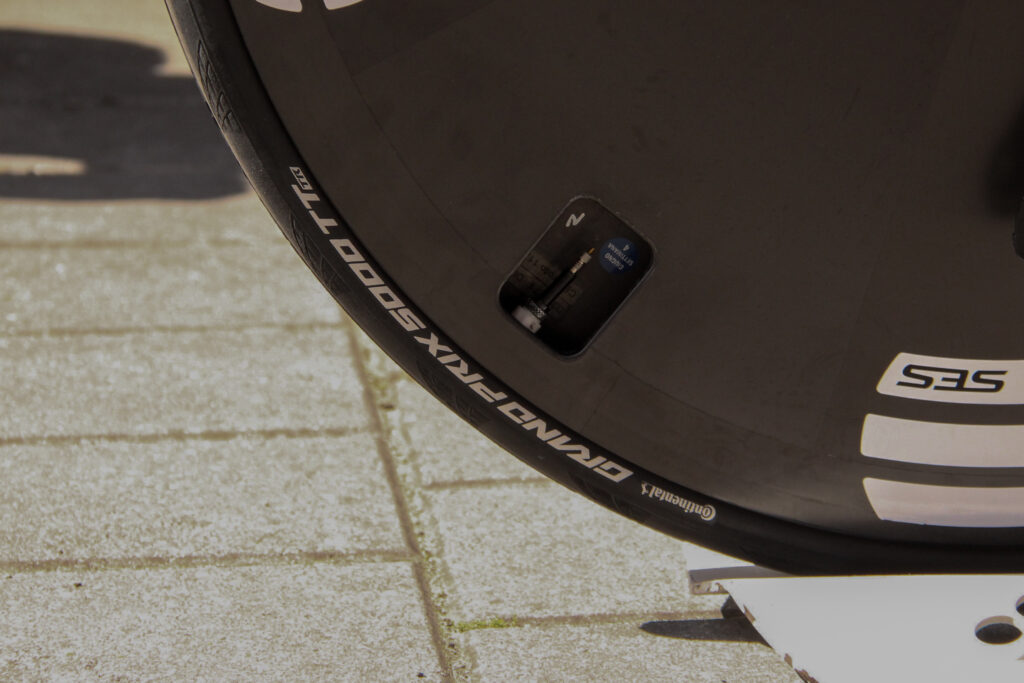
The tyres are Continental Grand Prix 5000 TT TR, meaning that they’re tubeless, and they’re just 25mm wide.
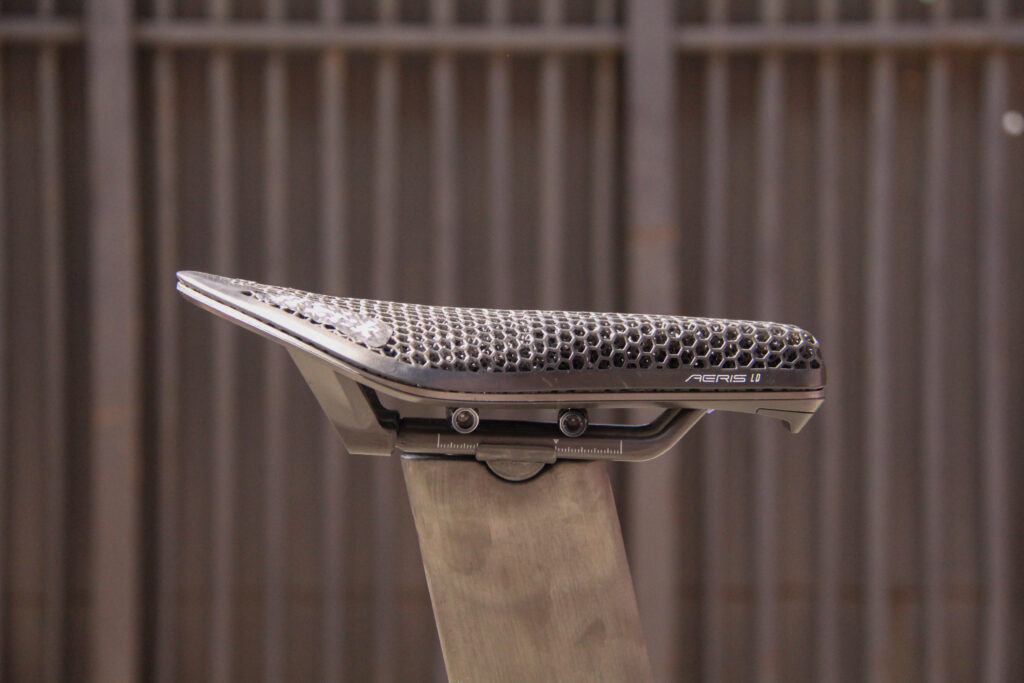
The saddle is a Fizik Transiro Aeris Long Distance with Adaptive 3D-printed padding that’s designed to provide comfort even in an extreme riding position.
Is Tadej Pogacar on course to win a fourth Tour de France? After today’s stonking effort, it’s looking rather likely already.






6 thoughts on “Will this time trial bike help Pogacar win another Tour de France?”
Apologies for the ignorance,
Apologies for the ignorance, but why 25 mm tires when everyone’s using 28 mm or bigger on the road bikes? Obviously there’s an aero advantage but does that outweigh the speed and handling advantages of 28 mm and if so why not use them on the road bike as well? I understand that he will only be riding this bike for 30 km or so which makes comfort less of a consideration, is that the only reason?
While they are labelled 25mm,
While they are labelled 25mm, on a modern rim with aan internal width of around 23mm they probably measure about 28-29mm, and the team almost certainly tested tyre width in a wind tunnel.
At TT speeds still offer an
TT speeds still offer an advantage to narrower tyres and the advantages of wider tyres aren’t quite so important. For the 1st half of last season Remco was riding the Aerocoach Titan front wheel which was designed around a 23mm front tyre (he used a 24mm tyre). These guys are TT well over 30mph on most courses so frontal area is still a key factor
Frontal area difference
Frontal area difference between tyres is insignificant, it will be down to which tyres they think work best with the front wheel (combining aero and crr). In the real world it is more of an educated guess because there are so many influencing factors not found in a wind tunnel.
Wider tyres and the accompanying lower pressures win hands-down on anything other than super-smooth tarmac with fine chippings (sometimes called ‘hot mix’).
Such a shame we won’t see
Such a shame we won’t see Ganna riding today
After yesterday, it looks
After yesterday, it looks like the answer to the question is “Yes”