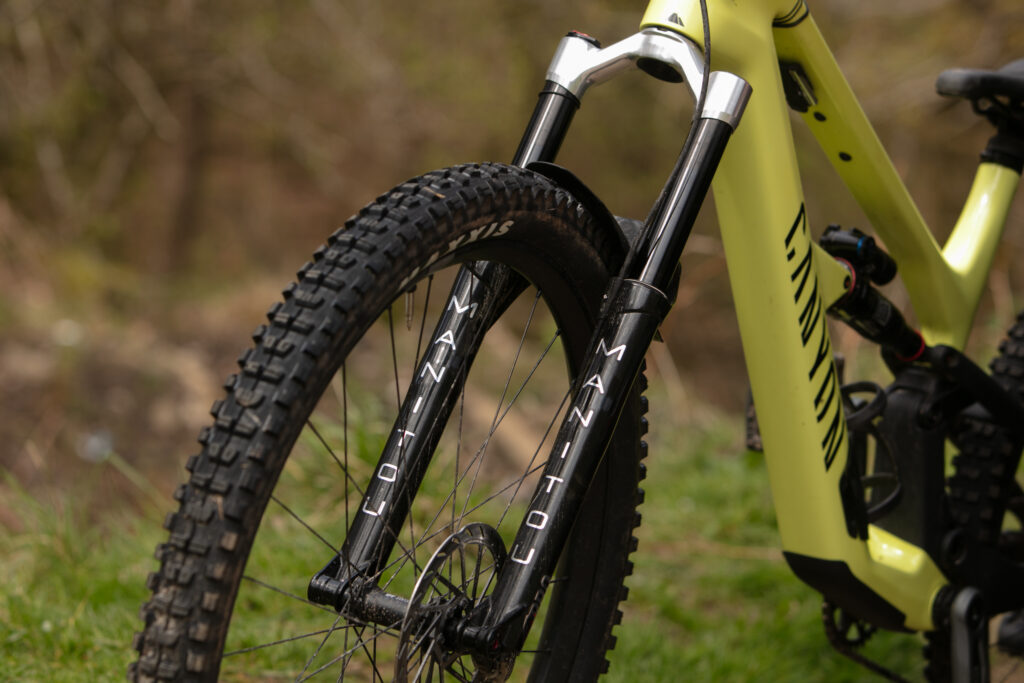

The Manitou Mattoc Pro takes everything I love about the Mezzer Pro enduro fork and whittles it down into a thinner-stanchioned package that’s ripe for a wide range of trail riding. Because it borrows the same damper and air spring, this fork is beautifully smooth as it moves through its travel, it’s mega adjustable and it’s plenty stiff enough for aggressive outings. However, while its weight is impressively low for trail applications, it’s not quite as competitive as a cross-country fork and some features aren’t as user friendly as other offerings. Regardless, if you’re looking for a suspension upgrade that offers a lot for a little less, the Manitou Mattoc Pro is certainly one of the best mountain bike forks around.
- How to install a mountain bike fork
- TruTune MTB Air Fork Insert review
- How to set up your mountain bike suspension
Manitou Mattoc Pro fork – Technical details
With the Mattoc Pro, Manitou states that it’s not a fork to keep up with trends but rather ‘a component that aims to add real value and benefit to the rider’. The brand also claims that it’s ‘the lightest, stiffest and most tuneable fork over more segments than any of its competitors’.
The fork borrows a lot from its bigger and fatter sibling, the Mezzer Pro, and that’s certainly no bad thing as that’s quite the fork itself. Such features include the brand’s Dorado Air spring, which is taken from Manitou’s downhill fork as well as the Mezzer, and its fancy IRT or Infinite Rate Tune tech.
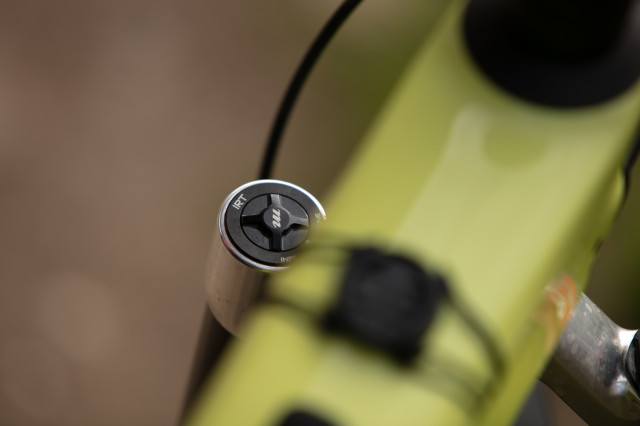
IRT is a pretty cool bit of tech that allows the user to fine-tune the fork’s ramp-up or progression, just by using a shock pump. Diving deeper into what makes this happen, IRT is essentially a second positive air spring but it only kicks in mid-way through the fork’s stroke, thus with adjustment, it alters how much support and bottom-out resistance (or progression). The more pressure added to the IRT, the more progression. And that’s while keeping separate from the main positive chamber so small-bump sensitivity shouldn’t be affected.
On the other side of the fork is an MC2 sealed damper that’s tuned specifically for the Mattoc Pro and its intentions. Manitou says that it offers consistent damping with a lighter breakaway force – so better small bump sensitivity. It employs a bladder to compensate for heat buildup and it uses a Hydraulic Bottom Out system that kicks in as the fork meets its final 30mm of travel, building up bottom-out resistance.
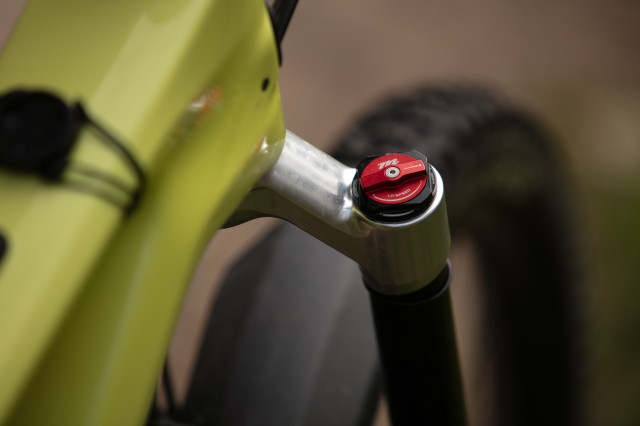
That damper offers rebound adjustments as well as high- and low-speed compression adjustments. There are also Trail Side Relief (TSR) bleed screws that allow the user to release pressure from the lower casting, which can build up during big descents with a large loss of gradient.
The Mattoc Pro comes in 120mm and 140mm travel options but it’s adjustable from 110mm up to 150mm and we’ll get into that shortly. It’s available for 29-inch and 650b wheels and with 37- and 44mm offsets. The stanchions are made from 7000 series butted wall aluminium, it can fit a 160mm rotor directly to its post mount and uses a 15mm x 110mm Hexlock axle.
All of that is housed within a 34mm chassis that the brand says is 30 per cent stiffer than the previous Mattoc with a lot of that stiffness being attributed to the distinct reverse arch design. It’s claimed to tip the scale at 1,750g, although it came in a little heavier at 1,810g with an uncut steerer on our scale.
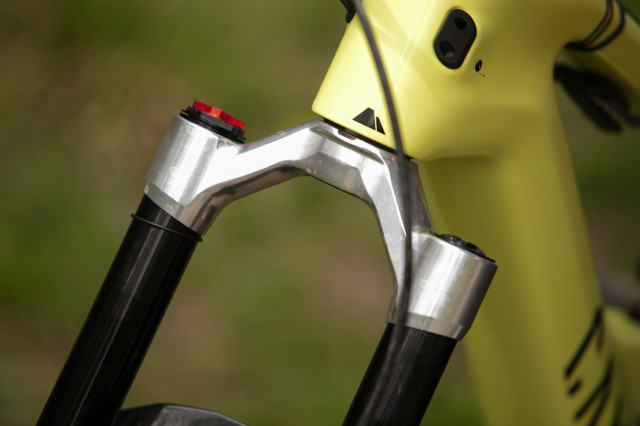
Compared to what RockShox claims its XC-focused SID SL weighs, which is 1,352g it is certainly weightier but it is competitive when looking at the Pike Ultimate at a claimed 1,887g. Then Fox’s 34 Factory with a GRIP2 damper weighs 1,686g. With all of that in mind, the Mattoc Pro’s weight is competitive as a trail fork but at the sharp end of cross-country, it is rather weighty.
Manitou Mattoc Pro fork – Travel adjust and setup
One thing this fork has that all of those certainly don’t is a user friendly and easy way of adjusting its suspension travel. The process requires only one specific tool and others that are very readily available. That specific tool is a cassette tool with a channel cut into it. Of course, if you’re handy with an angle grinder this can be done by yourself.
Moving on, and adjusting the fork’s travel is super simple. All that needs to happen is for the lower casting to be removed by undoing the rebound dial and main bolt fixings. Then using the cut cassette tool, there’s a cover that can be undone on the airspring side. Once removed, the air spring can be pulled away where you’ll either add spacers if you want to reduce the travel or add them for the opposite.
It’s an impressively easy job that can be done by anyone with mild wrenching confidence. I’ve managed to complete the task in about 10-15 minutes.
Setting up the fork is slightly more involved than others that use traditional air springs but it only takes one additional step. First, the IRT is inflated to the recommended pressure, then the main air chamber from the bottom of the fork. During my test, I ran the recommended settings that are on the fork and I’ve been pretty happy with them. If anything, I upped the pressure in the IRT to boost mid-stroke support a touch.
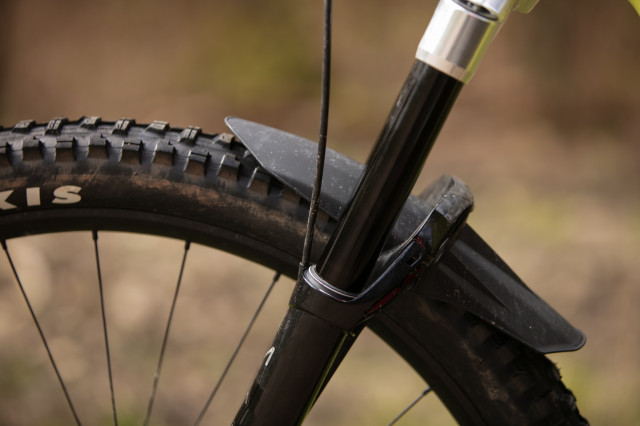
A very flexible mudguard is included in the box, and it uses three bolts to attach to the fork’s rearward arch. Having a mudguard included on a fork where compatible third-party guards are few and far between is a very nice touch.
Manitou Mattoc Pro fork – Performance
Having spent some good time with the Mezzer Pro and enjoying it a lot, I had high expectations of its smaller cousin, the Mattoc Pro and they were met wholeheartedly. Of course, the setup was a similar affair but, impressively, the Mattoc performs almost identically to the Mezzer but it’s just packaged in a slimmer and lighter casing.
Although I’m a huge fan of how easy the travel is to adjust, the IRT and the Dorado air spring, as well as its chassis are what make the Mattoc special. To start, the air spring works in tandem with the IRT system to provide a supple start of the stroke but the lack of progression caused by the IRT affects the travel much earlier than a fork that uses bottomless tokens or volume spacers. Because of that, the progression is much smoother, making the fork feel natural as it works through its travel, rather than hit a wall of progression when using volume token forks.
Manitou’s claims of tuning progression without affecting small bump sensitivity are incredibly true, too. Although the employment of the IRT becomes apparent very much in the mid-stroke, the initial few millimetres of travel are plush, as the fork allows the front wheel to track the ground effortlessly and the force required to break stiction is minimal. How the fork moves through its travel is beautifully smooth and that quality makes the Mattoc compete with the big F and RS.
Stiffness is impressive, too. I essentially rode this fork back to back with a RockShox Lyrik Ultimate on the Canyon Spectral CF 9 I’ve been testing and that’s a rather serious all-mountain/enduro-focussed fork – and the Mattoc held its own. Admittedly, stiffness isn’t quite that of the Lyrik’s but I never felt as if I was let down by the Mattoc, even in its longest 150mm travel setting. Steering was precise, and flex never became an issue, which is rather magnificent of a fork with a 34mm chassis.
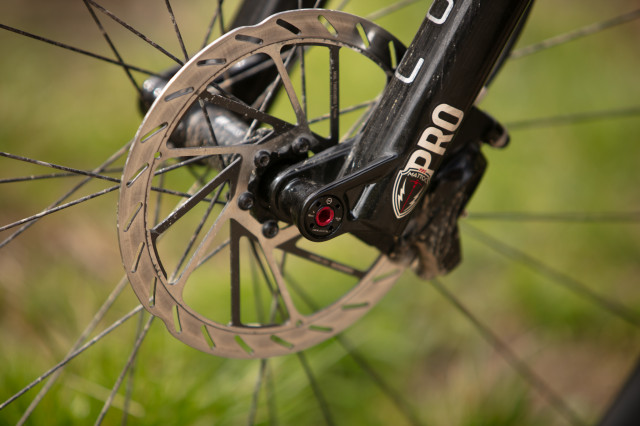
The Mattoc isn’t without its downsides, however, and they mostly lie within its ease of use. To be brutally honest, the Hexlock axle is a bit of a pain to use if you’re often removing and replacing the front wheel. It works very differently from other axles in that you turn a threaded section from the opposite side that you insert the axle, and then it needs to be orientated correctly before it engages properly. It’s niggly and it can be a little annoying to use. However, if you rarely remove your front wheel, it’s a minor issue.
The high-speed compression dial could do with some intermediary clicks, too. This was something I found on the Mezzer Pro where it only gets four clicks of high-speed compression, each of which makes quite a large difference from click to click. In an ideal world for my perfect setup, there would be double the clicks for finer adjustment.
Finally, it’s the weight. As a trail fork, the Mattoc Pro’s weight is competitive but if you’re looking to race serious cross-country it’s a little heavy. Although, the Rockrider Racing Team uses the Mattoc Pro and Savilia Blunk came third in the 2024 ARAXÁ in Women’s XCO and XCC.
Manitou Mattoc Pro fork – Verdict
With a price tag of £1,026, the Manitou Mattoc Pro gives you quite a lot in return, especially when it comes to features, damping quality and that lovely polished crown. However, its value can change depending on what you’re looking for from a fork as this one covers such a large range of disciplines.
For XC, RockShox SID SL Ultimate is £959. It’s lighter and gets a fatter 35mm chassis but it doesn’t get anything like IRT or such a range of adjustable travel. Then Fox’s new 32 Float Factory Step-Cast is £1,190. I rode that fork on the Pinarello Dogma XC Hardtail and really enjoyed it but although it’s lighter, it’s not quite as stiff and, again, it doesn’t have quite the feature list and adjustability.
Compared to more trail-going forks, the value looks a lot better with the RockShox Pike Ultimate at £1,017 and the Fox 34 Factory Step-Cast GRIP SL at £1,179.
Even though it might not be the lightest fork for cross-country use, the Manitou Mattoc Pro is a serious performer. It provides impeccable damping that’s supple and comfortable, yet supportive and reliable, summoning up decent grip that I’ve felt very confident with from the first pedal stroke. If that’s not enough, the fork becomes an even more appealing prospect through its adjustability and stiffness. If you’re looking to move away from the bigger suspension brands, this fork as it punches well above its weight.
You might also like:
- Your complete guide to bikepacking – what kit you need, how to plan and prepare
- Is big travel necessary for UK trails?
- Bike fit with e-gravel bike – Team ORCC ’23 | EP.02 pt 2
Product purpose:
Build extra:
•Weight: 1730g-1750g
•Offset: 37/44OS (27.5″), 44OS (29”)
•Ride Height: 27.5:
-110mm = 502 a2c
-120mm = 512 a2c
-130mm = 522 a2c
-140mm = 532 a2c
-150mm = 542 a2c
29:
-110mm = 522 a2c
-120mm = 532 a2c
-130mm = 542 a2c
-140mm = 552 a2c
-150mm= 562 a2c
•Spring: Dorado Air with Infinite Rate Tune (IRT)
•Compression Damping: Sealed Cartridge TPC+ with Hydraulic Bottom Out (HBO)
•Rebound Damping: Sealed Damper TPC
•Adjustments: Air, IRT, Rebound, HS, and LS Compression
•Steerer: 1.5″ Tapered
•Crown: Forged Aluminum, Hollow Bore
•Leg Diameter: 34mm
•Leg Material: 7000 Series Butted Wall Aluminum
•Brake: Post Mount 160mm
•Axle: 15mm x 110mm Hexlock
•Max Tire Size: 67mm
•Options: Fender Kit, TSR, Hexlock SL2
•E-Bike Compatible: Yes
Product construction
Product construction extra:
Product performance
Product performance extra:
Product weight
Product weight extra:
Product comfort
Product comfort extra:
product value
All the deals displayed on our review pages are pulled from a constantly updating database feed of the best affiliate deals available. The criteria for deciding on what are the best deals is who is offering the lowest, delivered price. In most cases we will be showing the very best deal available online, but sometimes you may be able to find an item cheaper. If you can please feel free to post a link in the comments box below. To find out more about affiliate links on road.cc click here.