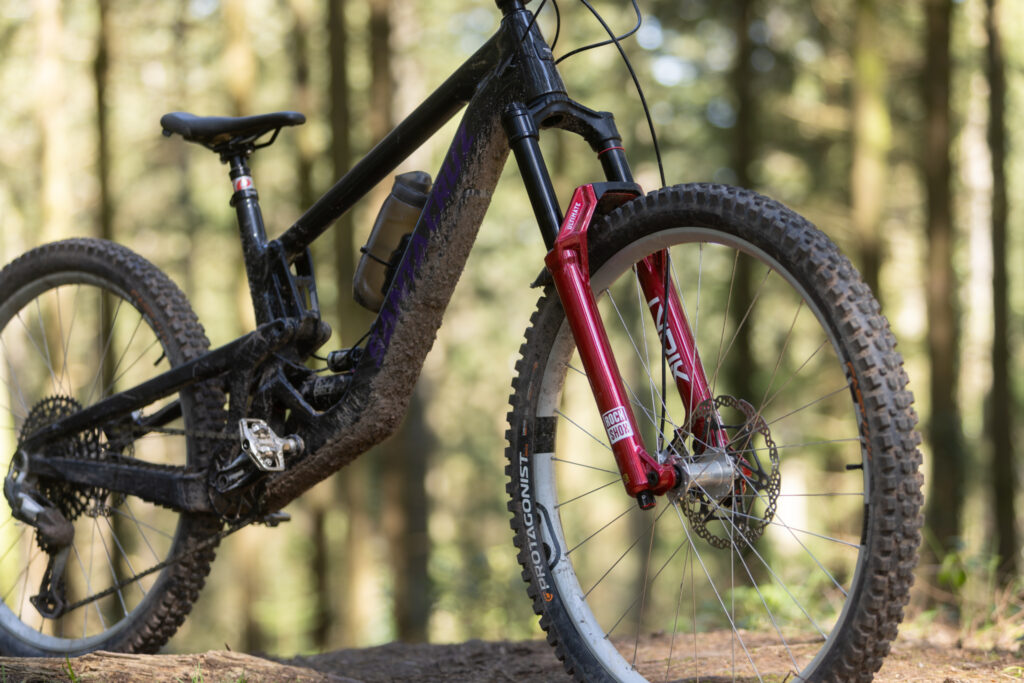

RockShox has really brought the heat with this, the RockShox Lyrik Ultimate Charger 3.2 RC2, the latest iteration of its big trail fork. Although now slightly weightier and a bit more expensive, its class-leading suppleness, adjustable support and generally fantastic performance put any small downsides firmly in the shade.
RockShox Lyrik Ultimate Charger 3.2 RC2 – Technical details
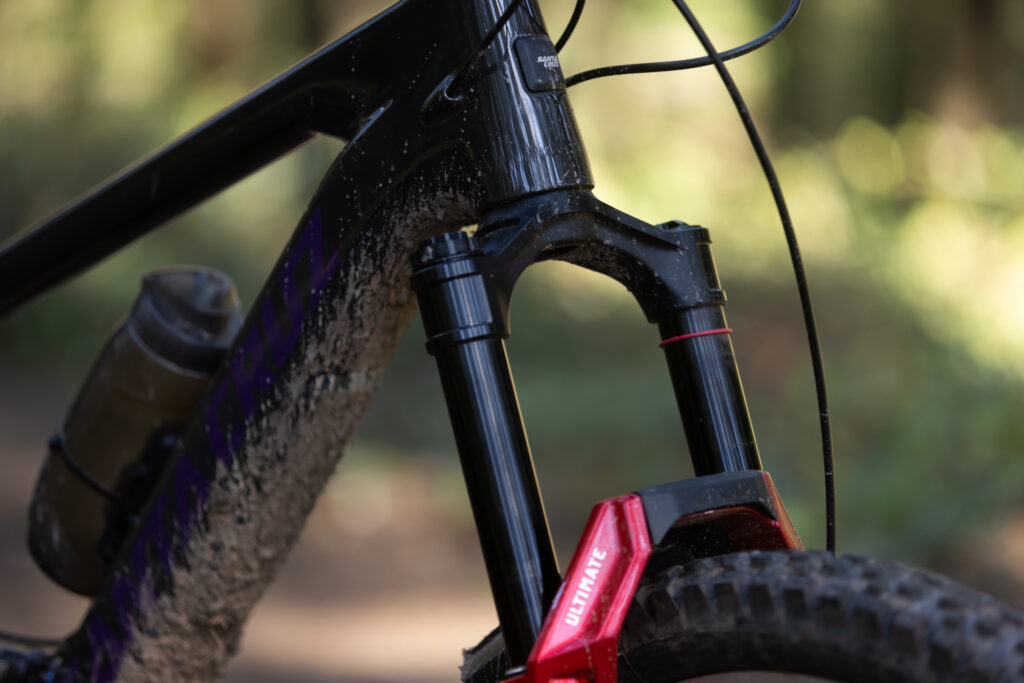
Because almost everything on this Lyrik is new, there’s flipping loads to get through here, but let’s start with the external stuff. Firstly, the Lyrik benefits from an all-new chassis design that’s built to be light but stiff.
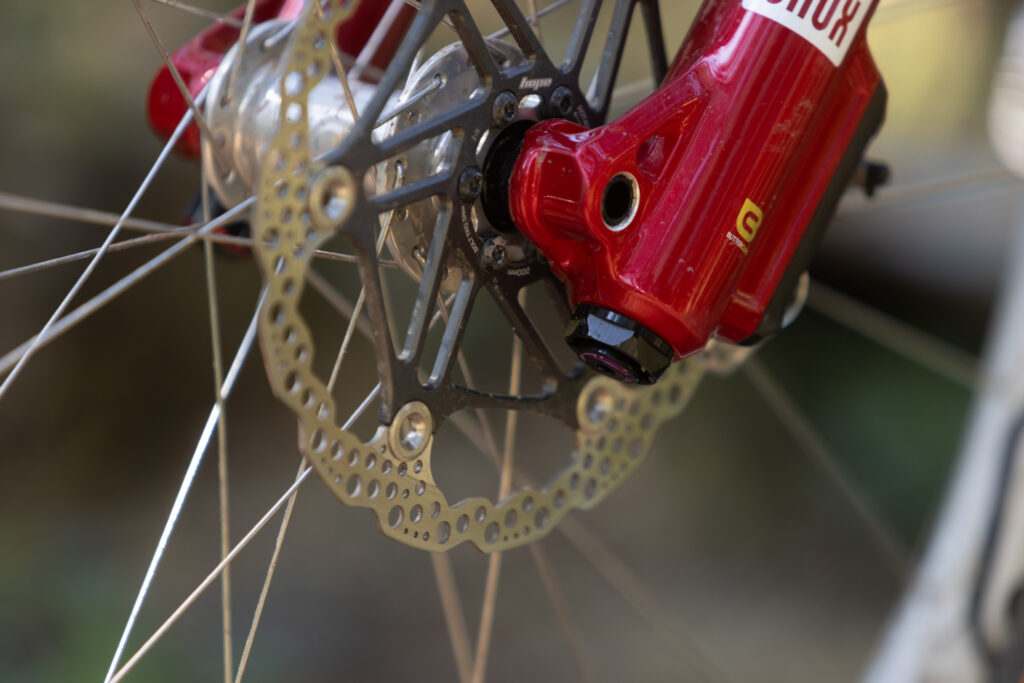
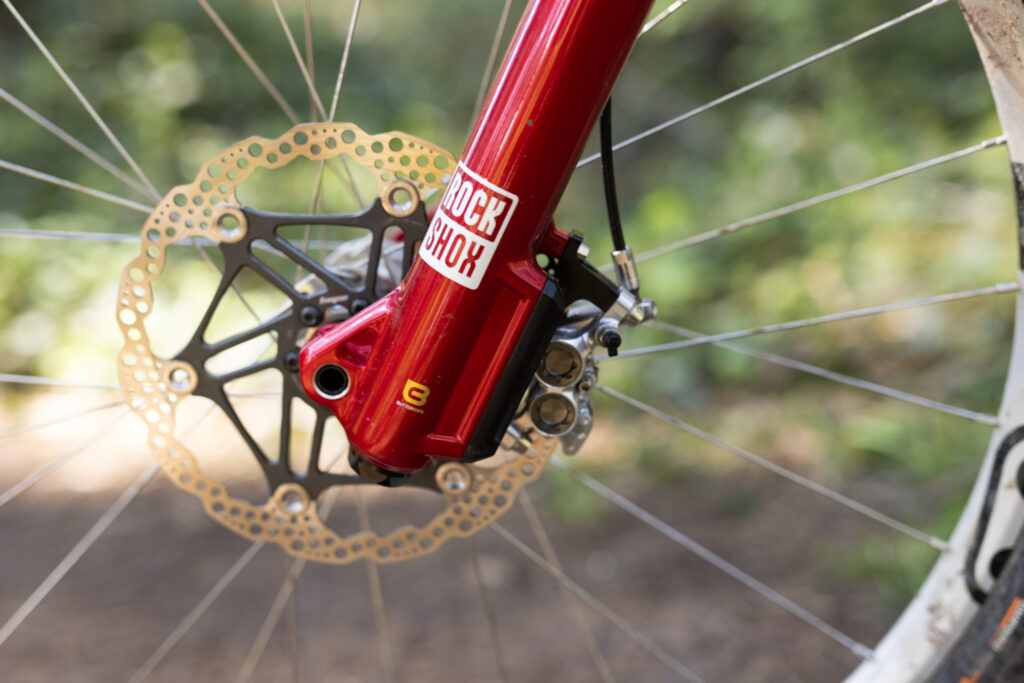
Up top the machined crown is wider to increase stiffness for steering control and climbing efficiency, while the fork’s arch also allegedly boosts stiffness while retaining big tyre clearance. There are a bunch of cutouts in the crown and towards the axle to reduce weight, while the returning TorqueCap dropouts also allegedly make the 15mm axle as stiff as a 20mm one.
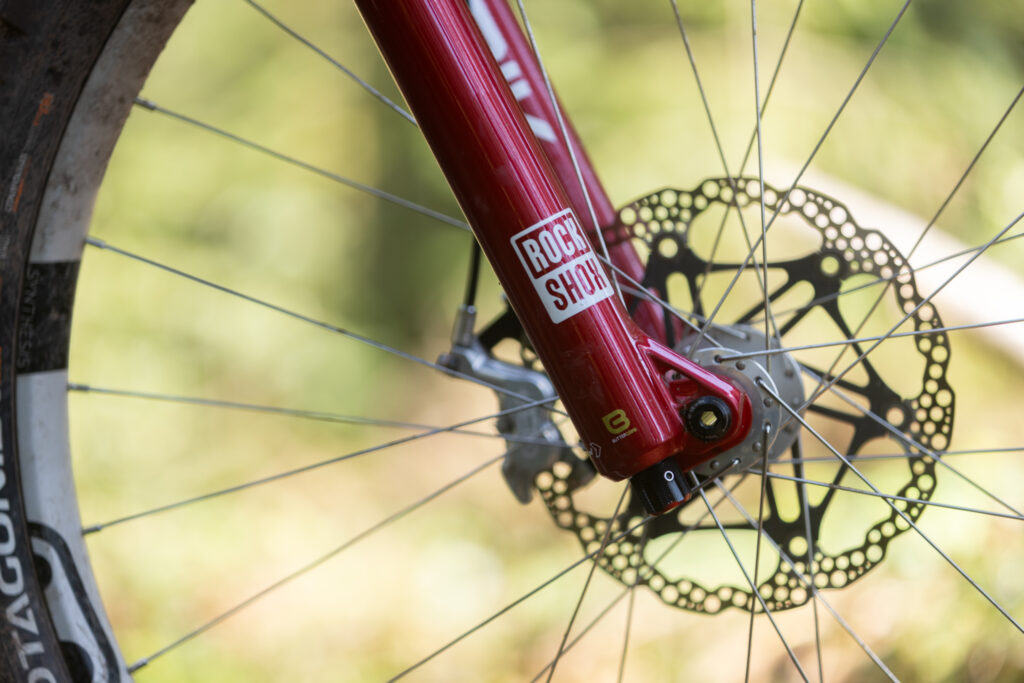
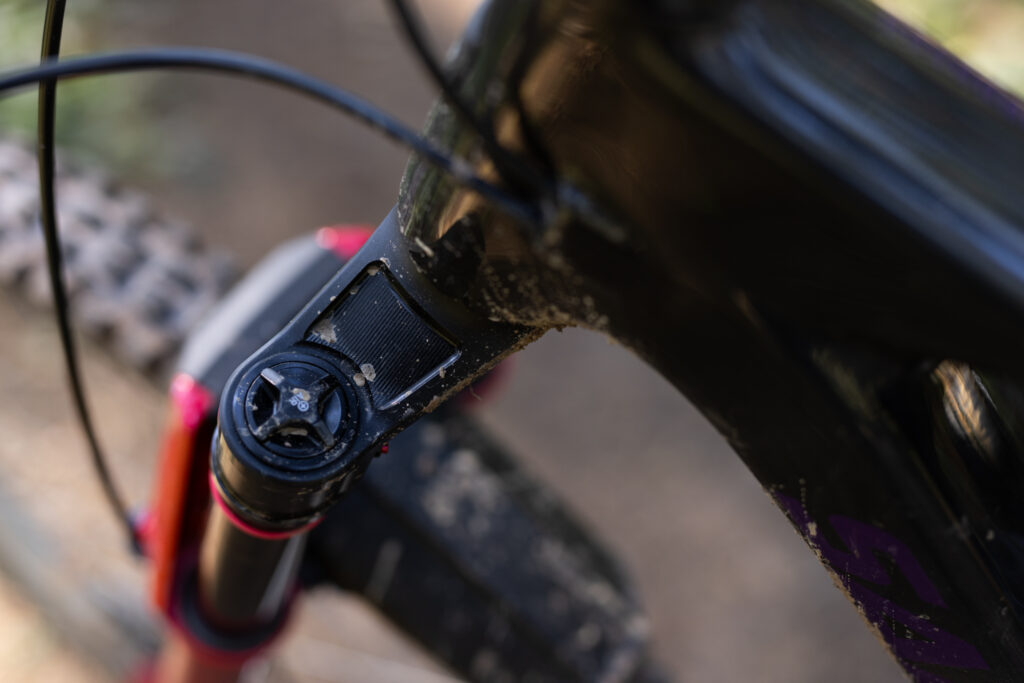
The compression dials are clearly marked, and I’m a big fan of these; relevant info is literally printed on the fork. It’s impossible to forget where the dials are set, and settings tweaks on the move are a breeze.
Inside is where the fork gets proper interesting. The most exciting new tech to grace the Lyrik is the LinearXL air spring. First found on the Boxxer downhill fork, it’s an (yes) air spring in a twin tube design. The clever bit is that, as the fork moves through the travel, the force required to compress it doesn’t change – a simple air chamber would ramp up as you got deeper into the stroke.
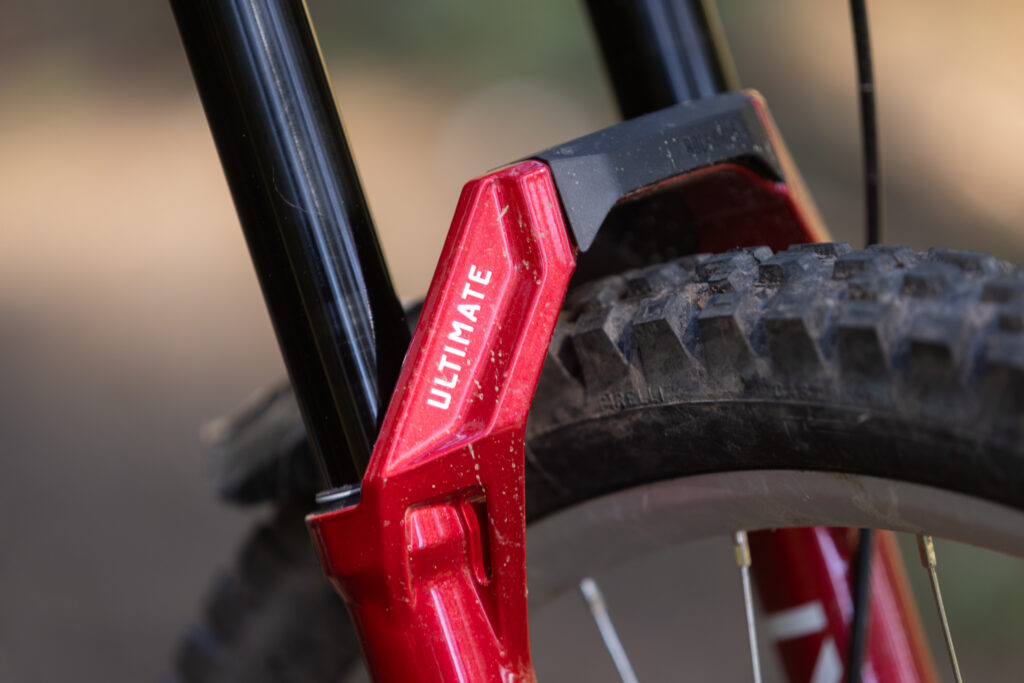
The most notable change is the new AirAnnex, the black-capped bulge on the lower left leg. It’s pretty simple. It’s literally just an extra space to allow the air spring to hold more air. The effect of that extra volume is a smoother end stroke ramp (it’s more linear) and, again, more effective damping, says RockShox.
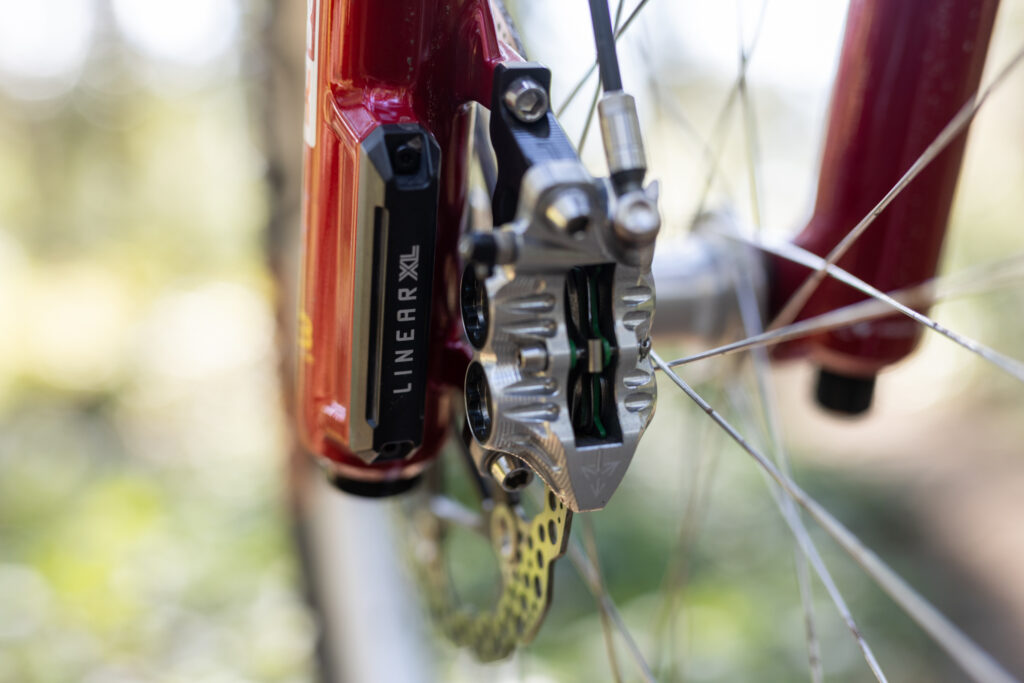
That air spring is then complemented by the Lyrik’s new breather holes in the stanchions. These allow air to move more freely throughout the fork as it runs through its travel, further smoothing that end stroke and improving speed sensitivity.
You’ll probably want some degree of ramp up towards the end of the stroke, so for that there’s ABO, or Adjustable Bottom Out. It’s a neat system that raises the internal bottom-out bumper in the fork’s lower, so the more it’s wound on, the sooner in the travel it kicks in. ABO is available on the more affordable Select+ fork, but it’s an internal adjustment, rather than the eight-click external adjustment on the Ultimate model, which is accessible via a 5mm Allen on the very bottom of the left leg.
Both stanchions wear RockShox’s ButterWagon technology, which essentially means there are loads of little dimples cut into the parts of the stanchions you don’t see to help distribute oil around the fork. The brand says it reduces running friction by 18% and static friction by 24% when combined with Maxima oil and seal grease.
This fork benefits from exclusive seals built by SKF to resist deflection or bending under pressure, resulting in a smoother, freer movement that still keeps dirt out.
Also new for this generation of RockShox forks (including the ZEB) is the updated Charger 3.2 damper. The brand doesn’t say all too much about this, but it’s supposedly quieter, tuned for the ‘position-sensitivity’ of the LinearXL airspring and, as before, complete with independent low and high-speed compression circuits. Adding more low-speed compression here, for example, won’t affect your high-speed compression damping.
Despite the talk of weight savings, this is heavier than the previous Lyrik Ultimate 3.1 by 177 grams. It’s also around 120g heavier than the current generation Fox 36 Factory.
RockShox Lyrik Ultimate Charger 3.2 RC2 – Performance
These days most product improvements, though noticeable, are pretty marginal, and perhaps not quite enough to persuade folk to move from one generation and invest in the next. But for this latest Lyrik, well… the usual small step in performance is more of an almighty leap.
First up, I’ve been impressed with the extra stiffness given the relatively small bump in weight. It translates to a more direct steering feel and a noticeable step up in confidence when heading towards technical sections. It helps the front wheel track where it’s pointed, without deflecting and pinballing from rock to root – it’s key to going faster, confidently. It also makes the bike feel more positive on the brakes, as braking forces aren’t pulling the fork lower towards the bottom bracket as much.
That said, it’s not an uncomfortable fork to ride. Thanks to the ButterCup technology that’s become a mainstay of RockShox kit for a few years now, the fork reliably filters out most low-level trail chatter before it hits the hands. Throw in the efficient self-lubrication of the ButterWagon design and the extra control of the proprietary SKF seals and the Lyrik Ultimate becomes one of the smoothest-feeling forks on the market.
There’s remarkably little breakaway friction – friction in general, in fact – which really can be felt on the trail. I found the Lyrik’s smoothness most noticeable when landing drops into fast-repeating impacts; there’s no jolt or clear moment where the fork begins to compress after full extension, it just smoothly sinks into its travel, yet recovers rapidly enough to absorb the incoming bumps too. It brings serious control over terrain that’s usually pretty hectic.
That sensation continues through to pretty much every other riding scenario. The fork moves so freely throughout its travel that it’s never harsh, which in turn reduces fatigue so you’re fresher for the ends of long descents (and feeling more confident for it).
Of course, the fork’s sensitivity also brings welcome traction, and that sensitivity remains even when you’re deep into the travel.
I feel like RockShox’s description of ABO (Adjustable Bottom Out) only tells half of the story. Yes, it does introduce the fork’s bottom-out bumper sooner into its end stroke, smoothing out bottom outs when needed, but it also adjusts the amount of progression in that air spring. As it’s basically a bit of rubber that’s raised or lowered in the lower leg (to put it very, very simply), it can take up more or less of the fork’s air volume; thus, the more you wind it in, the more progressive the fork gets. It’s pretty much like throwing in volume spacers, but at the turn of a bolt.
Importantly, no matter where in its adjustment range ABO is set, the quality of the damping doesn’t change. It just dictates the progression, how the fork sits in its travel and, of course, bottom out performance. When wide open, it’s keener to use more of its travel, as you would expect of a linear air spring. When wound completely in, the fork stands up much more.
But the smoothness and capability remains consistent regardless. Because of this, it becomes more a matter of personal preference, without a compromise to overall performance. There are real, tangible differences between the eight clicks too, so it’s easy to find a solid base setup.
With ABO wound off completely, its noticeably linear and much more so than previous generations of the Lyrik, even without volume spacers in place. So the range of adjustment, despite being just eight clicks, is pretty vast.
As for the damper, it’s mighty sensitive throughout the range of travel, which helps the fork remain composed through a wide range of scenarios. Again, this makes for a comfortable fork to ride, but one that also provides plenty of grip through varied terrain.
RockShox has been pretty solid with its compression and rebound settings. As mentioned, I’m a big fan of how all of the clicks are marked, which makes fettling as simple as it gets. As with the ABO, adjustments to high and low speed compression make real, noticeable differences.
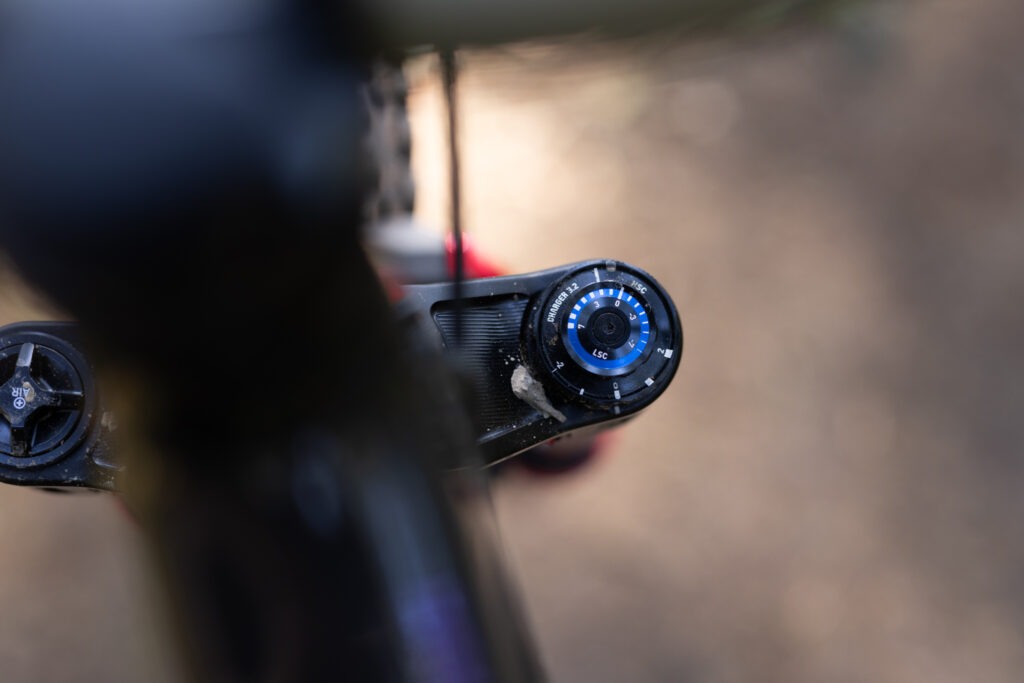
Being able to see exactly where my settings are on the dials, I’ve been able to bracket and experiment with them without losing my sweet spot.
RockShox Lyrik Ultimate Charger 3.2 RC2 – Verdict
So the biggest downside is the price: it’s crept up by £146 to £1,225. Compared to the likes of the 2027 Fox 36 Factory GRIP X2, however, it’s still more affordable – the Fox is £1,399. I liked the 36 quite a lot, and in my review I named it the fork I’d buy, but I take it back… (sorry Fox). The Lyrik 3.2 outperforms it in pretty much every way, except with low-speed rebound adjustment, which the Lyrik lacks. Even then, the Lyrik would be at the top of my list.
Its performance can even square up to the fancy ‘upside down’ Fox Podium Factory GRIP X2, which is £2,199. Granted, it’s not as stiff or as enduro-focused, but the damping and traction the Lyrik brings definitely leave a mark at a much lower price and weight (the Podium weighs around 400g more at 2,695g).
One contender worth looking at is Manitou’s Mezzer Pro. It’s only £25 cheaper for 2026 at £1,199.99, but it balances good stiffness with relatively low weight – it’s just a hair over 2,000g. It also gets a form of adjustable progression, though it’s not as straightforward as RockShox’s system as it uses a secondary air spring that needs to be inflated, rather than an allen key-accessible dial. The Mezzer Pro is an excellent fork, but for overall performance, RockShox has Manitou beaten.
With all its fresh features, refinements and updates, the Lyrik Ultimate Charger 3.2 sets the new benchmark for suspension performance. It’s ridiculously smooth, stiff enough for a broad range of riding, and the ABO feature is genuinely useful. The dials makes getting the very best tune out of it easy, too. While it is a little pricier than before, the extra is well justified. Right now, it doesn’t get better than this.
Test Report
What does the manufacturer say about this product?:
RockShox says, “Sounds cliché, but Lyrik really is that fork. The one you take when you’re off to ride who knows what. The one you trust for pretty much everything out there. With technology that can’t be touched by anything in its category. Long travel, not crazy travel. Single crown, not overbuilt. Call it trite, but it’s true.”
Tell us some more about the technical aspects of this product:
Adjustable Bottom Out, ButterCups, ButterWagon, Charger 3.2 damper, LinearXL air spring, breather holes in stanchions.
Any further comments on performance?:
Suspension forks don’t get better than this.
How does the price compare to that of similar products in the market, including ones recently tested?:
Pricier than the Manitou Mezzer Pro, but more affordable than the Fox 36 Factory or a Fox Podium Factory by some margin.
Did you enjoy using the product? Yes
Would you consider buying the product? Definitely
Would you recommend the product to a friend? Yes
Use this box to explain your overall score
This has a level of performance I’ve not experienced on any other mountain bike fork to date.
About the tester
Age: 33Height: cmWeight: kg
I usually ride: Santa Cruz BronsonMy best bike is:
I’ve been riding for: 10-20 yearsI ride: A few times a weekI would class myself as: Experienced
I regularly do the following types of riding: Mountain bike Enduro