
Electric mountain bikes are incredible bits of kit. They make climbing far more palatable, and give you that cheesy grin you get after whooshing along a track you might not have thought it was possible to ride through leg power alone.
- Best e-MTBs 2025 – top-performing e-mountain bikes for every situation
- E-MTB geometry explained: how weight and geometry affect your ride
- Electric mountain bikes – everything you need to know
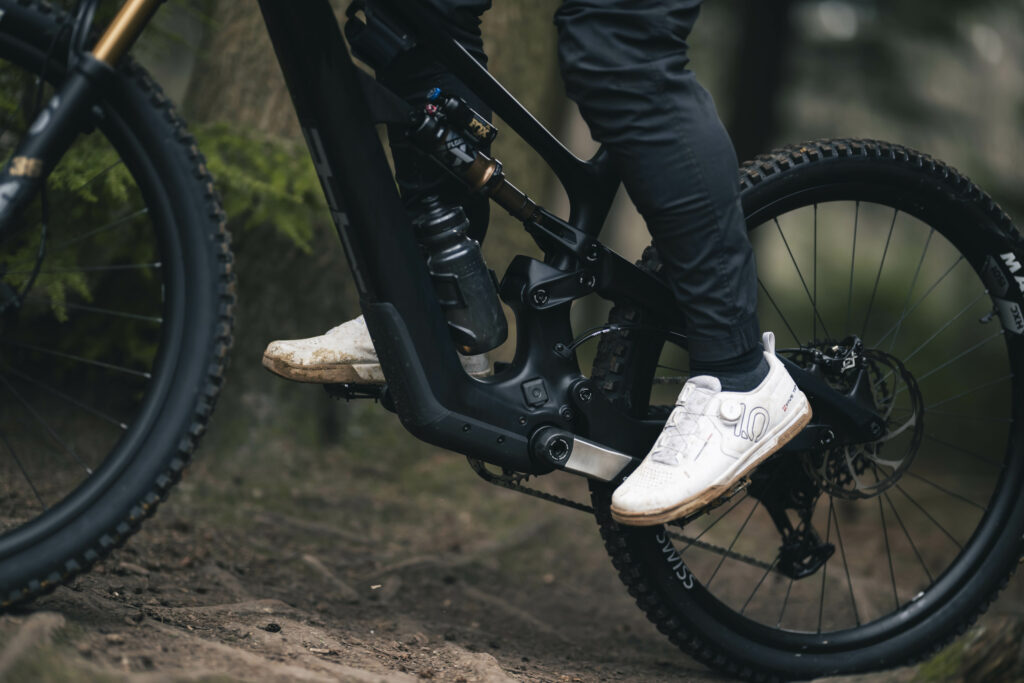
But, unlike analogue mountain bikes, the reality is that even the lightest of light eMTBs are around 18kg. That’s not an indiscriminate amount of weight – and it’s only top-end, lightweight eebs that are that light. You can quite easily find a full-powered e-bike weighing just shy of 30kg.
And when you think about that amount of weight in relation to how much you, as a rider, weigh, it quickly adds up. Say you weigh 60kg, riding something quite literally half your body weight is going to take way more effort to control on descents.
At some point, it just feels like you’re a passenger on a runaway train – no matter how powerful the brakes are, or how big the rotors, the strength and skill needed to sufficiently push and pull a bike around a fast corner and actually enjoy yourself can often be way more than many possess.
That’s not to say that there aren’t small riders absolutely shredding on e-bikes and making it look easy. But for us mere mortals, or people who are looking at buying an e-bike and jumping in at the deep end with a full-fat monster, I worry that they might be missing out on the best parts of riding a mountain bike.
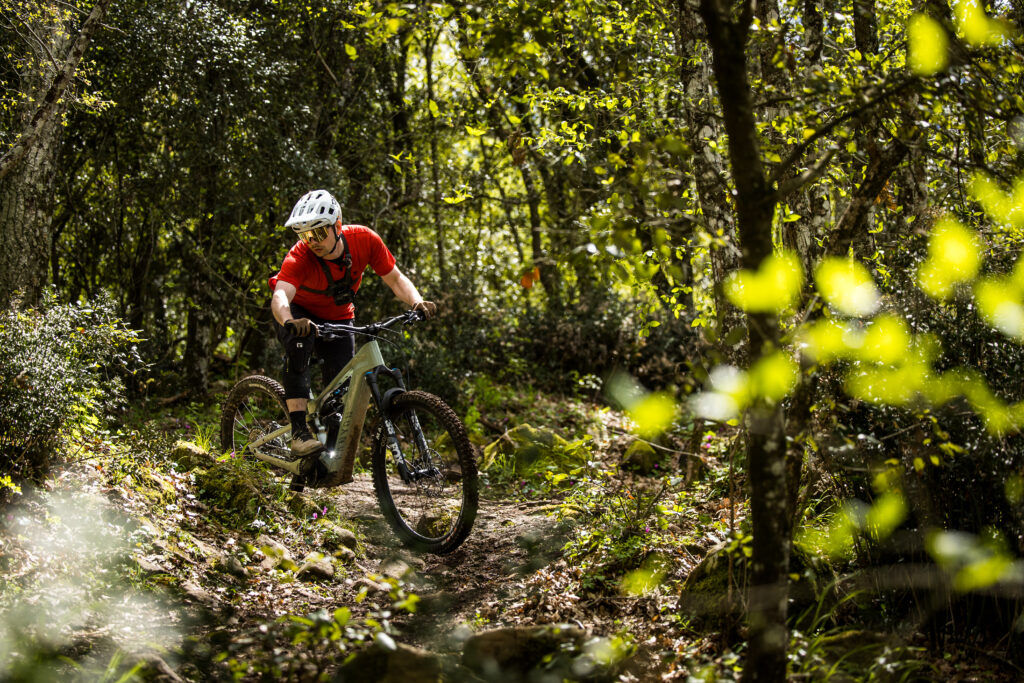
To me, the part of mountain biking I get the most enjoyment from is descending. Sure, a climb or two has to be done to get to the point where you can descend, but there’s nothing that beats the feeling of swooping through fast berms or gliding over roots and rocks through the woods.
And on an analogue bike, because there’s less weight to wrangle, I feel like I can do that well. I’m in control of my bike, I know the limits of the tyres, I know I can jump (albeit not very high), but I can clear obstacles and throw the bike about with more ease.
Put me on a full-fat, 25kg e-bike, and it takes me far longer to get into the flow of riding because of the difference in how the bike rides compared to a 13kg acoustic bike.
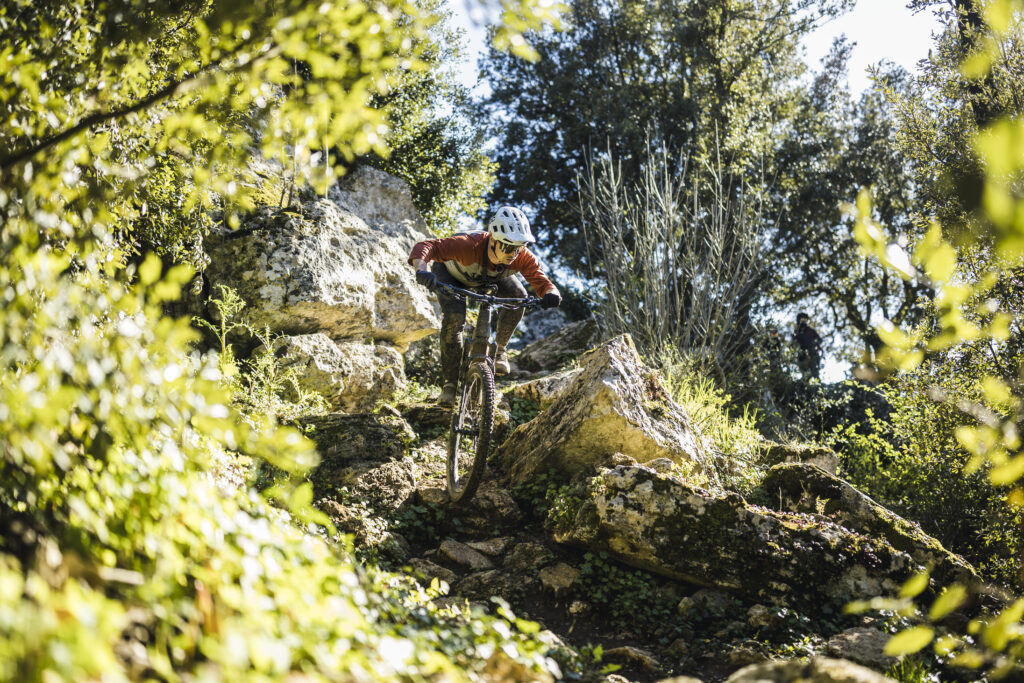
My hands hurt from braking much earlier in the ride because of the increase in force needed to stop the greater mass, and throwing the weight around is much more difficult. In essence, it’s just not as fun.
Sure, heavy bikes can go faster downhill thanks to good ol’ gravity, and everyone’s favourite school equation of force = mass x acceleration. The greater the mass (i.e. the rider and bike), the greater the force pushing you and the bike down the hill. Our sister site, road.cc, did a great deep dive into how much weight impacts descending speed, if you want to geek out on this a bit more.
But for all the struggling to keep it under control, I question whether this extra weight, power, and torque are worth it. Or perhaps I’m framing it wrongly, and I shouldn’t compare an eeb to a manual.
But for those buying one for the first time, I do worry that they’re missing out on the quintessential mountain biking experience of feeling super connected to a trail and maximising their bike’s potential.
Without completely stripping the bike and replacing everything with titanium components, it isn’t the easiest task to make a 20 kg-plus bike easy to throw around for small riders. But, there are a few tricks bike designers are cottoning on to. One, for example, is to do with the bike’s centre of gravity.
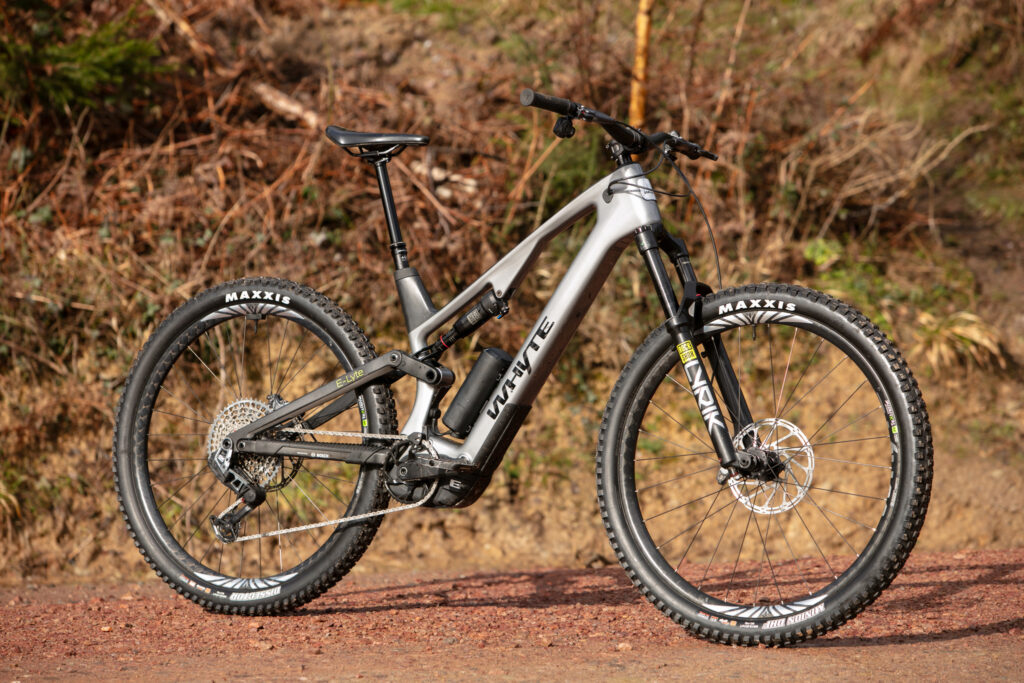
Whyte has been a big optimiser of this across its range and more recently, its E-Lyte models, with the idea that by keeping the motor and battery as low as possible, it will increase the bike’s stability as well as its ease of leaning into corners.
Having the centre of gravity well, more central, also means there is less effort required to change direction during riding, as well as getting some air time, as there’s less weight high up in the frame.
While that is one method of reducing the impact a bike’s weight has on its ride feel, I think we’re still a little way off before we really start seeing e-bikes that are just as easy to fling about as acoustic bikes for smaller riders.
Mountain biking, to me, is about fun. It’s an escape from the digital world, responsibility,y and it’s a great place for some headspace. But throw in a heavy bike, or something that’s just not as enjoyable to ride as my analogue, and it can certainly take away from the enjoyment.