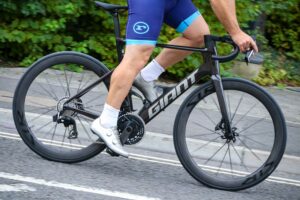
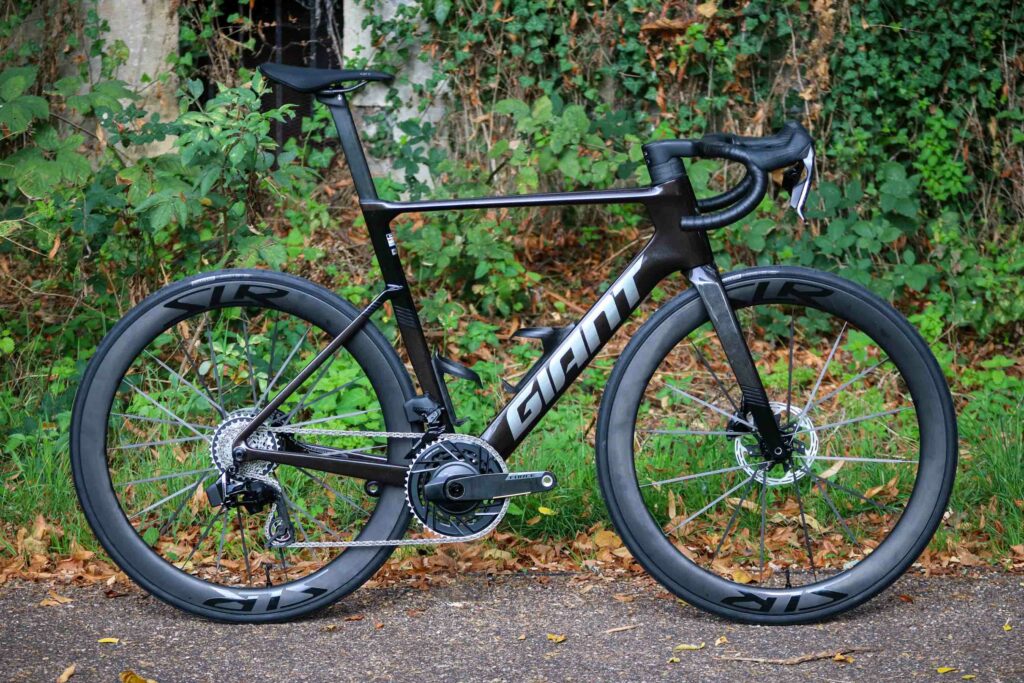
The new Giant Propel Advanced Pro 0-AXS model sits at the mid-point of the Propel line-up, balancing performance, stiffness, comfort and spec list without blowing the budget. A couple of minor kit tweaks will make this an excellent choice as a do-it-all aero race machine.
Giant Propel Advanced Pro 0-AXS: The ride
The Propel is Giant’s aero race bike and for 2026 the firm has made some subtle changes like improving the aerodynamic performance, increasing stiffness and lowering the weight. Compliance hasn’t been forgotten either, so the result is something designed to cheat the wind that’s as versatile as a standard road bike.
On our office scales this Propel weighed 7.04kg, so straight away it is shunning that myth that aero bikes bring a trade off when it comes to weight. This means that it feels responsive on the climbs, and it accelerates very well too.
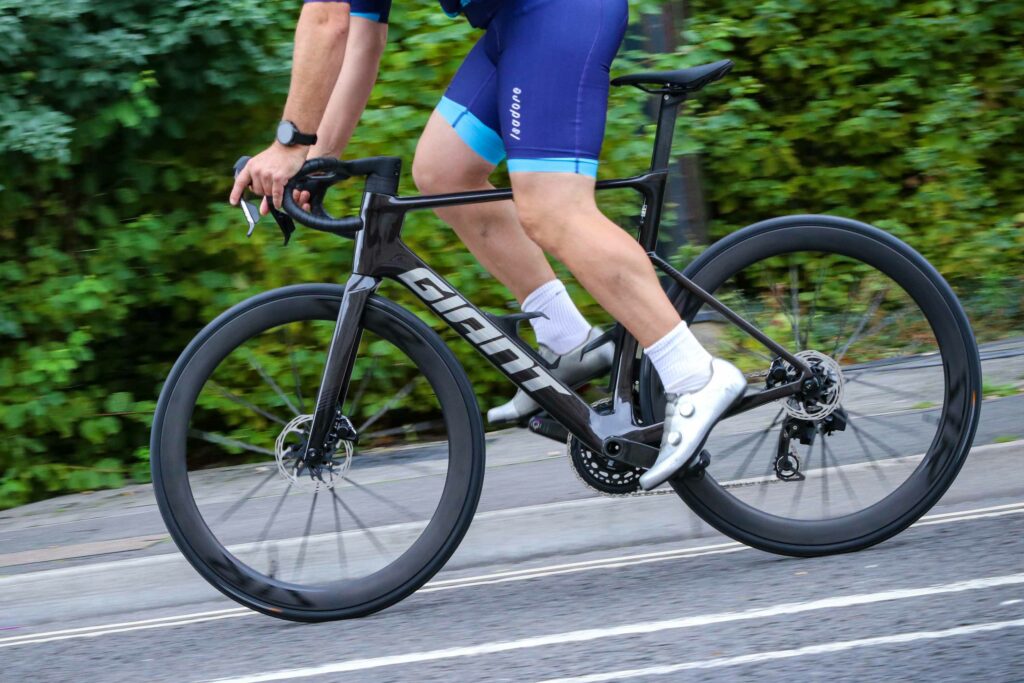
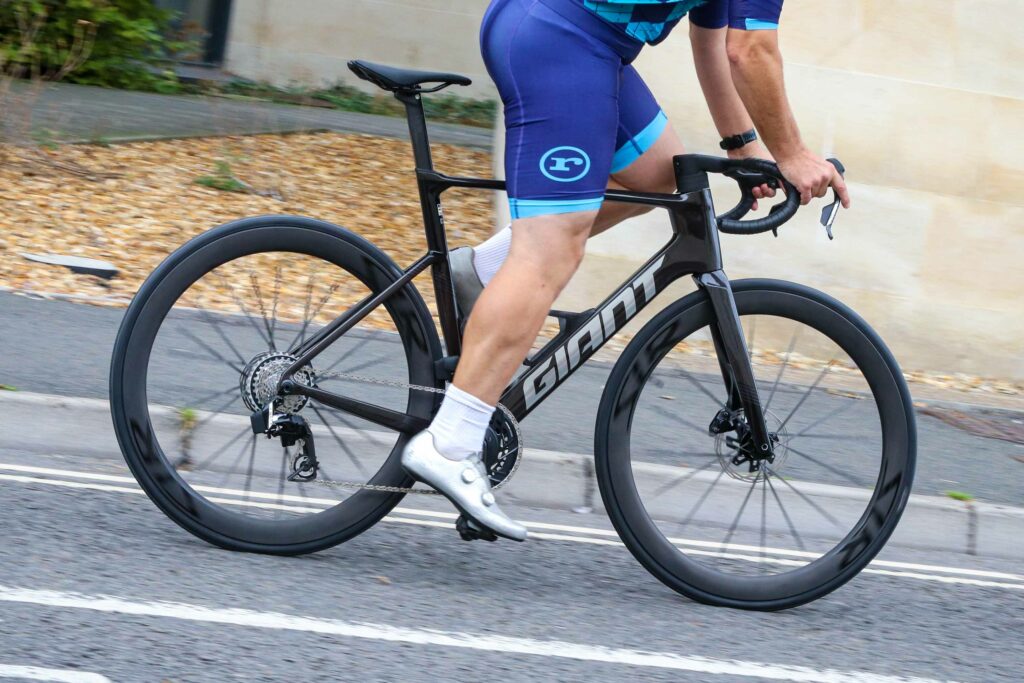
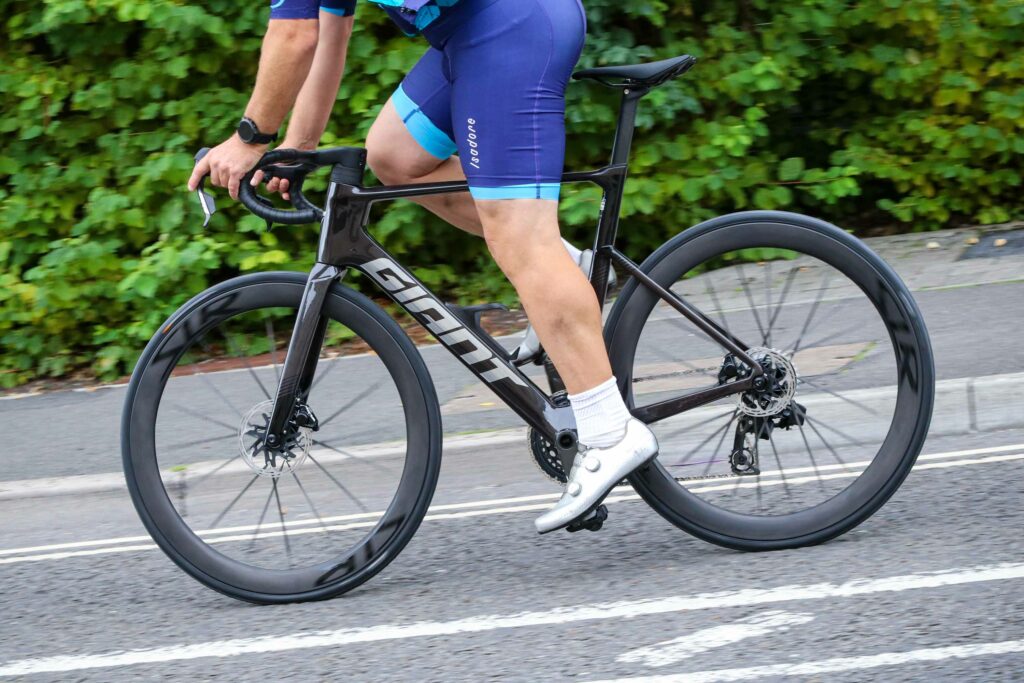
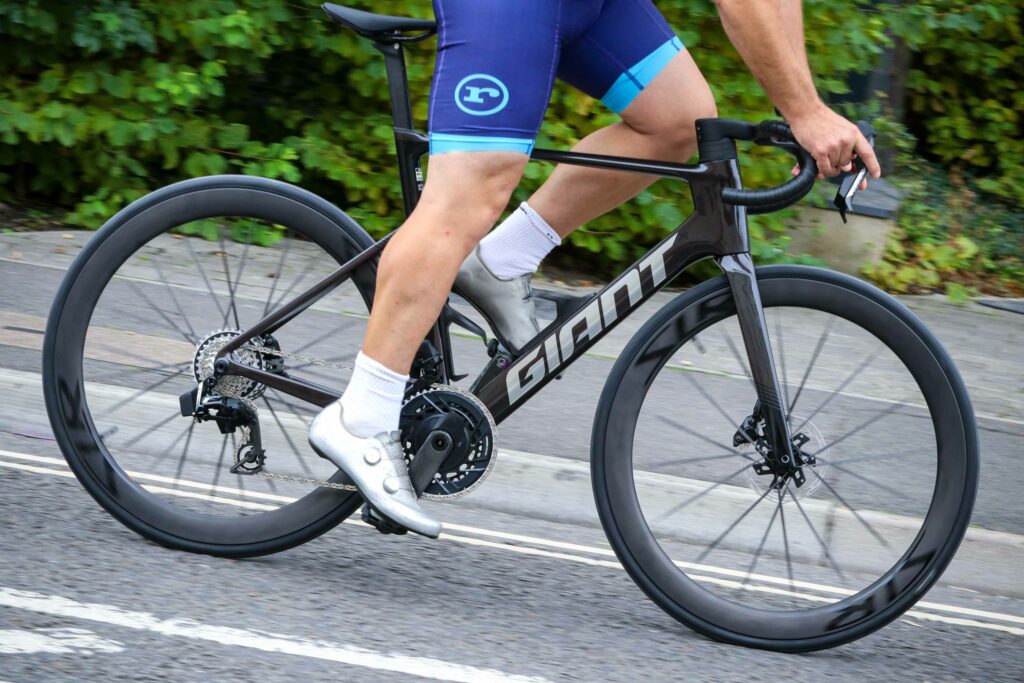
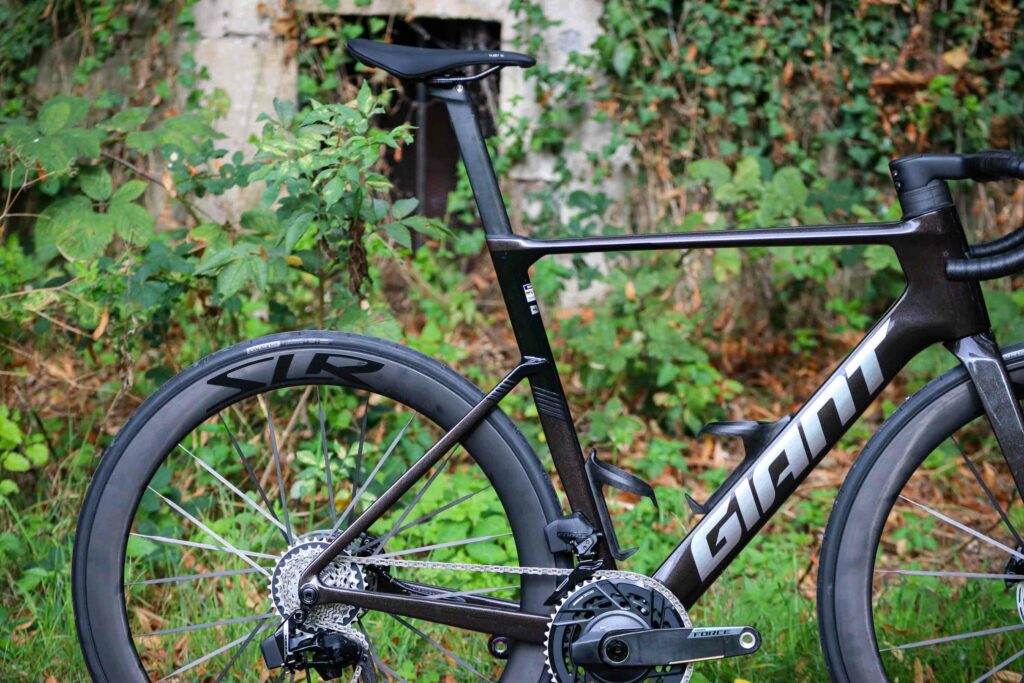
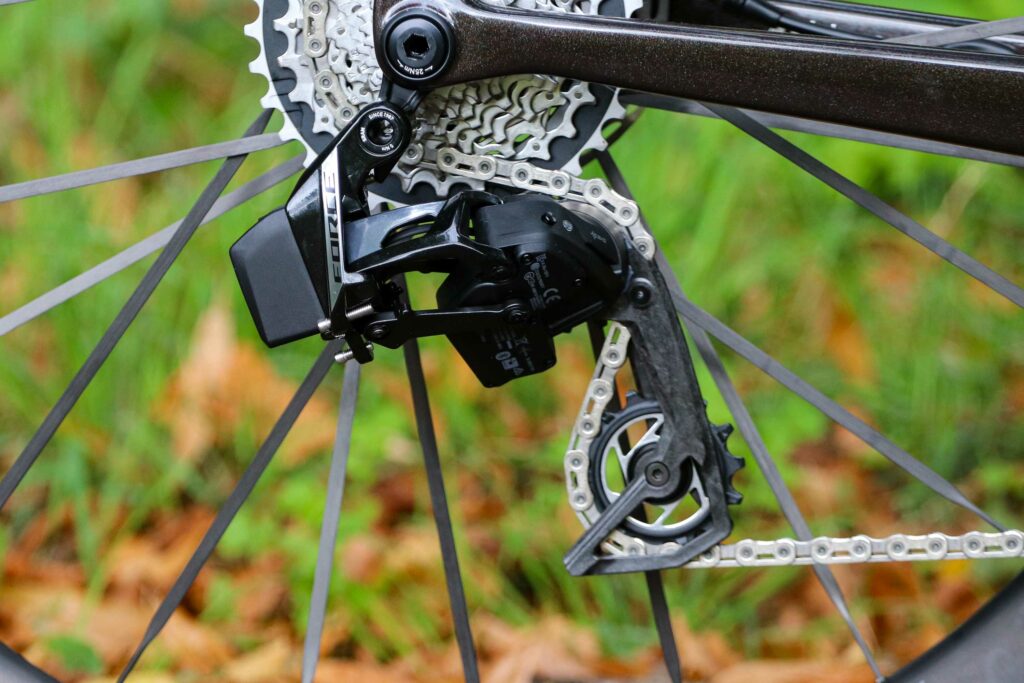
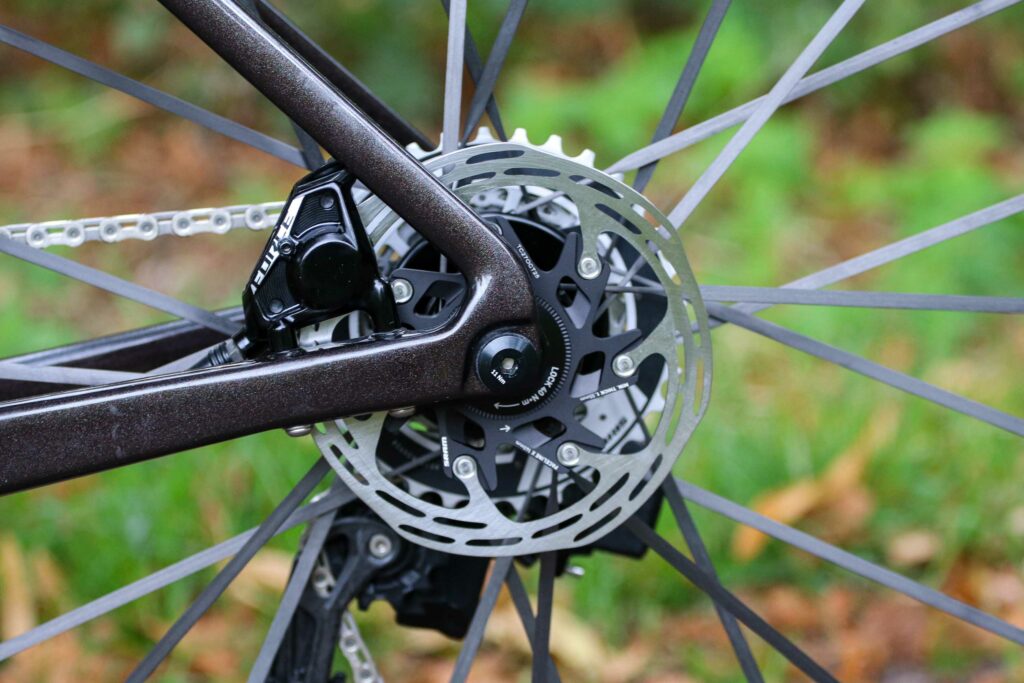
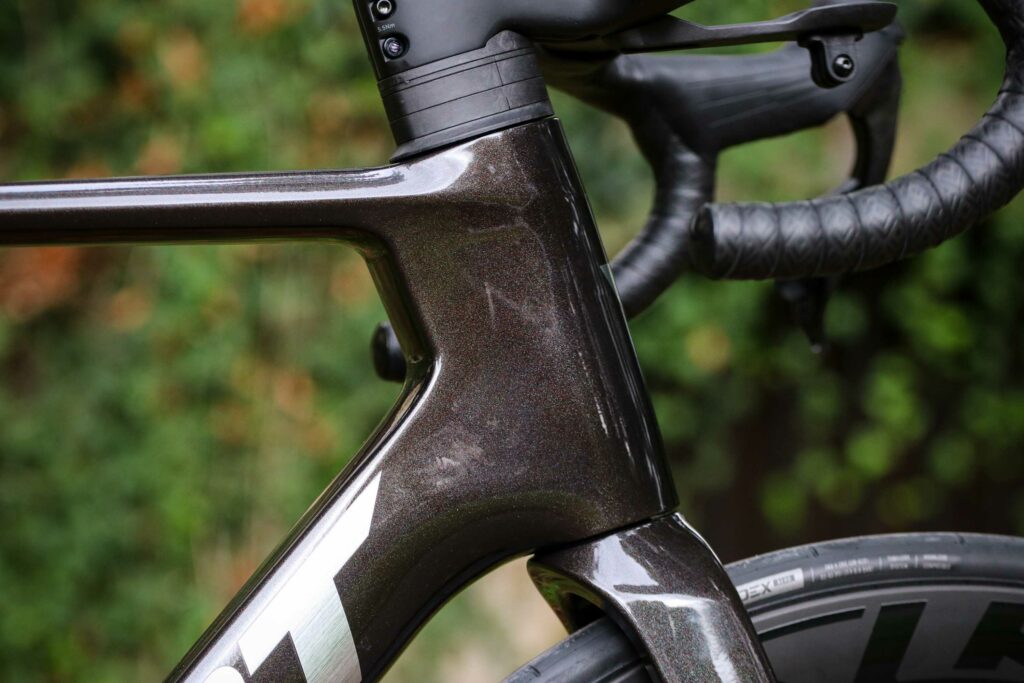
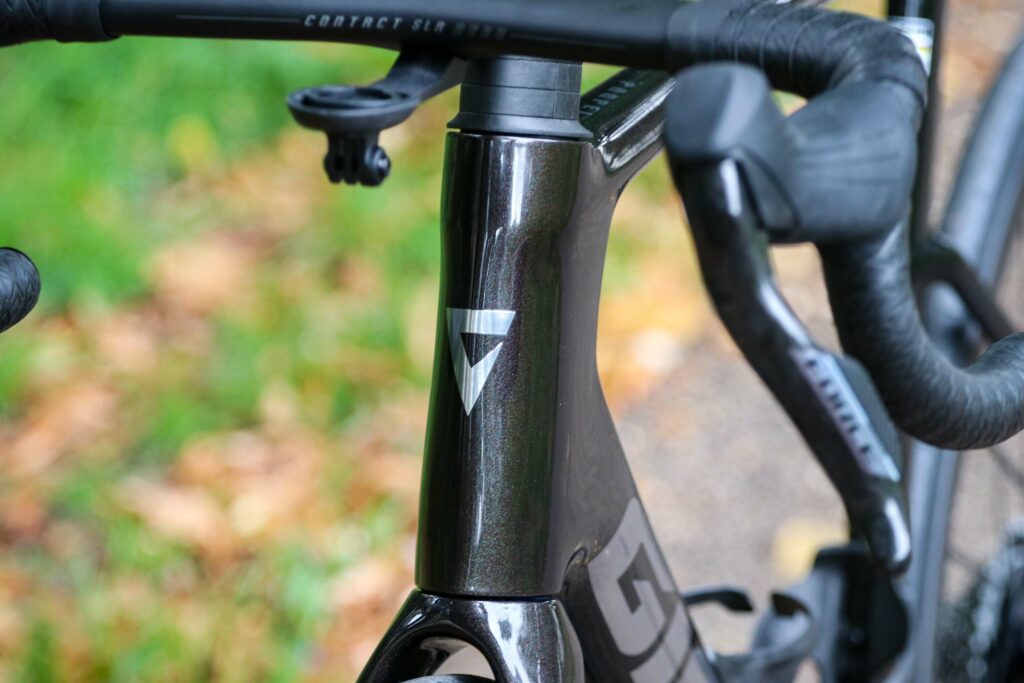
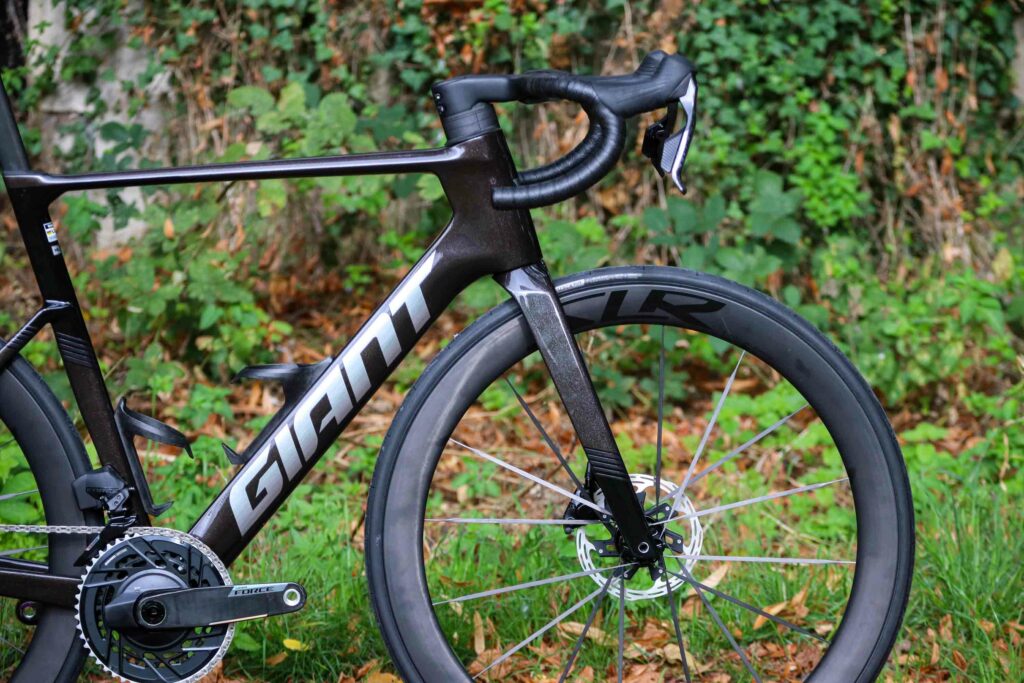
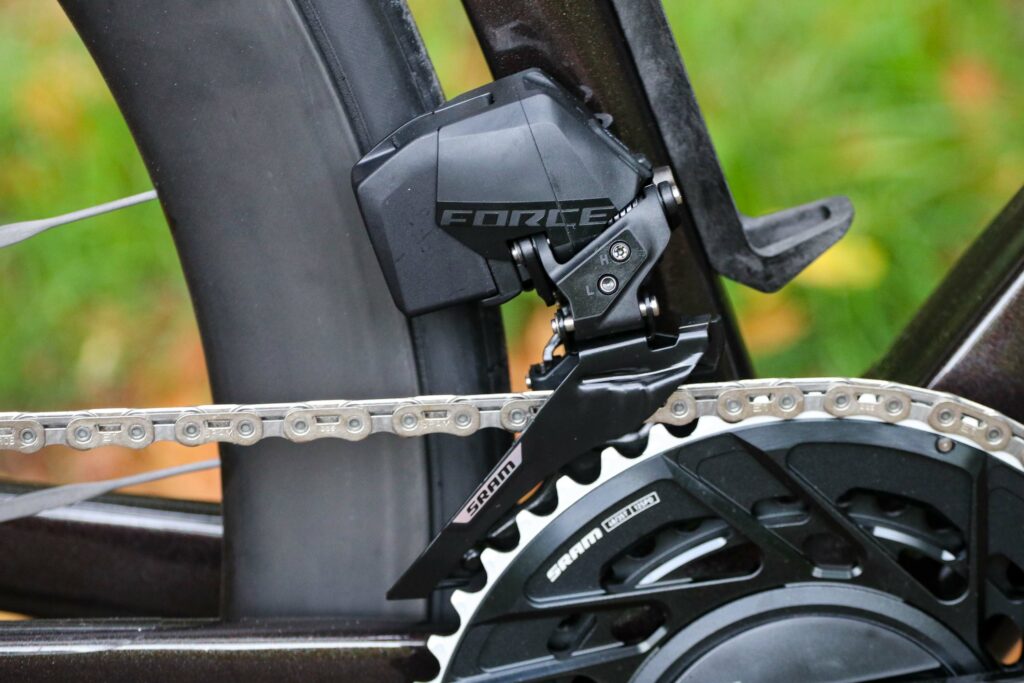
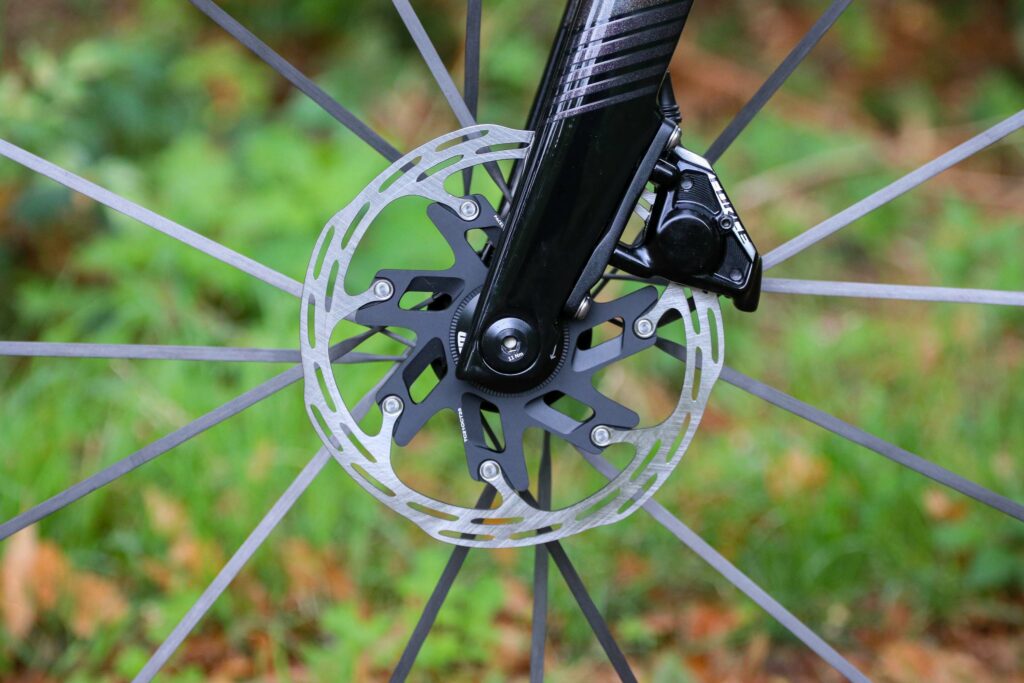
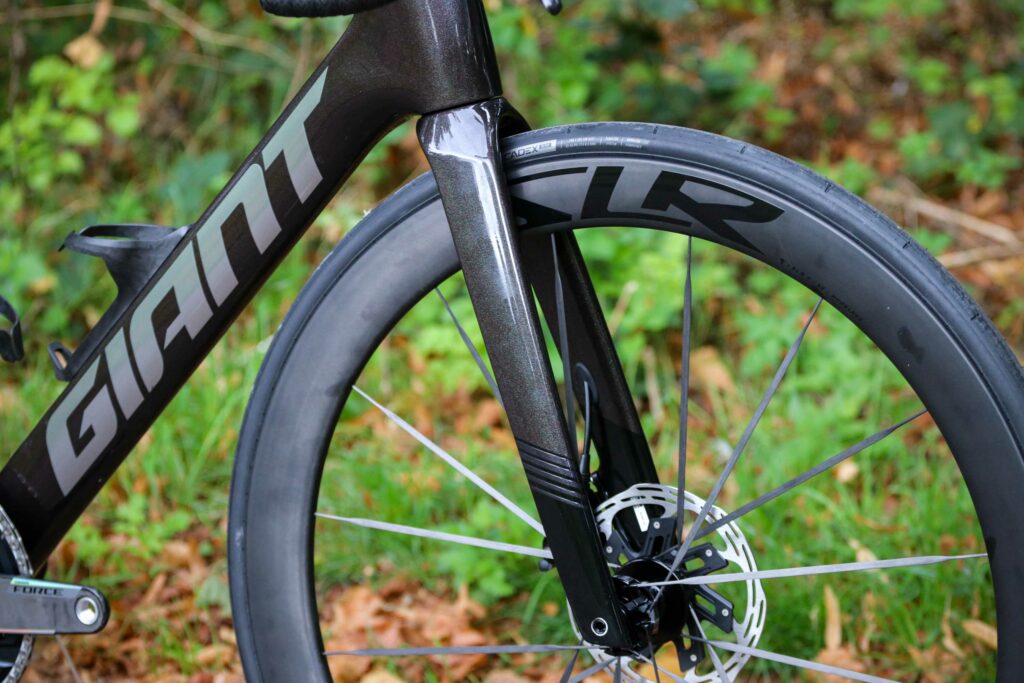
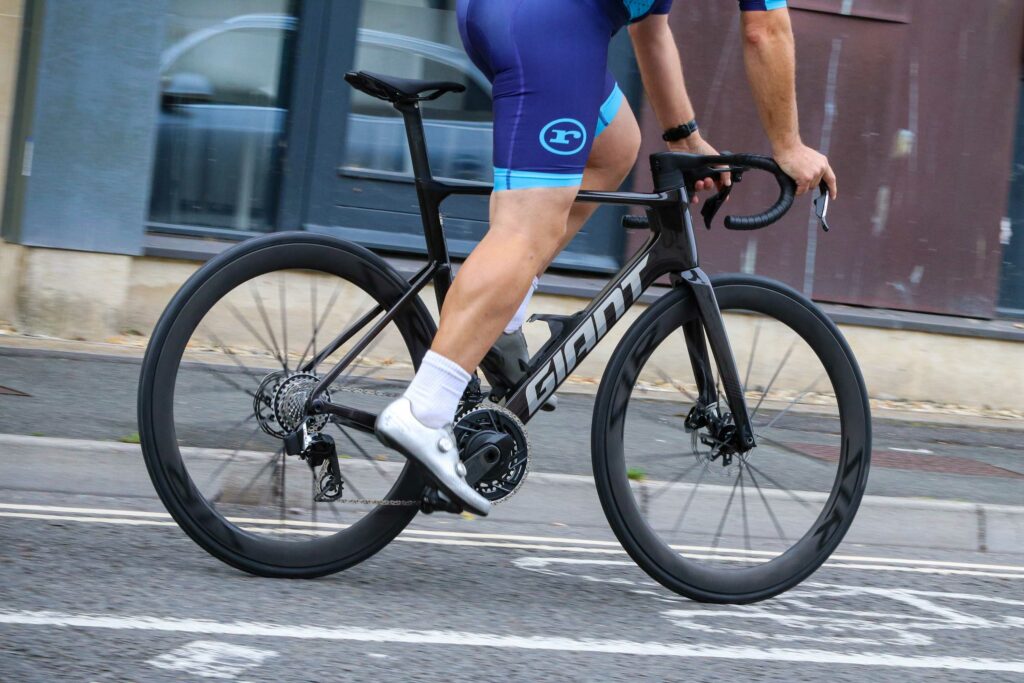
While it’s designed to cover the miles as fast as possible, Giant has managed to give the Propel a good ride quality (with a change to the tyres – I’ll touch on that later) and while not as supple feeling as my TCR due to the larger profile tubing, it’s not far off. This meant that if I was heading out for a longer ride of three or four hours, taking the Propel wasn’t a compromise.
In terms of its geometry, the Propel doesn’t offer up any surprises. The position is designed to be long and low, but not in any way extreme, which again aids comfort on those long rides.
Even on this M/L size the wheelbase has been kept well below a metre. This makes the bike feel nippy and direct, which makes for a fun ride. It changes direction snappily and it’s easy to stick to a line when riding at speed, and it manages to maintain that level of control when the speed slows too.
Most rides I’d find myself in built-up areas with busy traffic, and while I wouldn’t say that filtering was quite as relaxing as on an endurance style bike, it wasn’t too twitchy either.
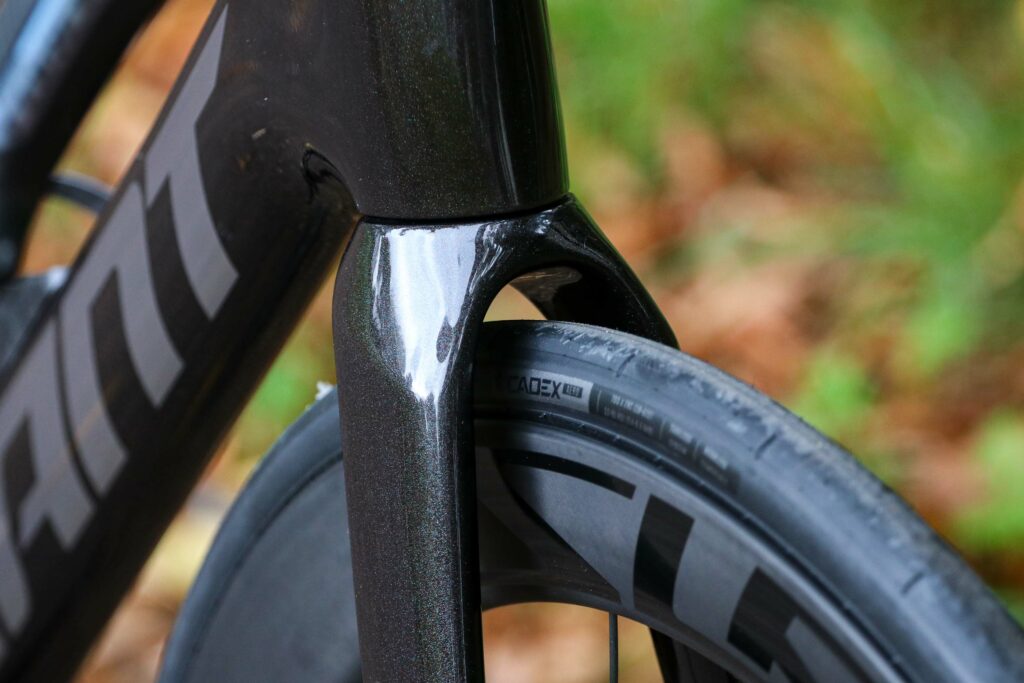
It’s a stiff bike overall, which means that from an efficiency point of view I can’t really fault it. It’s noticeably tight around the lower half of the frame and the rear triangle which helps you get the power down, and the fork showed plenty of resilience against hard braking and high-speed cornering while retaining enough compliance for comfort through the handlebar.
Overall, it’s a rewarding bike to ride thanks to the performance and geometry, and the low weight brings efficiency to the mix.
Giant Propel Advanced Pro 0-AXS: Frame and fork
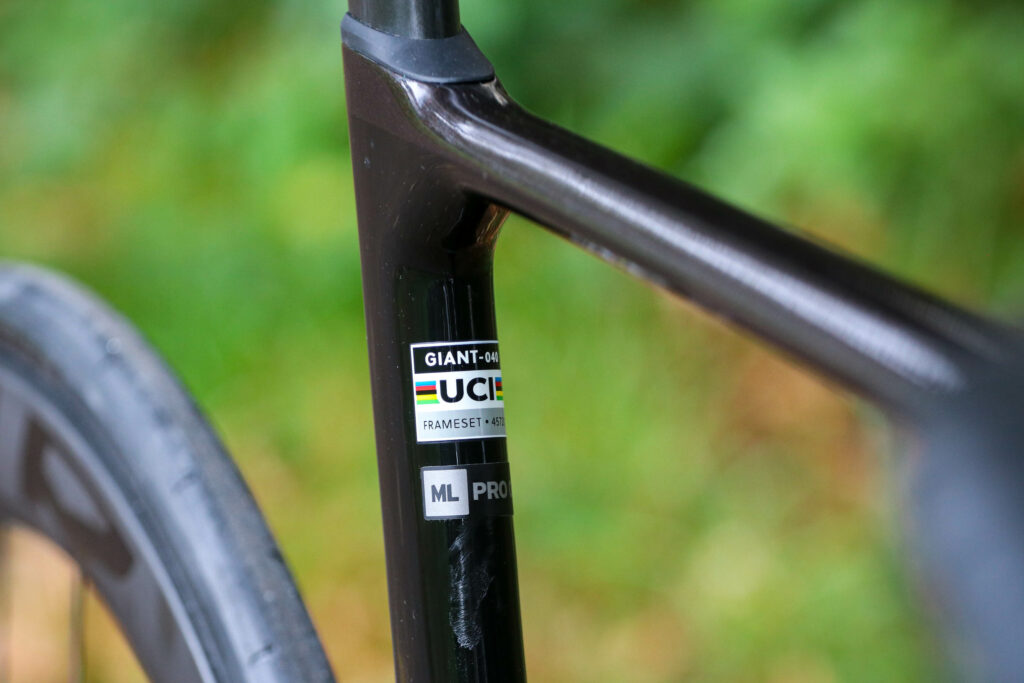
Giant offers two different composite grades for the Propel frames and forks with the top tier models getting the Advanced SL option while the cheaper models get the Advanced grade.
This Advanced Pro model gets a blend of the two with an Advanced grade frame, and the higher end Advanced SL fork.
In terms of what that changes, weight-wise, an Advanced SL frame weighs a claimed 800g, while the Advanced frame is a slightly heavier 863g.
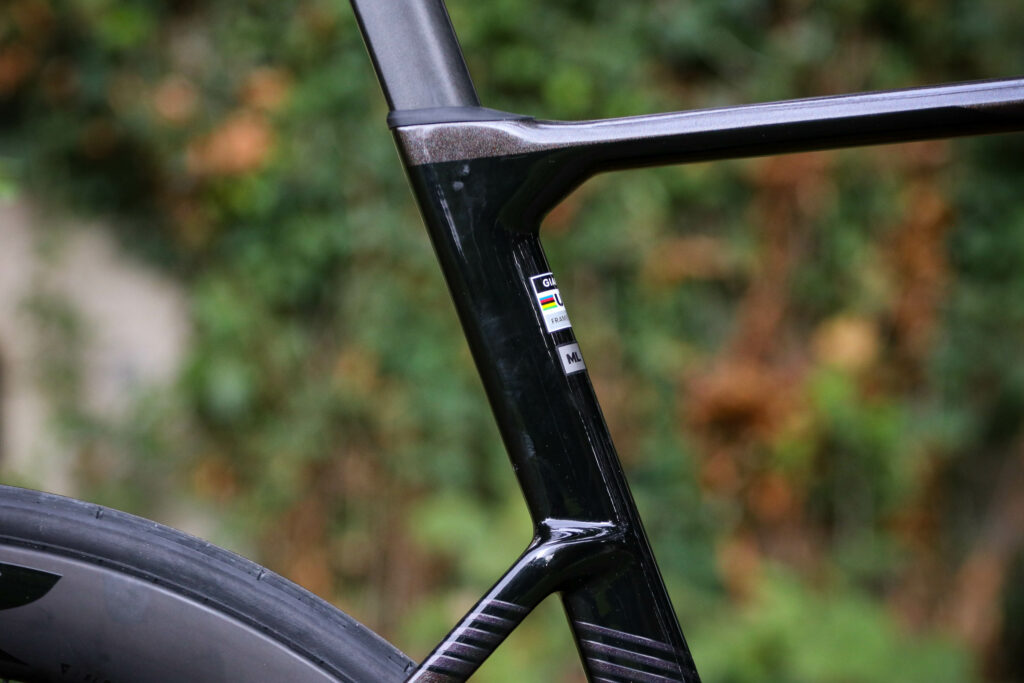
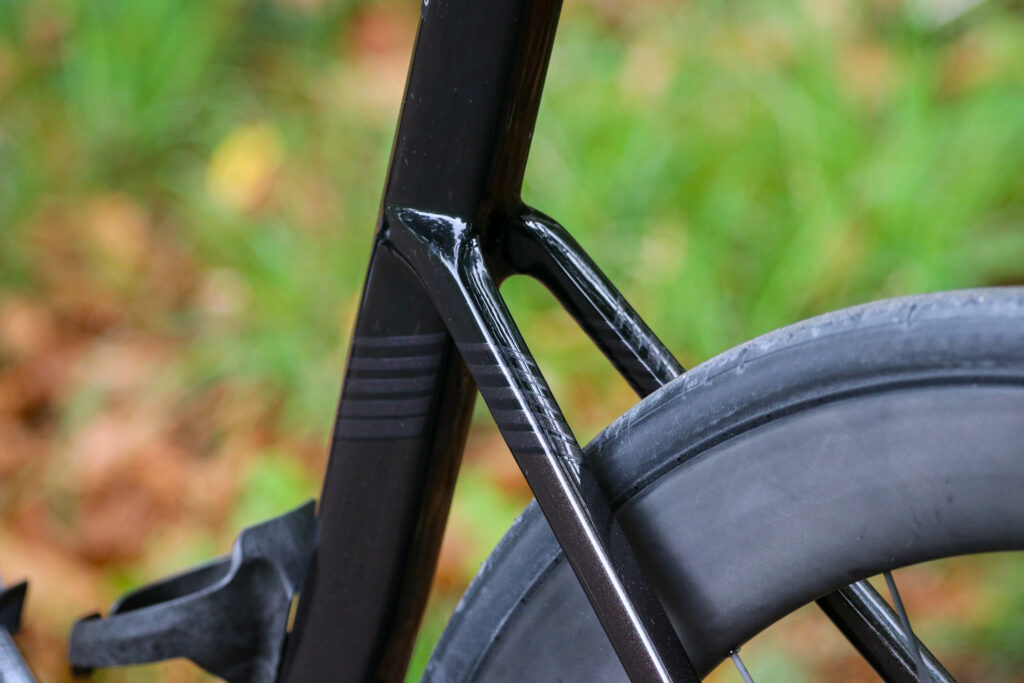
For this latest Propel, Giant hasn’t made massive changes to the design over its predecessor, but has refined key areas including the head tube, fork, down tube and seatstays, while also focusing on the aero performance of the bike as a whole, including the integrated cockpit and Cadex Aero tyres.
For the top spec Advanced SL model, that also includes the new Cadex Max 50 wheels for which Giant claims an 18.4W saving over the previous generation.
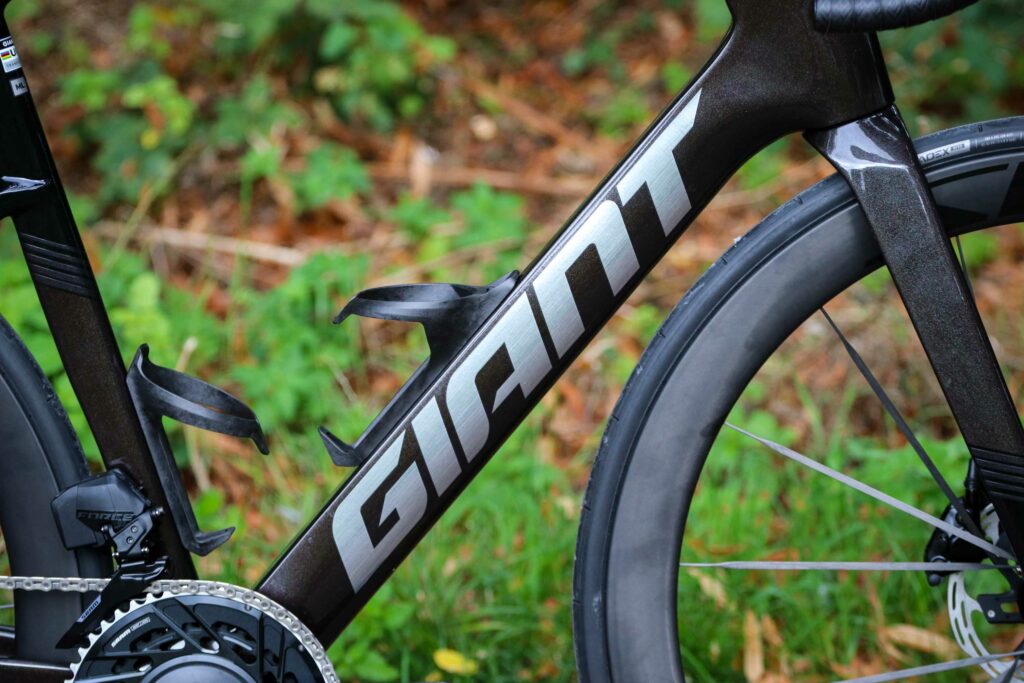
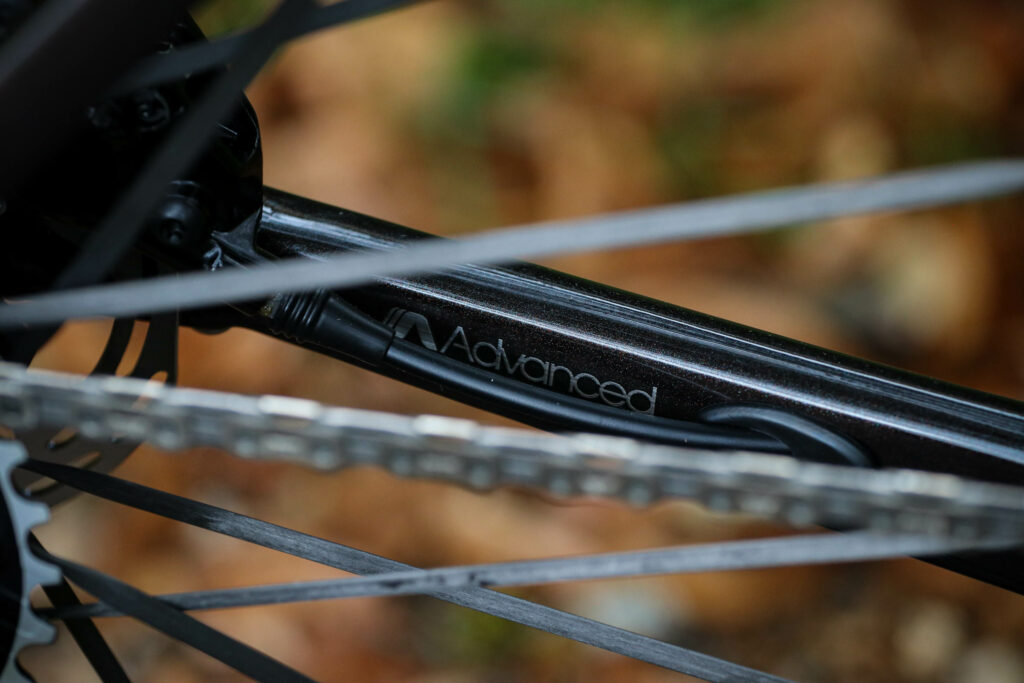
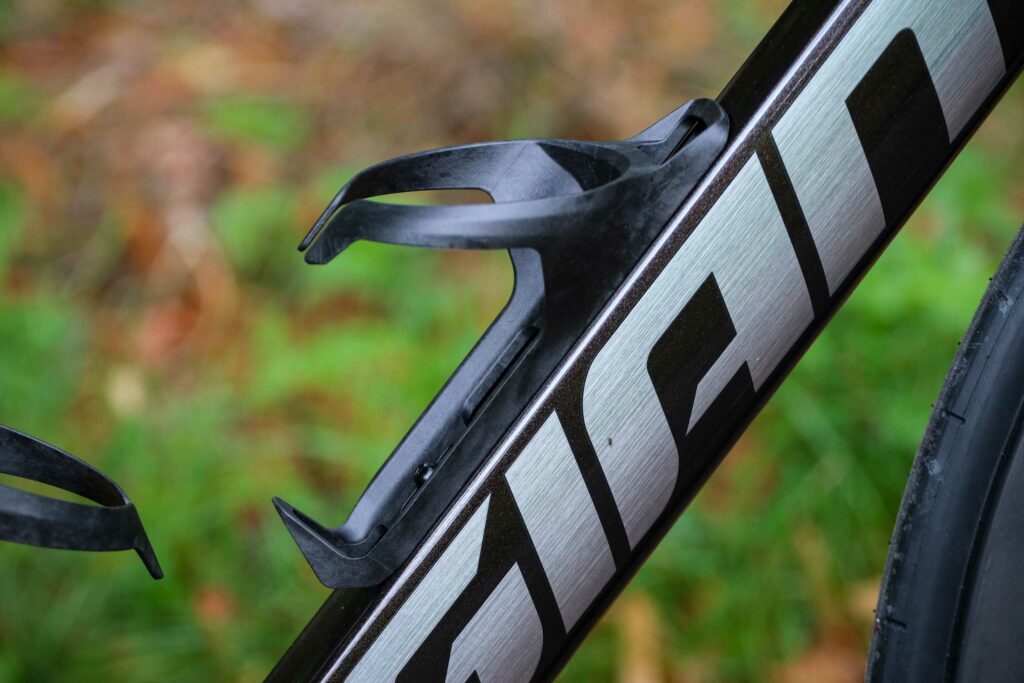
Like previous versions, the Propel runs any hoses and cables completely internally for a clean, smooth look, and the aero treatment even goes as far as the included bottle cages. They’ve kept the design pretty traditional though in terms of aesthetics, unlike more radical looking options like Felt’s new Nexar.
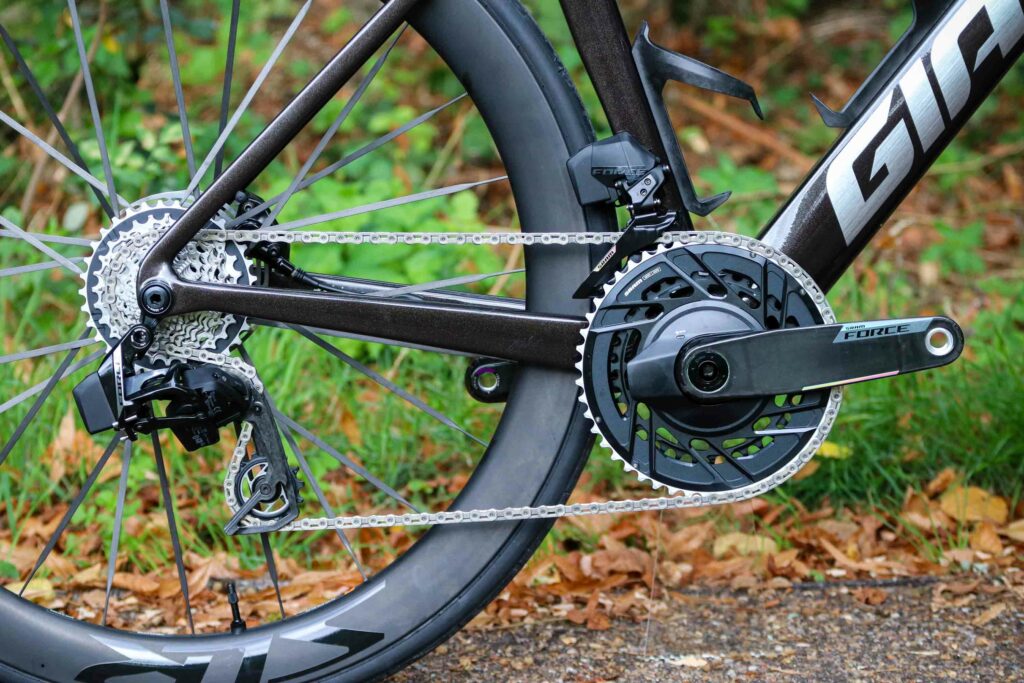
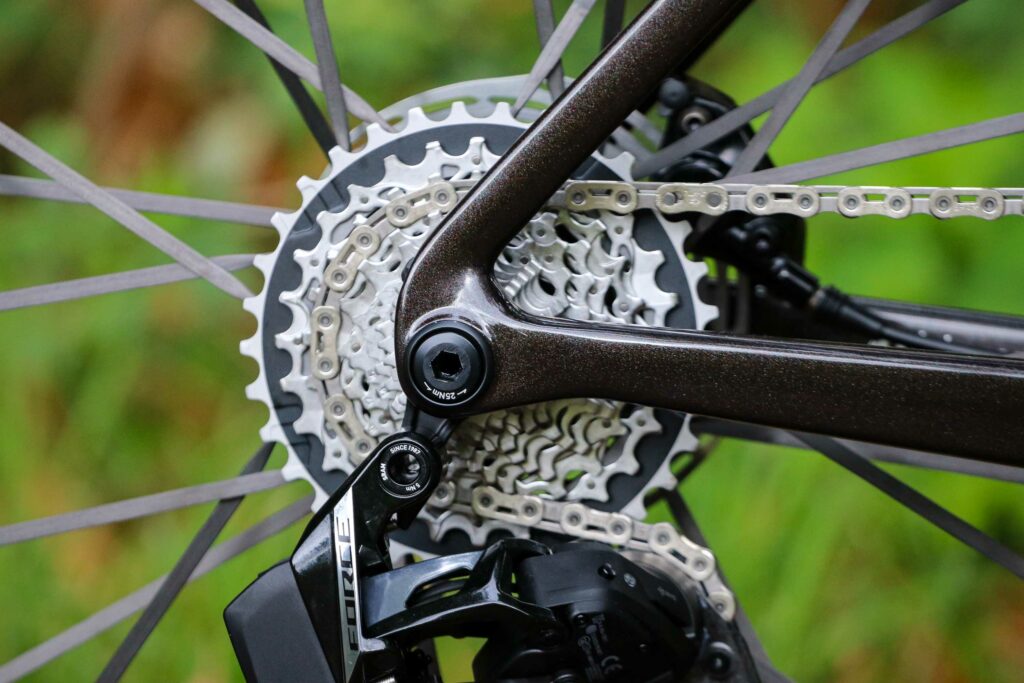
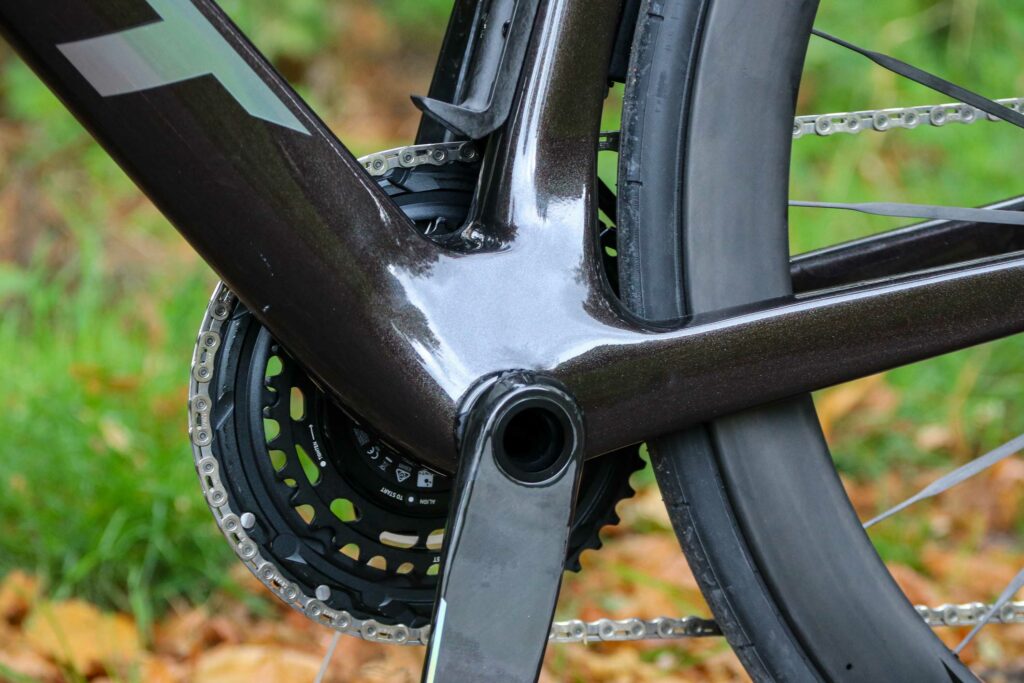
In terms of hardware, the Propel runs a pressfit bottom bracket and comes with a universal derailleur hangar (UDH).
With the trend towards ever wider tyres on road bikes, this latest Propel has also become a little more accommodating in the rubber stakes. It’ll now take up to 32mm wide tyres, which is a bonus if you want to eke out as much comfort as possible. It’s not as wide as some, but still plenty for an aero race bike in my opinion.
Overall, the build quality looks to be to Giant’s usual standard. Obviously, it’s difficult to tell, but shining a torch into the seat tube showed a smooth, clean finish to the inside of the frame.
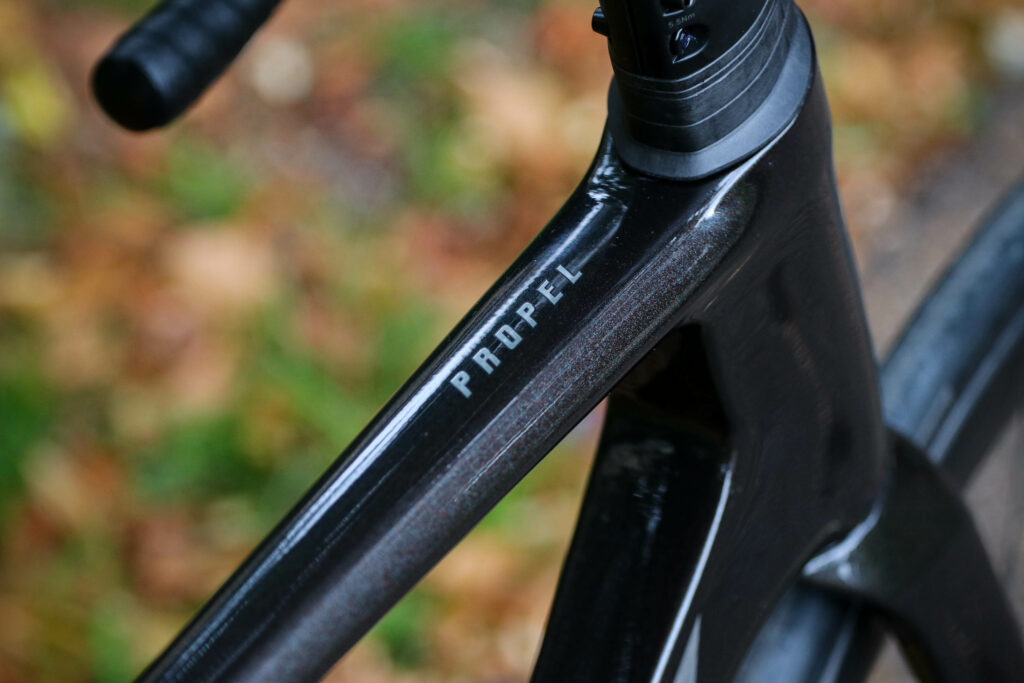
The paint colour is called Obsidian Pulse. This looks black most of the time, but when the sun catches it, it becomes a very dark purple with a metallic flake that looks really impressive.
In terms of sizing and geometry, things are pretty much identical to the previous version, which is great news as Mat got on very well with that when we last reviewed a Propel back in 2023.
This M/L model has a top tube length of 565mm which paired with a 165mm head tube sitting at 73 degrees gives stack and reach measurements of 565mm and 392mm respectively. All very typical of a bike of this size.
The seat angle sits at 73 degrees also, and the wheelbase is a nimble 990mm, helped by the use of some short chainstays at 405mm. Giant has managed to maintain plenty of heel clearance though even while allowing for those wider tyres.
The standover height is 808mm and the fork rake is a traditional 45mm.
Giant Propel Advanced Pro 0-AXS: Finishing kit
In this Advanced Pro range, you’ll find four bikes, starting off with the Shimano 105 Di2 and power meter equipped Pro 1-Di2 for £4,599, followed by the Ultegra Di2 version, which costs £5,799.
Above those you’ll find this 0-AXS, which has a SRAM Force AXS E1 groupset with power meter for £5,999, and the Pro-DA with a Dura Ace group, which tops the bill for £6,479.
All models get the same ‘wheel system’ and an integrated cockpit.
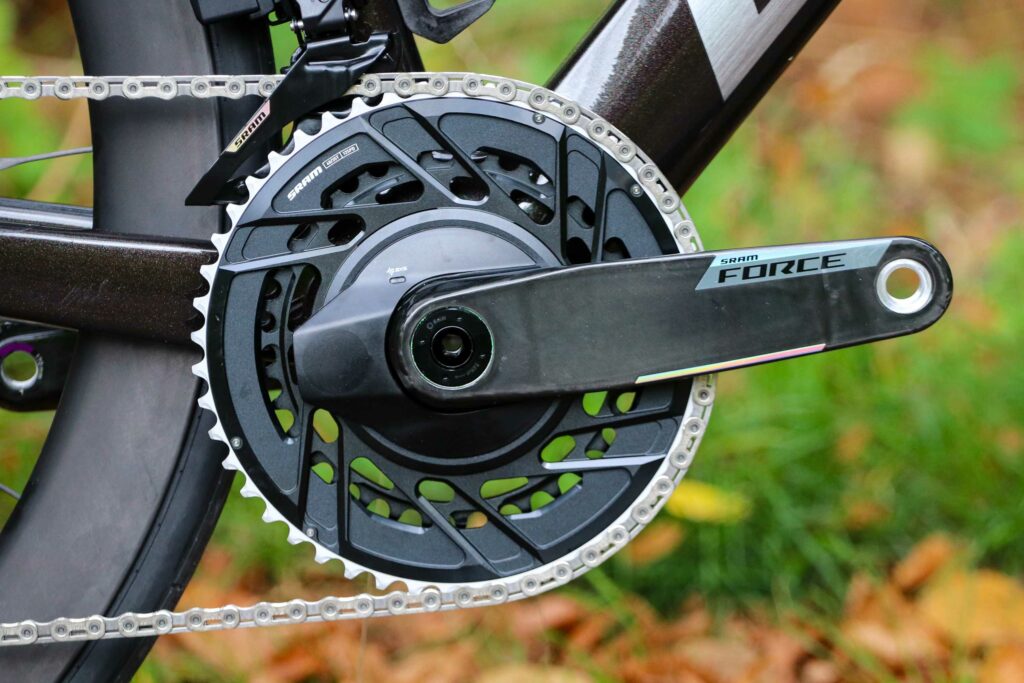
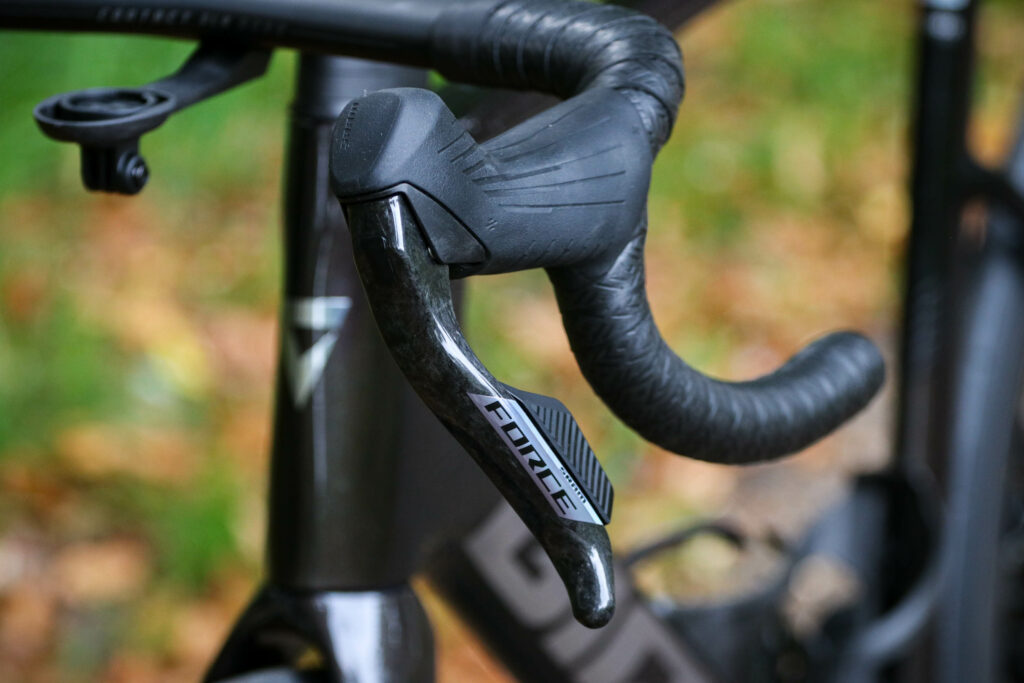
The Force AXS groupset is a modern classic, offering 95% of the performance of RED but without the price tag when it comes to replacing component parts.
The 48/35T chainset used here gives all the spread of gears I needed for a bike as quick as this for all kinds of routes. The 10-33T 12-speed cassette gave plenty of gear to push against when descending at high speeds, offsetting the smaller chainrings compared to Shimano’s offerings, while the 33T sprocket bailed me out a few times on steep, punchy climbs.
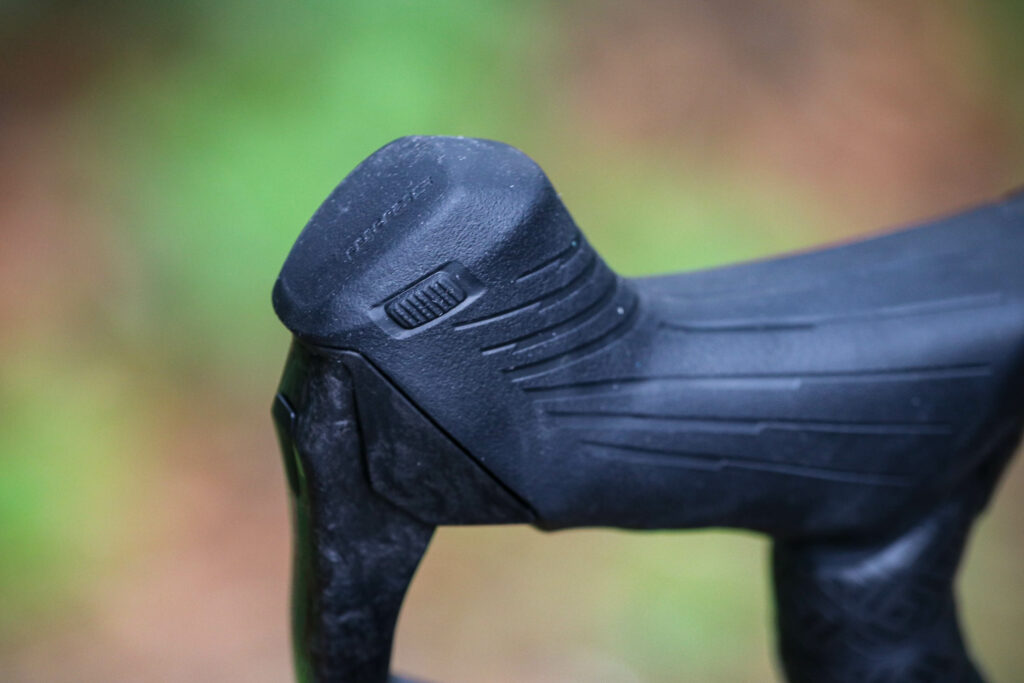
The shifting is great: very fast and precise and I’m a big fan of the single button operation on each lever. Being able to switch batteries between mechs can also be a game changer if you find yourself out for a ride and low on battery power. That’s something you can’t do with Di2 due to its single battery, wired configuration.
One thing that always blows me away when I ride Force is just how much braking power there is on offer. A reconfiguration of the shifter/brake unit internals means that you can stop from high speed with just two fingers of pressure without affecting modulation. It’s certainly got me out of some scrapes over the year or so since it was released.
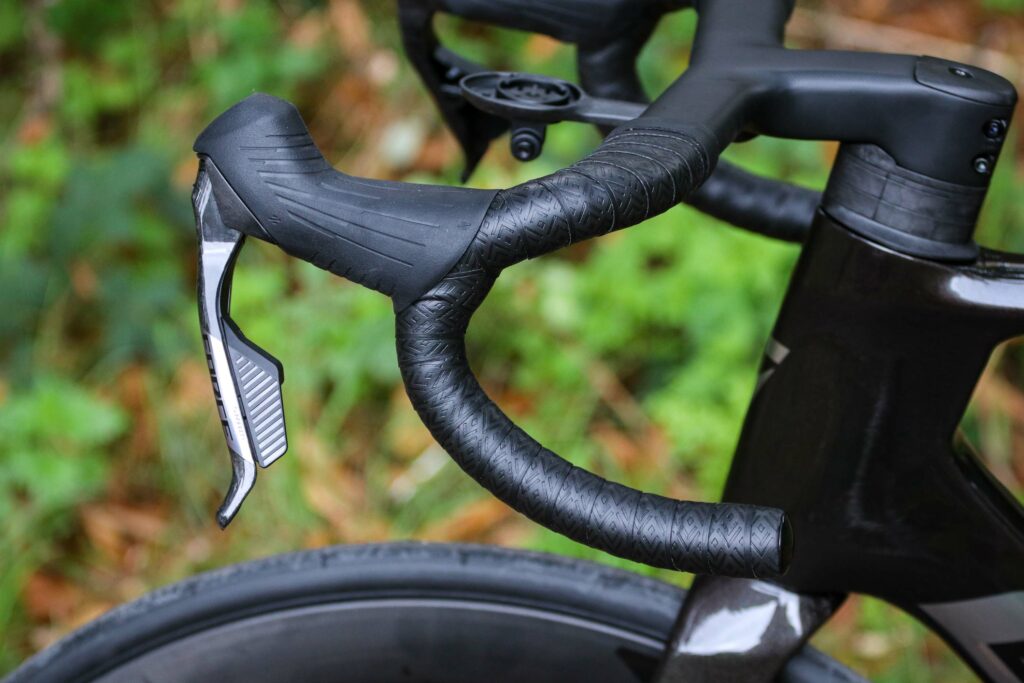
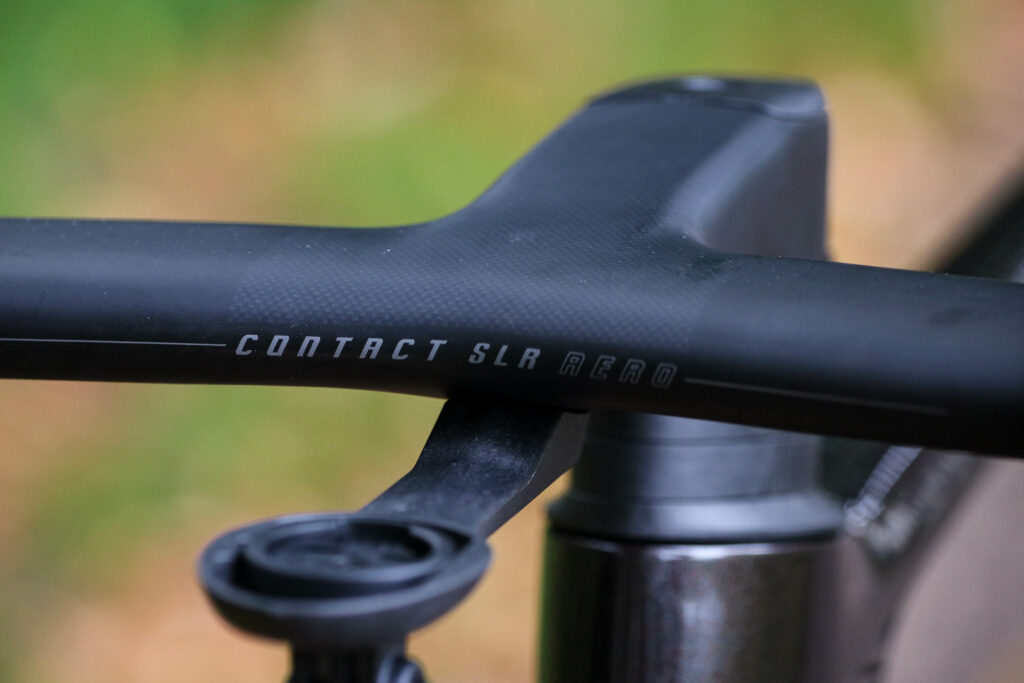
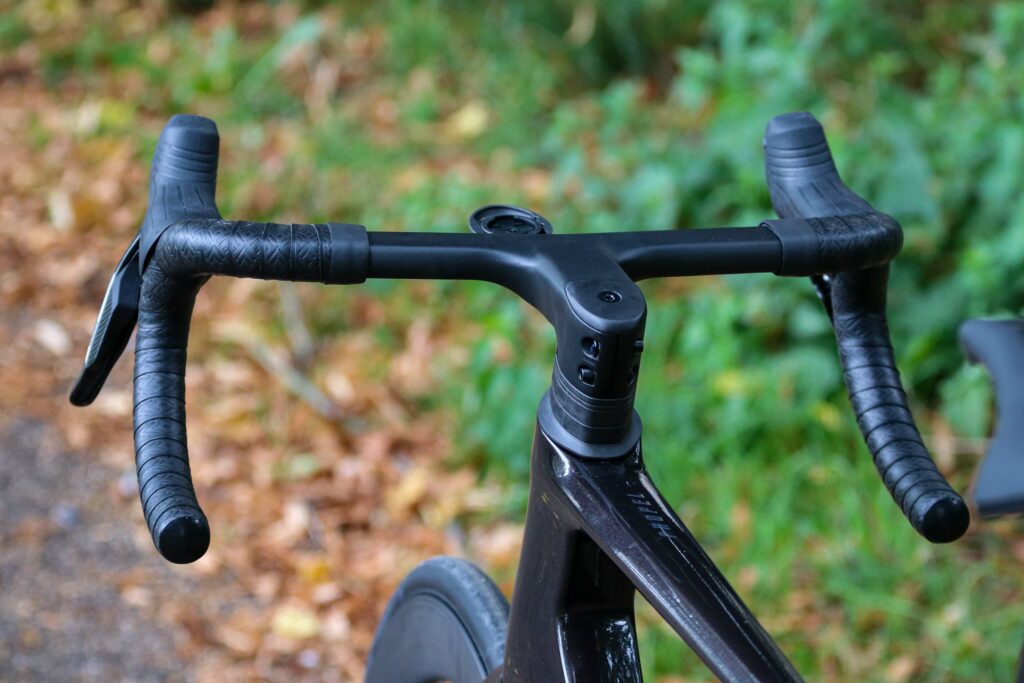
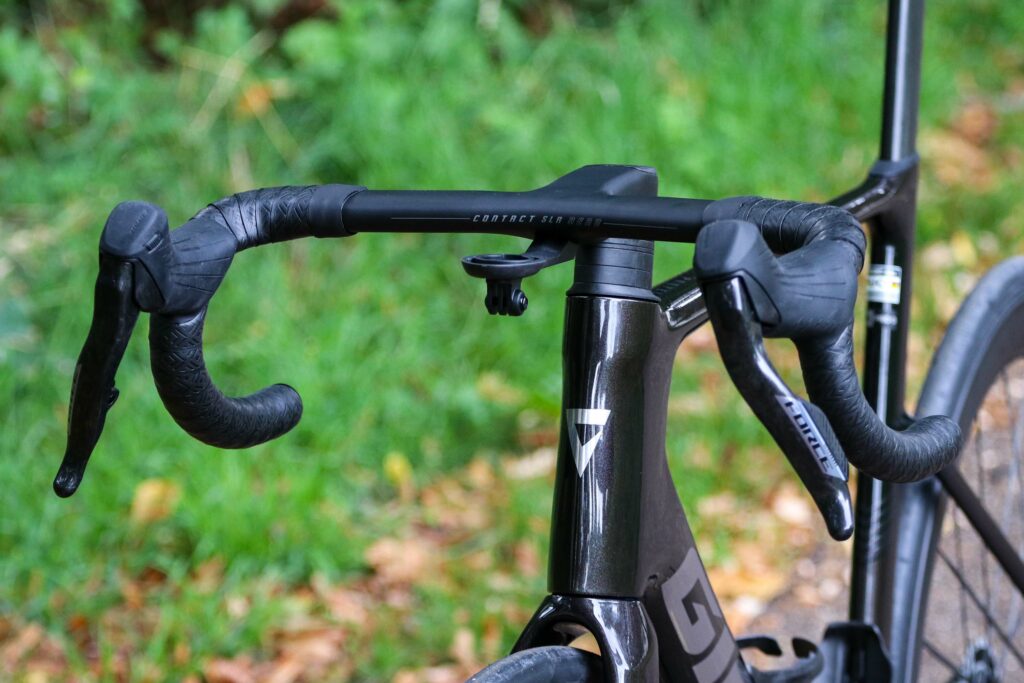
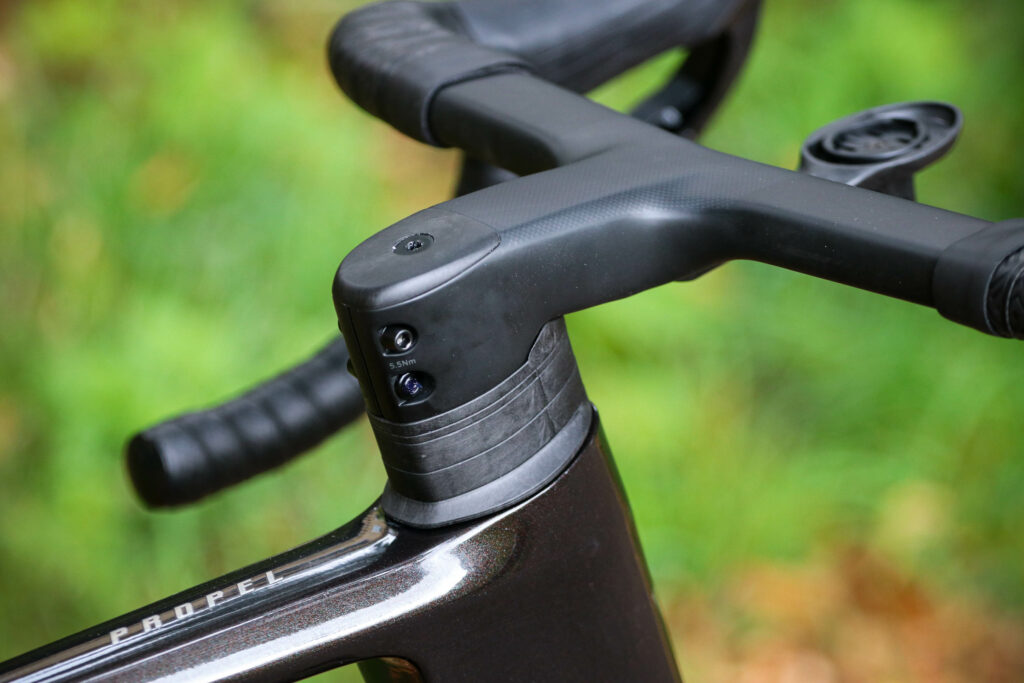
Giant’s Contact SLR 0 Aero cockpit is a full one-piece design constructed from carbon fibre, and it is a very comfortable handlebar to use. The flat top of the bar gives an extra, comfortable hand position while the positions in the drops and on the hoods feel very natural.
We’ve seen handlebars get narrower due to the pros using them and while I’m not a fan of going too narrow, as I think it can make the steering too quick and twitchy for amateur level riders, I did think that Giant has specced sensibly on the Propel.
This M/L bike comes with a 370mm bar centre-to-centre at the hoods, which I found to be fine. I have wide shoulders, so riding something like a 350mm bar – which I’ve found on a lot of aero bikes of this size – can make me feel a bit cramped.
Giant has designed a bit of a flare into the bar though, so at the drops they measure 400mm centre-to-centre, giving a bit of extra room to get air in your lungs when you are riding flat out – plus it takes the edge off the steering speed when you are descending quickly.
The only thing I had an issue with was the Stratus Lite 2.0 bar tape. It’s not very tacky on the rear and it took just two rides for it to start moving where my palms had been positioned on it. I rewound it and taped it up, but it didn’t take too long for it to shift again.
It’s an easy fix, but if I’d just blown nearly six grand on a bike and the tape started moving after a couple of days, I wouldn’t be too impressed.
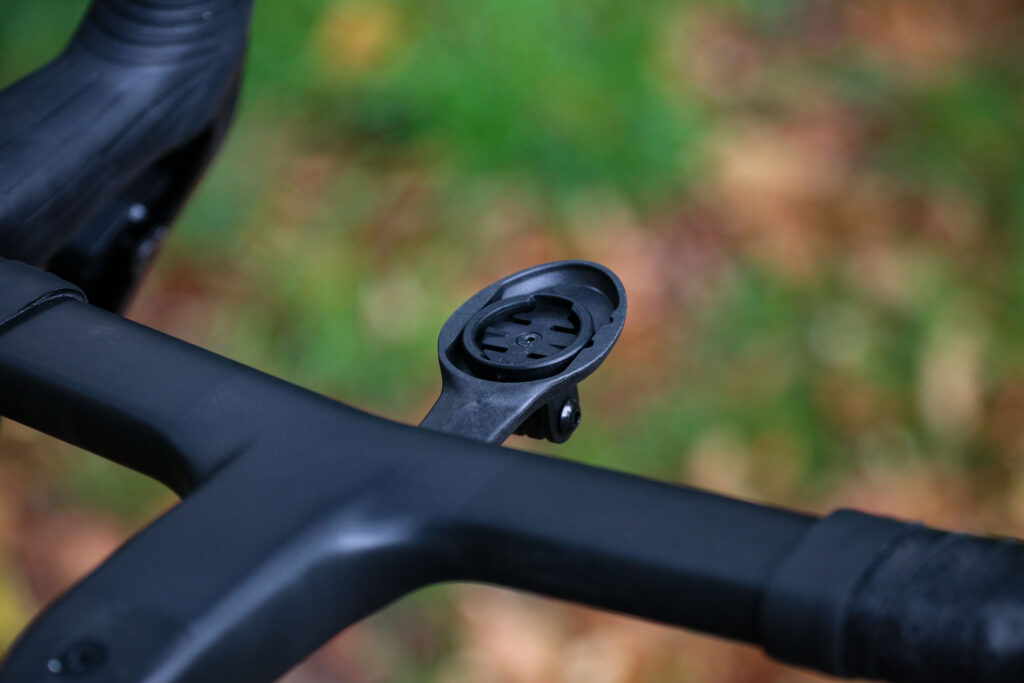
Should you wish to adjust the handlebar height, the Propel uses spacers which separate into two halves. This allows you to remove them or add them back in without having to remove the brake hoses from the levers. The bar also comes with a computer mount included.
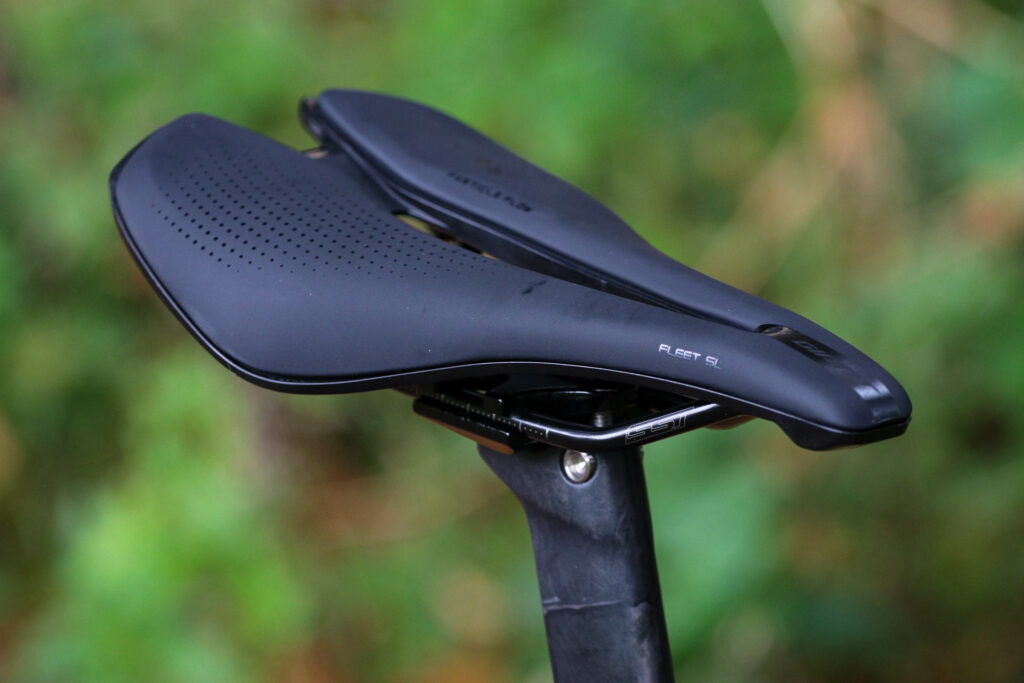
Moving back, you’ll find an aero carbon seatpost, which is simple to adjust and fits perfectly into the frame with no slippage, plus one of Giant’s own saddles, the Fleet SL.
I found it comfortable overall. I liked its short-nosed shape and minimal padding, and it has a central cut-out to reduce pressure.
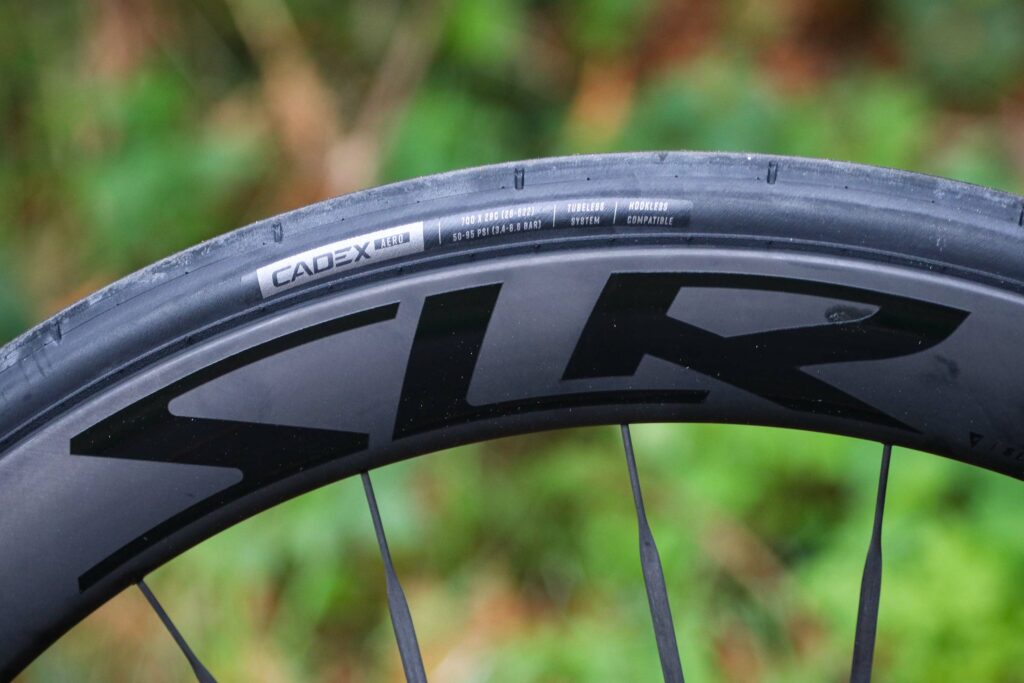
For this latest range of Propels, Giant has designed the tyres and wheels to work as an aero package. To be precise, it calls the setup here the SLR 0 50 Carbon WheelSystem, describing it as the top lightweight aero wheel in its lineup.
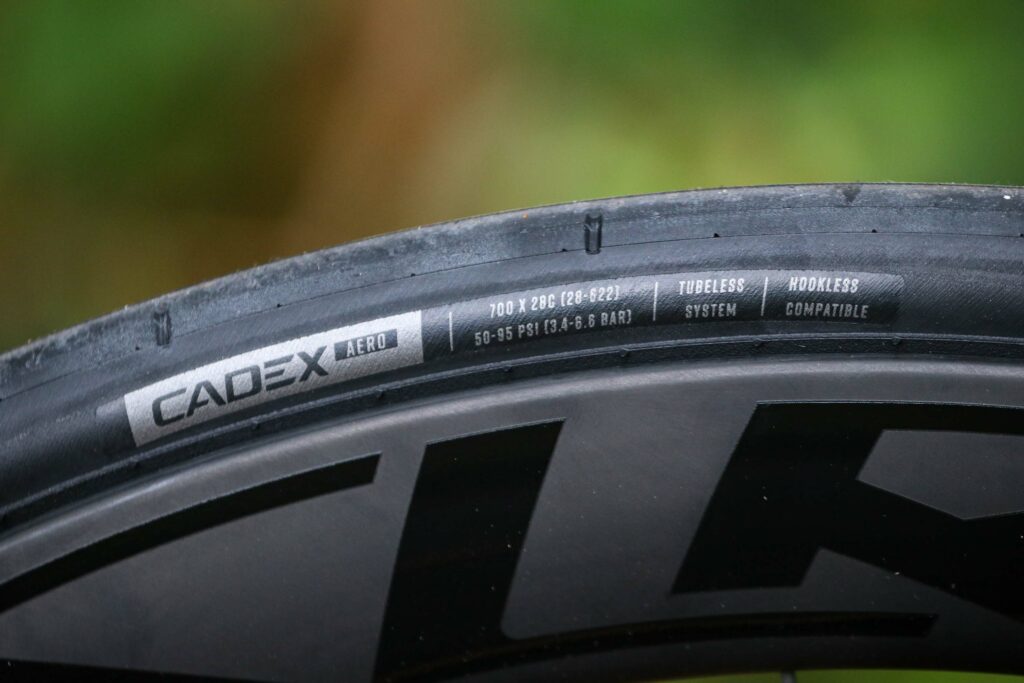
The wheels use a 50mm deep carbon fibre rim which has a 22.4mm inner width to work better with the latest wide tyres. The rims are hookless, which may put some people off in terms of how they work, but for me I don’t have an issue. The only thing I don’t like is the cap on tyre pressures at around 75psi – I’ll explain when I get on to the tyre’s performance in a minute.
Giant has included a reinforced rim bead which it says integrates more cleanly with the tyre sidewall for better airflow and greater support when cornering at speed.
Weighing a claimed 1,410g, the wheels are a reasonable weight against others on the market and the aero bladed carbon spokes not only look the part, they also add to the ride quality by a tiny amount.
A 40-tooth ratchet freehub gives instant drive as soon as you apply some pressure to the pedals, although the nature of its design does mean that freewheeling emits a high intensity buzz that makes it hard to hear what those next to you are saying.
Laterally, I found them to be very stiff and light enough to give a boost when climbing and when sprinting too. They were reliable throughout the month of testing, and their rim profile design meant that they weren’t susceptible to crosswinds.
The tyres, from Giant’s in-house brand Cadex, are called the Aero. They are 28mm wide and come set up tubeless, which is a bonus.
In the past I’ve been critical of Cadex’s tyres, and these haven’t won me over either. I’ve always found them to be a little bit on the dead side and these were no different. They lack the feedback and suppleness of something like Continental’s GP 5000 or Schwalbe’s Pro One to name a few, and I think the Propel suffers because of it.
I like to run my tyre pressures higher than what science says is the most efficient, and the reason I do that is because I want to feel what every part of the bike is doing beneath me. I’ll take that involvement over dropping a couple of watts here and there thanks to not having a sponsor or directeur sportif to keep happy.
At the 75PSI max that the hookless rims allowed, these tyres offer no feeling whatsoever – a vagueness so pronounced that I really didn’t enjoy riding the Propel. Inflating the tyres by another 15PSI saw the ride improve – not so much from the tyre itself, but at least the firmer contact allowed me to get some feedback from the frame.
Thankfully, I had a pair of Conti’s GP 5000 S TR tyres in for review and swapping the Cadex out for those transformed the ride.
The Cadex offered decent levels of grip, and the suppleness was okay, but if you buy a Propel, change the tyres as soon as you can warrant it and you’ll end up with a much better bike as a consequence.
Giant Propel Advanced 0-AXS: Conclusion
Overall, the Propel Advanced 0-AXS is a very capable bike that is quick, easy to ride and way more usable and comfortable than aero bikes of the past. If I’d laid out my own cash on this bike, I would be very happy and content, with a few minor changes.
It does have some tough competition though, and as I’ve ridden many of them, I’d say that the Propel might not necessarily be the one I’d choose.
The biggest thorn in its side is Merida’s latest Reacto. I reviewed the 9000 model a couple of months ago and described it as probably the best aero bike on the market right now – and I’m sticking with that.
Even with better tyres on the Propel, the Reacto just takes it on ride quality, and it was slightly better on the handling front too – a little more reactive and a little more planted at speed. We’re talking by the tightest of margins here, mind, but my money would go on the Merida.
The Reacto 9000 uses Merida’s CF5 grade frame, which is the pro level offering, so similar to the Propel Advanced SL. For a like-for-like comparison, the Reacto 8000 uses the CF3, which like this Advanced Pro model is the next tier down.
The 8000 comes with an Ultegra Di2 groupset, a Vision carbon cockpit and Reynolds AR 60 DB wheels fitted with Conti GP5000 S TR tyres for £5,000.
That’s a fair chunk cheaper than the Ultegra Di2 Propel Advanced 0 at £5,799. The Propel wins on frame weight though by around 300g if that is important to you, but from a performance and efficiency point of view, I’d say that they are virtually identical.
I was very impressed with Felt’s Nexar FRD a few months ago. It was light, very efficient and great to ride. That range topper was close to ten grand, but cheaper models are available. Again, there is no Force equipped bike for a direct comparison to the Propel I’m riding here, but the Expert model is fitted with Ultegra Di2, carbon wheels and a carbon cockpit for £5,454. It lacks a power meter though.
Like Giant and Merida, Canyon offers its bikes in the same geometry but using different carbon grades to fine tune the ride, weight and stiffness. The second-tier frame is the CF SLX, which in their Aeroad line up costs £5,699 with Sram’s Force AXS, a full carbon cockpit and Zipp 404 S wheels.
I’m a big fan of the Aeroad and while the last model I reviewed was the range topping CFR, I have ridden the CF SLX model in the past and found it comfortable, stiff and efficient – very similar in fact to the Propel and I’d be hard pushed to name a winner.
Summing it all up, I’m going to say that the Propel Advanced 0 is a very good bike. It’s versatile for an aero machine, efficient, comfortable to ride (with the right tyres) and offers all the stiffness any of us will require.
It’s not the best out there in my opinion though, albeit by a very tight margin. Nevertheless, if you like the aesthetics and the price, then go for it – you won’t be disappointed.
Test Report
What does the manufacturer say about this product?:
Hang with the fast group, go for the sprint, cheat the wind on a solo ride. The new Propel Advanced Pro is now lighter, smoother and more efficient, delivering higher speeds to help you maximise every effort.
Tell us some more about the technical aspects of this product:
Advanced Composite Technology:
Giant’s High Performance Grade raw carbon material is used to produce this custom frame material in our own composite factory with a high stiffness-to-weight ratio. The front triangle of these framesets is assembled and moulded as one continuous piece in a proprietary manufacturing process called Modified Monocoque Construction.
AeroSystem Shaping Technology:
Through CFD (Computational Fluid Dynamics) and wind-tunnel data, engineers optimize each tube shape to deliver superior aerodynamic performance.
OverDrive Aero:
Found inside the head tube of the Defy, Propel and TCR ranges, the D-shaped fork steerer tube and corresponding spacers provide an extremely aerodynamic, easier to service system of internally routed brake and derailleur cables.
Tubeless System:
Fewer flat tyres. Greater traction. Less rolling resistance and a smoother, faster ride. Giant’s Tubeless System makes it easier than ever to experience all these benefits.
How does the price compare to that of similar products in the market, including ones recently tested?:
The Propel Advanced Pro lineup is similarly priced with the equivalent models from Canyon’s and Felt’s aero models, but Merida’s new Reacto offers a similar build for quite a bit less money.
List the components used to build up the bike:
Handlebar: Giant Contact SLR 0 Aero Integrated XS:380/360mm, S:380/360mm, M:400/370mm, M/L:400/370mm, L:420/390mm, XL:420/390mm
Bar tape: Stratus Lite 2.0
Stem: Giant Contact SLR 0 Aero Integrated XS:80mm, S:90mm, M:100mm, M/L:110mm, L:110mm, XL:120mm
Seatpost: Giant Vector, composite, -5/+15mm offset
Saddle: Giant Fleet SL
Shifters: SRAM Force AXS E1
Front Derailleur: SRAM Force AXS E1
Rear Derailleur: SRAM Force AXS E1
Brakes: SRAM Force E1 hydraulic, SRAM PaceLine X rotors [F]160mm, [R]140mm
Brake Levers: SRAM Force AXS E1
Cassette: SRAM Force, 12-speed, 10×33
Chain: SRAM Force E1
Crankset: SRAM Force E1 DUB, 35/48 with power meter XS:165mm, S:165mm, M:170mm, M/L:170mm, L:172.5mm, XL:172.5mm
Bottom Bracket: SRAM, press fit
Rims: Giant SLR 0 50 Carbon WheelSystem, [F]50mm, [R]50mm
Hubs: Giant Aero Hub, CenterLock [R] Giant Aero Hub, 40T ratchet driver, CenterLock 12mm thru-axle
Spokes: Aero Carbon
Tyres: CADEX Aero, tubeless, 700x28c (28mm), folding
Extras: computer mount, water bottle cages, tubeless prepared, 32mm max tire size
Tell us what the bike is for and who it’s aimed at. What do the manufacturers say about it?:
Giant says: “With a new frameset that’s now lighter and more efficient — delivering greater torsional and pedalling stiffness for precise handling and improved power transfer — the next-generation Propel Advanced Pro blends straight-ahead speed with an improved overall ride quality.
“The Vector composite seatpost and integrated cockpit offer more compliance, absorbing bumps and vibrations at both ends of the bike to help minimise fatigue so you can sustain higher speeds. The WheelSystem features 50mm deep composite rims paired with CADEX Aero tyres to reduce wind drag and rolling resistance. Even the bottle cages are designed for speed, made specifically for the frame to help optimise airflow.”
Where does this model sit in the range? Tell us briefly about the cheaper options and the more expensive options:
In the Advanced Pro line up this model sits just below the Dura Ace equipped Advanced Pro-DA, and above the Pro 0-Di2 and Pro 1 Di2.
Tell us about the build quality and finish of the frame and fork:
A very well made frame throughout, and the metallic paintjob looks amazing in the sunlight.
Tell us about the materials used in the frame and fork:
The frame uses Giant’s Advanced grade carbon fibre, while the fork uses the Advanced SL grade from the top spec Propel range.
Tell us about the geometry of the frame and fork:
The geometry is typical of a race bike with a long and low position with steep angles.
How was the bike in terms of stack and reach? How did it compare to other bikes of the same stated size?:
The stack and reach are well within range of what I’d expect on a bike of this style and size.
Was the bike comfortable to ride? Tell us how you felt about the ride quality:
Yes, overall the ride quality is good, although it benefits from some more supple tyres than the Cadex options fitted.
Did the bike feel stiff in the right places? Did any part of the bike feel too stiff or too flexible?:
The Propel has all the stiffness it needs.
Was there any toe overlap with the front wheel? If so, was it a problem?:
No.
How would you describe the steering? Was it lively, neutral or unresponsive?:
Lively.
Tell us some more about the handling. How did the bike feel overall? Did it do particular things well or badly?:
This is a race bike and therefore it gets quick handling which means it descends well at speed and changes direction positively.
Which components had the most effect (good or bad) on the bike’s performance? Would you recommend any changes?:
I get on well with SRAM’s gear ratios, liking the smaller chainring size as it suits my cadence style. I’d change the tyres for a better ride feel allowing me to go harder into the corners thanks to extra feedback.
Any issues with drivetrain durability?:
No.
Tell us some more about the drivetrain. Anything you particularly did or didn’t like? Any components which didn’t work well together?:
Force is a stunning groupset with fast shifts, great battery life and very comfortable ergonomics.
Any issues with wheel durability?:
No.
Tell us some more about the wheels. Did they work well in the conditions you encountered? Would you change the wheels? If so, what for?:
A good choice of wheels to match the bike’s performance, at a decent weight too. They showed themselves to be reliable throughout testing as well.
Tell us some more about the tyres. Did they work well in the conditions you encountered? Would you change the tyres? If so, what for?:
Decent grip and reliability, but they lacked suppleness for me which sacrificed a bit of ride quality.
Any issues with brake durability?:
No.
Tell us some more about the brakes. Did they work well in the conditions you encountered? Would you change anything? If so, why?:
Very powerful brakes with loads of modulation.
Any issues with controls durability?:
No.
Tell us some more about the controls. Any particularly good or bad components? How would the controls work for larger or smaller riders?:
A good choice of kit, except for the bar tape which kept slipping.
Did you enjoy using the product?
Yes, overall.
Would you consider buying the product? Yes.
Would you recommend the product to a friend? Yes.
Use this box to explain your overall score
I really liked my time on the Propel and found it a fast and efficient bike to ride. In isolation I can’t really falt it, but having ridden most of its closest opposition I can’t help but feel that there are some very good bikes out there which have a marginally better ride quality, and price.