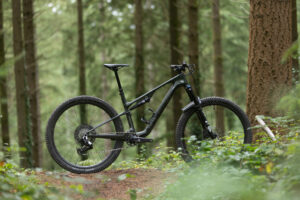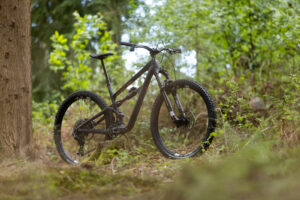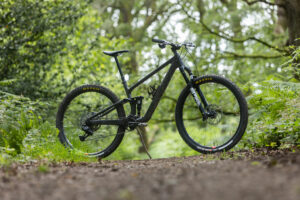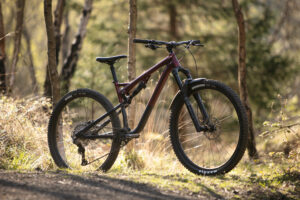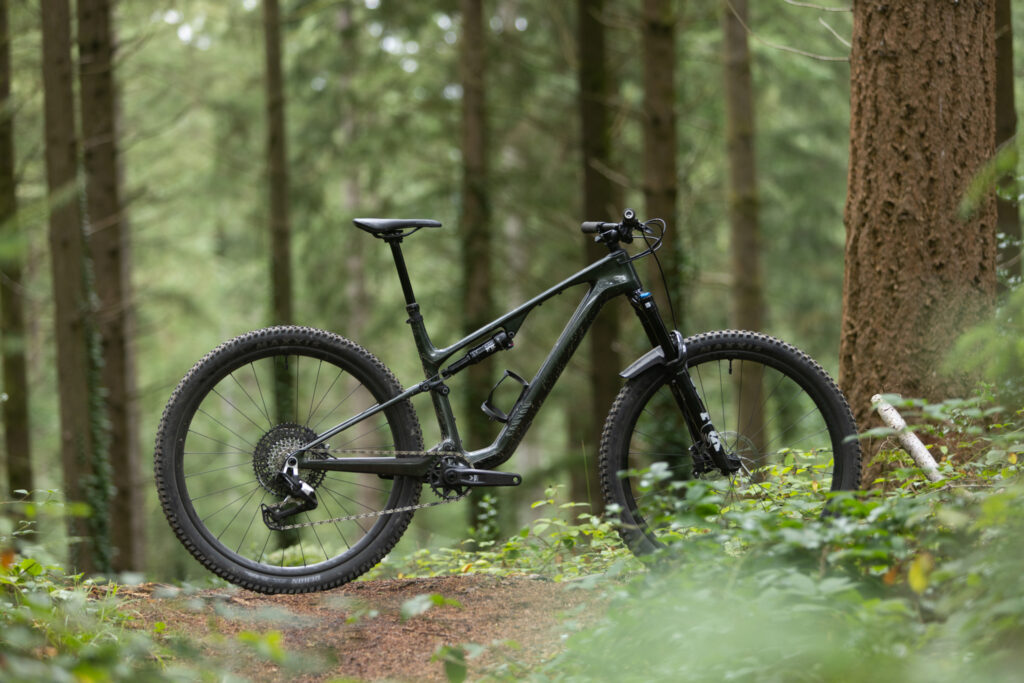

Taking strong cues from its cross-country thoroughbred, Canyon has trailified the Lux with a couple of tweaks to create the Lux Trail. The result is a bike that leans heavily toward the cross-country end of the spectrum but gains capability from a bit more suspension travel, a revised geometry, and a slightly burlier build. It’s fun, it’s efficient, and it’s keen to get a little wild, but where the rear suspension works great for cross-country jaunts, it can feel a little out of its depth when the trails get more demanding.
Canyon Lux Trail CF 7 – Technical details
With cross-country bikes getting more capable to better cope with the ever-increasing demands of modern XC courses, it’s absolutely no surprise that Canyon has taken its most recent Lux formula and beefed it up to create something a little more trail-friendly. The similarities to the Lux cross-country bike are tough to ignore, mostly because it uses an almost identical frame, including the very same rear triangle, but it gets a shock with a 5mm longer stroke to achieve 125mm of rear travel. There’s then a longer, 140mm travel fork.
The boost in fork travel brings tweaks to the bike’s geometry, compared to the Lux. So there’s a slacker 64.8-degree head tube angle and a slacker 76.1-degree seat tube. There’s then a 470mm reach and a 435mm chainstay.
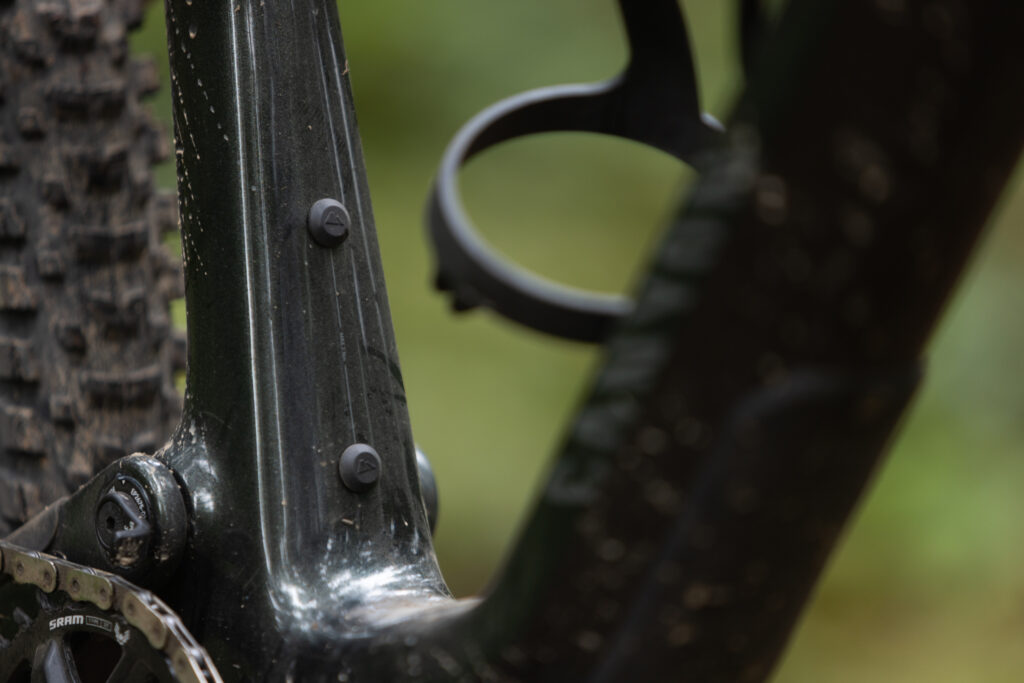
That’s all found on a carbon chassis that boasts a flex stay. This allows the bike to bin bearings that would usually make up a Horst link, or a four-bar platform, in favour of using the carbon seat stay’s flex as something of a pivot. This means that there are fewer bearings to maintain, which is no bad thing.
The flex stay is joined to a 3D-forged rocker link that rotates around bearings held in place via circlips, in a bid to boost stiffness.
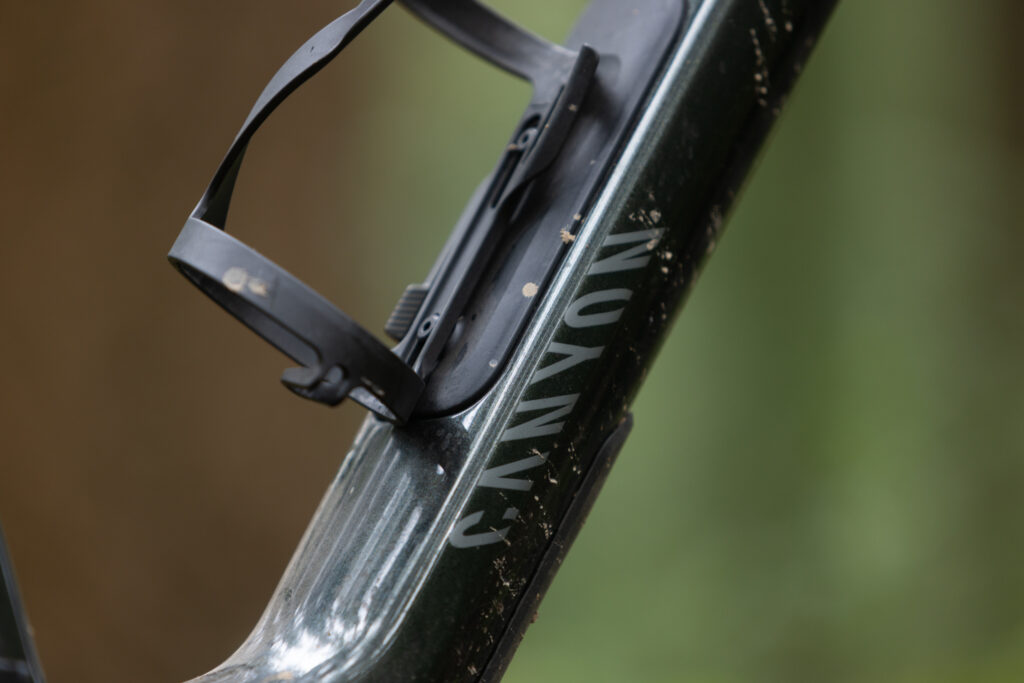
Elsewhere, the Lux Trail dons all of the mod cons, including space for two bottle cages in the front triangle, an accessory mount under the top tube, guided internal cable routing that doesn’t exit the headset, and a threaded bottom bracket. There’s also internal frame storage in the downtube, which is home to a neatly packaged multitool, and a sleeve that’ll carry a Co2 canister and an inflator, tyre levers, and I expect there’s also space for a slim inner tube.
Though one omission on the Lux Trail that’s found on the Lux is the anti-squat-adjusting Quick Chip. You get what you get with the Lux Trail.
As a mountain bike that’s derived from a cross-country bike, it rolls on 29-inch wheels, understandably.
Canyon Lux Trail CF 7 – Componentry
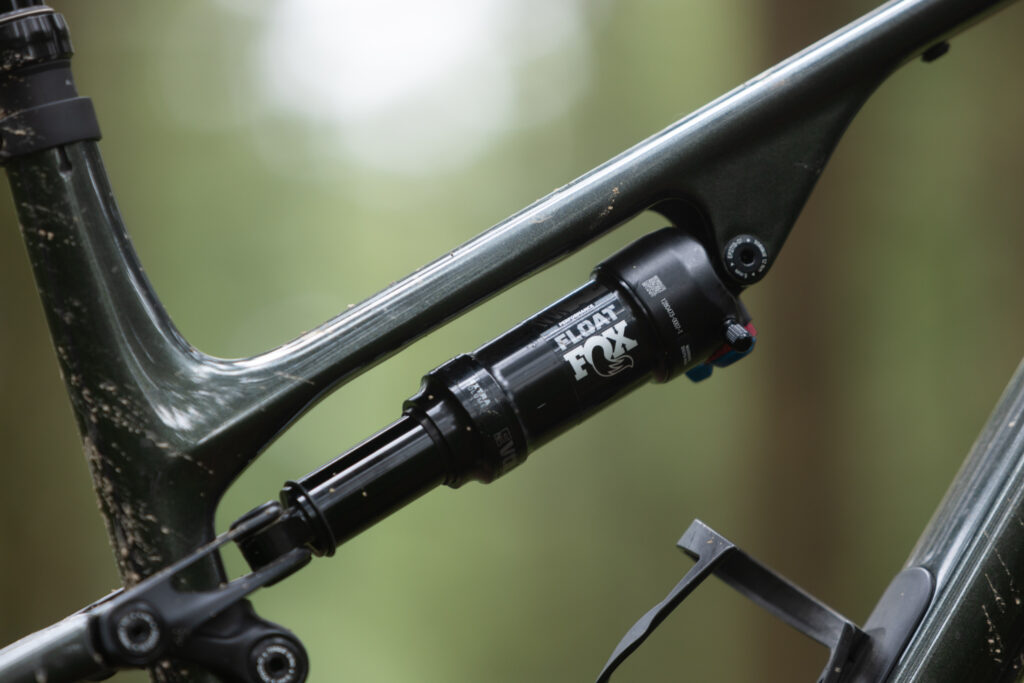
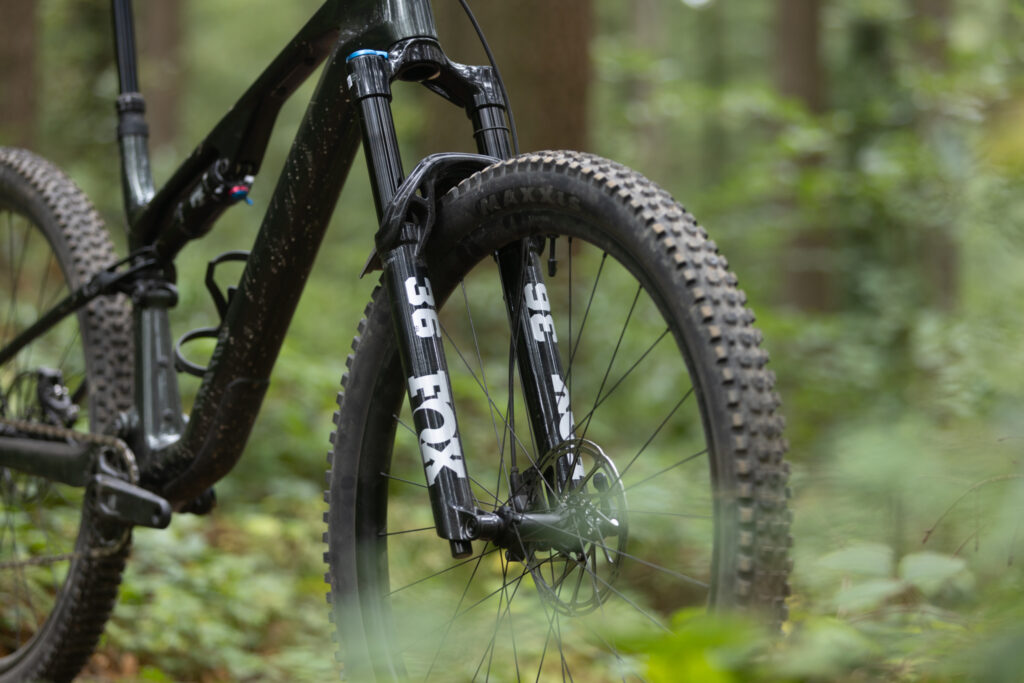
The CF 7 build of the Lux Trail is the ‘price-value’ leader, according to Canyon. For your £3,799, it’s smartly specced with one rather neat surprise. But first off, its 140mm of front suspension is controlled by a Fox 36 SL in its performance guise, while a Fox Float Performance handles the rear 125mm of squish.
The bike’s driven by SRAM’s Eagle 90 T-Type drivetrain, which is a real favourite of mine, and it’s slowed with SRAM’s Motive Bronze brakes, combined with a pair of 180mm Centerline rotors.
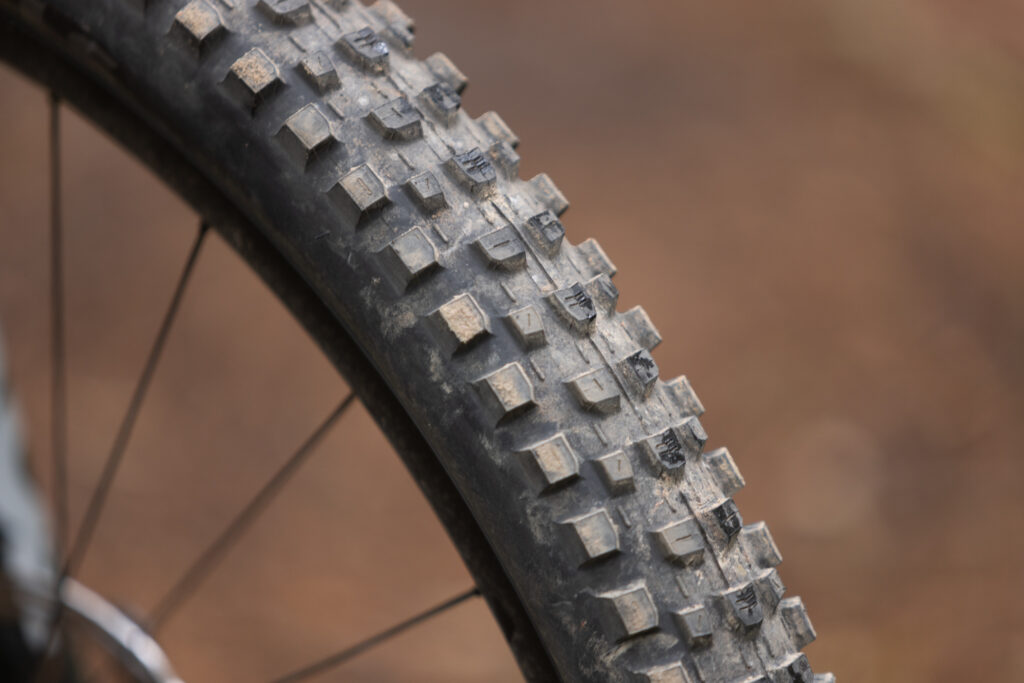
That surprise I mentioned is the Canyon XC 30 CF wheelset. These are the brand’s own carbon hoops that feature 30mm internal widths and are home to a Maxxis Dissector Gen 2 up front and a Maxxis Rekon at the rear. Both of these measure 2.4 inches in width, get EXO casings, and use Maxxis’ MaxxTerra rubber compound.
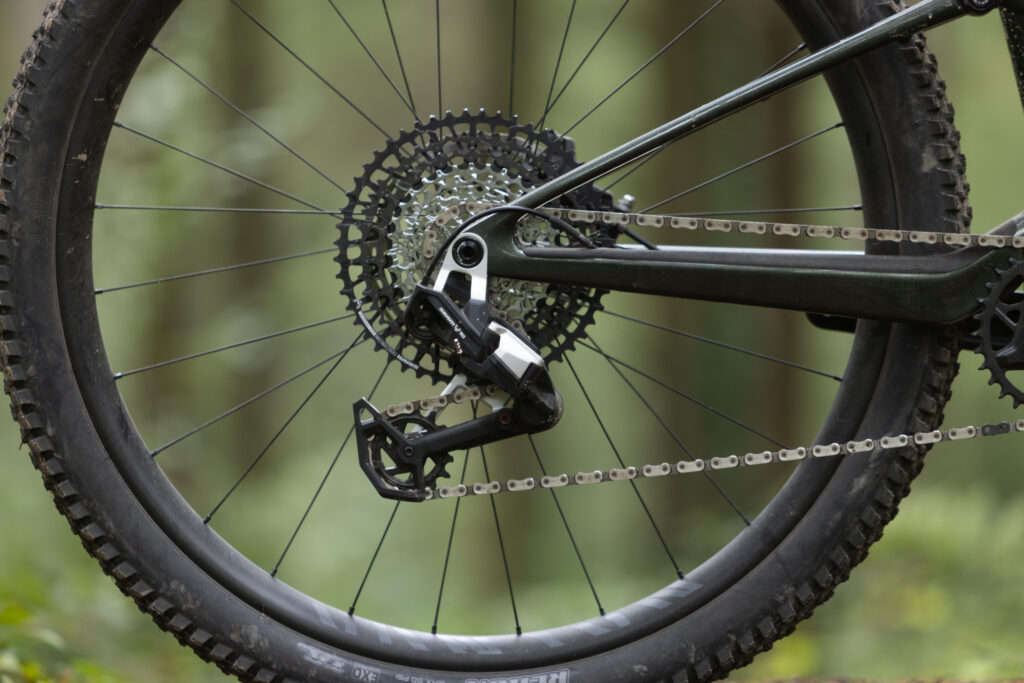
Wrapping up the build is a Canyon SP0081 dropper post with 170mm of travel on this size, with an Ergon SPS20 Neo saddle atop. Canyon handles the bar, and Ergon, again, supplies the GXR push-on grips.
Canyon Lux Trail CF 7 – Performance
The Lux Trail is a remarkably strong pedaller, but given the fact that it uses an almost identical frame as its cross-country race bike, that comes as absolutely no surprise. A huge chunk of its efficiency comes through its rather stiff flex-stay. It forces the bike to hold steady around the sag point, even under heavy load, so very little effort is wasted on excess suspension movement. Rather, every watt is transferred to the rear wheel.
As a result, it’s one fast machine both up a hill and when laying the power down mid-trail. In fact, I’ve found myself pushing harder gears than usual up climbs that I’d usually hold back on, polishing off those ascents far sooner than expected. Of course, the Rekon tyre at the rear sheds rolling resistance, boosting the Lux Trail’s overall fast and spritely feel.
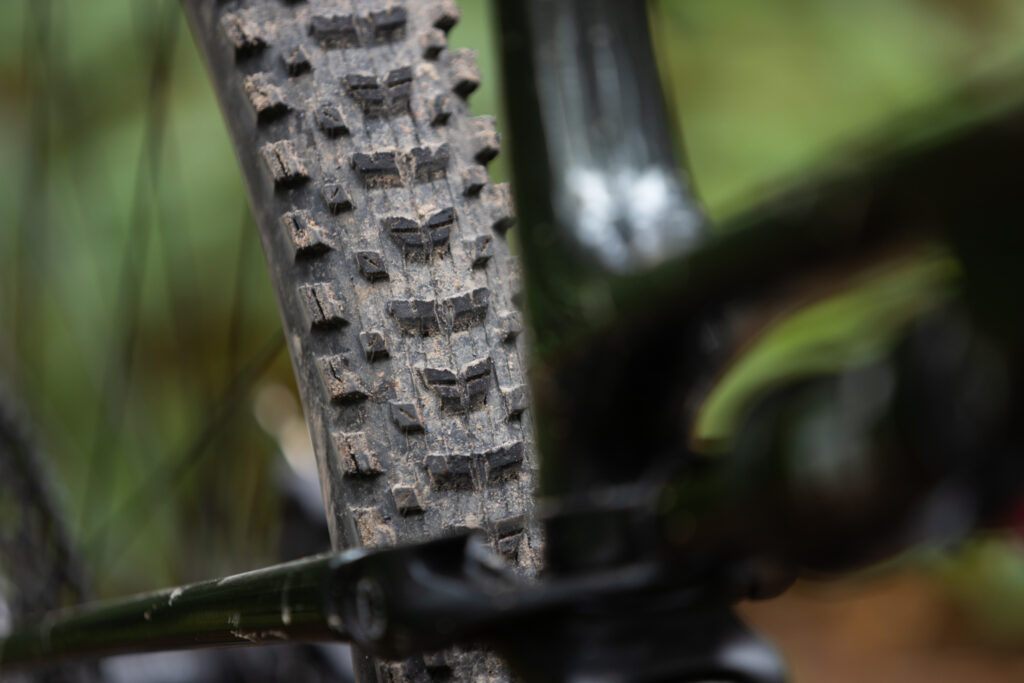
Although pedalling performance is rather awesome, there’s something of a front/rear imbalance, where the front feels supple and very grippy, while the rear is a little less forgiving and not as rich in traction.
Whether or not that’s a bad thing depends on your perspective. It’s definitely a firmer suspension kinematic that complements hard pedalling efforts. It does open up to a degree as it’s pushed past the sag point, but there’s still an air of firmness to it that gives the Lux Trail a more skittish feel as I struggled to achieve full travel. Though some may enjoy that small sense of unpredictability.
It’s certainly an interesting one here. I saw the ‘trail’ in its name and expected maybe a little too much of it. It’s not as ground-hugging and planted as others out there. Instead, it’s rich in feedback and super dynamic, but in some scenarios where it’s travelling faster over chattery terrain, it’s a little uncontrolled. Though it’s not short on support.
However, I found that a little more attention towards the suspension setup does much to smooth out the Lux Trail’s ride. While I initially set up the bike to sit at around 30% sag, releasing 20 to 30 PSI from the shock unlocked more of its travel but without really harming its pedalling character. Then, opening up the rebound by a click or two helped to manage impacts and help the shock refrain from blasting through all of its travel. While this helped, there is still some of that skittishness when pushed through faster tech.
But I reckon that Canyon’s done an exceptional job with the geometry here. It’s really well balanced, as it’s as comfortable and totally manageable when climbing as it is on the descents. It’s not quite as point-and-shoot, or as outright responsive as a steeper, more purpose-built cross-country bike; instead, it’s a little more muted and easier to handle. It’s by no means lethargic or non-responsive, but it hits an excellent balance.
That balance translates incredibly well on the descents too. Although derived from a cross-country race bike, there’s absolutely nothing stopping this bike from gathering speed and revelling in it.
The front end, with its generously slack head angle and spot-on reach measurement, rustles up plenty of support when the terrain gets a little steeper, while summoning a welcome level of stability when the speeds start ramping up. Then, equipped with some rather svelte carbon wheels and with that stiffer suspension layout, the Lux Trail delivers excellent maneuverability. Geometry-wise, there’s very little holding the bike back.
Although I understand why it’s there, I’m not the biggest fan of the Rekon on this bike. Yes, it helps the bike pedal well, but on the descents, I found myself making account for it, rather than using it to my advantage, if you know what I mean. Unlike the front end of the Lux Trail, the Rekon doesn’t provide as much traction. Over milder terrain, this is no issue, but when things get particularly uneven, it’s not as dependable on the brakes, and it can throw a surprise lapse of traction every now and then. This can be heaps of fun, but I’d rather a touch more predictability here.
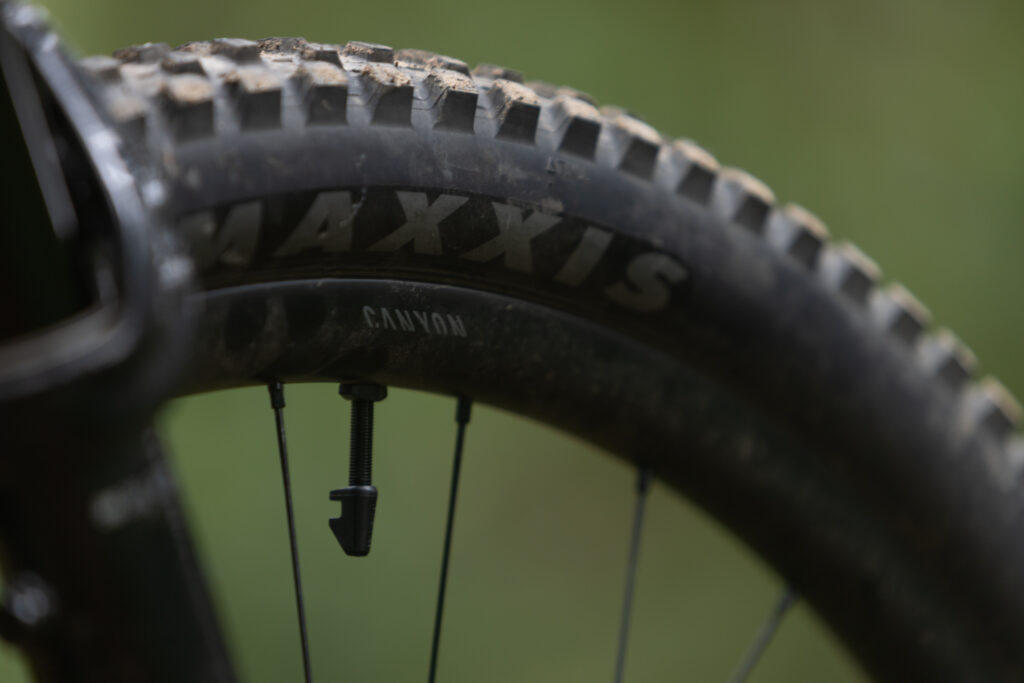
But what the Lux Trail is, is versatile. It may take a little more effort to get the rear suspension in a way that works for your riding style, but because Canyon has delivered a great geometry, a few changes in componentry can shift it pretty wildly from either end of the XC/trail spectrum. Throw on some low-profile tyres, and you’ve got a bike that’s primed for big efforts out on the hills, and even a cross-country race. Beef up that rear tyre, and you’ve got one that can take on more demanding terrain with more composure.
In its standard specification, the Lux Trail is a bike that’s ideal for exploration and plenty of miles without feeling overencumbered by excess weight and suspension travel. It’s efficient, its geometry offers plenty of headroom, and it’s a comfortable bike to ride. It’s just that rear suspension that really holds the bike back when the trails get marginally wilder.
Canyon Lux Trail CF 7 – Verdict
Although £3,799 is a good wedge of cash, the Lux Trail in its CF 7 build offers rather good value; you’re definitely getting a lot of bike for your money here. A solid competitor would be something like Propain’s Hugene, although it’s much more of a purpose-built trail bike than the Lux Trail. Propane offers its bikes in custom builds, and having built one (imaginarily) with a similar-ish build, adding a dropper post, it comes in at £3,634 with a slightly less posh specification.
For £3,000 you could pick Trek’s Top Fuel 8 Gen 4, but you’ll be going for an aluminium frame and again, a slightly less trick build. However, it’s a much better all-rounder with more solid suspension performance when pointed downhill. I would argue that its tyre spec is a little more wisely chosen, too.
But really, to get a similar specification small-travel trail bike with a carbon frame, you’ll generally be spending more than what’s on offer here. So yes, the Lux Trail CF 7 is packing exceptional value.
The Canyon Lux Trail CF 7 is a bike for those who want one bike to do an awful lot with. Although it’ll take a little extra time setting up the suspension and a change of tyre spec to wring the absolute most out of it, the geometry and easy-going pedalling are what make it extra appealing to folk who want big days out on the hills, without really being held back. And there’s not much out there that offers quite this much in terms of spec for the asking price.
Test Report
What does the manufacturer say about this product?:
Canyon says, “Light, fast, and capable. Lux Trail lets you crush climbs and kilometers with ease, then fly downhill in control.”
Tell us some more about the technical aspects of this product:
Carbon frame, flex stay.
Any further comments on quality?:
Good quality throughout, though the headset cap can look untidy if not in line.
Any further comments on performance?:
An excellent climber and a great all-rounder, but can suffer when pushed a little more on the descents.
How does the price compare to that of similar products in the market, including ones recently tested?:
You get more for not much more money compared to the Propain Hugene and Trek Top Fuel with similar builds.
List the components used to build up the bike:
Fox 36 SL Performance fork, Fox Float Performance shock, carbon Canyon wheels, SRAM Eagle 90 shifting, SRAM Motive Bronze brakes, Canyon finishing kit.
Tell us what the bike is for and who it’s aimed at. What do the manufacturers say about it?:
Canyon touts the Lux Trail as an ultralight fast trail bike.
Where does this model sit in the range? Tell us briefly about the cheaper options and the more expensive options:
The CF 6 at £2,849 is the base model, the CF 9 tops the range at £5,699.
Tell us about the build quality and finish of the frame:
Good finish, but the headset top cap can look a little messy.
Tell us about the materials used in the frame:
Carbon fibre
Tell us about the geometry of the frame:
Large has a 470mm reach, a 64.8-degree head tube angle, a 76.1-degree seat tube angle and a 435mm chainstay.
How was the bike in terms of sizing and angles? How did it compare to other bikes of the same stated size and intent?:
Given that the bike is derived from a cross-country bike, Canyon has hit an excellent mark with the Lux Trail’s geometry.
How much suspension travel does the fork have?:
140mm
How much suspension travel does the rear end have?:
125mm
Was the bike comfortable to ride? Tell us how you felt about the ride quality:
It was comfortable but a bit firm.
Did the bike feel stiff in the right places? Did any part of the bike feel too stiff or too flexible?:
Good stiffness throughout.
How did the bike transfer power? Did it feel efficient?:
Very
How would you describe the steering? Was it lively, neutral or unresponsive?:
Neutral
Tell us some more about the handling. How did the bike feel overall? Did it do particular things well or badly?:
The rear suspension can feel a little lairy and uncontrolled but handling otherwise is great.
Which components had the most effect (good or bad) on the bike’s performance? Would you recommend any changes?:
The rear tyre lacked useable traction when pushed only a little harder. I would swap this out straight away for a Maxxis Forekaster or similar.
Any comments on sprinting?:
Good stiff platform.
Any comments on high speed descending?:
Rear suspension performance pulls on the reins.
Any comments on technical descending?:
Rear suspension performance pulls on the reins.
Any comments on cornering?:
Not too long, lightweight and firm suspension does good stuff on the corners.
Any comments on technical climbing?:
Not as sharp handling as purpose built XC bikes but still very good.
Any comments on climbing efficiency?:
Pretty awesome.
Any comments on agility?:
A great balance of agility and stability.
Any comments on fork performance?:
Great fork for the cash.
Any comments on rear suspension performance?:
A bit firm for more aggressive trail riding.
Any comments on rear suspension efficiency?:
Very efficient.
Any comments on the balance and performance of the suspension overall?:
Front is grippy and forgiving, rear is the opposite.
Any comments on wheel performance?:
Surprising to see carbon wheels at this price.
Any comments on tyre performance?:
Dissector up front is a great move, Rekon at the rear could do with looking at.
Tell us some more about the tyres. Did they work well in the conditions you encountered? Would you change the tyres? If so, why?:
Rekon at the rear isn’t the best tyre for a bike that can be ridden like this.
Did you enjoy using the product? Yes
Would you consider buying the product? No
Would you recommend the product to a friend? Yes
Use this box to explain your overall score
The Lux Trail is a great bike, but it requires some attention and maybe upgrades to get the most out of it.
About the tester
Age: 33
I usually ride: Santa Cruz Bronson
I’ve been riding for: 10-20 yearsI ride: A few times a weekI would class myself as: Experienced
I regularly do the following types of riding: Mountain bike Enduro