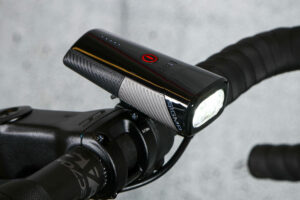
The Sigma Buster 1100 Headlight is the third most powerful in the German marque’s range and offers a good balance of output for most riding conditions in a relatively compact package. However, the OEM mount may feel a little dated for those used to Garmin types and while I’ve had no issues in the real world, IPX4 for weatherproofing and no remote feels a little behind the times.
Specification
Measuring 108mm (long) x 45mm (wide) x 38mm (high), the housing is made from a sturdy aluminium/composite mix.
Aside from protecting the light from stones and other accidental knocks, this also works as a heat sink and coupling that with a thermal cut-out means diodes, circuitry, battery and switchgear stand a sporting chance of long and productive lives. That said, it can still get a little hot to touch if you’ve been running it in the highest 800 and 1,100 modes for 50-60 minutes or more.
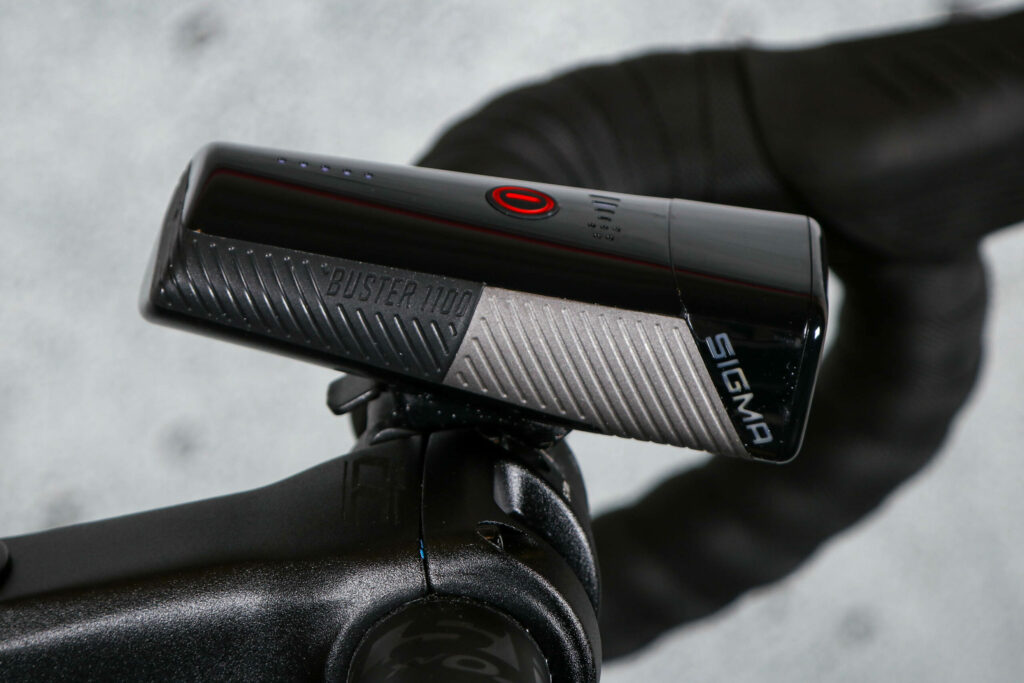
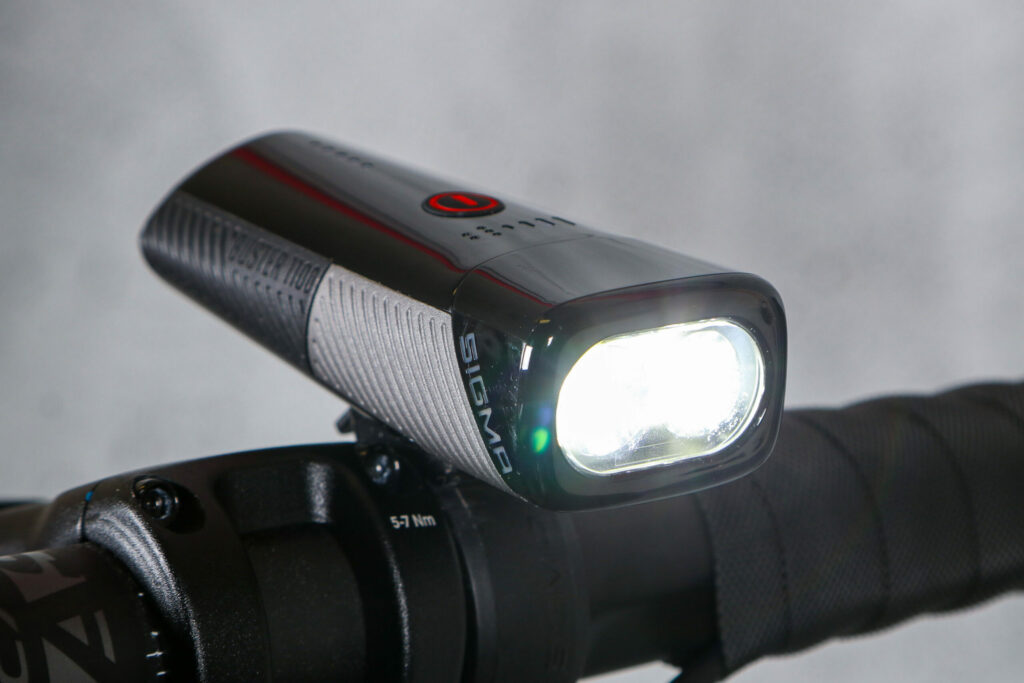
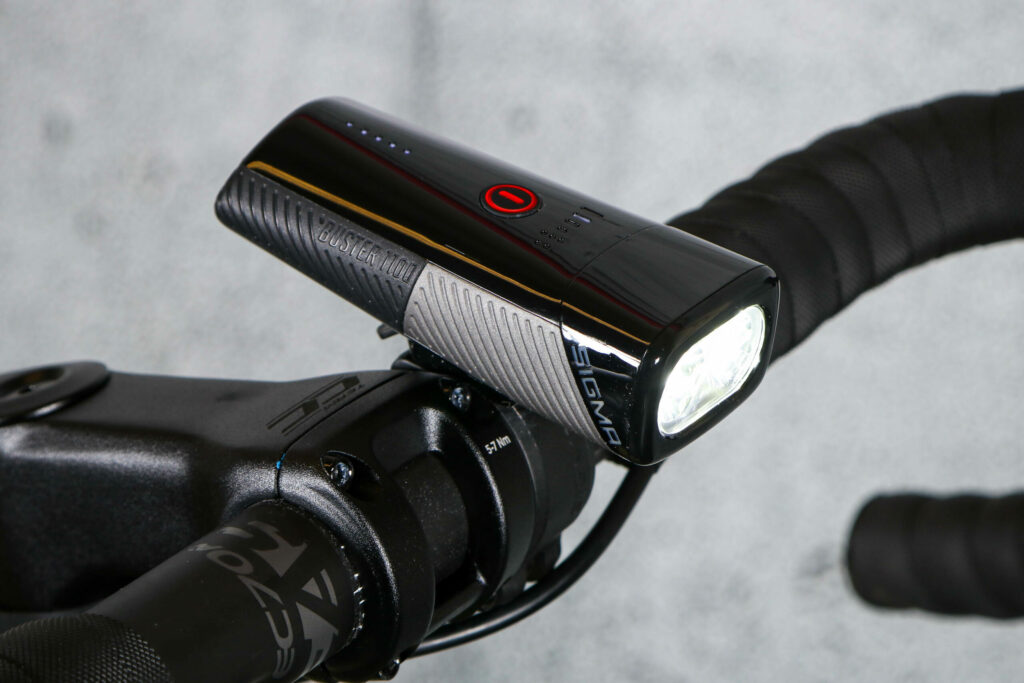
Two Osram LEDs are projected through what Sigma describes as “an innovative double lens” that combines the increasingly standard mix of spot for picking out the detail and a flood for generic overviews of conditions ahead.
The Sigma logo emblazoned on the side is not just marketing; it allows peripheral bleed and in my experience is surprisingly effective.
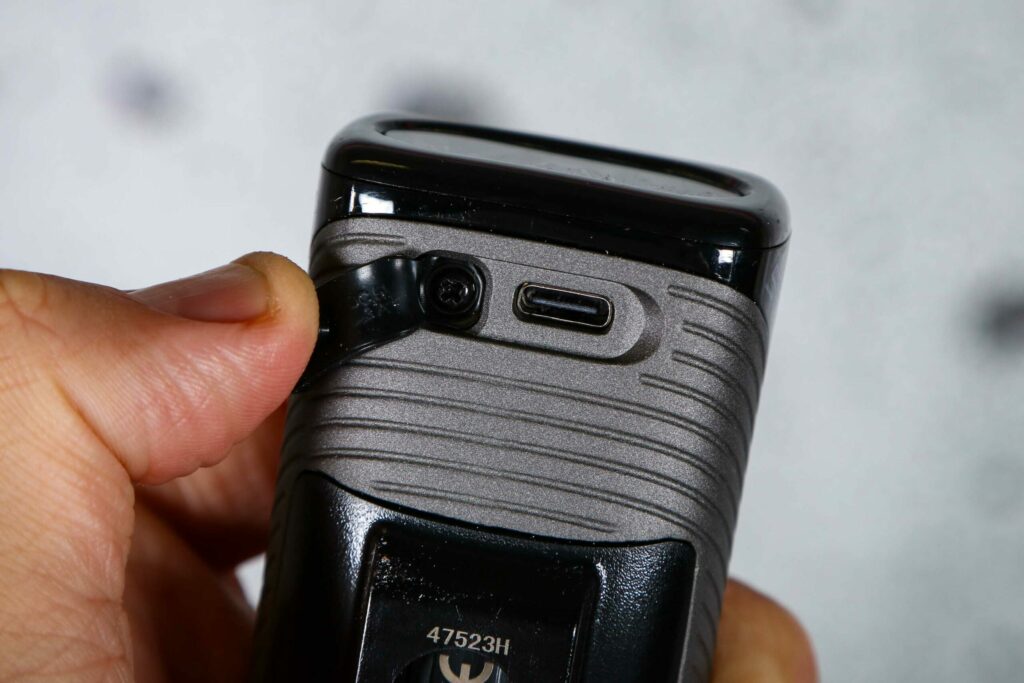
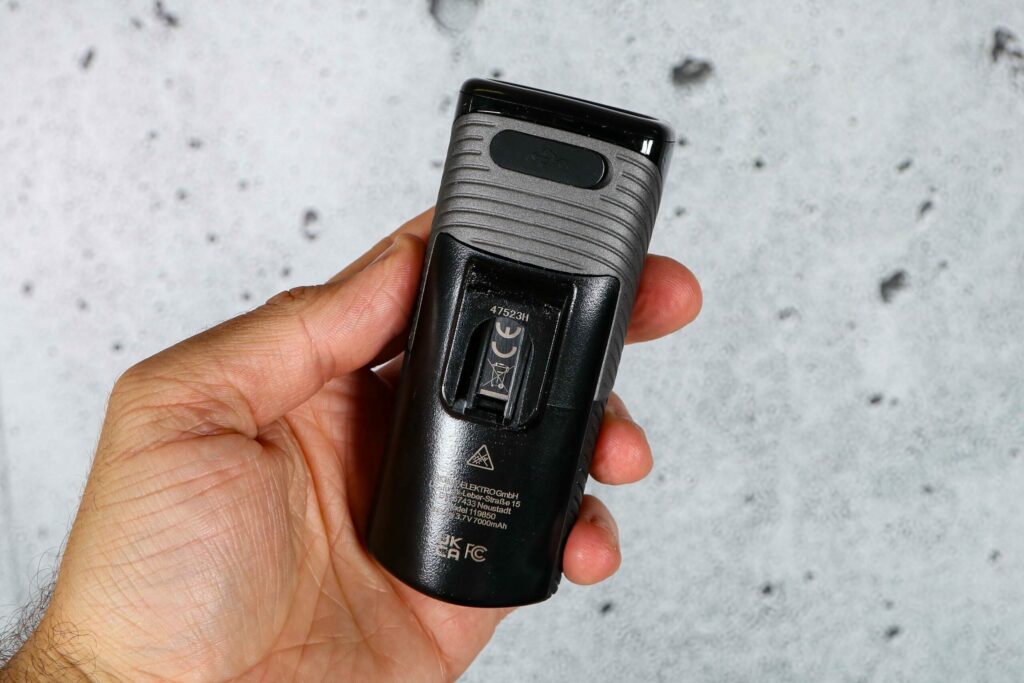
As I alluded to in my introduction, IPX6 weatherproofing is increasingly the norm, especially for anything marketed at gravel, or trail audiences. However, the charge port cover is a reassuringly snug fit, although a precautionary shot of silicone spray wouldn’t hurt.
Charging is via a USB-C cable and it will also accept a power bank, should reserves start tanking.
Modes, switch and battery life indicators
There are six modes in total – four steady and two flashing – and they offer a decent spread for most contexts.
High is 1,100 lumens, Mid is 800lm, Low is 400lm and Eco is 150lm. The flashing options comprise an 800/400lm Night flash and a 200lm Day flash.
It’s possible to program the light to run only a selection of modes – for example, the High, Medium and Low, or the Low plus a flashing option – which means you don’t have to cycle frantically through to find your desired output.
A memory mode continues this theme, but I can’t help thinking a remote, such as that employed with the HL2000, is a missed opportunity.
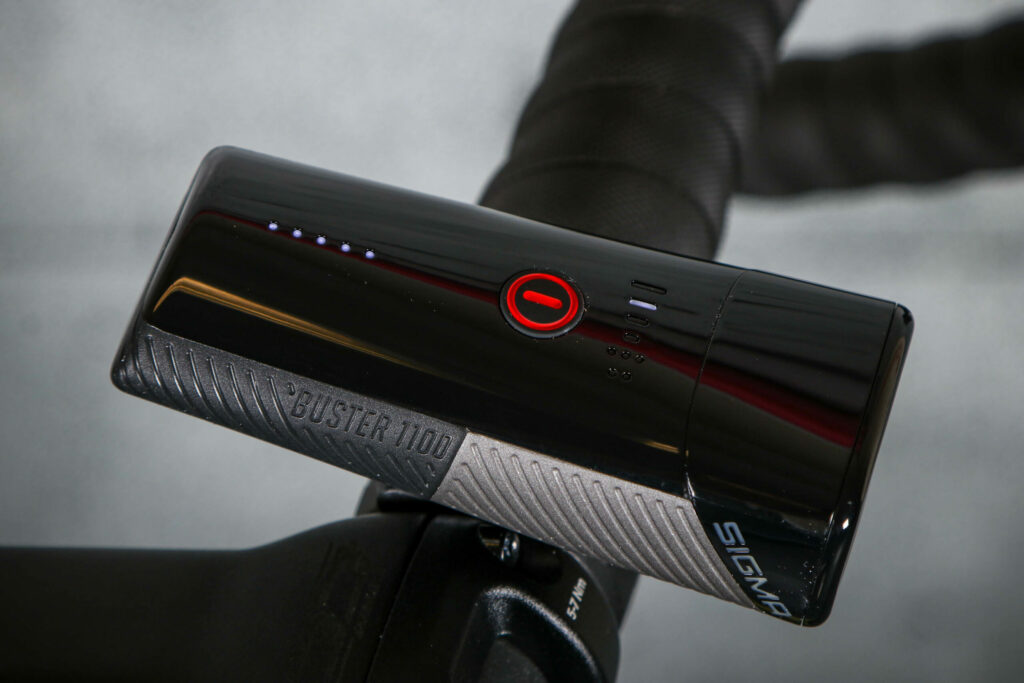
The switch is a very obvious, positive rubber affair. A double press is required to engage the light (a single press usefully indicates the charge level) and a sustained single press powers off.
You can also lock the switch with a three second press, so the light won’t engage when it’s bouncing around in a bag or pannier – a sudden, all modes flash indicates that you’ve done this.
The horizontal line above the switch denotes the mode. Running left to right, it goes from High to Day flash, so you can see at a glance what’s currently selected.
The battery life indicator comprises a row of five lights towards the base that emit a steady white light, tapering downwards until the last 19%, when they turn red, and then when you’re down to 5%, they flash. This is considerably more helpful than the traffic light type, although it took a couple of rides before I was fully assured of the accuracy (although even with today’s lithium ion cells, factors such as a sudden drop in temperature can impact run-times).
Mount
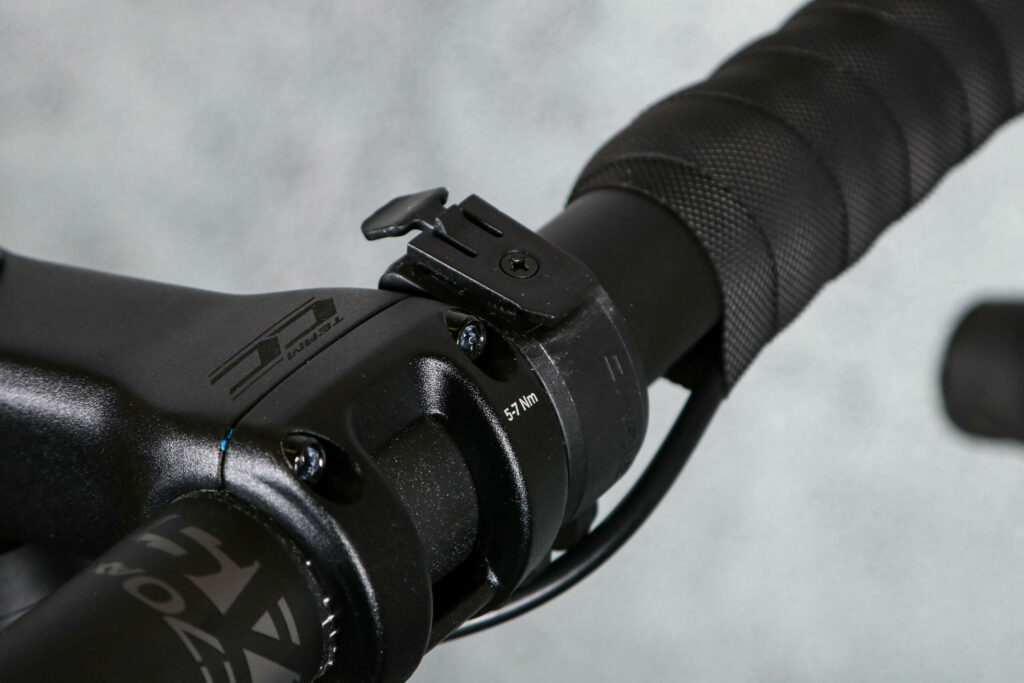
The OEM unit is a little basic and doesn’t allow for underbar mounting, but on the plus side, it’s very reliable, offering excellent, slip-free tenure to bars. The light also engages with a reassuringly solid click and it releases cleanly too.
I’ve had no problems with very old school 22.2mm and 25.4mm handlebars, through to 31.8mm courtesy of the shims and knurled screw.
Don’t click away in disgust just yet: there’s an aftermarket mount designed to work with the Sigma Short and Long Butlers, which lets you attach the Buster 1100 beneath for a sleek, uncluttered aesthetic. There’s also a helmet mount – although at 216g, the Buster 1100 is a little hefty atop a lid for my tastes.
Output
The light modes are generally good and very usable across the board. The highest 1,100lm gives enough clout for navigating unlit B roads at a steady 17mph, with a decent view of conditions and potential hazards. I’ve found Ravemen’s LR series and the 1000 in particular a little crisper, but there are certainly no issues with being seen.
The 800lm Mid setting, though on paper a little underpowered for these contexts, is quite practical when grinding up a climb or not going full pelt. Some have argued the Low’s 400lm are what’s needed for general road riding and I’d loosely agree, if we’re talking semi-rural to suburban routes.
The 150lm Eco setting is still useful – fine for town, shared use paths etc – and will sip reserves. Personally, I’ve found the 200lm Day flash a better option, but it’s nice to have the choice.
The Night flash is really effective if you want to remain conspicuous. I’ve tended to default to this around dawn, paired with 800lm and 700lm dynamos. Though bright, the tempo isn’t unduly aggressive, so a good choice for foggy mornings.
Battery and durability
Both charge time and run-times broadly correspond with those cited by Sigma. Employing the OEM cable, it refuelled from a laptop in the 3hrs cited – although I’ve had this down to 2:35hrs at the mains, using a tablet charge cable.
Run-times were within eight minutes of the official figures and it’s yet to plunge me into darkness. It’s said the lithium-Ion cell will withstand 300-500 charge cycles before there’s a tangible dip in performance.
Despite some minor misgivings about the IPX4 rating, the light held its own through heavy rain and I’ve deliberately left it mounted when washing bikes. The odd rogue stone has scored a direct hit, but without leaving any war wounds.
Value
The Sigma Buster comes in at £79.99 and while I would say it represents decent bang for buck, the market is competitive.
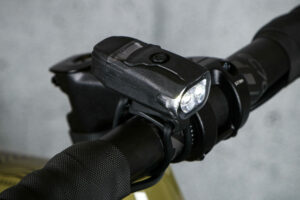
The Magicshine Hori 1300 is £69.99 and, as the name suggests, offers up to 1300lm. It complies with IPX6 for weatherproofing, comes with a wireless remote and can be paired with some of the brand’s other lights for uniform presence. It also comes with an underbar mount, allowing for a very sleek front end.
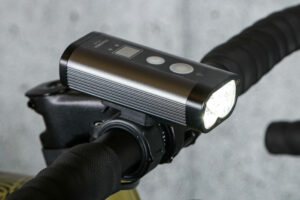
The Ravemen LR1200 (also £79.99) produces a maximum of 1,200lm and impressed Stu Kerton with its good spread of illumination, decent run-times and solid build quality. It can also run a wired remote, but this has to be bought separately.
The Blackburn Dayblazer 1500 is ten quid dearer at £89.99 and has been around a few years now and I’ve seen it heavily discounted online. Aside from the top 1,500lm output, it boasts a nicely CNC machined body and meets IPX67 for weather resistance. The “watch strap” type mount means it’s easy to swap between bikes, but these do tend to slip very slightly and there’s no remote option.
The Oxford Ultratorch CL1600 (£69.99) offers, yes, a maximum of 1,600lm. However, there’s no remote, it only complies with IPX4 for weatherproofing and there’s no option of mounting it beneath the bars.
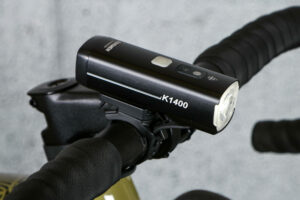
Dave was generally impressed with the Ravemen K1000, although found the AI mode something of a gimmick. It’s very slightly less powerful than the Sigma Buster 1100, but the beam shape is very effective – something I’ve also noted with its bigger siblings. IPX7 for weatherproofing is also very reassuring.
The Cateye AMPP1100 has been around for several years now. Stu noted that while the optical quality was good, run-times in the high setting fell relatively short, which will be a consideration if you’re looking to traverse darker roads with any regularity. Again, there’s no option of mounting it beneath the bars, and at full RRP (£94.99) it’s a good bit dearer than the Buster 1100 and others discussed here.
The Moon Rigel Max (£79.99) rivals the Buster on the price front and also offers bar, helmet and GoPro mounts as standard. It also produces 1,500lm in the highest setting. However, Charlotte found the anti-glare lens dazzled the rider and was also unimpressed by run-times in the highest setting and how fiddly it was to switch between modes.
> See and be seen with our top front bike lights for on the road, trail or path
Conclusion
The Buster 1100 has some definite charm and is still very relevant, but the OEM mount may limit the appeal and ditto the lack of remote. Personally, I’d be looking for 1,300lm upward for serious, full pelt blasting along the back roads. Nevertheless, I would say it remains a viable contender for those seeking to ride, or train in varied contexts.
Test Report
What does the manufacturer say about this product?:
The BUSTER 1100’s innovative double lens makes sure you always have plenty of light. The two LEDs generate a powerful lighting pattern with 1100 lumens and 165 metres of beam range. If you are on a long ride, you can keep the BUSTER 1100 charged during operation with the USB-C quick-charge function. And the six light modes can also be used to adjust the brightness so that the battery lasts up to 50 hours. The memory function makes sure that the BUSTER 1100 is in your favourite mode when you switch it on again.
Tell us some more about the technical aspects of this product:
Maximum light output: 1100 lumens
Beam range: 165 m
Six light modes: High (1100 lm), Mid (800 lm), Low (400 lm), Eco (150 lm), Night flashing (800/400 lm) Day flashing (200 lm)
Burn time: 2h in High mode, 2.5h in Mid mode, 5h in Low mode, 16h in Eco mode, 5h in Night flashing mode, 50h in Day flashing mode
3D adjustable screwbracket including quick release
Switch on protection (double click for ON)
Splash resistant in accordance with IPX4
Tool-free mounting
Charging possible during operation
USB-C charge function
Five-stage charge indicator, six-stage battery indicator
Weight: 215g (including bracket)
Any further comments on quality?:
Solidly made and has stood up well to the usual mix of rain, mucky spatter, and stones thrown up by the front wheel. OEM mount might be a little old-fashioned, but similarly dependable.
Any further comments on performance?:
There are the usual compromises when it comes to run-times in the highest settings, typical of high-power rechargeable torch types. However, there is a good spread of modes catering for well lit commutes, murky days and shorter runs along dark roads.
How does the price compare to that of similar products in the market, including ones recently tested?:
Several competitors offer better spec for similar money.
Any further comments on design and usability?:
Intuitive for the most part, and the switch is easy enough to operate when wearing middleweight winter gloves. However, less convenient than a remote switch, which are becoming increasingly common.
Any further comments on the clamp?:
Sturdy and reliable, but the OEM unit doesn’t allow it to be positioned beneath the bars.
Does the light have a waterproofing rating? If so, what is it?:
IPX4
Any further comments on waterproofing?:
IPX4 is at the lower end of the spectrum, but in the real world I had no issues with heavy rain or similar ingress.
Any further comments on battery life and recharging?:
Run and charge times are in alignment with those cited by Sigma. Mains charging using a USB-C designed for tablets has cut charging times from 3hrs to 2:35hrs. Run-times using the full 1100 are relatively short, although this is typically my experience of this genre of light, and the easy to read charge level indicator gives a sporting chance of you dropping down and getting home without being plunged into darkness.
Any issues with durability?:
None to date.
Any further comments on weight?:
Fine on the bars, but a bit hefty atop a helmet, were you looking to go that route.
Did you enjoy using the product? Yes
Would you consider buying the product?
On balance and for my needs, I’d go for its bigger 1600 lumen sibling
Would you recommend the product to a friend?
Well worth considering so long as they weren’t looking to be out along really dark lanes for too long, or frequently. However, there’s a lot of competition, some offering sleeker mounts as standard.
Use this box to explain your overall score
Good performance overall, and sensible modes for varying environments, but IPX4 for weather proofing, no remote, and the slightly old-fashioned OEM mount might be turn offs.
About the tester
Age: 52Height: 181cmWeight: 70kg
I usually ride: Assorted- fixed gear winter/trainer, drop bar rough stuff mtb tourer, gravel bikeMy best bike is: 1950s Holdsworth Road Path build
I’ve been riding for: Over 20 yearsI ride: Most daysI would class myself as: Experienced
I regularly do the following types of riding: Cyclocross, Gravel riding, Commuting, Touring, Fitness riding, Mountain bike XC