


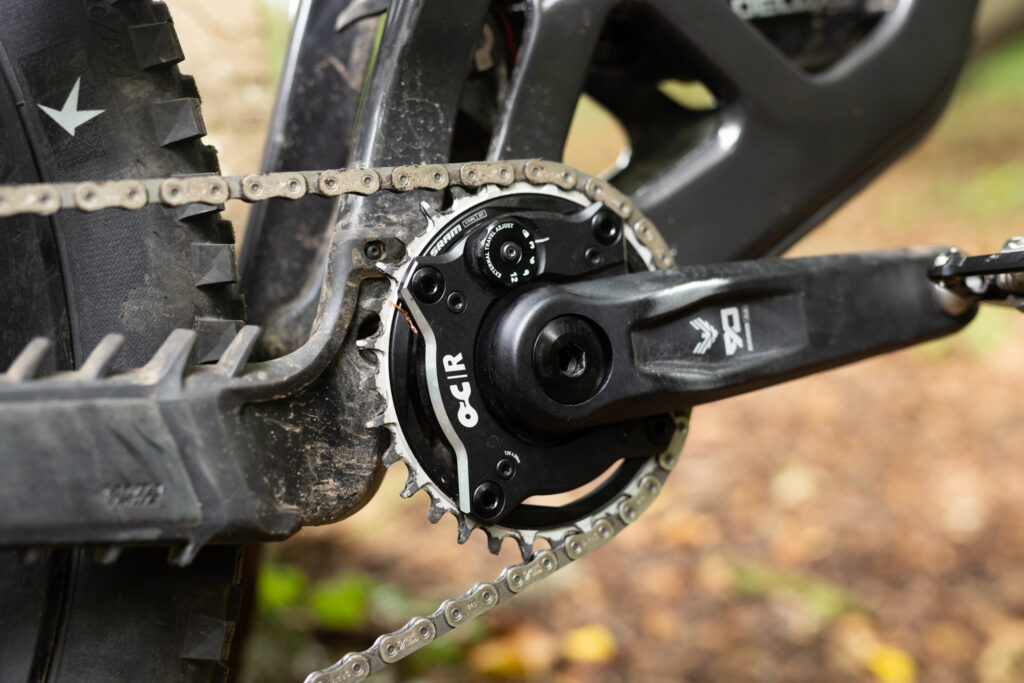

SRAM’s Ochain R marries effective pedal feedback reduction and solid pedalling character in an adjustable, durable, easy-to-service, and good-looking package. But all’s not perfect, as it’s available in a limited range of crank fitments and it’s possibly the most expensive option around.
SRAM Ochain R – Technical details
Ochain was the first brand to address feedback transmitted through the pedals, dubbed pedal kickback, through a spider-based system. Essentially, it reduces that feedback by adding some deadband, or free movement between the crank and the chainring, to absorb the forces of the chain pulling on the chainring before it reaches the crank arms and your feet.
And to dispel any potential confusion, pedal kickback is a chain-of-events-like phenomenon that occurs as a full suspension mountain bike’s suspension compresses, causing the freehub to engage, which causes the chain to tense and pull backward on the chainring, which then tugs anti-clockwise on your pedals. This is what the Ochain is designed to avoid.
But last year, SRAM famously purchased Ochain and brought some much-needed updates to the system. Notably, that includes better sealing but also a range of models. This Ochain R I have here is built to fit regular mountain bikes while offering adjustment to its degrees of dead band, while the OChain N loses the external adjustability in favour of a lower price. There are e-bike-specific versions, too, but they’re only available to fit Bosch CX Gen 5 motors.
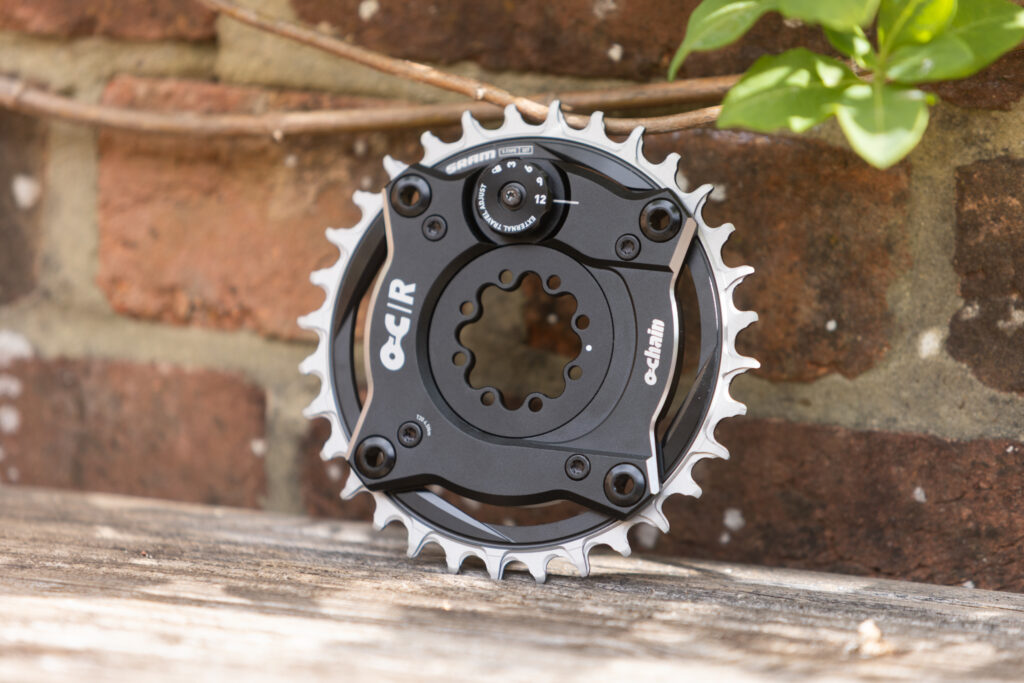
Speaking of fitments, it’s fairly limited but understandably so, as Ochain now comes from SRAM, something of a drivetrain giant. As such, the Ochain R and N models are available in eight and three-bolt interfaces. If you’re running Shimano, Hope or Race Face cranks, to name a few, sorry, the Ochain isn’t for you.
But back to the Ochain R. What sets this apart from other offerings in the market is that it features external adjustment to the degrees of deadband. Simply push down on the crank, lift the dial, and turn, and you’ve got zero, three, six, nine, and twelve degrees at your disposal. It then uses a 104 BCD chainring, which bolts on externally, so chainring swaps are pretty straightforward.
Note that the chainring isn’t included in the asking price. SRAM’s compatible XX Eagle Transmission chainring will set you back another £100 and is available in 32, 34 and 36 tooth options. That said, there are aftermarket chainrings available and likely compatible for less money. Take Burgtech’s 104mm BCD Thick Thin chainring, for example, which is less than half the cost of SRAM’s top-end offering. That also means that the Ochain isn’t only compatible with SRAM’s T-Type drivetrains.
Speaking of that chainring, the Ochain also offers a degree of adjustability in its offset. It’s compatible with 52 and 55mm chainlines thanks to long and short chainring bolts included in the pack.
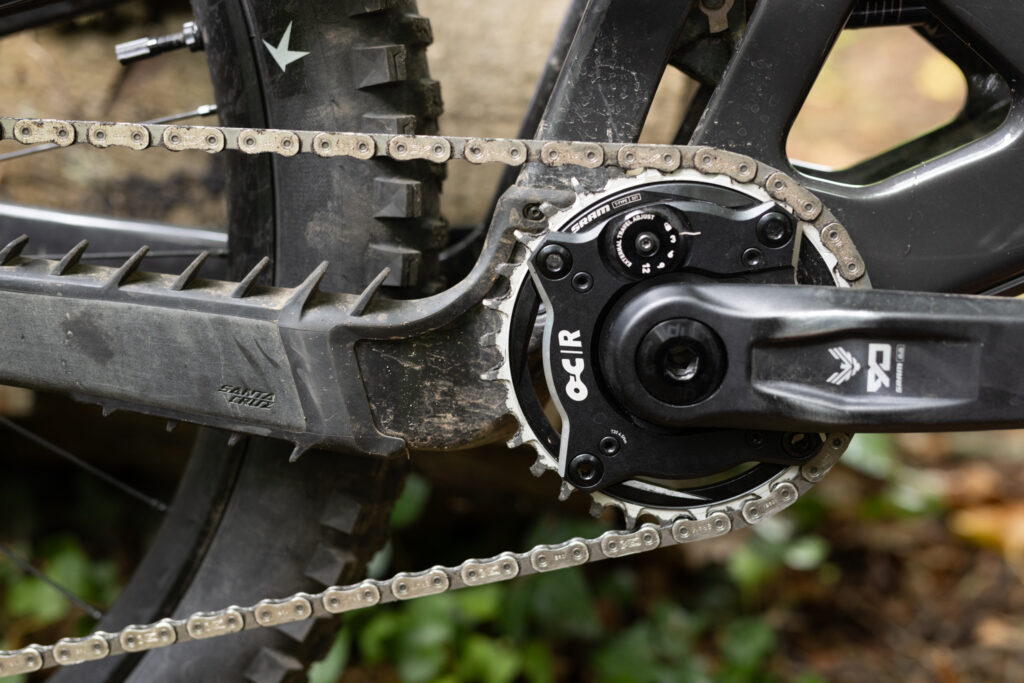
The Ochain’s service intervals are pretty impressive, as SRAM suggests that it’s primed for a service about the time you might have your (modern) RockShox suspension overhauled. After 100 hours, it’s time to replace the internal elastomers, and after 200 hours, it’s time for a full service.
Note that the 241g weight has been taken with the 32t chainring attached.
SRAM Ochain R – Performance
Throwing the Ochain R onto the bike is a super simple process. It’s exactly the same as any other chainring; you’ll just need to bolt on a 104 BCD chainring before doing so. While the Ochain doesn’t use a spiderless interface for its chainring, I’m quite the fan of this move as it makes chainring swaps far simpler than with other similar products. Just bolt it in place, and it’s ready. It’s a reasonably thin product, too, so there’s plenty of clearance between the frame and spider.
All pedal kickback reduction products throw in one notable downside into the mix – that deadband can make pedalling feel a little weird as it effectively acts as a very slow-engaging freehub. That means that when pedalling, there’s absolutely no resistance in the pedal stroke before the Ochain, or kickback reduction device, engages. That’s still very much the case with the Ochain, and it’s much more noticeable in the six, nine and 12-degree settings. But as it butts up against an elastomer when it engages for pedalling, it’s a firm but damped feeling, which is definitely welcome.
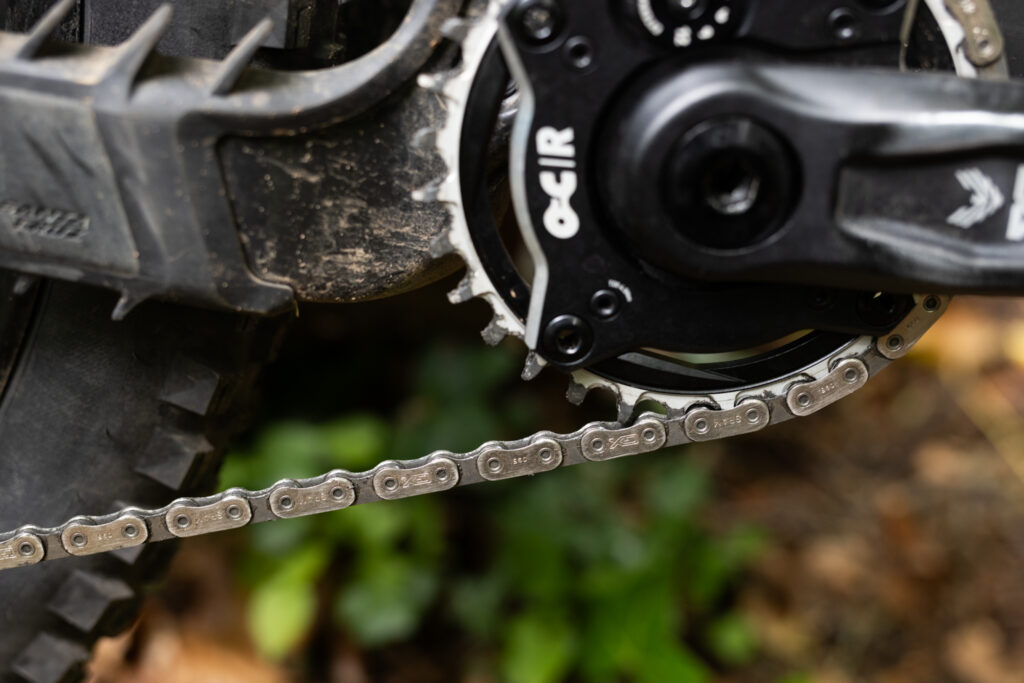
While I have played with all of its settings, I found myself settling on the three-degree option as it still offered some pedal kickback reduction, but minimised that dead band before pedalling. In fact, I found that it was the Goldilocks setting for my riding because pedalling up technical climbs and over dodgy terrain felt natural, but I could still revel in some of the benefits that the device has on offer.
Even in the smallest three-degree setting, the Ochain rustles up some serious benefits. When charging through uneven terrain, it helps the bike feel a lot more settled, as the suspension is freer to move and do what it’s built to – absorb bumps. It brings a more planted feel to the bike over technical terrain, while staving off fatigue over chattery sections. With it, I felt like I could ride harder for longer but with a serious boost in control and composure. It absorbs forces caused by the chain flapping about, and the freehub unnecessarily engaging, so those forces aren’t transmitted to the pedals as much.
The result is just an easier time on the bike. Less fatigue, a small boost in rear wheel traction, suppler suspension and a more composed ride in general.
Although settling with my chosen setting, it’s great to see that the Ochain is so easy to adjust. Although it’s not something you’d adjust as you’re riding. But if you knew you were about to ride up a super technical climb, with the turn of a dial, you can very easily pop the device into its zero-degree setting and take full advantage of a high-engagement freehub. At the top of the climb, flick it into whatever setting you like and gain the benefits it brings.
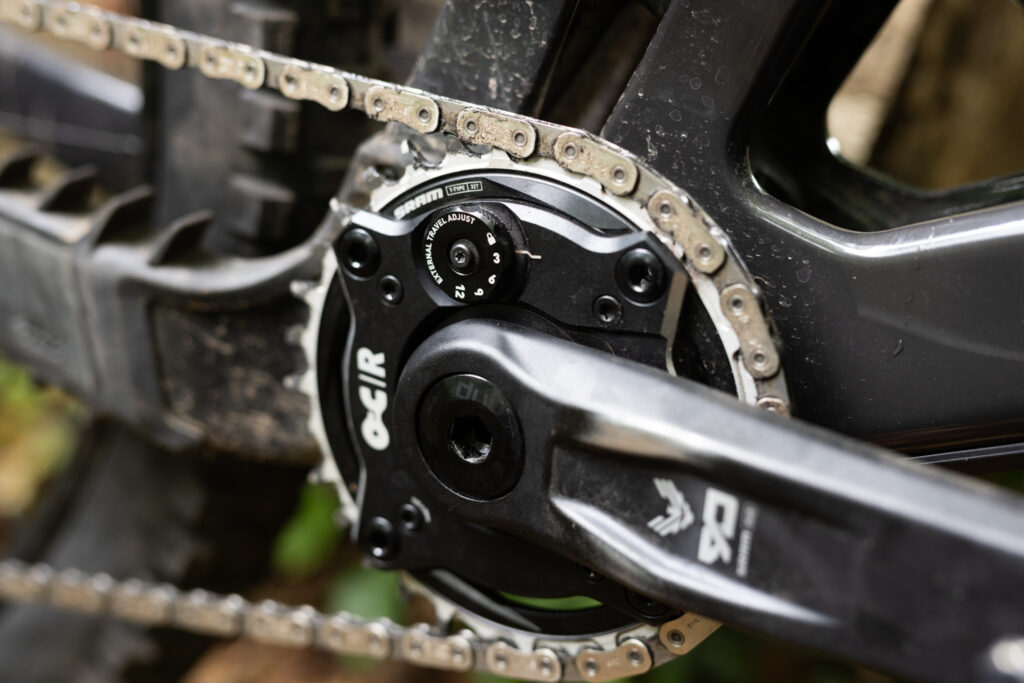
Perhaps the biggest change the SRAM has brought to the Ochain is revised sealing. There’s a gasket that sits along the outer edges and a rubber O-ring along the inside. With that, I’ve been impressed with its ability to keep crud out.
I’ve ridden the Ochain for a good few months in a range of conditions, and after opening up the system, there’s only some minor discolouration of the grease inside. Everything else is still looking rather clean. And as there aren’t any springs at play here, the device is really easy to put back together. Just line everything up, press the two halves together, and nip up the bolts.
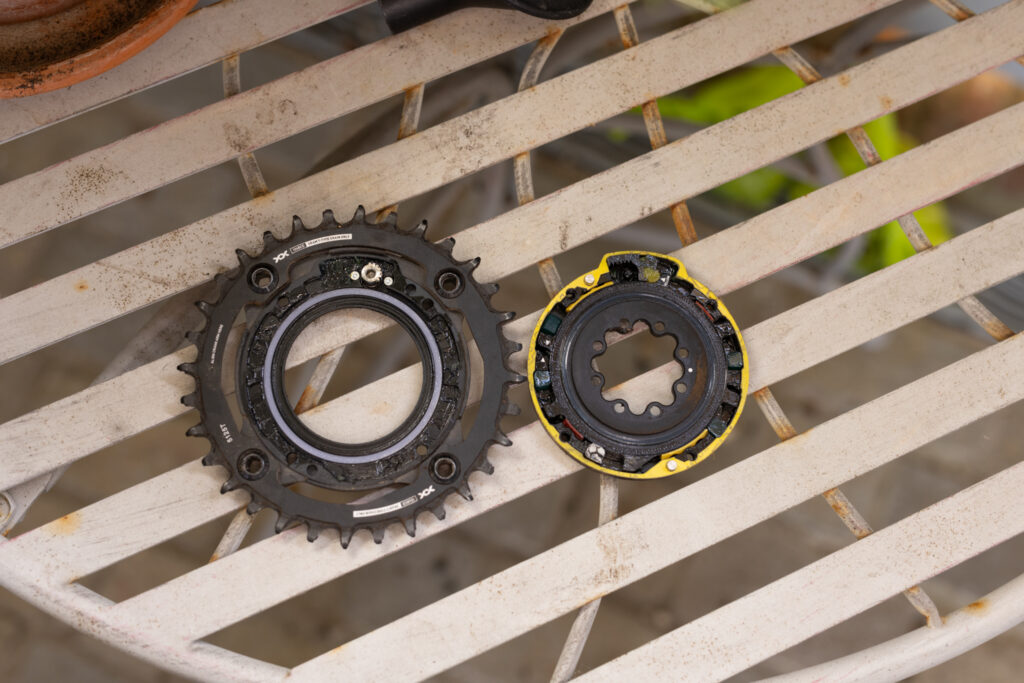
Though what really sets the Ochain apart from the likes of Rimpact’s Chain Damper is that it’s so easy to service. There are no springs inside, so the tricky balancing act of keeping springs in place while closing the unit up isn’t a thing with the Ochain. The non-integrated 104 BCD chainring then means that you don’t have to open the spider up to replace chainrings. Handy.
SRAM Ochain R – Verdict
While the limited number of fitments is quite the caveat, another is the price. It’s £340 for the spider only, and you’ll need to source a compatible chainring, so you’re looking at spending £380 just to get rolling with this.
That in mind, it’s more expensive than Rimpact’s £189.99 Chain Damper, which is developed to address the chain’s forces rather than prioritise pedal kickback. This unit is equally, if not more, durable than the Ochain, but servicing it is trickier, and the chainring is part of the device, so you’ll need to open up the whole thing in order to change them around. Additionally, there are potential issues with frame clearance, as the Chain Damper is a chunkier bit of kit. Its free movement isn’t adjustable, and it’s damped, or sprung in both directions, so the unique pedalling character it offers takes a little more getting used to.
Of course, there are then the freehub-based systems like e*thirteen’s Sidekick and DT Swiss’s Degrees of Freedom tech. The Sidekick V2 hub will set you back at least £229.95, depending on the model you choose; then it’ll have to be laced to a wheel. However, the brand offers Sidekick-equipped wheels for around £329.95. However, Sidekick doesn’t have an ‘off’ mode, and you’ll have to dive into the hub’s internals to adjust its degrees of deadband.
It’s a similar story for DT Swiss’s Degrees of Freedom, but it’s compatible with most of the brand’s modern hubs, and it’s just a £144.99 upgrade that can be done from home. It’s not as well refined as any of the other systems, but it does the job; it comes with a zero-degree setting, and it’s adjustable.
In terms of the performance it provides, SRAM’s Ochain R is the best anti-pedal kickback device I’ve ridden so far. It’s super easy to adjust, produces a reasonably natural pedalling character, and general servicing is very straightforward. It’s just the most expensive option for pedal kickback reduction on the market at the moment, and the fact that there isn’t a chainring included is another hit to the wallet. Perhaps a more serious downside is its lack of fitment options, meaning that if you want to run an Ochain, you might have to invest in a whole new crankset.
Test Report
What does the manufacturer say about this product?:
From full-on downhill to all-day trail, Ochain R brings next-level confidence and control. The next-generation spider design allows the chainring to rotate backward, decoupling the rider from the forces of pedal feedback. The result is a quieter bike with reduced chain turbulence and noise, allowing riders to stay fully focused on the trail ahead. It allows riders to be more confident by unlocking greater stability while braking and cornering, boosting control on rough terrain.
Tell us some more about the technical aspects of this product:
Includes: Ochain R Spider, spider to crank mounting bolts.
Available in SRAM 8-Bolt and SRAM 3-Bolt direct mount chainring standards
104bcd chainring compatibility only (chainring and hardware NOT included)
Standard 3mm offset for 55mm and 52mm chainline compatibility. Install 3mm spacers and long bolt hardware for 56.5mm chainline compatibility.
Ochain R features External Travel Adjust with selectable degrees of travel: Lock, 3º, 6º, 9º, 12º for more bike and terrain types.
Re-engineered impact, longevity, and contamination resistance
100hr – Recommended Elastomer Replacement Service
200hr – Recommended Full Service
Any further comments on performance?:
Best balance of performance for a product of this type.
How does the price compare to that of similar products in the market, including ones recently tested?:
Its the most expensive of its type
Did you enjoy using the product? Yes
Would you consider buying the product? If on sale
Would you recommend the product to a friend? Yes
Use this box to explain your overall score
The Ochain is the best anti-pedal kickback device I’ve used but it’s expensive and doesn’t come with a chainring.
About the tester
Age: 33
I usually ride: Santa Cruz Bronson
I’ve been riding for: 10-20 yearsI ride: A few times a weekI would class myself as: Experienced
I regularly do the following types of riding: Mountain bike Enduro
