
We’re now at the point where the wild designs of mountain biking’s earlier days have plateaued a little, and that’s no bad thing, as modern MTBs perform very well consistently no matter which brand they come from, for the most part. That has led to a somewhat cookie-cutter design, where many bikes use similar technologies and produce similar results. However, there are a few that break that mould. Here’s a list of brands for those who are seeking something different.
Although many of these brands step away from the industry norms, there are some rather interesting similarities between them all. Notably, they’re all trying to fix things found with current bike manufacturing and performance, such as suspension under braking or the overcomplication of regular bikes. A lot of the brands listed choose some form of single pivot suspension platform and/or there’s some inspiration from motorsports.
Anyway, here are some of the most interesting and unique bike brands currently on the market.
Starling Cycles
Built from simple Reynolds steel tubes, Starling’s bikes are designed for nothing but simplicity, while producing an excellent ride quality. The brand’s whole range revolves around a single-pivot suspension platform that uses just two bearings, making servicing easy, and external cable routing is found throughout.

But what makes Starling’s bikes a little more unique is that users can buy a Mini Murmur, for example, and tweak it to become a bigger-travelled regular Mumur. Change some other things around, like the chainstay, and it can become the brand’s heavy-hitting Mega Murmur. Of course, you’ll need to invest in fresh suspension components, but few brands make their bikes quite as modular as Starling.
Better still, as a relatively small brand, Starling is super agile. As such, it was the first to release a production mega mullet mountain bike in the 29”/32”-wheeled Big Bird.
Actofive Cycles
Almost like a spiritual successor of Pole, Actofive Cycles builds its frames in a very different way to your bog standard aluminium bikes. There’s not a weld in sight; rather, the brand CNC-machines its frames in two halves and bonds them together.

Actofive says that it takes 22 hours to machine the main parts of the frame, shedding 38kg off of a solid billet of material. With that, it claims to promote sustainability by recycling excess swarf. Once the frame pieces are machined, it takes another eight hours to bond and finish each frame.
The result is some of the prettiest bikes around. But it’s not just frame construction that makes this brand rather different. That’s because it’s one of the few that offer a modern production bike with a floating rear brake caliper on its P-Train.
And yes, it’s a brand that’s jumped on the 32″ bandwagon.
Shuvl
Motorsports brands often dip their toes into the world of MTB, but mostly, that’s seen in componentry, like Ohlins’ suspension, as well as HEL and Brembo’s brakes. But it’s not often we see whole bikes developed with inspiration from motorsports, or well, motocross in Shuvl’s case.
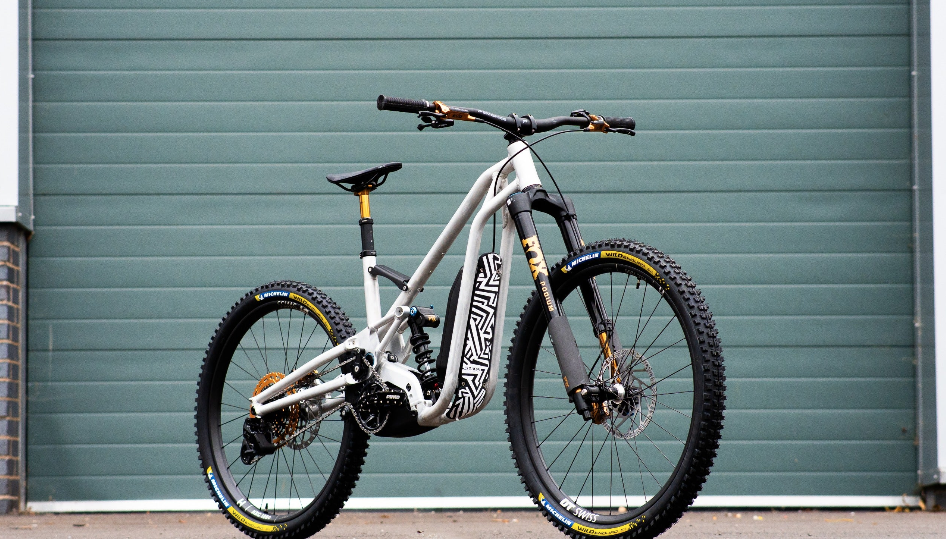
Shuvl’s eMTB prototype is still in its very early stages, but the brand has been keen to show it off, and rightfully so, I think. Its looks are definitely divisive, but like many that push boundaries, there’s a reason.
It’s modular. Shuvl has taken a ‘future-facing’ approach to the bike’s design, and we’re told that it’s able to accommodate a selection of motors. So unlike any other e-mountain bike on the market, you could be able to swap a Bosch drive system for Avinox on this bike.
In a genre where bikes are bound to their motors, and the technology is changing rapidly, this could be a more useful entry into the market than you think.
Auckland Cycle Works
Auckland Cycle Works is another small UK-based brand that builds its bikes from Reynolds steel tubes, so nothing too mad here. However, that all changes when you shift your gaze to the linkage. At the moment, only the Marra is available, and it’s one mental-looking machine, but there’s a real method behind that chunky link.

The idea here is to retain suspension performance under braking loads, and before the Marra was built, it started life as a Lego model as the brand’s founder tinkered with a range of linkage layouts before settling on the KOLARP design.
It’s an interesting bike, and there’s an awful lot at play here. Luckily, I’ve ridden it so you can get more details and my ride impressions in the Auckland Cycles Works Marra first ride review.
Atherton
While from a distance, Atherton’s bikes might look rather familiar, once you get up close you’ll see just how different they are. Rather than using tubes that are welded together, or laid up, Atherton’s bikes are built of tubes that are bonded to lugs.
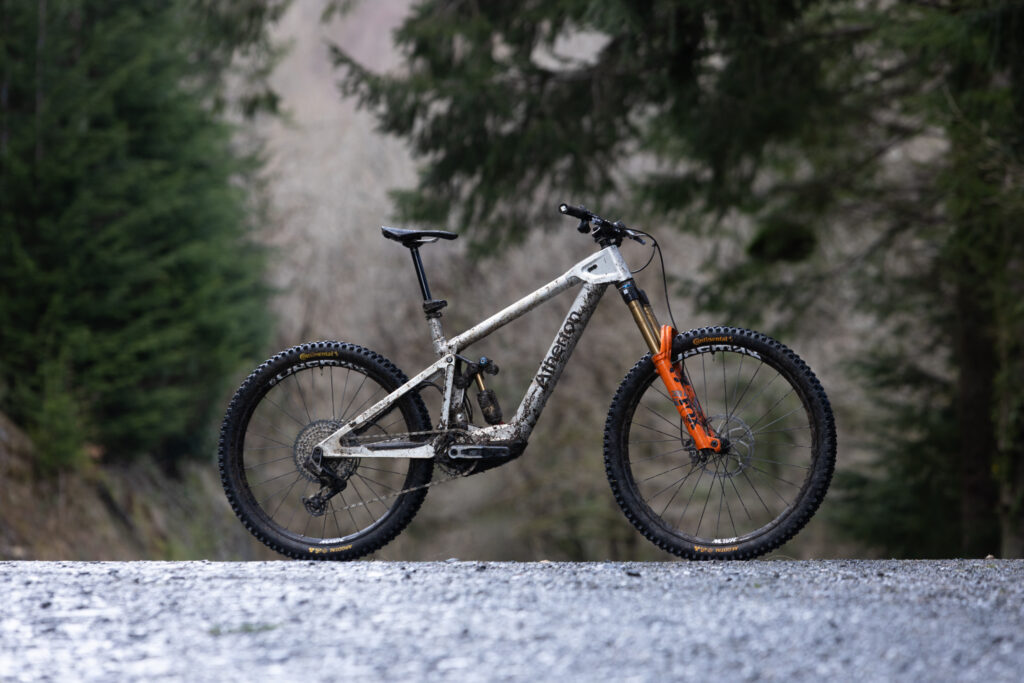
Now, this is nothing new; we’ve definitely seen it before. In fact, we’ve seen other bike brands use the technique of bonding tubes to 3D-printed lugs to develop test mules. But Atherton uses this technique to offer a wide range of frame sizes to fit a larger range of riders. It also allows the brand to fine-tune the stiffness and compliance profiles of its frames.
Every bike is made to order, too, and having taken a quick tour around Atherton HQ, the attention to detail is very impressive.
Production Privée
Andorran brand, Production Privée, is another brand that likes to throw nods to motorsports, with its car-livery inspired paint jobs, but it’s one of the few that marry carbon fibre with good ol’ steel. Found on its Shan 5 and Shan 6, their front ends are constructed from MCS 4130 heat-treated steel in a bid to hit an ‘excellent mechanical performance to weight ratio’ at the front triangle, while bringing a snappy and dynamic feel to the rear end.
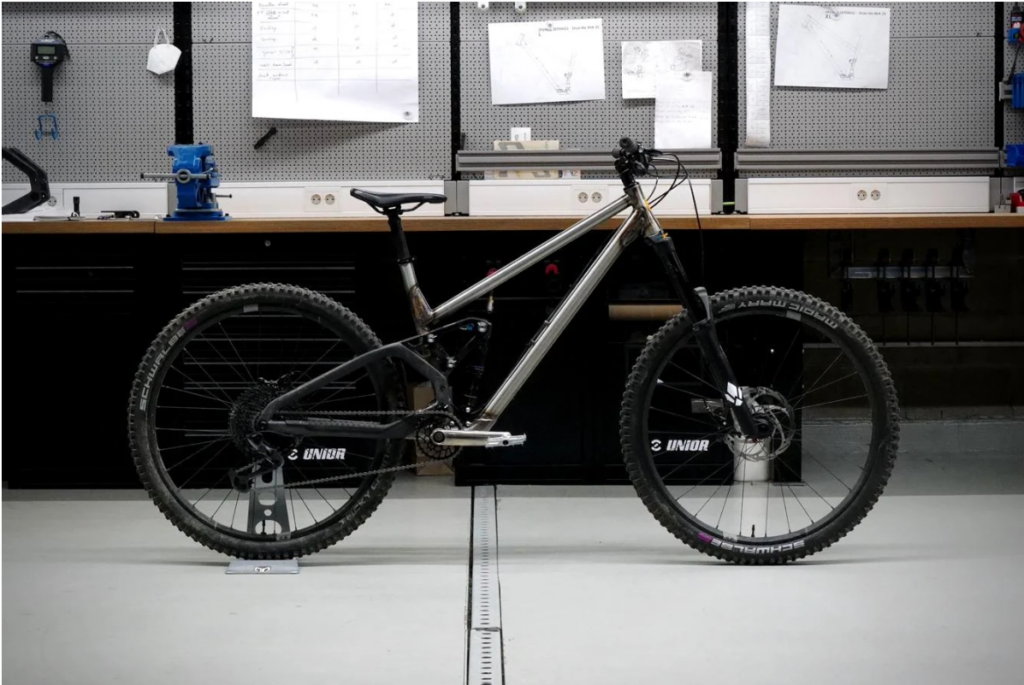
Going for a carbon fibre rear end also allows the brand to shed a whole bunch of weight, boosting suspension performance while dialling in the flex-to-compliance balance that the brand has sought.
Then, the Shan 6 specifically pushes the envelope a little further. It boasts a 225x75mm shock to achieve 167mm of rear suspension travel, but that’s a move that’s been made with some serious purpose. The 75mm stroke means that the shock’s damper works harder, so the bike relies less on spring rate. Apparently, this means a more supple feel but without lacking support. It also means that as there’s more oil inside that shock, it’s less prone to overheating.
Deviate Cycles
Although high-pivot mountain bikes have existed long before, Deviate is often referred to as the pioneer of the tech. There are some real benefits to be had, too, as it reduces the effects of pedal kickback while encouraging a more rearward axle path, which brings smoother performance to the bike’s suspension.

That’s not all that’s a bit different here though, as both the Claymore and Highlander models benefit from a ‘cable gulley’. It’s essentially a semi-internal routing system where cables are run through the rear triangle and then neatly hidden inside a very literal gulley that spans the length of the top tube.
As a brand hailing from the UK, Deviate’s bikes are built to cope with the harsh and wet weather we ride in most of the time, so it features grease injection ports around the frame to keep everything working as smoothly as possible with little effort. Deviate is also known to tinker with titanium, though we’re still yet to see that come to production models.
Structure Cycle Works
Telescoping forks? Nah, not for Structure Cycle Works. Rather than a regular fork, Structure’s bike, the SCW1, uses the WTF (great name), or Without Telecoping Fork system. Obviously, its fork isn’t what you would usually see on a mountain bike; instead, it’s a linkage system that joins directly to the frame. Also, Structure is another brand that brings motorsports learnings to MTB.
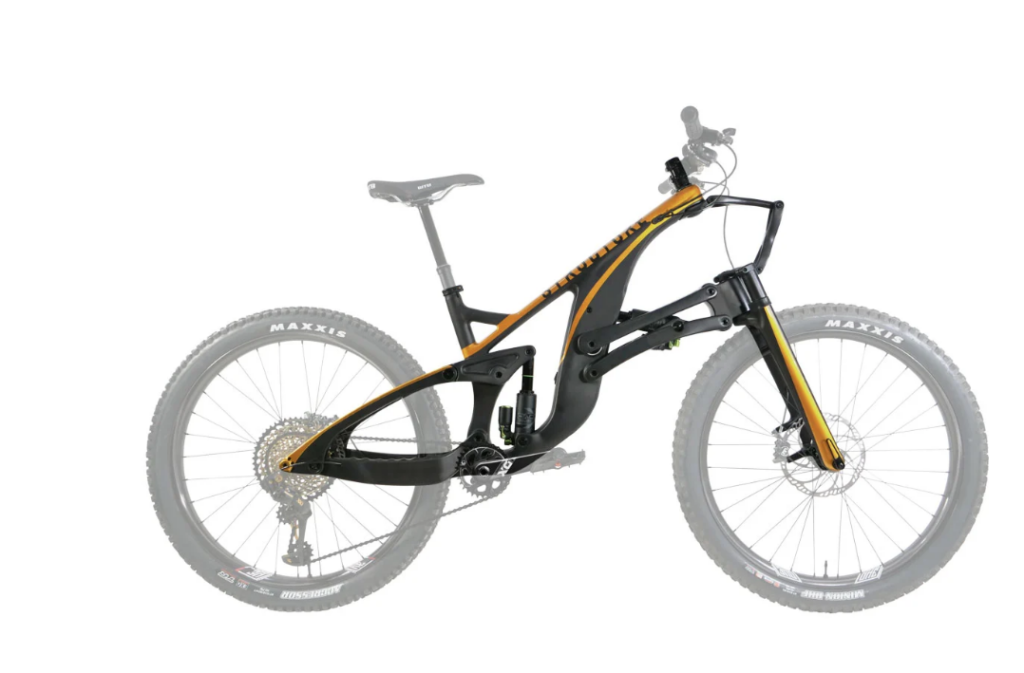
Structure says that the head angle gets slacker as it pushes deeper into its travel, and because of that, it brings extra stability as it stretches. But because of that slackening, the bike’s geometry effectively remains the same.
Then, because the links rotate on cartridge bearings, rather than have seals and air pressure bring friction into the mix, the WTF system is smoother than traditional forks. Structure also says that because there are no seals, bushings or oils, service intervals are comparatively longer.
Orange
A long-time staple of the UK bike industry is Orange, and it’ll feel like heresy not to include it. If you’ve not heard of the brand before, it follows a similar style to Starling as it uses mostly single-pivot suspension layouts, but it goes about the whole bike-building thing very differently.
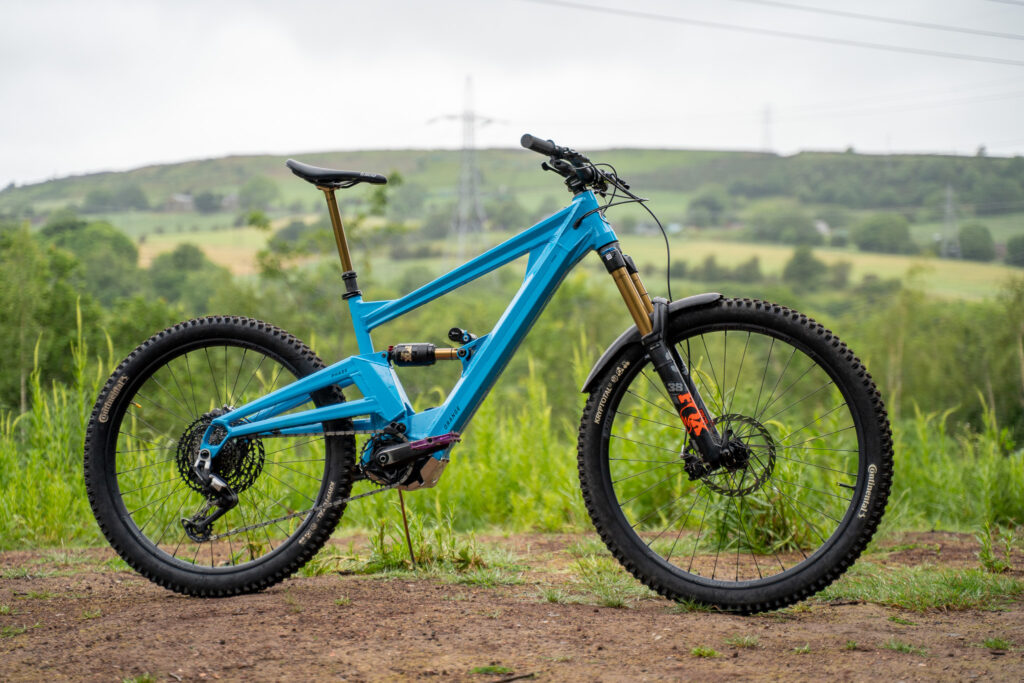
That’s because its bikes are built from folded and welded sheet metal. The result is a very love/hate aesthetic, but there are no two ways about it: you’ll know that a bike’s an Orange from quite a distance.
Lal Bikes
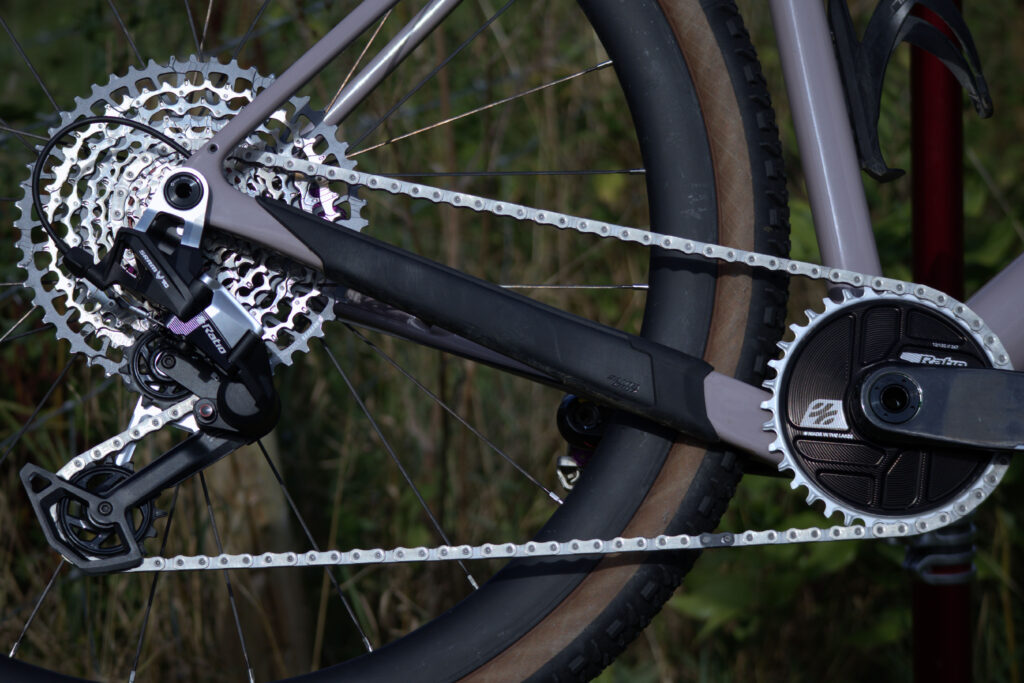
Some brands, like Auckland above, seek to fix particular issues found in conventional bike design, and that’s the very case with Lal Bikes. Modern chain-based, derailleur-touting bikes come with a good few problems, with a key downside being the fact that the (potentially) very expensive but incredibly important derailleur is hanging out in the open, ready to be caught by a game-ending rock.
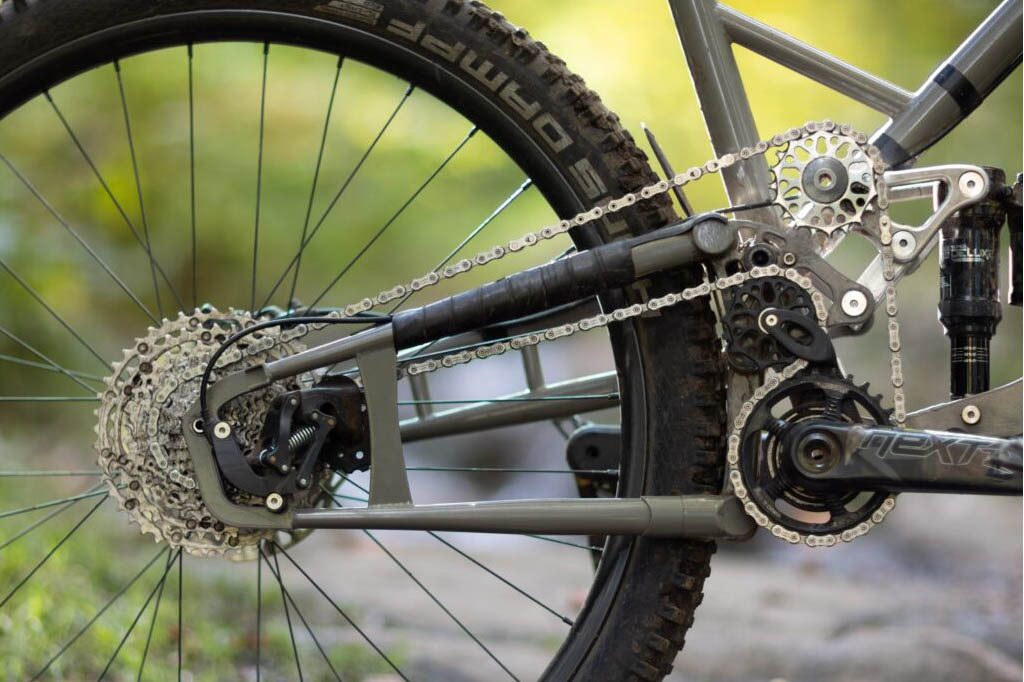
Lal Bikes has developed the Supre Drive system, which addresses that issue head-on, promising to combine the efficiency of a derailleur with gearbox-like reliability. You’ll also find this system features on Nicolai’s now-discontinued Nucleon 16.
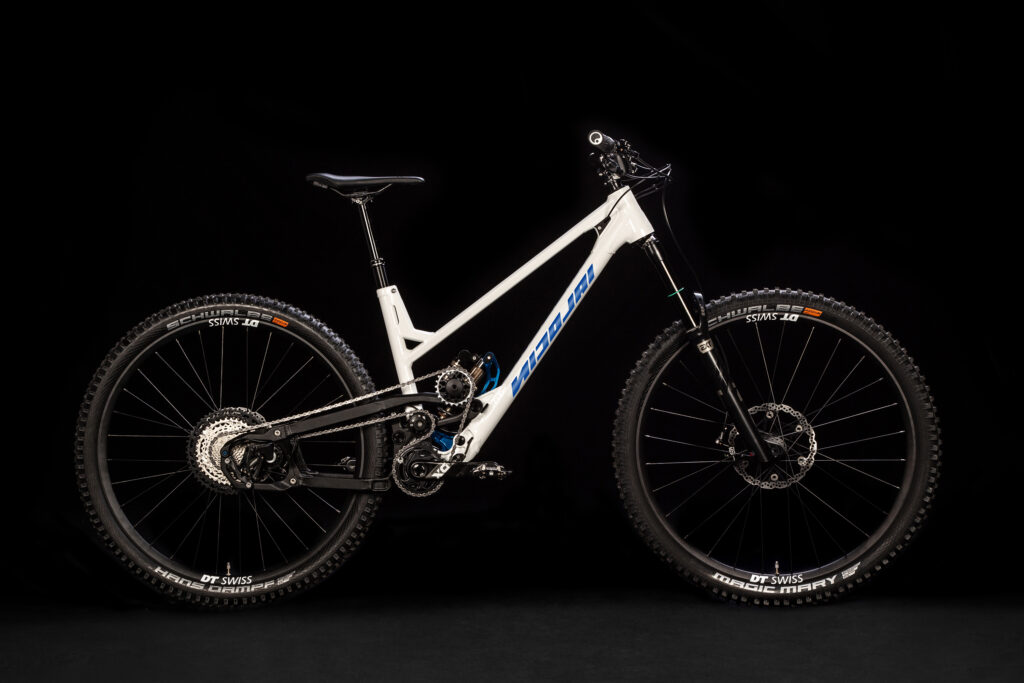
Technically, Supre Drive splits the derailleur into two, packing it all closer to the frame to increase ground clearance while a speed-sensitive hydraulic chain tensioner keeps the chain in check. This also reduces the weight of the shifting package altogether, resulting in less unsprung mass. We’re told that the system also produces less drag, so it should be more efficient than other high-pivot mountain bikes.
Have we missed anything? Let us know in the comments.