Although primarily designed to provide traction, comfort, and capability, there’s a lot more than meets the eye built into modern mountain bike suspension. Things like anti-squat and anti-rise are sculpted into a bike’s carefully arranged linkage to help a bike pedal well, while maintaining performance under braking. But in nearly all cases, all of that comes as a compromise in other areas. But Auckland Cycle Works’ Marra is a real outlier in that respect.
Many mountain bikes suffer from something called ‘brake jack’. It’s caused when applying your brakes and the rear brake specifically, which can then extend and/or stiffen the rear suspension, reducing its ability to work properly while reducing traction at the rear wheel. Brake jack is combated through ‘anti-rise,’ which, to put it simply, comes as a result of clever linkage design, but too much can stiffen the suspension. Many brands aim to achieve some kind of suspension/braking force independence, like Trek and its Active Braking Pivot but few manage to do so completely.
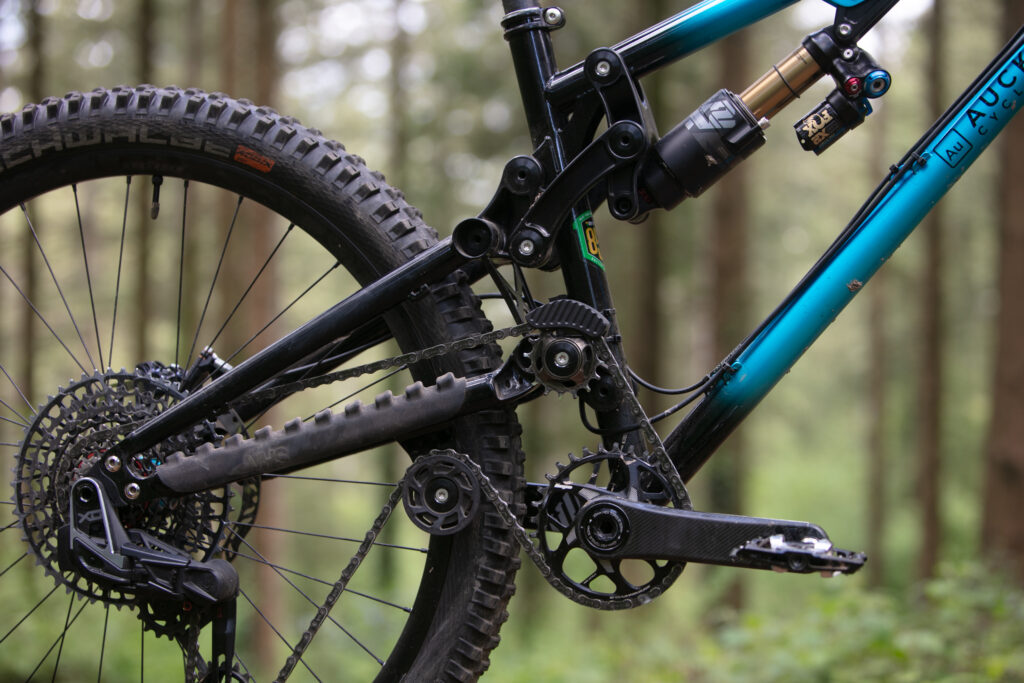
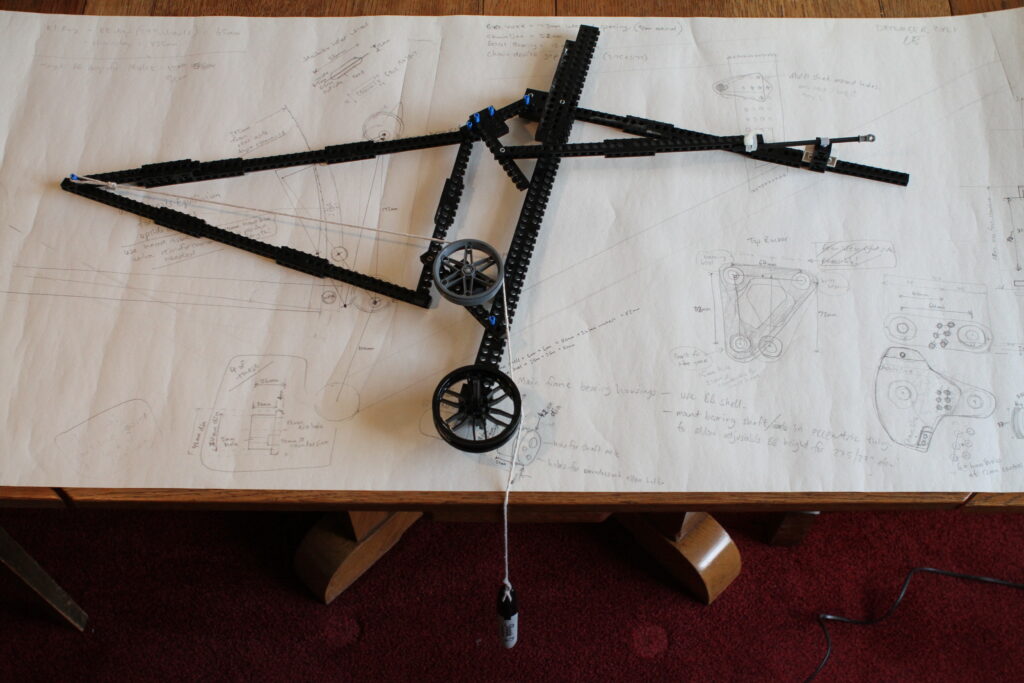
Auckland Cycle Works’ KOLARP (Kind Of Like A Rearward Pivot) suspension design, the jewel in the Marra’s crown, has come as a result of five years of hard work, and… Lego. And it’s designed to produce more than 100% of anti-squat to prohibit weight from being shifted forward under braking on the bike altogether, while maintaining the same suspension performance that you get when freewheeling.
But why Lego? Instead of leaning on computer-aided design programs to design the bike (CAD was still used for manufacturing), the mind behind Auckland, Gary Ewing turned to Lego for a few reasons. Mainly, it stopped him from going a similar route by using similar tools as other brands, which could result in similar outcomes. A Lego model also meant that Gary could physically visualise, feel, move and adjust his design first-hand.
KOLARP is every bit as complicated as it looks, but there’s some real method behind the madness, and I’m told that the Marra’s sizey predicted, not documented anti-rise and anti-squat figures come from the rearward axle path that the design achieves and its many links. In total, the rear centre stretches by 32mm with the bike unweighted, through to full travel, achieving a very rearward axle path. But under sag (or rider weight), it does the bulk of its stretching. Then, owing to geometry wizardry that’s way beyond my maths GCSE D pay grade, the extreme angle at which the rear axle sits in its axle path at sag counteracts the gravity of rider weight combined with their centre of gravity, holding the suspension at sag, resulting in decent pedalling performance.
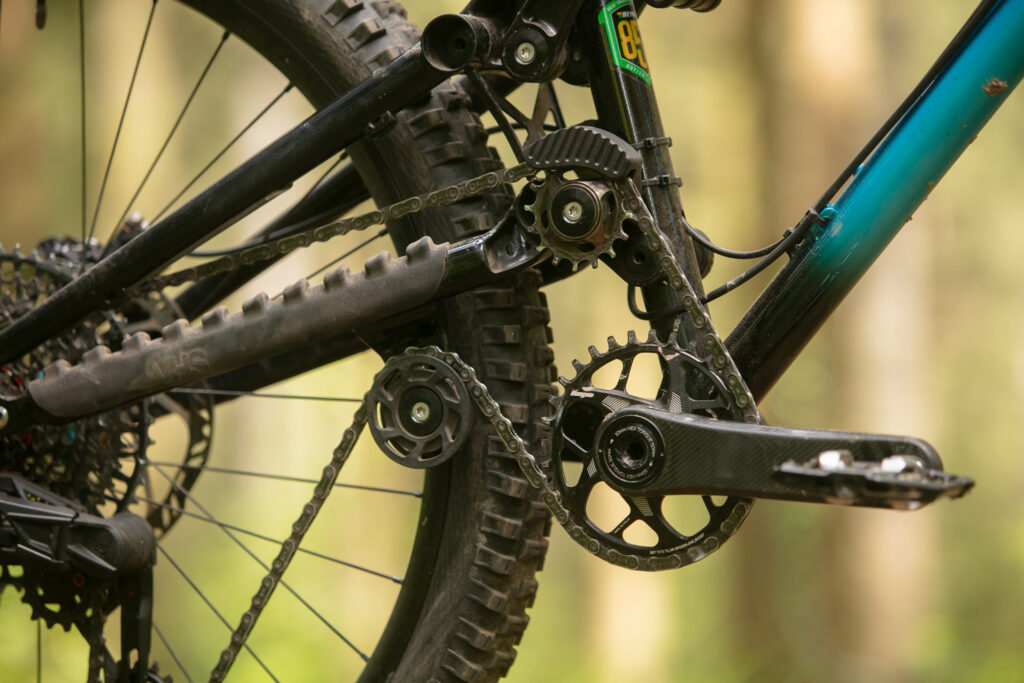
Then, there are some interesting linkage movements in the bike’s rear end, where the idler effectively lowers, while the dropout rises. This movement, along with the rearward axle path and upper idler pulley, apparently eliminates pedal kickback and helps to achieve Marra’s anti-rise, and that’s all with a standard-length chain.
KOLARP gets crazier, still, as that axle path is parabolic. To put it in the simplest way possible, that means that around halfway through the rear suspension’s travel, the very rearward axle path straightens to be more vertical. So the bike benefits from all of the good things that such bikes usually would, but the rear centre, or chainstay, doesn’t continue to grow as the suspension reaches its end stroke.
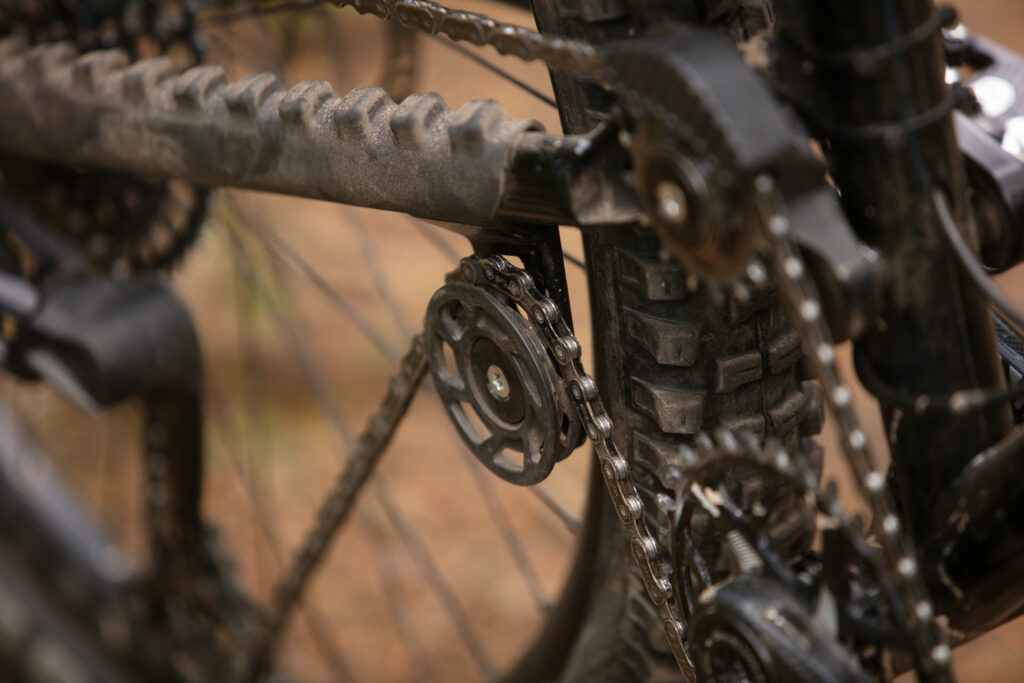
That high pivot is then complemented with a lower idler, which has been added to keep the derailleur still while the suspension moves. I’m told that this further increases suspension sensitivity while keeping shifting as slick as possible.
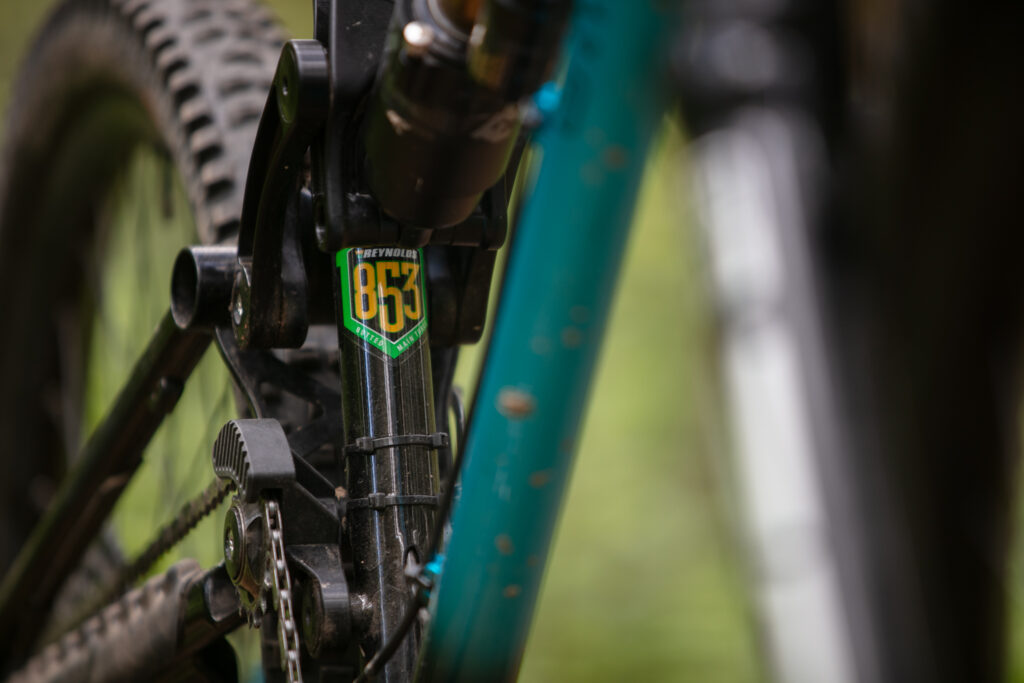
Alright, let’s take a quick break from the suspension… the Marra is built from Reynolds 853 steel tubing, chosen for its known performance and strength, which, for Auckland, takes a variable out of the design process so it could focus on developing KOLARP (I mentioned it again… sorry).
It also meant that the brand could take advantage of the steel frame building network nestled around the UK. For example, my test bike came with a front end built by Burf at BTR Fabrications and Rat Bikes, known for its Dad Rat. Though Coal Bicycles has built some parts, and I’ve caught word that Five Land Bikes (known for building Cotic, Mason, Frameworks and other brands) may handle some of the production weight in the near future.
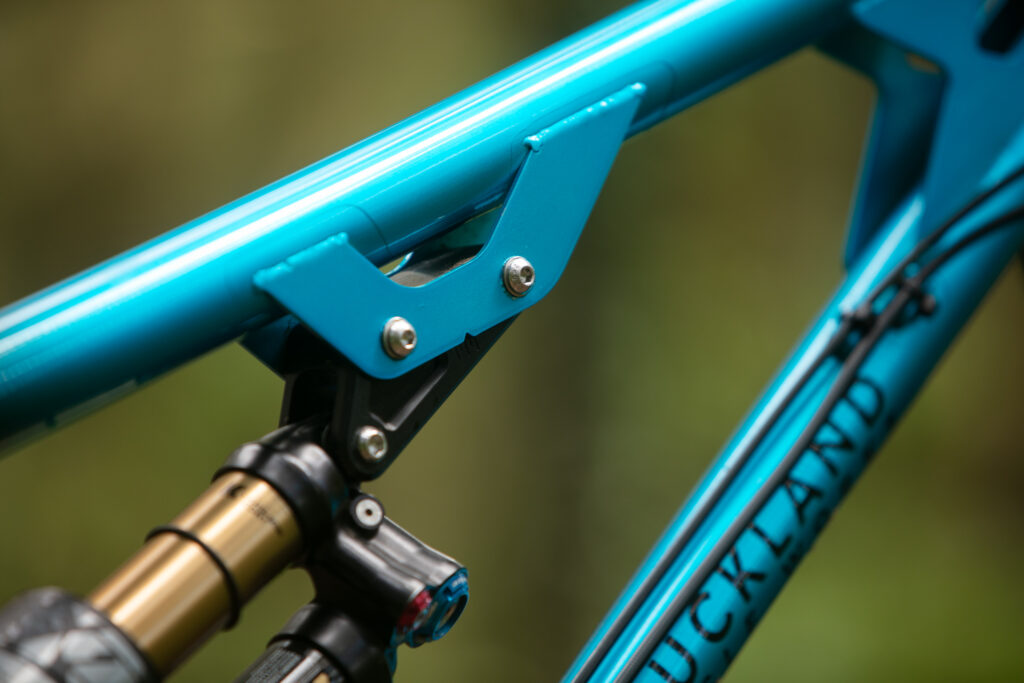
The Marra is an enduro thoroughbred that runs 180mm of rear suspension with another 180mm at the front on my test bike, although it can be equipped with 170mm to 200mm suspension forks if that’s more your jam. An adjustable forward shock mount brings a hint of geometry adjustment to the party, as well as a modular dropout, which offers up to 6mm of chainstay length adjustment. The bike is then designed to rock a 650b wheel at the rear.
As for the geometry, I rode a large bike that benefits from a 64-degree head angle, a 429.9mm chainstay, a 78-degree seat tube angle and a 486.3mm reach. The Marra is also built with a low, 646.4mm stack as standard to accommodate riders who are sizing up for stability’s sake, as well as a deep and straight seat tube for all of the dropper post insertion. However, Auckland offers the opportunity to choose custom reach and stack measurements.
It’s a similar story for the cable routing and colours, too, as cables can be run internally or externally. Colours can then be chosen according to the customer’s preferences, with a two-colour fade being included in the price, but the brand does welcome more complicated designs for a bit more money.
At the moment, sizes are limited with medium and large frames available, but I’m sure other sizes can be accommodated through the reach and stack customisation.
Auckland Cycle Works Marra: componentry
The Marra comes primarily as a frame-only offering with the option of a Cane Creek Kitsuma G3 or RockShox Vivid Air Ultimate RC2T shock for £5,600. Customers can upgrade to a Fox X2 Factory for more of a cash injection, too.
However, as the bike comes from the Inspiral Cycles shop in Bishop Auckland, it can be built up with a specification of the customer’s choosing. An example build, listed on Auckland’s website, lists a Cane Creek Kitsuma G2 shock, RockShox ZEB Ultimate Charger 3.2 fork, Hope GR4 brakes, Hope Fortus 30 wheels, Hope cranks and finishing kit as well as a OneUp Components Carbon Handlebar, V3 dropper post, Schwalbe Radial tyres and SRAM’s Eagle 90 drivetrain, with an Ergon SM-Comp saddle. All in, this will set you back £9,500.
So the Marra isn’t a cheap bike, by any means, but depending on how you choose to build it, there’s opportunity for some savings to be made.
Auckland Cycles Marra: ride impressions
Okay, so the Marra looks pretty mental, and I’ll admit, I’ve still not got my head fully around how it works, so later into my somewhat short time with the bike, I’ve given up trying to understand properly what’s going on, and focus more on how it rides. But that’s been a little confusing, too, because I’ve not ridden a bike that rides quite like the Marra… and that’s a good thing, for sure.
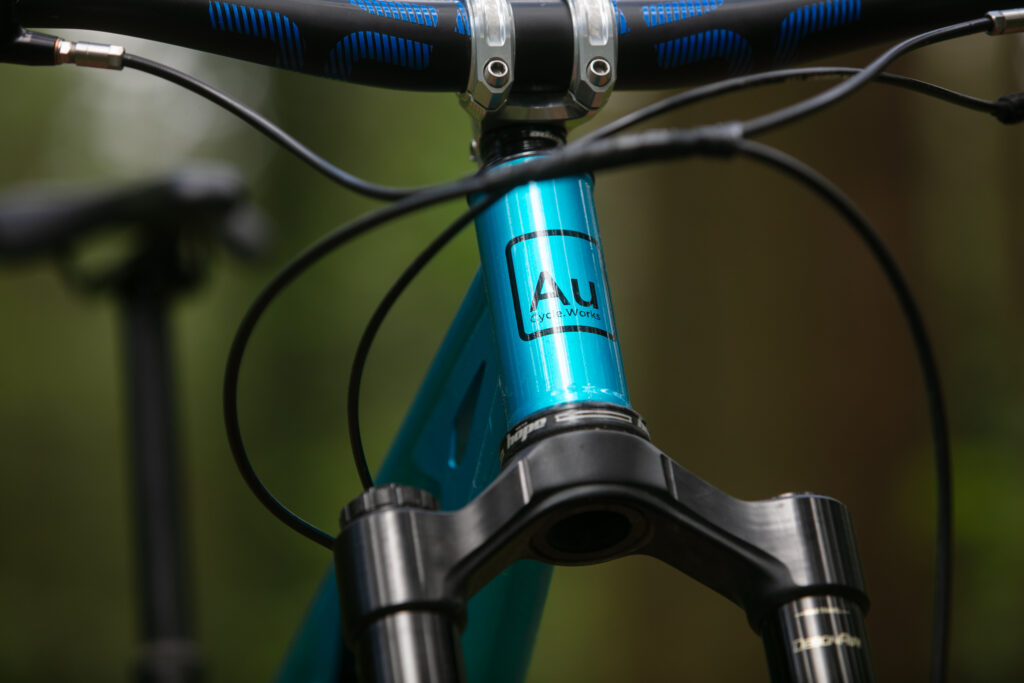
The Marra build I was given is pretty typical of how a big, burly enduro bike would be set up, and really, it’s not too far off from the example build listed above. As a result, it’s not the lightest bike around, nor is it the sprightliest when pedalling up a hill. Uphill efforts are certainly a little slower, but that’s not a fault of the frame itself. Rather, it’s the result of the draggy, descent-focused Magic Mary and Big Betty tyres, and its 17-18kg overall weight thrown in for good measure.
Admittedly, there’s a smidgeon of bob within the linkage, but I’d say it’s an acceptable amount, and nothing too far from the norm compared to other bikes. However, the bike’s climbing performance gave me a very good inkling of what it had in store on the descents.
That’s because it doesn’t sit any deeper into its sag as the bike rolls up a gradient than it does on the flats. Add in the steep 78-degree effective seat tube angle, and the Marra is a planted, predictable and calm climber. Yep, it might take a little longer to summit a climb, but it does so comfortably, all while providing an incredibly impressive level of traction.
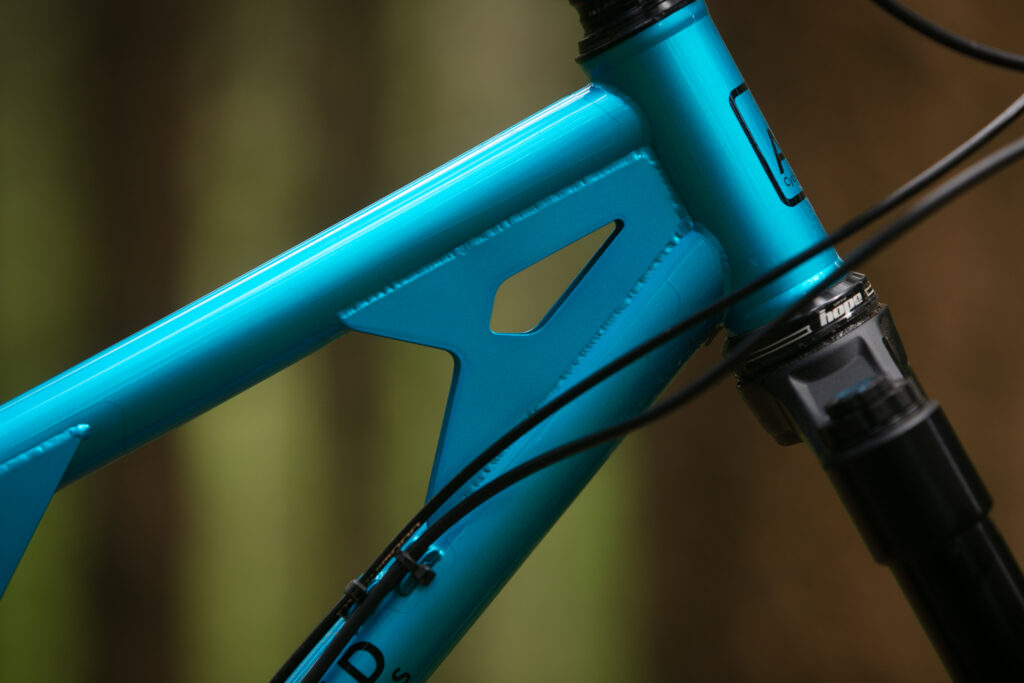
Therein lies the beauty of the Marra’s rearward axle path. When rolling up rooty and techy climbs, the rear wheel remains glued to the ground, but importantly, it doesn’t buck the rider about. Instead, it conserves its geometry and just rolls over stuff without so much as a slip to throw things sideways.
That performance translates even more so on the descents. In fact, it’s such a well-mannered descender that it took a little bit of time to get accustomed to just how poised it is. A very important benefit of the KOLARP design is that it maintains the bike’s dynamic geometry as it utilises its suspension and under braking loads. This makes it incredibly consistent and predictable.
While pushing the bike into tech, I felt as if I didn’t have to load the front nearly as much as with bikes of more conventional designs, owing to the chainstay stretch that comes from the rearward axle path. Instead, I could weight it more centrally, and let the fork do the work it needs to, while loading up the rear end more to revel in the traction and outright composure that the mind-boggling suspension design conjures.
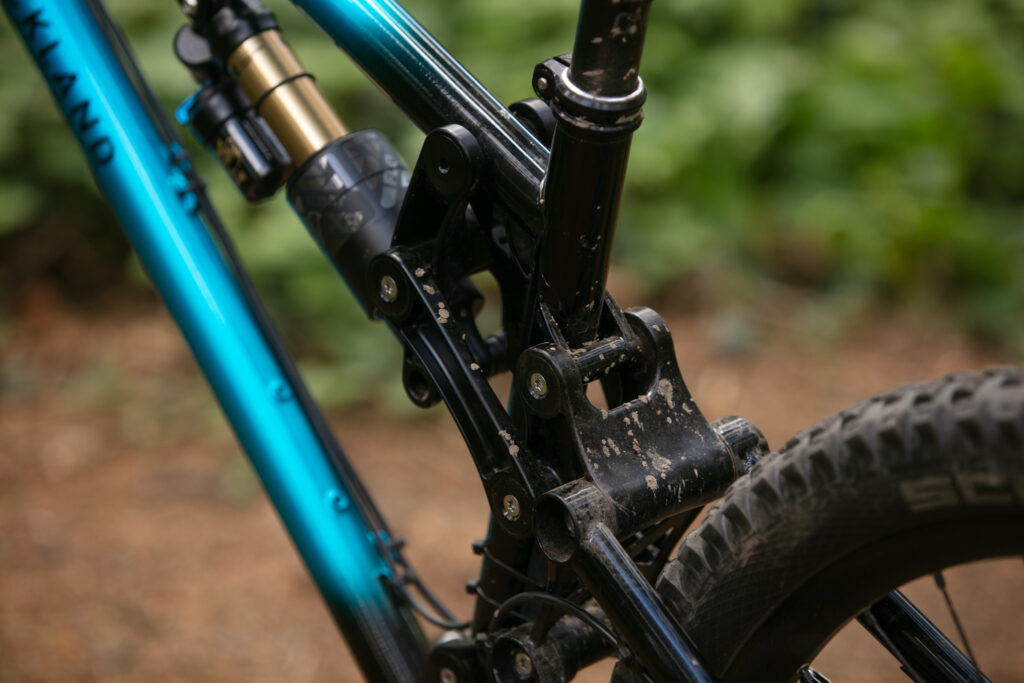
Then, under braking, the sentiment continues. Brake jack is non-existent, so even under very heavy braking loads, the Marra feels remarkably consistent both in its shape and how the suspension works. In fact, I purposely overbraked several times to see just how much it took for the rear wheel to break traction, or do something weird, quickly finding that it takes an awful lot of effort for it to do so. But when the rear wheel did lock up, the suspension was still active.
Even through particularly chunky bits of track, the Marra summons a real feeling of calm, partly down to its mass of travel and its ability to conserve its shape as the suspension compresses, but, of course, it’s a high pivot bike with that rearward axle path. As the rear wheel moves, and the suspension compresses with the impact of a bump rather than against it, it produces a noticeably smoother ride. Then, with that 32mm maximum chainstay extension, it benefits from a welcome boost of stability.
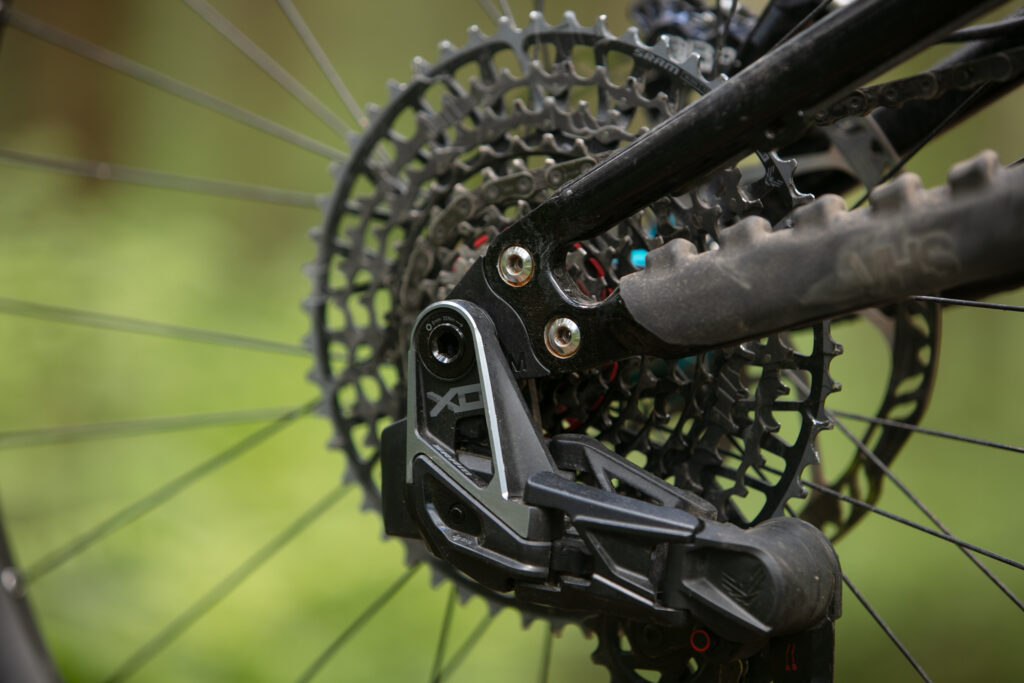
Because the Marra is such a calm bike to ride at speed, I found myself riding faster than I usually would, but without really knowing it. It wasn’t until I hit my usual braking points (or well, blew right past them) with the usual level of urgency that I realised how much faster I was going. Thankfully, the bike’s ability to remain active under heavy braking meant that I avoided unintentional airborne trips into the bushes.
Despite being a big ol’ 180mm enduro bike, it still has an air of flickability, and dare I say it, liveliness. Usually, such bikes are lumbering beasts that require a serious dose of muscle to wrestle around corners and to jump about on, but therein lies more KOLARP magic. On flatter terrain, that extreme rearward axlepath still holds the suspension around the sag point, which makes such a large bike feel remarkably manageable on terrain that enduro bikes usually have no business riding.
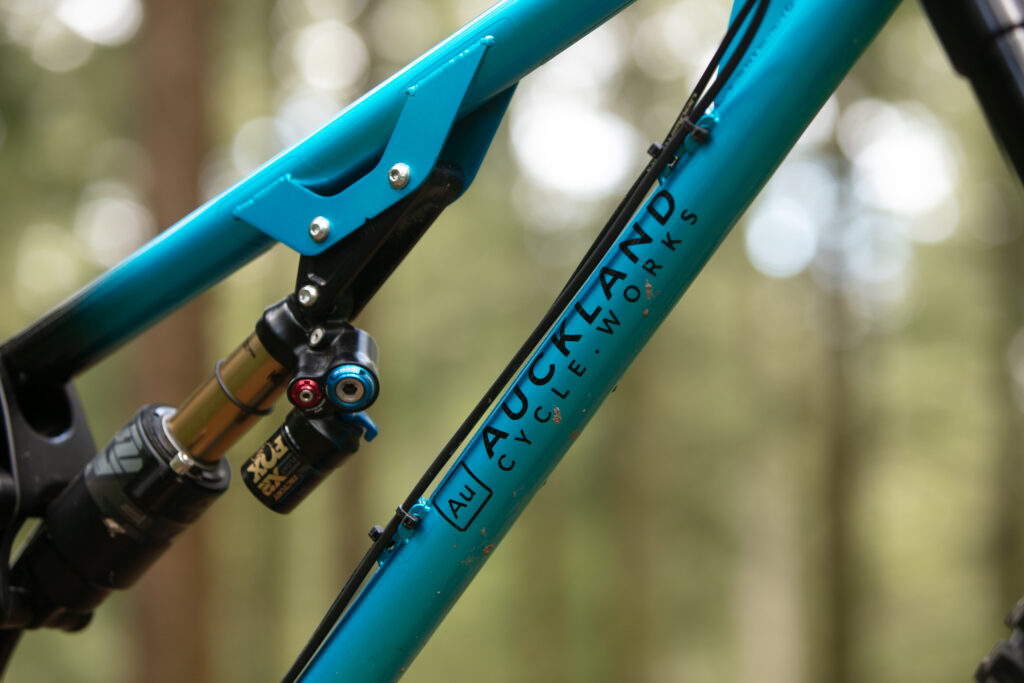
The Marra’s tendency to retain its geometry throughout its suspension travel means that Auckland hasn’t had to build it with a crazy slack head angle, or any other mental numbers. With that, the brand has managed to retain a very useful and appreciable level of agility in the bike. The chainstay, when unweighted, is short, and the 64-degree head angle is right on the money. So the rear end is easy to flick about, while the front end is responsive but not squirrelly when tackling a range of gradients.
Auckland Cycle Works Marra: the early verdict
I guess my time with the Marra has highlighted a bit of an issue that we’re seeing in the industry at the moment. Big brands have people, shareholders and their audiences to please. Thus, they’re not daring to push the boat out all that far. I get it, play it safe, rake in whatever cash is floating about at the moment.
But that leaves space for those with bright ideas, who have the bravery to dare.
That’s exactly the case with Auckland Cycle Works and the Marra. It’s a frighteningly different bike that certainly brings a more complicated system into the mix. But with that, it’s one of the most interesting bikes I’ve ridden for years. And although its KOLARP platform is so wildly hair-brained compared to pretty much everything on the market, it works. Its performance under braking loads is unlike anything I’ve ridden before. Its ability to conserve its geometry while rattling through chunky terrain encourages speed I simply haven’t been prepared for, but importantly, at such speeds the bike instils a level of calm that makes going fast remarkably comfortable. Then on milder terrain, it defies itself as a 180mm enduro bike as it’s engaging, responsive and still fun to ride.