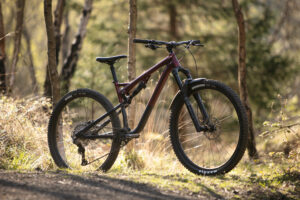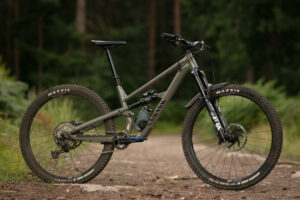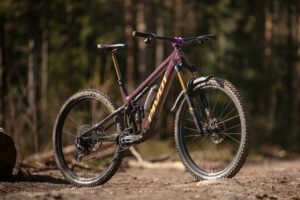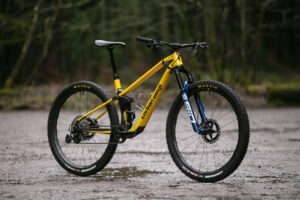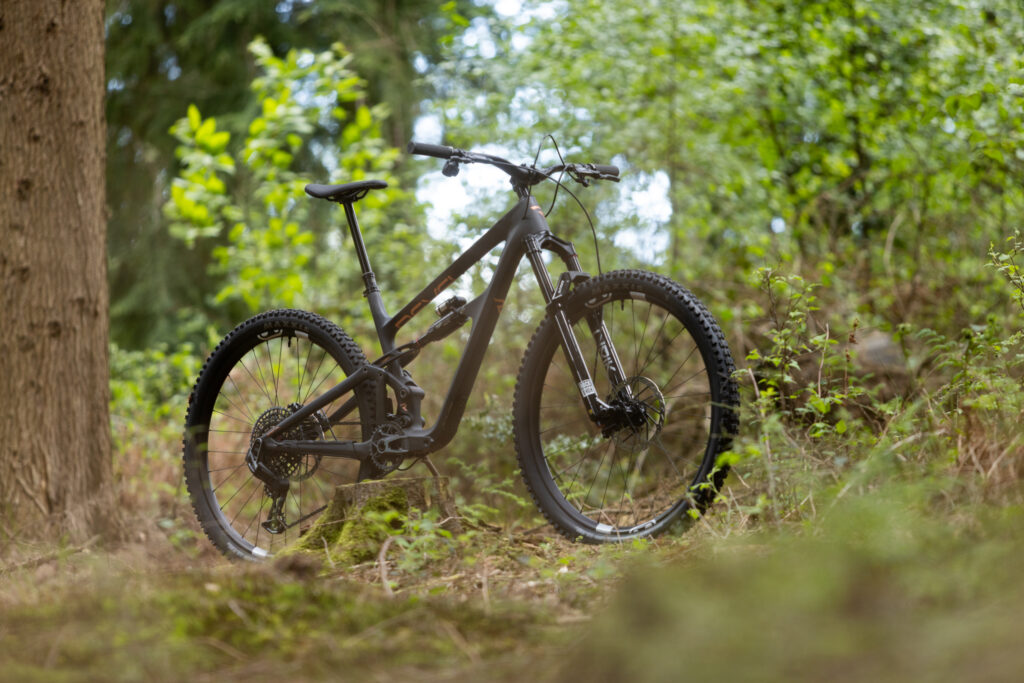

The Revel Rascal is a unique offering which blends capable suspension, a lightweight build and lively geometry into a bike that is an absolute hoot to ride. This bike will reward those who want a playful, agile and sure-footed ride yet still want to efficiently cover ground. Whilst the shorter reach and lower stack don’t promote confidence in the steeps, the climbing prowess and agility make this bike a real speed machine and a heck of a lot of fun.
Revel Rascal SRAM X0 Transmission – Technical details
The Revel Rascal do-it-all trail bike and is now in its third generation. Sitting between the shorter-travel Ranger and the longer-travel Ritual, it uses 29in wheels with 150mm of travel up front and 130mm at the rear. The aim is to create a bike that pedals efficiently enough for long days out but still has the stability and control needed for faster, rougher trails. Although Revel is a Colorado-based brand, its bikes are now available directly through its UK operation.
The Rascal uses Revel’s SL carbon frame, constructed using a mixture of Toray T700 and T800 carbon fibre. The frame also uses carbon suspension links to help keep weight down while maintaining stiffness.
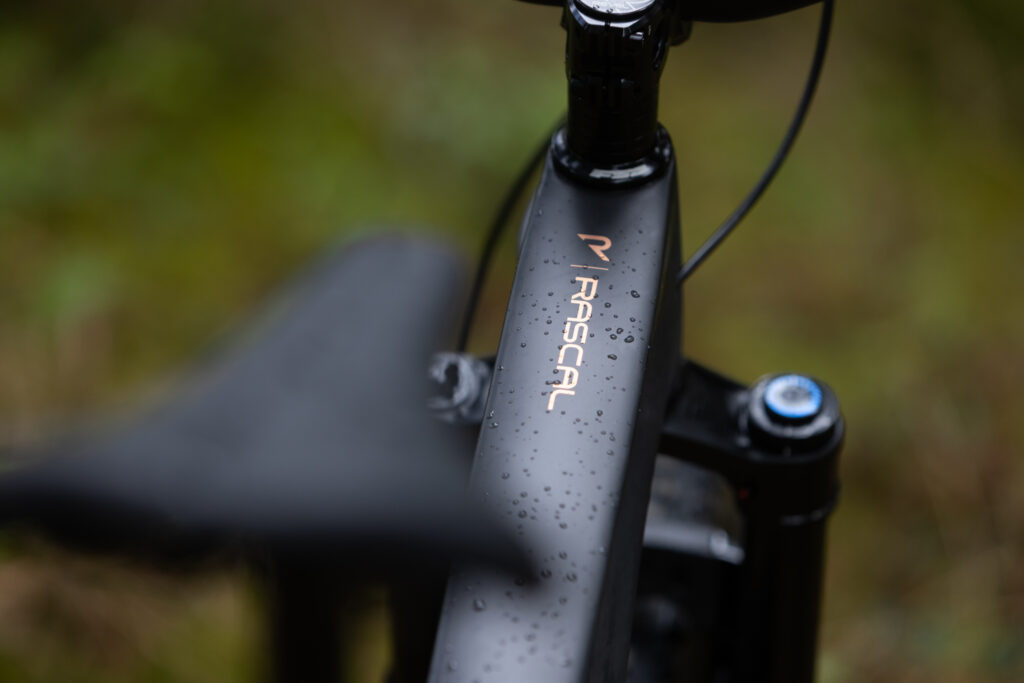
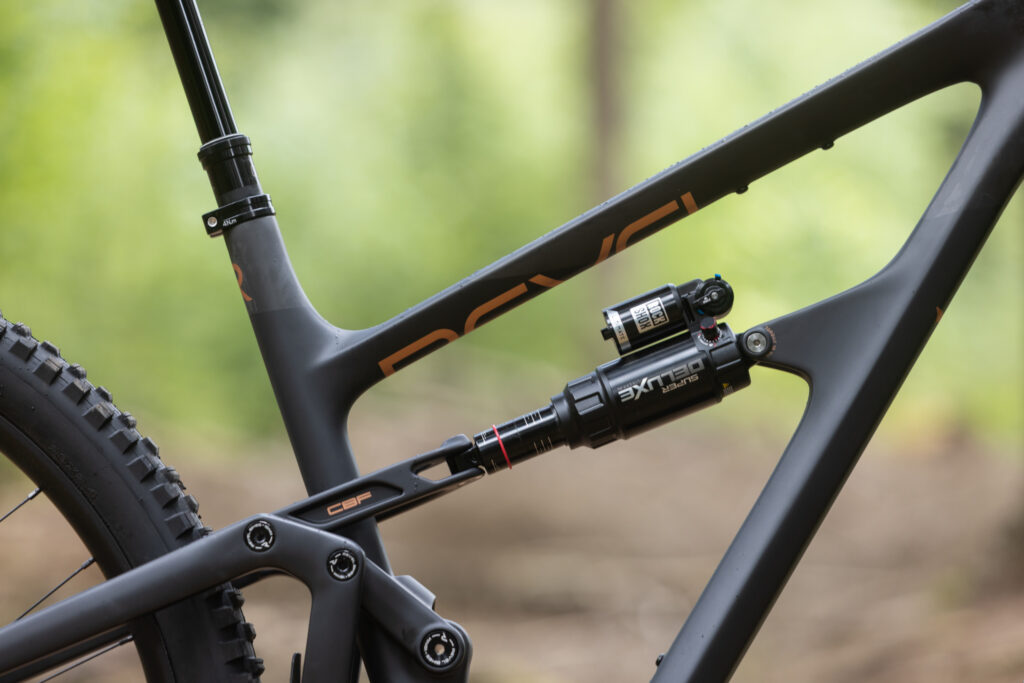
At the heart of the bike is Revel’s CBF (Canfield Balanced Formula) suspension design. The system is intended to provide an efficient pedalling platform while remaining active when the bike hits rough ground. Revel claims the 130mm rear end gives the Rascal the feel of a longer-travel bike without losing the lively character expected from a trail bike.
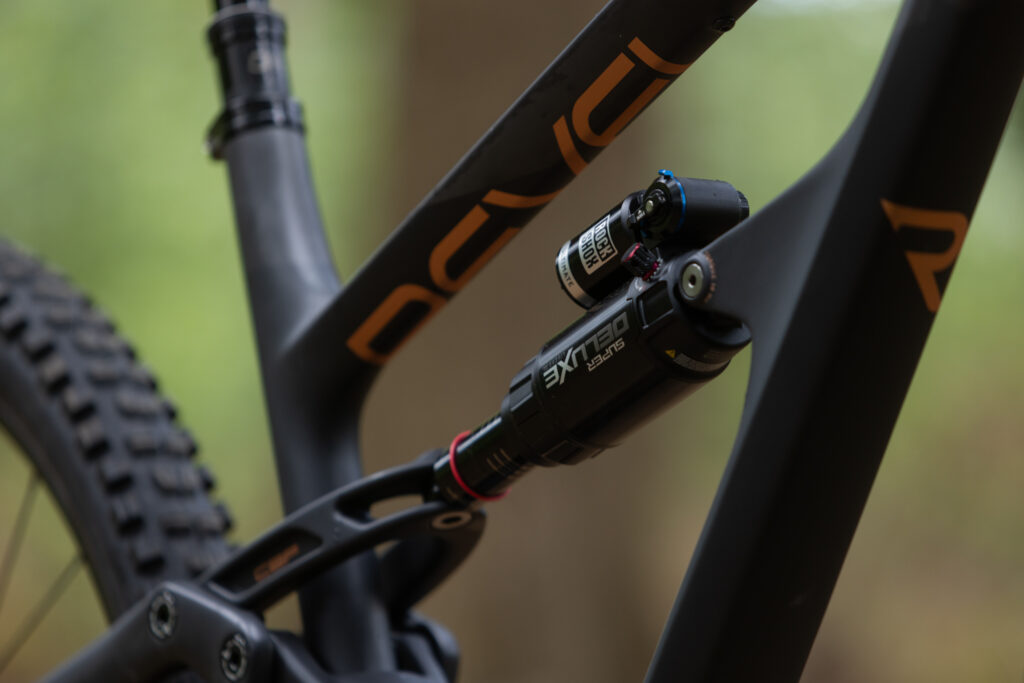
The rear shock is mounted low in the frame and uses a 210x50mm size. Revel recommends running around 30% sag, although riders can move roughly five percent either side depending on whether they want a firmer or softer feel.
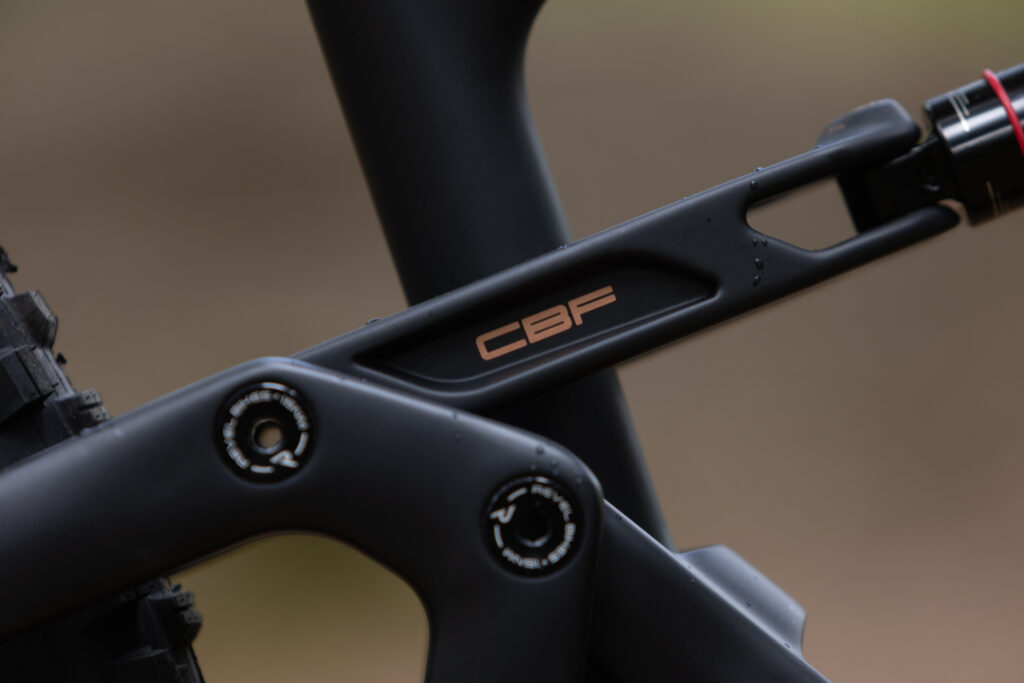
Practical frame details have been well considered. The Rascal uses a threaded BSA bottom bracket rather than a press-fit design; there’s no internal headset routing and SRAM’s Universal Derailleur Hanger joins the party. These should make replacement parts easier to find and help simplify maintenance.
The internal cable routing is fully guided through the carbon frame, giving the bike a clean appearance without making cable replacement or maintenance unnecessarily difficult. A removable mudguard sits around the lower suspension area, helping to protect the pivots and frame from mud and stones.
There is room inside the front triangle for a full-size water bottle, along with an additional accessory mount for carrying tools or a spare tube. The straight seat tube allows plenty of dropper-post insertion, with a maximum insertion depth of 300mm across the size range.
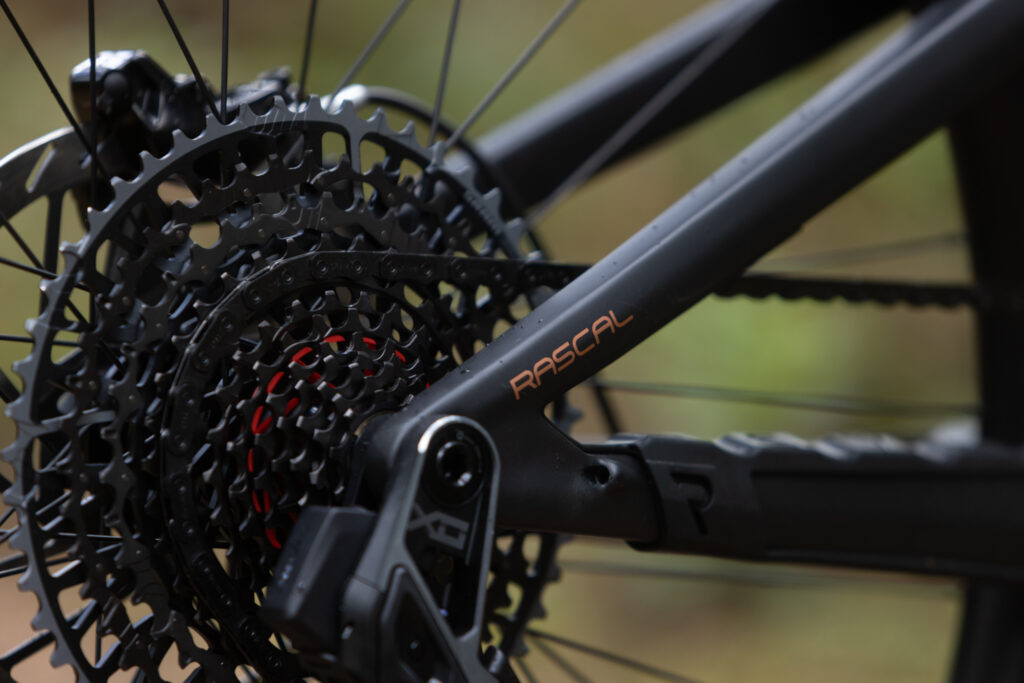
The rear end uses standard Boost 148mm hub spacing and has clearance for tyres up to 29×2.6in. ISCG-05 mounts are included for fitting a chain guide or bash guard, while the frame accepts a maximum chainring size of 36 teeth in a round profile or 34 teeth in an oval design.
Revel offers the Rascal in sizes small through to XXL. Reach starts at 430mm on the small, rising through 450mm on the medium and 470mm on the large, before increasing to 497mm on the XL and 527mm on the XXL.
The 64.8-degree head angle is the same across the range. Combined with the 150mm fork, it should give the Rascal plenty of confidence on steeper sections without pushing it fully into enduro-bike territory.
Chainstay length is also consistent across all five sizes at 436mm. This relatively compact rear end should help the bike remain responsive through tight corners, although taller riders may find the weight distribution slightly more rearward compared with bikes that use size-specific chainstays.
The effective seat angle starts at 75.75 degrees on the small, medium and large, becoming progressively steeper on the XL and XXL. This should place taller riders in a more central position when climbing, making up for the shorter chainstay, while giving the smaller sizes a comfortable seated pedalling position.
Revel Rascal SRAM X0 – Componentry
The X0 model sits towards the upper end of the Rascal range and comes with a high-quality specification that should be ready for demanding trail riding straight out of the box.
RockShox handles the suspension, with a 150mm Lyrik Ultimate fork paired with a Super Deluxe Ultimate rear shock. Both sit at the top of the RockShox range and offer plenty of adjustment for riders who want to fine-tune the bike’s suspension.
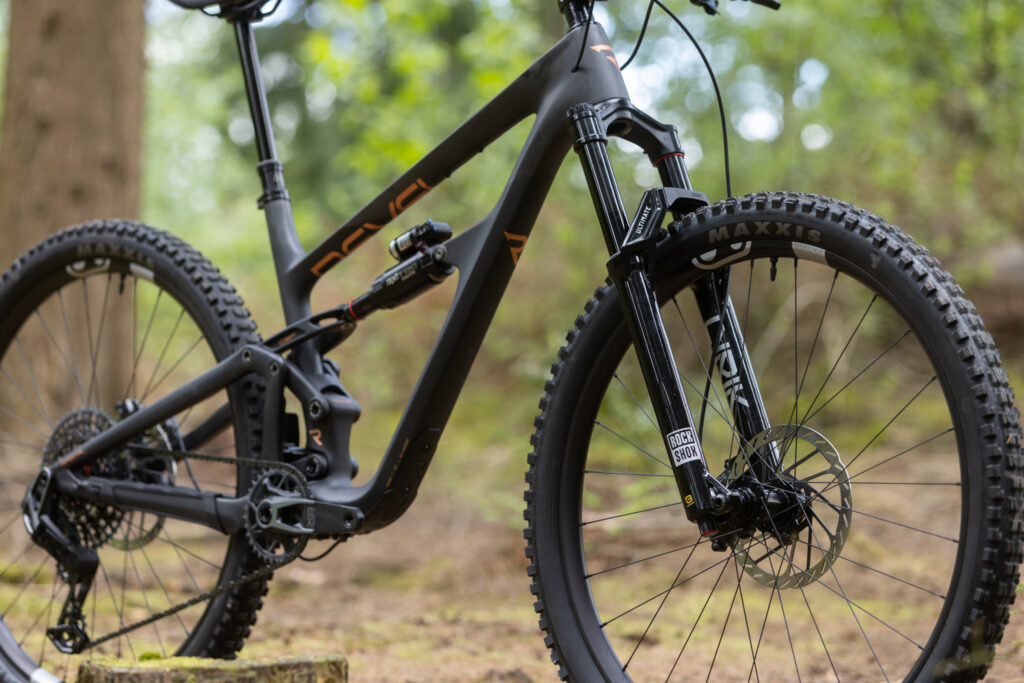
Drivetrain duties are handled by SRAM’s wireless X0 Transmission. This uses a direct-mount T-Type rear derailleur, a wireless AXS controller and a wide-range 10–52t cassette. A 32t chainring is fitted to 170mm X0 cranks, giving a broad spread of gears for steep climbs and faster trail sections.
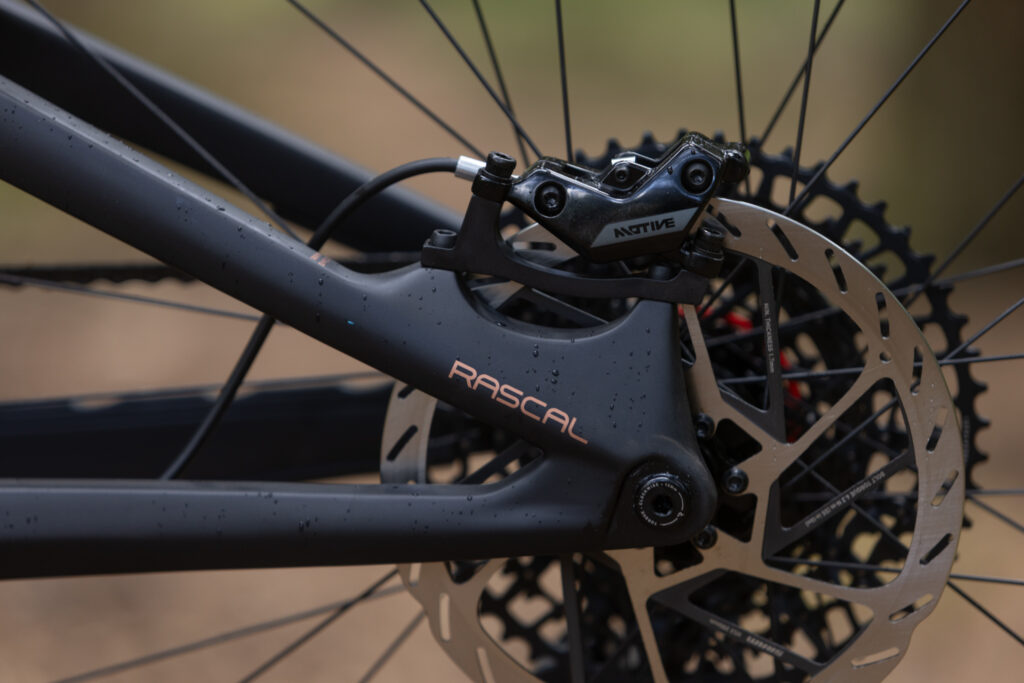
SRAM also provides the brakes, with Motive Silver four-piston callipers and 200mm Centerline rotors front and rear. The large rotors should provide plenty of stopping power, although the lighter Motive brakes are aimed more towards trail riding than full-on enduro use.
The cockpit uses a 35mm-diameter OneUp Components Carbon Handlebar measuring 800mm wide, paired with Revel’s own 40mm CNC-machined stem. The bar has 35mm of rise, providing a relatively upright position that should suit the bike’s technical trail intentions.
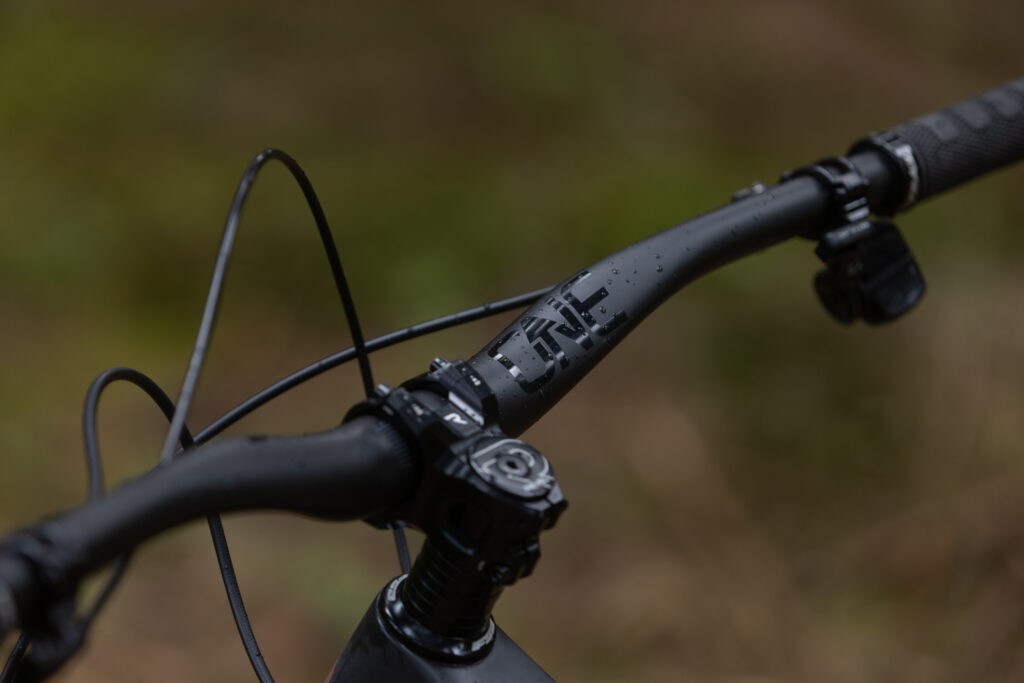
A OneUp Components V3 dropper post is fitted, with the amount of travel changing according to frame size. The small receives 125mm, the medium 190mm, the large 210mm and the XL 240mm. These are generous drop lengths, particularly on the larger sizes, and should allow riders to get the saddle well out of the way on descents.
The Crankbrothers Synthesis V2 Enduro alloy wheels are a sensible choice for a bike of this type. The front and rear wheels use different rim characteristics, with the front designed to provide a little more compliance and grip while the rear prioritises strength and tracking accuracy.
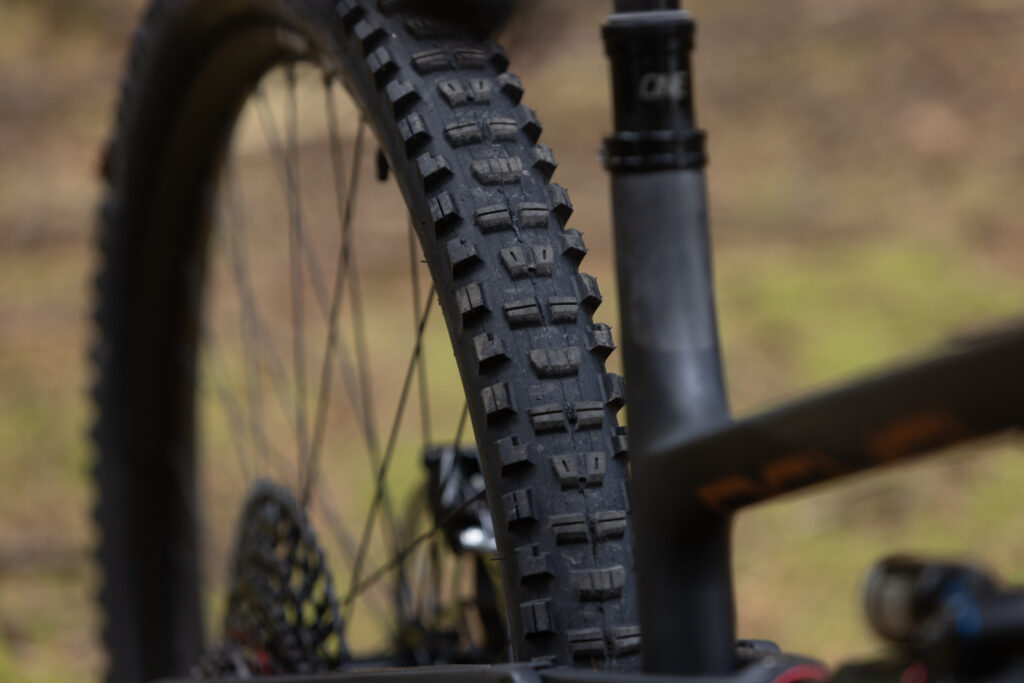
Maxxis supplies the tyres, with a 2.5in Minion DHF at the front and a 2.4in Minion DHR II at the rear. Both use MaxxTerra rubber and reinforced EXO+ casings, giving a good balance of grip, rolling speed and puncture protection for general trail riding.
Finishing details include an SDG Bel-Air 3 Lux saddle, Revel grips and a Cane Creek 40 Series headset. Overall, the Rascal X0 combines top-level suspension and drivetrain parts with sturdy alloy wheels and properly aggressive tyres, resulting in a build that prioritises real-world trail performance rather than chasing the lowest possible weight.
Revel Rascal SRAM X0 Transmission – Performance
For UK riders, there is the option at checkout to either have the bike directly shipped to them or collect from Revel UK in Abergavenny. Collection will involve free bike set-up including bar widths, control placement and suspension to get you up to speed in double time. All of the UK and EU orders (shipped directly) are fulfilled from Revel’s own workshop and warehouse based in Taiwan, with all the shipping duties and paperwork sorted for a speedy four to five business day shipment.
Revel recommends 25-30% sag at the back and 20-25% on the rear, which, for my 95kg, equated to 175PSI in the fork and 240PSI in the shock. I left the compression open and dialled in some rebound to get the bike feeling balanced. I quite like the rebound being set fast, however, I would say the rear shock’s rebound tune feels a little too light. I had the rebound fully closed on the shock, so for a heavier rider there may not be quite enough control here.
Anyway, let’s start with climbing. The Rascal offers a comfortable seated pedalling position with a sensible effective top tube length, although this is due to a combination of its relatively slack seat angle and short reach. On steeper climbs, the rearward seat angle puts the rider’s weight a little too far back over the compact rear end, causing the front wheel to lift and requiring more effort and a forward weight distribution to keep it planted.
Despite this, the Rascal is an efficient pedaller. The suspension remains active over uneven ground while producing very little pedal bob, helping the bike carry speed well across flatter sections and accelerate without feeling lethargic.
The rear suspension provides a supportive platform that gives the Rascal a lively and manoeuvrable character. It responds well to rider input and is easy to flick through tighter sections of trail or have fun carving up alternative lines. This is an absolute hoot to ride on trails which change direction and get you moving around on the bike. If you imagine a sliding scale between a long/stable bike and a nimble/playful bike, the Rascal falls towards the latter.
When the terrain becomes rougher, the rear end tracks the ground impressively well for its 130mm of travel, remaining composed and controlled. There is also plenty of traction under braking, helping the bike maintain grip when slowing down on loose or uneven surfaces. There is, of course, a limit to the capabilities of a 130mm bike, however, the rear end keeps up with the 150mm fork, so it’ll be the front end warning you to dial it down first.
As the descending gets steeper, the short reach and low stack do limit confidence, with the front wheel feeling a little too close and the weight a little too forward compared to other more aggressive trail bikes. Adding 10mm to the bar rise and 10mm to the stem length did help improve the bar position and create a more balanced riding position.
The spec on the XO model is well thought out with top-level suspension, wireless shifting and solid wheels; nothing is letting the side down here. The long dropper post is very much welcomed along with the excellent OneUp carbon bars. Whilst the Exo+ casing tyres may need to be thicker if you ride a lot of rocks and the SRAM Motive brakes aren’t the most punchy, both choices are appropriate for this bike’s intentions. It’s good to see the downtube protector wrapping around the bottom of the frame shielding from rock strikes, and a well-built chainstay protector, however, it’s a little on the firm side, which, whilst being durable, doesn’t do a great job of silencing chain slap. The bike is by no means noisy to ride, but on the roughest terrain that chain lets you know it’s there.
Revel Rascal SRAM X0 Transmission – Verdict
At £8,000, the Revel Rascal, in its X0 spec, is certainly not a cheap bike, however, that money does get you a very sorted spec with no need to upgrade anything. If you can do without the wireless shifting, the Eagle 90 spec represents a more enticing £6,000 price tag.
The Pivot Trailcat LT is a very close comparison to Rascal, offering 135mm of rear travel and a 150mm fork. The geometry is also similar in many aspects, although it does give 5mm more reach in the size large. The DW backend is another very capable performer, and the X0 spec comes fully loaded and ready to go, but you’ll be £10,800 lighter for it.
Another worth consideration is the Transition Smuggler, which offers 130mm rear and 140mm front travel. The carbon XO spec comes in at £7,300, and it’s a very comparable spec to the Rascal. The key difference being a slightly less stout fork in the RockShox Pike flavour for the Smuggler. It does offer more progressive geometry, which’ll make it a little more stable but potentially less manoeuvrable.
There’s also the Santa Cruz Tallboy to consider. Like the Smuggler, it’s a little smaller in the suspension department with a 140mm fork, and it definitely errs more towards the trail side of things with lower profile tyres, but Liam found it to be seriously capable and lively. But with a similar spec, it’ll set you back £8,299.
Overall, the Rascal is an efficient and lively trail bike that covers ground quickly, changes direction easily and remains composed across moderately rough terrain. However, its short reach, low front end and compact rear end limit confidence on steeper, more technical trails, where both its riding position and lightly damped shock begin to feel out of their depth. If you’re looking for a capable and agile step up from a cross-country bike, this could be exactly the bike for you.
Test Report
What does the manufacturer say about this product?:
The Rascal put Revel on the map when we launched in 2019. Now in its third iteration, we’ve improved every aspect of geometry, CBF kinematics, and uses the best quality carbon layup in the biz. Making the Rascal the ultimate do-everything, ride-everywhere trail bike.
This 130mm trail bike is mind-boggling. Riders around the world are blown away by it’s bottomless feel. From ledgy desert tech to fast flowy trail, it descends like a much bigger bike and climbs with incredible efficiency.
Tell us some more about the technical aspects of this product:
Wheel Size 29″
Front Travel 140mm
Rear Travel 130mm
Shock Spec 210mm X 50mm
Axles 177 x 12 x 1.0
Seatpost Diameter 31.6mm, 34.9mm Seat Collar
Max Seatpost Insertion Depth 300mm ALL SIZES
Rear Brake 180mm post mount/203mm max rotor size
Rear Tire Clearance 29″ x 2.6″
Bottom Bracket 73mm BSA English Threaded
Max Chainring 36T Round / 34T Oval, 55mm Chainline
Tapered Headtube IS42 Upper / IS52 Lower
Bottle Bosses 2 Sets of bosses. 1 set located along top of down tube. 1 set located along bottom of down tube. Size XXL has an additional set underneath the top tube.
Any further comments on quality?:
Excellent build with top quality finish.
The raw carbon looks great
No issues whilst riding
Nice frame details such as torque specs written on bolts
Any further comments on performance?:
As a full on trail bike it doesn’t handle the steep trails so well because of its low stack height and short reach. However it does carry speed well, handle rough trails better than the 130mm suggests and its super agile which makes it a fun and active ride
How does the price compare to that of similar products in the market, including ones recently tested?:
At £8000, the Revel Rascal, in it’s X0 spec is certainly not a cheap bike however that money does get you a very sorted spec with no need to upgrade anything. If you can do without the wireless shifting, the Eagle 90 spec represents a more enticing £6000 price tag.
The Pivot Trailcat LT is a very close comparison to Rascal offering 135mm of rear travel and a 150mm fork. The geometry is also similar in many aspects although it does give 5mm more reach in the size large. The DW backend is another very capable performer, and the X0 spec comes fully loaded and ready to go but you’ll be £10,800 lighter for it.
Another worth consideration is the Transition Smuggler which offers 130mm rear and 140mm front travel. The carbon XO spec comes in at £7300 which a very comparable spec to the Rascal. The key difference being a slightly less stout fork in the Pike flavour for the smuggler. It does offer more progressive geometry which’ll make it a little more stable but potentially less manoeuvrable.
List the components used to build up the bike:
Component SRAM X0 Transmission
Frame Rascal SL Carbon
Wheel Size 29″
Headset Cane Creek 40 Series IS42/52
Shock RockShox SDLX Ultimate 210×50, 130mm
Seat Collar Revel 34.9mm Dia
Fork RockShox Lyrik Ultimate 150mm
Wheelset Crank Brothers Synthesis V2 Enduro Alloy
Hubs CB Ratchet
Tires Maxxis DHF 29×2.5WT 3C MaxxTerra/EXO+/TR
Maxxis DHR II 29×2.4WT 3C MaxxTerra/EXO+/T
Handlebar OneUp Carbon Bar 35x800mm, 35mm Rise
Stem Revel CNC 35mm x 40mm Alloy
Grips Trail 1 x Revel Farlow Gap
Saddle SDG Bel-Air 3 LUX
Seat Post OneUp V3
125mm (SM), 190mm (MD)
210mm (LG), 240mm (XL)
Dropper Lever OneUp
Brakes SRAM Motive Silver
Rotors SRAM HS2 200mm 6-bolt
Shifter SRAM AXS Shifter Pod
Rear Derailleur SRAM Eagle X0 T-Type
Chain SRAM X0 T-Type 116L
Cassette SRAM X0 T-Type XS1295 10–52t
Crankset SRAM X0 Eagle T-Type 170mm 32t
Bottom Bracket SRAM DUB 73mm MTB WIDE threaded
Where does this model sit in the range? Tell us briefly about the cheaper options and the more expensive options:
Frame kit, Eagle 90, X0, XX and XX Flight Attendant
Tell us about the build quality and finish of the frame:
Excellent build with top quality finish.
The raw carbon looks great
No issues whilst riding
Nice frame details such as torque specs written on bolts
Tell us about the materials used in the frame:
The Rascal uses Revel’s SL carbon frame, constructed using a mixture of Toray T700 and T800 carbon fibre. The frame also uses carbon suspension links to help keep weight down while maintaining stiffness around the suspension system.
Tell us about the geometry of the frame:
Geometry Small Medium Large XL XXL
Effective Top Tube Length 584mm 605mm 627mm 652mm 680mm
Seat Tube Length 385mm 415mm 445mm 475mm 475mm
Seat Tube Angle 75.75° / 70.75° 75.75° / 70.75° 75.75° / 70.75° 76.25° / 70.75° 76.75° / 71.75°
Chain Stay Length 436mm 436mm 436mm 436mm 436mm
Bottom Bracket Drop 31.2mm 31.2mm 31.2mm 31.2mm 31.2mm
Bottom Bracket Height 348mm 348mm 348mm 348mm 348mm
Head Tube Angle 64.8° 64.8° 64.8° 64.8° 64.8°
Wheel Base 1180mm 1203mm 1227mm 1261mm 1298mm
Head Tube Length 90mm 96mm 104mm 115mm 115mm
Axle to Crown 566mm 566mm 566mm 566mm 566mm
Fork Offset 44mm 44mm 44mm 44mm 44mm
Trail 128mm 128mm 128mm 128mm 133mm
Stack 608mm 614mm 622mm 639mm 654mm
Reach 430mm 450mm 470mm 497mm 527mm
Standover 719mm 722mm 730mm 744mm 762mm
How was the bike in terms of sizing and angles? How did it compare to other bikes of the same stated size and intent?:
Short, its playful but lacks confidence on the steeper trails
How much suspension travel does the fork have?:
150
How much suspension travel does the rear end have?:
130
Was the bike comfortable to ride? Tell us how you felt about the ride quality:
Yes, good seated position
Standing position is shorter than I’d expect for a large
Did the bike feel stiff in the right places? Did any part of the bike feel too stiff or too flexible?:
No issues
How did the bike transfer power? Did it feel efficient?:
Yes
How would you describe the steering? Was it lively, neutral or unresponsive?:
Neutral
Tell us some more about the handling. How did the bike feel overall? Did it do particular things well or badly?:
Feels lively and agile
Steering is neutral, especially with a longer stem
Which components had the most effect (good or bad) on the bike’s performance? Would you recommend any changes?:
Suspension is excellent
Good tyres
Great length dropper
Stem and bars were swapped for a longer stem and higher rise bars
Any comments on sprinting?:
Good power transfer
Any comments on high speed descending?:
Ok on rough trails but steeps not so much
Any comments on technical descending?:
Great to pop off stuff, move the bike underneath you
Any comments on cornering?:
Active and easy to lean over
Any comments on technical climbing?:
Good traction and strong seated position
Tell us some more about the fork. Anything you particularly did or didn’t like? Any features which didn’t work well together?:
Top of the range fork, goes well
Any comments on rear suspension performance?:
Handles rough stuff well whilst offering good mid-stroke support
Tell us some more about the rear suspension. Anything you particularly did or didn’t like?:
Impressive for 130mm, feels like it offers good support, good traction and ramps well towards the end of the stroke
Tell us some more about the drivetrain. Anything you particularly did or didn’t like?:
X0, well tested and works great
Any issues with wheel durability?:
no
Tell us some more about the wheels. Did they work well in the conditions you encountered? Would you change the wheels? If so, why?:
Solid wheel choice
Tell us some more about the tyres. Did they work well in the conditions you encountered? Would you change the tyres? If so, why?:
Exo+ casings are appropriate for this bike, good grip and fast rolling compound
Tell us some more about the brakes. Did they work well in the conditions you encountered? Would you change anything? If so, why?:
A little under powered for the rowdy terrain but they’re appropriate for this bike
Tell us some more about the controls. Any particularly good or bad components?:
A well rounded out spec with sensible controls. Great carbon bar.
Did you enjoy using the product? yes
Would you consider buying the product? yes
Would you recommend the product to a friend? yes
Use this box to explain your overall score
Overall, the Rascal is an efficient and lively trail bike that covers ground quickly, changes direction easily and remains composed across moderately rough terrain. However, its short reach, low front end and compact rear end limit confidence on steeper, more technical trails, where both its riding position and lightly damped shock begin to feel out of their depth. If you’re looking for a capable and agile step up from a cross-country bike this could be exactly the bike for you.
About the tester
Age: 32Height: 183cmWeight: 95kg
I usually ride: Mostly mountain bike along with gravel for some good milesMy best bike is: Deviate Highlander 2 (mtb) Custom Titanium (gravel)
I’ve been riding for: 10-20 yearsI ride: A few times a weekI would class myself as: Expert
I regularly do the following types of riding: Fitness riding, Mountain bike XC, Mountain bike Enduro, Mountain bike downhill/freeride