


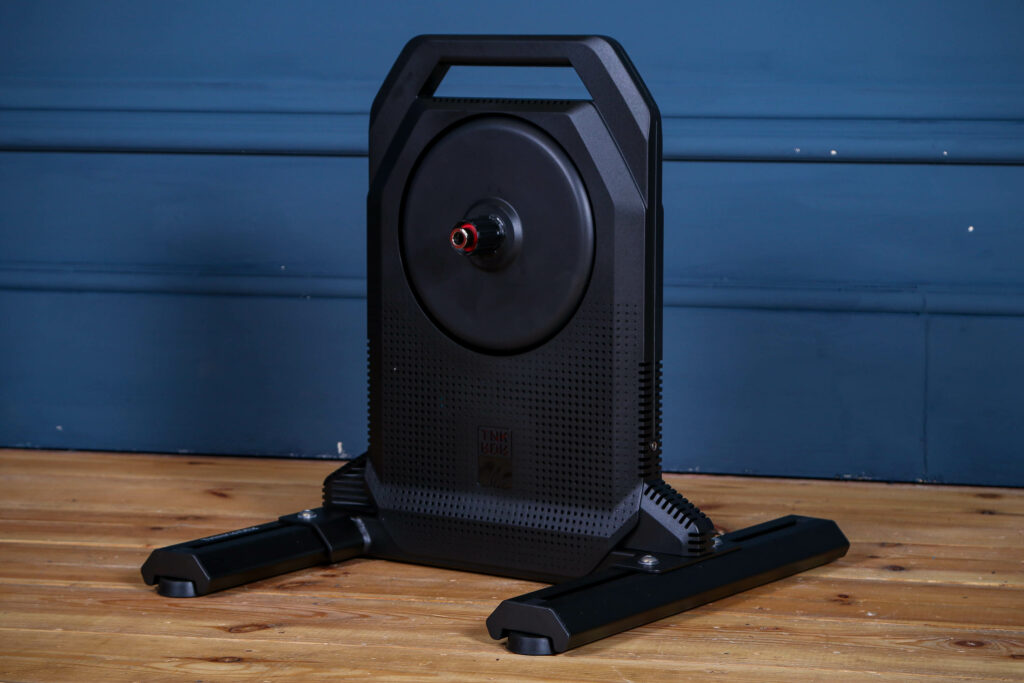



Want a very capable smart trainer for the kind of money a dumb trainer used to cost you a decade ago? Of course you do, and the ThinkRider XXPRO Direct Drive Smart Bike Trainer doesn’t disappoint. It’s a great option that’s easy to use and spits out accurate power numbers. For the money, it’s simple to recommend.
Thinkrider XXPRO – setup and specs
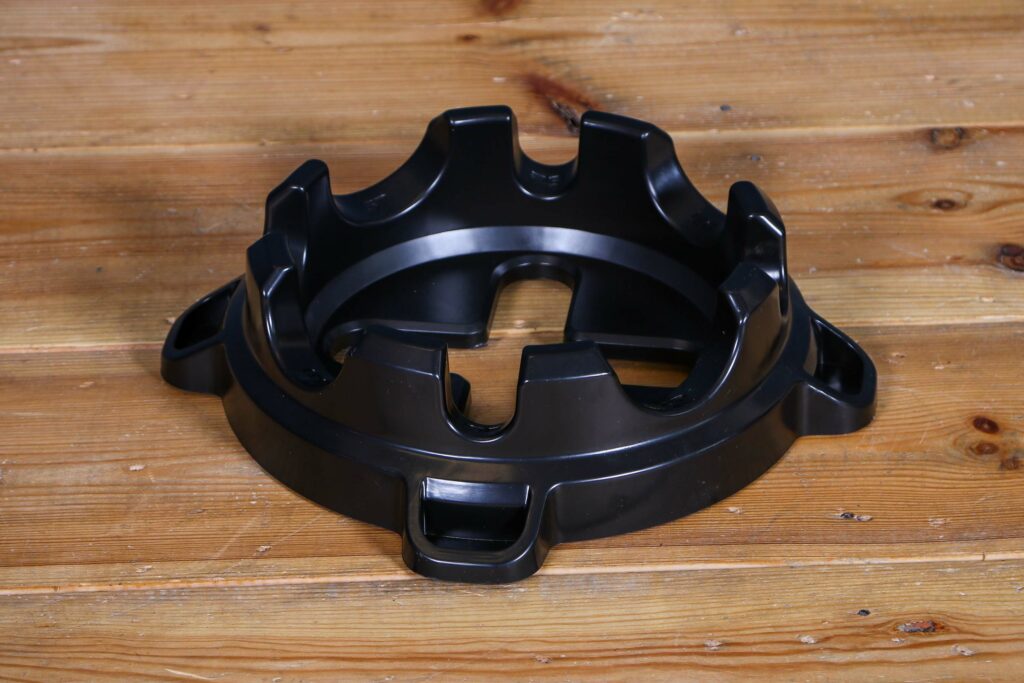
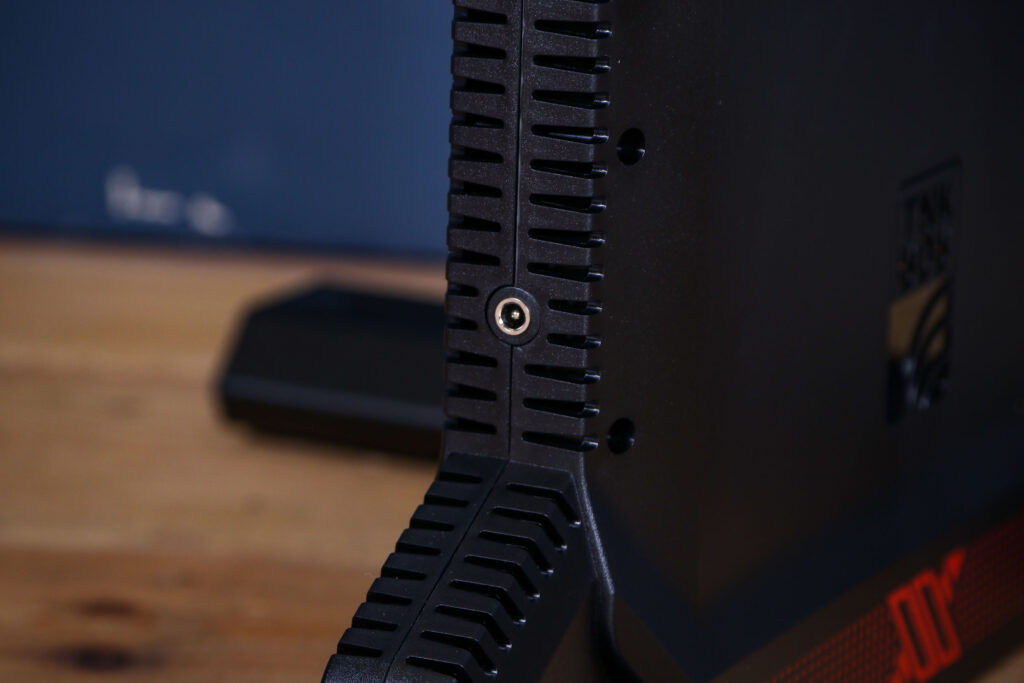
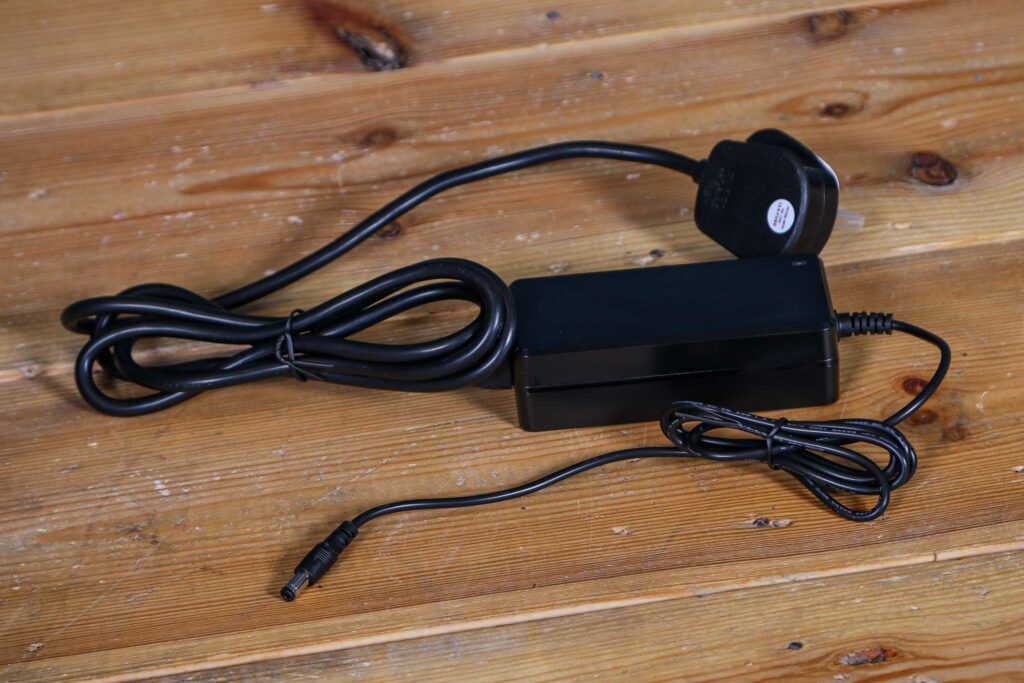
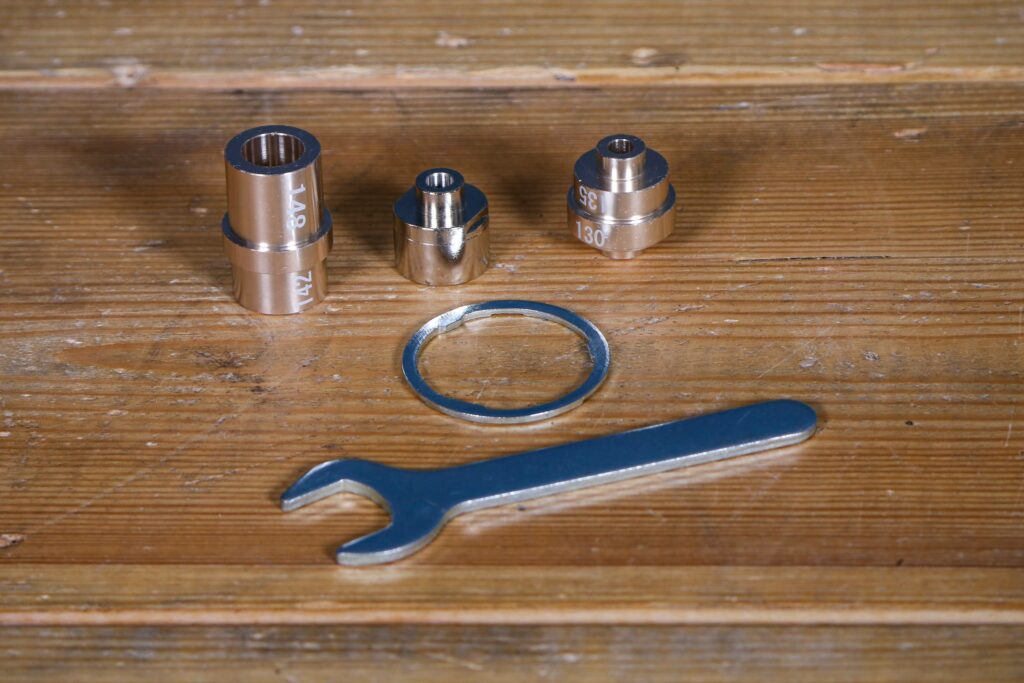
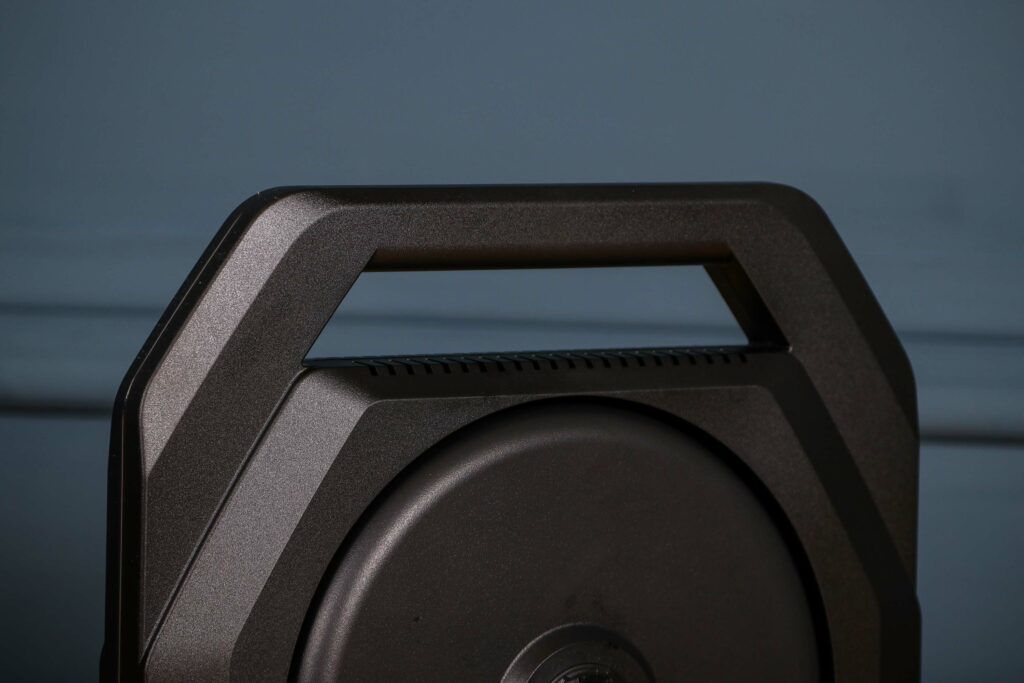
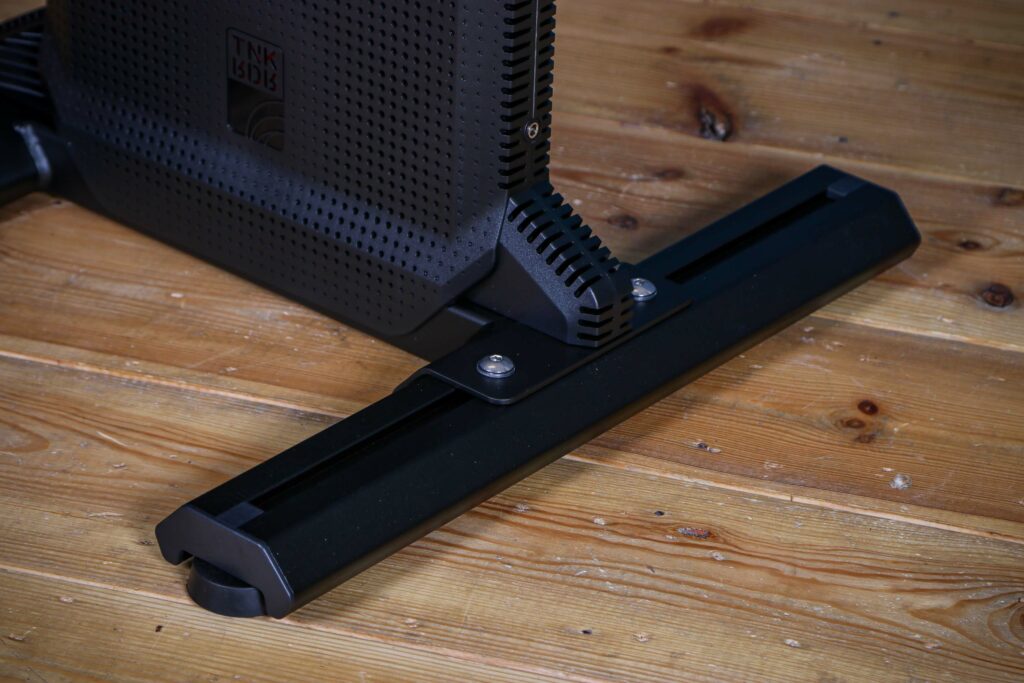
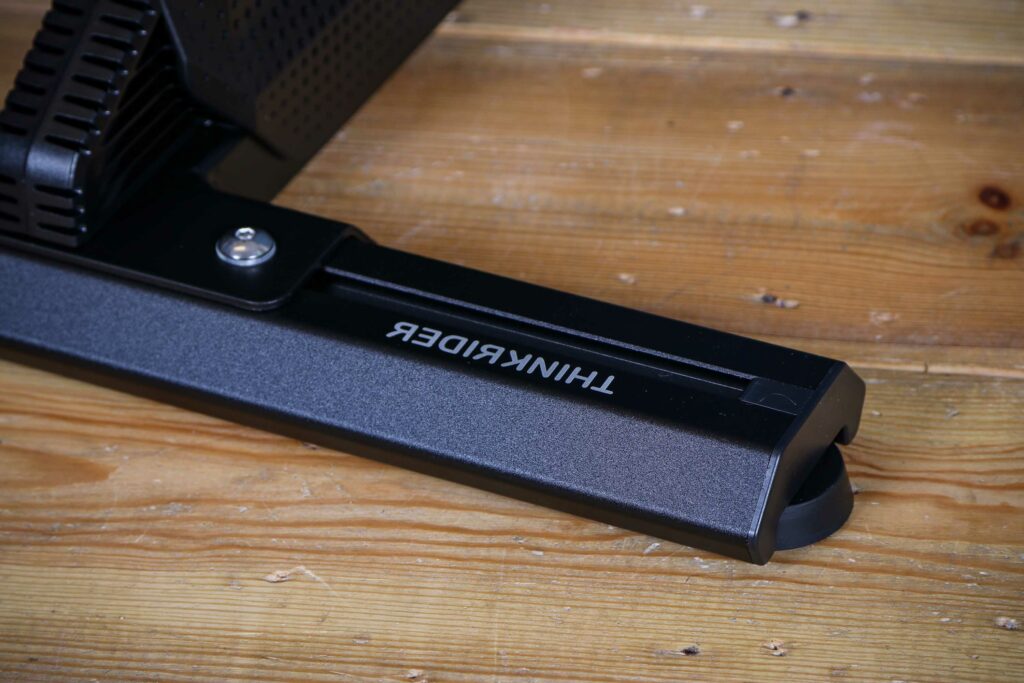
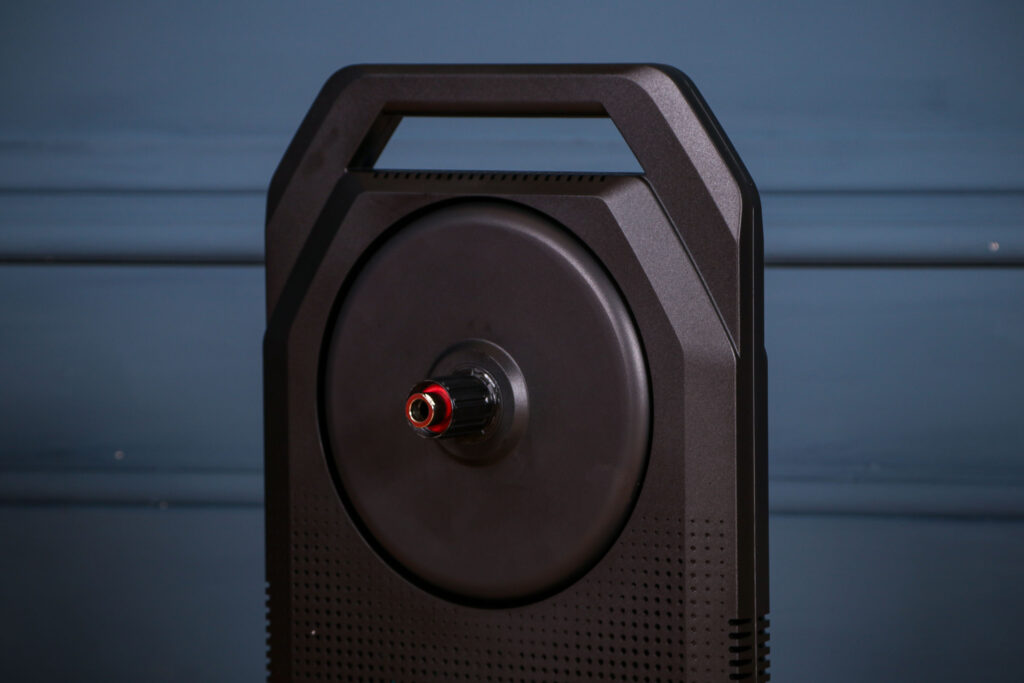
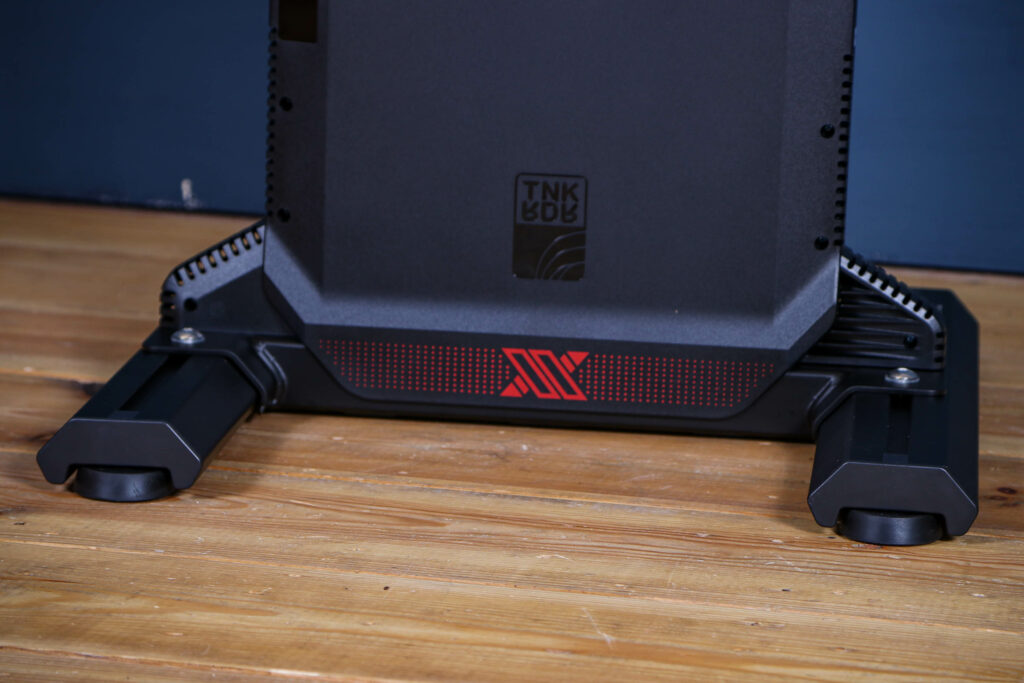
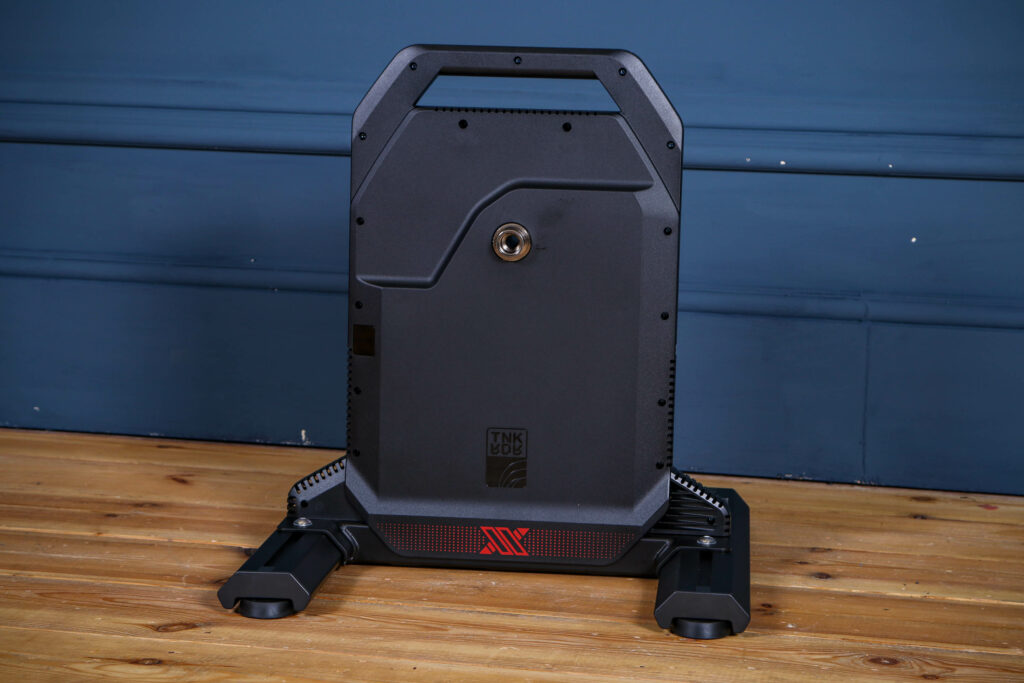
The XXPRO comes in three bits – you just bolt the two legs on, add a cassette (not included) and plug it in and you’re ready to go. You can fit more or less any 8-12spd cassette that uses an HG spline pattern (an XDR freehub is also available), and the trainer is compatible with quick release and thru-axle frames.
Setting it up the first time took about ten minutes, not including the ubiquitous firmware upgrade on first use. It’s ANT+ and BLE compatible for connection to your favourite training apps, and I had no issues connecting it to Zwift, TrainerRoad or MyWhoosh.

I found the connection to be stable, and I didn’t experience any dropouts. However, it doesn’t support wired or WiFi connections.
The XXPRO uses a brushless DC motor resistance unit, with a claimed maximum resistance of 2,500W and a maximum simulated gradient of 25%. That puts it in the top tier of trainers, as does its claimed +/- 1% accuracy.
The motor brake can simulate a flywheel, in the same way that a Tacx Neo or KICKR Bike Pro does, and it can also drive itself during a long downhill – although I didn’t find it did that as effectively as the Neo does.
The other thing it can do is generate its own power. If you’re a racer who likes to warm up on the turbo in the car park, then you can take the XXPRO and do your structured intervals out in the wild just like you would in the shed. It’s a bit of a niche but it might be handy for some riders. At 18kg it’s not so heavy you couldn’t chuck it in the boot.
Thinkrider XXPRO – the ride
I’d describe the ride of the XXPRO as pretty neutral overall. It doesn’t do anything badly, and most of the time I didn’t think about it. It felt a lot like riding outdoors in terms of the trainer’s response to input.
There’s no major weight in the drive and resistance unit, but it mimics a flywheel pretty well. There are times on steeper gradients – when you’re standing and grunting up to the radio tower in Zwift for example – when it starts to feel a little bit choppy, but overall it’s very composed – especially considering the price point.
Winding it up into a big sprint didn’t expose any particular weaknesses. The trainer is heavy enough and has a wide enough footprint to be stable when you’re giving it the beans, and it winds up nicely with power.
Direct drive trainers are generally very quiet and this one is no exception. Once you’ve got your gears clicking and your fan blowing, it’s just part of the background hum of training.
The XXPRO is well-balanced and didn’t vibrate or resonate at all. Everything felt very smooth and it behaved as well as trainers that are significantly more expensive.
Thinkrider XXPRO – power accuracy
How does it live up to its accuracy claims? Pretty well, turns out. I compared the trainer to the excellent Favero Assioma Pro-RS2 pedals which I’m happy are a fair representation of the power I can get out of my grumbling legs in the shed. Well, I’m not happy – but they are fair.
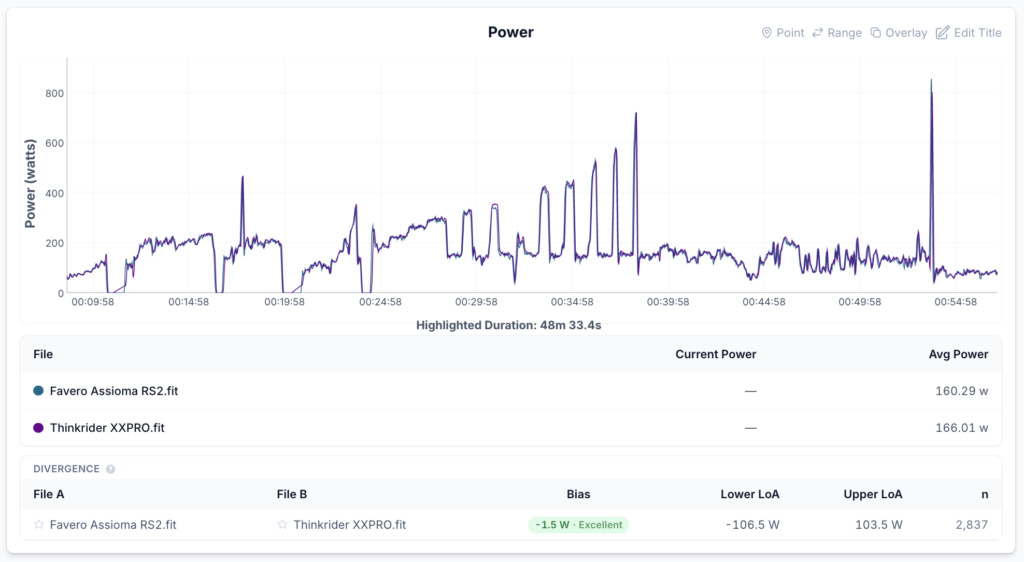
Here’s 45 minutes of free riding with my 15-minute power benchmarking workout in the middle. There’s about 6W between the two overall, with the Thinkrider reading higher.
The more nuanced bias score from the analyser tool, which uses the Bland-Altman method to calculate the average difference between readings, puts the difference at just 1.5W. You can see from the graph that there’s a broad agreement between the two power meters.
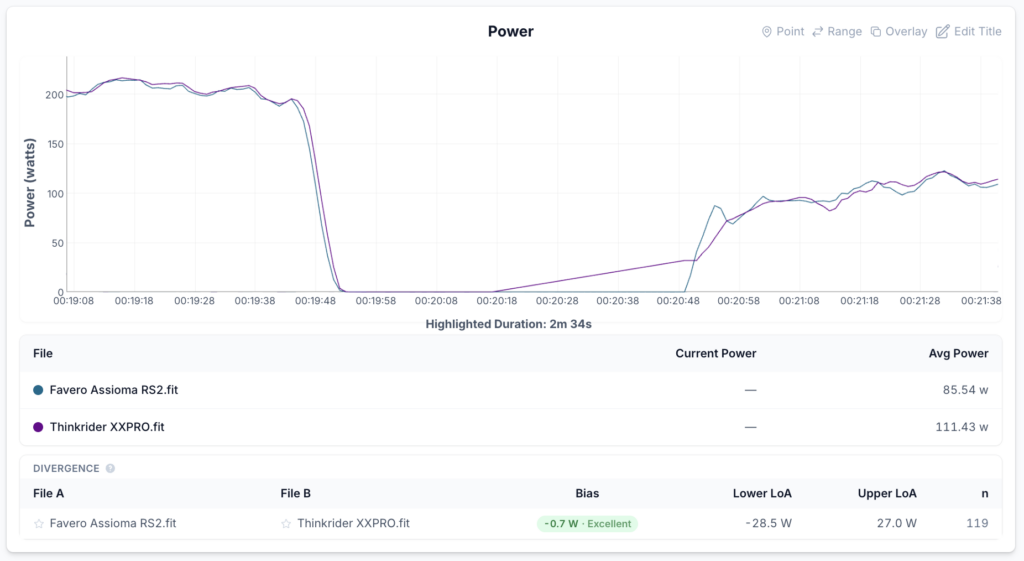
The way the Thinkrider handles zero power sections is to report nothing at all, rather than to report zero like the pedals do. That means there’s more zero data in the Favero dataset which overall pushes the average lower. The bias number discounts the extremes and so wouldn’t take this into account, which is why that measure agrees much more closely.
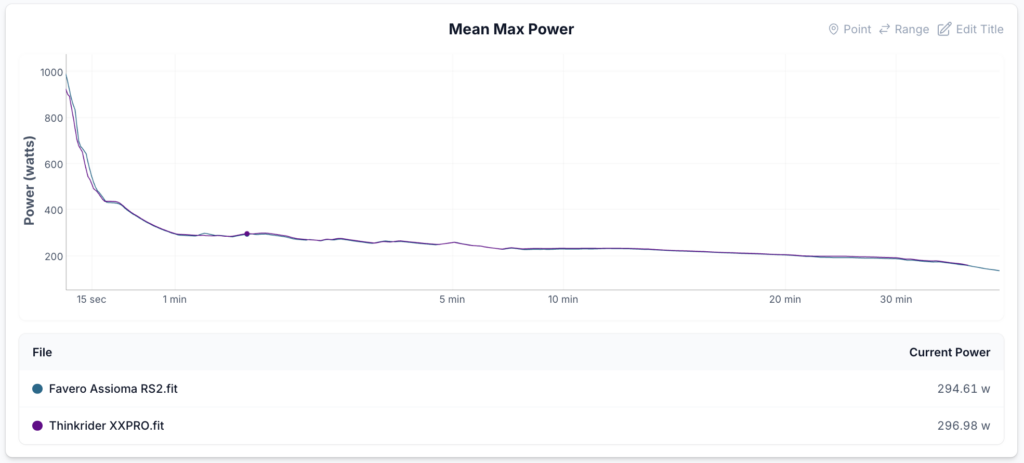
The mean max graph shows that across the board, the two power meters are very much in agreement. There’s a bit of discrepancy at higher powers and shorter durations (actually the pedals are on top here) but that’s not uncommon and it’s often as much to do with the sample size and sampling rate as it is with any actual reading differences.
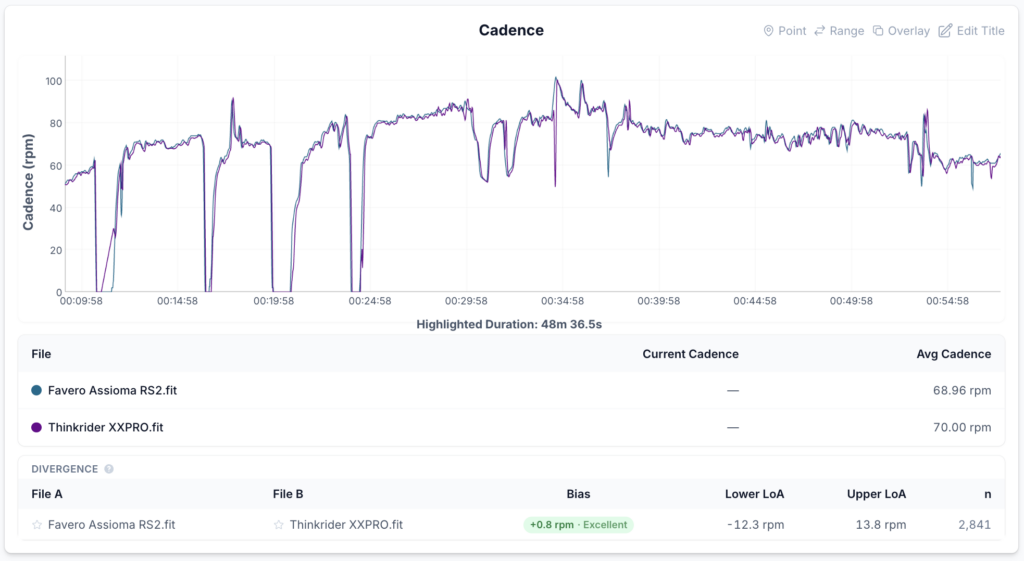
Here’s the cadence plot, which again shows nothing to worry about: the XXPRO agrees with the pedals overall. Although there’s a bit more noise in the line than with the power, the overall bias shows the two are within 1rpm of each other.
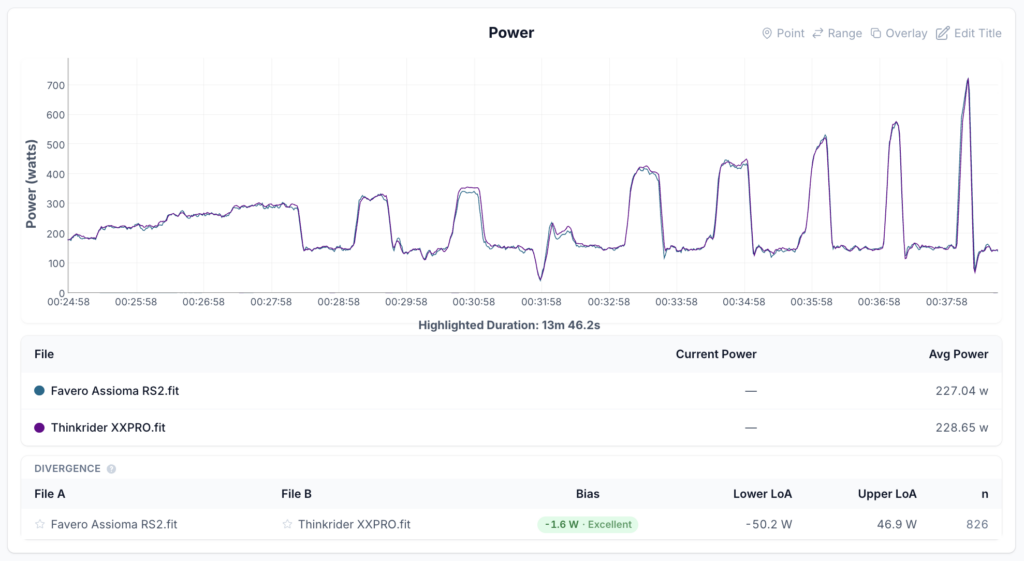
Here we’re focused on the interval section of the ride, which is a series of intervals that get harder and shorter: four minutes of ramped warm-up, then intervals that start at 30 seconds and shorten as they get harder, up to a maximum of 250% of FTP for ten seconds at the end. You might be able to tell that things didn’t go entirely to plan here, with the third interval kind of missing in action. Why’s that? Well, let’s investigate.
Thinkrider XXPRO – ERG performance
ERG mode is where the training software sets the required power and the trainer adjusts the resistance so that you’re hitting the numbers. All smart trainers have it, and some are better than others.
I’ll preface this bit by saying the Thinkrider is largely good. If you’re riding at a constant cadence then the resistance ramps up and down quite effectively. It’s not as rapid to change as some, which is both good and bad.
If a trainer is too quick to respond to changes in power and cadence then the start of a hard interval can send you into what’s known as a doom spiral: the power ramps up quickly, your cadence drops as a result, the trainer notices you’ve started pedalling more slowly and adds more resistance so the lower cadence will hit the power number… and you grind to a halt. That’s unusual to find now, but what you do often find is a power spike at the start of the interval where the resistance has ramped up and it takes a short while to settle to the new level.
The Thinkrider is at the other end of the spectrum. The resistance increases very gradually, so there’s no spike at the start of a hard interval. However, it’s also slow to respond to changes in cadence, so when you have a situation where you’re heading into an interval that you want to do standing up, the two things are compounded and the interval never really gets going.
That third spike was supposed to be around 395W but never got above about 280W in the 30 seconds. The one before it was also a low-RPM standing interval and it made a better job of that, so I’m not sure what the issue was the second time.
Anyway, I think some work is needed on the ERG algorithm yet to bring it into line with the competition. It’s a firmware thing, so it’s not like the hardware is compromised. Most of the time it’s fine; sometimes it’s not, but it always feels a little bit slow.
ERG smoothing is available on the app if you want it. It makes the line look nicer but I can’t really see the point myself.
Thinkrider XXPRO – app
The Thinkrider app doesn’t bring much to the party. It’s basic, and it’s mostly there to handle firmware updates and the like, which it does just fine. There are some calibration options too, but they’re not relevant to this particular trainer.
One thing it does give you, though, is the ability to tweak the power numbers coming from the trainer. This might be useful if, for example, you’re running an external power meter that reads significantly above or below the XXPRO and you want to make sure you’re having a consistent experience indoors and out.
Crank meter reading 8% more than your trainer? Just bump the trainer numbers up by the same amount and you can directly compare your indoor and outdoor rides. Again, it’s a bit of a niche use case, but it could be just the ticket if you’re stats-obsessed.
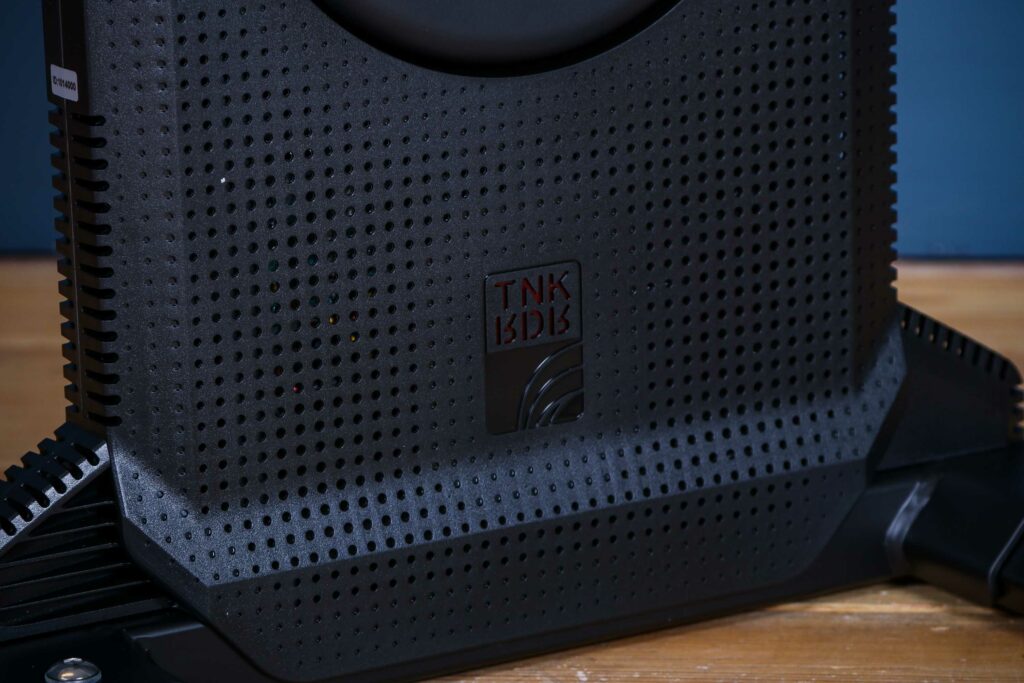
I wish there was a button to turn off the flashing red Thinkrider logo. There isn’t.
Thinkrider XXPRO – value and overall
Normally, we would consider value on RRP, but it’s not actually clear what the RRP is for the XXPRO. Currently you can get it on Amazon at the ThinkRider official store – which is about as close to an RRP as you can get – for just £299. That’s some serious value right there. AliExpress will also match prices found elsewhere and will refund the difference if a customer finds it cheaper elsewhere on Amazon, eBay, Shein or Temu within seven days of purchase.
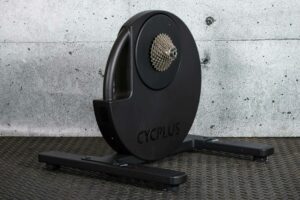
The Cycplus R200 is the obvious comparison: a relative newcomer to the market making a really, really good device for the money.
Compare the specs to something like the more established Wahoo KICKR Core 2 or Elite Rivo and you’re getting more for considerably less: more top-end grunt, more accuracy, a more high-end resistance unit.
The JetBlack Victory is cheaper than either of those, and just as good. It’s the pick of Zwift-cog-equipped trainers right now and deservedly got five stars – as did the Cycplus. I’m not going quite that far with the XXPRO because I think the ERG mode still needs a bit of work, but it’s a great trainer and a proper bargain, and I wouldn’t hesitate to recommend it.
> Indoor cycling — a complete guide and everything you need to get started
Test Report
What does the manufacturer say about this product?:
THINKRIDER brand was founded in 2015 and specialized in the development and promotion of smart cycling rollers. After more than a decade of technological accumulation and experience in the market, it has launched two new series: X2 Max and XX Pro. Our mission is that ordinary consumers can use smart rollers, making innovation and technology serve every rider.
Tell us some more about the technical aspects of this product:
Model: XXPRO
Color: Black/White
Drive Type: Motor Self-Driving
Power: 2500w
Power Accuracy: ±1%
Gradient: 25%
Output Data: Power/Cadence/Speed/Left-Right Balance
Wireless Transmission: Wifi & BLE& ANT+
Downhill Simulation: Plug-in Power
Power Tuning: Calibration-Free
Compatibility: Road : 24/650c/700c, MTB : 24″/26″/650B/29″
Cassette Compatibility: Shimano HG spline compatible with Shimano 8-12s and SRAM 8-11s cassettes.
Software Support: Zwift, Onelap, Rouvy, TrainerRoad, BKOOL Cycling, Wahoo Systemx, ThinkRider
Set-up Dimensions: 48x50x52cm
Net Weight: 18kg
How does the price compare to that of similar products in the market, including ones recently tested?:
£299 is as cheap as nearly any smart trainer, but the XXPRO has some serious spec
Any further comments on ride feel?:
Good in nearly all circumstances
Any further comments on stability?:
No issues even when sprinting
Any further comments on accuracy?:
Very good compared to the Favero pedals which are a known quantity. I don’t have any concerns. Power is tweakable in the app.
Any further comments on adjustability?:
Adjustable feet for stability, works with QR and 142/148×12 thru-axles
What connection protocols does the trainer support?:
ANT+, BLE
Any further comments on connectivity?:
No WiFi, no wired
Any further comments on smart resistance performance?:
Really good
Any further comments on ERG mode performance?:
Mostly good but the algorithm needs a bit of work to make it as good as some of its competitors
Did you enjoy using the product? Yes
Would you consider buying the product? Yes
Would you recommend the product to a friend? Yes
Use this box to explain your overall score
Nearly a 10, with some minor tweaks it definitely can be
About the tester
Age: 53Height: 189cmWeight: 104kg
I usually ride: whatever I’m testing…My best bike is: Dward Design Custom Audax, Lauf Úthald, Cannondale Topstone
I’ve been riding for: Over 20 yearsI ride: Every dayI would class myself as: Expert
I regularly do the following types of riding: Road racing, Gravel riding, Indoor riding, Indoor racing, Bikepacking, Commuting, Touring, Club riding, Audax, Fitness riding, Leisure riding

3 thoughts on “ThinkRider XXPRO Direct Drive Smart Bike Trainer”
Does anyone know if this trainer has a ‘race mode ‘ , that’s ten hertz transmission rate. Thanks.
@VIPcyclist I’m going to guess no, as it doesn’t support wifi or wired connection, only ANT+ and BLE.
My wife bought one and I thought wow, amazing. third day of use it was all over the place. She was on a descent and it went it to max power level and stayed stuck there. Then after a reset, it would suddenly drop all the resistance while riding on a flat road and then suddenly go so high, she couldnt pedal. Trying to get help and service from these guys is a nightmare and this just shows buying direct from what looks like a professional company is easy when you are parting with your money, but like peeing in the wind when you need help. We are at th point where we are going for a credit card chargeback now.