



The MUOV Road Bike offers really good performance and a unique look and feel, with a built-in tilting mechanism. It integrates well with training apps (especially Zwift) and you can have any colour to match your outdoor bike or your training room. It’s quiet, and the power accuracy is very good. No getting away from it though: this is an expensive way to train.
First things first: this is a lovely-looking thing. The carbon frameset is made in the UK and painted in-house at the MUOV headquarters: you can basically have any colour scheme you want.
The frame itself is available in three sizes and I started with a medium mostly because when I originally got the bike the large wasn’t quite ready for shipping. I’m between the two sizes at 1.90m but I’d have probably gone for a large if it was my own money.

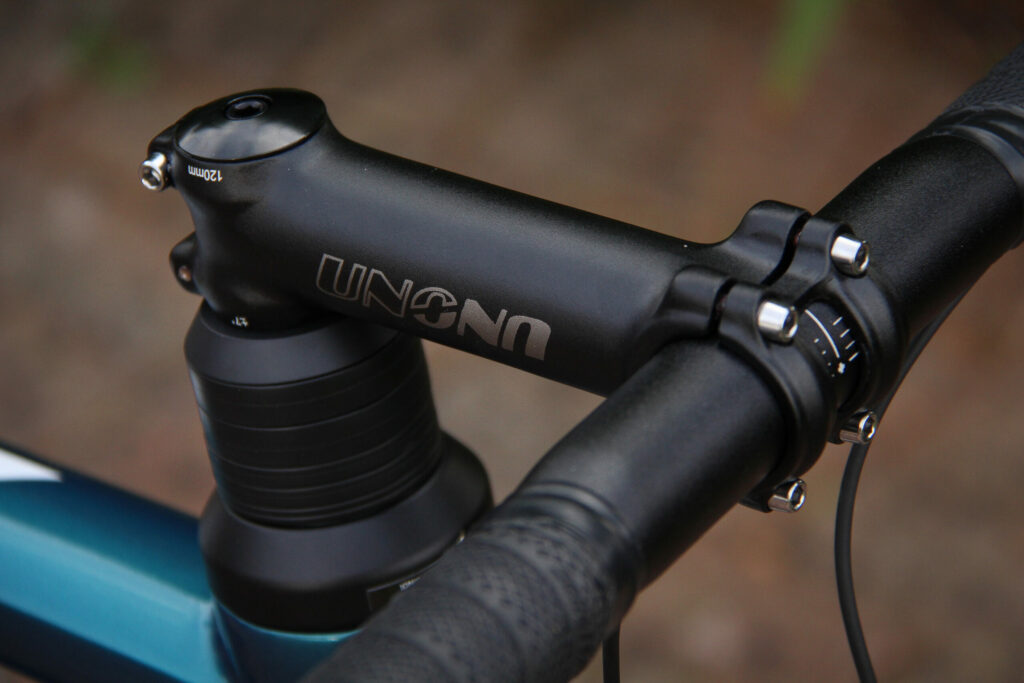
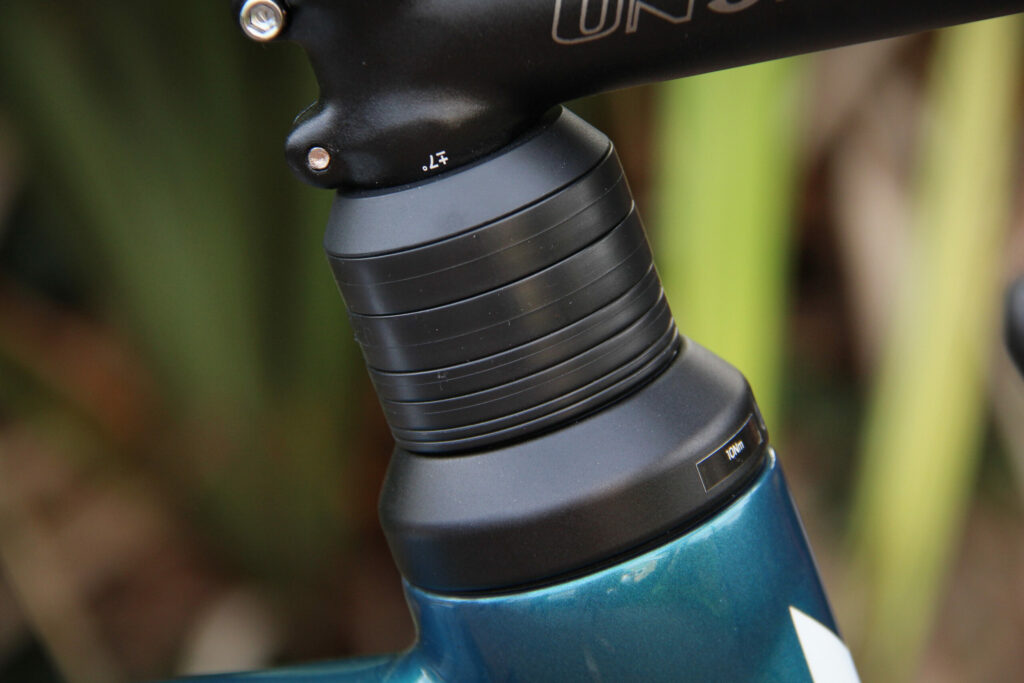
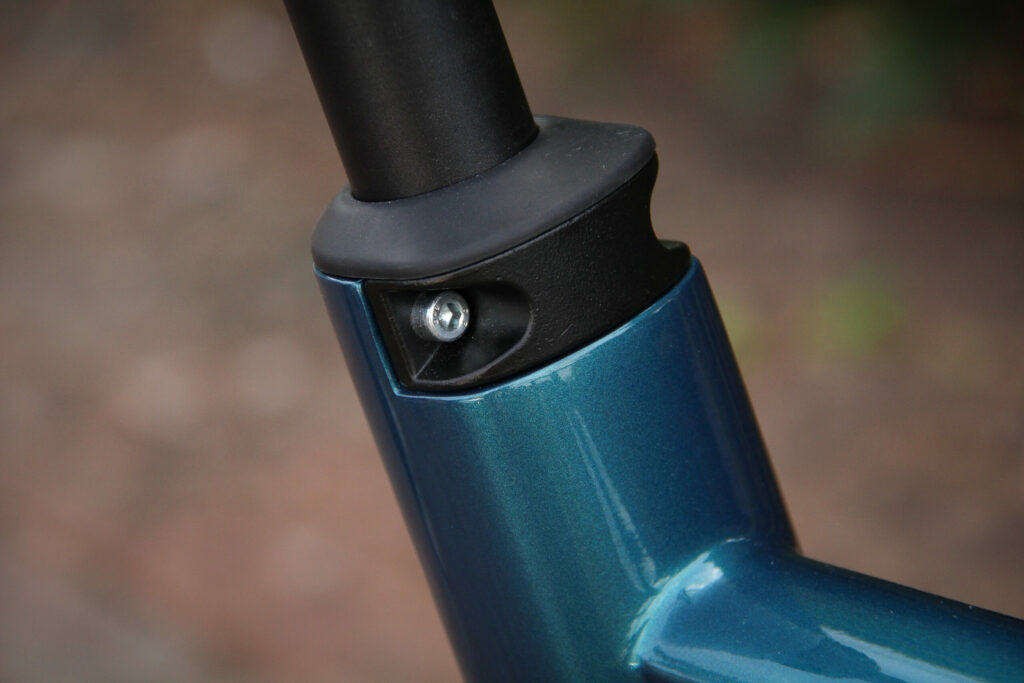

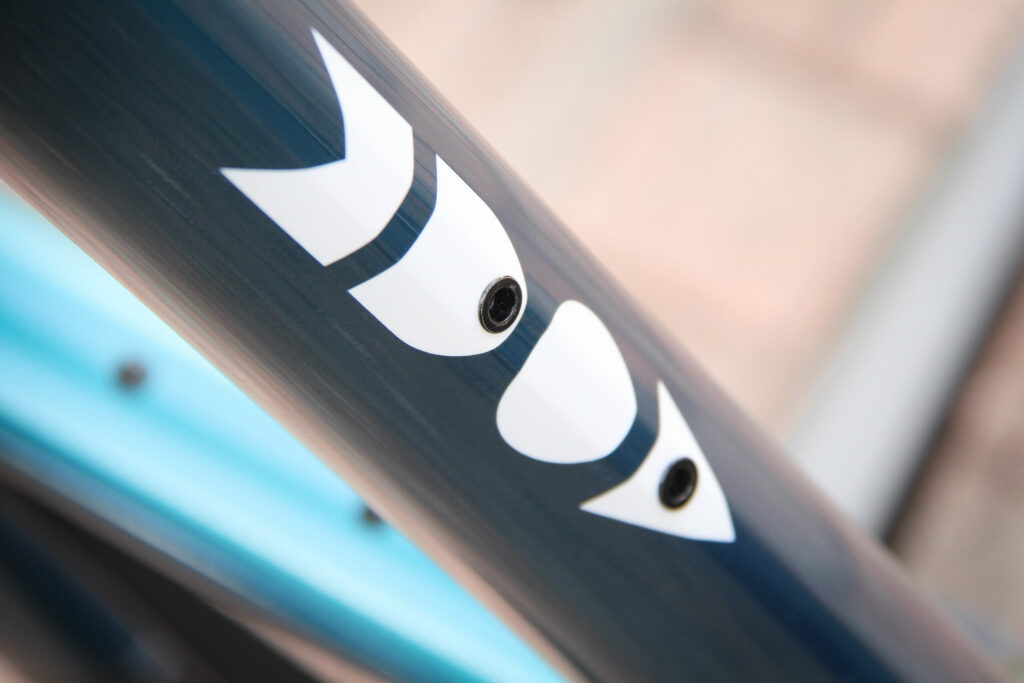
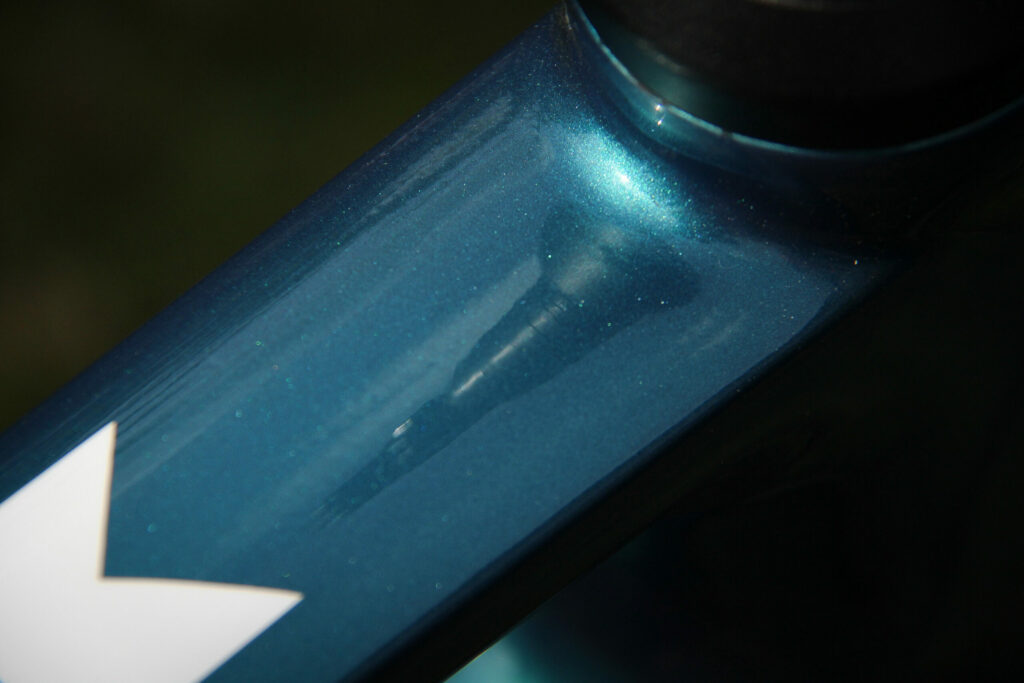

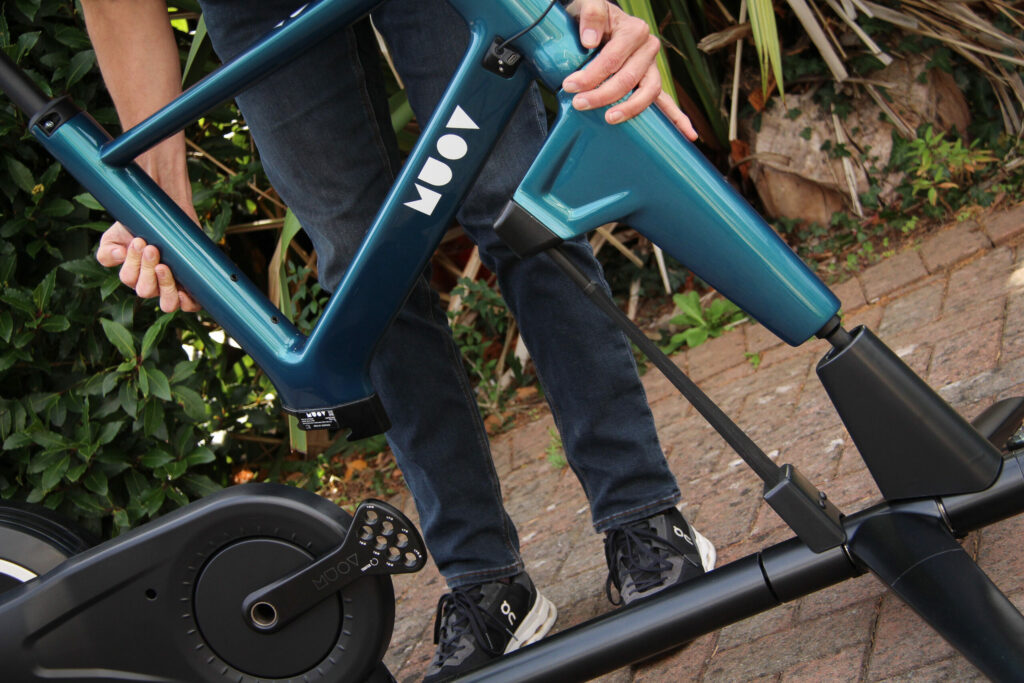
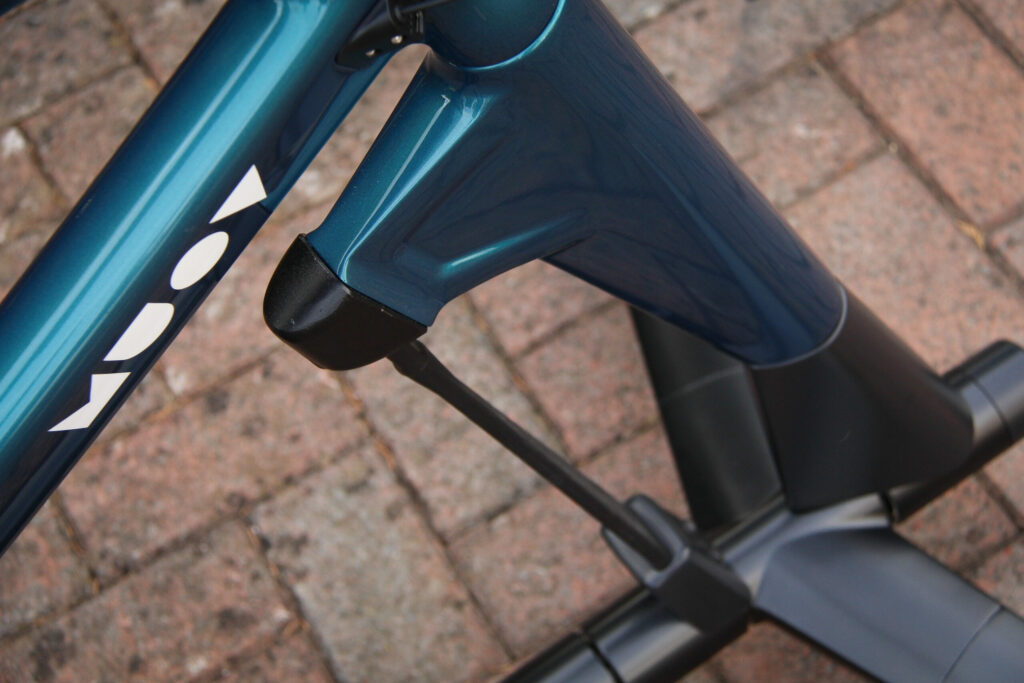
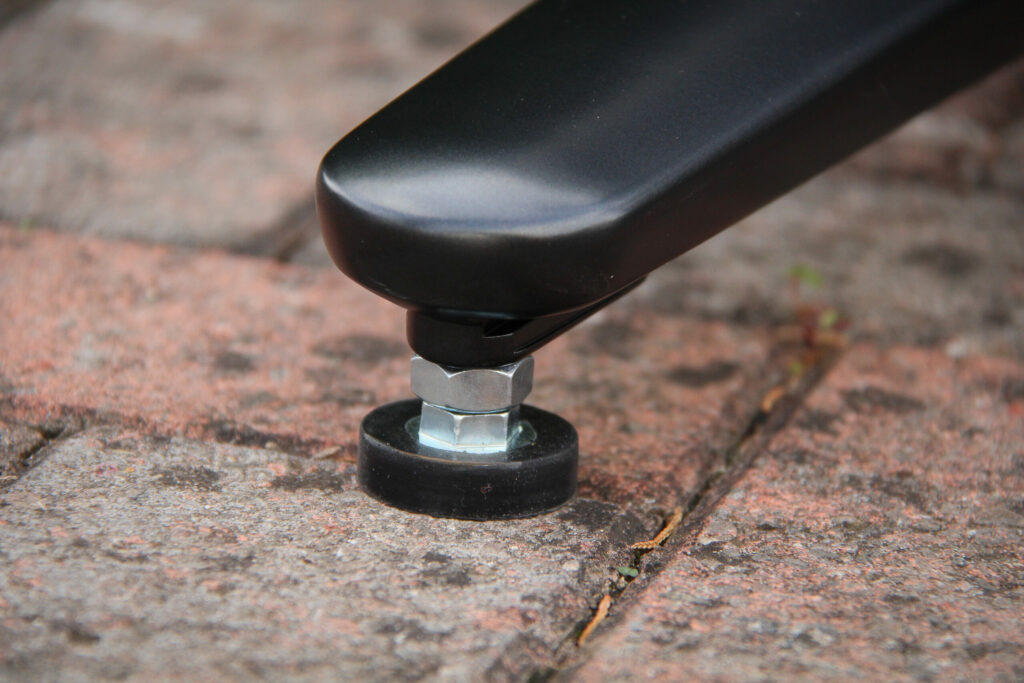


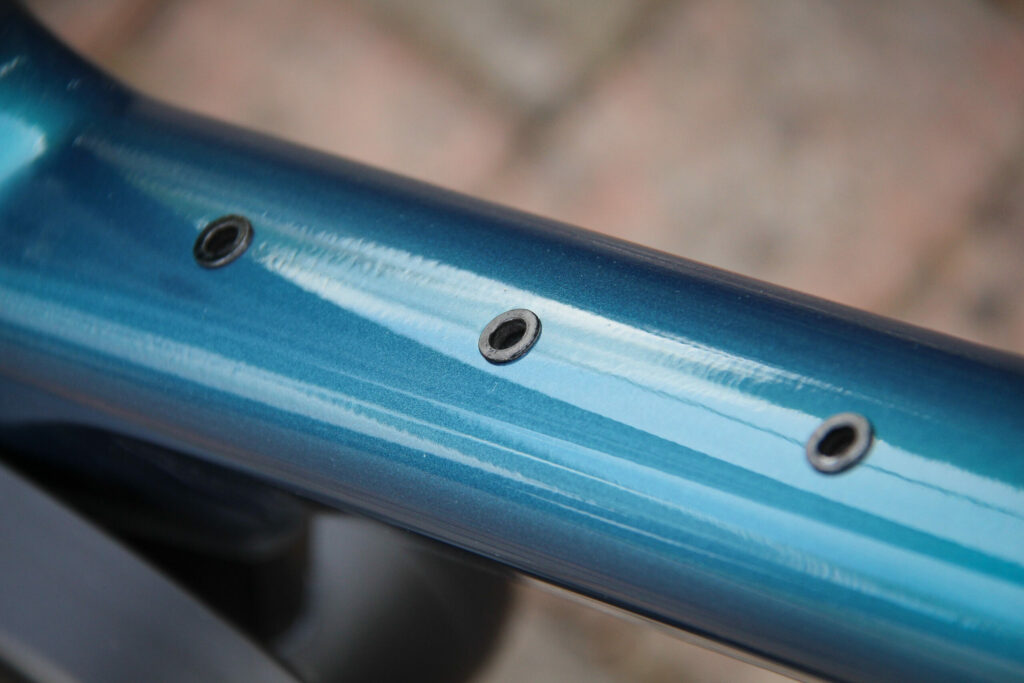
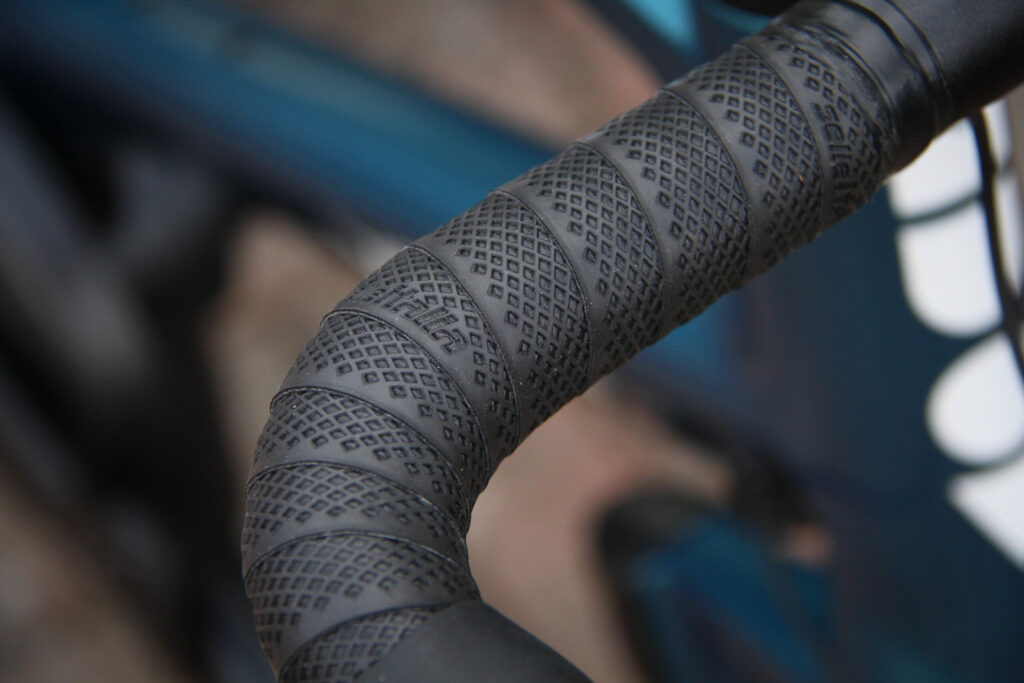
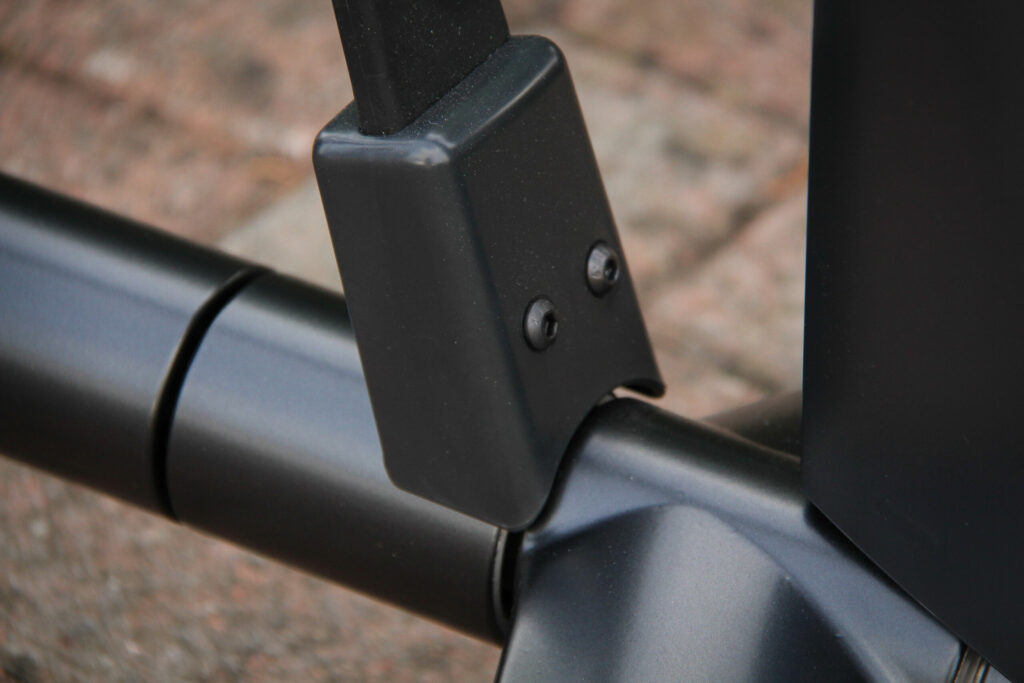


There’s a standard seapost, and at the front the bar height can be adjusted through about 100mm of range using spacers. The idea is that you set it up just so for yourself, and then if two people are training, or you have two setups – say road and TT – that you want to replicate, then you can have a different frame for each person, or setup. The one thing that won’t cover is the pedals and the crank length, because the cranks are part of the base. You can choose crank lengths from 150mm up to 175mm, so plenty of room for experimentation.
Removing the carbon frame from the base and sticking a different one on is a one-bolt job and is as quick, if not quicker, than going round and adjusting all the contact points on a standard smart bike. Plus, because you’re not adjusting things once they’re done, it’s always right. The downside? Cost, mainly. Another frameset (with all the bits) is going to set you back £2,000, and you’ll need somewhere to put it when you’re not using it.
I finished testing on a large frame, which I swapped onto the same base. I didn’t need as many spacers on that one, which made the front end feel a bit tighter, and it looked a bit neater (and had a road.cc-adjacent paintjob!) but I was effectively in the same position on both.
The base has an articulating mechanism so the bike can pivot from side to side around the base rail. It’s not dissimilar to a rocker plate in terms of the action; it does feel quite natural, and takes up a lot less space.
The bike secures with a bolt at the seatpost end but the ‘fork’ (it’s not a fork, obviously) just slides over the base. That’s fine most of the time but in a sprint, or when you’re climbing hard out of the saddle, it does move against the base like it’s loose, and I found that irritating at times. It’s not going to come off, and talking to the MUOV team, it is designed to be free there so that the bike can have a bit of fore-aft freedom, but it just doesn’t really feel like an engineered movement to me. The second (large) frame was a slightly updated design, and it was a closer fit, which meant that the movement at the front wasn’t as noticeable, but it was still there.
I connected mainly via Bluetooth, but ANT+ is also available and there’s an ethernet port for a wired connection too, down the line.
The leaning mechanism also doubles as a steering mechanism in Zwift, so if you tilt the bike over to the right then the handlebars turn and you’ll go that way on the screen too. I’m a bit conflicted about this to be honest. On the one hand, it feels like it should be a nice natural way to steer indoors, and it is, but there are downsides to it too. I ended up steering without meaning to.
Any imbalance between your left and right leaning is going to mean you end up on one side of the road or the other. The cost of your MUOV delivery includes precisely laser-levelling the bike so that it’s exactly upright, so you shouldn’t be leaning over at a standstill, but I just found that if I wasn’t concentrating I’d end up riding along the kerb (mostly), or the centre line.
Button-based steering isn’t as natural, for sure, but Zwift is a game and game-style controls make more sense to me. At the very least I’d like the option to turn steering off, and ideally I’d like to be able to assign other controls to do it: there are plenty of them.
The other issue, for me, is that steering and leaning are intrinsically linked: you can’t lean the bike over without the handlebars moving. Obviously if you were steering round a corner then that’s the behaviour you’d expect, but I’d argue that for the majority of time you’re moving the bike from vertical – climbing out of the saddle, and sprinting – you don’t want the handlebars to be forced to turn and it feels a bit unnatural for them to do so.
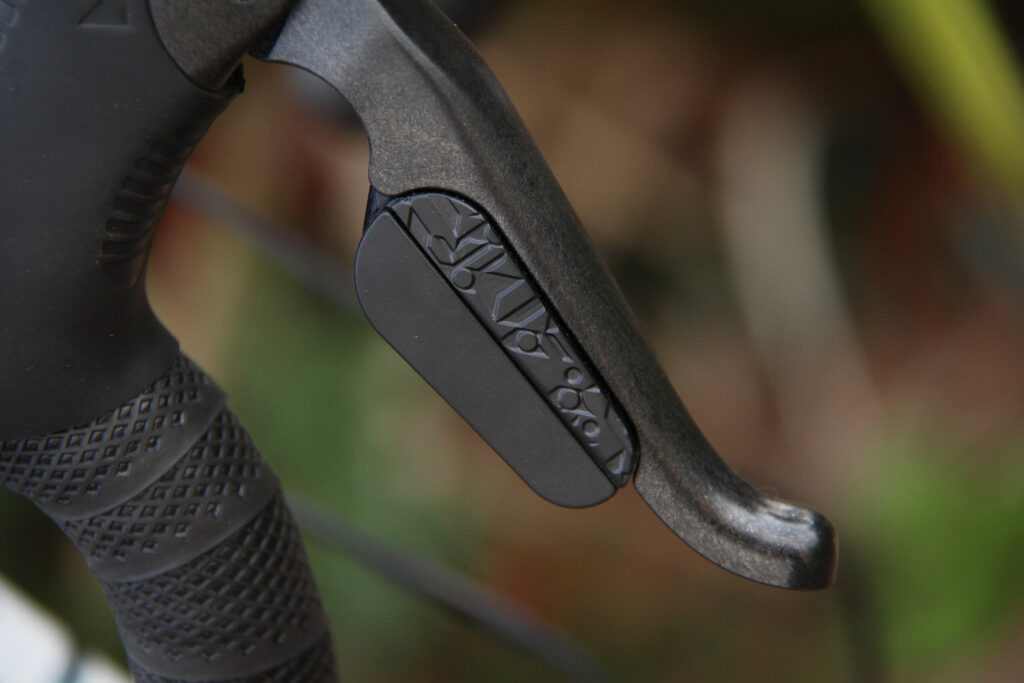
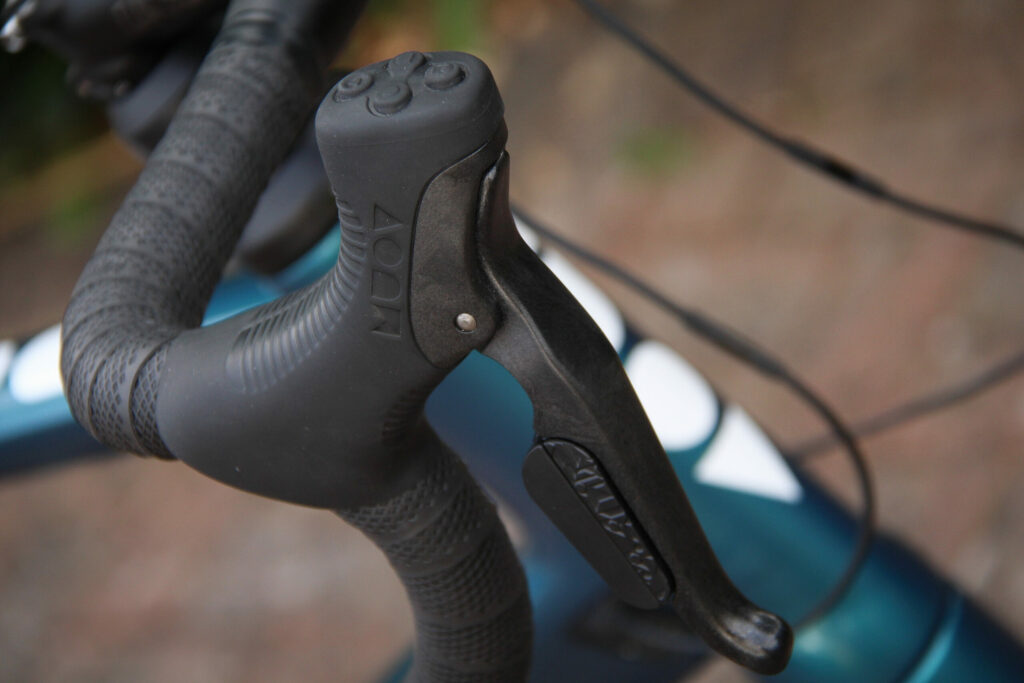
The MUOV has shifters with two paddles for the gears, and four buttons on the hood. The buttons are mapped to Zwift’s cursor and action buttons, so you can navigate through Zwift from the bike, as you can with Zwift’s Click system or the Wahoo KICKR Bike Pro.
I didn’t have any more trouble remembering which button did what than I normally do, which is to say that I got it right some of the time. All the controls fall to hand easily enough. The shifting paddles replicate the Shimano lever layout, and out of the box it’s set up as a Shimano 2x road bike: the left shifters handle the front chainring and the right shifters are for the cassette at the back. That works fine, although with an indoor bike I’ve never really seen the point of replicating the limits of physical gears. If we could have 25 sprockets and a single chainring outdoors then that’s what we’d do. With virtual gears you can have as many sequential gears as you want, so why not just do that?
You can set up the MUOV as a 1x bike, and I have, but only within the limitations of an outdoor groupset: mine’s running a 44T chainring and a 10-51 cassette, a la GRX 12 speed. It’d be an improvement if you could just set up the gears however you want. Apparently full sequential gearing is in development so this may not be an issue by the time you read this.
There’s no display on the bike itself but most apps will show your gear on screen these days, so it’s much less of an issue than it used to be.
The MUOV bike uses a motor-braked electromagnetic resistance unit that’s not dissimilar to those on other high-end bikes, and that means the shifts have an instant feel like that of an outdoor bike. It doesn’t quite have the ‘clunk’ of the Tacx Neo bike – that one’s still the best in my opinion – but it’s very good.
The bike uses a belt drive and is effectively functionally silent: it’s quieter than my fan, and quieter than my respiratory system most of the time. The noise it does make is a kind of space-age electronic whine, which isn’t as annoying as I’ve just made it sound. Once you’ve got the fan on you can’t hear it anyway. It’s very impressive, and if your training space is indoors, or in a flat with people living underneath, that’ll be a big plus. It’s exceptionally well-balanced and well-behaved.
For the most part, I found it to be a great ride, too. It’s a comfortable bike to be on, not least because of the tilting mechanism and the high-quality contact points. The articulation means that you move around more on the bike and I was noticeably less affected by numbness at the hands and the seat than I can be on more rigid indoor bikes. Most of the way through the power curve the response of the bike is very realistic, and the gear changes are instantaneous and easy to feel through the pedals.
The only time I didn’t really like the feel of the bike was in a full-out sprint. There’s no flywheel to wind up and I found the response of the resistance unit a bit choppy. I think that the frame articulation probably doesn’t help there either, as you don’t have such a solid base to push against. There’s an element of the sprint feel that can no doubt be improved by tweaking the firmware: the Tacx Neo Bike doesn’t have a weighted flywheel either but does a better job of making the bike feel ‘heavy’ when you’re pushing hard. So there’s a bit of work to do there.
MUOV bike: Power accuracy
I benchmarked the MUOV bike against Favero’s Assioma Pro RS2 pedals, which I’ve been very impressed with. The main take-home is that power numbers are very good, and there are no surprises at all.
Here’s a full session (about an hour) on Zwift with a bit of everything: some free riding, a couple of quick sprints, and a standard benchmarking ERG session I do for pretty much everything.
Overall, the pedals read about 3.5W higher, which equates to under 2 per cent. You’re measuring power at the pedal before any drivetrain losses (not that you’ll get all that many with an enclosed belt drive) so in actual fact the two are probably closer even than that.
Is the MUOV bike reading ever so slightly low? Are the pedals a touch optimistic? Are both things half true? I couldn’t say: this is a relative test and I couldn’t say that either power meter is empirically right, but both give very believable numbers and they track each other more or less exactly.
For the free ride section of the session, the pedals are the line on top for the most part, but not always, and the gap is never big. The top of the sprint is lower for the MUOV bike but that’s as likely to be a sampling difference as anything. The overall power difference is slightly higher, around 2.5 per cent in favour of the pedals.
For the ERG section the overall difference is under 2 per cent and you can see that there’s very little in the way of an entry spike into the higher power intervals. The MUOV makes a very good job of ramping up the resistance without going too far and having to back off. It feels more gradual than some, and I thought it might affect the bike’s ability to handle short-duration intervals, but that wasn’t the case: it was fine with ten-second sprints. Overall the ERG feel is up there with the best of them.
The mean max power graph shows that there’s nothing really between the two, and no discrepancies at any point in the graph.
Cadence is handled very well: there’s barely a gap between the lines at all.
MUOV Bike – what’s it good at?
The MUOV Bike – considering it’s the company’s first product – is a very good smart bike. It feels like a high-ticket item and the build and the finish are really excellent. Power accuracy is probably as good as any trainer I’ve used, and the ride feel is generally excellent. The tilt/steer mechanism is well-engineered and works very well, and the dynamic nature of the bike means that it’s comfortable for longer. Everything works seamlessly, especially with Zwift where I’d say the MUOV is easier to pair and use than Zwift’s own bike. Plus it’s a nice-looking thing that you can colour-match to your outdoor bike, or your training space, or you can just go crazy.
It’s difficult to know when reviewing a product exactly what the end-consumer experience will be because you’re a special case as a reviewer – and especially with a startup – but I’d be willing to bet that MUOV will be a lot more available and hands-on with any issues that need sorting than the bigger players: it’s a small company, and it’s going to be a more personal service.
MUOV Bike – what’s not so good?
It’s fair to say at this point that I’ve had the MUOV for a while, on and off, and used two different frames and various firmware builds. It still feels a bit like a work in progress: it’s not a beta product but neither is it maybe quite in its final form.
Some of the things that I found sub-optimal are probably simple firmware or app fixes. The ability to turn off (or reassign) steering, customise the button layout, set up your own custom gearing – all of those feel like app updates that could easily happen. The response under heavy sprint loads can probably be tweaked in the firmware too, although part of that for me was the movement of the bike. The lack of a secure connection between the frame and base at the front is a sticking point for me: it’s not a deal-breaker but my personal preference would be to have it secured there.
MUOV Bike – value and overall
This is a pricey bit of kit. You can spend more: anyone remember the €14k Elite Fuoripista or the mad five-figure Ciclotte circle bike that comes in marble?
However, in terms of what’s actually a direct competitor, the MUOV is £1,500 more than both the Wahoo KICKR Bike Pro and the Tacx Neo Bike (our review from a while back now when it was a lot cheaper) and add another two grand if there’s more than one of you training.
Both of those smart bikes are excellent units, so you’re going to need a good reason to spend the extra money. The “natural balancing and steering” mechanism, as MUOV calls it, is certainly a USP, and that may appeal to you, and the aesthetics, personal service and made-in-the-UK homegrown provenance might too.
If you’re looking for a high quality indoor setup and you’re not short of a few bob then I’d certainly recommend trying out the MUOV bike to see if it’s the one for you. There’s a lot to like about the ride feel, and it integrates nicely with a range of training apps. For me it would be hard to justify the extra spend, but your mileage may vary.
Test Report
What does the manufacturer say about this product?:
SMART BIKES, REAL FEEL
MUOV Bikes are the only indoor bikes that feel natural, like riding a bike.
Enjoy freedom of movement, engage your core, and reduce the discomfort of ordinary stationary bikes.
Made for everyone looking to train smarter, feel better, and stay fit.
MUOV’s TiltBikes support natural balancing and steering and enable riding in 3D environments. The experience feels more natural for the body – like riding a bike outdoors – and enables immersive training, esports, and interactive fitness.
Tell us some more about the technical aspects of this product:
Shipping Dimensions
54″ x 14″ x 35″ (1350 x 340 x 880 mm)
Product Weight
93 lbs/42 kg
Drivetrain
Belt Drive
Resistance
up to 2200W (expected)
Power Accuracy
+/- 1% (expected)
Wireless Software Updates
via the MUOV app
Connectivity
Bluetooth, ANT+
Device Compatibility
iOS, Android, PC (Mac and PC)
User Height Range
152-200cm
Max User Weight
240lbs (110kg)
Power Requirements
100-240V, 50/60 Hz
Crank Arm Lengths
(non-adjustable) – 150/175mm
Stem length
(non-adjustable) – 80/90/100mm
Handlebar widths (Road)
(non-adjustable) – 38/40/42cm
Maximum Simulated Grade
25%
Frame sizes
Small (height 152 – 165 cm)
Medium (height 165 – 185 cm)
Large/XL (height 185 – 200 cm)
Product dimensions
L121cm x H55cm x W70cm
Resistance type
Electromagnetic motor
Any further comments on quality?:
Very nicely made and finished – in the UK!
Any further comments on performance?:
Very good overall with a few quibbles.
How does the price compare to that of similar products in the market, including ones recently tested?:
Other smart bikes are a lot cheaper.
Any further comments on ride feel?:
I like the ride feel in nearly all circumstances, sprinting being the main issue for me.
Any further comments on stability?:
You’ll do well to tip it over.
Any further comments on accuracy?:
I don’t think there’s much room for improvement.
Any further comments on adjustability?:
It’s got plenty of adjustability but not as much as other bikes, and a separate frame for a second rider is another £2,000.
What connection protocols does the trainer support?:
ANT+, Bluetooth, Ethernet.
Any further comments on connectivity?:
No issues.
Any further comments on smart resistance performance?:
Very good overall.
Any further comments on ERG mode performance?:
One of the better ERG trainers.
Did you enjoy using the product? Yes
Would you consider buying the product? No
Would you recommend the product to a friend?
A well-heeled friend, maybe.
Use this box to explain your overall score
It’s a good smart bike with some unique features, and it’s great to see another UK player in the market. For all that, I think there’s some stuff to iron out, most of it in firmware: the hardware is pretty solid.
About the tester
Age: 53Height: 189cmWeight: 104kg
I usually ride: whatever I’m testing…My best bike is: Dward Design Custom Audax, Lauf Úthald, Cannondale Topstone
I’ve been riding for: Over 20 yearsI ride: Every dayI would class myself as: Expert
I regularly do the following types of riding: Road racing, Gravel riding, Indoor riding, Indoor racing, Bikepacking, Commuting, Touring, Club riding, Audax, Fitness riding, Leisure riding

13 thoughts on “Muov Road Bike”
Is it just me that thinks this is a silly product name? It’s not a road bike. Plus I can’t imagine enjoying indoor cycling so much you’d spend this much on it. I guess perhaps it’s for those that already have a £10-15k *actual* road bike.
Not just a road bike, it’s also a “smart bike”.
I’m heading me over to check out their new smart bronco on rodeo.cc…
Awaiting a certain poster to come on and point out that this is not a road bike and so the article should be on indoortrainers.cc.
I thought maybe it was a justifiable purchase for somebody who really loves indoor cycling and does a lot of racing on the various platforms, but then the “realistic” element surely makes it suboptimal for them as some of your energy will be dissipated in the tilting from side to side, presumably you would get more speed for a given power output from a fixed trainer like a Wattbike?
One would think that, as I did, until I put a rocker plate under my Tacx Neo Bike. It took a few weeks to get used to, and initially average power output was lower, it was difficult to stop leaning over to the side that was doing the pedal downstroke. However once leaning the other way became second nature, power in sprint segments went up slightly, as I could lean the bike so that as the crank goes down, the bike comes up.
The main advantage is ride comfort, I used to get lower back pain after about an hour on Zwift, despite the Neo being set up exactly the same as my outdoor bikes. The rocker movement (2 axis, fore/aft, left/right), however slight, while pedalling just feels right, and now I can do 2+ hour sessions with no issues at all.
Only disadvantage I can think of with a rocker plate is the space it takes up, and the Muov has solved this by building the movement into the platform. Only future improvement I could suggest would be a method to lock it out, similar to MTB suspension, that way the user could choose whether they wanted a realistic ride feel, or something like a gym spin bike.
Yeah I didn’t notice that my actual sprint power was down, I just didn’t really enjoy the experience of sprinting on the bike as much as some others. not that I ever really enjoy sprinting…
Not sure what whether it’s a road bike has to do with it, but it’s definitely a silly name – it’s clearly some sort of green, not mauve at all.
It looks gorgeous, and I am never one to decry something over price alone… but apart from aesthetics (subjective) surely this is worse in every way than a Kickr Bike?
I like that if you opt for the 165mm crank option that you get the advantage of an L shaped crank…
Marginal gains 🙂
Aside from looking nice (though with a coffee’s worth of change from 5 grand, I guess why not) why does it need to be carbon? It’s not like it’s going anywhere
No rot.
Zwift ride and a 4 grand cycling holiday.