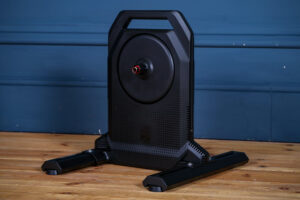
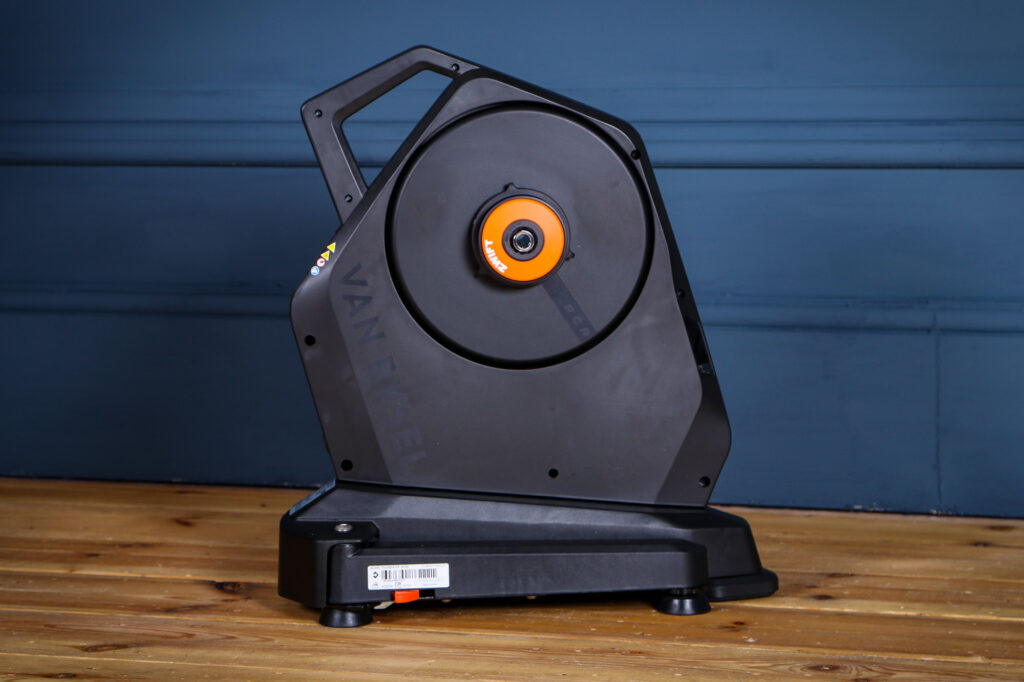
The Van Rysel RCR Connected Home Trainer with Zwift Cog and Click is Decathlon’s own-brand flagship smart trainer. If you’re a rider that wants a bit of fun indoors it’s worth looking at, but if you want accurate data and quality training, you’re better off elsewhere – especially as this isn’t massively cheaper than the competition.
At £749.99, this package sits above Van Rysel’s D100 and D500 models, which are £279.99 and £399.99 respectively. They both come with Cog and Click too.
In the RCR’s box you get the trainer itself, a host of axle adaptors for compatibility with pretty much any bike, the Zwift Click shifter buttons, the Zwift Cog (pre-installed) and a card with a two-month membership code. The packaging has some handy diagrams to help measure your bike’s axles, and thus pair it with the correct adaptors, which is a nice touch.


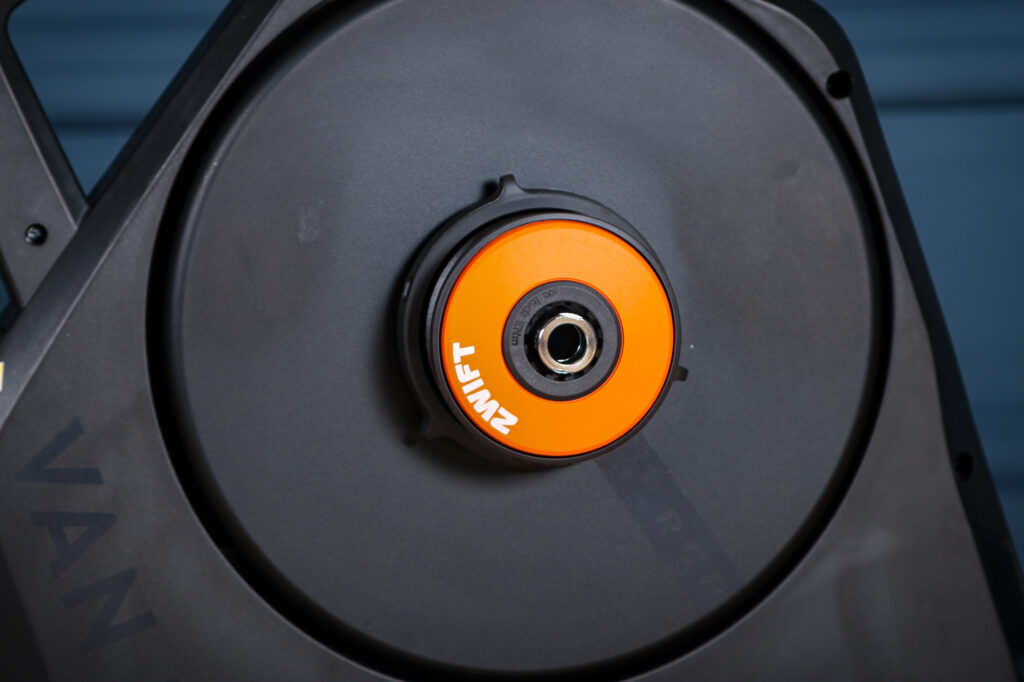
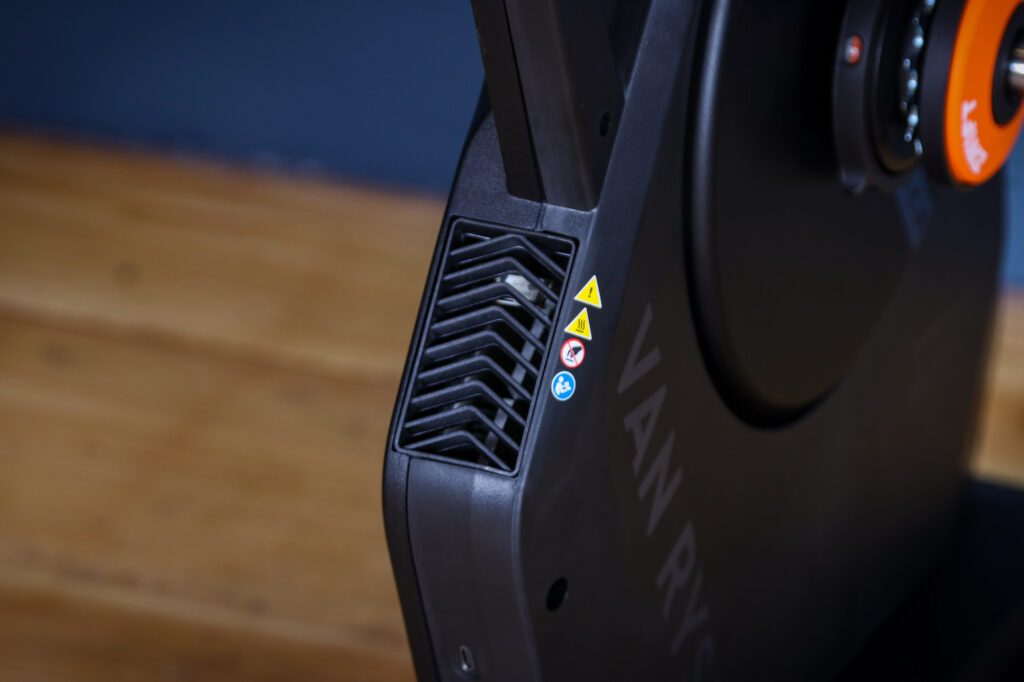
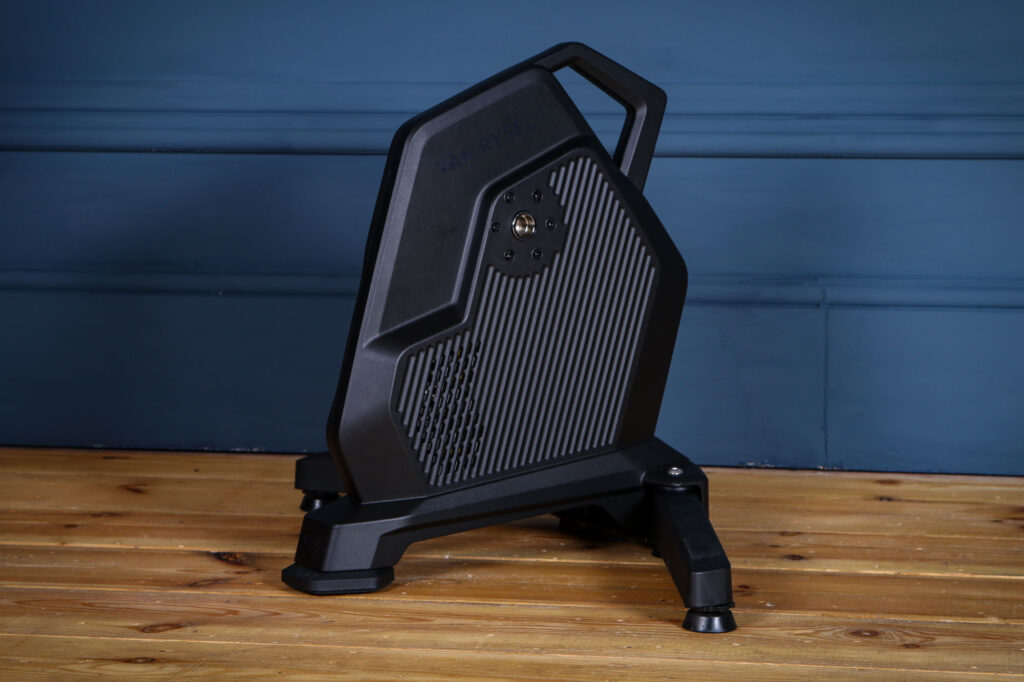
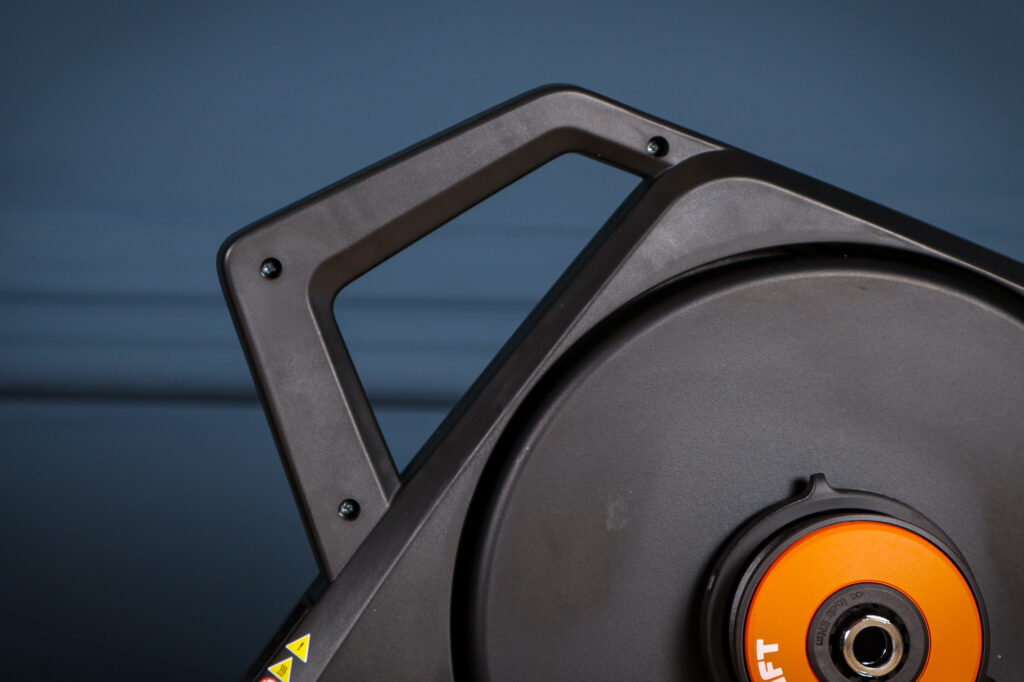




One of the main draws here is this Zwift bundle: the hardware costs £49.99 on its own, and the two month subscription another £35.98. One minor issue is that the code is only valid for new members; I had a Zwift account a few years ago, so couldn’t redeem the code without setting up a new account with a new email. A small problem, but a little bit annoying.
The Clicks mount to the handlebars with two rubberised straps each. Grippers underneath stop them sliding around and scuffing anything, but annoyingly the grippers aren’t actually attached and are quite easy to lose. The buttons are tactile and have a nice, positive feel.
The 14T Cog has a dial that adjusts over ten positions for tuning the chainline, and Zwift claims it’s compatible with most things – the new Campagnolo N3W 13-speed and 1/8″ fixed-gear/single-speed chains not included.
Once I’d found a gear that worked with my chainline, the Cog felt fine. It’s pretty quiet, and feels much the same a trainer with a regular cassette. The digital shifting takes a bit of getting used to, however, and having 24 sequential gears means that you can be left holding a button for a little while if you’re trying to manually do intervals with two polarised gears.
Each shift gives a little bump through the pedals to try to emulate real world shifting, but it doesn’t have the same weight to it, and at first I actually thought it was an issue rather than a feature. Obviously in ERG mode you don’t really need to use the virtual shifting anyway, but personally I prefer real shifters and a regular cassette on a trainer. Its nice being able to give ‘ride ons’ to other Zwift users via a button, and control the menu with the clicks instead of reaching for your laptop, but I think I’d prioritise a more authentic interface with the bike.
Real deal wheel feel?
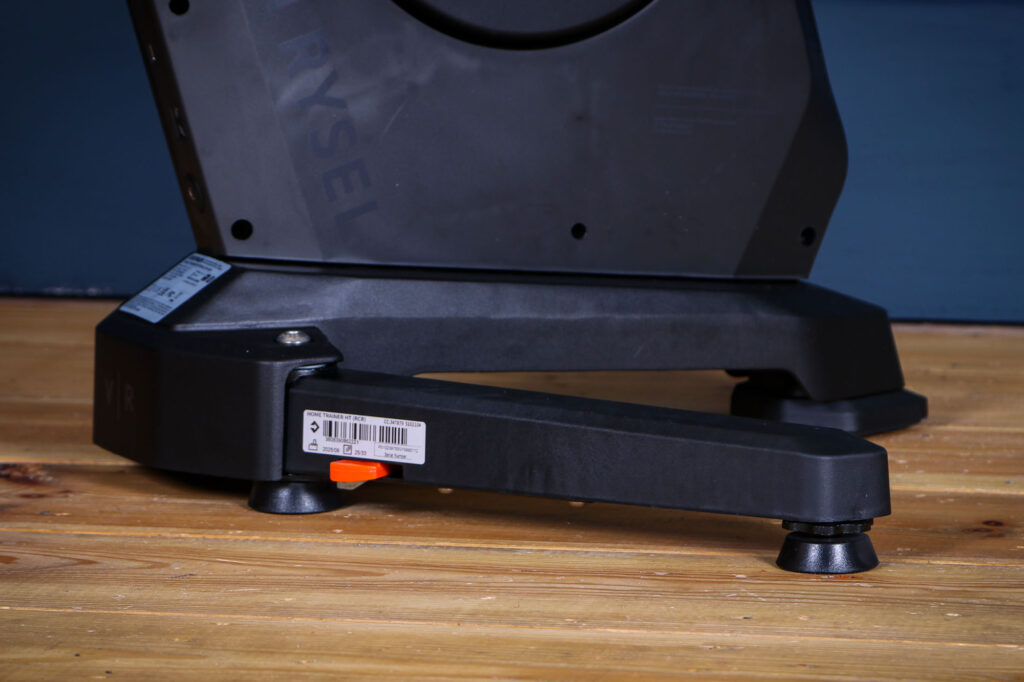
The ride feel is pretty good. This thing has a hefty stainless steel construction, and feels very solid when you’re cranking out sprints and intense efforts. The flywheel is weighty, and the trainer is rated up to 2,800 Watts.
For the first few rides, I got the impression something wasn’t quite right. Eventually I cross-referenced the power meter against my own Stages Gen 3 crank arm, my Favero Assioma pedals, and my partner’s Wahoo Speedplay Power pedals. All three confirmed the RCR’s power meter was reading anywhere from 5 to 10% high, increasing as the intensity of the effort increased. All three external meters read within a handful of Watts of each other.
Decathlon claims no calibration is required, and there’s no way to do it. Because of this, I decided to continue testing with Zwift paired to my Favero pedals rather than the trainer, and found the power readings much closer to perceived exertion.
It’s a bit baffling to me as to why they don’t allow calibration. Perhaps it’s the sort of thing that can be added with a firmware update.
Ztuck with Zwift
So! On to my next gripe. Whilst Zwift is fine, I wanted to try the trainer on other software such as TrainingPeaks Virtual, TrainerRoad, or the internal workouts of the Wahoo head-units. But for some reason, none of these programs could detect the RCR. I turned everything off, unplugged it all and plugged it all back in, but I just could not get the trainer to pick up on anything other than Zwift. Okay, it’s the biggest virtual training platform out there, but if – like me – you’re not a massive fan, it’s a meaningful negative.
For me, ERG mode is where Zwift reveals its biggest flaw; the resistance builds a few seconds before the interval actually starts.
For low intensity, steady-state intervals (anything up to about threshold intensity) this wasn’t too much of an issue; the resistance would ramp up over a few seconds, the interval would start, and I’d settle into the effort. The power on screen would fluctuate a fair bit both up and down, which is disconcerting, but the average power across any given interval would be close enough not to worry.
However, for more intense intervals that require a big power spike to get on top of the Watts, it proved a pretty much fatal flaw.
For example, I was trying to do a few sets of pretty standard 30/30 intervals: 30 seconds somewhere around zone five/VO2 max, and 30 seconds to recover, ten times in a row. But two or three seconds before each interval resistance starts ramping up and, if you don’t start the effort early, the ERG mode increases resistance further and the death spiral begins, quickly grinding me to a complete halt. I thought this was a one off, so disconnected everything and tried again, only to have the same issue. It actually ended up wrecking a few sessions before I gave up using ERG mode and relied on the virtual shifting alone – which, given the wide swings in gear ratio required, was still quite annoying.
Not everyone will use this for dedicated intervals, but ERG mode performance was a real low point for me.
Value
The £749.99 asking price feels reasonable for what you’re getting here, but it’s not as far below the name-brand offerings as you often see with Decathlon stuff.
For example, the Wahoo Kickr V6 Turbo Trainer with Zwift Cog and Click is £150 more at £899.99, and the Kickr Core 2 with Zwift Cog and Click is just £499.99.
Looking at Garmin’s Tacx lineup, the Neo 2T Smart Turbo comes in at £859.99, and the mid-level Flux 2 is just £629.99.
Overall
Whilst the RCR trainer itself is okay – if not without its flaws – and the Zwift element boosts the value enough to largely justify the price, if you’re after focused, accurate training tools then this isn’t the choice for you, especially as the power meter gets more inaccurate the harder you ride and can’t be calibrated. For more casual training via Zwift (and nothing else), however, it’s a reasonable option.
Test Report
What does the manufacturer say about this product?:
Van Rysel says, “The HT RCR home trainer offers a realistic training experience:power up to 2800 W, 27% slope simulation, ±1% accuracy and 56 dB quietness”
Tell us some more about the technical aspects of this product:
Power accuracy: +/- 1%
Maximum power: 2800w
Slope simulation: 27%
Noise Level: 56dB quietness at 25km/h (measured at 1.5m)
Calibration: No calibration required
Any further comments on quality?:
The build quality is solid, and in line with other mid-level smart trainers.
Any further comments on performance?:
The trainer itself is good – most of my gripes stem from the Zwift cog and integration with the software. I also doubt the claims about the 1% accuracy of the internal power meter.
How does the price compare to that of similar products in the market, including ones recently tested?:
The Wahoo Kickr and Tackx Neo are £899.99 and £859.99 respectively, and I would say represent a significant enough upgrade over the RCR HT to justify the price.
Any further comments on ride feel?:
The ride feel is good, with a heavy flywheel and motor that “faithfully restores the feeling of decompression when you stop pedalling,” apparently.
Any further comments on stability?:
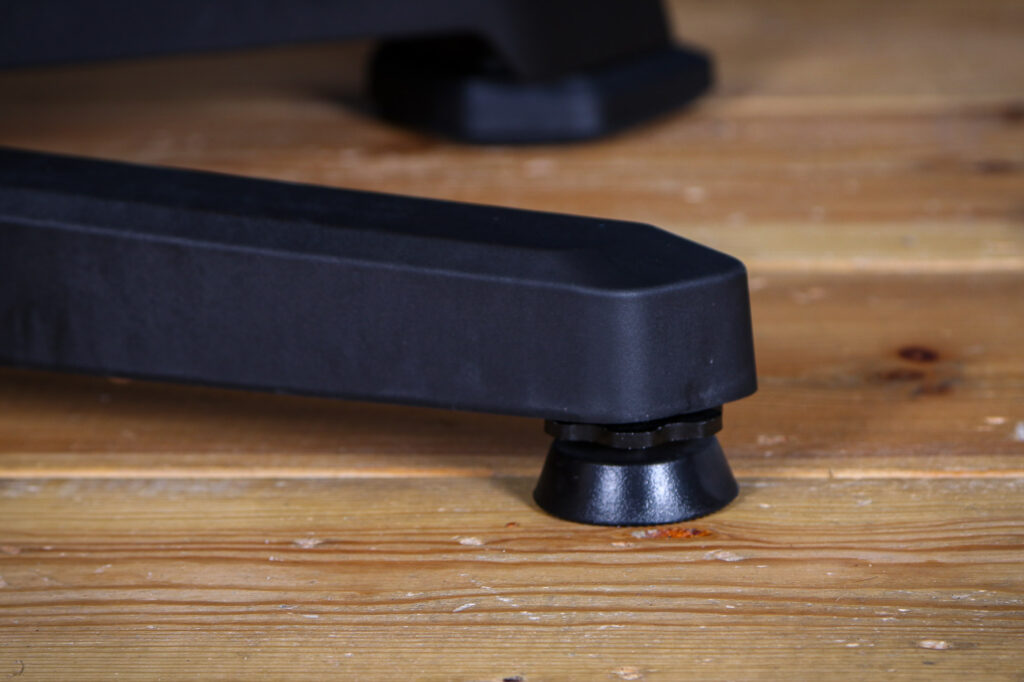
Solid, heavy construction with wide legs that snap into position. A very stable trainer.
Any further comments on accuracy?:
The internal power meter consistently overread against the three pedal and crank-based power meters I tested it against, by upwards of 10% at times. The external meters all tracked within a couple of percent of each other. Whilst it was consistent with itself, it did make some workouts frustrating – and Decathlon quite proudly states there’s no need to calibrate ‘thanks to its technology’.
Any further comments on adjustability?:
The Zwift Clicks are an interesting feature, and certainly take a bit of getting used to, but once you get the hang of it they’re quite intuative.
What connection protocols does the trainer support?:
Bluetooth FTMS, ANT+, wired ethernet
Any further comments on connectivity?:
I had no issues with Bluetooth or ANT+ connections, but some users report terminal issues with the ethernet link.
Any further comments on smart resistance performance?:
The ERG mode function on this trainer was really frustrating. On Zwift, it would kick in a few seconds before intervals start – catching me off guard and sending me quickly into the cadence death spiral. When riding in steady state, I could see my power flicking around on the screen, spiking tens of Watts above and below the target range.
Did you enjoy using the product? Sort of
Would you consider buying the product? Maybe
Would you recommend the product to a friend? Maybe
Use this box to explain your overall score
Value looks okay when paired with the Zwift package, but this doesn’t represent quite the saving you might expect from Decathlon. The ERG mode and power meter are quite frustrating, and I wasn’t able to connect to any other training platforms. This feels good when it’s working well, but it’s a bit tricky to get there and I had to compromise quite a few sessions to get the most out of it.
About the tester
Age: 30Height: 175cmWeight: 67kg
I usually ride: Road (Tarmac SL7)My best bike is:
I’ve been riding for: 10-20 yearsI ride: Every dayI would class myself as: Expert
I regularly do the following types of riding: Road racing, Time trialling, Cyclocross, Commuting, Mountain bike XC, Mountain bike Enduro, Mountain bike downhill/freeride