



When the Tour de France hits the high mountains of the Alps and Pyrenees, there is always, no matter the situation in the race, a crackle of excitement and anticipation. Where will the big favourites attack? Will a yellow jersey contender unexpectedly crack?
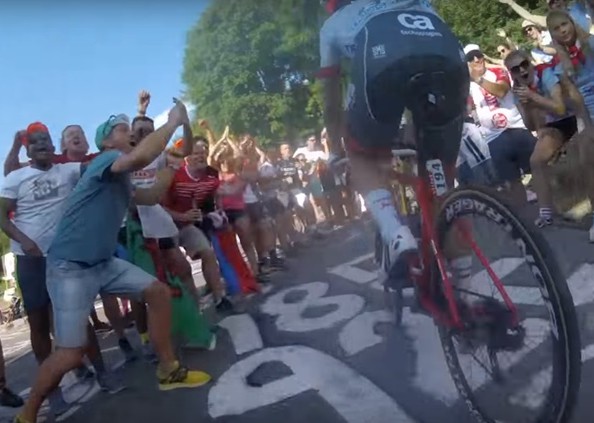
And when will an inebriated, sunburnt spectator, invariably dressed as a giant duck, wielding a huge flag, make a nuisance of themselves by running alongside the riders, veering perilously in front of their wheels and wheezing some beery breath into their exhausted faces?
One of professional cycling’s greatest charms is its proximity to its fans. If you step onto the pitch at Wembley during a match, expect to be tackled by overzealous security staff and face a lengthy ban. But in cycling, the pitch is the road. And in the Tour’s mountains at least, the fans are an integral part of the spectacle, providing a vibrant, ear-busting corridor of passion, noise, and fervour for the riders to pass through.
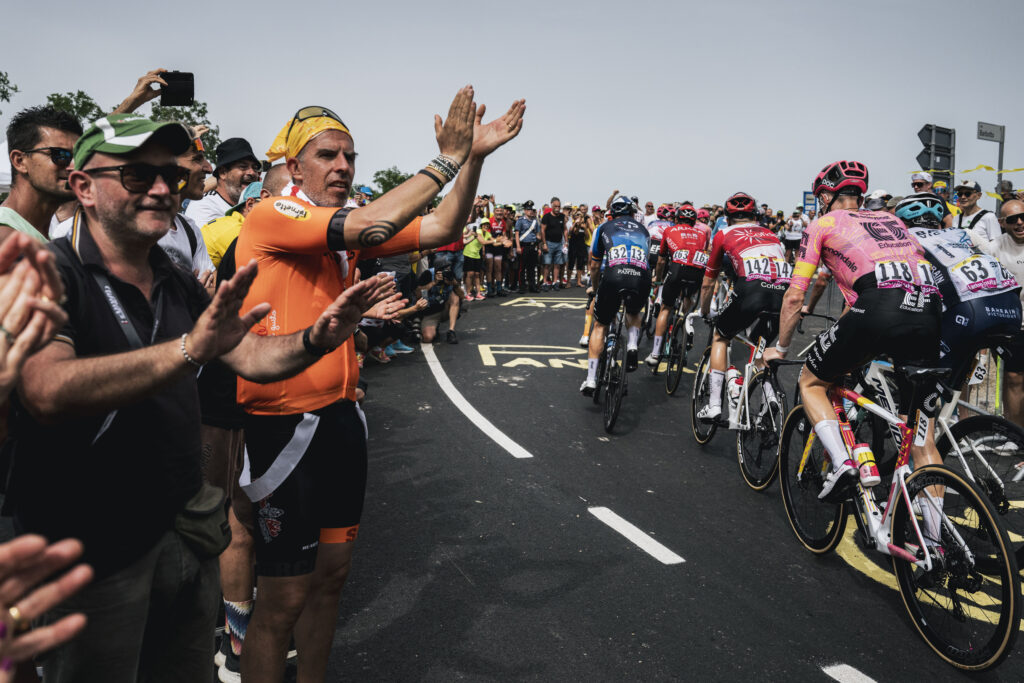
However, one particular type of cycling fan divides opinion more than most: the runner. You see them on every major pass, straining to keep pace with the leaders, shouting in their ears, narrowly avoiding both the Tour’s stars and the outstretched arms of the roadside stationary spectators whose view they’ve temporarily blocked.
During the opening road stage of the 2026 Tour, the race organisers pleaded with fans to not run alongside the riders, after one enthusiastic jogger nearly collided with the breakaway on the first proper climb of the race.
For longstanding TNT Sports commentator Carlton Kirby, one of the sport’s vociferous opponents of mountain runners, the message is simple: stay still.
“Cycling is a privilege for the fans, and the big thing for me is: don’t get in the bloody way,” Kirby tells road.cc.
“It’s as simple as that. We get to see pictures that you don’t get to see, and a lot of the shenanigans are actually tidied up. So you don’t really get to witness just how close some of these people get. And they all think they’re athletes. They all get rather overexcited as well.
“Of course, it’s lovely to have the atmosphere, but when you start affecting the race, and it has happened in the past, it’s a bit of a bloody nightmare.
“When they get close, I think they don’t realise how fast the riders can actually approach these hills as well. No matter what gradients they’ve got, they’re always going to be quicker than the runners. That doesn’t mean that the runners aren’t going to be tempted to try and keep up alongside, which is fine until they bounce off somebody else who also steps into the road to take a picture.
“And then they bounce into the riders, I’ve seen it so often. I’ve also seen the pictures of people dealing with it at the side of the road, sometimes it’s quite brutal. I’ve seen some end up being poleaxed by somebody at the side of the road who basically just hangs an iron forearm out and Tom and Jerry-style, they almost start spinning around it mid-air.
“I’ve seen fans run over by motorcyclists. And we have to be, well, I hope they’re all right, but in our minds we’re thinking, thank goodness for that.
“The big thing I tell fans off for is is running. Don’t touch them and don’t touch them involuntarily, which you can do when you’re running. And the other is, why do you bring flares to a cycling race? Honey, I’m off to watch the race, where’s my flare?
“Yeah, fans are fantastic. We love the atmosphere. I just can’t stand it when they compromise the safety of the riders. So I usually call it out.”
Carlton’s condemnation of roadside runners was echoed by some fans on the roadside at the 2026 Tour. One Colombian fan branded runners as “dangerous”, arguing that they’re simply trying to become the centre of attention.
Henry and Jenny, a pair of bikepackers from Leeds, attended their first Tour mountain stage on stage three of the 2026 race at Les Angles, and spotted a few runners.
“I guess if there’s a bit of space and you think you can run up without getting in the way, and it’s maybe just like one or two riders right at the front, not a massive bunch trying to get through the crowds, then maybe it’s okay,” Henry says.
“People can have their fun, but it does seem like a lot of the time it kind of bugs the riders. People try and do it when they’re just isn’t the space to do it, but you can just see it becoming like an accident waiting to happen type thing.”
The runners, however, have one high-profile fan: 2018 Tour de France winner Geraint Thomas.
“I never really minded it, as long as they didn’t get too close,” the Netcompany-Ineos rider, who spent a sizeable chunk of his career near the front in the mountains, told road.cc.
“When they’re running and they have flags or a big pole, that’s when it’s a bit more dodgy. Or when it’s narrow and they’re trying to run right next to you and they’ve been drinking all day, that’s when it’s a little bit dodgy.
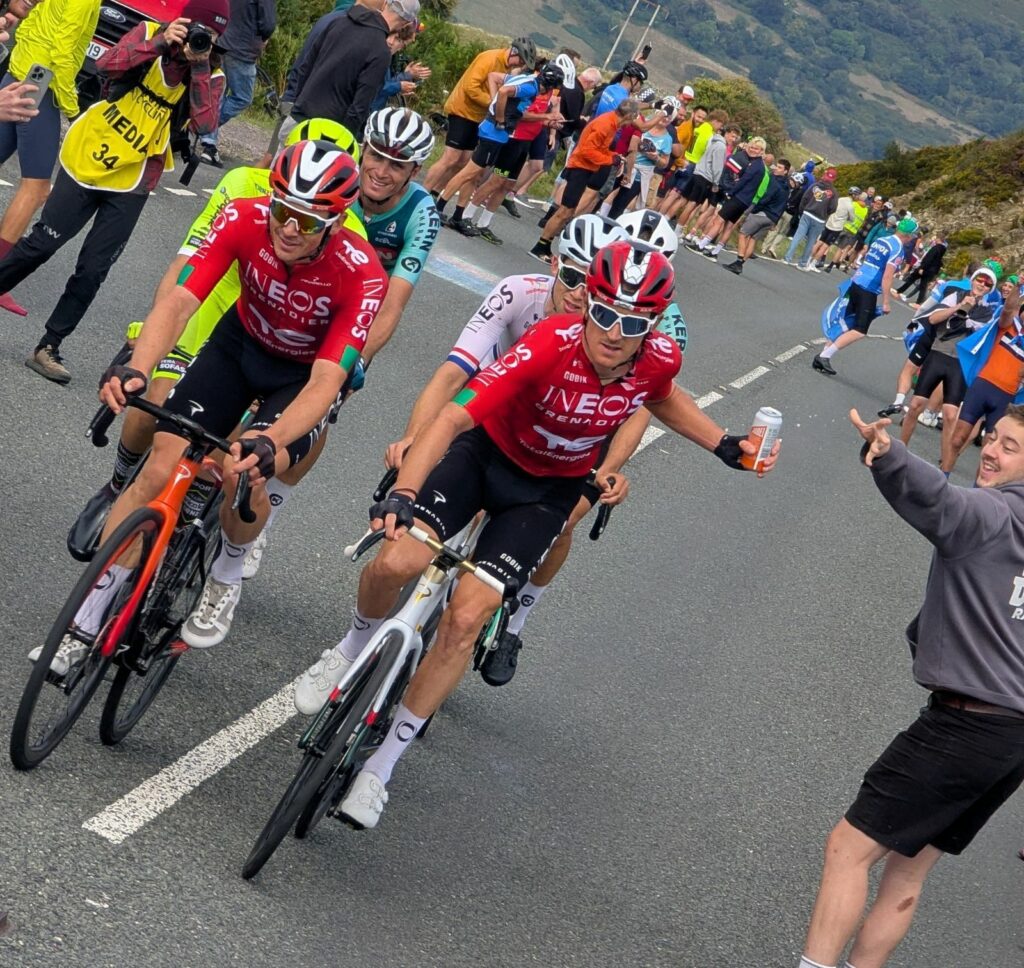
“But I think anything that adds to the atmosphere, I always loved it. I always just buzzed off it. What’s there to be grumpy about it? Boys and girls out there enjoying the bike racing, you’re in the front of the biggest bike race in the world, going up the mountains, what you dream of as a kid. I always loved it, always thrived in it.
“It’s the same in Belgium, when you can smell the beer on their breath when they’re screaming at you on the Kwaremont. So, I was always a fan. Because there’s some other stage races where you’re riding up a mountain and there’s nobody there. There’s been a few in the Tour where they haven’t had fans on certain climbs or during Covid, and that was just nowhere near as good.
“It’s all about the fans really. At the end of the day, it’s what you grow up dreaming of, seeing those iconic like climbs, Alpe d’Huez is obviously a standout one, but I think the Alps and the Pyrenees in general, just the atmosphere, that’s the best part of it.”
Asked if he’d experienced any close calls with exuberant fans, Thomas said: “No, not really. I think when there’s somebody sprinting, that’s when you’re a bit like, mate, just step aside a little. But I was always pretty lucky actually. I never really had any close calls.”
Does it affect the riders?
“A lot of the time you’re in the zone and you’re just concentrating on what you’re doing. There’s also background noise and the buzz off that, but it never really affected me in a negative way,” the Welshman said.
Meanwhile, Thomas’s fellow retired Brit Alex Dowsett, working at the Tour as a performance engineer for XDS Astana, toes the middle ground when it comes to runners, describing them as a “mixed bag”.
“If it’s not impacting the front, it’s okay,” he tells road.cc. “If someone’s running next to me, it’s the most interesting that’s happening, because I was a staple of the gruppetto. You’re racing, but you’re just finishing. If time limits are pushed, there needs to be a balance. It’s kind of what professional cycling is synonymous with, though.
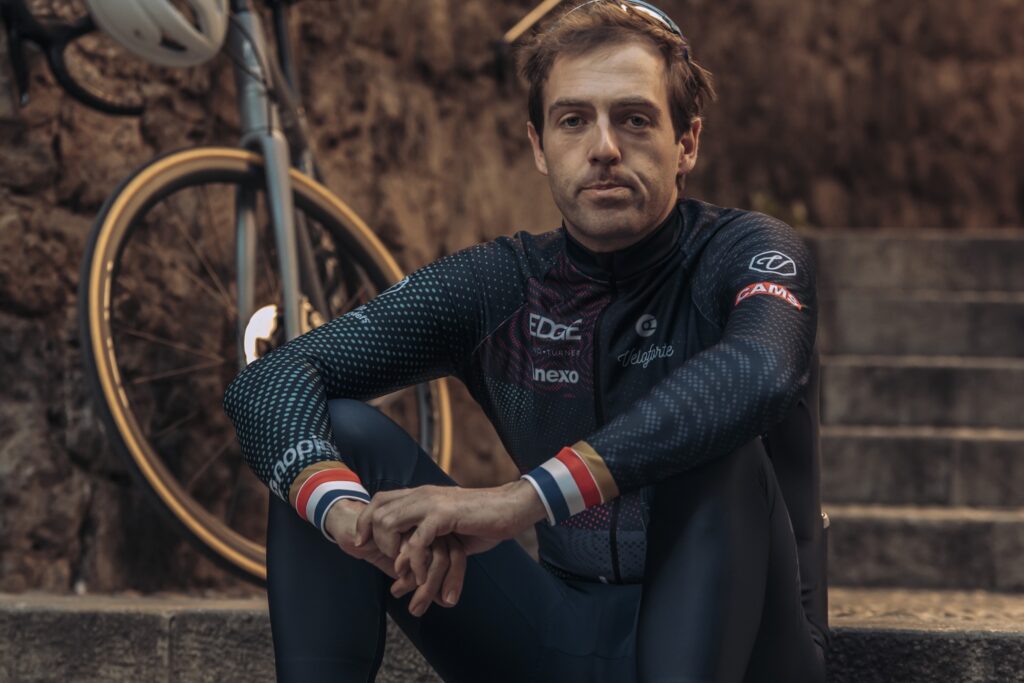
“It’s part of the charm, I think. If you start putting barriers up like Formula One, cycling’s going to lose what makes it special. It’s like everything in life, a balance just has to be had.”
So, why do runners do it? Speaking to Thomas, Dowsett, and Kirby, the answer is threefold: the desire to get closer to the riders for longer, the pull of appearing on television or social media (and the notoriety it provides), and, last but not least, alcohol. Mountains stages at the Tour mean a long day for spectators, and plenty of time to consume their beverage of choice before the riders arrive.
“I think it’s obviously something that a few people do and it’s always on telly and they just do the same, really,” Thomas offers, when asked why fans would be motivated to channel Forrest Gump at a bike race.
“But when the speed’s higher, that’s when it’s a bit more dodgy, when you see them sprinting – well, mate, if you trip over now it’s not going to be ideal.
“But you just want to see the passion and you want to see everyone enjoying it, and it’s part of the sport. That’s what makes the sport so unique and special, really, the fact that fans can just go up there, for free, and watch their heroes racing and get up close to it. Just not too close.
Dowsett adds: “Perhaps in the day and age of social media and virality on social media, I would question whether the fans’ motivation is to create rather than be a part of the race.
“Back in the day, it was probably about perhaps getting on TV, but being part of a race, just you get a snapshot of riders whizzing by, that’s cycling. So if you run with them for a bit, you’re getting a longer snapshot.
“But if fans are doing it actually not for the race, and they’re doing it for their own ambitions of appearing on screen somewhere, then that’s the balance going the wrong way.”
“I think they just get overexcited,” says Kirby. “Some of them are quite logged up. It’s just one of those things. You wait all day and then your heroes are coming by. And if you’ve got a message to deliver to them, if you stand still and you want them to get that message, all you’re going to be able to say is, allez, allez, or scream something in their ear.
“So they decide that they’re going to have a conversation. And they try and have that conversation by running alongside. They’ll still only get three words out, that could be audible, one of which I’m sure could probably burst an eardrum of one of the riders.
“But yeah, that’s what it’s about. And it’s not even about getting on telly, you know, because otherwise they’d be standing there waving at the cameras rather than looking at the race. Bless them, it’s just a question of getting very enthusiastic.”
“They just do it for jokes, don’t they?” laughs Leeds bikepacker Jenny. “It’s mainly like young boys doing it. And I suppose it puts it into perspective how quick they’re going.
“The big mountain passes, like the big summit finishes, people have probably been up there since 5am, had a few beers,” notes Henry. “You can see the atmosphere building and why people do it, but if it gets dangerous and busy, then it becomes a squeeze.”
What do Thomas and the others make of the Tour organisers’ pleas to fan to refrain from running?
“It’s a tough one for the organisers. You don’t want it to be dangerous in any way, and I totally agree with that. I can see why they would say it, but they know that people are still going to do it after a few drinks or whatever, aren’t they?” the 2018 Tour winner says.
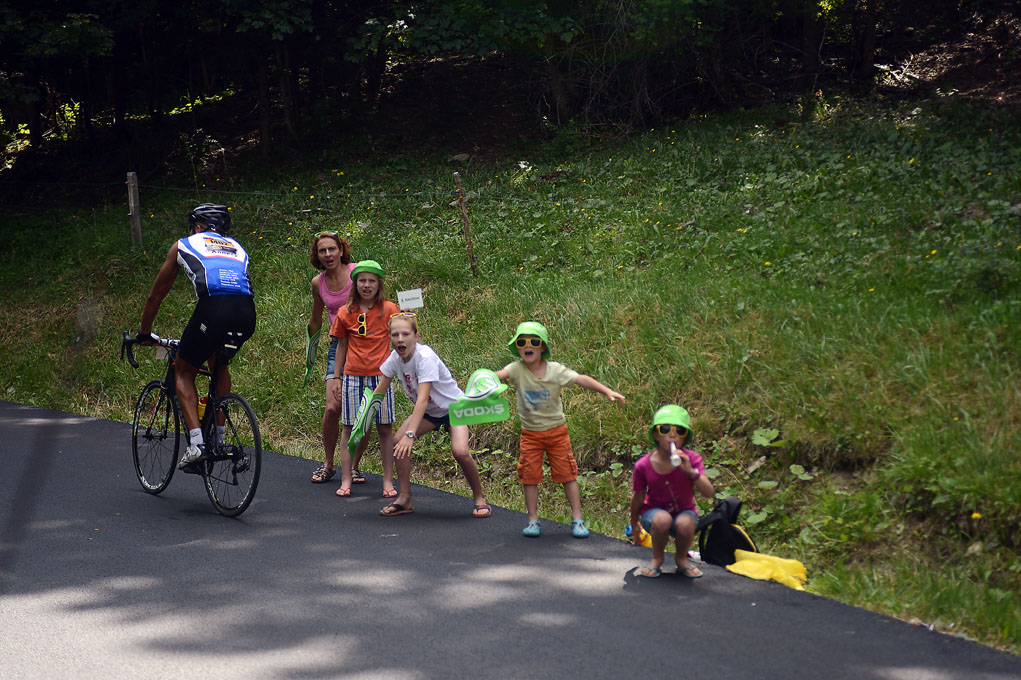
“It’s more just being aware of your surroundings, when somebody runs alongside for 10 metres or whatever, it’s feeling like it’s not too close.”
“You can’t ban it. That’s the point,” says Kirby. “But the French invoked a brilliant law to try and stop powder flares. If a policeman tells you to stop doing something, if you ignore that, then you can be fined.
“So they can’t ban running itself. But if a policeman tells you to stop running or gives you a warning, do not run in front of the riders when they come by.”
“But I think it’s right that the organisers are exercising caution on fans to placate any enthusiasm that might happen later in the race,” adds Dowsett.
“Put it this way, when I went up the Zoncolan at the Giro, I was adamant I wouldn’t be getting a push. And I learnt Italian for ‘push’ pretty bloody quickly.”
We’ll leave the last word to the loud hailer-wielding Colombian on the Col du Tourmalet.
“You don’t need to run. Just scream at the riders.”



4 thoughts on “Why do fans run alongside riders on mountains at the Tour de France?”
Why did they do it? Because twats are going to twat… I really disagree with the great CK but I think he’s wrong to say they’re not doing it to get on TV, a lot of them are running with phones in their hands then as soon as they run out of puff or are pulled to the side they are shouting down their phones, presumably “Did you see me? Did you see me?” to someone back home. The Spanish police seem to have had it well sorted in recent years, a Policia every ten metres or so and runners very quickly grabbed by the neck and thrown with some considerable force to the roadside. The Tour policing seems pretty light by comparison.
@Rendel Harris really = rarely. Are we ever going to get the edit function back?
And easy quoting and formatting please – haven’t seen a “FTFY” in ages!
And working comment sorting :o(