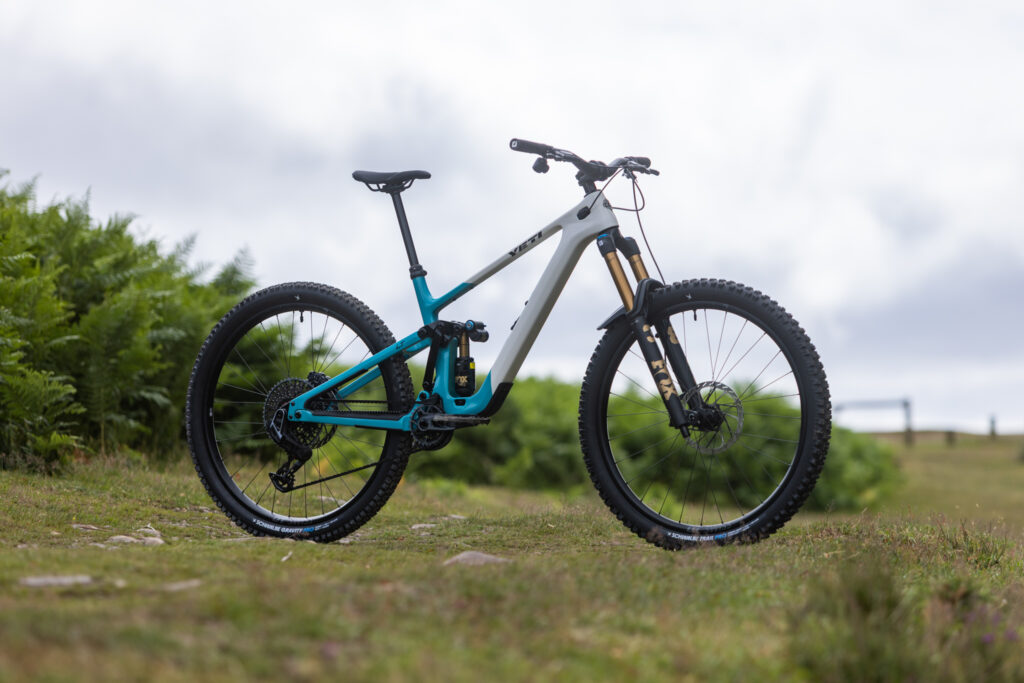

Five years ago, Yeti unveiled its first e-mountain bike, the 160E, which was a fresh take on the brand’s renowned Switch Infinity suspension platform, known as Sixfinity. Later, that system was employed for its more recent e-MTBs, and now, the brand has ditched the linkage for its regular mountain bikes as well as the SB naming convention of old. Meet the new Yeti LT and its own Sixfinity platform.
Yep, Switch Infinity and the SB160 are no longer things for Yeti. Instead, it’s the Sixfinity platform and the LT. We’ve become rather accustomed to Sixfinity as it’s been on the brand’s e-MTBs for some years now, and it’s simply been a matter of time for it to appear on a non-assisted mountain bike. And honestly, I’m chuffed to see it.
Sixfinity brings a whole bunch of benefits, but the most immediate is that it does away with that Switch Infinity mechanism that comprises a couple of Kashima-coated stanchions and bearings. It was cool tech that made a modern Yeti ride like a Yeti, but it meant more maintenance on something proprietary to the brands’ bikes.
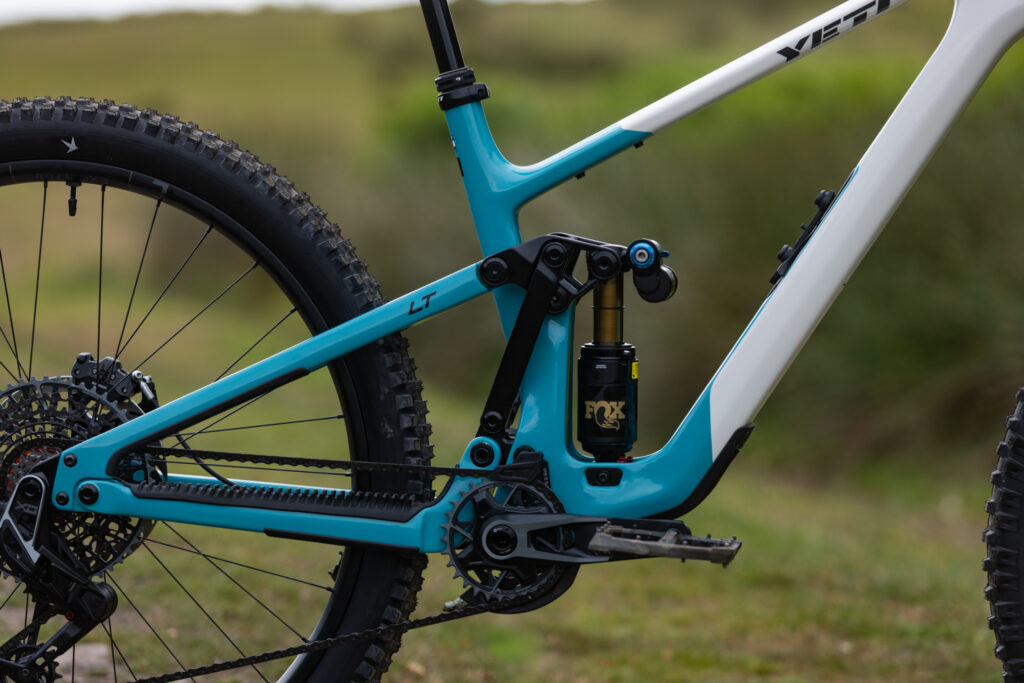
The second benefit, and perhaps the most important, is that it has allowed the system’s designers more freedom with how they tuned the suspension platform, and boy, they’ve not held back. In the easier gears, this Sixfinity system produces around 190% anti-squat. This is a mighty figure, given that 100% anti-squat effectively eliminates pedal bob through chain tension (to put it in the simplest way possible). However, I’m told that anti-squat drops off drastically as the shock moves past its sag point. The result should be excellent pedalling performance on a bike that can still effectively absorb impacts.
Yeti has also tuned in enough anti-rise to keep the bike stable under braking loads and balanced when descending steeper terrain.
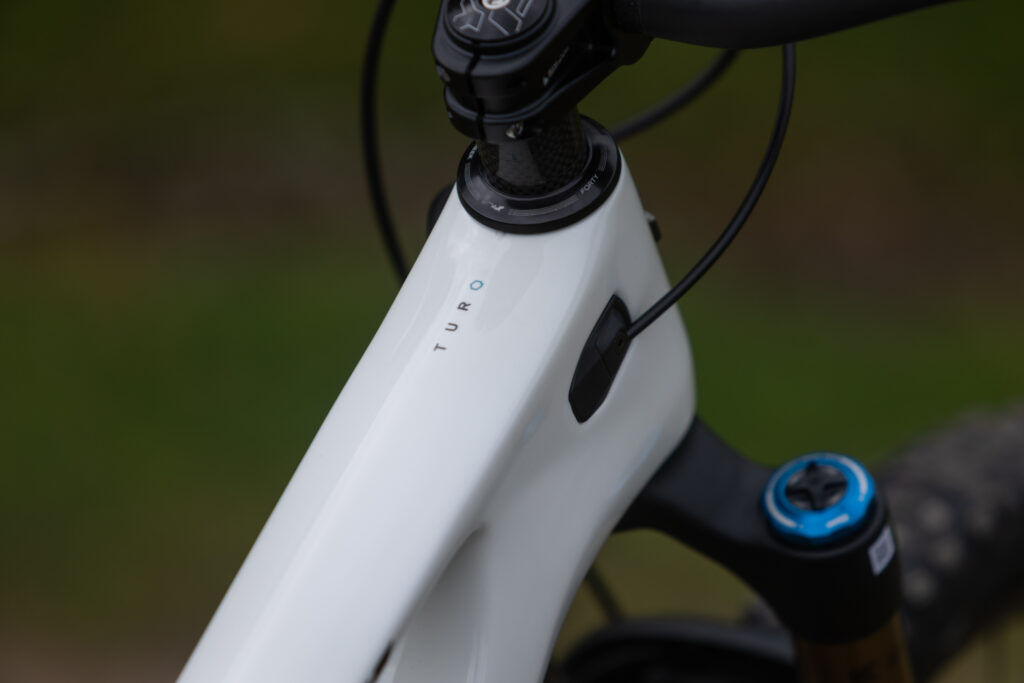
The LT then benefits from a shedload of adjustments. As standard, it runs a pair of 29-inch wheels, but it can accommodate a 650b wheel at the rear, while retaining its geometry via a flip-chip. However, with a little wheel bolted in the back, there’s another flipchip available that allows for even slacker angles. Then, the LT uses pressed-in headset cups, rather than ones that are moulded into the carbon. This means that users can invest in aftermarket reach and/or angle-adjust headset cups to revel in even more geo adjustability.
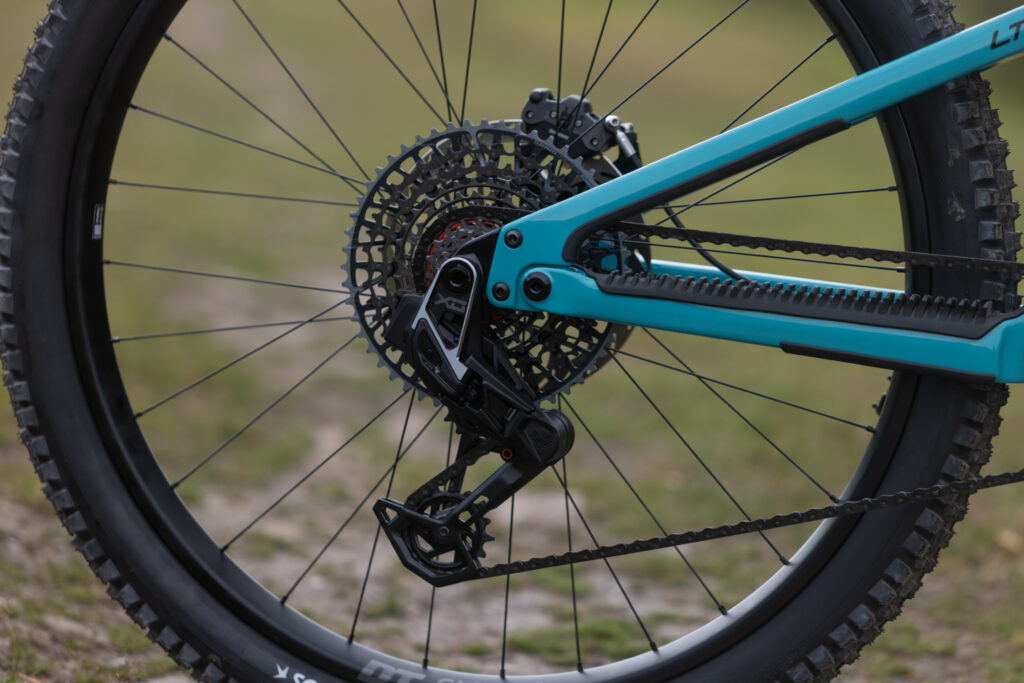
But that’s not all, because the bike employs modular dropouts to adjust the chainstay length. As standard, it’s equipped with a rather lengthy 455mm chainstay, but bolt on the longer dropouts, and you’ll get an even longer 465mm chainstay.
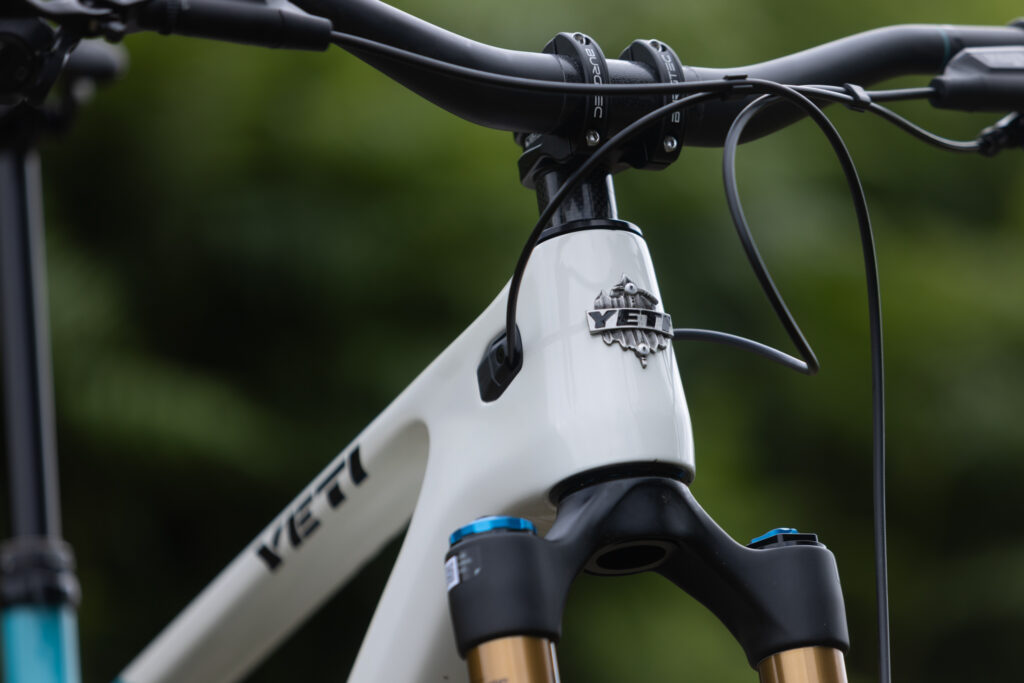
Elsewhere, the geometry is pretty run-of-the-mill for an enduro bike. There’s a 64-degree head angle and a 485mm reach on a large frame. With the more aggro flipchip installed with a 650b rear wheel, the bike can achieve a 63.5-degree head angle and a 480mm reach.
Oh, and you can also pop an Airtag or Tile tracking device just by the bottom bracket. Handy stuff if you’re spending Yeti money.
Yeti LT XO – Componentry
Yeti’s UK distributor, Silverfish, will be bringing two LT models into the country: the range-topper XO build that I rode, and a slightly more wallet-friendly XO Factory build. Each will cost £9,799 and £7,899, respectively. Both get Yeti’s top-end Turq carbon frames, though.
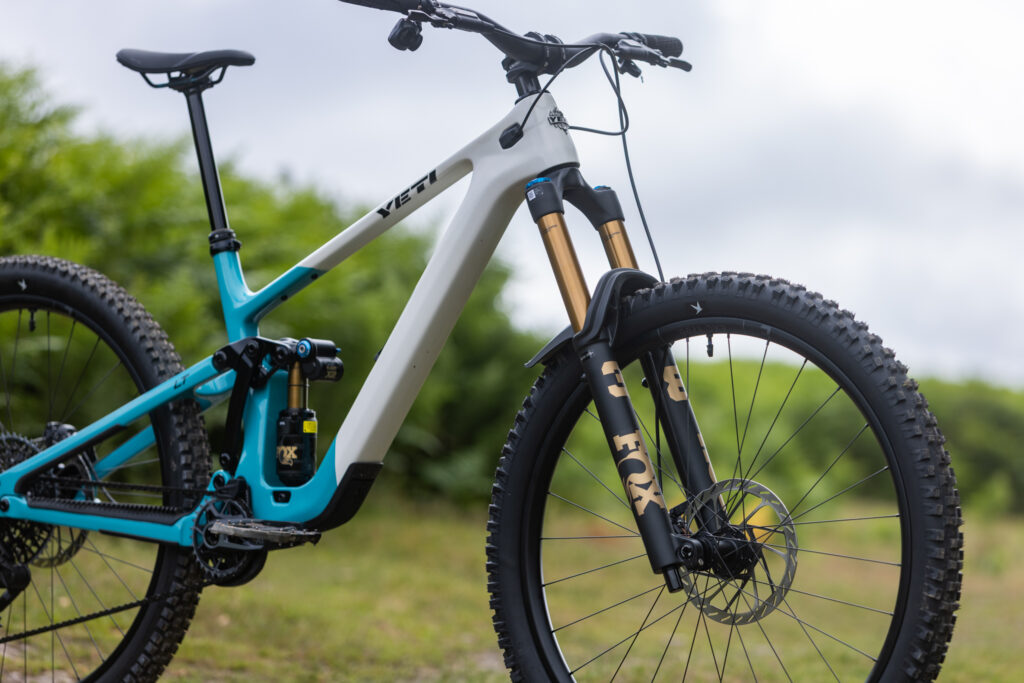
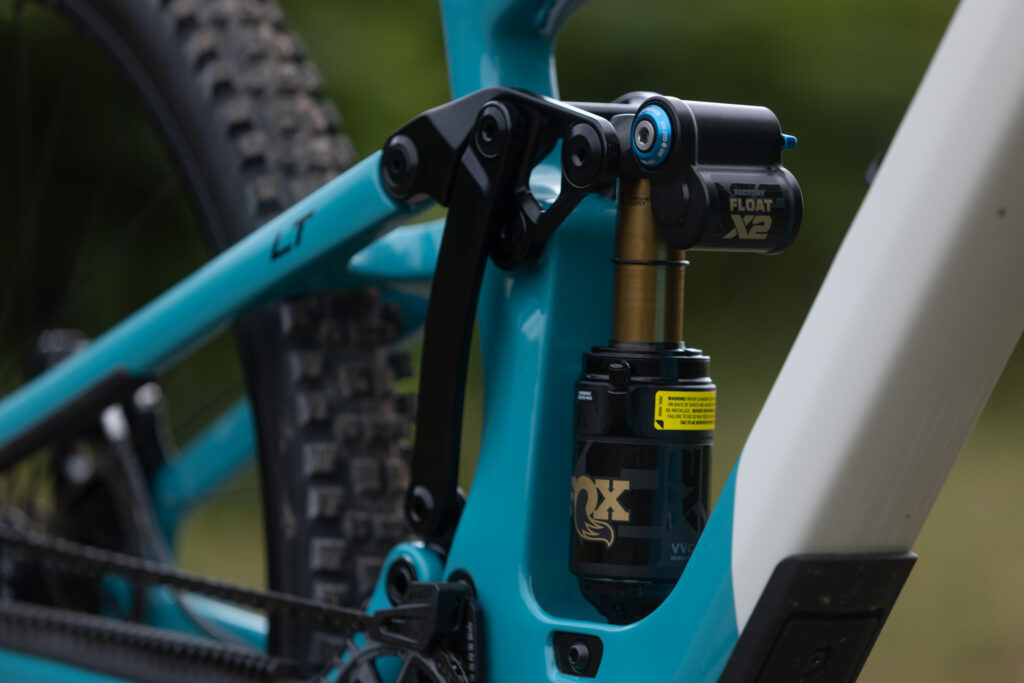
As for the bike I rode, it comes with all of the kit you’ll expect from a bike of this price. It’s sprung thanks to Fox’s Factory lineup that includes the 38 fork and X2 shock. Shifting then comes courtesy of SRAM and its XO T-Type drivetrain with that wireless goodness, if that’s your bag.
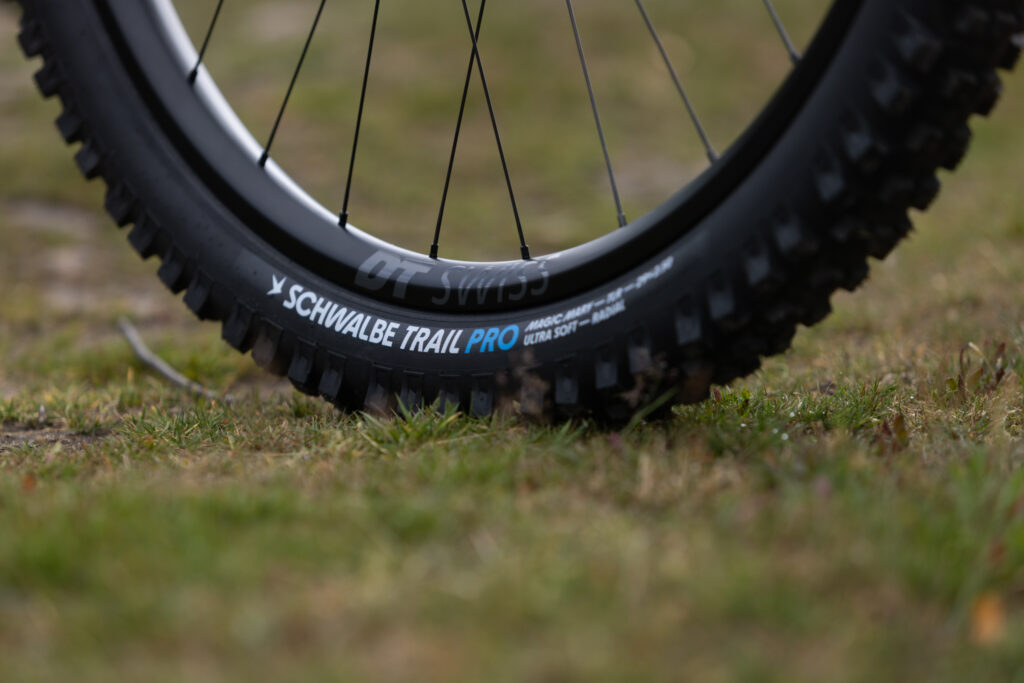
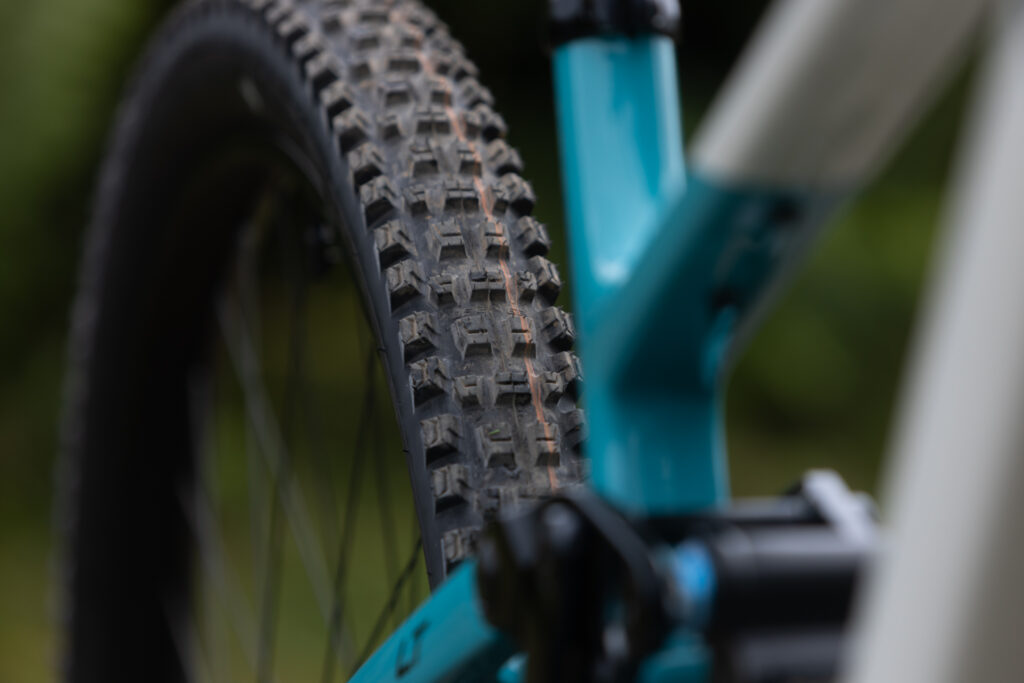
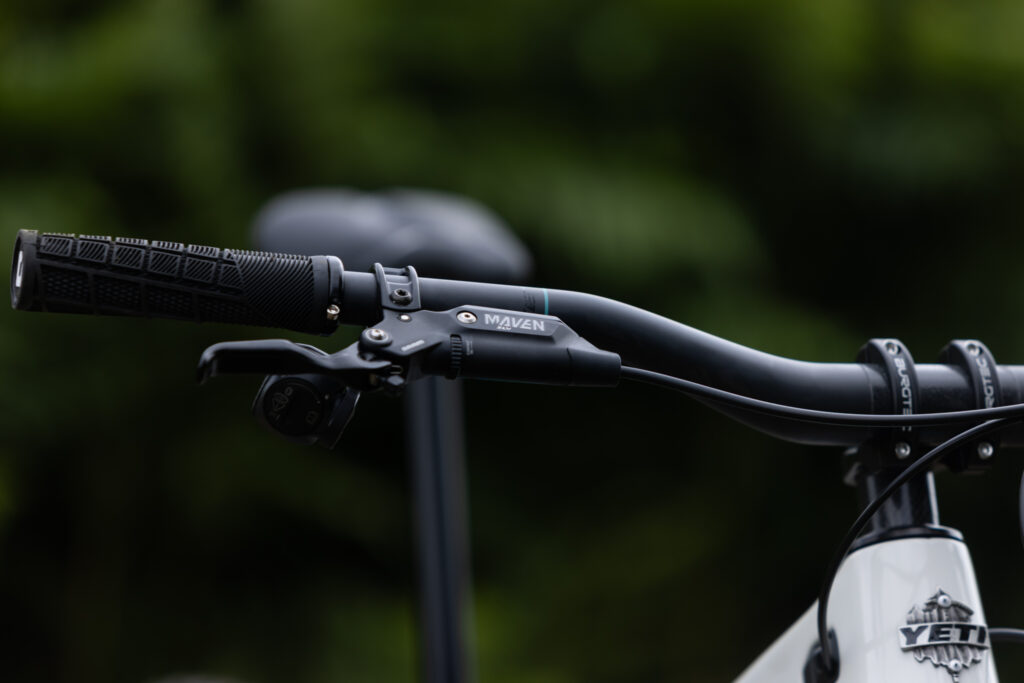
SRAM’s Maven Silver brakes slow the bike down, while DT Swiss’s carbon EXC1700 EVO wheels, complete with its Degrees of Freedom tech. Those are wrapped with Schwalbe rubber, including a Magic Mary in a trail casing up front, paired with an Albert with a gravity casing at the rear. Both feature Radial constructions.
Wrapping up the build is a Fox Transfer dropper post rustling up 210mm of drop on this large frame, a pair of ODI Reflex grips, Yeti’s own 780mm wide carbon bar and a WTB Solano saddle. There’s an MRP AMG SL bash guide, too.
As for weights, Yeti reckons this bike weighs 15.9kg, but doesn’t state which size weighs that.
Yeti LT XO – Early impressions
Ever since I rode the 160E five years ago, I’ve been asking when Sixfinity would come to a regular mountain bike, and let me tell you, I’ve not been disappointed. But while I’ve been very impressed with what the bike has to offer, it’s not without a few compromises.
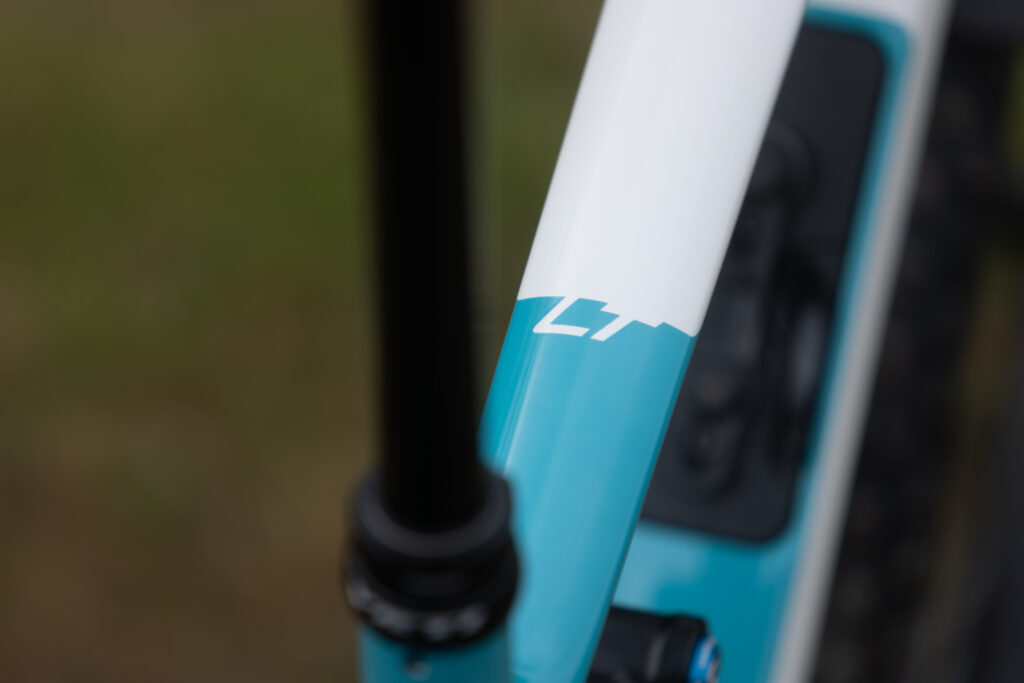
The jewel in the LT’s crown is its move to the six-bar Sixfinity linkage. Although it adds a few more bearings into the mix, it bins the proprietary Switch Infinity design, so at the very least, it’s not as wallet-hungry to maintain. But where the system has allowed the designers to be more flexible with what they can do with the platform, there are some real improvements present.
Notably, the LT is a seriously keen pedaller, even for a bike of its intention. Generally, while many enduro bikes aren’t shabby on the pedals, there’s some compromise to pedalling performance in favour of descending ability. The LT is a different story, as when on the pedals, the shock is incredibly stable. There’s absolutely zero pedal bob, so the bike is mega efficient when climbing or cranking about on the flats. Every bit of effort put into the pedals is transmitted straight to the rear wheel, so long and drawn-out climbs feel surprisingly effortless.
Though I say effortless rather lightly, as the LT is still a 16-odd kilo bike with aggressive tyres. But it’s great to see that Yeti has calmed one of the factors that contribute to a tough time up a hill.
Suspension design in general is something of a balancing act, so it’s safe to assume that something that provides such a dialled pedalling character can suffer when descending. But not the LT. As mentioned before, Yeti has built the system to dump its anti-squat as the suspension moves past the sag point, and it’s been very successful in doing so.
When tackling tech, and at quite some speed, the rear suspension opens up and performs exactly how you would expect of a 160mm enduro bike. As you can imagine, the performance isn’t a stone’s throw from that of the brand’s e-bikes, where the LT is glued to the ground, driving through uneven terrain with utmost composure. But even in the shock’s middle progression setting, there’s still a great balance built into that shock stroke, where it provides a reasonably solid platform for pumping terrain while being free enough to absorb hits.
Of course, that composure is only aided by the bike’s seriously long chainstay. In a straight line, the LT plows, making short work of holding its line and its momentum. That’s with a good helping of comfort too. Yep, as an enduro bike, it’s most comfortable at speed, but I wouldn’t expect anything less. In fact, I polished off a bunch of trails, surprised with how quickly they were over.
The rest of the geometry is nothing out of the norm for an enduro, or even a trail/all-mountain bike. So the LT feels incredibly familiar from the first pedal stroke. I merely tipped it into the trail and immediately felt at home on a bike I’ve never swung a leg over.
When brands kit their bikes with longer chainstays, I find that such bikes tend to throw weight over the front wheel when navigating steeper trails. But this is another thing that Yeti has solved with its Sixfinity linkage. That’s thanks to the bike’s anti-rise design. Rather than pitch weight forwards, the bike remains well balanced and plenty controllable when the gradient gets wild, even when hard on the brakes.
I mentioned that there are some compromises, and I stand by that. When climbing, I found that the front end could get fairly wandery. While the suspension provides solid pedalling performance, it’s a little more of a task to keep the front wheel pointed where you want it.
And interestingly, the rear wheel is pretty keen to lock up under braking. Granted, there’s a pair of SRAM Maven Silver brakes slowing the bike, but they’re mated to 200mm rotors at both ends. With the large disc at the rear, it can struggle to achieve the level of modulation I prefer and can control. Compounding this, the rear brake mount can only accommodate a minimum of a 200mm rotor, so there’s no way of chucking on a smaller rotor to reduce its keenness to lock up. Admittedly, for hard chargers like Ritchie Rude, this’ll be no issue, but I’m definitely no Richie Rude.
A smaller downside is Yeti’s decision to kit the bike with a Trail-cased tyre at the front. This does reduce the bike’s overall weight a touch, but it’s a pretty easy tyre to bottom out at speed. With that, it’s a bit of a curveball that the brand has gone this route, given how easy the bike is to ride quickly.
Then, owing to its long chainstay, agility isn’t exactly the LT’s strong suit. In a straight line, yes, it’s sure-footed, and through more drawn-out corners, it’s rather dependable, but when it comes to tight and twisty sections, it can bog down a little. But it makes a great excuse to swat up on your endo turns.
Yeti LT XO – Early Verdict
As expected of Yeti, the new LT isn’t a cheap bike, which could be looked at in a couple of ways. It’s a shame that its awesome performance is gatekept behind a lofty paywall. On the other hand, it’s a good example of what can be achieved if your bank account allows for it. On my salary, it’ll remain a poster bike, but if I won the lottery or found my way into the black market to sell off an organ or two, the LT would be at the top of my list.
Financials and missing kidneys aside, Yeti has created a very solid enduro bruiser. Although it’s not without a few compromises, the Yeti epitomises the modern enduro bike. It’s well-shaped, fast, traction-rich and downright capable. But the biggest surprise is how effortlessly it pedals for a 16-kilo bike equipped with lots of suspension travel. It could do with a few improvements, still, however. The ability to install a smaller rear brake rotor would widen its appeal to those who aren’t racing EDRs for wins, and its front end can get a little wild when climbing.