


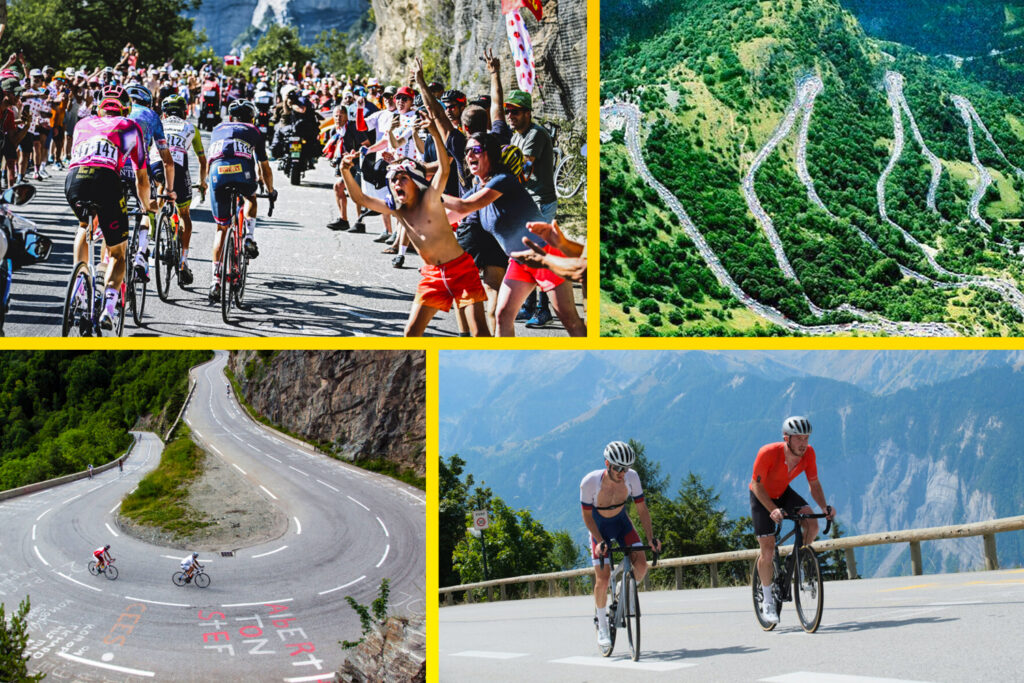

Talk about Tour de France folklore and it won’t be long before the topic of Alpe d’Huez comes up. It’s one of the most renowned climbs ever to feature in the race, and this year sees two Alpe d’Huez finishes, one on Stage 19 – the traditional route including the famous 21 hairpins – and then from the other side of the mountain on Stage 20, the penultimate day of the 2026 race. It’s highly unlikely that the overall winner will be decided on Alpe d’Huez this year because Tadej Pogacar is already so far in the lead – race organisers were doubtless hoping for a more closely fought contest – but some of the GC standings could be finalised with just the final stage into Paris to follow.
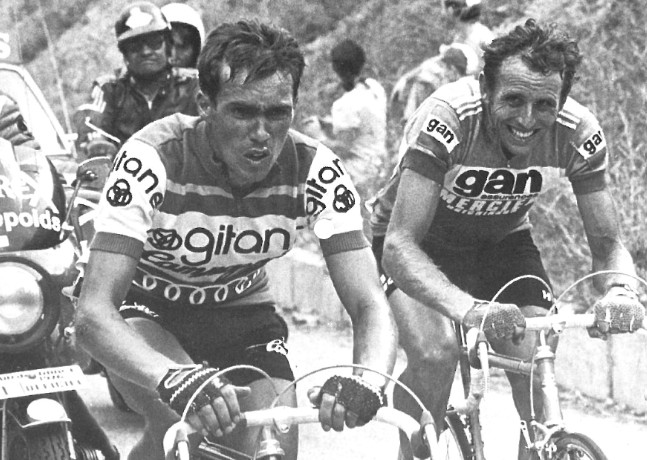
What is it that makes Alpe d’Huez so special? It’s among the most ridden climbs in Tour history, but Tourmalet, Galibier and Aspin have all featured more frequently. And those climbs, plus the likes of Peyresourde and Aubisque, featured in the Tour much earlier. Tourmalet made its first appearance way back in 1910, for example, while Alpe d’Huez was relatively late to the party: 1952, and then not again until 1976.
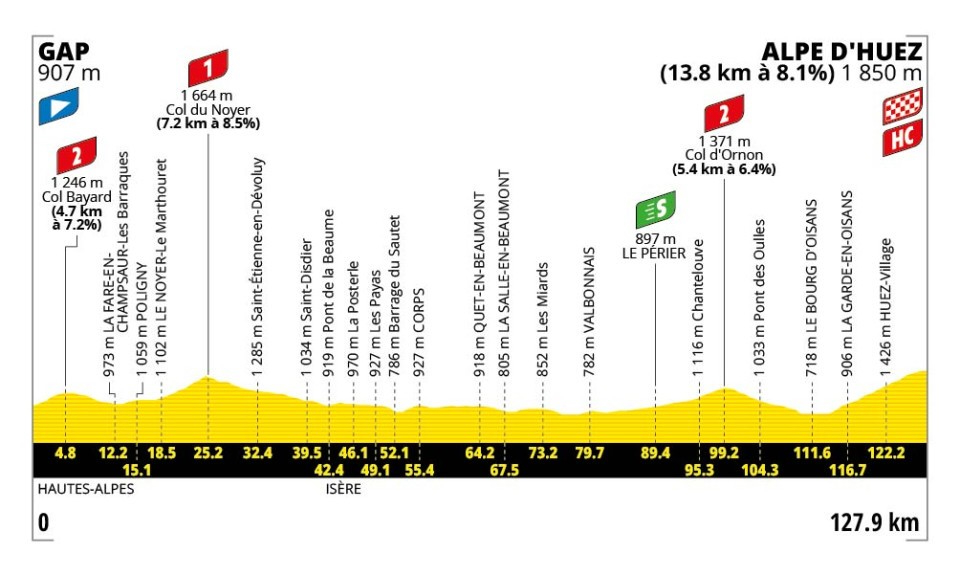
Plus, by Alpine standards, Alpe d’Huez isn’t especially large. Yes, the Alpe d’Huez Strava Verified Ride Segment finish elevation might be 1,776m (much higher than Ben Nevis, the UK’s highest point), but you’re already fairly high above sea level when you start. The (Strava version of the) climb is 1,047m over 12.02km.
For comparison, the combined Télégraphe/Galibier climb is over 35km long with twice as much vertical ascent. Granted, the average gradient is lower (there’s a brief descent in the middle), but it’s a monster.
According to Strava, the average time for an amateur cyclist to climb Alpe d’Huez is 1:21 hours. Although there are various ways of defining the record, the fastest time from Le Bourg d’Oisans is 37:35 minutes by Marco Pantani during the 1997 Tour de France. Like a lot of the fastest times recorded by professionals from that era, it’s suspect, to say the least (we should point out that Pantani never officially tested positive for banned performance-enhancing drugs during his career, although he was excluded from races – most notably the 1999 Giro d’Italia – for exceeding the UCI’s hematocrit limit; this was officially a health-based exclusion rather than a doping conviction).
Is Alpe d’Huez a great climb?
Judged purely as a climb, Alpe d’Huez isn’t the greatest. Granted, “greatest” is subjective, and if it were in the UK we’d never stop raving about it. But it’s not; it’s in the Alps, one of the spiritual heartlands of cycling, and there’s a lot of competition around there.
You’ll have heard that joke often wrongly attributed to John Lennon (it’s actually from Jasper Carrot, fact fans): an interviewer asks, “Is Ringo the best drummer in the world?” John allegedly replies, “Ringo isn’t even the best drummer in The Beatles.”
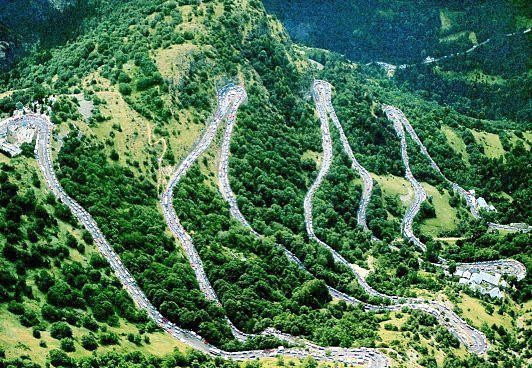
What does that have to do with Alpe d’Huez? Not much other than the fact that Alpe d’Huez isn’t the best climb in the world. It isn’t even the best climb in the Alps. In fact, if you base yourself in Le Bourg d’Oisans, at the foot of Alpe d’Huez, you could find plenty of arguably better climbs accessible on a day’s ride: Croix de Fer, Glandon, Télégraphe, Galibier…
Our man Jo Burt says, “I’ve ridden it a few times. The usual route is a wide access road for coaches that’s pretty boring in my opinion. I don’t get the fuss. There are nicer ways up, but they won’t be Tour caravan-friendly. There are hundreds of better hidden climbs.”
In a former life as a triathlete, I ran up Alpe d’Huez one morning and rode up it after lunch, which I mention not as some humble brag but as evidence that it’s not especially big or scary. And, as we’ve seen, it’s a bit of a Johnny-come-lately to the Tour de France, so why is it so revered?
Quite a lot of the road.cc team have ridden it over the years so we’ve got our heads together to try to give you some answers.
1. Great vibes
The best thing about Alpe d’Huez is that it’s Alpe d’Huez. Huh? To explain that strange statement a little more clearly: well, it’s Alpe d’Huez, innit? Know what I mean? Maybe you do, maybe you don’t.

Our man Liam Cahill says, “It’s a great climb from the vibes point of view with all the winners’ names on the corners and nearly every metre of the road covered in paint.”
It might not be the largest or prettiest climb in the world – or even in the district – but those 21 hairpins are legendary. Like Wembley Stadium or Camp Nou for football, Lord’s for cricket or Madison Square Garden for boxing, Alpe d’Huez is a cycling icon. The great Fausto Coppi was the first winner here, for goodness’ sake. Alpe d’Huez is a big part of cycling distilled into a few miles of road.
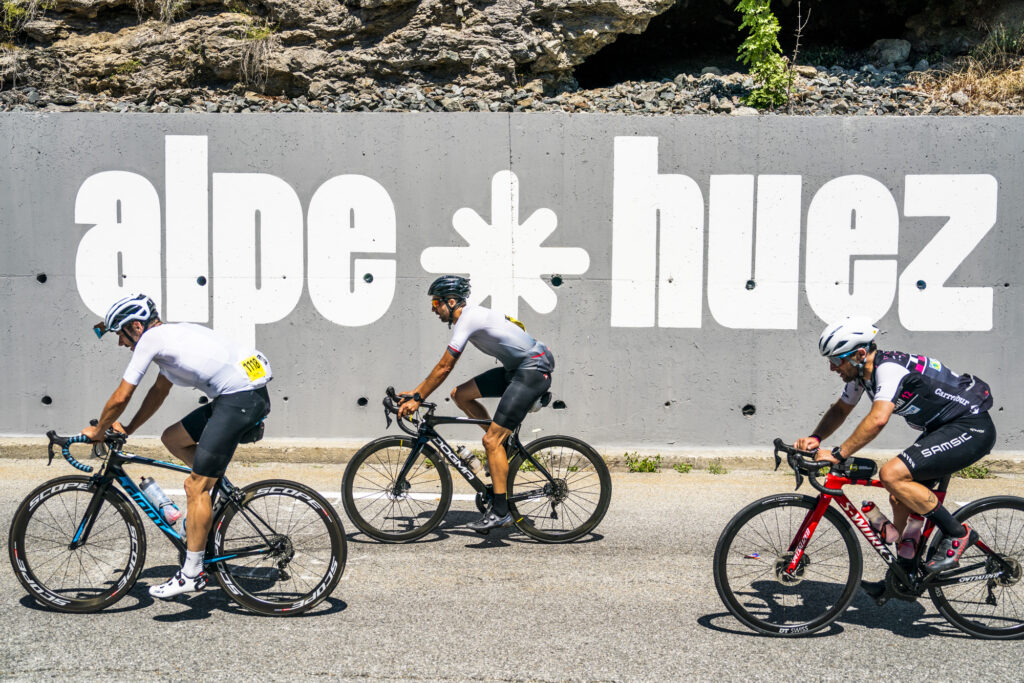
Mumbo jumbo? Maybe, but when you ride Alpe d’Huez you know you’re tackling one of the most famous climbs in cycling – maybe the most famous (although Galibier, Tourmalet, Ventoux and Stelvio might want a chat about that). It has a special place in Tour de France history, and you can take a little piece of it home in your memory.
2. Dutch Corner
Each of Alpe d’Huez’s 21 hairpins is notable in some way or other, but Dutch Corner – turn seven – is the most famous.

Why? Because when the Tour de France heads up there, orange-clad Dutch fans gather for a party. Some of them get there days in advance, and take staggering amounts of refreshment. Well, it’s thirsty work cheering on the riders in the hot sun for several hours, and you obviously have to spend a few days preparing for it.
> Video: The madness of l’Alpe d’Huez’s Dutch Corner
It all stems from the fact that Dutch riders won a lot of the early Alpe d’Huez finishes, but that was a long time ago. It has become a quirky – very quirky – part of the Alpe d’Huez story.
3. It’s usually a summit finish
Summit finishes can be decisive in the Tour de France – they’re where the strongest climbers can make gains over their rivals with no danger of losing any of that time on subsequent descents, so they can put it all on the line – and Alpe d’Huez is usually a summit finish, meaning that action is pretty much guaranteed.
Remember the 2022 Tour de France? That’s the one when Britain’s Tom Pidcock broke away on the Galibier descent – you’ll have seen the astonishing video where he drops world-class riders like they’re novices – before going solo with around 8km to the finish, and becoming the youngest Alpe d’Huez winner in Tour de France history at 22 years old.

Remember Geraint Thomas back in 2018? A group of GC contenders caught Steven Kruijswijk on Alpe d’Huez after a 70km solo break, and then G eventually dropped the rest of the group – including teammate and reigning champ Chris Froome – proving his status as the strongest climber in that year’s race and going on to take the overall win.
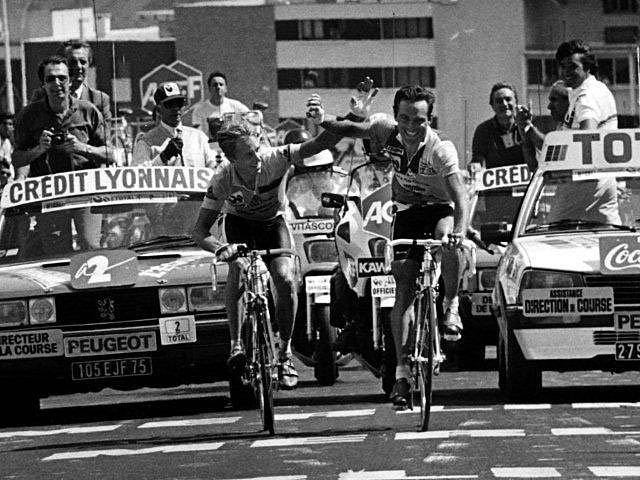
Bernard Hinault and Greg LeMond crossing the line arm in arm in 1986… we could go on all night. Things happen on Alpe d’Huez.
4. The Look
There’s one more Alpe d’Huez moment that’s worth a quick look.
If you’re old enough, you’ll remember when Lance Armstrong pretended to be having an off day in the 2001 Tour de France before moving to the front of the group and looking back at Jan Ullrich at the bottom of Alpe d’Huez, then cruising off and “winning” the stage by a couple of minutes.
We now know that Armstrong was a dirty, rotten drugs cheat, of course, so that result has been rescinded. He has since claimed that he was actually looking back to see the position of a teammate, but it seemed for all the world as if he was staring directly into Ullrich’s soul before sticking the knife in. Like him or loathe him – and that whole drug-fuelled era – it was a memorable moments in Alpe d’Huez history, even if it’s now remembered as much for what it says about cycling’s darkest chapter as for the mountain itself.
5. You can ride it yourself
We said a little earlier that, judged purely as a climb, Alpe d’Huez isn’t the greatest, and we stand by that. Don’t get us wrong, it’s decent enough, but by Alpine standards it’s not the longest or most scenic, and the ski resort up top is easily forgettable. Given half a chance you should still ride it, though, and like most of cycling’s most famous roads, it’s perfectly accessible (as long as you go in summer).
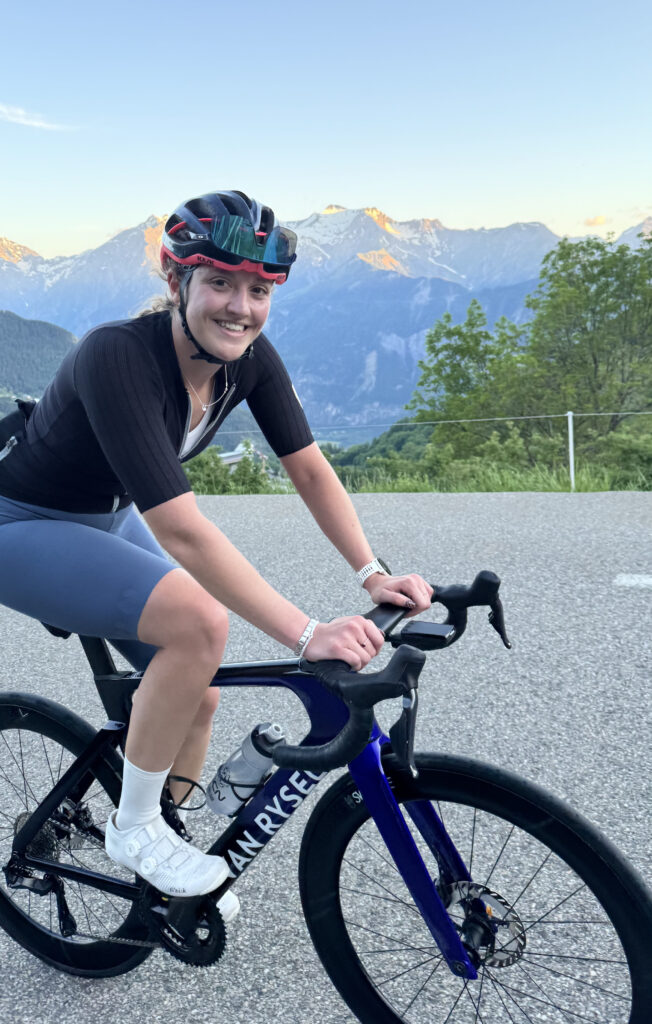
Why should you ride it? Simply because it’s Alpe d’Huez. It’s iconic. Riding it is a rite of passage. We’re not going to tell you that you’ll feel all of its history seeping out on those 21 bends, but like the Paris-Roubaix cobbles, the Oude Kwaremont and the white roads of Tuscany, it’s something you need to experience.
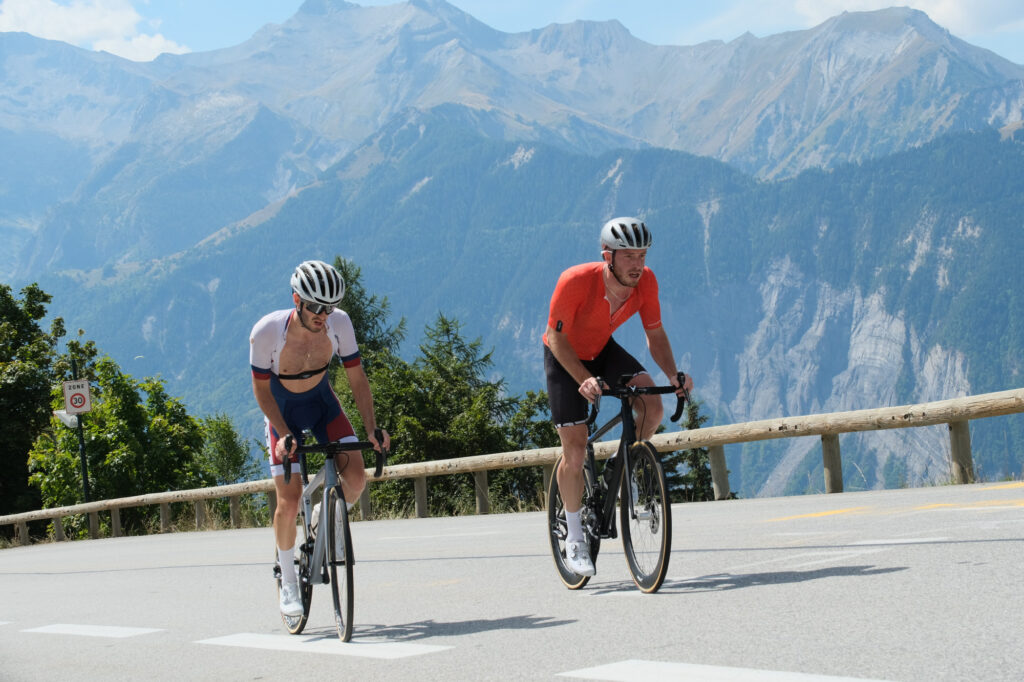
If you can do it just ahead of the Tour de France, all the better.
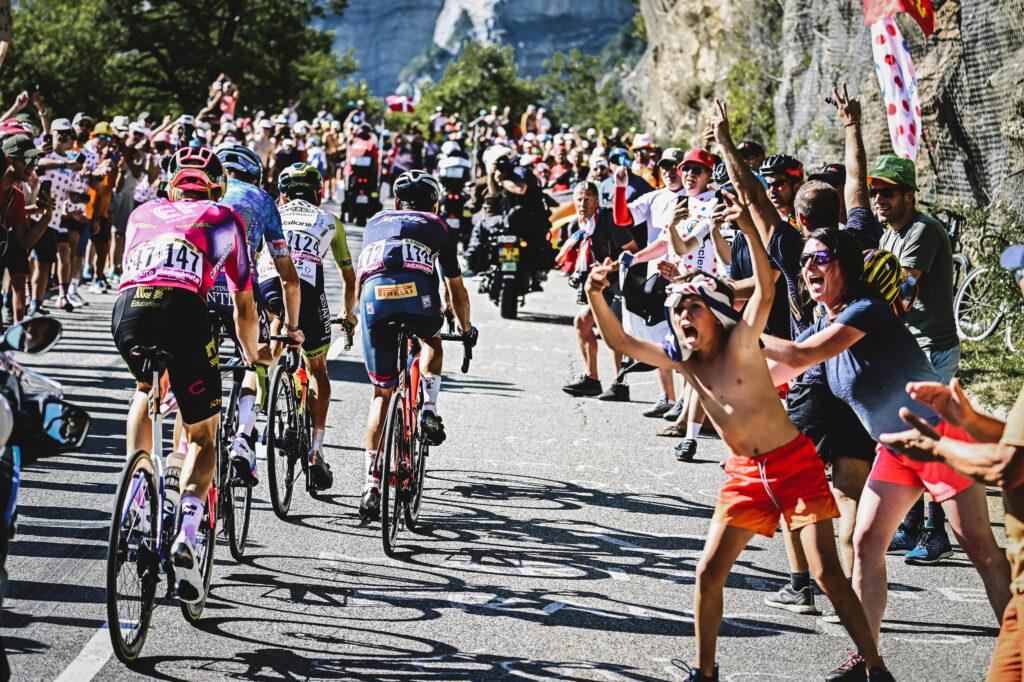
Jo Burt says, “Riding Alpe d’Huez when the Tour is on is a different experience altogether with all the caravans, names in the roads, the crowds… Stopping on Dutch Corner for a swig of beer was a moment, as was the smell of piss and Amstel.”









2 thoughts on “Why Alpe d’Huez is the Tour de France’s most iconic climb – maybe – even if it isn’t the best”
Interesting article and a pleasure to read. A lot of pros say the the climb is tough because the gradient varies so much and they can’t get into a rhythm.
I have ridden Alpe d’Huez on Zwift. It is tough enough there, without any wind!
One point. The phrase “piss and Amstel” could be replaced by “piss and fizzy piss”
The most disappointing aspect of the climb to me is that it has no proper summit. You can stop in the town, but that’s not where the pros stop. Instead you stop the other side of the town at a non-descript ski station but the road (turning into a track) continues on upwards. It’s a weird anticlimax.