


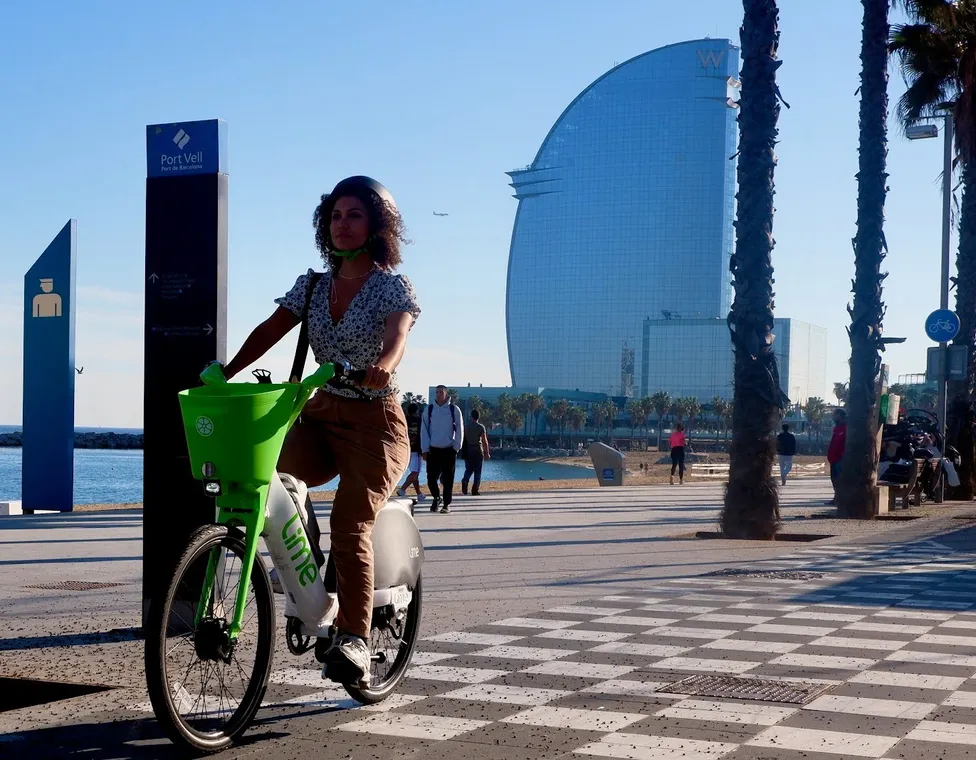

Private bike share companies such as Lime and Voi will be banned in Barcelona from 2027, after the city’s mayor described the use of the hire bikes – which have accrued over 5,000 fines since January 2025 – a “mess”.
However, the decision has been criticised by the president of the European Cyclists’ Federation, who argued that the loss of the private e-bike schemes will mean Barcelona no longer has “sufficient mobility supply” and is turning its back on sustainable travel.
Earlier this month, Barcelona mayor Jaume Collboni announced that the Catalan capital, which is set to host the Grand Départ of this year’s Tour de France at the start of July, will not renew the licences currently held by e-bike hire companies Lime, Bird, Voi, Boltest, Cooltra, RideMovi, and Smart Cycles.
The licences of these seven brands – which together account for 3,478 e-bikes in Barcelona – were all set to expire on 31 December. The failure to renew their deals means that, from 1 January 2027, they will no longer be able to be used in the city.
According to local reports, the decision to axe the private e-bike schemes is a result of widespread parking and operating rule violations.
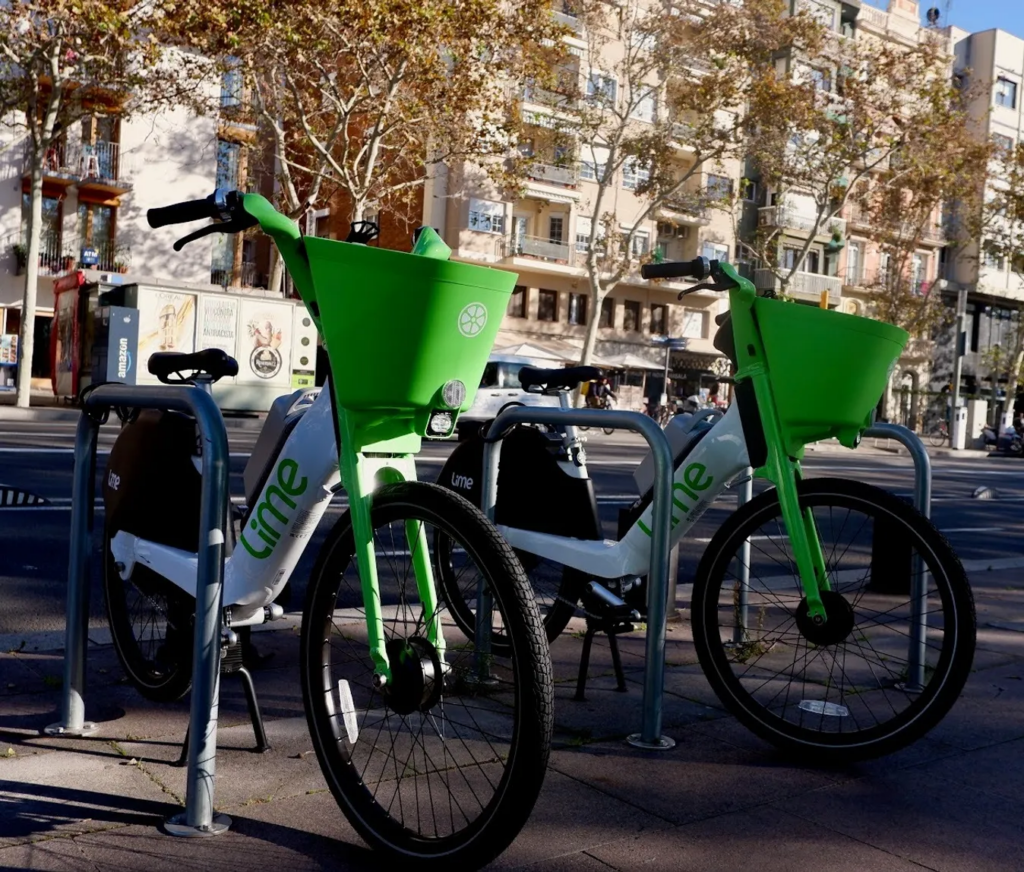
When the local authority last awarded the licences for the privately-run systems, first introduced in 2020, at the end of 2024, it did so on the condition that the companies were required to control how their bikes were used and parked. On its website, for example, Lime reminds its users that parking in specific bike racks is mandatory in Barcelona.
However, according to data published by Barcelona City Council, since January 2025, the local authority has handed out 5,413 fines to the seven companies for violating this agreement, the equivalent of over 1.5 fines for every e-bike.
2,099 bikes have also been removed by the council after they were left poorly parked, such as on narrow footpaths or blocking pedestrian crossings. In the same period, the council received 4,443 complaints from residents about poorly parked dockless bikes, with the majority of these complaints stemming from areas with the highest concentration of tourists.
Describing the use of the e-bike service as a “mess”, Barcelona mayor Collboni said: “The city must protect public space a lot.”
The Socialists’ Party of Catalonia politician also claimed that, despite meeting with the service providers several times and admitting that they have attempted to “put some order in place”, the problems have persisted.
Another much-criticised element of the private operators’ presence in Barcelona is their overwhelming reliance on tourists, with only 10 per cent of the bikes being used by the city’s residents.
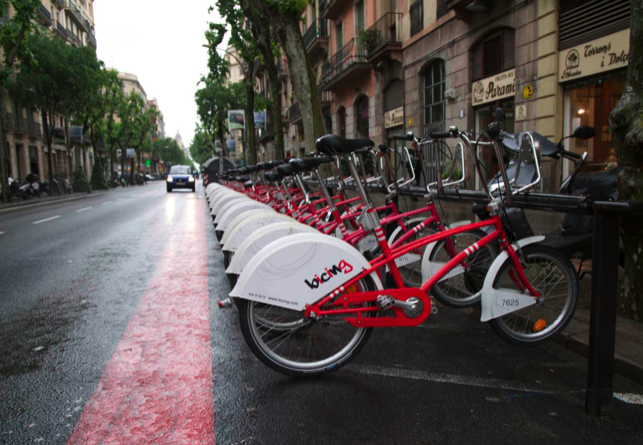
Instead, Collboni confirmed that the council will soon unveil its plans to expand the public Bicing bike sharing system, first introduced in 2007 and run by the local authority. Unlike Lime and the other private schemes, Bicing is only available through a subscription service and is limited to users with addresses in Catalonia.
Bicing’s expansion comes amid concerns over the quality of the council’s public scheme, following reports that parking stations have been out of service for weeks and that some bikes are in poor condition. The new Bicing contract is understood to be focused on introducing new stations and bikes across the city.
Collboni also noted that the rise of private dockless e-bikes among tourists has harmed “local alternatives” such as bicycle rental shops traditionally catered to visitors.

However, the decision to expel private e-bike brands like Lime from the streets of Barcelona has been criticised by Henk Swarttouw, the president of the Brussels-based European Cyclists’ Federation, who said this week that he is “very disappointed” by the move.
“This decision goes against the trend elsewhere in Europe and the world, where bike share systems are increasingly an integral part of sustainable urban mobility systems,” Swarttouw said in a post on LinkedIn.
“Without these shared electric bikes, the city will not have sufficient mobility supply, as the public Bicing system doesn’t have enough capacity to serve all residents and cannot be used by visitors or tourists.
“To fill the combined demand of citizens and visitors, Barcelona needs around 12,000 shared bikes, as established by the Bicicleta Club de Catalunya, which is approximately the sum of the 8,000 public shared bikes and the 3,500 shared bikes from private operators. This shows their key supplementary role in providing rides to occasional visitors and tourists.
“It’s saddening to see that the host city of EIT Urban Mobility and Tomorrow.Mobility turns back on its earlier progress in sustainable mobility, but there is still time to reconsider!”
Of course, Barcelona isn’t the only city where hire bike parking has become an issue. Last week, we reported that e-bike and e-scooter operators have been issued a total of over £210,000 in recovery, storage and release fees for dumped vehicles in the London borough of Kensington and Chelsea (RBKC) since January 2025.
Lime users are the biggest offenders, with 1,624 bikes seized and a total of £143,891 in fines. Forest had 787 of their bikes taken by the council, while Voi and Bolt had less than 100 offending units each. The local authority, which has received over £179,000 in payments so far, said that income from fines “will be reinvested into the service to support ongoing enforcement activity.”




















5 thoughts on “Barcelona to ban private bike share schemes from 2027, as mayor slams e-bike parking “mess””
I think this is a positive story. They’re not getting rid of public hire bikes – they’re expanding their in-house one. They’re merely kicking out cowboys who’ve shown they’ve a lack of interest in the game they claim to be playing.
It seems logical that companies whose business model is to extract (venture capital) money by invading public space are even less likely to make the efforts to keep things in order than a local “in house” scheme. (After all the “bikes and riding” part of these schemes always *costs* money, they don’t generate it.) So not surprising their experience shows those firms are not particularly motivated to follow the rules – especially when scrapping for “market share”.
It’s nice the European Cyclists’ Federation is thinking about tourists also (i hesitate to say “follow the money…”) – as they note, where it’s safe to cycle locals will largely get their own bikes. Tourists aren’t going to stop coming because lack of public bike share – I think this is mostly a “nice to have” (“hey – why don’t we go on one of those bikes there? “).
Hope Barcelona keep the transport improvements (they’ve been making for a while) coming! Better streets, more infra to help active travel where necessary.
And while it’s a major investment (though can be lower operating cost than busses) maybe more trams where they can. That may be more effective in making places active travel friendly and replacing taxis than mass public bike hire. They’ve a good start with 6 lines already.
By their very nature the dockless bike schemes will result in bikes being parked in stupid places. The user has little incentive to find the correct place to park it. More so if they are tourists with a cruise liner to catch and only 3 hours to explore.
So, if the operation can’t be made to fit within the councils required operating method, then it should be removed.
I’m pretty sure another operator will come in and propose a system acceptable to the council if they believe they can make money.
I strongly suspect that the current operators can only make money by tacitly allowing bikes to be left where the tourist money wants to leave them, so time to rethink the financial model me thinks!
@TrainWalkWheel at least one person on here seems to have better understanding of these than I do but AFAICS the model is even less likely to lead to good outcomes than happened with eg. a certain UK bus company. The one notorious for moving into an area, putting the existing providers out of business by running more services for pence and losing money, then – having captured the market – jacking up the price and dropping services.
At least in that case the intention was presumably to deliver a self-sustaining service in the end (albeit perhaps a worse, overpriced one).
But AFAIK mass bike share itself has never made money directly. So one wonders what the end plan is if any one of these market-share-capture firms actually won? (Presumably that isn’t important and it’s all about trading / financial shenanigans in some way. I doubt they could hold the local authority to ransom for the extra cash…)
In 2019, Shanghai and other Chinese major cities implemented strict regulations and clean-up operations tp remove millopns of abondoned dockless bicycles that had created public nuisances and blocked pavements.
One can’t blame local authorities for taking actions in order to stop a messy situation triggered by unruly users.