



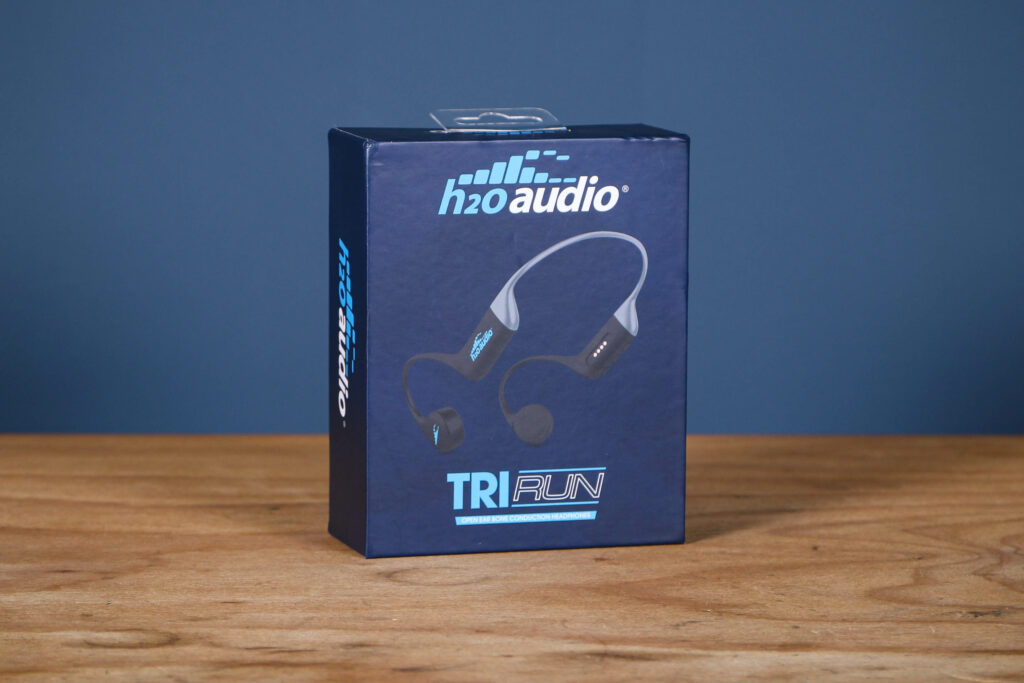
The H2O Audio TRI Run open-ear bone conduction headphones are the entry point in the American headphone manufacturer’s bone conduction line of products. They sit beneath the Tri 2 and the Tri 2 Pro, offering some of the same features as the more expensive models at a much lower price point. We’ve previously tested the Tri 2 and Ben felt they were good, if a little expensive, but I found the TRI Run frustrating to use to the point where I couldn’t recommend them unless price is your overriding concern.
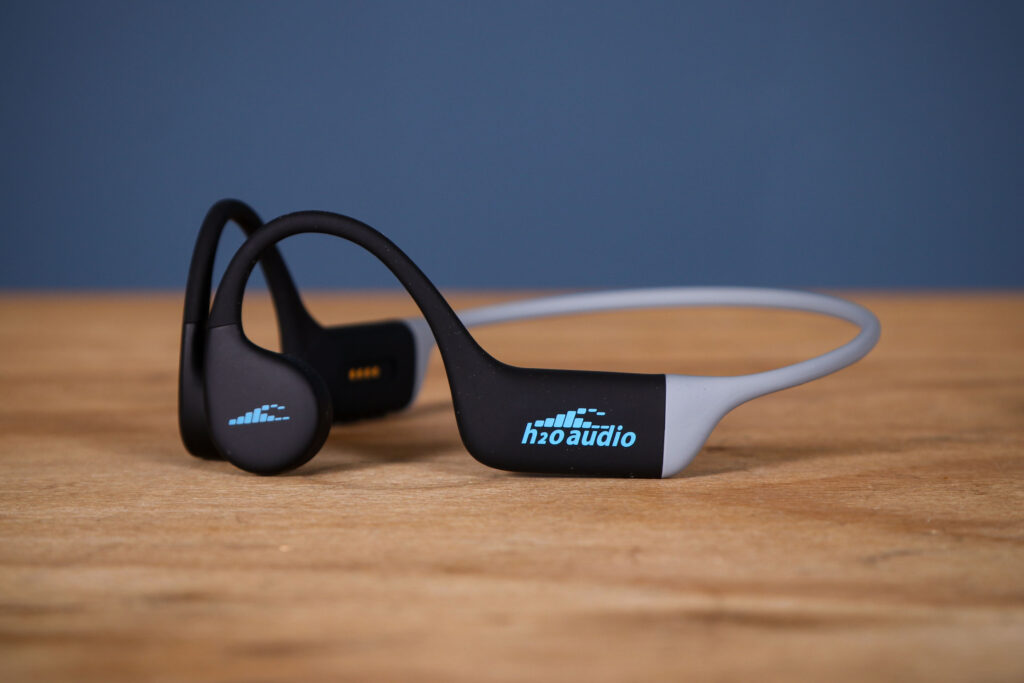
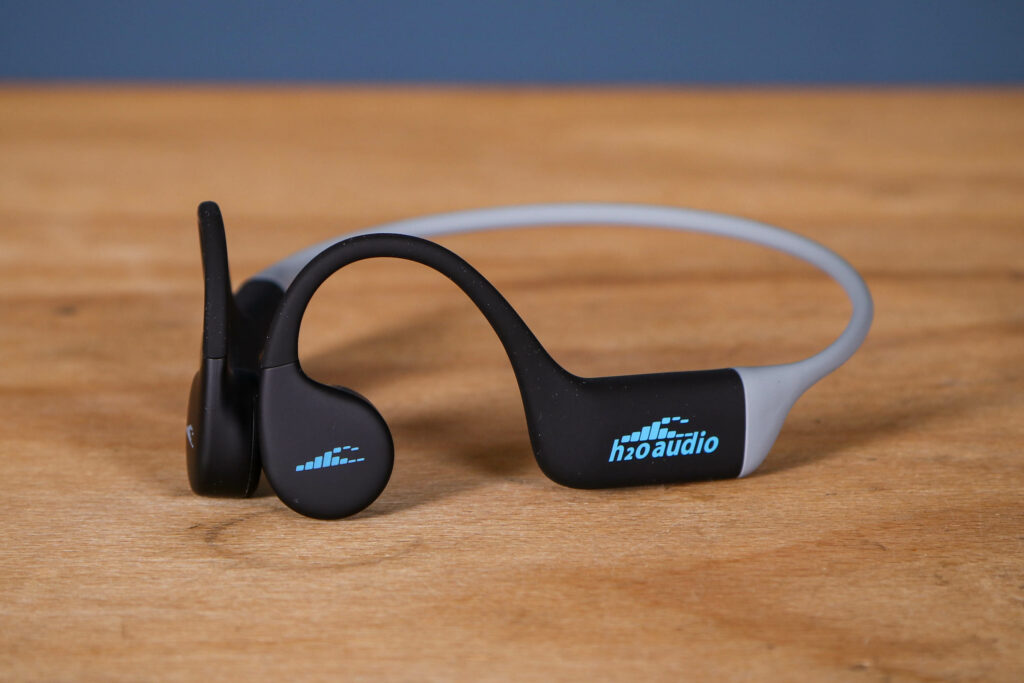
The TRI Run headphones are comfortable to wear, and sit nicely just in front of the tragus without too much pressure. The flexible frame is unobtrusive and plays nicely with helmet straps and eyewear arms and, on the whole, after a few minutes I forgot I was wearing them. I would say they are marginally tighter and smaller than the SHOKZ headphones I usually use, but not enough to really impact my time using them – just something to keep in mind if you have a larger head or bigger ears.
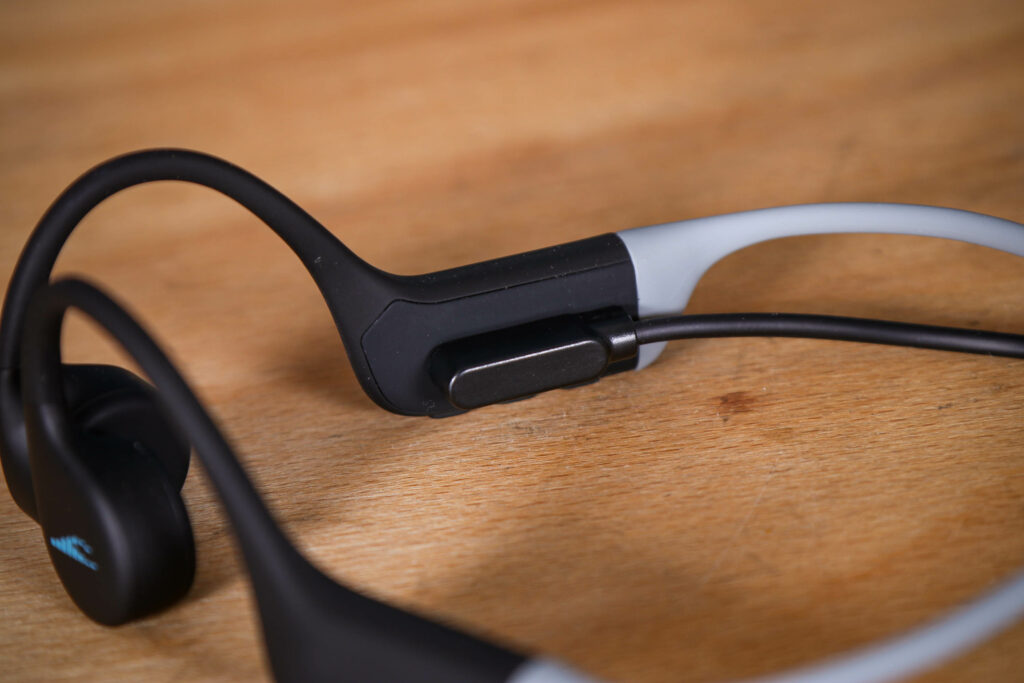
Like many other sets of bone conduction headphones, the TRI Run employs a proprietary charging cable. Be aware that this magnetic four pin cable is another to take with you when travelling. Should you lose it, a replacement costs £6, but I was dismayed to find that shipping from H20’s website to the UK costs a staggering £25.78 with no alternative service available. Getting on for half the product’s value to replace a charging cable? No thanks.
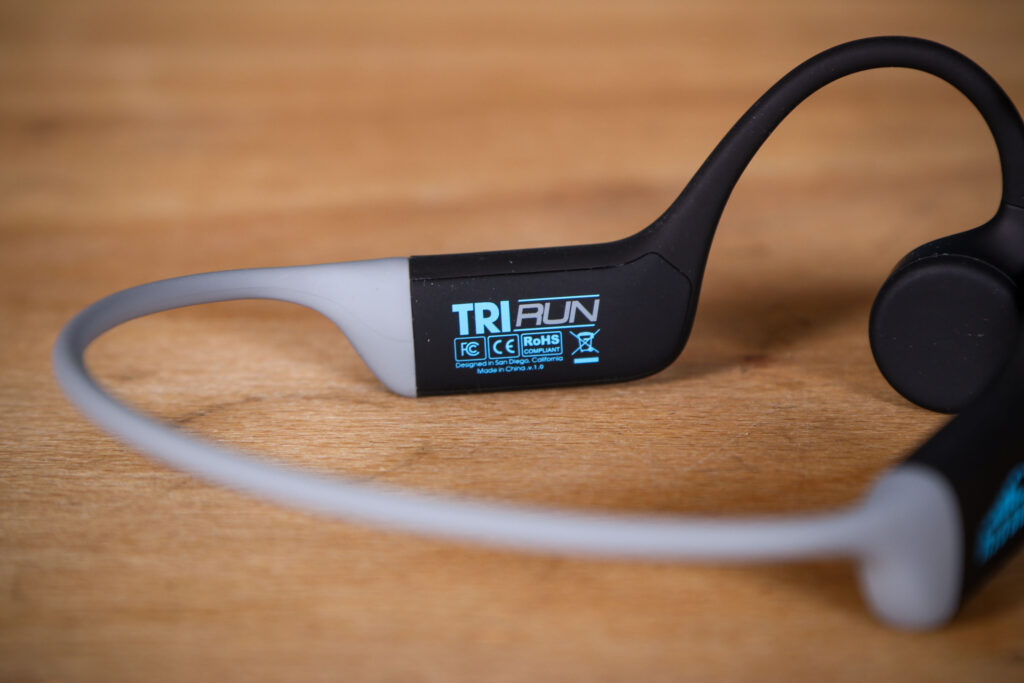
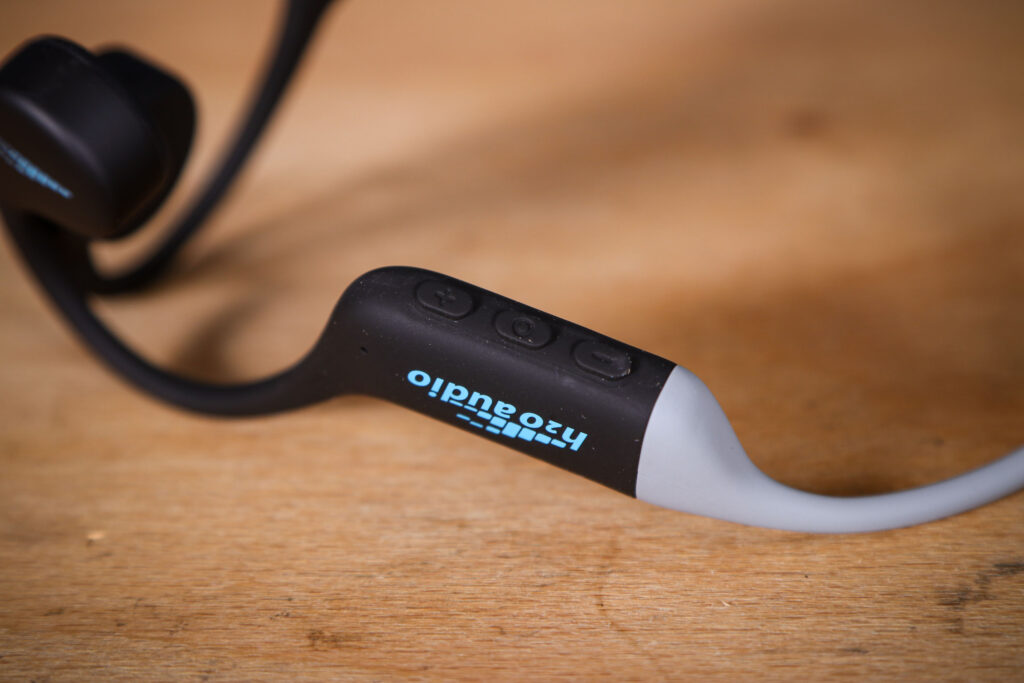
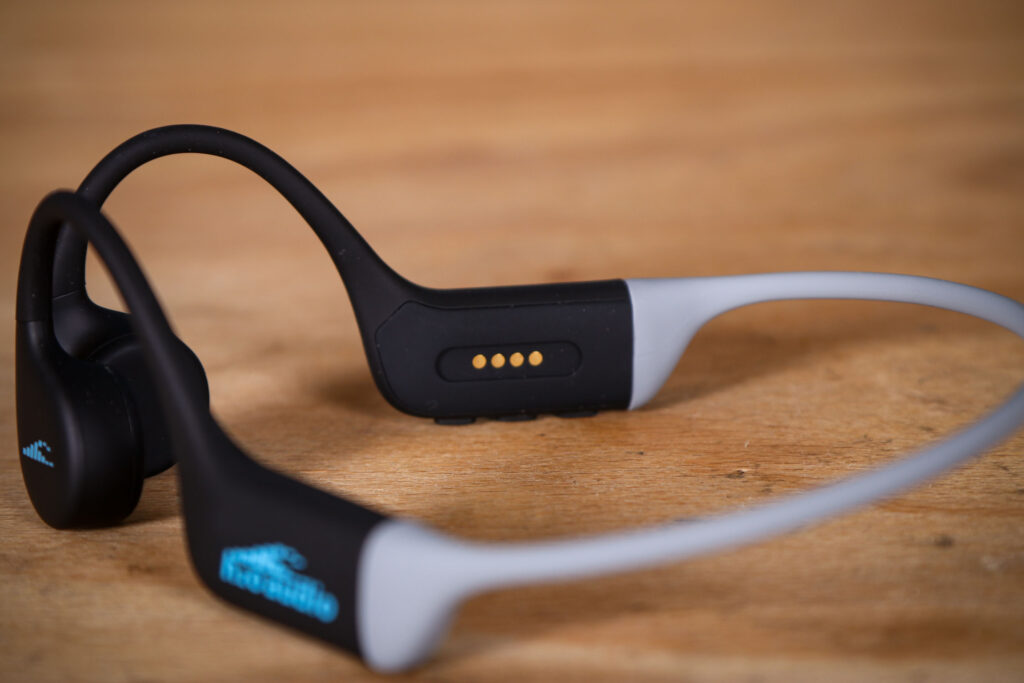
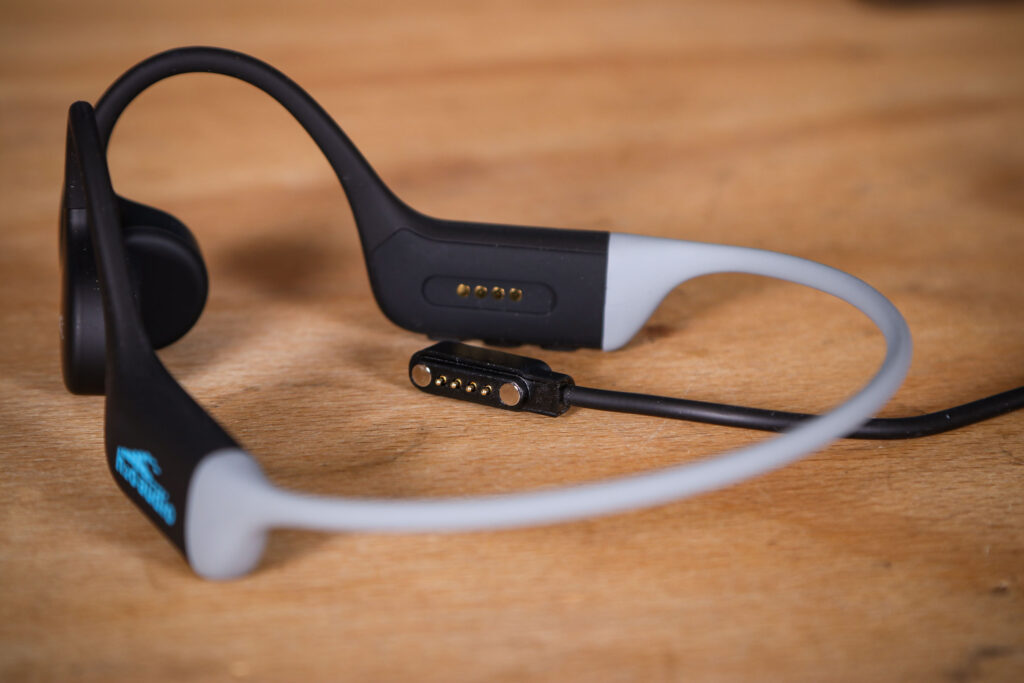
Performance wise, the headphones just didn’t do it for me. Connecting them isn’t that intuitive as you have to press two buttons at the same time and wait for just a moment longer than you expect for them to search for a connection – long enough that for the first few goes you’ll think something’s not quite right.
Once connected, the buttons are quite sticky and don’t work very consistently to adjust the volume. You have to really mash them hard to get the volume to increase or decrease – although the play/pause button in the middle seemed to work okay. To make matters worse, as there are only three buttons you can’t press and hold the up/down volume buttons as this will skip tracks forwards and backwards, so if you want to make the audio louder by more than one notch, you need to mash the button over and over again as it only seems to work about 50 per cent of the time.
I also found the sound quality to be pretty poor. I’m familiar with bone conduction headphones, having ridden with them for a few years now, so I’m not expecting full studio audio, but these just weren’t very good. When riding, the wind noise rushing past your ears means you need to run bone conduction headphones near full volume most of the time (this may be different when running, as you’ll be moving slower so wind speeds will be less of a factor). However, at full volume the vibration from the bass of whatever I was listening to was just awful. I could almost see the earpieces bouncing on the side of my head, and the tinny rattling noise where a more rich bass sound should be was just not good. The actual vibration itself was so intense I had to turn the headphones off after a few minutes as it just wasn’t an enjoyable sensation at all.
At lower volumes, I’d describe the sound quality as similar to listening to someone else’s tinny smartphone speaker out loud on the other side of the train carriage. They really just weren’t great. I use SHOKZ headphones usually, which don’t have any of these issues, so I know this is specific to this pair of H20s rather than a sweeping view of bone conduction sound quality.
I tried to do a few calls on them just to test out the mic, but any conversations I had were cut short owing to the person on the receiving end reporting my voice to sound like I was underwater.
These headphones are cheaper than most at just £75, and if price is your primary driver then you’ll struggle to find much better out there.
The TOZO OpenReal headphones that Emily reviewed are just about the only thing on the market that’s cheaper, but they suffer from many of the same shortcomings.
Whilst the Suunto Wing Bone conduction headphones are a lot more expensive at £169, Suvi’s 9/10 review shows what that extra investment brings.
In my experience, the sound quality and interface aren’t a patch on any of the headphones from SHOKZ either. The Sports range starts with the OpenMove model at just £79.95, while the more advanced OpenRun and OpenRun Pro will set you back £129.95 and £179 respectively.
Overall, I have to say I’d give the H2O Audio TRI Run a miss. The primary function of headphones is to deliver quality sound and, whilst I appreciate these are bone conduction so sound quality won’t be as good as something in- or over-ear, they just aren’t good enough.
Test Report
What does the manufacturer say about this product?:
The H2O Audio TRI RUN is built for athletes who refuse to choose between performance and awareness.
Using open-ear bone conduction technology, TRI RUN delivers clear, motivating audio while keeping your ears open to the world around you. Whether you’re running city streets or cycling open roads, you stay aware of traffic, conversation, and your environment, without sacrificing the soundtrack that drives you forward.
Designed specifically for running and biking, the lightweight wraparound neckband provides a secure, stable fit that stays comfortable mile after mile. No earbuds falling out. No noise isolation. Just dependable performance audio that moves with you.
Tell us some more about the technical aspects of this product:
Superior Sound
Bluetooth – Advanced Bluetooth Connectivity
Battery – Extended Battery Performance
User Interface – Optimized Ergonomics for Active Training
Open Ear Design – Advanced Open-Ear Bone Conduction Technology
Any further comments on quality?:
The headphones feel like they’re good quality, with a nice rubbery coating that hasn’t worn anywhere in a month or so of use.
Any further comments on performance?:
The headphone quality isn’t great, and the battery life is lacking.
How does the price compare to that of similar products in the market, including ones recently tested?:
These are about half the price of the other bone conduction models in the H20 range, but lack a lot of the features. Compared to SHOKZ – the main competitors – these are approximately £50 cheaper but, again, lack a lot of the features found there.
Did you enjoy using the product? No
Would you consider buying the product? No
Would you recommend the product to a friend? No
Use this box to explain your overall score
Overall, whilst I like the idea of bone conduction headphones, there are much better out there. Whilst these are cheap, they’re not good enough to recommend.
About the tester
Age: 30Height: 175cmWeight: 67kg
I usually ride: Road (Tarmac SL7)My best bike is:
I’ve been riding for: 10-20 yearsI ride: Every dayI would class myself as: Expert
I regularly do the following types of riding: Road racing, Time trialling, Cyclocross, Commuting, Mountain bike XC, Mountain bike Enduro, Mountain bike downhill/freeride


3 thoughts on “H2O Audio TRI Run open-ear bone conduction headphones”
Not that it sounds like a dealbreaker given the other faults you’ve identified, but that cable isn’t really a “proprietary” cable, four pin magnetic cables like that are quite common on bone-conducting headphones and other devices (my inexpensive smartwatch uses one) and they can be had for £4.99 on UK Amazon.
@Rendel Harris I will second that. Although they are hard to find you can buy them at https://www.amazon.com/BaiWeiDun-Universal-Magnetic-SmartWatch-Accessories/dp/B0FBR8PD63
That’s fair – I didn’t realise this cable is used elsewhere. However, I’d argue you can order most things on Amazon, and having to order something online doesn’t necessarily mean it’s “readily available” – especially in comparison to USB-C cables, which you can buy cables in most supermarkets, Post Offices, and any shop that sells electronics pretty much anywhere in the world – so if you’re travelling or lose the cable it can be replaced immediately. Also, it’s just ANOTHER cable to remember to take with you, isn’t it?