The Lezyne KTV Drive is best thought of as a compact contingency light for clutter-phobic road or TT bikes, or perhaps as a dynamo companion. It feels solid, the flashing modes are eye-catching yet frugal, but shifting modes while in the saddle can be fiddly. It’s been around for a long while too – although a big boost in run-times, coupled with decent build quality, means the KTV Drive remains very relevant.
Specification
The KTV drive is made from composites, but high quality fare throughout. The model tested here is goes-with-everything black, but there are white, red and blue alternatives. Co-moulded technology basically means that the lens and body are chemically bonded together.
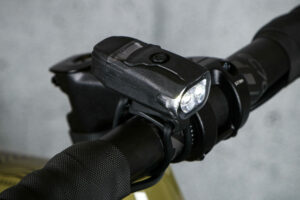
Two little diodes project through a polycarbonate lens with sensibly proportioned side ‘windows’ to improve peripheral bleed. It’s powered by a rechargeable 400mAh lithium-polymer battery reckoned to be good for 300 charge cycles before there’s any tangible dip in performance.
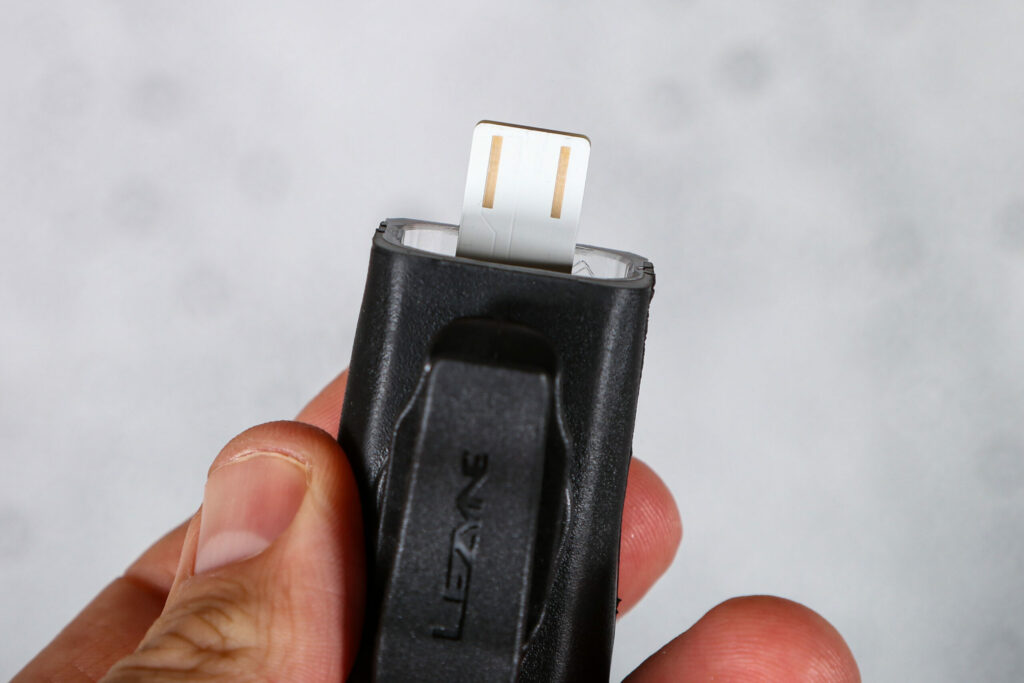
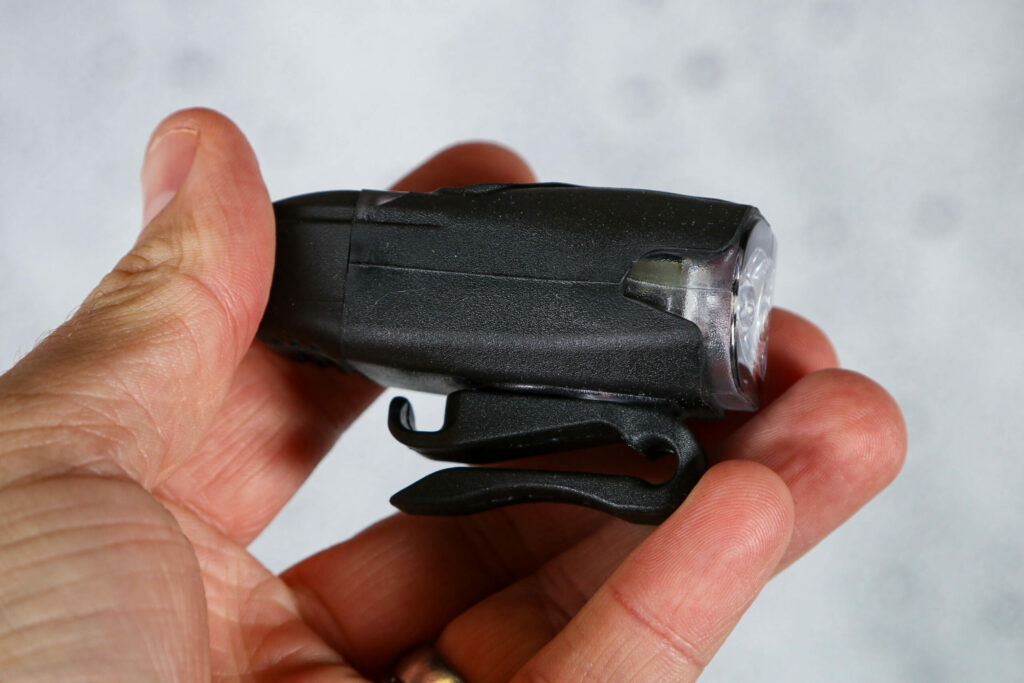
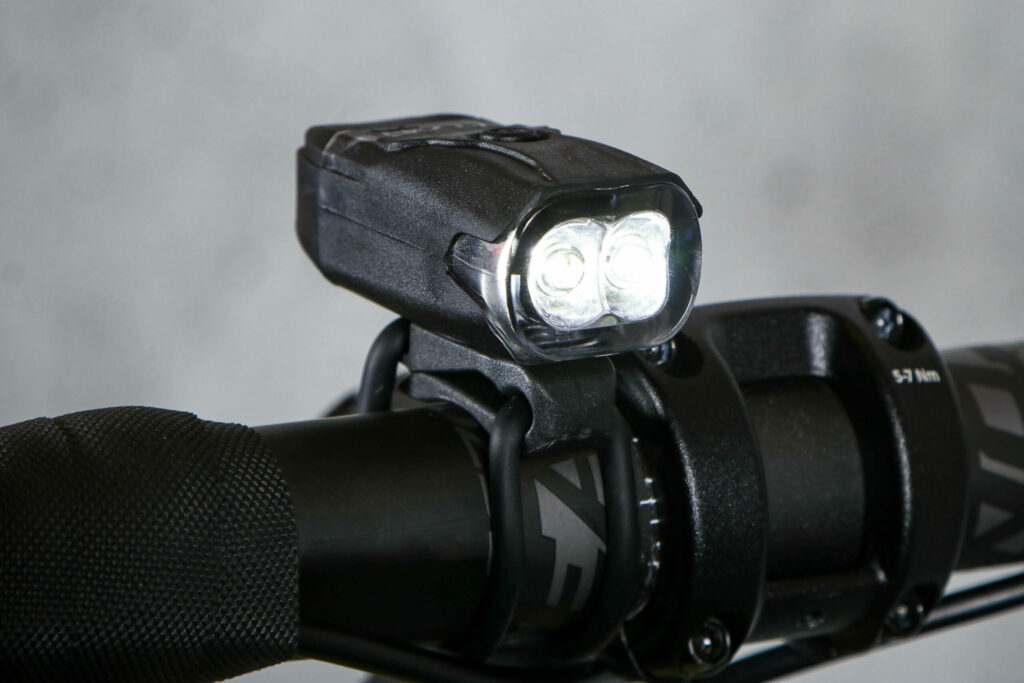
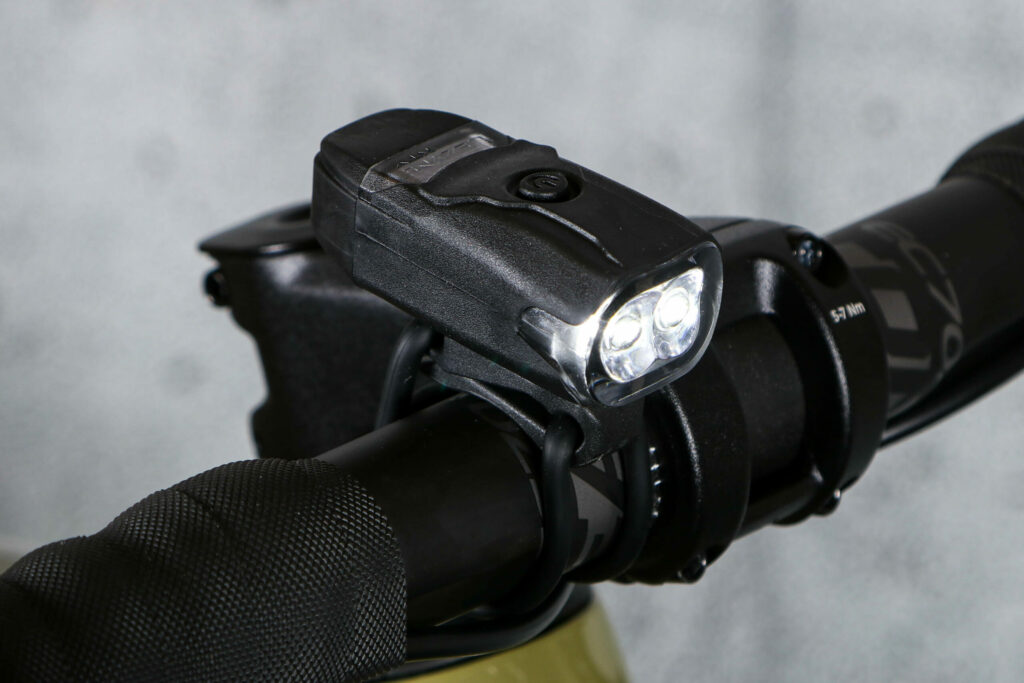
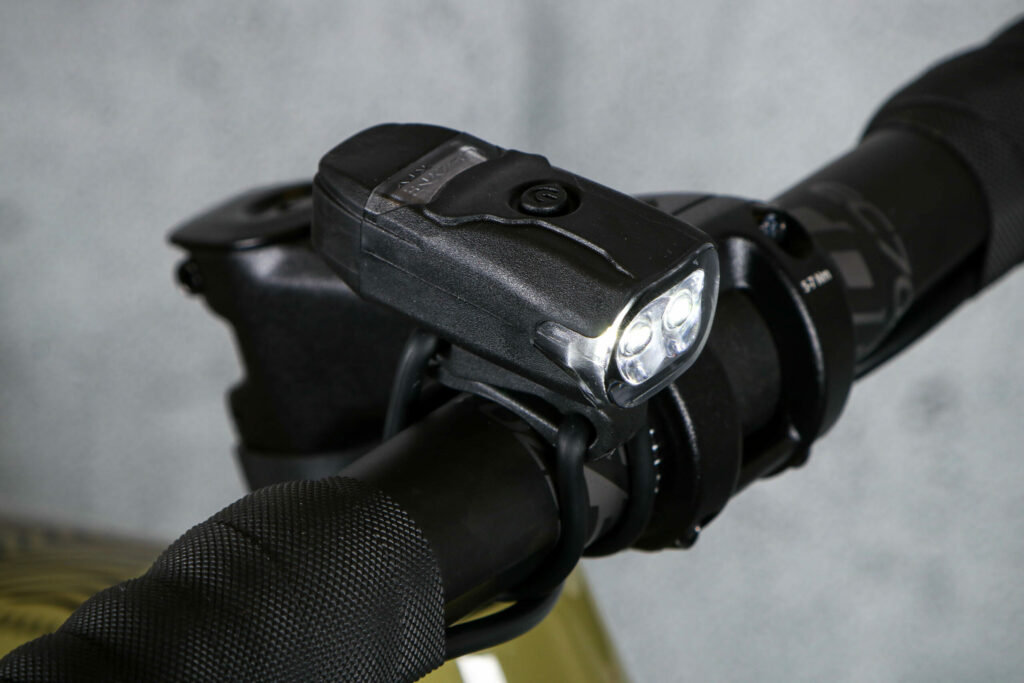
In common with other Lezyne lights I’ve tested, they’ve chosen to integrate the USB stick, which looks slick and also means there’s no cable to lose, or forget. This doesn’t appear to have any negative impact on weather sealing either – it meets IPX7, which is everything bar sustained immersion.
Modes and switch
There are five modes: two steady and three flashing. Blast is the highest steady option, delivering 70 lumens, while its Enduro counterpart is 15 lumens. Daytime running flash is 200 lumens, whereas Flashes 1 and 2 are 30 and 15 lumens respectively.
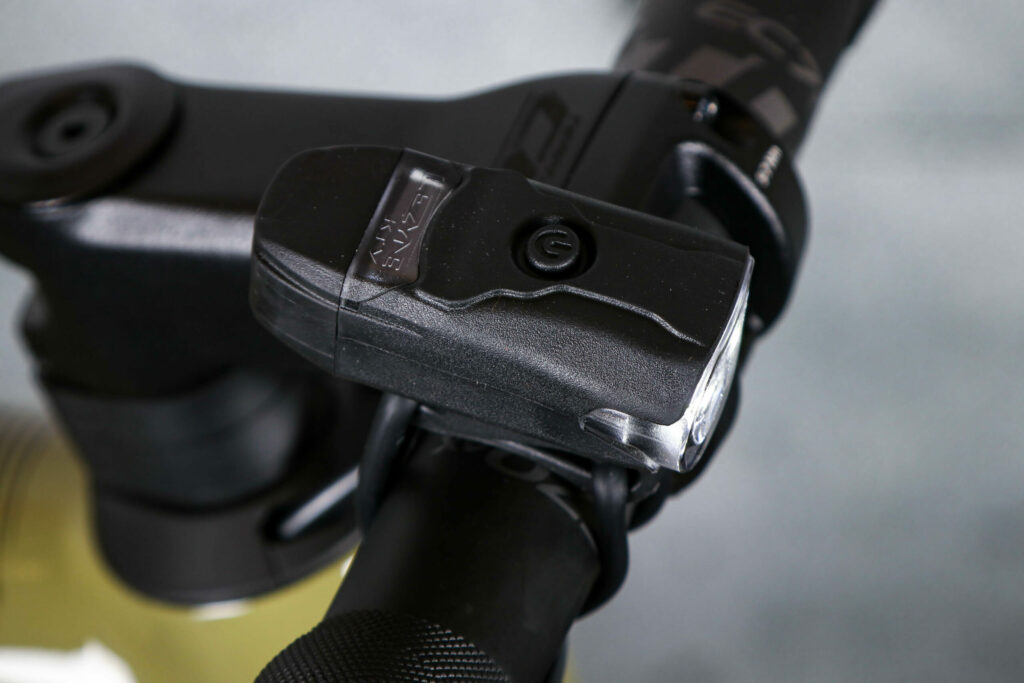
The switch is a top-centre mounted affair with an integral traffic light style charge life indicator. The switch is positive in the sense you’re unlikely to accidentally engage it, nor when it’s bouncing around in a pocket, or bag. A single, one-second press brings the light on or off and it defaults to the last selected mode. Subsequent prods cycle through the modes. It’s pretty intuitive and likely familiar to many folks.
Mount
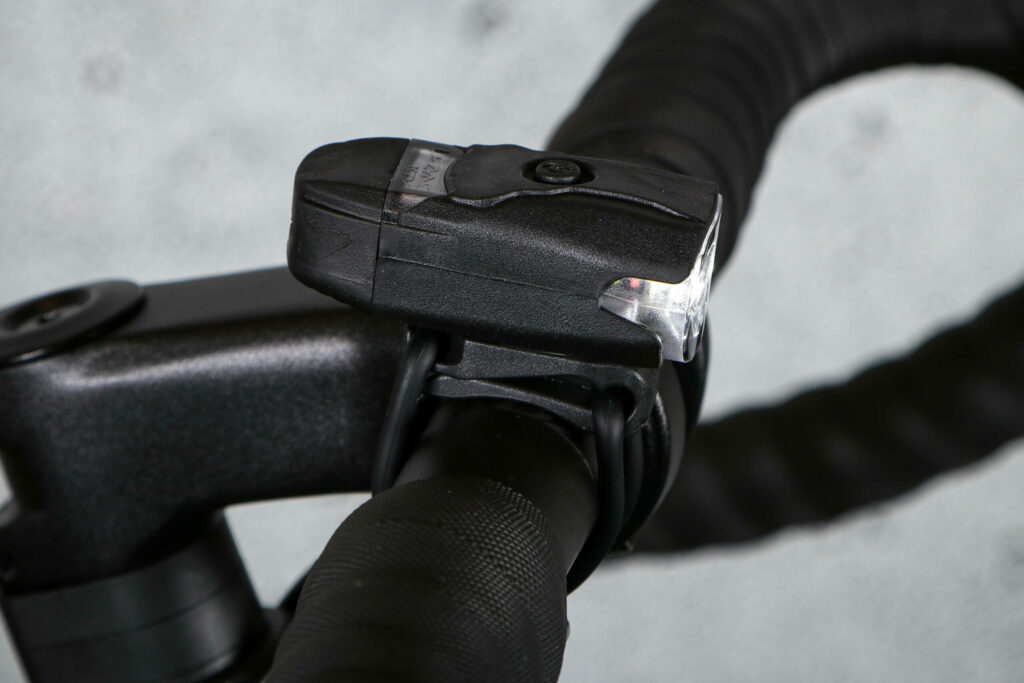
This is a simple composite affair that affixes to the bars courtesy of a thick ladder type strap. Simply rotate the light 90 degrees and tether the strap – sorted. The mount’s clip-type design also allows it to cadge a lift on peaked caps – although for my purposes, I’ve stuck to bars or handlebar extensions.
I’ve had no issues with bars between 25.4mm and 31.8mm, although I’ve needed to wrestle the strap really tight to prevent the composite moving, or vibrating over washboard surfaces. I’d wrap some precautionary tape or a shim on carbon bars. That said, there were no marks on a carbon handlebar I tested the light on during the test period.
Output
Being a safety light in the ‘be seen’ sense, Lezyne has prioritised flashing modes and they have impressed me. A lot of high-power lights are packing 500 lumens and more for their flashing modes, but I’ve been pleasantly surprised by the pace and punch of the 200 lumen Day Flash, especially on overcast mornings. Even though I tend to have a high power dynamo running in these contexts, I felt other road users would be responsive to the tempo as much as the output.
Despite the daylight tag, I’ve also defaulted to this mode as the backing singer for more powerful “proper” lights, especially along winding, unlit roads. In bright, early season sun, it lacks the outright presence of those packing more lumens, but it’s still reassuringly eye-catching and particularly welcome in congested town centre traffic, or at bigger roundabouts when leaving the outskirts. At dusk, a neighbour in her car reckoned she could pick it out from over 100m, which should give plenty of warning.
The 30 lumen flash was brighter than expected and is super frugal, which is great for long steady miles, or on slower paced bike lanes and shared-use paths. In these contexts, you could even get by with its 15 lumen counterpart, since the pattern and pacing is still fairly distinctive.
The 70 lumen Blast sounds like a contradiction, but continues the brighter than expected narrative and is handy for pannier rummaging and roadside checks. As a light, it’s fine for town and shared-use paths, assuming you didn’t want to go the flashing route, but it does put a notable dent in run-times. The 15 lumen Economy setting has frugality in its favour, but outside of bail-out contexts is probably best reserved for shared-use paths.
Charge and run-times
Charging from a PC, I’ve had the light from zero to hero in the 2:15hrs quoted. While there’s no denying the USB stick’s convenience, it’s not foolproof. I’ve had to employ an adaptor where USB ports are a little congested.
Predictably, charging is quicker from the mains – 1:50hrs from flat to fully juiced. Run-times, at least in temperatures between 5 and 14 degrees, have generally been within a few minutes of official figures (2hrs for Blast, 6:30hrs for Day Flash) and while the traffic light charge light is less precise than some, it’s accurate enough to avoid unexpected power downs.
Care/durability
I’ve accidentally dropped the light – it tumbled from a jersey pocket onto a concrete floor – but without any damage to form or functionality. It’s also been out on some very wet rides, and I’ve deliberately left it on the bars when giving bikes a seriously good wash. It’s been fine. It’s worth saying I’ve got some old Lezyne lights that are still going strong a decade or so down the line.
Value
A price of £28 is still favourable for this kind of safety light but there’s a few competitors that could pip it.
Those seeking a sleek, Garmin compatible unit will need to pay a good bit more. The Ravemen FR160 Pro comes in at £44.99 and offers six modes, the maximum being a 160 lumen day flash. Emily was impressed by its performance in daytime and low light. However, while she found the run-times very accurate, they don’t rival some of the Lezyne’s and she also noted switching modes on the fly was tricky with a computer riding atop.
I’m still fond of the Moon Sport Meteor (£29.99) which offers eight modes (four steady and four flashing), including a very potent 500 lumen Day Flash. So long as you don’t need the 400 lumen steady very often, run-times are favourable, although charge times are a little longer than the Lezyne and parking it next to a wireless computer can interrupt the latter’s signal.
Those prioritising flashing modes may find the Cat Eye AMMP 200 Front Light a contender. The 200 lumen steady is an obvious draw over the KTV Drive but will also guzzle the battery relatively quickly (1:30hrs) but there’s also a fairly frugal 40 lumen steady and a 200 lumen flash (30hrs).
Magicshine’s ALLTY 200 Rechargeable USB-C Road Bike Light comes in at £19.99 and boasts a maximum of 200 lumens. It offers five modes: three steady (50, 100 and 200 lumens) and two flashing (100 and 200). It also complies with IPX6 for weatherproofing but the run-times, save for the 200 lumen Day Flash (claimed 42hrs), may be a little short for some.
> See and be seen with our top front bike lights for on the road, trail or path
Conclusion
The KTV Drive has been around a good while and on paper lacks the punch of several rivals, which could be a deal breaker for some. However, in my view, it remains a relevant safety light, thanks to the perky daylight flash and its super frugal counterparts. Build quality and weather sealing are similarly impressive and should cover most contexts, including bikepacking where mud and other gloop can create mischief.
Test Report
What does the manufacturer say about this product?:
A compact cycling safety light built around two high-output LED emitters, the KTV Drive Front offers up to 200 lumens of output and an attention-grabbing Daytime Flash mode. It features a lightweight yet durable co-molded waterproof construction (IPX7 rated). The KTV Drive Front offers five output modes, up to 20 hours of runtime, and an integrated USB stick for convenient cable-free recharging.
Tell us some more about the technical aspects of this product:
Max Lumens: 200
Max Runtime: 40 hours
Battery Capacity (mAh): 400
Recharge Type: USB Stick
Weight: 47.4g
Dimensions: 65.9mm, 30.8mm, 40.3mm
Features: IPX7, Daytime Flash”
Any further comments on quality?:
Solidly made with impressive weatherproofing.
Any further comments on performance?:
Good, taking everything into account – particularly the daylight flash and the long run-times in the lower settings.
How does the price compare to that of similar products in the market, including ones recently tested?:
Similar.
Any further comments on design and usability?:
Generally intuitive, but the switch is trickier to operate mid-ride than some.
Any further comments on the clamp?:
Easy to whip on and off the bike. Nice, sturdy composite strap offers a tenacious grip on various bar diameters.
Does the light have a waterproofing rating? If so, what is it?:
IPX7
Any further comments on waterproofing?:
Aligns with my experience and expectations of a light meeting IPX7 for weatherproofing.
Any further comments on battery life and recharging?:
In line with those cited by Lezyne, at least in temperatures between 1 and 14 degrees.
Any issues with durability?:
None
Did you enjoy using the product? Yes
Would you consider buying the product? Yes
Would you recommend the product to a friend?
Yes, worth considering as a safety/backup light.
Use this box to explain your overall score
A decent light that has been around for some time. However, while the switch could be improved, the perky daytime flash, solid build quality, and extended run-times in the lower modes mean it’s still a contender for those seeking a compact safety light.
About the tester
Age: 52Height: 181cmWeight: 70kg
I usually ride: Assorted- fixed gear winter/trainer, drop bar rough stuff mtb tourer, gravel bikeMy best bike is: 1950s Holdsworth Road Path build
I’ve been riding for: Over 20 yearsI ride: Most daysI would class myself as: Experienced
I regularly do the following types of riding: Cyclocross, Gravel riding, Commuting, Touring, Fitness riding, Mountain bike XC