



Welcome to our monthly sentencing round-up, a regular compilation of sentencing stories from local publishers and police forces from around the UK, and sometimes internationally in particularly notable cases.
All sources are credited with a link, and where a case has been picked up nationally, we’ll always credit local publishers who have attended court.
Drunk and drug driver jailed for four years for killing cyclist while her two children were in car
In Ireland, a woman with a ‘cocktail’ of drugs in her system and an open bottle of wine in the passenger seat has been given a five-year prison sentence, suspended for the final six months, after killing a 70-year-old cyclist with her car.
Saoirse Lillis McMahon, 33, caused the death of teacher Michael Lorigan on 16th August, 2023, on a straight stretch of road on the the N67 near Kilkee, County Clare, when she hit Lorigan from behind after fellow road users had called the police to report her dangerous and erratic driving. Her children, aged 9 and 6, were also in the car at the time of the collision.

Lorigan was 5 miles from the end of his ride and was days away from celebrating his 39th wedding anniversary with his wife Dympna. Dympna told the court she had passed Michael in her car shortly before police were alerted to dangerous driving on the road. Lillis McMahon was found to be over the drink-driving limit at the scene.
The Irish Times also reported that Lillis McMahon expressed remorse for her crime in a police interview.
She said: “I am sorry it happened – the night before wasn’t planned at all. I had my kids with me. It shouldn’t have happened. I think about his wife all the time.”
Lillis McMahon’s lawyer said his client lost custody of her children, her job and had experienced community isolation following the fatal collision. Lorcan Connolly added that Lillis McMahon had a history of mental health difficulties.
Imposing sentence, the judge reduced the maximum 8-year prison sentence to 5 due to Lillis McMahon’s early guilty plea and subsequent remorse. The final six months were suspended on condition of Lillis McMahon co-operation with the Probation Service over her problematic drink- and drug-taking.
Fly-tipping lorry driver jailed after cyclist seriously injured by “lethal hazard”
A lorry driver has been jailed for 16 months for causing danger to road users after fly-tipping on a road in Brentwood, Essex. Craig Frewin, 36, dumped a large amount of rubbish on Lincolns Lane in September 2024 when no other road users were nearby. A delivery driver later approached and saw a cyclist lying on the ground with a severe head injury. He was subsequently airlifted to hospital and was in a life-threatening condition for a period. He has now been left with life-threatening injuries.
Essex Police say CCTV footage was used to identify the lorry by matching the rubbish loaded in the tipper lorry with the rubbish found at the scene. Investigators also discovered that the cyclist’s front tyre had deflated due to a puncture and split, after encountering waste from a garden shed that had been illegally dumped across three-quarters of the road. Among the debris was a piece of asbestos with a protruding nail. Frewin was subsequently arrested in December 2024 and was sentenced on the 30th April. The rubbish was subsequently removed by a specialist asbestos company at a cost to Essex County Council of £1,660.

Detective Constable Alan Marks, who led the investigation, said: “Fly-tipping isn’t just an eyesore – it can be a lethal hazard. In this case, rubbish dumped across a country lane caused a cyclist to come off his bike and suffer a devastating head injury, leaving him with no recollection of what happened and months of hospital treatment.
“This family’s life has been changed forever, and it simply did not need to happen. If you produce waste, you have a responsibility to dispose of it legally and safely – and if you pay someone to take it away, make sure they’re a licensed waste carrier. Fly-tips can contain sharp or hazardous items and can put the public at real risk.”
The injured cyclist’s family said in a statement: “We are deeply grateful to Essex Police, and in particular the Roads Policing Unit and Serious Collision Investigation Unit officers involved in this case, for their dedication and determination in uncovering the truth.
“The thorough and meticulous investigation, especially the efforts of the officer leading the case, has brought us a sense of justice and reassurance that the person responsible has been held to account. We know that without the commitment and combined efforts of everyone involved, this outcome and justice may not have been possible.”
Community Order for causing serious injury by careless or inconsiderate driving
A 23-year-old from Exeter with a clean license and no criminal record has avoided a custodial sentence after hitting a cyclist coming the other way when he attempted to turn at a junction. The 60-year-old cyclist sustained an open fracture and open wound in her right knee, as well as a torn ligament in her left hand, and head trauma including impaired vision, the Exmouth Journal reports.
The cyclist also provided a victim impact statement to court detailing her reliance on friends to help her bathe, get dressed, and attend hospital appointments. She has also been told to expect arthritis and to take three months off work.

Charlie Howell, told the court he stopped his car on Pinhoe Road where the incident occurred and stayed with the cyclist, calling the emergency services and hailing a passing ambulance. He told the court, “I accept full responsibility”
The Chair of Magistrates told Howell that an offence of this category would usually result in a custodial sentence. But he instead received a 12-month community order with 180 hours of work. He was banned from driving for 12 months and must pay an £114 surcharge and court costs of £85.
Cocaine-influenced motorist given seven month prison sentence and 33-month driving ban for breaking cyclist’s neck
A driver who told police “I fell asleep, I’m too old for this s**t” has been jailed after hitting a cyclist with his car whilst under the influence of a ‘cocktail’ of drugs, The Courier reports.
The 44-year-old cyclist was airlifted to hospital with fractures to his vertebrae and sternum, after hew was rear-ended by the Renault Scenic driven by 42-year-old Ryan Murray. But Murray’s solicitor disputed his own clients admission he fell asleep, instead telling the court he had only “closed his eyes” due to intoxication.
The court also heard that Murray has struggled with drug addiction and that the recent death of his foster mother had “caused a downward spiral in his life where he entered self-destruct mode.”
“He saw the cyclist in the road and moved to overtake and then he saw a vehicle heading in the other direction and pulled back in.”
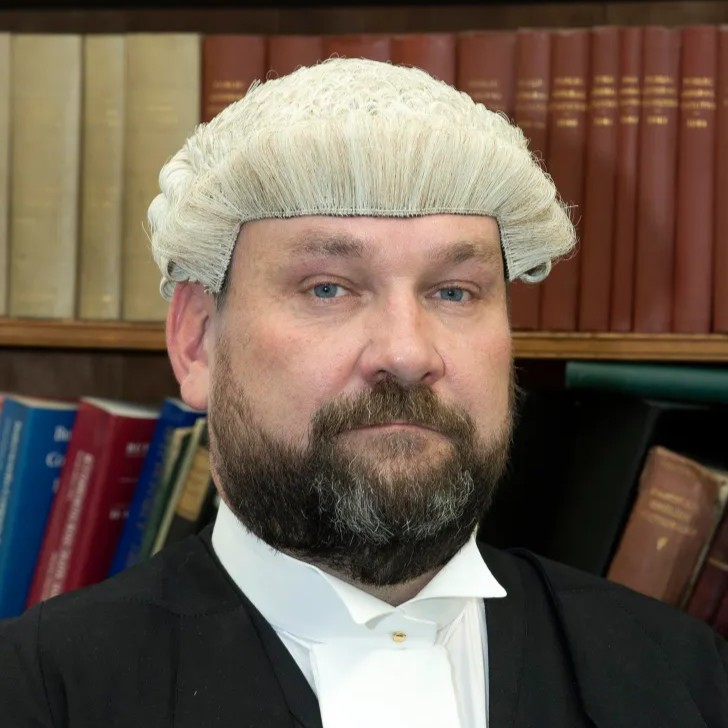
In court in Stirling, Sheriff Keith O’Mahony told Murray, “You pled guilty to the serious matter of driving a vehicle dangerously, having taken benzos and cocaine and failing to observe the complainer, a cyclist. This complainer had nothing to do with anything – he was simply out cycling.
“I’m not satisfied this can be dealt with in any way other than a custodial sentence.”
“Too often, road traffic offences are treated as second-tier crimes, even when the consequences can be life-changing”
One common theme from almost all court cases we cover, whether mentioned by the prosecution, during sentencing remarks or victim impact statements is how life-changingly devastating for so many people one moment of inattention, distraction or dangerous driving can be. Campaigners and cyclists alike have regularly questioned sentencing severity for road offences, Cycling UK telling us that “too often, road traffic offences are treated as second-tier crimes”.

Sarah Whitebread, Head of Policy and Public Affairs at Cycling UK, said: “That mindset has contributed to dangerous and careless drivers reducing or even avoiding disqualification through claims of ‘exceptional hardship’. Speeding, driving while exhausted or passing dangerously close to someone aren’t harmless slip-ups, they are decisions that can leave families grieving.
“If someone drives dangerously and puts lives at risk, taking them off the road for a period is not excessive. It’s common sense. The courts’ first duty must be to protect the public and if the government is serious about meeting casualty reduction targets set out in the Road Safety Strategy, sentencing has to match the seriousness of the harm.”
Sentencing is a much-discussed topic on road.cc, particularly with regards to the punishments handed down to drivers who seriously injure or kill cyclists.
This series is a regular round-up of sentencing stories that helps us to collate information for our more in-depth coverage around sentencing, but we’re hoping it could also be of use to readers, academics, and those in the legal profession as a starting point for analysing the state of play when it comes to sentencing for driving and cycling offences.
Much like our Near Miss of the Day series, we’re not doing this for ‘clicks’ – but we make no secret of the fact that the article format is designed to get attention, and generate discussion. Though road.cc acknowledges there is a problem with inconsistent and lenient sentences for killer drivers, we’re intentionally steering clear of editorialising in our reporting here, which means we’re not just going to be selecting cases where we’ve decided in-house that the punishment didn’t fit the crime.
The aim is to provide a true picture of how people are sentenced for driving and cycling offences for further analysis. Are sentences wildly inconsistent depending on the judge? Are sentences becoming more lenient, or harsher over time? We can’t change the law, or a judge’s decision – but change starts with a discussion, and an acknowledgement the current system isn’t fit for purpose. This is why the maximum sentence for death by dangerous driving was increased to life imprisonment in 2022, and why the Highway Code was updated to include minimum passing distances for drivers around cyclists and the Hierarchy of Road users.


















26 thoughts on “Four years in prison for drunk and drug driver who killed cyclist with kids in car + “Lethal hazard” fly-tipping lorry driver jailed after rider seriously injured + Cocaine-influenced driver jailed for breaking cyclist’s neck: road.cc sentencing round-up”
https://www.itv.com/news/anglia/2026-05-18/driver-appears-in-court-on-murder-charge-over-death-of-cyclist
I’m hoping we get a decent result for this one. Must have been some good dash cam footage for a murder charge.
@carlosdsanchez Let’s hope it’s a shockingly long, headline grabbing sentence.
We don’t want headline grabbing sentences – it’ll just provoke the usual complaints about clickbait…
Ugh the language again.
“A man has appeared in court charged with the murder of a cyclist who was allegedly deliberately hit by a car.”
“as a cyclist being deliberately hit by a white Mercedes CLA 180 Sport car”
Given in this case it was (apparently) deliberate, why isn’t it “… hit WITH a car.” as it was used as a weapon?
If it was any other weapon it would have been “… hit with a knife/hammer/etc.”
A motorist who is responsible for a cyclist’s death shall be sentenced to 20 years. No excuses, no exceptions.
Whoever is caught driving or cycling under influence shall be banned from the roads for 5 years. Regardless of the type of vehicles they drive, road deliquents must be neutralised.
@MaxiMinimalist That’s reasonable and would surely get the message across but sentencing seems to be going in the other direction.
@MaxiMinimalist
Well down to your usual standards of complete nonsense. Motorists who kill cyclists whilst under the influence of drugs or alcohol or whilst speeding absolutely should be treated as murderers. All of the drivers above have been given sentences that are too lenient, shockingly so in some cases. However, sending everyone responsible for a cyclist’s death to prison for twenty years “no excuses, no exceptions” would be absurd. Have you never made a mistake in a car or on a bike that could, in unluckier circumstances, have caused a death? I have on both bicycles and motorcycles and anyone who’s honest with themselves would say the same. If you think there’s any benefit to society or to victims in sending a careful driver who just once misjudges a cyclist’s approach speed when pulling out of a junction to prison for twenty years, destroying their lives and that of their family and costing the taxpayer over a million pounds then you’re an even bigger fool than you usually appear and that’s quite saying something. Cycling offences are now, for better or worse, on a par with driving offences; if you misjudge a bend at speed, come off and hit an elderly pedestrian on the pavement and they hit their head and die, would you say that deserves twenty years in prison, “no excuses no exceptions”? Your silly histrionics help nobody.
Remorse doesn’t bring people back and doesn’t make the blindest bit of difference to the hundreds of thousands or millions of drivers who are dangerous on our roads. They see cyclists as a nuisance and they see people who hurt and kill people given a slap on the wrist. They see constant bad driving and no consequences.
Serious sentences might change that. If people started going to prison for serious amounts of time then it would actually make people think.
@mctrials23 “Serious sentences might change that”?
I wouldn’t object to that experiment … although due to the numbers of people that Rendel and you note this would rapidly lead to a prison place crisis, and would lead to a noticeable increase in tax in the medium term.
BUT for several reasons I think this would have but little effect on driving safety.
We *do* need the feedback of criminal sanction but I’m not sure it makes the small number of hardened crims / asocial nutters think once never mind twice.
And much of the casualties are caused more by “errors of omission” – incompetence, taking shortcuts plus the terrible inexplicable errors which arrive if you have enough people doing something frequently enough. Not sure that “worse punishment” fixes that either.
Overall I’m skeptical of “police it better” – i think “sustainable safety”-type changes are the way. (Rather than the *actual* way the UK has improved safety: remove vulnerable road users by offering them a trade of safety for convenience, while making it both more convenient and safer for motorists).
@chrisonabike Exactly right, nobody sets out deliberately to forget to check their blindspot or not to check twice for cyclists when pulling out, it’s unfortunately human nature that we all occasionally forget to do things exactly as we should. Deterrents work for premeditated actions, e.g. someone who might be tempted to commit murder might be dissuaded from doing so by the thought of the sanctions awaiting them if caught, it doesn’t work like that for simple human error. Absolutely agree that we need infra designed so that the errors don’t happen or so that they don’t have serious consequences when they do – whilst retaining the severest penalties as deterrents for deliberate acts such as driving on drink and drugs, street racing etc.
@Rendel Harris no one sets out to deliberately forget to check their blindspot but bad/dangerous driving is absolutely commonplace. I don’t think that you can disconnect the lack of punishment/enforcement of the rules from peoples complete disregard for them.
Do you think people would treat driving in the same way if they actually stood to lose their license from bad driving? If I could send a video of of the 20th idiot of the day who overtook me on a blind corner to the police and they actually took action. If drivers knew that doing all the stupid things they do would come back to bite them.
Society works on a system of social pressure and consequences. Driving is treated as something that is not to be taken seriously and that “accidents happen”. They happen because we downplay bad driving and even when peoples luck runs out we still downplay it.
When you downplay nasty behaviour do you think in increases or decreases. What do you think would happen if murder or assault become legal tomorrow? That a few extra assaults or muders would happen? Of course not. It would be chaos. Consequences and the chances of seeing those consequences are a huge driver of behaviour for most of society. No, the people at the edge will always break them but most won’t.
We don’t have that with driving, we have the vast majority of otherwise law abiding citizens constantly breaking the rules. Its “forgetting to check their blindspot” because when they hit a cyclist or pedestrian they will get a slap on the wrist.
@mctrials23 Respectfully, I think you’ve missed my point a little bit. I am absolutely in favour of severe punishment for people who deliberately make dangerous choices when driving such as breaking the speed limit or, as per your example, choosing to overtake on blind bends. Throw the book at them by all means, they are quite deliberately choosing to disobey the law and should suffer the consequences. That’s not the same as a momentary oversight with no intention of breaking the law or putting someone else at risk. My point was that you can stop, or at least reduce, deliberate lawbreaking and selfish dangerous driving with deterrent sanctions, you can’t legislate human error and momentary lapses in attention out of existence.
@mctrials23 Agree there is a social component because humans do what other humans do. (We’re highly motivated to do what we think will make us look good, and strongly avoid things that will make us “lose face”. Those are imperfectly correlated with obeying laws…)
But if the goal is ensuring people behave in a safer way in the roads – and there could be other motivations eg. “desert” or a general desire to “keep people in fear of the law” …
… the priority should be to *massively* improve detection, charging, conviction rates, no? And then making the system much swifter. After all the negative feedback – punishment – at best comes months (but often years) after the behaviour it’s in part hoped to correct.
Police and courts that don’t take road crime seriously are an issue – but possibly follow the attitude of the population.
What are those social expectations? The key one is “mass motoring”. The expectation that driving is activity that almost all adults will do, because it’s a low-risk activity requiring fairly low skill and concentration levels (perhaps on the level of playing a recorder or below). And indeed that is something most “need” or even “should” do.
If we assume that we’ll fix it so that’s self-fulfilling. Changing that? Ultimately that needs fewer people driving, less often. So providing great alternatives to driving, while also making driving less convenient.
Then we might look at bringing in a “driving licence” (which requires renewal and can be revoked) rather than the current club membership certificate (for life).
Then look at the innumerable infra and procedural measures to make “driving is simple and convenient” true: roads much wider than necessary (to allow for errors in operating vehicle) which then signal to people that it’s safe to go faster. Then: lower urban speed limits. The presumption you can park anywhere not specifically forbidden etc…
‘Lead to’ a prison place crisis? ‘Exacerbate’, surely?
@mctrials23 Ahead of serious sentences, you need serious policing of roads. There isn’t any and until there is so many will think they can get away with their behaviour (and they’re not even thinking of shockingly lenient sentences).
Every one is remorseful once they get to Court!!!!
As I’ve said before, in the most serious cases, the punishment should include loss of taste buds and libido (even if only for a number of years) on top of prison.
Given the leniency of sentences now, only when people face serious consequences will they think twice.
@mitsky You’ve said this over and over again, do you ever stop to think what it actually means? You’re talking about allowing the state physically to mutilate criminals as a punishment, something that we rightly decry as barbarism when we see it practised in other parts of the world. Would you seriously wish to live in a country where such mutilations were permitted? Personally I rather like living in civilisation, myself.
I think mitsky is onto something in terms of motivation though. Amputate their Testarossas! If there were some “rapid feedback” ways of removing pleasure / ease from motoring I think that could be more powerful!
So maybe if you speed for more than x seconds your car automatically drops its max speed to 10mph below the limit (but runaway lorries, terrorists and collapsing chimneys though…)?
Or more realistically if you go over your points limit you *actually* lose your car (but multiple car households though…)? And instead of “exceptional hardship … have to drive” being an “OK, no punishment then” the best you can hope for is to be issued with a speed-limited Reliant Robin? And only for the first time…
https://4.bp.blogspot.com/-VcrNn8AiWMc/Tq2CavD4Y1I/AAAAAAAABCs/iv07lVmamsE/s1600/Someone+is+wrong+on+internet.png
I suspect that removing offenders’ taste buds will lead to increased proliferation of McDonalds restaurants. I also get the impression that their customers don’t have sex very often either.
Stop pandering to drivers with “one moment of inattention, distraction”. It is almost always as a result of their pattern of behaviour on the road and long-tstanding disregard for others.
Interesting use of the passive voice by the drugged up and drunk woman Mc Mahon. “I am sorry it happened” and “It shouldn’t have happened” No remorse, no acceptance of responsibility. I expect she took her cue from the way road deaths are usually reported, particularly where the victim is a bicycle user.
Or (Occam’s razor) just a standard legal “sorry (I’m a reasonable normal person) but not too sorry (as it’s not actually my fault)” – which might be recommended in many cases, not just road crime?
Not cyclists but a couple more days points for motor crime:
Unbelievably reckless speeding / RLJ / use of phone while driving / drug use / killing and leaving the scene, plotting a cover up (obviously), no insurance and previous convictions (11 years 8 months in prison):
https://www.bbc.co.uk/news/articles/c5yrzy7gkdxo
Pair who chased after someone for 13 miles in their cars (due to rumours it seems) and rammed him off the road, then drove into him when he got out – 4 and 5 years.
https://www.bbc.co.uk/news/articles/c042kry3ygdo
https://www.wiltshire.police.uk/news/wiltshire/news/2026/may-2026/woman-sentenced-after-colliding-with-cyclist-and-leaving-scene/
A lenient sentence for the act of colliding with a cyclist but when combined with hit and run it seems ludicrous. The driver could easily have got away with it had the police not been proactive and lucky. Hit and run is a no brainer under the current system provided you have no conscience.