



The Garmin Fenix 8 Pro Smartwatch is rugged, feature-packed and delivers excellent battery life, comprehensive mapping and some of the deepest training insights available in a wrist-worn device. It’s large, not as good as an Apple Watch for daily use, and expensive, but if you’re looking to prioritise activity tracking and want something that could potentially replace a bike computer, it’s one of the most complete options out there.
Build and design
The Fenix 8 Pro is available in three case sizes, 43mm, 47mm and 51mm, and it’s fair to say that even the smaller sizes are substantial units. The 51mm model that I have for review is easily the largest smartwatch I have used, with a large titanium body and a 16.5mm thickness. It is large on my wrist, but despite this I didn’t feel like it was too imposing and the lightweight materials also meant that it didn’t feel like I was doing a bicep curl every time I lifted my left arm.
The materials are premium and lightweight as you would expect for a watch coming in at over £1,000. It has a titanium bezel, a fibre-reinforced polymer case and a sapphire crystal display. Basically, it feels bombproof. It feels like I could hit it with a hammer and the hammer would come off worse. After weeks of riding in late winter weather — with grit, gravel, dust and the occasional knock against a gate — it still looked unmarked.
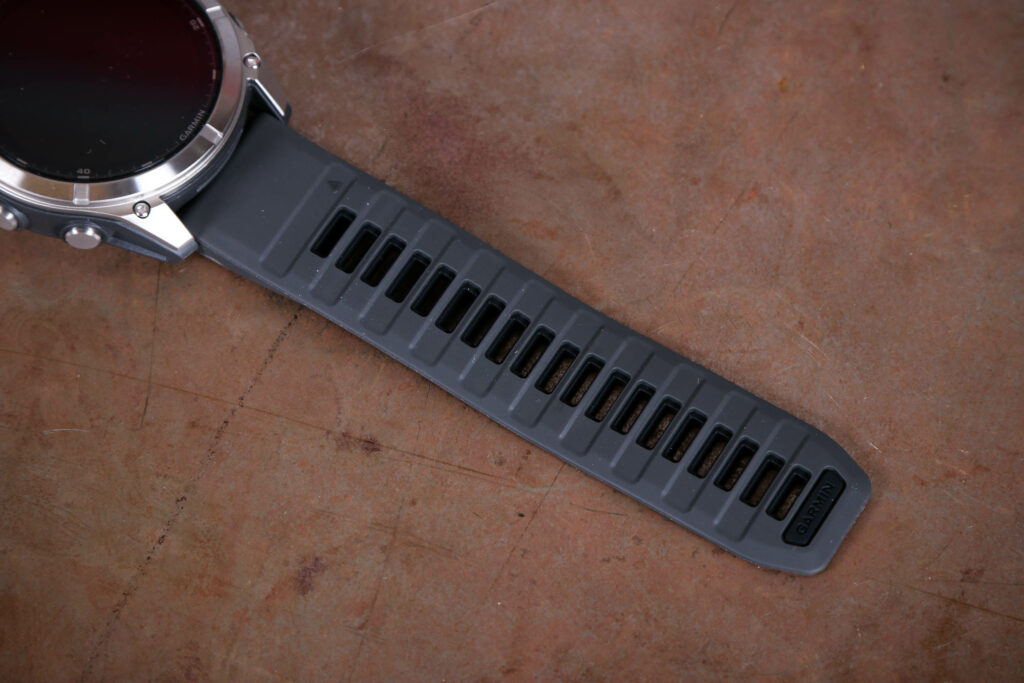


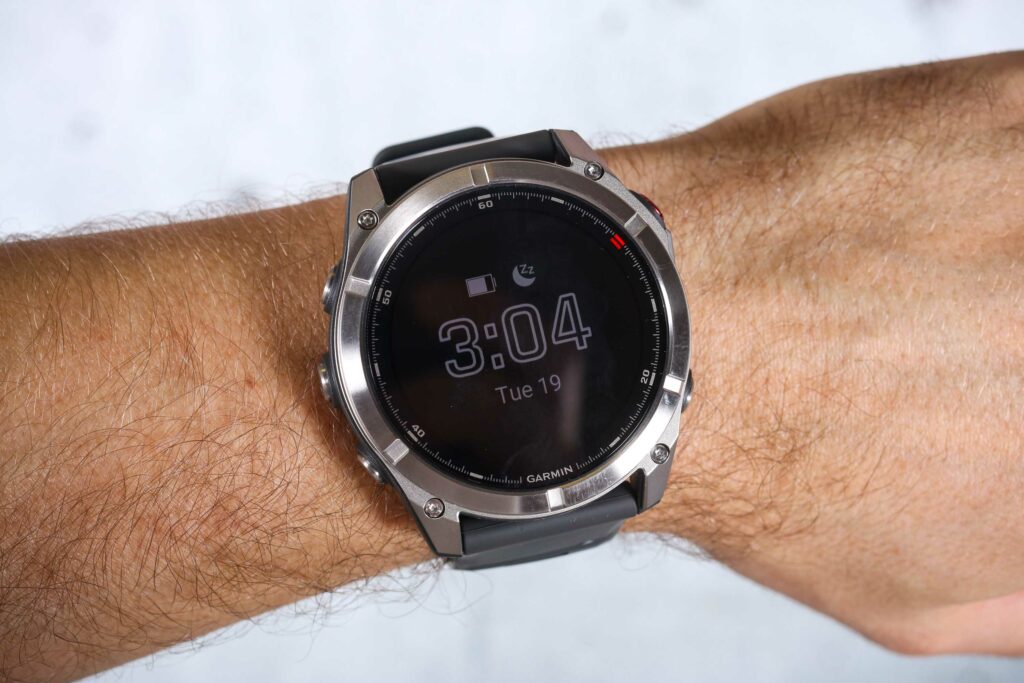

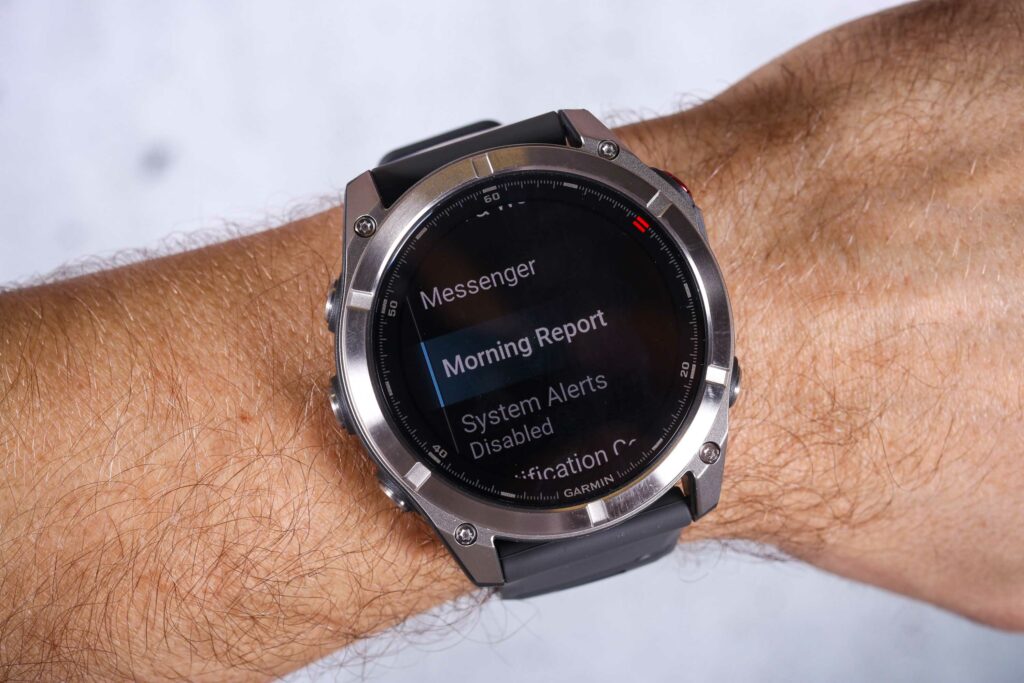
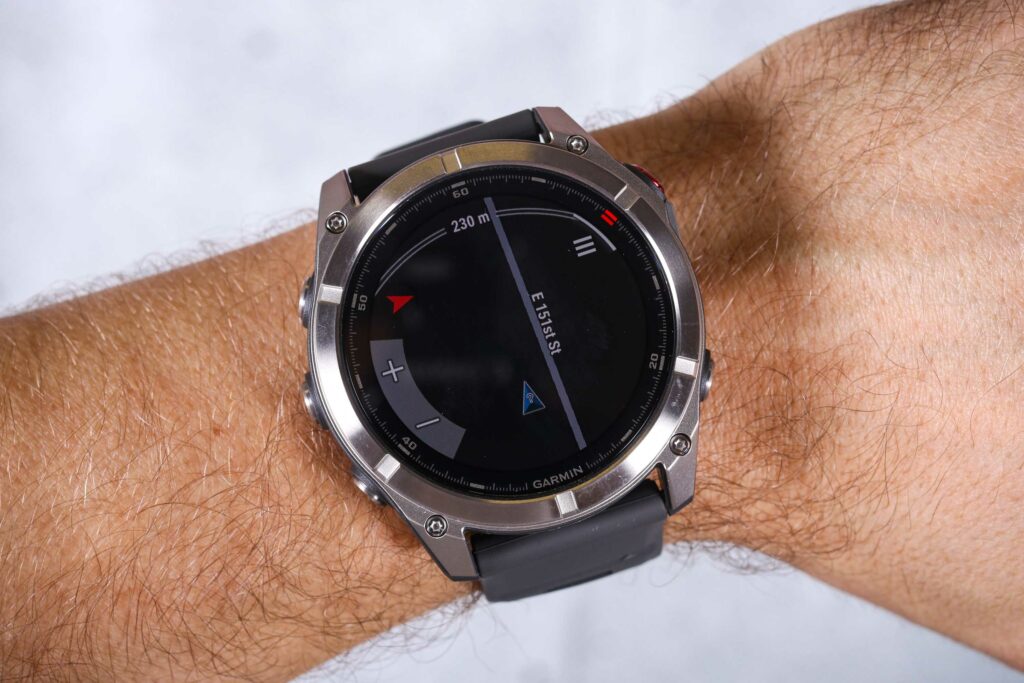
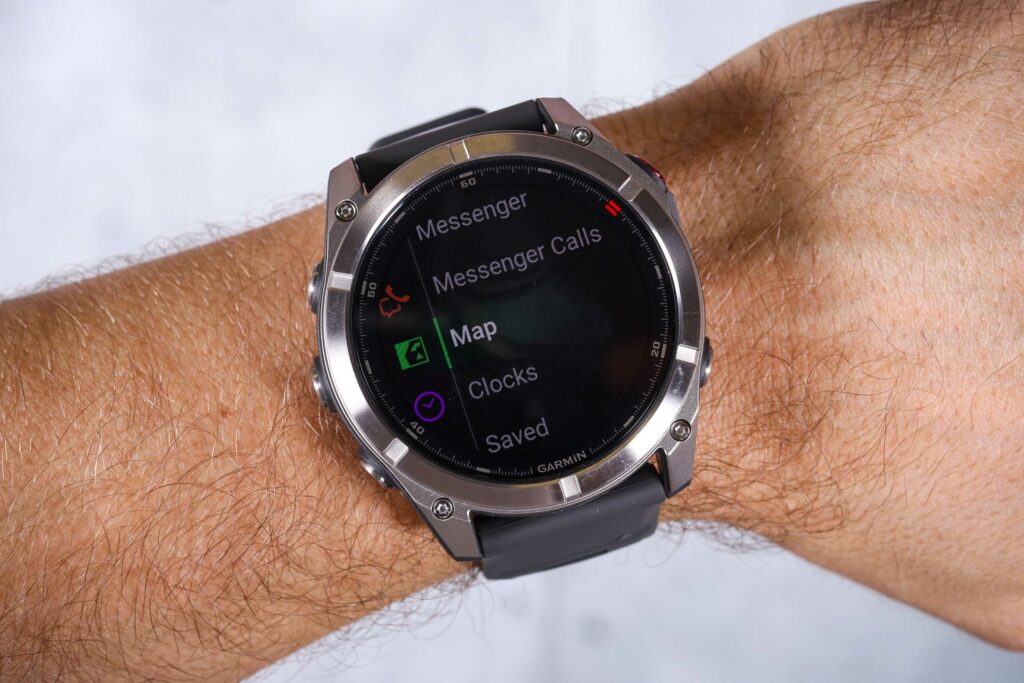
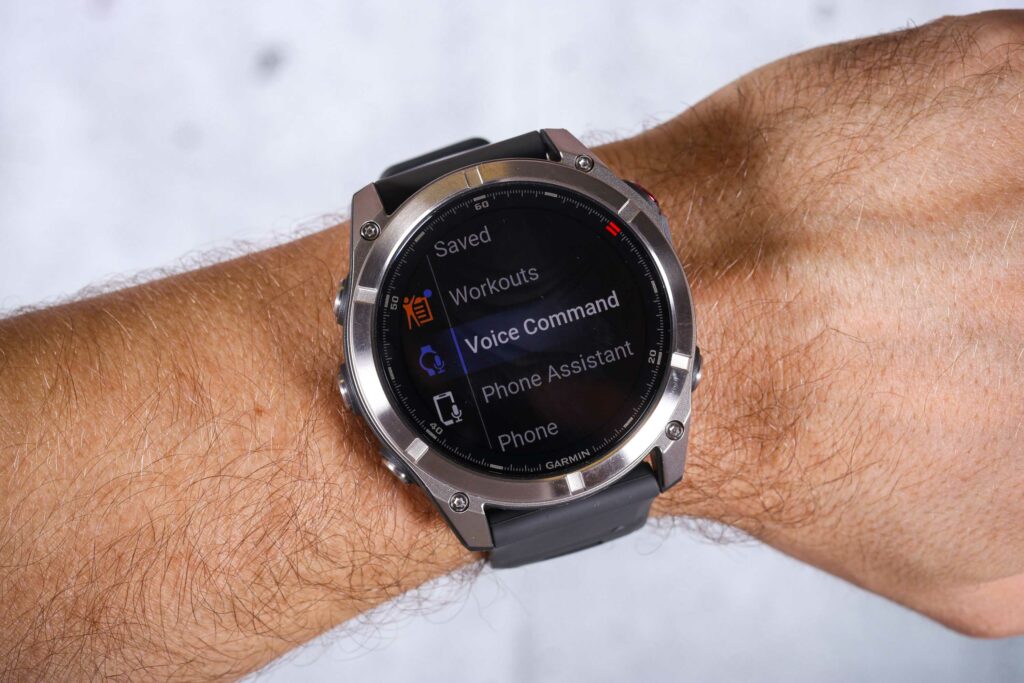
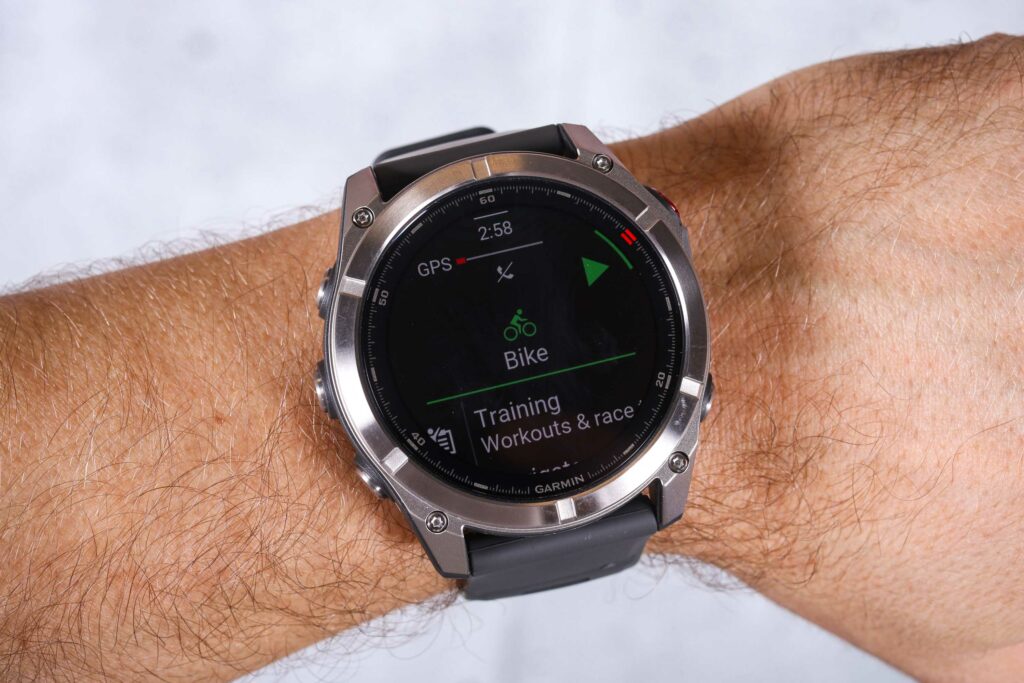
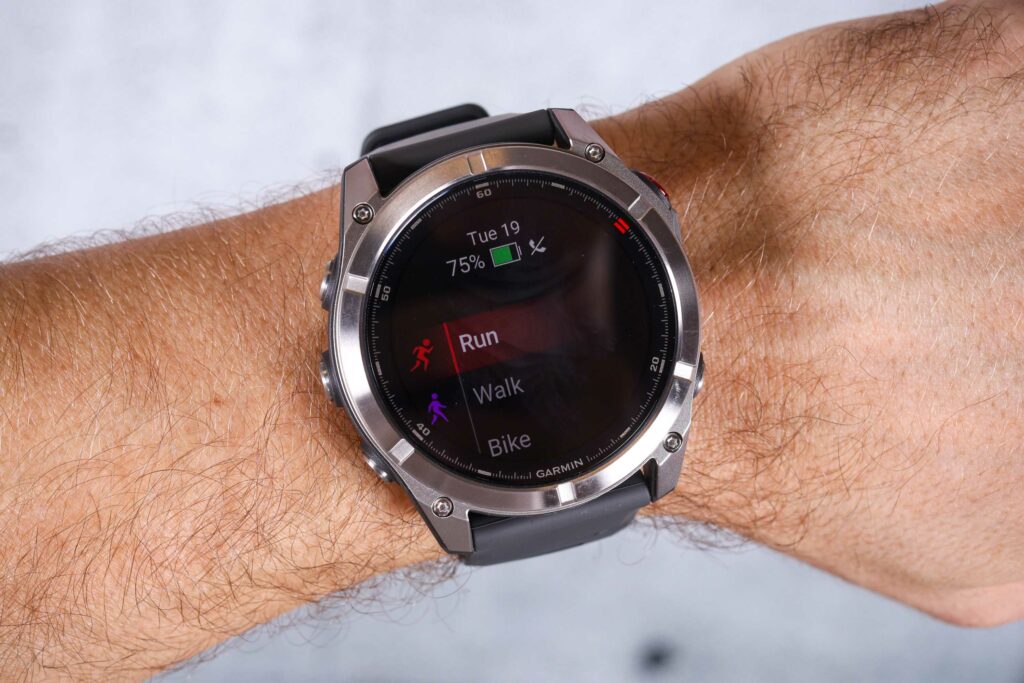


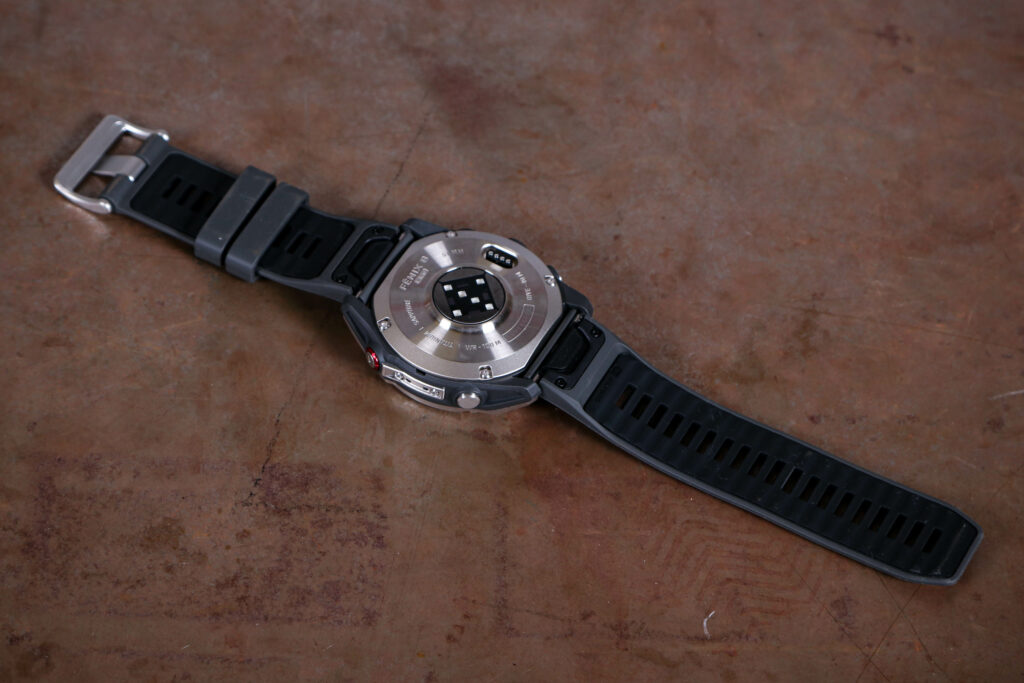
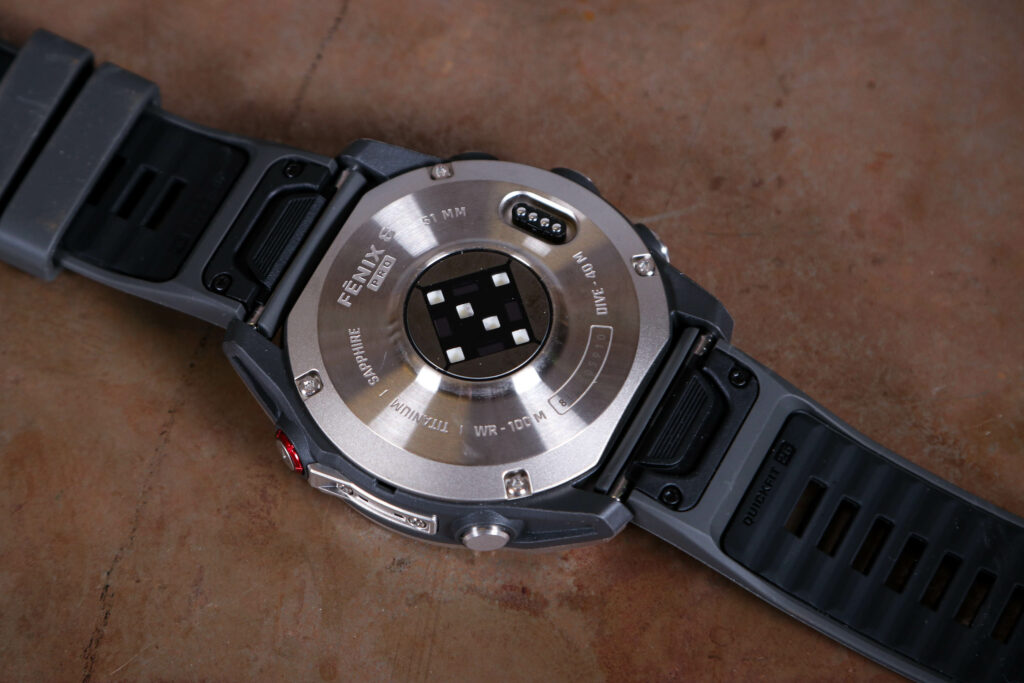
The buttons are large and tactile, something I always appreciate on Garmin watches. When you’re riding in winter gloves or trying to start a session at a traffic light, the physical buttons are more reliable than touchscreen input. The AMOLED display is bright, crisp and significantly more vibrant than older memory-in-pixel screens. Even in bright sunlight it’s easy to read at a glance, and colour mapping adds clarity when following routes.
There are some elements which could be improved for daily use – a key one for me is the responsiveness to a wrist tilt to read the time. I found that it was hit or miss whether it would wake the screen or whether I would need to press a button before it lit up. It’s not the end of the world, but other smartwatches do this better.
Battery life
Battery life is one of the Fenix 8 Pro’s strongest selling points. Garmin claims up to 27 days in smartwatch mode, which I found would be possible if you weren’t doing much activity tracking. Nevertheless, with regular rides, sleep tracking and notifications running, I was comfortably getting 14-16 days between charges, which is incredible given I’m used to charging my Apple Watch Ultra every three days.
In GPS activity mode, it will handle several long rides without stress. Multi-hour endurance rides barely dent it, and for riders who are braver than me who would do bikepacking in February, there are battery saver and expedition modes that dramatically extend longevity by limiting other functions.
Compared to many AMOLED-equipped smartwatches, which can struggle to make it through a few days, the Fenix 8 Pro feels properly built for endurance use.
On the bike
While this can’t yet replace a dedicated cycling head unit like a Garmin Edge, the Fenix 8 Pro is more than capable as a primary recording device and see some data on the go. It pairs with ANT+ and Bluetooth sensors, which means you can record the same data and when I tested it alongside my Edge 830, the GPS data matched pretty much exactly.
The data screens are fully customisable, letting you prioritise metrics that you want to see when riding. I am still in winter-miles mode, so I wanted to monitor my HR zones, and I found the data was quick to update, clear to see at a glance, and it was simple to change to a different data view when needed.
As this is a Garmin device, navigation is naturally strong. The watch comes with full-colour, TopoActive maps, turn-by-turn guidance and routing. For exploring unfamiliar roads or trails, it’s reassuring to have detailed mapping without needing a phone connection. Elevation profiles and climb information also help pace longer ascents.
That said, wrist-worn navigation will never be as convenient as a bar-mounted screen on a bike, but as far as it goes this is up there with the best smart watches on the market today.
Training metrics and recovery insights
This is where the Fenix 8 Pro really separates itself from the pack. Garmin’s training ecosystem is deep, to the extent that there is no way I could ever review everything available without quitting my job and spending all day every day training. Some of the options include VO2 max estimates, training load, training readiness, recovery time and HRV status, all of which can be integrated into daily feedback. I particularly appreciate the estimated recovery times after each ride as somebody who has historically tended to overtrain and injure myself.
If you follow structured training plans, the watch can guide you through workouts directly from your wrist too. Suggested daily workouts adjust based on your recent activity and recovery status, which can be genuinely helpful if you’re trying to balance performance with work and life stress. With a full-time job and two children under six, this was a great feature as I often just need to grab 30 minutes where I can without the luxury of planning it.
Sleep tracking, stress monitoring and body battery metrics add another layer of context. Whether you fully buy into readiness scores is up to you, but the data is thorough and presented clearly in Garmin Connect. That said, I tried to sleep with the watch on a couple of times and had to take it off because it’s so sizeable that on more than one occasion I woke myself up with it.
Everyday smartwatch features
Away from training, the Fenix 8 Pro generally functions well as a daily smartwatch. You get smartphone notifications, music storage and control, and Garmin Pay for contactless payments. There’s even a built-in LED flashlight – a surprisingly practical feature when I’m trying to find something in the back of a cupboard. (Maybe not something they would put in their advertisement, but still useful.)
I am normally an Apple Watch Ultra user, which puts more emphasis on daily use. For example, it can be used to unlock other devices or ‘hand off’ data to other devices. The Fenix 8 is still very good day-to-day, but it doesn’t quite offer the same level of convenience.
There is a large library of watch faces you can choose from and you can also design your own, albeit with fewer options compared to Apple.
One of the standout additions on the Fenix 8 Pro is Garmin’s built-in LTE capability, which unlocks a suite of smart features without needing to have your phone nearby. When paired with a Garmin subscription, you can use LiveTrack and message sharing, so friends or family can follow your ride or see your location in real time. There’s also SOS and incident detection via this connection, meaning the watch can send alerts and your location to emergency contacts even if your phone is out of range. It’s not free – the LTE service requires an ongoing subscription, but for riders who spend a lot of time off the beaten path, that added connectivity may be reassuring.
Comfort
Despite its size, the Fenix 8 Pro is reasonably comfortable thanks to its curved case back and adjustable silicone strap. You’re always aware it’s there – after all, it’s a 51mm watch – but weight distribution is good, which means that even when wearing it all day, it doesn’t push more on one part of your wrist or another.
The strap uses a standard buckle alongside two loops, which means that there is a lot of adjustability and the two loops keep everything tight and out of the way. There’s a reason watches have used the same strap system for centuries. Garmin has clearly concluded that if it ain’t broke, don’t fix it.
Value and comparison
This is by some way the most expensive smart watch that we have looked at on road.cc, with an RRP for this version of £1,119. In all, there are 25 models available with prices ranging from £880 to £1,499.
A higher priced competitor would be the TAG Heuer Connected which offers the tracking and basic functionality of the Fenix 8 Pro, but is focused less on the rugged, outdoorsy elements and pitched as more of a luxury smartwatch. It comes with an RRP of £1,500.
The Apple Watch Ultra 3 has an RRP of £749. It offers a more seamless daily experience, if used within the Apple ecosystem. However, outside of that, it doesn’t offer as much as the Garmin. It is smaller on the wrist, but the Fenix 8 Pro feels more robust.
Overall
The Garmin Fenix 8 Pro is a seriously capable, performance-focused smartwatch that prioritises training depth, mapping and battery life over slick day-to-day convenience. It’s large, expensive and not quite as seamless for everyday use as an Apple Watch, but when it comes to activity tracking and endurance sports performance, it operates on another level.
The build quality is exceptional, its battery life is class-leading and the training ecosystem is about as comprehensive as it gets for a wrist-worn device. If you want a watch that could realistically reduce your reliance on a bike computer and handle almost any outdoor pursuit, this is one of the most complete options available.
Test Report
What does the manufacturer say about this product?:
Built for athletes and adventurers whose pursuits can make it impractical to carry a phone, this multisport GPS smartwatch is a breakthrough. Leave your phone behind during an activity, and use the watch’s inReach® technology for voice calls and LiveTrack™ location sharing when you have an LTE network connection. Or access two-way messaging and interactive SOS capabilities from either an LTE connection or off-grid satellite link.
Tell us some more about the technical aspects of this product:
Sleep Score and Insights
Battery life (smartwatch mode): Up to 27 days (15 days always-on)
Built-in mapping
Pulse Ox Blood Oxygen Saturation
Garmin ECG App
LED flashlight
Garmin Pay™
Multi-band GPS
Music storage
Make calls and send texts via voice
Satellite communication: Yes (inReach subscription required; coverage details)
LTE communication: Yes (inReach subscription required; coverage details)
Training Readiness
Training Status
Watch display type: AMOLED
Touchscreen
Water rating: 10 ATM
General
Strap material: Silicone
Lens material: Sapphire crystal
Bezel material: Titanium
Case material: Fibre-reinforced polymer with titanium rear cover
QuickFit™ watch band compatible: Included (26 mm)
Physical size: 51 x 51 x 16.5 mm
Fits wrists with the following circumference:
Silicone band: 127-210 mm
UltraFit band: 127-225 mm
Leather band: 135-213 mm
Metal band: 135-225 mm
Weight: 90g (case only: 65g)
Leakproof inductive buttons
Built-in speaker/microphone
Display Size: 35.56mm (1.4”) diameter
Display Resolution: 454 x 454 pixels
Colour display
Large font option
Battery type: Lithium ion
Battery life: Smartwatch: Up to 27 days (15 days always-on)
Battery Saver Watch Mode: Up to 34 days
GPS Only: Up to 78 hours (56 hours always-on)
All Satellite Systems: Up to 60 hours (47 hours always-on)
All Satellite Systems + Multi-band: Up to 53 hours (41 hours always-on)*
All Satellite Systems + Multi-band + LTE Livetrack: Up to 21 hours (19 hours always-on)*
All Satellite Systems + Multiband + Music: Up to 23 hours (21 hours always on)*
All Satellite Systems + Multiband + Music + LTE Livetrack: Up to 15 hours (14 hours always on)*
Max Battery GPS: Up to 123 hours
Expedition GPS: Up to 24 days
*Assuming typical use with SatIQ technology
Charging method: Garmin proprietary plug charger
Memory/history: 32GB
Any further comments on quality?:
This is an exceptionally well-made smart watch with well-thought-out materials all put together in a robust package.
Any further comments on performance?:
For activity tracking and smartwatch features this is among the best currently on the market.
How does the price compare to that of similar products in the market, including ones recently tested?:
More expensive luxury smartwatches do exist, but are typically less sports focused.
The closest comparison, the Apple Watch Ultra 3, costs a little less, but while it offers a more seamless daily experience when used within the Apple ecosystem, it’s otherwise not as multi-faceted.
Did you enjoy using the product? Yes
Would you consider buying the product? Yes
Would you recommend the product to a friend? Yes
Use this box to explain your overall score
This is an excellent smartwatch that is exceptional for activity tracking and outdoor use. On the bike it shows what you want and records as well as a dedicated head unit, whilst also boasting impressive daily smartwatch features.
About the tester
Age: 38Height: 182cmWeight: kg
I usually ride: Orro VenturiMy best bike is: Specialized Diverge
I’ve been riding for: 10-20 yearsI ride: A few times a weekI would class myself as: Expert
I regularly do the following types of riding: Gravel riding, Commuting, Club riding, Sportives, Fitness riding, Leisure riding


3 thoughts on “Garmin Fenix 8 Pro Smartwatch”
I’m still on their model 7 pro, sapphire solar edition. It’s a great product but may be overkill if you only use it for one sport like I do (cycling).
What I like about it are the long battery life and the perfect integration with Garmin connect -still largely free- and Edge devices.
Dislikes are an archaic interface that requires you to scroll through lots of menu’s to change some stuff and the outdated graphics (obviously that’s also where the long battery life comes from). Using this just for the recording of cycling trip data is like purchasing a F1-car to do your weekly groceries run. I doubt that many users ever use more than 20% of the full functionality.
Worth mentioning: Garmin will probably bring out the Fenix 9 in Q3 or beginning Q4 of 2026. Just saying. If you want the latest and greatest or if you want to score a discount on the 8 then a bit of patience might be worth it.
Agreed, also factor in the extra 3 months Garmin will need to fix all the new bugs!
On past experience, it soon will be broke. For a premium product, the quality of Garmin’s straps is really disappointing. Especially when a host of third parties seem to be capable of making perfectly good ones for a fraction of the price they ask for a replacement.