The Garmin Forerunner 970 is a powerful multi-sport watch that can handle almost any activity. The health and training metrics are clear and easy to use, while the new AMOLED screen is excellent – though it does come at the cost of shorter battery life.
The Forerunner 970 is a watch designed for runners, triathletes, and multi-sport athletes seeking detailed training insights, reliable navigation, and comprehensive daily health monitoring. It is one of Garmin’s top models, offering many features similar to the premium Fenix series, but in a lighter design that’s more comfortable for all-day wear.
Setup
The watch is quick to set up. Scan the QR code on the watch and it’ll pair with Garmin Connect, which guides you through the basics and offers some useful tips. If you’re upgrading from another Garmin, it can copy across your activity profiles, settings, and data, making for a seamless transition.
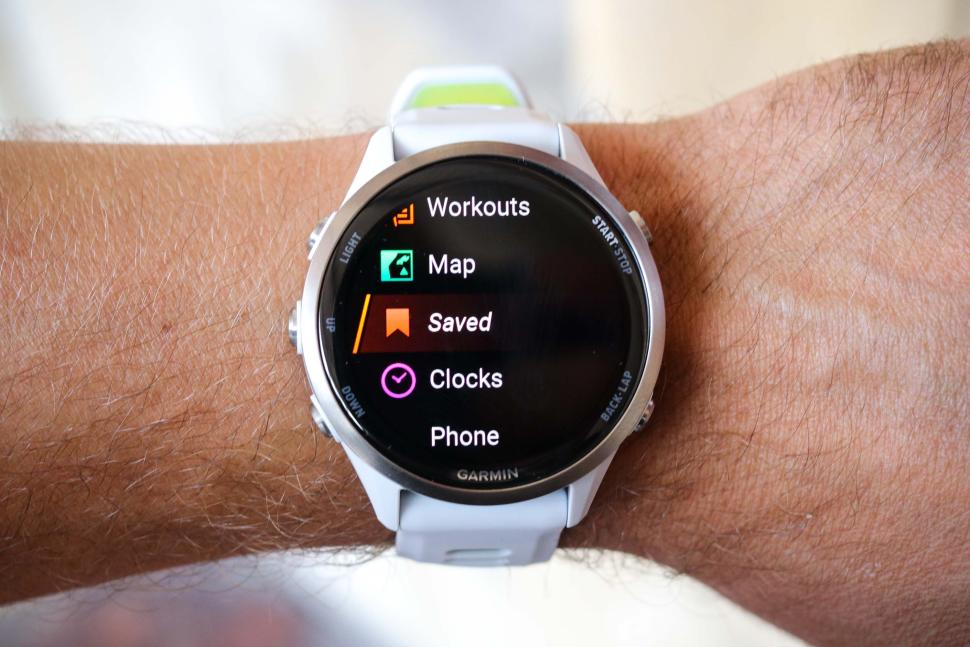
There’s still a learning curve – even after a month of testing, I was still discovering new tips and features.
Activity tracking
The Forerunner 970 has one of the widest ranges of activity profiles available, covering everything from road, trail and track running to multiple cycling, swimming, gym, team, and racket sports, plus winter and water sports. This means your sessions are logged accurately rather than all being lumped under ‘workout’.
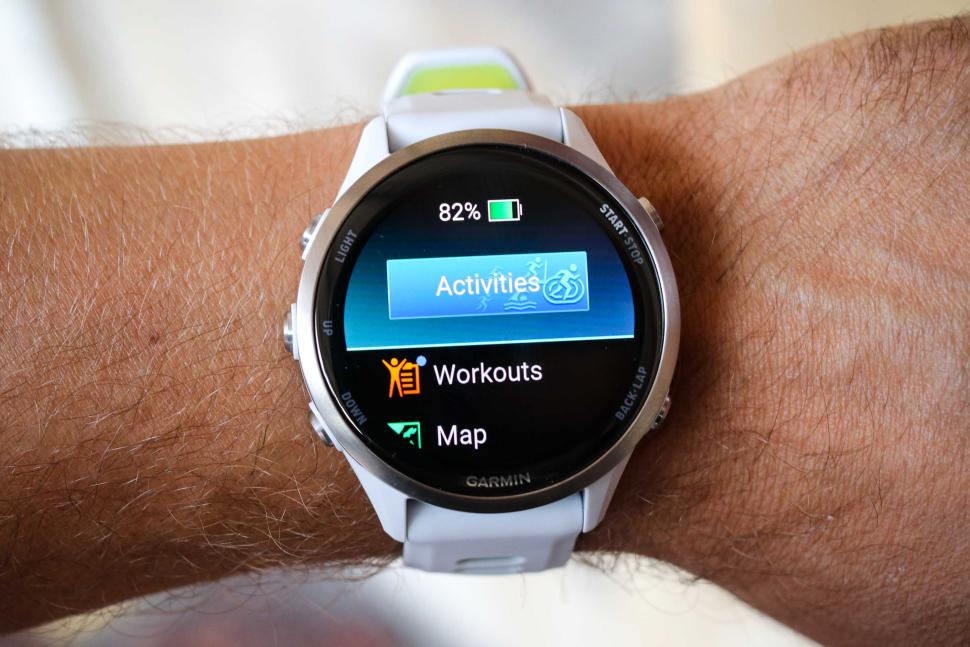
I tested it across cycling, running, swimming, hiking, strength training, and even jump rope (surprisingly good); I didn’t get to take it snowboarding this time, which I did with the previous model, but that worked excellently so no reason to think this one would be any different. The default data screens are well chosen for each sport, but they’re easy to customise in Garmin Connect if you prefer.
Adding structured workouts is straightforward, and the daily run and ride suggestions are well thought out, with clear prompts when it’s time to push harder or ease off.
Screen
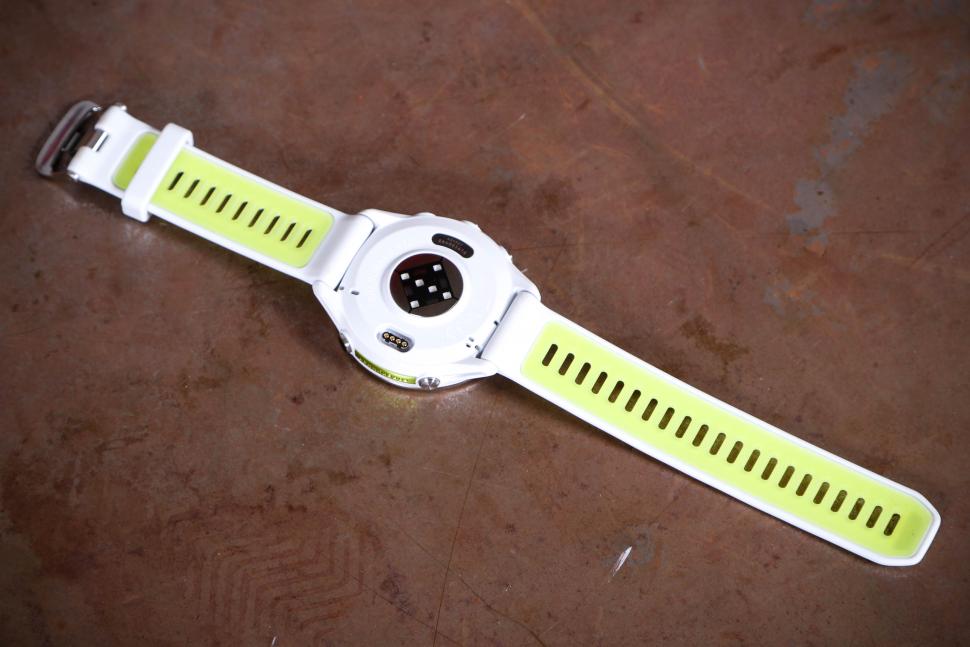
At 47mm, with a 35.3mm screen, the Forerunner 970 strikes a good balance: large enough to display plenty of data, but still comfortable for all-day wear. At just 56g, it feels light on the wrist, and although the band is slightly stiffer than older models, I had no issues with comfort even on long, hot rides.
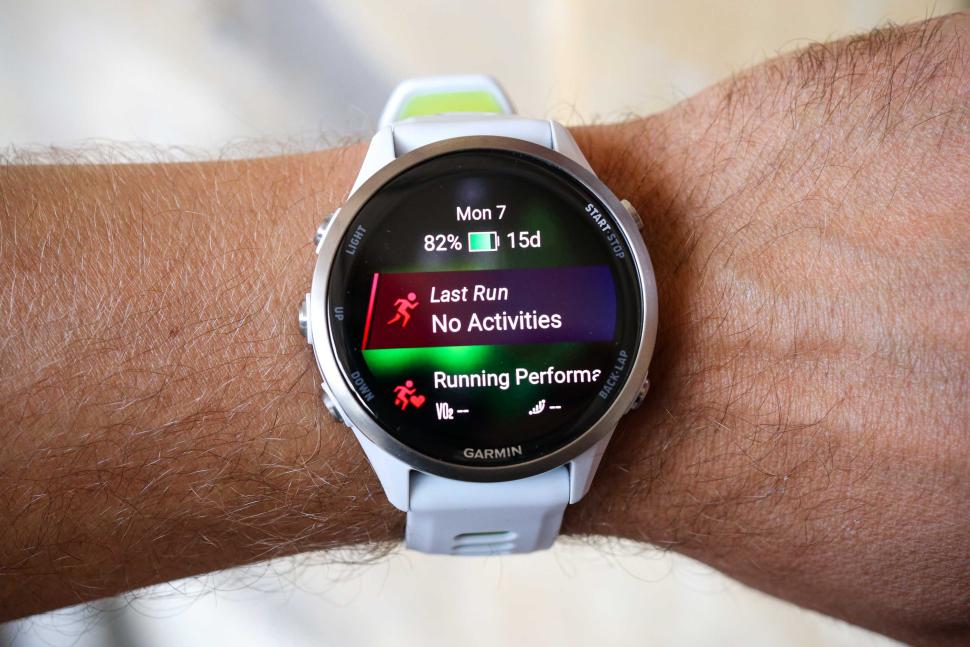
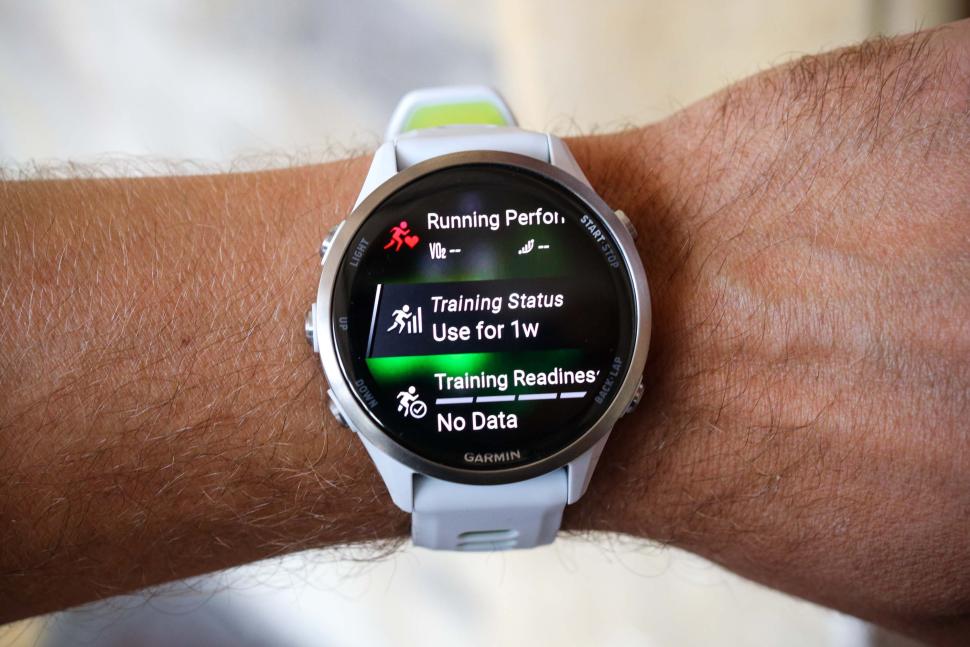
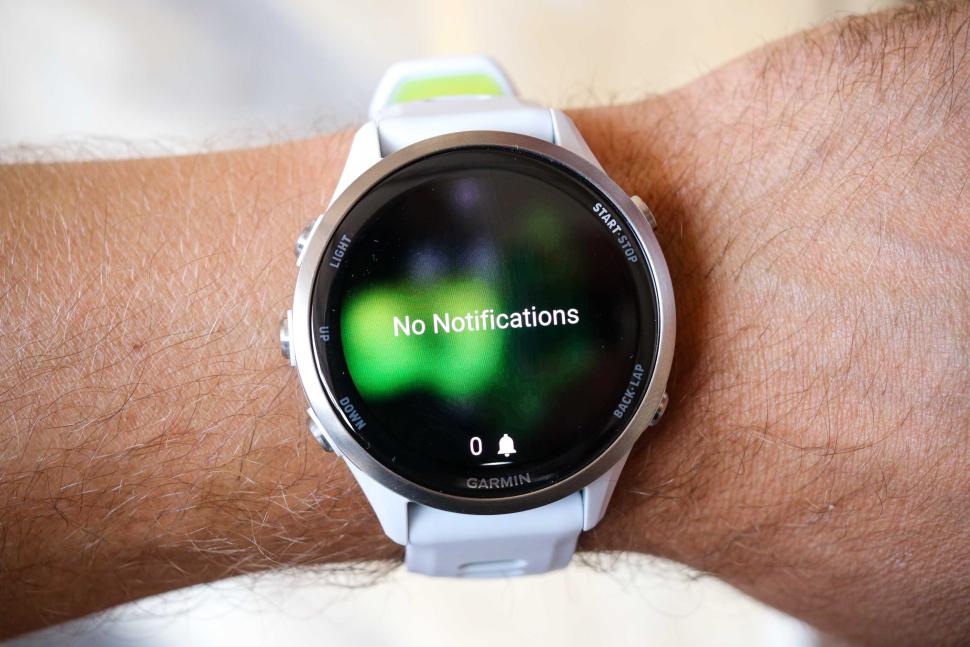
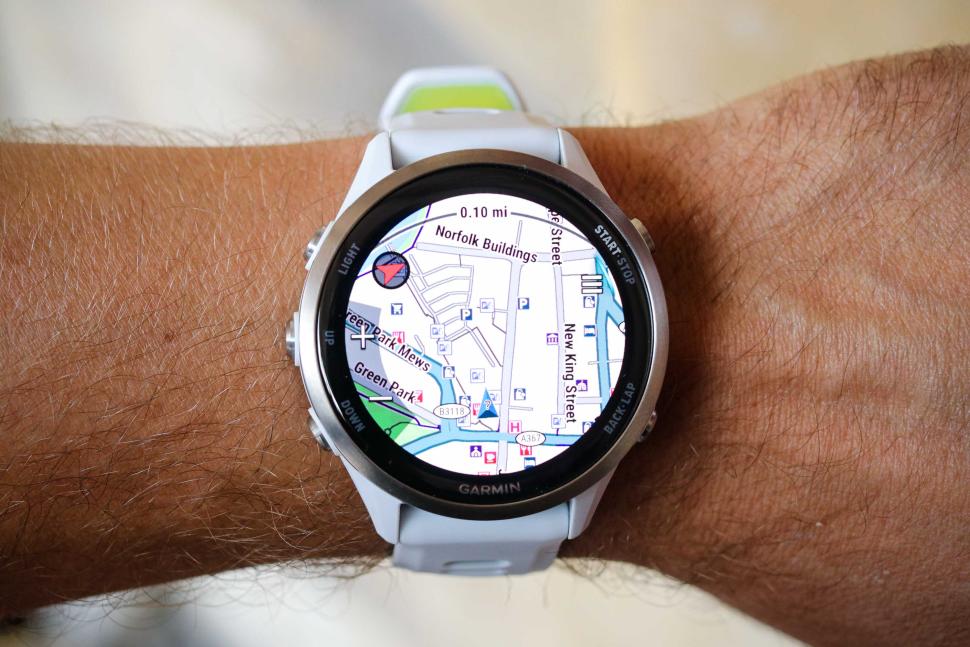
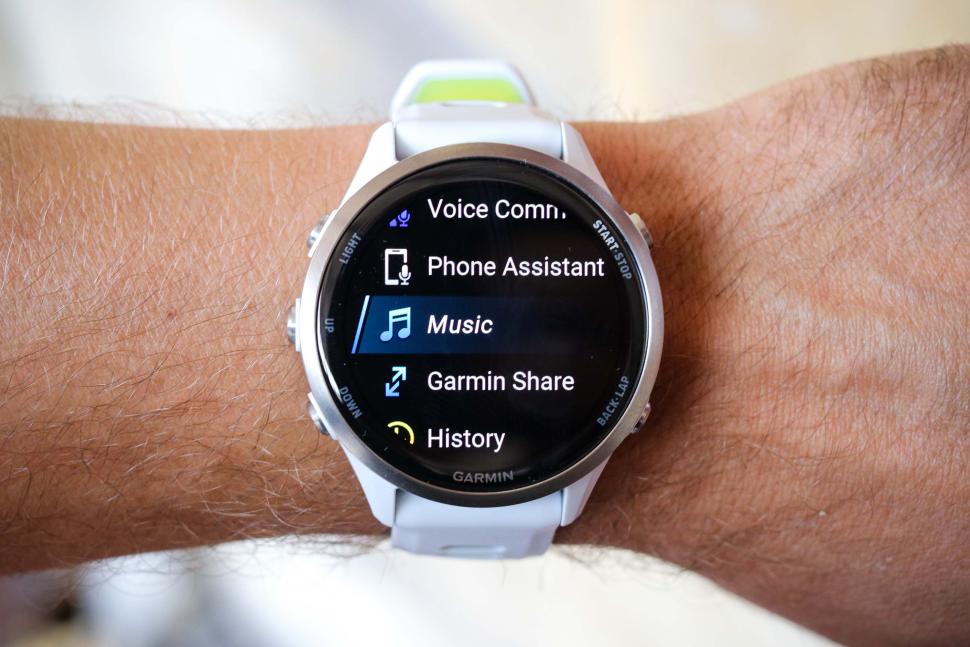
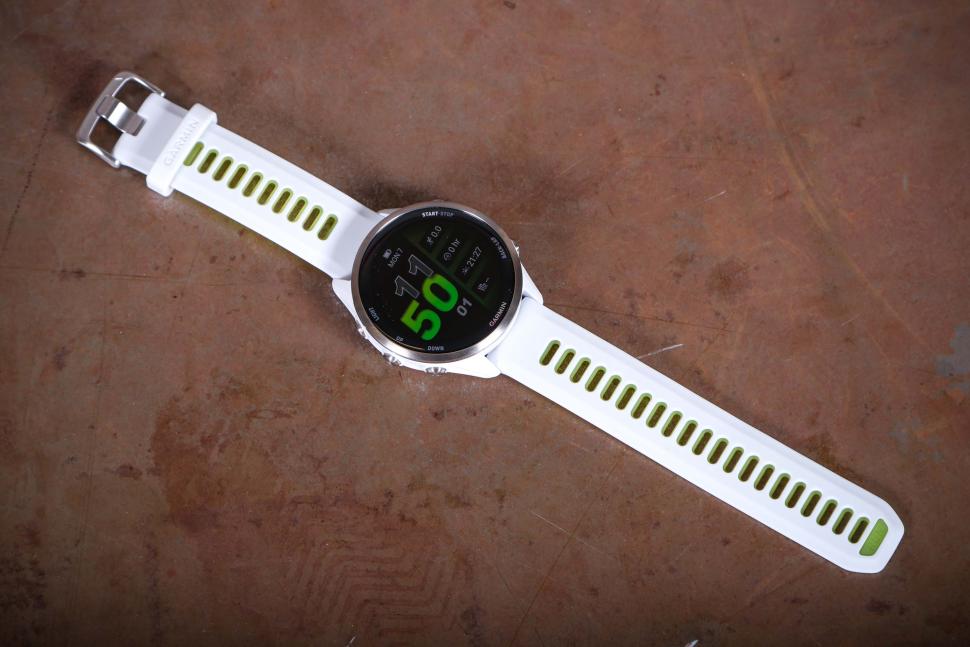
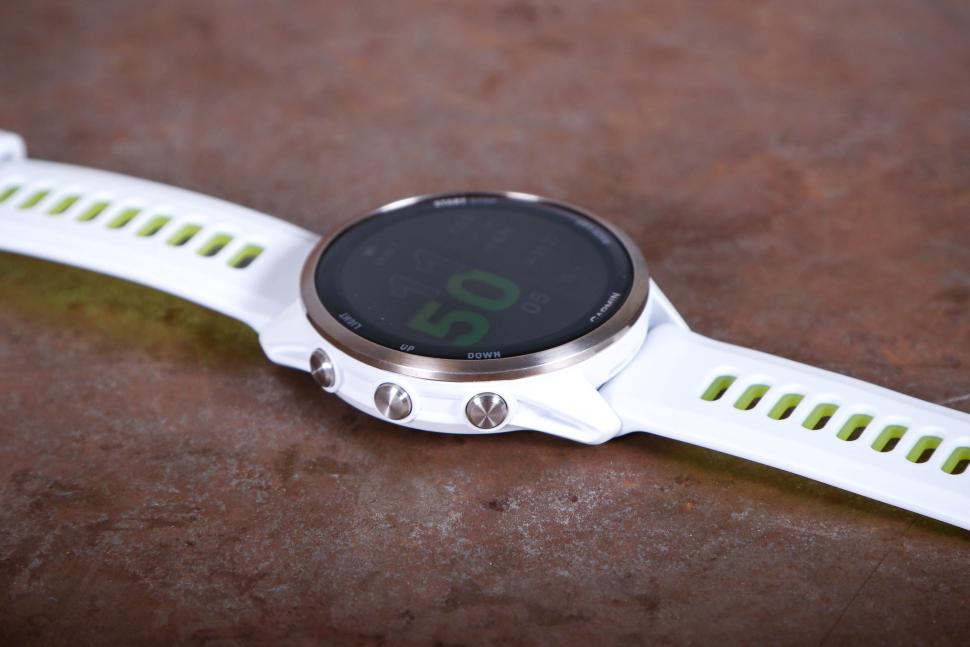
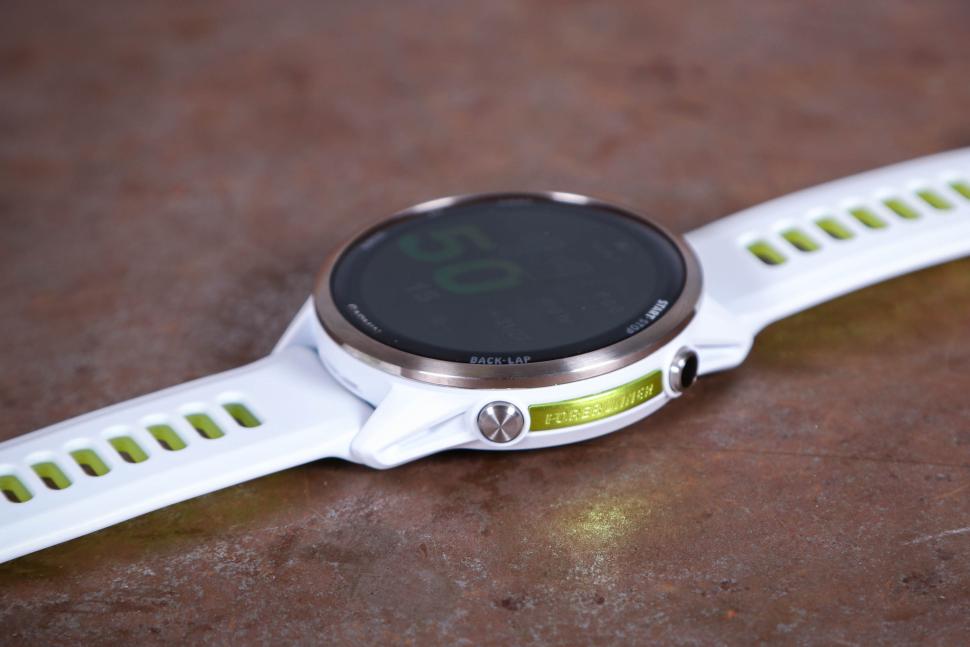

The AMOLED screen is a big step forward. It’s brighter than previous Garmin AMOLED models and remains easy to read in all conditions, including direct sunlight while cycling. I used to prefer Garmin’s MIPS screens for training, but this is the first AMOLED that feels like no compromise. The always-on mode works well, though it does come with a battery trade-off.
The touchscreen is sensitive and responsive, and you can enable or disable it by sport. I preferred to keep it off during runs, but it was useful for slower activities such as hiking. It was prone to unintentional activation when wearing a long-sleeved top or showering.
Watch faces and data fields are highly customisable. The defaults aren’t exciting, but the Connect IQ store has endless options.
The Sapphire Crystal screen has also proved tough; after a few months of 24/7 use, it still looks brand new.
Navigation
I’ve used this watch for navigation while cycling, trail running, and hiking in unfamiliar areas, including a recent trip to the Alps. Loading a route is straightforward – you can do it via Garmin Connect, direct import to the device, or auto-sync with platforms like Strava or Komoot. The watch can also generate routes itself; it isn’t fast, but the routes it suggested around Bristol were good for both running and cycling.
Step-by-step navigation is clear, with arrows showing directions and an alert as you approach junctions (though you may want to lower the default notification volume if you want any friends left after a group ride). The AMOLED display makes maps easy to read, with vibrant colours and visible contours, which were particularly helpful when hiking.
Of course, a dedicated cycling computer is still better for navigation, but if you’re considering spending this much on a watch, you probably already have one.
The Forerunner 970 also includes ClimbPro, which displays the profile of significant climbs on a route, showing how much elevation you’ve covered versus what remains. On my Alps trip, I found this both useful and a little intimidating, given that many rides finished with an hour-long climb back to our apartment. The altimeter was accurate, closely matching road signs along the way.
Other navigation features include reversing a course, exploring nearby points of interest, or navigating a previous activity. You can also select ‘avoid unpaved roads’, which would have been handy to discover before a terrifying Alpine gravel descent on 25mm tyres…
The multi-band GPS performed perfectly – whether I was under tree cover, in the city, or along rivers, it accurately tracked my location.
Connectivity and heart rate
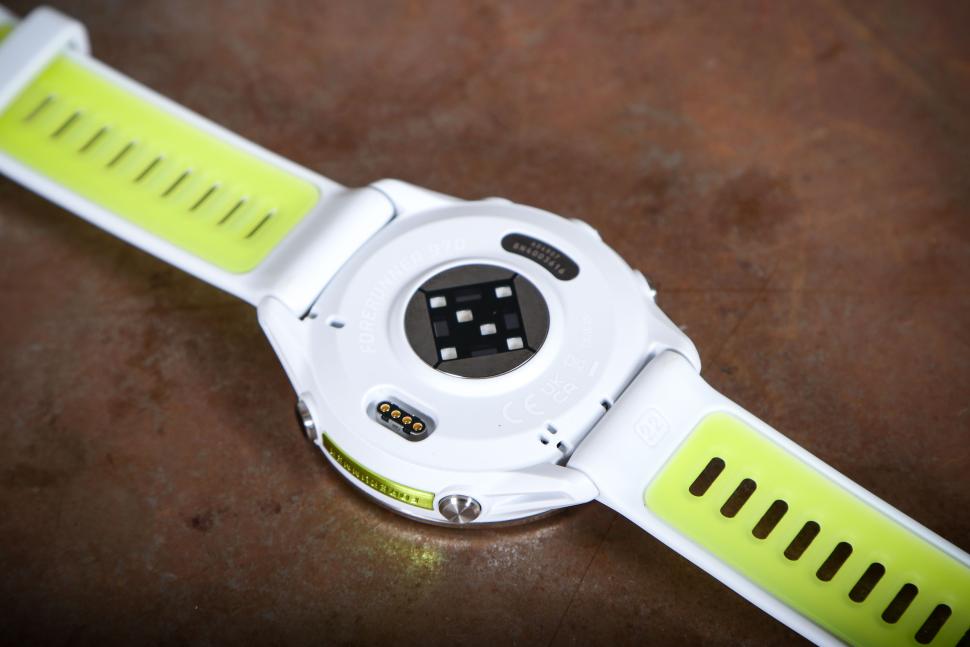
The Forerunner 970 has the new Garmin Elevate 5 heart rate sensor, designed to work better with dark skin, hairy arms, and during high movement activities.
I compared the wrist-based strap against my Garmin HRM Pro Plus strap across several rides and found it to be accurate (provided you ensure the watch is closely fitted). On a mountain epic including Alpe d’Huez, the Forerunner 970 logged an average of 136bpm with a max of 177bpm, and the strap 137bpm average and a max of 179bpm. On a quick lunch blast including the club monthly Strava segment, the Forerunner logged 145bpm with a max of 184bpm, and my HR strap 146bpm with a max of 183bpm.
Looking at the heart rate zones in detail, the time spent in each zone was very similar and tracked the strap closely.
It works really well while running. I rarely wear my heart rate strap running now unless I am doing a race. This has been especially pleasant in the hot weather, where a HRM strap can get sweaty and irritating when running.
As with any wrist-based heart rate monitor, it’s important to make sure the watch is snug on your wrist; if it’s too loose, the readings are likely to be inaccurate.
You can broadcast the heart rate from the watch to your cycling computer or device to use during indoor training, which I often do while using Zwift.
The Elevate 5 sensor also offers ECG functionality, which can detect signs of atrial fibrillation. After acknowledging about 20 times that you know it doesn’t detect heart attacks, you then place your thumb and finger on the bezel. It detects your heart rhythm and provides a status on whether you have any abnormalities. It doesn’t work if your heart rate is below 50bpm or above 120bpm. It doesn’t monitor continuously like some watches.
You can also connect lots of other accessories to the watch, such as power meters, radars, electronic gears, and a smart trainer. I found myself using it for short rides where I didn’t need my cycling computer.
Health monitoring
The Forerunner 970 collects lots of data for monitoring your health and presents it in an easy-to-use format. I found this easier than the watches I tested from Coros or Suunto.
I like the training readiness and morning report features. The morning report gives a summary of sleep, heart rate variability, stress, and recovery. This is summarised into a training readiness score out of 100. It encouraged me to back off when I was training too much during the glorious summer weather.
The Training Status feature uses your training load, HRV, and split of training intensities to show whether you are maintaining, improving, or overreaching. This helps you maintain a good balance of training intensities – useful if you don’t follow a training plan but still want a good mix of training intensities. Shockingly, mine currently says “Productive”.
There’s a new ‘evening report’, which gives a summary of your day, suggested sleep, tomorrow’s training session, and weather forecast. It was good, but it didn’t add as much value as the morning report.
If you are new to the Garmin ecosystem, it takes approximately three weeks of consistent use to establish a personal baseline in the data. After this, the trends and data in features such as HRV, sleep, and recovery become more useful. If you are an existing user, it’ll just port all your data over, which is great.
To get the most out of the health data, you need to wear the watch most of the time to ensure accurate data is collected. I didn’t find this an issue as I am used to wearing a smartwatch. I don’t mind sleeping with the watch on, but I know some people find it uncomfortable. Garmin has an (expensive) solution to this with the Garmin Index Sleep Monitor.
The watch tracks your sleep, and works well, but as with any watch, it struggles if you are reading in bed. It can detect breathing abnormalities while sleeping (used as a proxy for sleep apnoea), although this feature must be enabled.
Battery life and charging
The battery life claimed by Garmin depends on the mode you choose. The most interesting figures are the All Systems GNSS; Garmin quotes 21 hours battery life, which reduces to 12 hours if you are using music.
Initially I wasn’t getting the expected battery life from the watch, but with a few tweaks to the brightness settings, it tended to last around four days with one or two hours of GPS activity per day.
This is by no means the longest on the market – the Garmin Enduro 3 lasts at least 60 hours! It is long enough for a 300km ride or an Ironman, though, which is enough for most people.
Charging is via Garmin’s proprietary cable and is fast: a 20-minute charge added 32% to the battery, which was just enough for a 100km club ride with navigation. If you realise you are out of battery when you are getting ready, a quick blast will likely see you through most training sessions.
The watch doesn’t have solar charging, which I think is sensible. It isn’t aimed at ultra-endurance athletes.
Training plans
You can now use the watch to create a triathlon training plan for events up to the half Ironman distance. I tested the suggestions for an event, and it has a lot of customisation, with different options for long training days, adding strength training, and days you can train twice. The sessions it prescribed seemed great for cycling and running, although swimming could be better.
If you don’t follow a training plan, it will still give you a daily workout suggestion for running and cycling. The suggestions were always appropriate, and even if I didn’t follow one, it made me question my plans – for example, attempting a hard session on a day it recommended as a rest day.
Other features
The watch supports Garmin Pay, so you can make contactless payments using your watch. However, the only major UK banks currently supported are Santander, Revolut, and Starling. I did open a Starling account a while back to use this, and I often use it at the café.
Music is supported via apps such as Spotify and Deezer. I tend to sync a few Spotify playlists, which update over Wi-Fi when the device is charging. It’s handy if you have playlists that change regularly, like ‘New Music Friday’; they auto-update, so you don’t have the same music all the time. Connect some wireless headphones, and you can run or hit the gym without your phone while still listening to music. Battery life takes a hit, but it’s a great feature.
New to the Forerunner series is a flashlight located at the front of the watch, which can be set to either red or white. I found it surprisingly useful; it is similar in brightness to a phone torch, and it was great if I was in unfamiliar surroundings, like in a hotel or finding my dropped earbud on a flight.
You can set it to come on automatically if you are running at night. I think it is pretty useful as I often run on river paths with minimal street lighting and quite a few unlit cyclists.
Notifications
The Forerunner 970 will keep you updated with notifications, provided your smartphone is within range.
I like to block a lot of apps as I don’t want annoying notifications, and sometimes use the do-not-disturb mode if I have lots of work deadlines.
New to the Forerunner 970 is a microphone and speaker, which you can use for calls (provided your phone is nearby). The sound quality was surprisingly good (for both me and the other person). It isn’t something I think I would use much, but it may be useful for some.
It is supposed to be able to sync up with Apple’s Siri or Google Gemini as a voice assistant, but I didn’t have a great success with it. It was my fault initially – I didn’t have the right Google Gemini app downloaded on my phone – but I still didn’t really like it. I feel a bit silly talking to my watch.
Colour
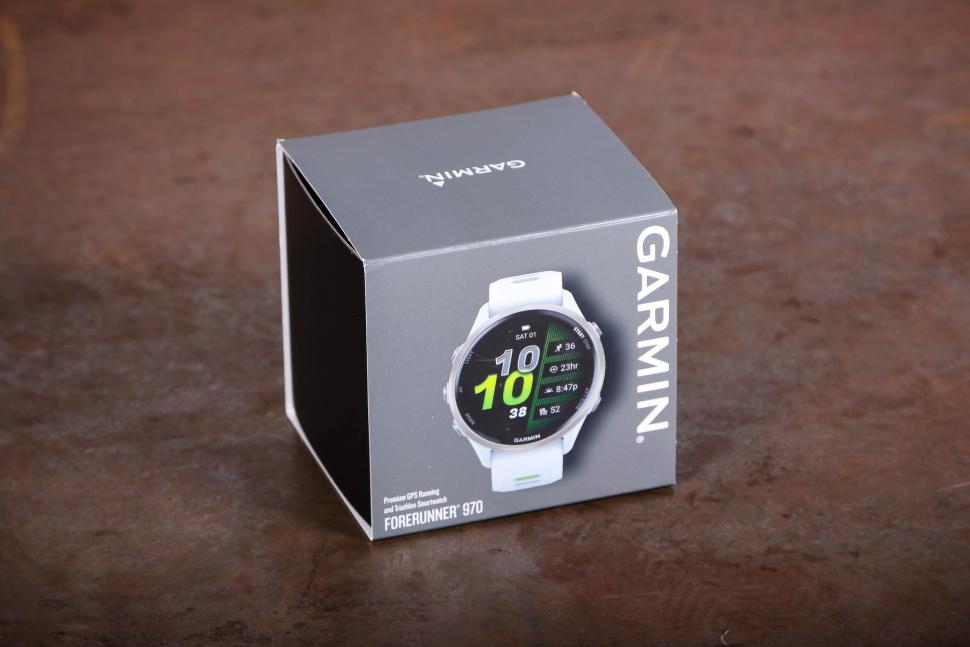
As you can see from the pics, I tested the version with a Whitestone case and band. It is also available with a grey and indigo band or a more traditional black. My friend had the black version, and it looks great.
Should you upgrade?
The jump in functionality between generations of sports tech seems to be getting smaller and smaller. With the price increase, it often seems hard to justify whether the next generation is worth it. From my experience with friends, most people seem to keep a watch for at least a few iterations before upgrading, even the more tech-savvy ones.
I’ve got the Forerunner 955 at the moment – so, two iterations older than the 970. Given the cost versus increased functionality, I would find it hard to justify upgrading to the Forerunner 970 (though I still want to!). My partner has the Garmin Forerunner 945, and from this watch, it’d feel like a good upgrade.
Cost and alternatives
At £629.99, this is an expensive watch. You’d need to consider whether the additional features are worth the money for you.
For this price, you could get a good cycling computer and a mid-range watch, which seems to be a common setup among my clubmates who are keen cyclists and occasionally do other activities.
I reviewed the Coros Pace Pro which, though not as all-encompassing as the Garmin, still covers a wide range of features and is just over half the price at £349.
I also reviewed the Suunto Race, which is now £345 (and there’s also the new, smaller Suunto Race S, for £299); that’s very good for the range of features, though it did have a few quirks.
Overall
The Garmin Forerunner 970 is a very good multi-sport watch with a huge range of features designed for the demanding athlete. The training and health data is excellent and well presented, mapping and navigation were easy to use, and the new HRM sensor worked perfectly.
The AMOLED screen is a big step up from other watches I have reviewed, even if it does impact the battery life. If the high price isn’t a barrier for you, you won’t be disappointed.
Verdict
Excellent screen, unrivalled training and health data – with a high price
All the deals displayed on our review pages are pulled from a constantly updating database feed of the best affiliate deals available. The criteria for deciding on what are the best deals is who is offering the lowest, delivered price. In most cases we will be showing the very best deal available online, but sometimes you may be able to find an item cheaper. If you can please feel free to post a link in the comments box below. To find out more about affiliate links on road.cc click here.
road.cc test report
Make and model: Garmin Forerunner 970
Size tested: n/a
Tell us what the product is for and who it’s aimed at. What do the manufacturers say about it? How does that compare to your own feelings about it?
Garmin says: “Our best and brightest running and smartwatch.”
Tell us some more about the technical aspects of the product?
Numerous features, inc:
Bright 1.4inch display
Up to 26 hours battery life in GPS mode
Full colour mapping with turn by turn navigation
Training readiness
Built in speaker and microphone
Morning and evening report
HRV & ECG status
Climbpro
Music from Spotify, Deezer or Amazon
Garmin Pay
Lots of running metrics
Battery life could be better.
This is an expensive watch but has a lot more features than other competitors, so it is broadly justifiable.
Tell us how the product performed overall when used for its designed purpose
It performed very well, it met all my training needs, and the health data is excellent.
Tell us what you particularly liked about the product
It’s the first time I’ve found an AMOLED screen great for both training and general use.
Tell us what you particularly disliked about the product
The battery life could be better, and I’d prefer the black version…
How does the price compare to that of similar products in the market, including ones recently tested on road.cc?
It’s more expensive than others on the market.
I reviewed the Coros Pace Pro earlier this year, which, although it wasn’t as all-encompassing as the Garmin, covers a wide range of features and is just over half the price at £349.99.
I also reviewed the Suunto Race last year, which is now £345 (and there’s also the new, smaller Suunto Race S, for £299); that’s very good for the range of features, though it did have a few quirks.
Did you enjoy using the product? Yes
Would you consider buying the product? Yes
Would you recommend the product to a friend? Yes – if they do multisport.
Use this box to explain your overall score
Overall, this is a very good watch. It does pretty much everything you could ever need with excellent training and general health data. The screen is excellent; however, this comes with the compromise of a shorter battery life.
About the tester
Age: 35 Height: 178cm Weight: 73kg
I usually ride: Specialized Roubaix My best bike is: Cervelo S3
I’ve been riding for: 10-20 years I ride: Most days I would class myself as: Expert
I regularly do the following types of riding: road racing, touring, club rides, general fitness riding, Indoor