


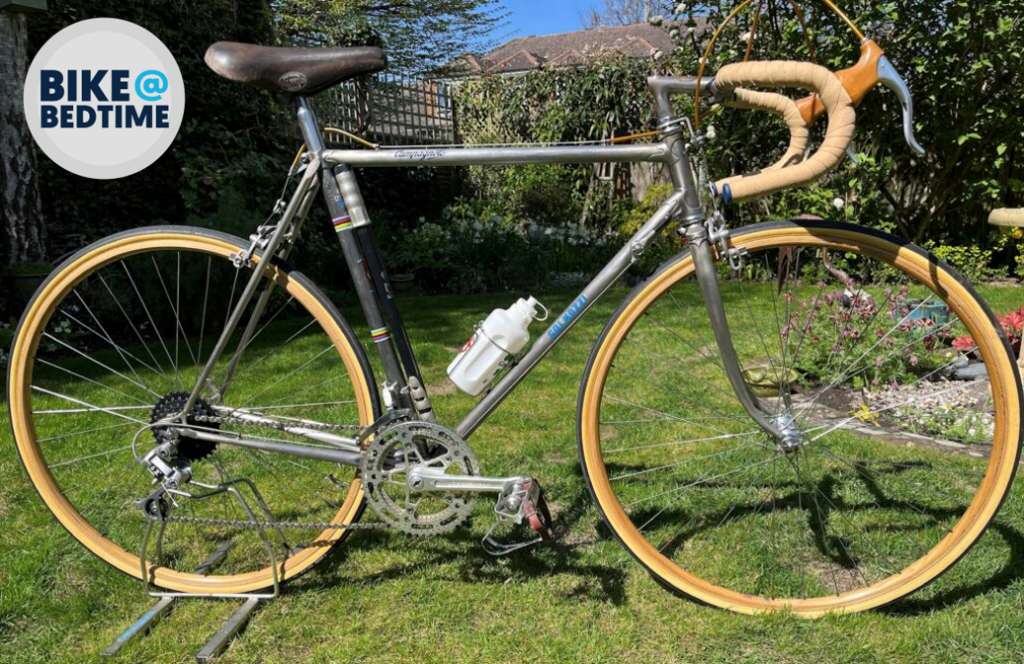

This early 1970s Italian-made racing bike comes from Ciclo Galmozzi of Milan, and it was produced for the Lazzaretti Racing Team based in Rome. Francesco Galmozzi founded the brand in 1938 and designed the distinctive head badge, which features a rooster standing on a wheel hub. As the Italian word for rooster is ‘gallo’ and the word for hubs is ‘mozzi’, the maker’s logo is simply a visual amalgamation of the two.
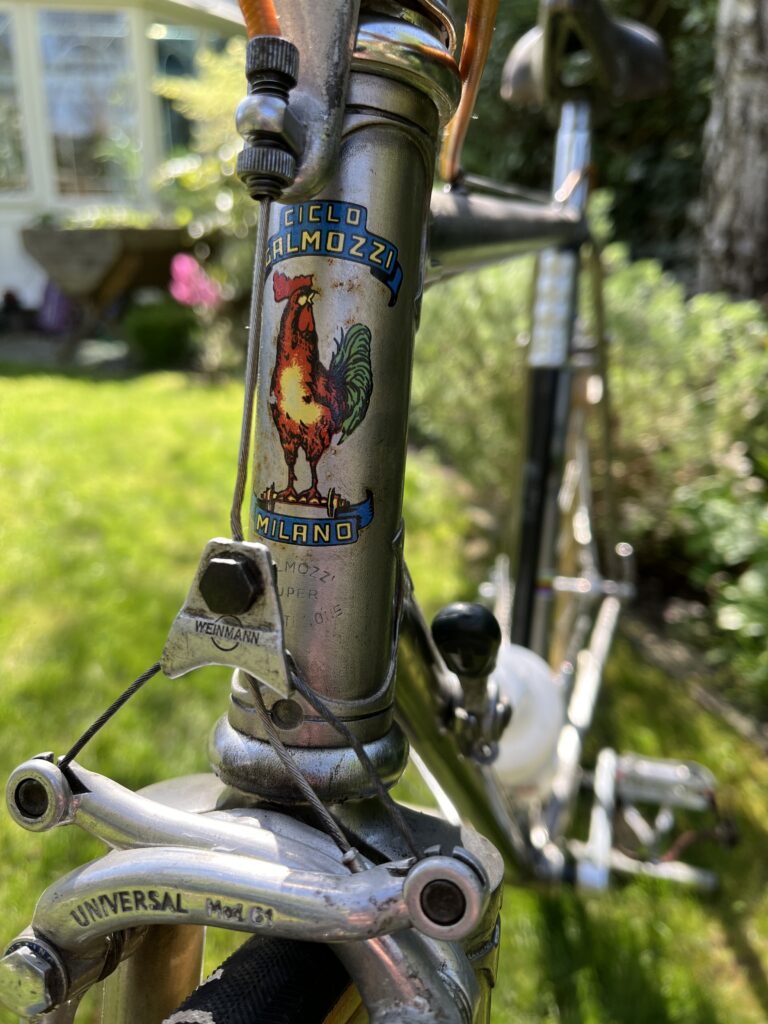
Francesco Galmozzi had a long-standing friendship with Antonio Columbo of Columbus tubing. This had started in the 1930s, and both firms were based close to Milan. In fact, from 1949 Columbus used to stamp the tubes made for Galmozzi with the rooster logo, and the words ‘Super Competizione’, to stop counterfeit bikes being made! This is visible just below the headset logo above.
Although we can’t see which tubeset is used for this build, we do know that Columbus introduced its iconic SL (lightweight) tube set in 1973, so it is possible that it was used here.

The lugs, whilst still decorated, are much less ornate than some earlier builders would create. Hetchins or Rotrax bikes from the 1950s spring to mind as obvious examples. These lugs have a purposeful simplicity that I find to be elegant.
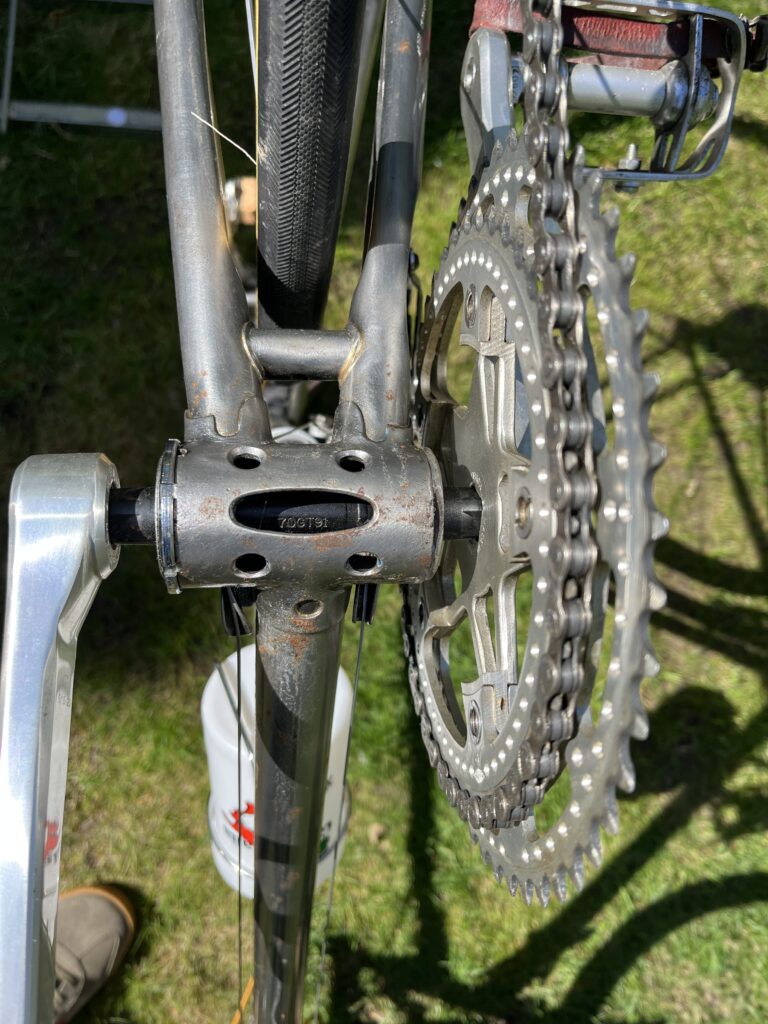
Sticking with the frame, we can see above the one oval and four circular holes present underneath the bottom bracket, which was quite common on high-end vintage frames. Although undoubtedly useful in being able to drain water out from the frame, they also played a psychological part for the weight-conscious rider, who wanted an even lighter bike.
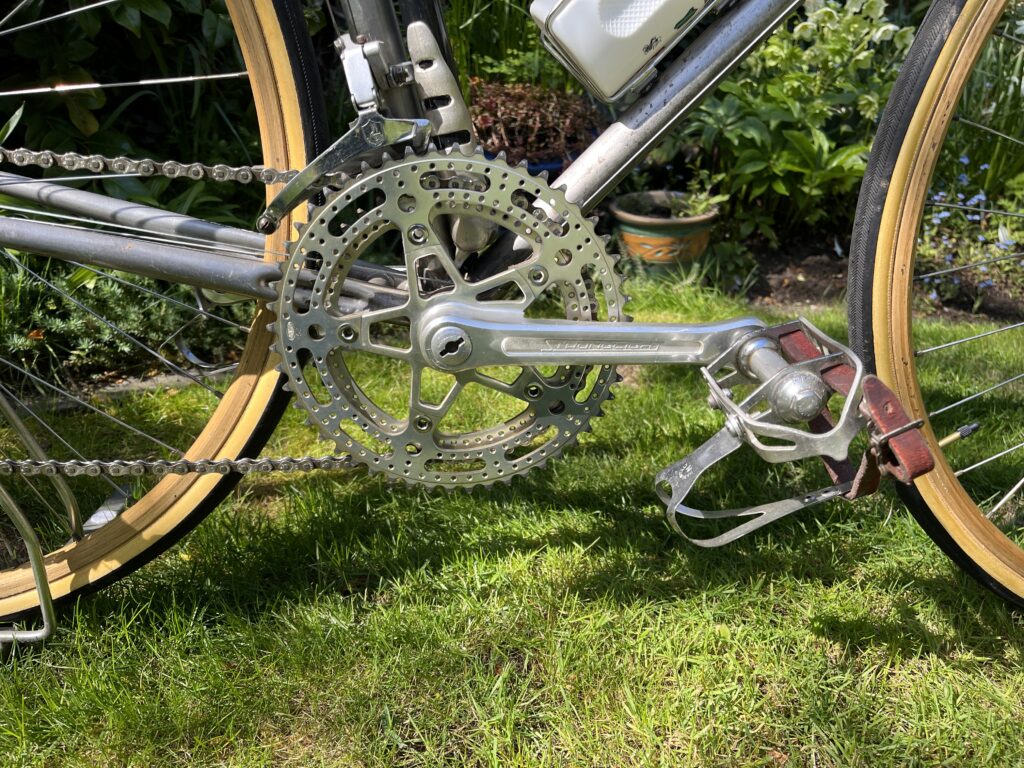
On the subject of ‘drillium’, the Stronglight chainrings feature extensive, neatly drilled holes to save further weight. This was a trend that was popular from the 1960s through to the ’80s, inspired by racers such as Alf Engers and Eddy Merckx. If you want to see some impeccable modern retro examples, check out various projects by the estimable Campag Kid.
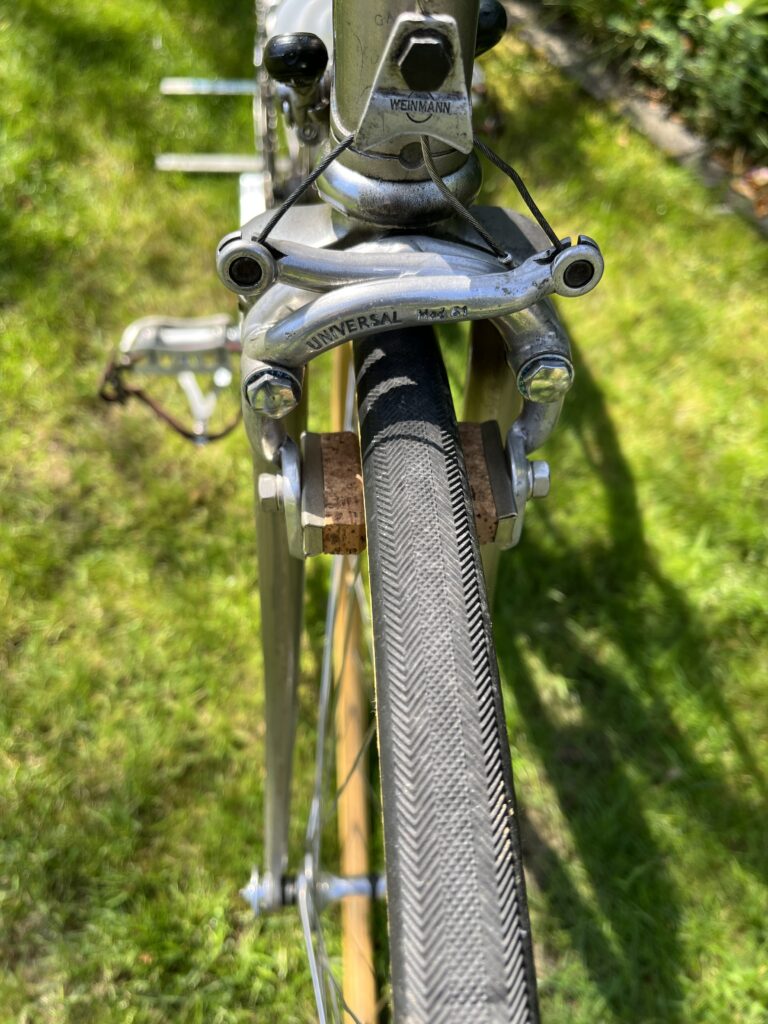
The Campagnolo Super Record low flange hubs are laced to CBL Brusati Limbiate Roubaix Tubular wood rims using 36 spokes per wheel. Wooden rims were lighter in weight (for the time) and often provided exceptional vibration damping. Allied to a supple 320tpi tubular tyre, they should ride rather well.
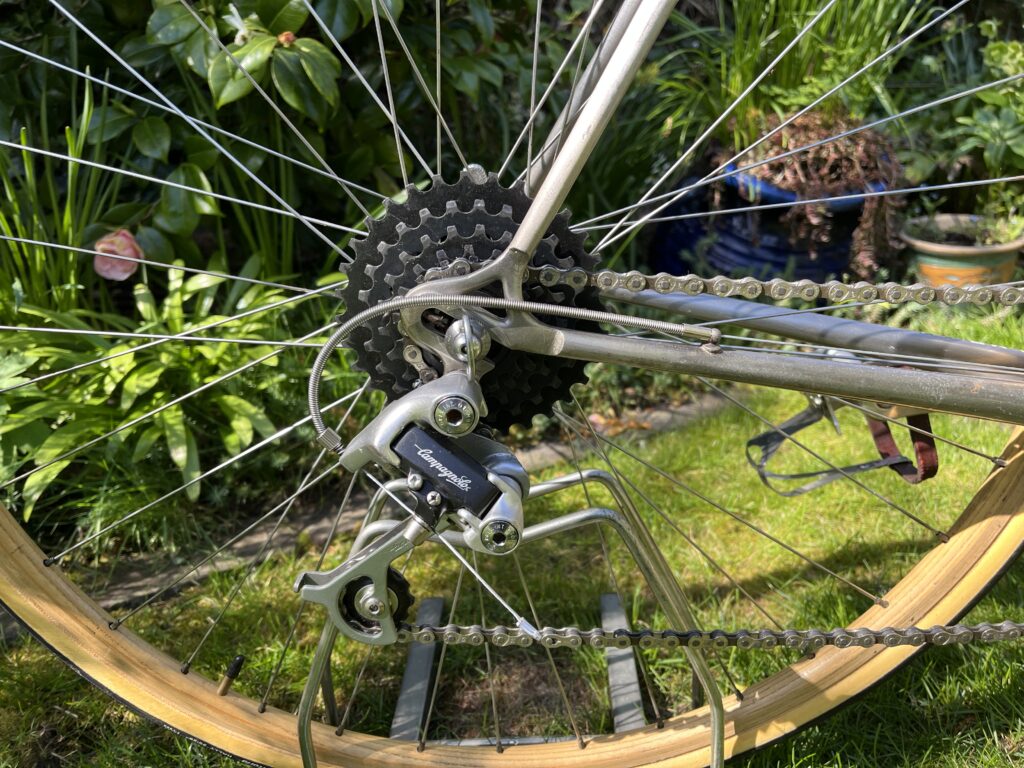
One judicious change made by the current owner to keep the bike rideable was to fit a wide range 6-speed freewheel and longer cage rear derailleur. Although the Galmozzi still sports friction down tube shifters, it will be much easier to climb the Box Hill zigzags now. Certainly easier than if a racing ‘corncob’ close ratio freewheel was still fitted!
Although the rear derailleur is undoubtedly more modern looking than the other components, to my eye it still looks in keeping with the other parts due to a polished silver main body and jockey wheel cage. The classic lines of the slowly evolving Campagnolo design helps in this regard, too.
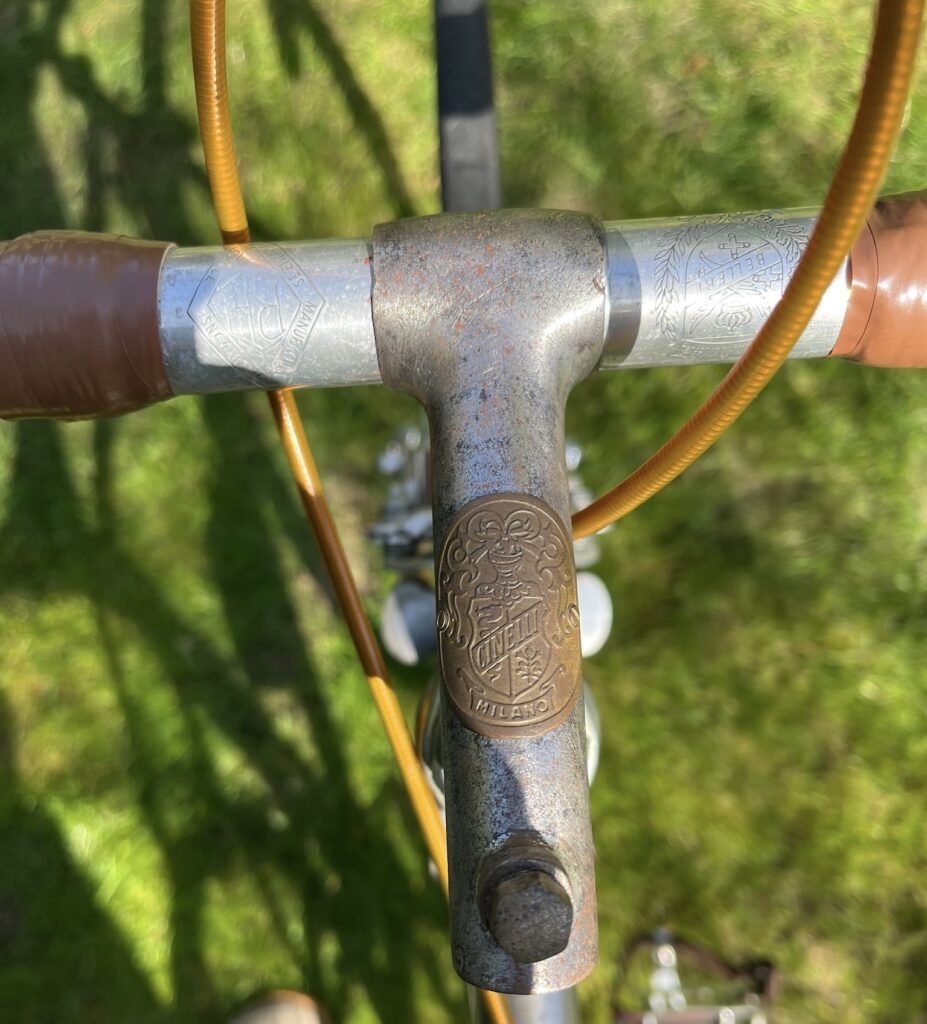
A Cinelli stem from an even earlier has been used, yet it looks in keeping with the overall aesthetic of this 1973 bike. The Belleri handlebars are etched with the Belleri Shield on the righthand side, and the ‘BF manufactured in St. Etienne, France’ logo on the left. A little bit of France on an otherwise Italian bike! However, although the Milremo saddle sounds very Italian, it was in fact a British brand, even if it looks similar to the classic Selle SanMarco Rolls saddle from the same era.
Signore Galmozzi died in 1975, aged 80. His son, Angelo, continued to run the workshop until 1986, when it closed due to rising rental costs. This was the end of an era for a workshop that had made frames for many professional racers, including Gino Bartali and Rik Van Looy. Van Looy used a Specialissima model, which weighed less than 10kg, in 1961 to win the world championships.
Arrivederci Ciclo Galmozzi! Many thanks to the owner of this lovely classic racing bike for talking to me about its history, and allowing me to photograph it.


















1 thought on “Wooden rims, cork brake blocks… a rooster perching on a wheel hub? Feast your eyes on Ciclo Galmozzi’s eccentric Super Competizione from 1973”
Lovely bike, apart from the rear derailleur. Needs swapping out for a Campag Rally or similar.