



Shimano has agreed to pay an $11.5m penalty as part of a settlement to resolve charges with the U.S. Consumer Product Safety Commission (CPSC), in relation to failings in its response to crankgate.
One of the biggest bike tech stories of modern times, after thousands of reports of issues with 11-Speed Bonded Hollowtech II cranks, in 2023 the components manufacturer recalled certain Hollowtech Ultegra and Dura-Ace crank models in the United States and implemented inspection programmes in other parts of the world.

Investigation found that between 2013 and 2022, Shimano received thousands of warranty claims relating to crankset issues and dozens of reports of consumers globally sustaining personal injuries, including fractures and lacerations due to crashes, contact with the broken cranksets, and impact with the ground.
The CPSC stated that despite possessing the information above that “reasonably supported the conclusion that the bicycle cranksets contained a defect which could create a substantial product hazard or created an unreasonable risk of serious injury or death, Shimano did not immediately report to the Commission”.
As such, the components manufacturer faced charges from the product safety body, the latest announcement that the two parties have provisionally agreed to a settlement that would see Shimano pay an $11.5m civil penalty and accept various other conditions.
The settlement agreement would also require Shimano to “maintain internal controls and procedures designed to ensure compliance with the Consumer Product Safety Act (CPSA)”. This includes “enhancements” to its compliance programme.
Shimano has also agreed to submit annual reports regarding its compliance programme, internal controls, and internal audits of the effectiveness of compliance policies, procedures, systems, and training.
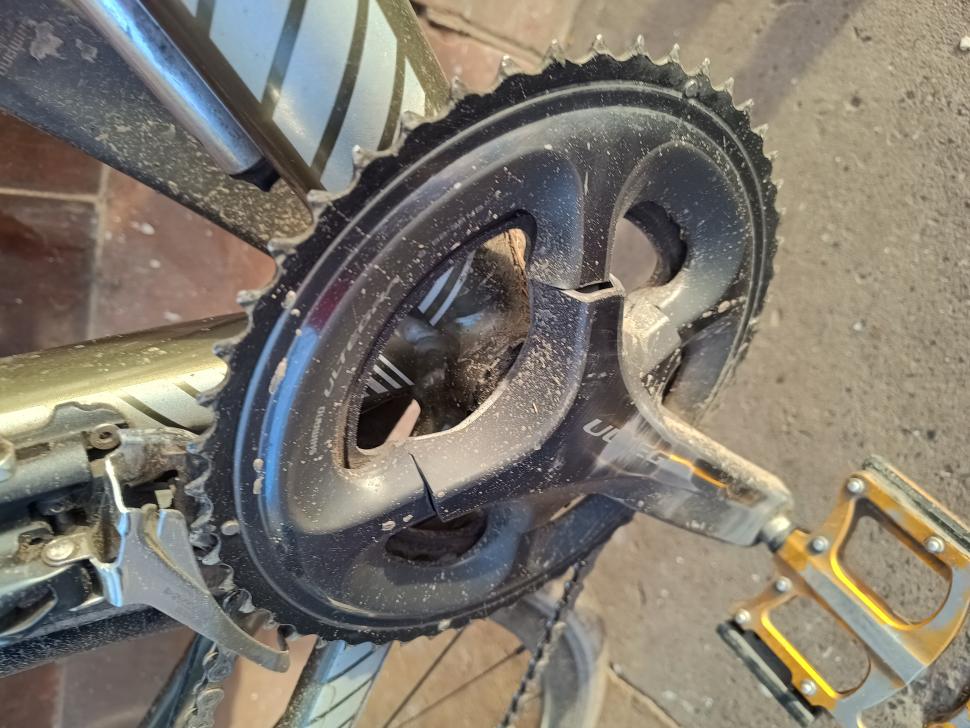
If fully accepted, the settlement will mean a resolution to the CPSC’s charges that Shimano “knowingly failed to immediately report to CPSC, as required by law, that its 11-Speed Bonded Hollowtech II Bicycle Cranksets, Models Ultegra FC-6800 and FC-R8000 and Dura-Ace FC-9000, FC-R9100, and FC-R9100P, contained a defect which could create a substantial product hazard or created an unreasonable risk of serious injury or death to consumers”.
The CPSC announcement added some further information to the crankgate story, the government agency highlighting that during the decade when Shimano was receiving reports of issues (2013-2022), the company made nine overall manufacturing and design changes that resulted in over twenty-five individual changes to the bicycle cranksets to mitigate the potential for the cranksets to separate and break.
Despite this, crashes and injuries were still being reported, leading the CPSC to its conclusion that Shimano had failed to immediately report concerns to the commission, despite possessing enough evidence to do so.
“The Commission has provisionally accepted the settlement agreement, subject to public comment,” the CPSC’s latest statement concluded. “Liana G.T. Wolf, a Senior Trial Attorney in the Division of Enforcement and Litigation, represented the Commission in this enforcement action.”
While cranks in the US were recalled, the very same design and models were not in other parts of the world.
In the UK, where Shimano issued only an “inspection and replacement programme” rather than a formal recall, the Office for Product Safety and Standards (OPSS) concluded in late 2023 that the affected cranksets “do not meet the requirements of the General Product Safety Regulations 2005”.
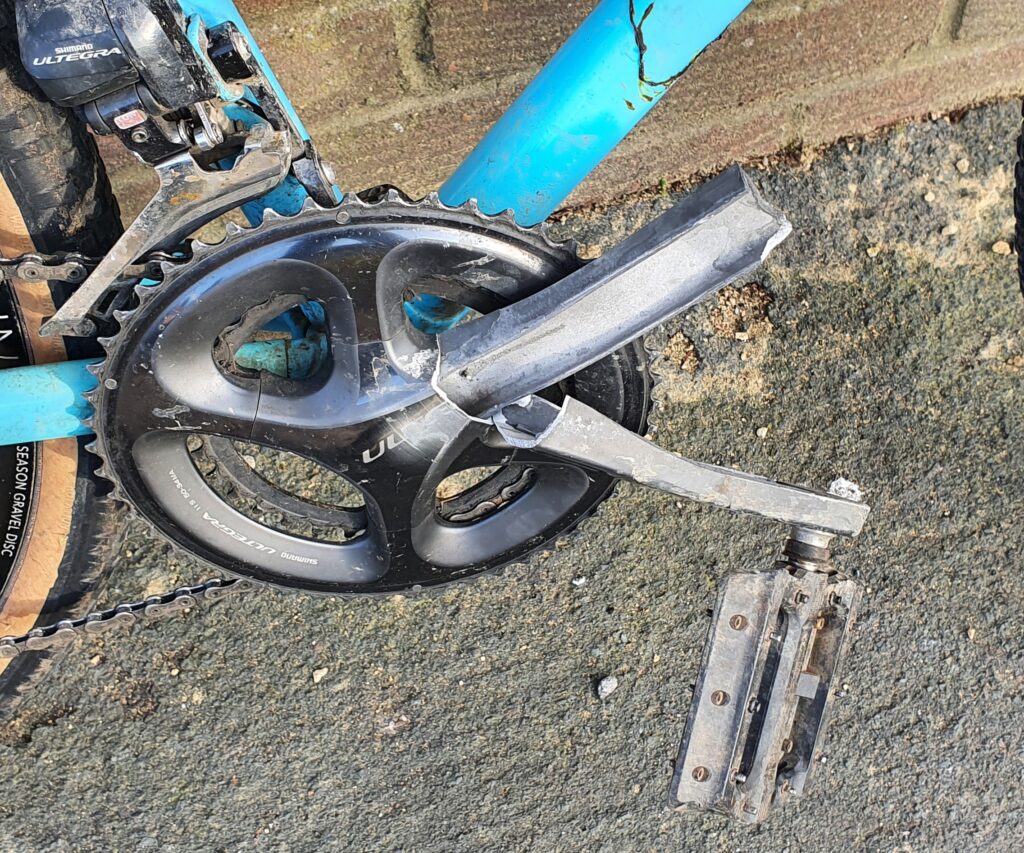
road.cc also sent broken cranksets from readers to Dr. Mark Bingley, a mechanical engineering expert at the University of Greenwich, whose analysis suggested failure often began at the internal bonding between crank arm layers — even in cases where no visible corrosion was present.
Shimano’s financial accounts suggest crankgate cost the company £70m in 2024.



















4 thoughts on “Shimano agrees $11.5m penalty to settle crankgate failings with US government agency”
So, when are we going to get any redress for the dangerous cranks that were clearly not fit for purpose in the UK?
It just strikes me how a company can NEGOTIATE a penalty with a public institution in the US.
– So how do you like 20M, bro?
– Nah, too much. Can’t you do anything about it? Ya know, we’re big and I drank with your boss once.
– Like, 11,5M?
– Yup, let’s do it.
And that’s how they graciously AGREED to pay a penalty for getting a few people nearly killed.
This kind of stories really makes me happy to live in Europe.
At least in the USA Shimano issued a recall. In the UK, they initially denied it was an issue and then reluctantly agreed to a one-time visual inspection.
Happens in Europe too, q.v. Vodafone & HMRC tax settlement.