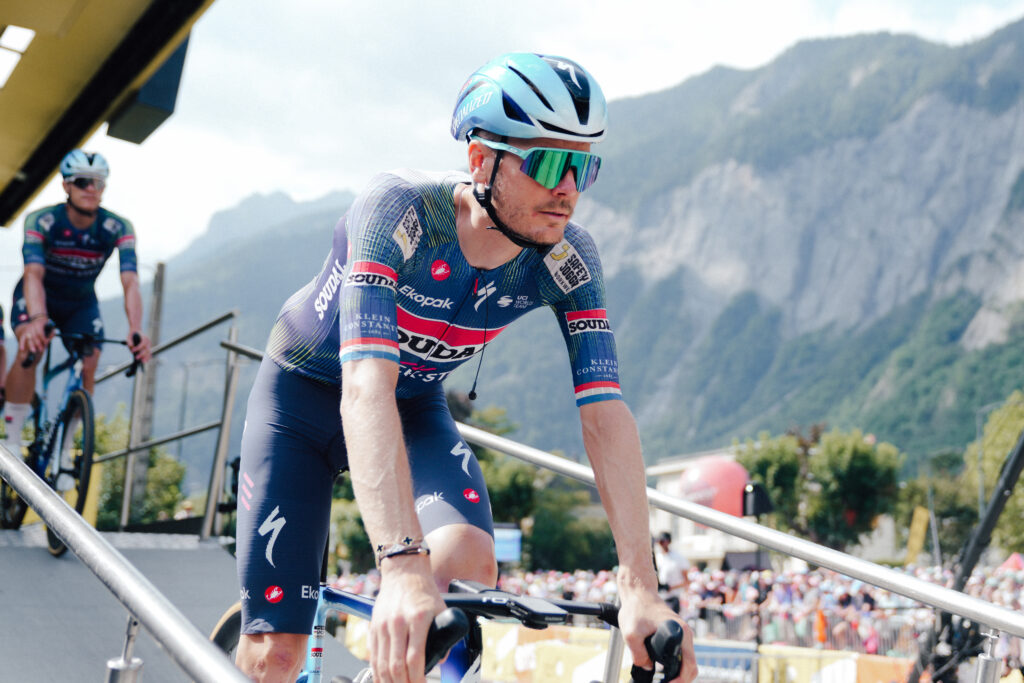
Laurens ten Dam is well known and highly respected in the world of gravel and ultra racing, having been an early convert to the new rough side of dropped bar bike racing over a decade ago, whilst still racing as a WorldTour pro on the road.
- “What we need is to give people a special reason to come here, and I thought mountain biking was the way to do it”: How the world’s first trail centre was built
- Rising from the dust – the Lachlan Morton interview
- “I want to make sure I retire knowing that I gave it absolutely everything I had”: Joe Breeden on building the Nukeproof Axess Racing team
Right now, he’s in the middle of the Transcordilleras gravel stage race in Colombia. We caught up with him just before he started to learn about his own and gravel racing’s evolution over the past decade.
off.road.cc: You’re just starting the Transcordilleras race in Colombia. What’s so special that you keep going back there?
Laurens ten Dam: I’m in Medellin; it’s an eight-day gravel stage race, and it’s the fourth time I’ve been here. [It’s similar to] a lot of the other races I’ve done, like the Migration Gravel, and another one I won there last year, I only go to once.
I did the Tour Divide in 2024, and I’m going back again this year. I’ve done two different Further races. What keeps me coming here is the warmth of the people, they’re really nice and kind.
The climate, too. It’s been a long dark winter, and after my road career I promised my wife and kids that I wouldn’t go on training camps anymore. So when I’m away it’s to race, or film a movie, not to train and hang out and try to become better. At 45, that’s not my profession or life anymore.
When you go to Africa, you’re like a sight, and when you go into a town, it’s like something is going on. Here you only have to ask where a bike shop is, and everybody knows and will show you – you don’t have to explain what cycling is. This whole country is cycling.
It’s also an eight-day stage race, so when I’ve done that, I’ve got it in my legs. In the past, I could win some stages; I’m still sponsored by Specialized, but now with Specialized Benelux and not Specialized Racing (global). In the past, it was important to win races and to start the year right, and I’d train my arse off on the beaches in the Netherlands in winter. Once I got fed up with that, to flee the winter depression I’d just come here for the race, preferably to win some stages and do a good GC ride.
Two years ago was the last time I was here, and I was also training for Tour Divide. I also did an ultra and raced against Rob Britton and won; it also taught me a lot about racing ultras, too.
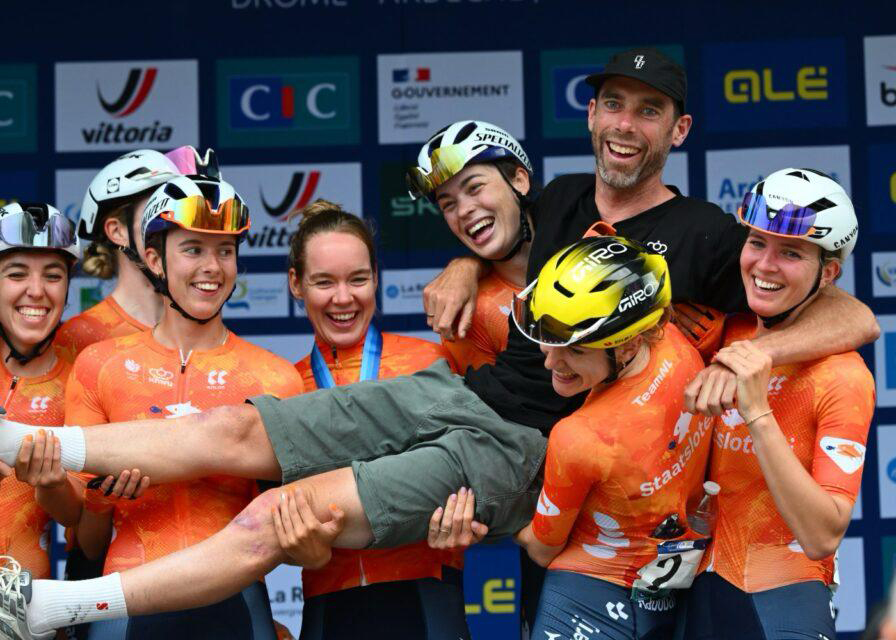
At home, I’m also always really busy; I’m the head coach of the Dutch female road squad and the gravel squad. I own a clothing company, a media company, and have two kids who are growing up and playing baseball at a high level, so all the training needs to be fitted in (around that).
Here I do all of my emails early morning, at 6 am, and so from 7 am-3 pm I can train and not have to look at the phone, and then at night I do my other emails again. I’ll also record two podcasts about Omloop Het Nieuwsblad (road classic), so I have to juggle a lot of balls. Once here, a few balls are on the ground – like my kids, my wife and the clothing brand, but the people at home can take care of that, so I can live a little bit of life like a WorldTour pro again.
ORCC: Your life, and the world, has changed dramatically over the past few years – do you still enjoy what you’re doing with such a workload?
LTD: I have seven people working for me in Amsterdam, so somehow [the new lifestyle] comes pretty naturally to me.
In 2020-21 Covid years, there was a lot less going on, and I could still easily ride 25-27,000km a year, whereas right now I’m nowhere close to that. I’m preparing for Tour Divide. Once that’s done in June, the focus goes on to the women’s team and trying to become European and World Champions.
It actually makes it easier to shift away from your own performance; I’m 45 now, and don’t need to win, but once I’m on the start line, I’m still going to do the best I can on that given day. Though now I have to train within my boundaries, the companies, my kids, the women’s team, the gravel squad, and I’ve also had the same wife since I was 17, so it’s accepted that I cannot do anything more.
My sponsors all know that. Specialized shifted me from the S-Racing team to Benelux, which means I don’t have the pressure of winning two-three stages here anymore in order to fulfil my contract.
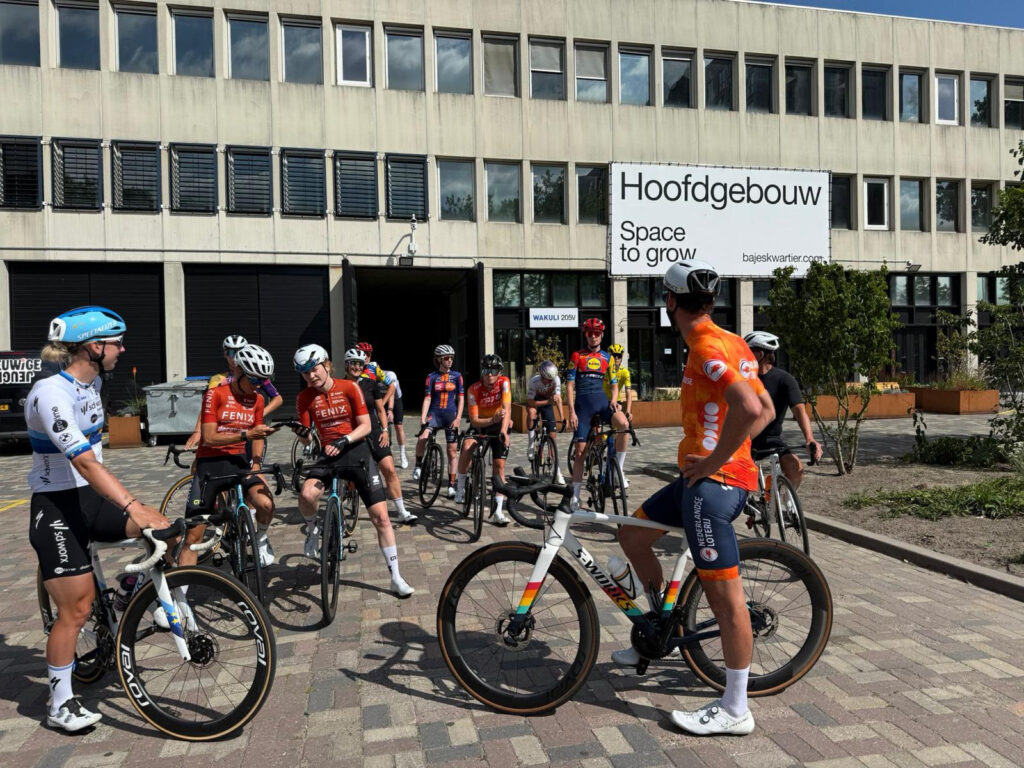
Three new movies are coming out on YouTube soon, so the content machine is going pretty well, and all of that comes quite naturally to me. With Live Strong Ride Fast and the people I’m working with, I think we’re building something together, which people know and is cemented in the cycling community in the Netherlands, but I’m not sure about elsewhere (it’s in Dutch).
When I did Tour Divide in 2024, I stumbled on a guy in the middle of nowhere, and he asked me, “What the FX%$ am I doing?” I told him I was riding my bike from Canada to Mexico, and he said he’d seen something about that on Instagram. I asked if it was one of my posts, and I told him my name; he’d never heard of me. I said how about LSRF, and yeah, he knew that.
Shifting away from me, the person, and going towards the company name, the slogan, and the manifesto, we want to bring that to cyclists in the Netherlands, and worldwide also.
The love of the bike is still there, but there’s certainly more balls to juggle than when I was WorldTour and trying to finish top 10 in the Tour de France.
ORCC: There are more gravel pros and teams emerging every year, and a handful of full-time ultra racers, too; how have you seen this evolution?
LTD: In gravel, yes, a lot more are making a living from it now. In ultra, I don’t know [if many live from it], or if they have side jobs. I don’t see myself as an ultra pro anymore. I work, maybe, 50–60-hour weeks with coaching the women’s team, making the podcasts, managing the employees, etc.; it’s far from a pro’s life.
I can do around 15 hours (training) a week in winter, but I’m working all of my other hours, not lying on a couch watching TV. I also do some lectures for companies about my story, and I always say (and with my coaching) on the ‘live slow’ part, which I want to achieve, but I’m also still chasing that part. I’m basically the front man of LSRF who likes to live life, and to show that LSRF is all about balance.
It started back in 2012-13 (the LSRF approach/ideal while riding pro road). I’d maybe do a little bit of stretching and rollers (riding) in the morning, have breakfast, go and ride my bike, and then maybe do some power training. At 5pm, the laptop was closed, and I was there for the family; we’d go out for dinner, maybe a glass of wine.
It’s about balance, and it’s the same with work. I’m chasing that balance; although sometimes it’s a bit too much towards the work, but at the same time I have two easier months during winter, and I put a lot of wood on my stove then. I have two new big projects, which you should know about in the next two weeks.
Given time constraints, I can’t focus fully on training now. I have the engine from all of my years racing a bike, and I’m counting on that, but my pro days are gone, and that’s okay. For me, it’s way more important to get a girl wearing the rainbow stripes than me winning Tour Divide; it’s an easy choice.
Chasing the lost spirit of gravel
ORCC: How have you seen gravel racing evolve over the years?
LTD: When I came into gravel in 2016 with Leadville and some local Santa Cruz races in California (where I lived then), and up until 2020-21, you could still ride as a gravel pro in the way Colin Strickland did (former top road pro). He had his cars and the stuff, could train 12-15 hours a week, and had the talent to focus on one race.
Nowadays, the whole gravel peloton is almost where I left WorldTour racing in 2019. Riders are focused on weighing their stuff, marginal gains, and so on.
The whole way off gravel racing back in 2020-21, where at Unbound and other races, when a rider got a flat, we waited for them and then started racing again; that camaraderie has gone.
I re-found that camaraderie in ultra racing, when you get a flat, they stop. Justinas (Leveika) and Ulrich (Bartholmoes) even came with me to the podium and really took care of me because I was a wreck after Tour Divide [he finished 3rd behind them].
I think you can still win in ultra with not training the best if you have a strong mind, don’t need that much sleep, and maybe focus on one race a year and put your heart and soul into it.
It’s a bit like Unbound back in 2021; when I was a gravel pro, I only focused on maybe five races a year. Now there’s a full season going, with your teams, pictures/promo, and so on. Back then, I had a few partners and put their names on my jersey, had the coolest race jersey in the bunch, and I just rode five or six races.
It’s basically the same in ultra now; I’ll do just three races, that’s all I can fit in with my schedule. Ultra is basically like the gravel racing of 2016, where everything is fun, and it doesn’t matter too much if I win or finish second at Tour Divide; as long as I got a good ride in and am there for my company, it’s ok. I have two weeks of fun on that trail and am not too wrecked when I get home.
You might also like:
- “I had the mindset that I’d be going for a helicopter trip or coming down in first. We didn’t take the helicopter trip”: Ronan Dunne on the thrills and spills of elite downhill racing
- From Olympic gold to winning the 2025 UCI XCO World Champs: Jenny Rissveds reveals all on winning huge events at a young age and success at a new team
- 51 days in a Russian jail: Sofiane Sehili reveals all on his trans-Eurasia record attempt… and its spectacular failure