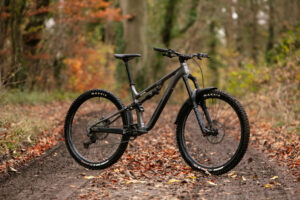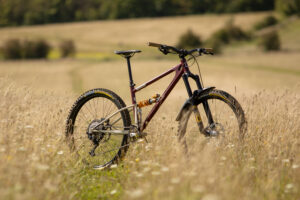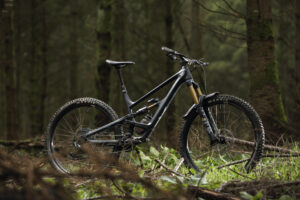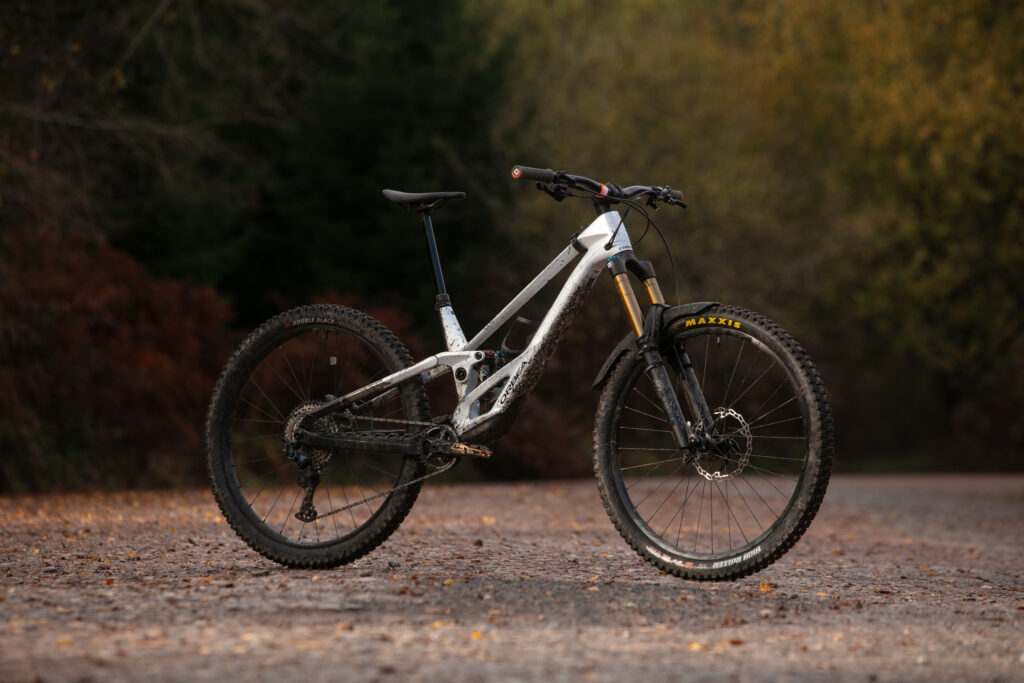

Unveiled after winning its debut race under Tahnee Seagrave, Orbea’s Rallon now takes a very different stance from models prior. Now, it’s an out-and-out gravity machine that’s available in both downhill and enduro configurations. With that, it lives for the descent as it shrugs off the rowdiest, most technical, and most demanding tracks, but in its pedalable enduro guise, climbing has proven to be a labour of love.
- Is ‘downduro’ the future of mountain bikes? How Tahnee Seagrave’s race-winning Orbea Rallon was made
- Norco Sight C1 mountain bike review
- The daily driver of the UK’s most exciting DH World Cup rider — we speak to Phoebe Gale about her new Orbea Rallon
Orbea Rallon E10 – Technical details
Before, it could be said that the Rallon blurred the lines between trail and enduro, but in its latest iteration, it’s 100% gravity focused, and there’s loads to back up its downhill intentions. To start, it’s available in both enduro and downhill builds, both of which share the very same frame but feature specifications that are better suited for the style of riding it’s built for. However, that means that if you want to pick up an enduro Rallon as a daily driver but race serious downhill every now and then, you can easily throw on a bigger travel dual crown fork, swap out a link and add a longer stroke shock, and there you have it, you’ve got a downhill bike. Granted, that’s not a cheap endeavour.
But what this means is that the Rallon is incredibly adjustable, and even more so in the enduro build I’ve been riding for the past few months. At the head tube, it rocks three head angle settings and at the lower link (or the GravityLink, Orbea calls it) shrouded by an opaque black clip-in cover, are adjustments for bottom bracket height, as well as a smidgeon of angle adjustment. There’s also the choice between a more progressive suspension kinematic, or a more linear one.
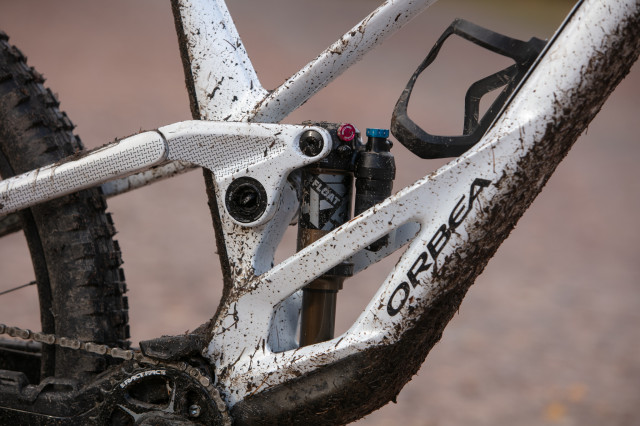
That’s not all, as with a swap of the lower shock mount, the bike can be set up to combine its 29-inch front wheel with a 650b hoop at the rear.
The lower shock mount isn’t all about geometry adjustment, though, as it hides another trick up its sleeve – you can bolt purpose-built weights to it. We’ve seen crudely bent bits of lead taped to the frames of downhill pros for years now, and Orange even made a downhill bike with weights you could bolt onto the frame, so this is nothing new, but it is rare to find such a feature done so simply, seamlessly and tidily. There are two weights available for the enduro, 29-inch configuration, allowing riders to slap up to 530g onto the frame. We’ll dive into why this is quite a good thing a little later.
Elsewhere, the Rallon boasts all of the mod cons. There’s downtube storage in the form of Orbea’s Lockr, there’s internal cable routing and UDH compatibility.
As for suspension, the Rallon benefits from 180mm at the front and 170mm at the rear. Orbea reckons that enduro riders seek downhill performance in their suspension, so the enduro bike uses the very same kinematic as the downhill going machine. That means that it receives a progressive leverage ratio with a choice between 22.5% and 27.5% progression, as touched on before. The brand has tuned the suspension to minimise pedal kickback for more active performance, and it’s been designed to decouple braking forces from the swingarm, so there should be little feedback under braking loads.
Though, as this suspension is very downhill focused, it comes as no surprise that the Rallon is ‘optimised’ for electronic shocks, as they lock out automatically. This suggests that it’s perhaps not a keen pedaller.
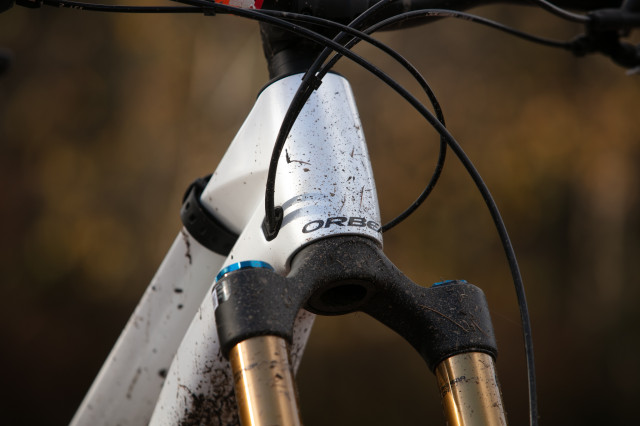
Because there’s so much adjustment here, I’ll list the bike’s geometry in its lowest and slackest setting. The large frame I’ve been riding gets a 474.9mm reach, a 63.2-degree head angle, a 78.8-degree effective seat tube angle and a 442mm chainstay. But the bike comes with the option of two chainstay lengths, the aforementioned 442mm, and there’s a 450mm option on offer. I rode the 442mm length.
In its highest and steepest setting, there’s then a 475.7mm reach, a 64.8-degree head angle and a 78.9-degree effective seat tube.
Orbea Rallon E10 – Componentry
With an asking price of £5,400, it’s clear that Orbea has gone for a performance suspension approach, choosing to spend most of its budget on top-notch suspension components at the expense of some other parts. With that, the Rallon E10 boasts top-end Fox suspension in the form of the 38 Factory with the excellent GRIP X2 damper, and there’s a Float X Factory shock.
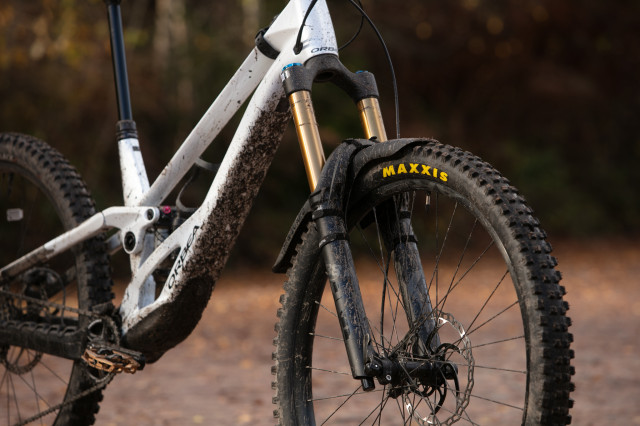
Although it can be seen as something of a sacrifice for its posh bouncy bits, Shimano provides the SLX 12-speed drivetrain and Shimano M6120 disc brakes. While neither of them is particularly blingy, they work, and very well at that. However, upon unboxing the bike, I found the brake pads to be severely glazed and super squeely when pushing it around the office. I swapped them out for the test.
Rolling on a pair of Race Face AR 30c wheels, Maxxis provides the grip, and I’ve been incredibly pleased to find the High Roller III mounted up front. It’s quickly become one of my favourite tyres, and it’s ideal for the UK’s wintery conditions. There’s then a DHR II at the rear with a Double Down casing, which proves that Orbea certainly isn’t messing around.
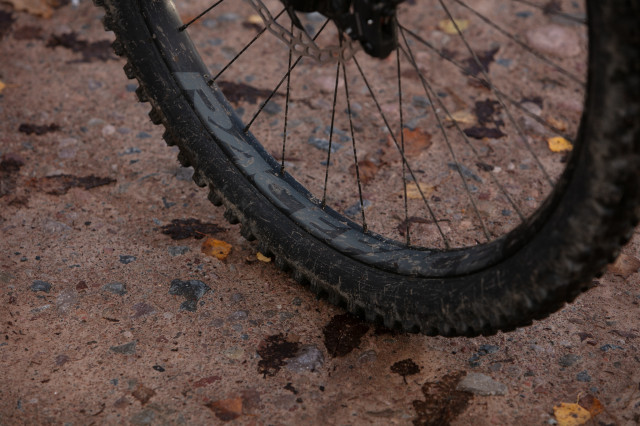
Elsewhere, Orbea’s own brand, OC, delivers the rest of the kit, as well as the impressively lengthy, 230mm dropper post. The length of which can be chosen upon checkout.
Yep, as usual from Orbea, much of the bike’s specification can be upgraded even before you put the cash down. So while some of the bits may be a little basic, if you’ve got a bit of extra money to spend, it can be upgraded before the bike turns up at your door.
Orbea Rallon E10 – Performance
I’ve got to get one thing out of the way. The Rallon looks excellent. There’s some clear inspiration and learnings taken from the Wild’s preliminary outings on the DH circuit, but the bike is low slung, sleek and one hell of a looker. Thankfully, it has the ride to back up the looks.
But to get a couple of negatives out of the way first, my build didn’t have the perfect time through Orbea’s quality control. Upon my first few rides, it was incredibly creaky under pedalling loads. I checked the bottom bracket and torqued up the crank, but the creak didn’t disappear until I found a loose pinch bolt on the non-drive side lower pivot. Nipping that up sorted the creak out right away. Although it was a minor and very easily fixed, combined with my brake pad issue, it’s a shame that the bike wasn’t perfect straight out of the box.
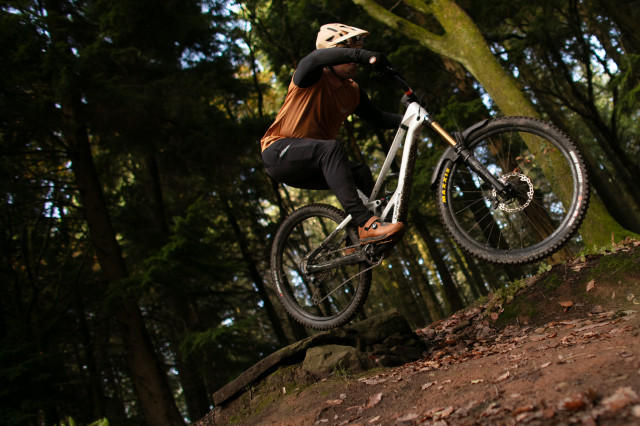
Secondly, despite Orbea’s best efforts in making the Rallon a comfortable and efficient climber, pedalling it up a hill is a labour of love, rather than a pleasant time. Don’t get me wrong, the steep seat tube puts rider weight well between the wheels, and although Orbea has built the bike with little anti-squat, the suspension is very well behaved while pedalling. It’s just not a light bike, at nearly 17kg. Pair that with somewhat draggy tyres, and the Rallon is lethargic, and I hate to say it, a bit of a chore to climb.
However, the extra effort made cranking the bike up a hill is more than made up for with its downhill performance, which is what the new Rallon is all about. It’s an absolute monster when pointed down a hill, as it massages egos, rewards a hint of extra bravery and encourages nothing but all-out speed. In fact, the Rallon found its home while riding the fastest and chunkiest of bike park trails, where its heft of suspension travel and absolutely dialled geometry made perfect sense.
On more natural trails and smaller, twistier bike parks, the bike still shone, but it made a perfect argument for its flip chip and swathes of adjustment. I ended up raising the bottom bracket a touch and, in turn, steepen the head angle just to heighten front-end response, and add a bit more pedal clearance. But on tamer trails, the Rallon lost the spark that burns so brightly when being ridden fast over very technical trails, as it’s simply a lot of bike to move around. But the latter is what the bike is built for.
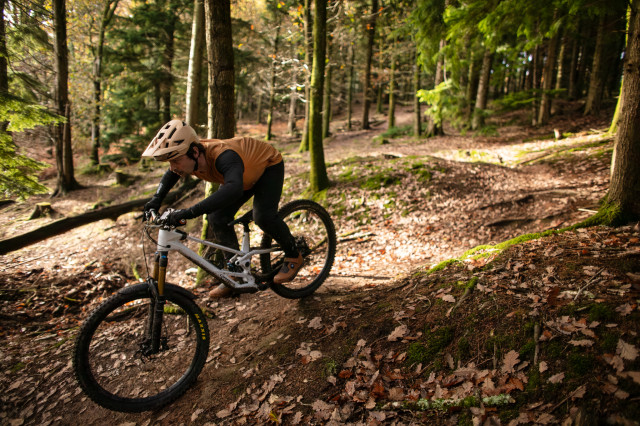
Orbea’s downhill-focused suspension design plays a key role in the Rallon’s general capability. It’s supple and active, making light work of smoothing even the harshest of bumps. Though even in its progressive setting, it’s pretty eager to use its millimetres. For bashing downhills, it makes sense as it irons everything out, making the bike fast, but it can blow through its travel under heavier compressions. Though I found that it resists bottoming out very well. It’s pretty much devoid of pedal kickback, too.
When rattling through technical terrain, the bike’s low-slung weight distribution does good things to boost confidence. Throw one of the weights onto the GravityLink, and the Rallon becomes more planted, more sure-footed and more composed through the rough stuff. The added weight does little to harm the bike’s handling; it only improves it, but if you are looking to pedal uphill, of course, it will add to the Rallon’s lethargy. I added the weight for uplift-assisted bike park rides during which I revelled in the calmer and more confident ride.
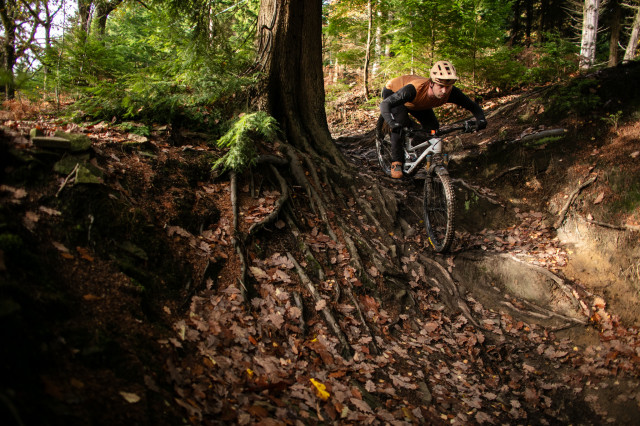
Because a lot of the bike’s weight, with or without the extra weight, is very low slung, and the bottom bracket is pretty on the money, the Rallon dispatches corners with nothing but poise. The 1,275mm wheelbase isn’t massively lengthy, so the bike offers up a decent level of manoeuvrability, even its its slackest setting, which I was very surprised with. Of course, going for a mullet wheelsize and tweaking the geometry will make the bike even more responsive. The suspension plays a solid role here, too. As it’s supple and very active, it rustles up dependable traction through all kinds of corners.
Finally, Orbea has worked very hard with the Rallon’s carbon layup to balance stiffness and compliance, and the brand’s done an excellent job. On a bike like this, it’s easy to take the belt and braces approach, and make the bike super stiff and incredibly unforgiving, but for the Rallon, it strikes that ratio almost perfectly. The bike isn’t too stiff, nor is it too compliant. It’s comfortable to ride fast without it transmitting eyeball-rattling feedback to your body. The long dropper post and short, maximum insertion seat tube, then open up loads of space around the bike to move around.
Orbea Rallon E10 – Verdict
As mentioned before, the Rallon E10 invests in suspension performance while making a bit of a sacrifice to the rest of the build. That’s not a terribly bad thing, as Orbea has made very wise choices, but I do wonder what the brand could have done if it went for Performance Elite suspension, rather than wallet-busting Factory-level kit. Regardless, the value of the Rallon E10 certainly isn’t bad, but there are bikes around that provide a better all-around package in terms of componentry.
One of those is the Trek Slash 9 GX AXS T-Type Gen 6. It’ll set you back £5,175, so it’s more affordable, but it’s built around an alloy frame, gets lower spec RockShox Select+ suspension, and it does have fancy wireless shifting. Though we’re told this bike weighs 17.6kg, so it’s weightier than the Rallon E10.
For £5,500, you can get the Merida One-Sixty 7000 (here’s our review of the Merida One-Sixty 500). Compared to the Rallon, it’s a little toned down, using 160mm of suspension (well, 162mm), and it gets a similar build to the Slash with Performance level Fox suspension and posher Shimano XT shifting and brakes. So in terms of value, it really depends on how you approach the Rallon E10. If you’re after top-shelf suspension at the expense of poshness elsewhere, Orbea has done well to bring excellent performance for the cash it’s asking.
During my time with the Orbea Rallon E10, it’s become remarkably clear that it’s all about one thing – going downhill, very, very fast. And it does so impeccably as it boosts confidence and bravery through its unwavering composure. Its downhill performance does compromise on uphill ease, so it’s not the most welcoming bike to pedal uphill, but the Rallon is as flexible, adaptable and beautiful as it is fast.
You might also like:
- Enduro mountain biking – everything you need to know
- MTB enduro racing for beginners – how to prepare for your first race
- Best mountain bikes 2025 – top options from cross-country to Enduro
About the bike
Tell us what the bike is for, and who it’s aimed at. What do the manufacturers say about it? How does that compare to your own :
State the frame material and method of construction. List the components used to build up the bike.:
Carbon fibre frame, Fox 38 Factory fork, Fox Float X Factory shock, Race Face Arc 30 wheels, Maxxis Minion DHR II rear tyre, Maxxis Highroller III front tyre, Shimano brakes, Shimano SLX drivetrain, OC finishing kit.
Frame & Fork
How much suspension travel does the fork have?:
Was the bike comfortable to ride? Tell us how you felt about the ride quality.:
How was the bike in terms of sizing and angles? How did it compare to other bikes of the same stated size and intent?:
Overall rating for frame
How much suspension travel does the rear end have?:
Did the bike feel stiff in the right places? Did any part of the bike feel too stiff or too flexible?:
Tell us about the build quality and finish of the frame:
Tell us about the geometry of the frame:
Tell us about the materials used in the frame:
Riding
How did the bike transfer power? Did it feel efficient?:
How would you describe the steering? Was it lively, neutral or unresponsive?:
Tell us some more about the handling. How did the bike feel overall? Did it do particular things well or badly?:
Rate the bike for sprinting:
Rate the bike for high speed descending
Rate the bike for technical descending:
Rate the bike for flat cornering:
Rate the bike for technical climbing:
Rate the bike for climbing efficiency:
Any comments on climbing efficiency?:
Rate the bike for agility:
Suspension
Rate the fork for performance:
Any comments on fork performance?:
Rate the fork for value:
Tell us some more about the fork. Anything you particularly did or didn’t like? Any features which didn’t work well together?:
Rate the rear suspension for performance:
Rate the rear shock for value:
Any comments on rear shock value?:
Rate the balance and performance of the suspension overall:
Any comments on the balance and performance of the suspension overall?:
Drivetrain
Rate the drivetrain for performance:
Any comments on drivetrain performance?:
Rate the drivetrain for value:
Any comments on drivetrain value?:
Wheels & tyres
Rate the wheels for performance:
Rate the wheels for durability:
Any comments on wheel durability?:
Rate the wheels for value:
Any comments on wheel value?:
Rate the tyres for performance:
Rate the tyres for weight:
Rate the tyres for value:
Tell us some more about the tyres. Did they work well in the conditions you encountered? Would you change the tyres? If so, what:
Controls
Rate the controls for performance:
Any comments on controls performance?:
Rate the controls for value:
Tell us some more about the controls. Any particularly good or bad components?:
Summary
Did you enjoy riding the bike?:
Would you consider buying the bike?:
Which components had the most effect (good or bad) on the bike’s performance? would you recommend any changes?:
Would you recommend the bike to a friend?:
Rate the bike overall for performance:
Rate the bike overall for value:
Use this box to explain your score:
All the deals displayed on our review pages are pulled from a constantly updating database feed of the best affiliate deals available. The criteria for deciding on what are the best deals is who is offering the lowest, delivered price. In most cases we will be showing the very best deal available online, but sometimes you may be able to find an item cheaper. If you can please feel free to post a link in the comments box below. To find out more about affiliate links on road.cc click here.