



The number of daily cycle journeys in London has risen to 1.5 million in 2025, up 12.7 per cent on last year and 43 per cent higher than in 2019, Transport for London (TfL) confident the boost is further evidence of the real-world impact of “investing in high-quality infrastructure that allows more people to walk and cycle more often”.
TfL published new data from its Travel in London report, showing that daily cycle journeys in London jumped from 1.33 million in 2024 to 1.5 million journeys per day this year, an increase of almost 13 per cent.

Cycle journeys have increased across the city, inner London enjoying a 14.8 per cent increase (650,000 to 747,000), outer London a 9.9 per cent boost (490,000 to 538,000) and Central London a 12.8 per cent boost (187,000 to 211,000), TfL confident the success story is evidence of the capital’s approach to cycling is working, with investment in cycle lanes and other active travel infrastructure “enabling more Londoners to make the most of cycling”.
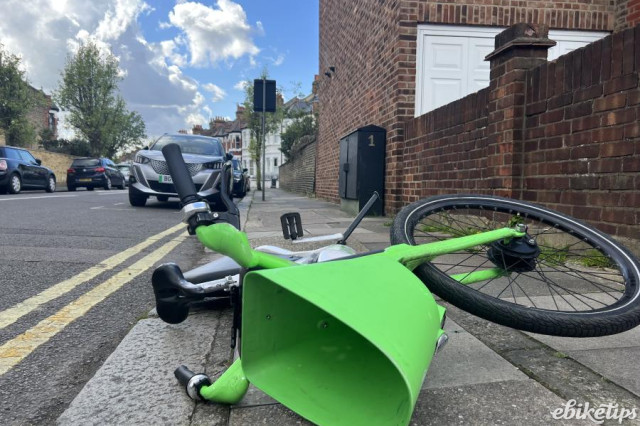
In fact, walking and cycling commissioner Will Norman said there is “no doubt that London is fast becoming a cycling city”; while Lime’s director of policy Hal Stevenson said it was “incredible to see London’s cycling transformation”, the TfL figures showing that dockless e-bikes now make up 10 per cent of all cycling journeys.

While the overall numbers will naturally grab the headlines, TfL also pointed out its surveying found 76 per cent of people using Cycleways feel safe all or most of the time.

A decade ago, in 2016, the strategic cycle network was 90km in length but has grown to over 431km, meaning that a third of Londoners now live within 400 metres of the cycle network.
Explaining why this is crucial to getting more people on bikes, a TfL spokesperson explained that it is estimated around a third of all cycling in London takes place on TfL Cycleways, that despite the network only accounting for 2.5 per cent of all cyclable roads.
“This impressive data shows the success of the Mayor and TfL’s investment in high-quality cycling infrastructure, working in partnership with London’s boroughs, and demonstrates the need for continued investment,” a spokesperson said. “Each protected cycleway provided people from all backgrounds and abilities with safer, more appealing routes, encouraging greater diversity in cycling.”
A possible knock-on effect of active travel being more accessible and more daily cycle journeys is, TfL notes, more than 43 per cent of adults in London achieving at least 20 minutes of physical activity per day, the highest proportion recorded to date.
“As we continue to expand London’s cycle network, the number of daily bike trips is soaring,” walking and cycling commissioner Norman said. “Cycling has increased by 43 per cent since 2019 to 1,500,000 trips every day, with the vast majority of people feeling safe when using our Cycleways.

“There’s no doubt that London is fast becoming a cycling city. Of course, there is more to do. The Mayor and I will keep working closely with TfL and the boroughs, investing in more high-quality routes to enable even more people to walk and cycle, building a better, greener London for all.”
Alex Williams, TfL’s Chief Customer and Strategy Officer, added: “Walking and cycling are at the heart of creating a healthier and greener London, so it’s fantastic to see more people choosing these ways to travel.
“Every extra journey by bike or on foot helps reduce congestion, improve air quality and make our streets safer and more welcoming. We’ve made huge progress expanding the cycle network and continue to work with boroughs to grow the Cycleway network further, making active travel an even more accessible and attractive option for everyone.”
TfL’s analysis that it is its investment in high-quality cycling infrastructure which has boosted daily cycling journeys may be of interest to the authors of a new review, published by Transportation Research, which suggested that, on their own, non-coercive measures, or ‘carrots’, such as improving public transport or enhancing cycling and walking infrastructure has little impact on car use.

The authors suggested these non-coercive measures need to be combined with measures such as higher driving costs or reduced car access to have an effect.
TfL also today reiterated it is “committed to making life-saving changes at some of the capital’s most dangerous and intimidating junctions, as part of its Safe and Healthy Streets funding”.
“This dedicates more than £150m to improving London’s roads for people cycling, walking and accessing public transport, over half of which is invested through London’s boroughs,” a spokesperson said. “TfL has so far completed work at 47 Safer Junctions across London, including recently completed works at Battersea Bridge. The new Safer Streets programme also offers up to £50m over the next four years to help boroughs tackle the worst safety locations in their communities.”
This comment comes a week after cycling campaigners suggested transport chiefs were happy with an “acceptable” number of crashes to avoid impacting bus times. New research by the London Cycling Campaign found that the capital’s ten most dangerous junctions resulted in four cyclist deaths and 51 serious injuries between 2020 and 2024.


















11 thoughts on ““London’s cycling boom shows no sign of slowing”: Daily bicycle journeys up 43% on pre-Covid levels as Transport for London hails the impact of high-quality cycle lanes”
Harrow still stuck on 0.8%
Harrow still stuck on 0.8% AFAIK, but hardly surprising as improvements to fatal junctions like North Harrow crossroads haven’t even been looked at from the local council or the GLA/TFL, and minimal safe segregated routes exist in the borough. I imagine similar for most of Outer London, which TFL seem to think doesn’t exist from a cycling or public transport perspective
Remember that TfL don’t
Remember that TfL don’t ‘manage’ the majority of roads in Harrow (or any borough) The majority of public highway is managed by the borough – so getting a cycle lane in a borough like Harrow, Barnet, Bexley, Hounslow etc is nigh on impossible; the car drivers wouldn’t allow it. There are exceptions, like Enfield which has put in some really goog infrastructure and Walthamstow. But that’s because they had the support of the councilllors and Cllrs who were prepared to withstand the backlash.
This is great news, as are
This is great news, as are all the pics of cyclists in ordinary clothes, sans lycra and helmet, demonstrating that you don’t need to be or look like an olympic athlete to ride a bike.
eburtthebike wrote:
Prudes!
Amazing, when I started
Amazing, when I started cycling to and from work in 1958, hardly anybody cycled in London.
That is a long commute.
That is a long commute.
Are we currently experiencing
Are we currently experiencing Schrodinger’s Cyclist?
“Improving cycle infrastructure and public transport has little impact on car use”
https://road.cc/content/news/review-reducing-car-driving-316971
and
“There seems to be a virtuous circle. Segregated bike lanes increase safety, which leads to more riders, which in turn makes cycling even safer.”
https://www.bbc.co.uk/news/articles/cly02lljdero
To be fair, there is no
To be fair, there is no contradiction here. One of the findings of the review paper was that cycling infrastructure does seem to increase cycling rates but a lot of the modal shift is from public transport, rather than cars.
Good news, and I’ve
Good news, and I’ve definitely noticed a big jump in riders over the last couple of years. When I look back to when I first cycled in London in 2017, we have come a long way with many more people cycling.
However, I regularly use one of TfL’s “high quality routes” (C7) and it really is anything but by modern standards: only light segregation via plastic wands/bollards, with many seemingly being deliberately removed (not by TfL) and not being replaced; long stretches in bus lanes which don’t feel safe at later hours thanks to taxi drivers rushing to get home, impatient bus drivers and no protective “mass” of fellow cyclists; and dangerous side-road and multi-lane junctions with no sign of forthcoming improvements (in the cae of Clapham High Street, they actually made it worse by removing paint and bollards after recent resurfacing works).
“While the overall numbers will naturally grab the headlines, TfL also pointed out its surveying found 76 per cent of people using Cycleways feel safe all or most of the time.” Imagine if 24% of people felt unsafe when using the bus or tube – I think there would be a bit more urgency deployed to improve things.
TfL does also seem to have lost it’s mojo with cycle infrastructure plans with seemingly not much in the works, and the plans that do exist featuring some pretty outdated ideas like shared bus lanes, ASLs and measures to encourage cyclists to take primary position. It’s a bit like they’ve thought “Well, more and more people are cycling and they’re doing it on the existing [mostly shit, unsafe] road layouts London already has, so I guess we don’t need to make as much effort on segregated cycle infra anymore”.
Compared to many other European cities, London is really falling behind in terms of speed of change. Yes, good stuff is happening but given the clear latend demand and sheer scale of the change required, it’s progressing much too slowly. Covid showed local authorities can chuck up a lane segreagted by wands or cones using an ETRO overnight if they wanted to.
Meanwhile, TfL can’t even replace some plastic cycle lane bollards within the 9 months since I first reported them deliberately removed by some Thames Water road works!
Disgraceful! These selfish
Disgraceful! These selfish cyclists could be getting the bus or train and reading a freshly purchased Daily Telegraph or Daily Mail en route.
Great.
Great.
now can we have the same investment in cycling infrastructure in the rest of the UK please.