



Good morning! How may I help you?
I need a new chain and cog thing for my bike please
Of course, which one?
Errr, I’m not sure
Ok. How many sprockets are there on the cassette?
I know that. Ten!
Great. What range do you want? 11-28, 11-32, 11-42? Is it mountain, road or gravel? Is it Shimano/SRAM or Campagnolo? Which freehub body does it use?
Silence…
ENDS
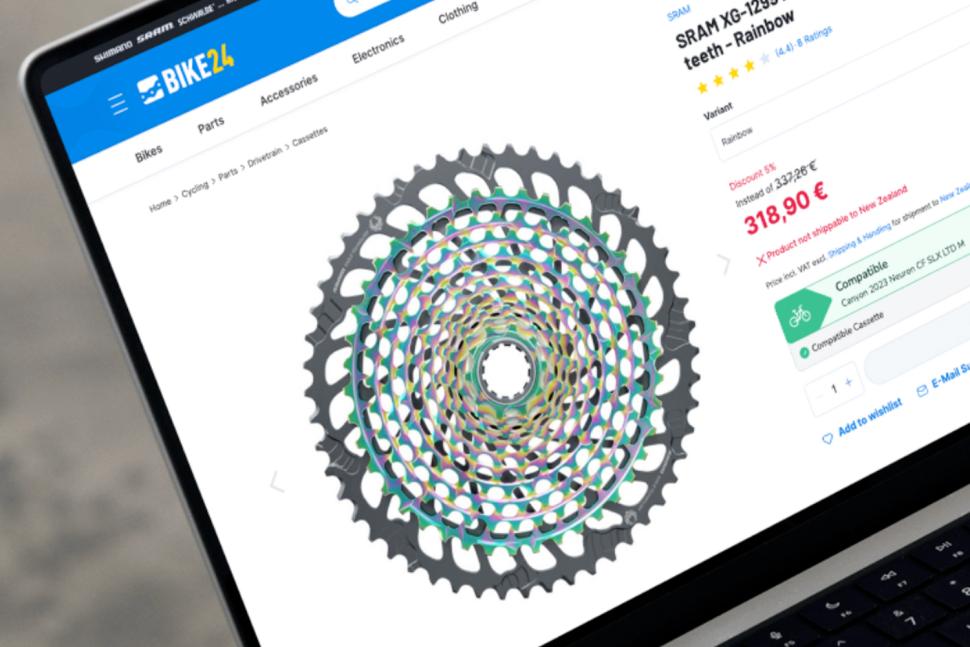
You, dear reader, might well know the component stats mentioned in the short play above – but many folk don’t, and there are of course numerous other areas of the bike where component compatibility can become a complete minefield, even for experienced tinkerers.
In a physical bike shop, often the customer will have their bike with them, so the professionals can take a look and quickly work out what is needed. But what happens when someone is shopping online for new parts and isn’t sure? It can be a bit overwhelming trying to filter down a list of 142 different cassettes to find the one or two that you actually want.
Bike Matrix from New Zealand thinks it has the answers. Its online database is accessible via online and physical bike shops (using a point-of-sale terminal for the latter), and all it requires is that you know your bike’s make, model/spec and year.
> Which groupset is best for your bike, and how much should you spend?
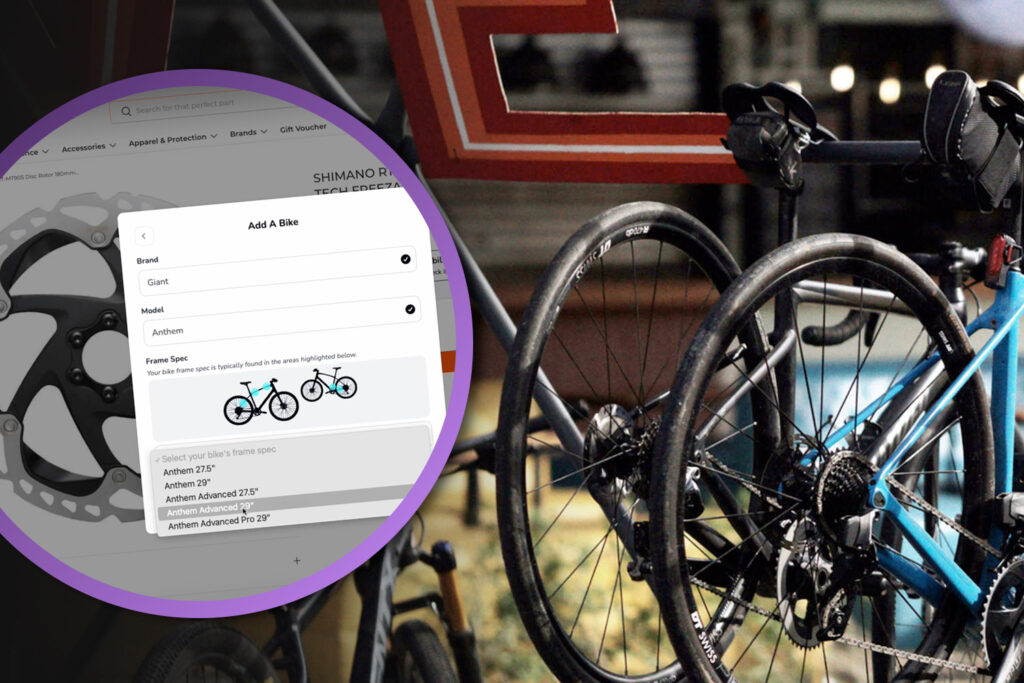
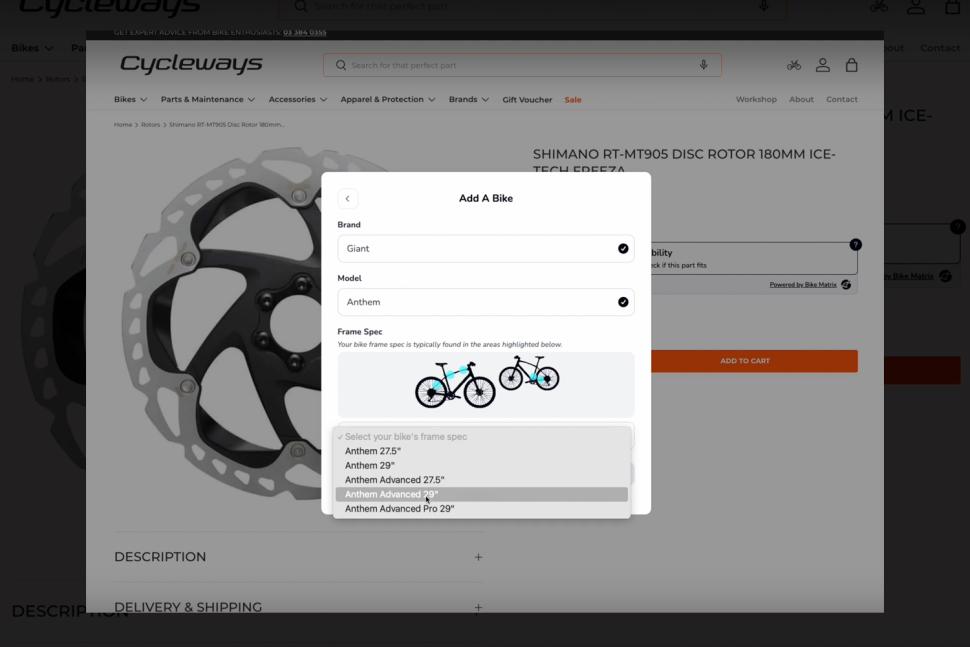
Using the Bike24.com website as an example, you can click on ‘parts’, then ‘add a bike’, fill in the relevant information, then click ‘Save My Ride!’. Your bike will remain on the site until you choose to delete it. You don’t even need to create an account or log on.
What you are then offered are products that will fit your exact bike. The correct width inner tubes, the correct range and speeds of cassette, the correct bottom bracket, and so on. The guesswork is taken out, and you only see the relevant options to choose from.
As Peter Ebert of Bike 24 says: “Most cyclists don’t want to become experts in bottom bracket standards. They have a passion for riding bikes.”
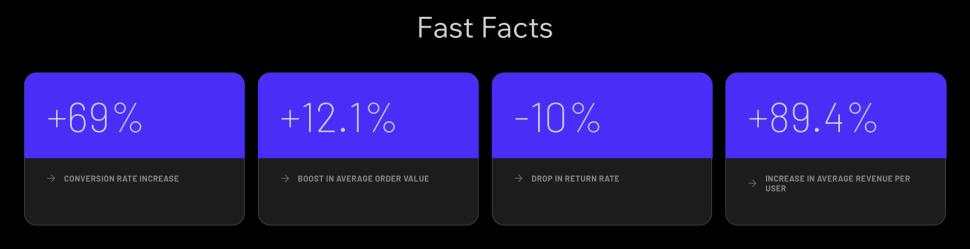
So why should this matter? According to the latest Bike Matrix 50-day (6.6 million session) test, its system has reduced the rate of returns on the Bike24 website by 10%. A customer gets the product that they actually want, and Bike24 have less admin and expense to deal with.
> Everything you need to know about disc brakes
The testing looked at the differences between a customer who engaged with the Bike Matrix feature and ones who didn’t. Other claimed results included a 12% rise in average order value and a lofty 89% rise in average revenue per user. 92% of the 738 users sampled said they found the feature ‘valuable’, and a quarter said it was ‘…extremely valuable – I wouldn’t buy components without it’.
Of course, we have to take Bike Matrix’s word for it here when it comes to the data and results of its survey. These are some seriously lofty claims.
Bike Matrix doesn’t, as yet, deal with a custom build, or even just a groupset, so if that’s you then you’ll still need to remember what you need. Of course, not every single bike in existence can be listed on the website either – right now just 15 bike brands are listed from the likes of Specialized, Trek, Canyon, Cube and Cannondale, but most of the current bikes in these brands’ ranges can be found.
Another issue is that it doesn’t appear to match every single part of your bike based on our testing of the system on the Bike24 website. It covers: brakes, wheels, tyres, tubes, chains cassettes, headsets, bottom brackets, cranksets, chainrings, and axles. That’s almost everything you’d want to upgrade or replace, but doesn’t cover saddles, handlebars or seatposts, to give three examples. Anyone who has a carbon saddle with 7x9mm oversized rails will know even buying a replacement for this will require some knowledge to avoid ending up with a standard alloy-railed saddle.
Even so, for the majority who buy a bike complete, and are unlikely to customise it, then the system appears to work in most scenarios based on our experimentations so far. New bikes and specs are being added all the time, too.
Anything that helps minimise confusion and frustration for cyclists looking to buy new parts that fit their bike should be a good thing, so we’ll be intrigued to see if the Bike Matrix system makes it onto more retail websites and shop floors in the future.











6 thoughts on ““‘Will this part fit my bike?’ might be the most expensive question in cycling” — Bike Matrix promises to take the guesswork out of ordering replacement parts for your bike”
On the one hand, I applaud
On the one hand, I applaud the effort. On the other I worry about the work required to maintain it unless manufacturers pile in to help out. If it can maintained it will be incredibly useful.
Where it will fall down is
Where it will fall down is when manufacturers substitute a part for something else because of supply issues – with the result that the same “standard” model has a number of different components for the same thing.
For like-for-like replacement
For like-for-like replacement, I’m happy to DIY, but if I’m starting to fiddle with the bike too much then it’s usually worth a trip to the LBS (keeps them in business); they often have an opinion/advice that I haven’t taken into account.
Wot no mech hangers?
Wot no mech hangers?
That’s great, the system can
That’s great, the system can tell you which bottom bracket is needed (probably), but what happens when you receive the part and realize you don’t have the tools or knowledge to change it yourself? Or when changing it doesn’t get rid of the creak that you were hearing? I hope local, physical bike shops will still exist in the future, please support yours. Thanks.
The Bike Matrix sounds like a
The Bike Matrix sounds like a virtual reality for cyclists ; maybe a very dark version of Zwift.
There are lots of exciting worlds to cycle in and you are blessed with superhuman powers (very high FTP).
You have arranged a meet up with Monica Bellucci this morning to cycle around the volcano and through the rainforest.
But if you are killed by a speeding SUV in the Bike Matrix, then you also die in reality.