Are you one of the many gravel riders who have got a proper taste of riding off-road, but are looking to test the waters of life on knobbly(er) tyres? Well, mountain bikes pose a real difference in riding style that, although experienced in the slip and grip world of off-road cycling, gravellers may not be aware of. Here are a few things you should know.
- Gravel bike racing – everything you need to know
- Best gravel bikes 2025 — drop-bar bikes for off-road riding
- Gravel bike suspension and dropper posts – do you need them?
Dial your attack position
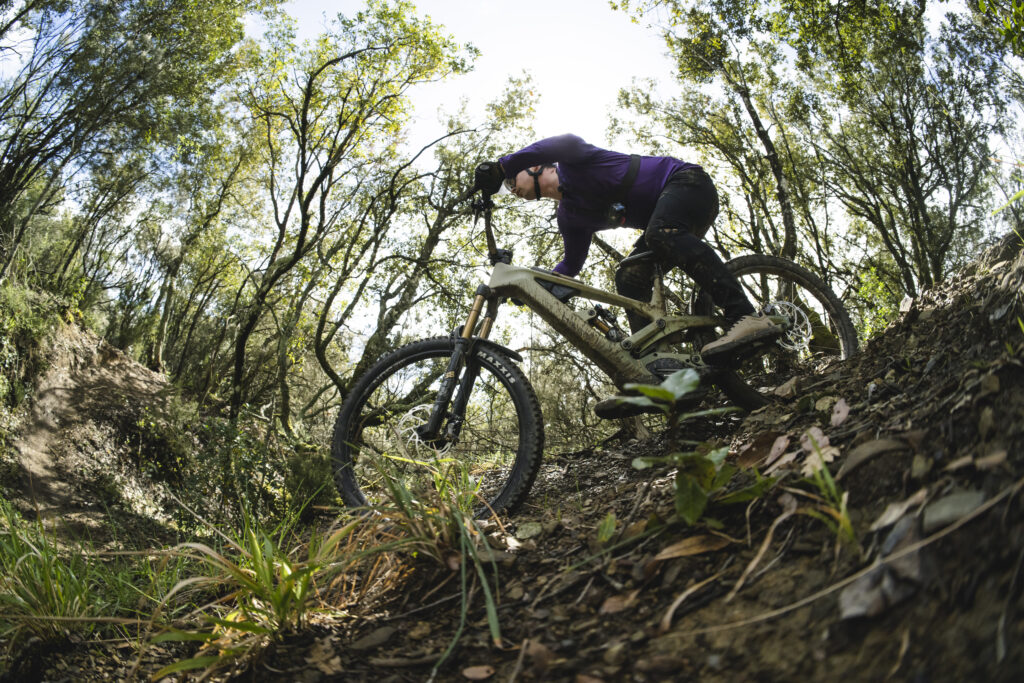
Mountain bikes command a very different stance compared to gravel bikes, especially as a lot of the time on a gravel rig, you’ll be seated. To get a head start in mastering the art of descending prowess, you’ll need to master what’s commonly known as the ‘attack position’. This is the stance you’ll adopt when standing on the pedals and descending on a mountain bike.
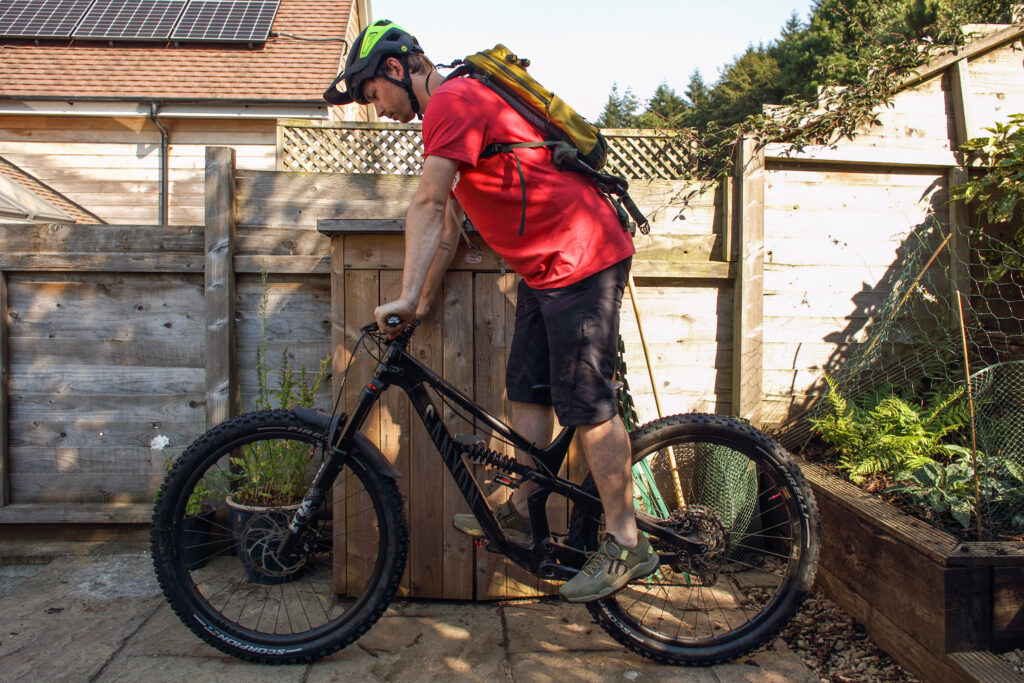
Nailing the attack position serves as the ideal foundation for any mountain bike technique, but importantly, it’ll put your body in the best place possible to absorb bumps, and allow the bike to move around underneath you naturally.
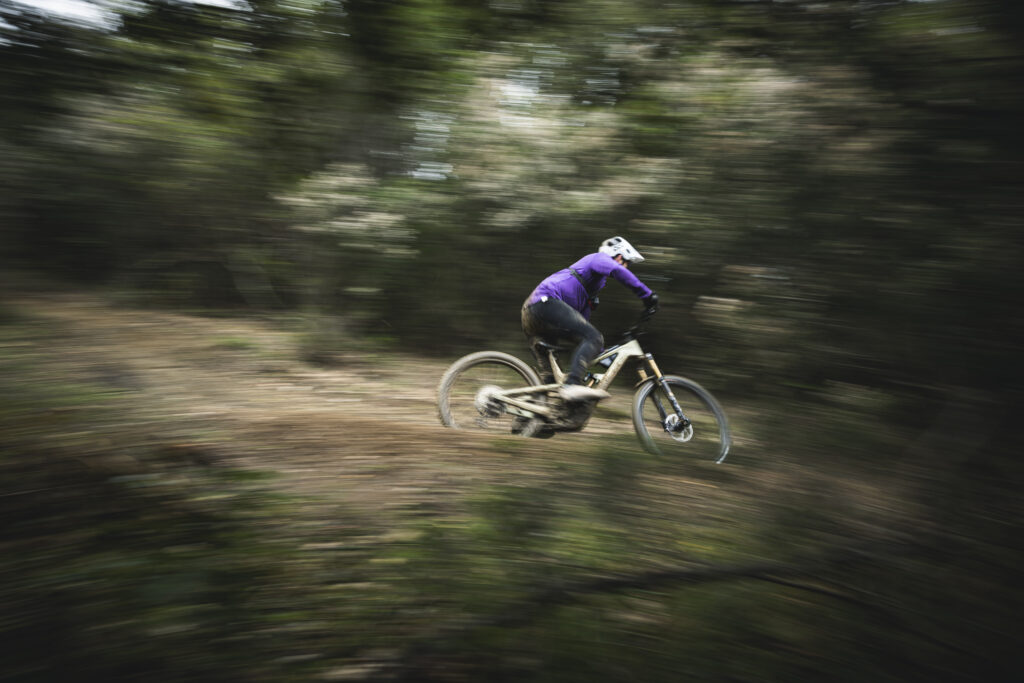
To achieve the attack position, stand on your pedals with your weight centrally balanced between the wheels. You’ll then want a slight bend in both your knees and elbows. Locking out either your knees or elbows will contradict what the attack position is all about by reducing readily available movement. That slight bend will mean that your arms and legs (and your bike) are primed to absorb the many impacts found when mountain biking.
You’ve got a greater range of movement, so take advantage of it
Because gravel bikes are generally quite tall, with lofty standover heights, fixed seat posts, longer stems, and a more stretched position on the bike, your range of movement over a gravel bike vs a mountain bike is comparatively restricted. Often, mountain bikes have much lower standovers, dropper seat posts, and shorter stems. This all opens up the range of movement, so take advantage of it.
Finding the limits of this newfound range of movement does take a little bit of learning, however, and those limits can get rather harmful if found at the wrong time and place.
To figure out how far you can move over the bike, find a safe space like an empty playing field and experiment. Lean as far back on the bike as you can until your bum touches the rear tyre, and lean right over the handlebars. This will give you a solid idea of the range of movement you’ve got to play with before going too far. It’s unlikely that you’ll ever go to these extremes when out on the trail, but knowing that you’ve got such movements at your disposal will certainly come in handy when tackling steeper rolls, or even climbing on a mountain bike.
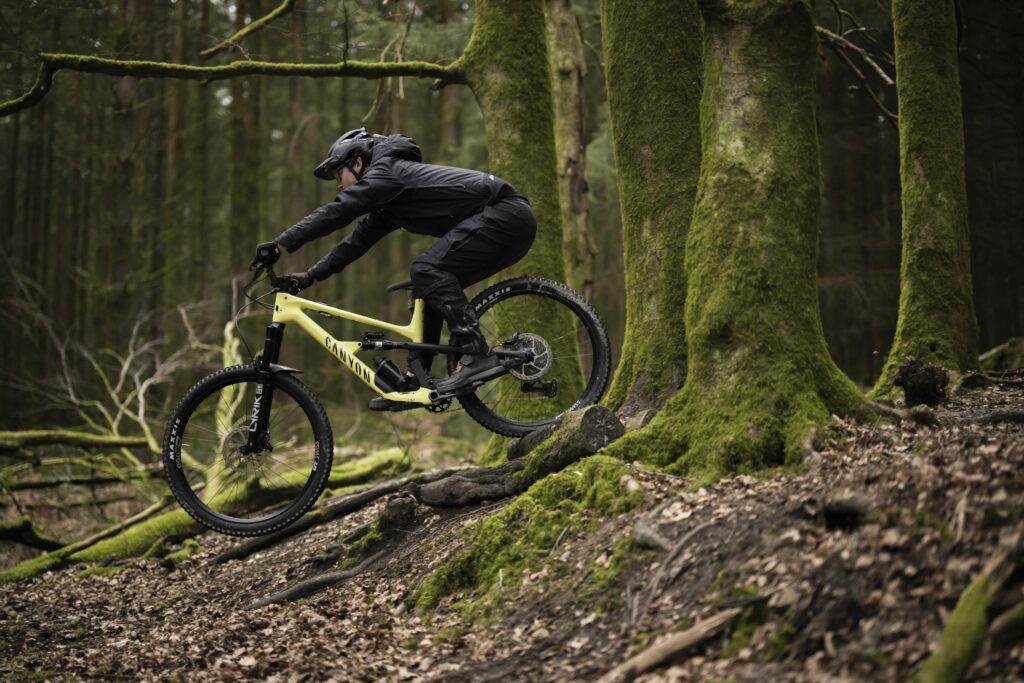
It’s not just fore and aft, either. Lean the bike from side to side underneath you, as this is a movement that you’ll need to get used to when learning the proper cornering technique.
Apply all of that when cornering
Although burlier and potentially more complicated than a gravel bike, riding a mountain bike is full of nuance. Most of those small variations, or surprises in the trail, can be smoothed out with proper weight distribution. When cornering, though, correct weight distribution is absolutely vital. Get it wrong, and you’ll be on the floor in no time. Master the correct technique, and you’ll be whipping those corners in no time.
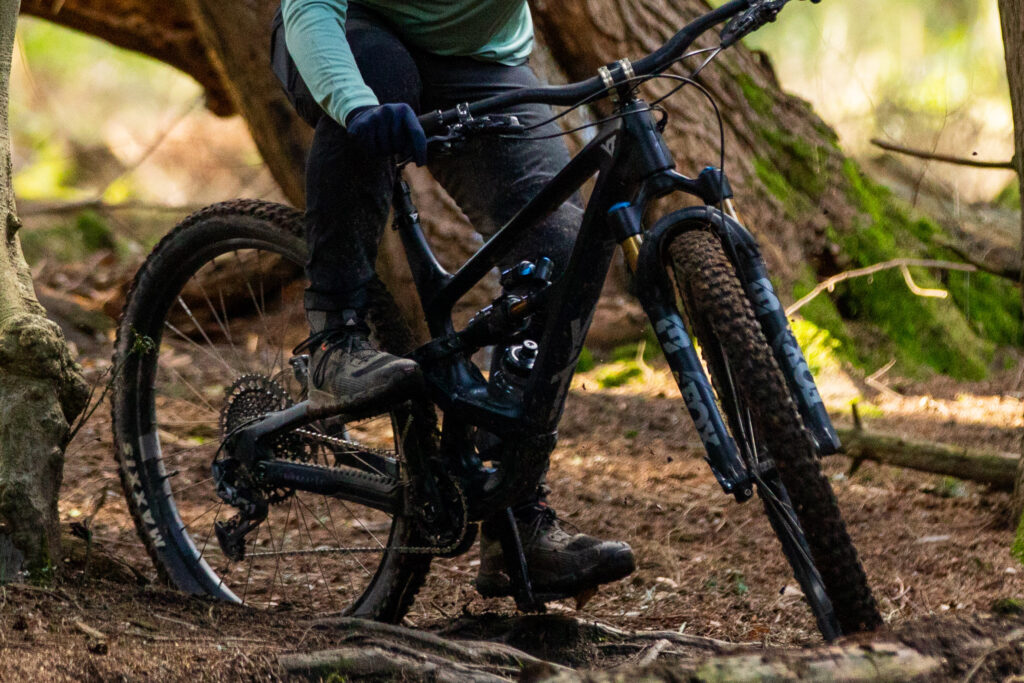
As you approach a corner, adopt your attack position before dropping your outside foot (left foot for right-hand corners, right foot for left-hand corners). With this, you’ll want to lean the bike into the corner, but independently of your body. Your torso should remain somewhat separate from how the bike is leaning. Also, if your right foot is down, you’ll want to raise your right elbow to help the bike lean. This will help keep your weight low, too, helping the tyres grip better.
This is all very different to riding a road motorcycle, as the physics are far from the same. But keeping your body upright will help keep your bodyweight over the right point in the tyre’s tread, achieving more grip. Over wet surfaces, especially, this position also allows for adjustments in the bike’s lean as you and your bike hunt for traction.
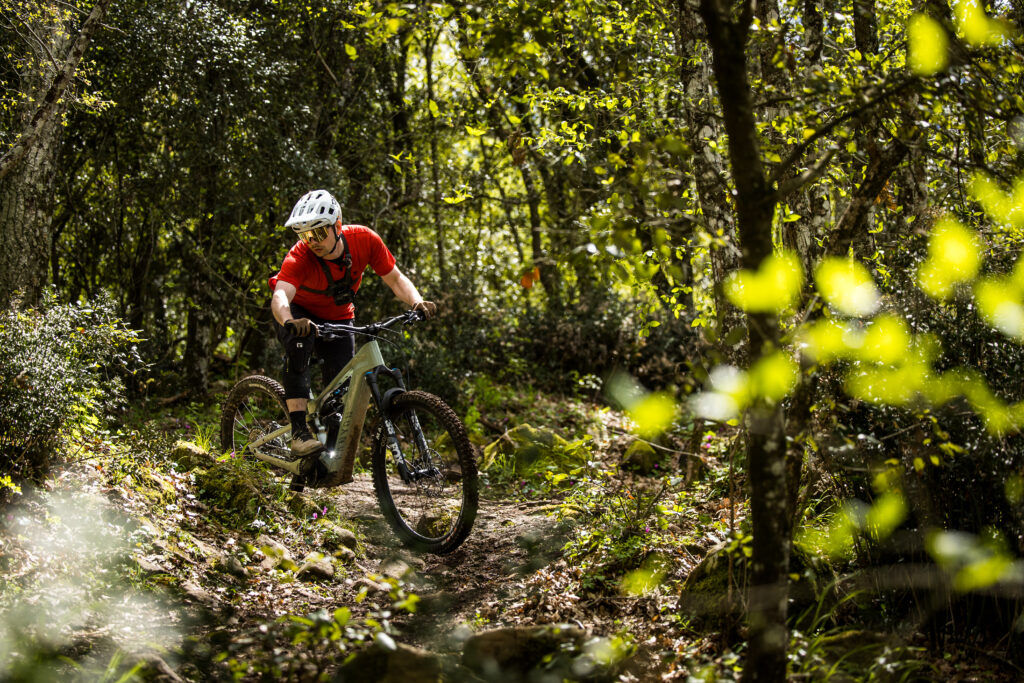
Now, this can all change depending on the type of corner you’re riding. If it features a berm, or if it’s a banked corner, you can attack these with level pedals, which can be a better technique as it’ll allow you to press the bike into the corner for a free helping of speed. But if you’re just beginning your MTB journey from gravel, get the outside-foot-down technique dialled first.
Let the bike move underneath you
All of the above is to enable the bike to do most of the work for you, and in order for that to be successful, you’ll need to allow the bike to move around. As a gravel rider, you’ll likely be familiar with this sensation already, but mountain bike trails typically involve much larger lumps and bumps, so your own movements and your bike’s movements will be much greater.
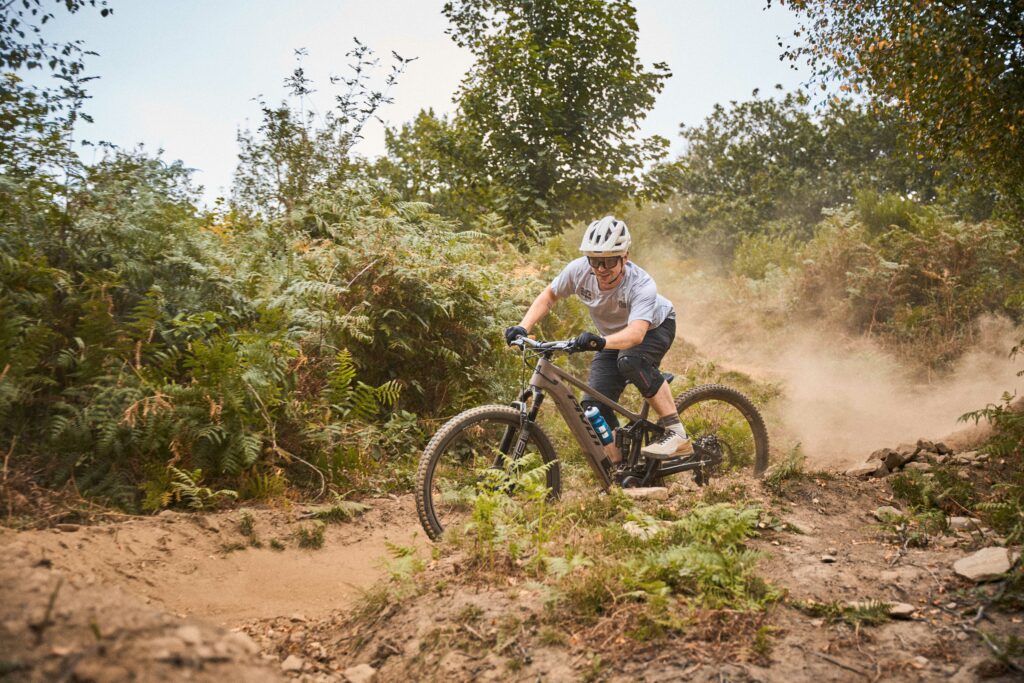
If you watch a mountain biker on a trail, you’ll notice that their body is all over the place. It’s in constant movement with the bike, and there’s a real method to what looks like utter madness. Part of that franticness is all to help the bike do its thing.
If you were to stiffen up on the bike during any scenario, you’d drastically reduce your bike’s ability to remain stable and gain traction. Think of a firm tyre on a lumpy surface vs a soft tyre. A firm tyre will likely slide when under load, whereas a softer tyre will conform and produce more grip since it can move a bit.
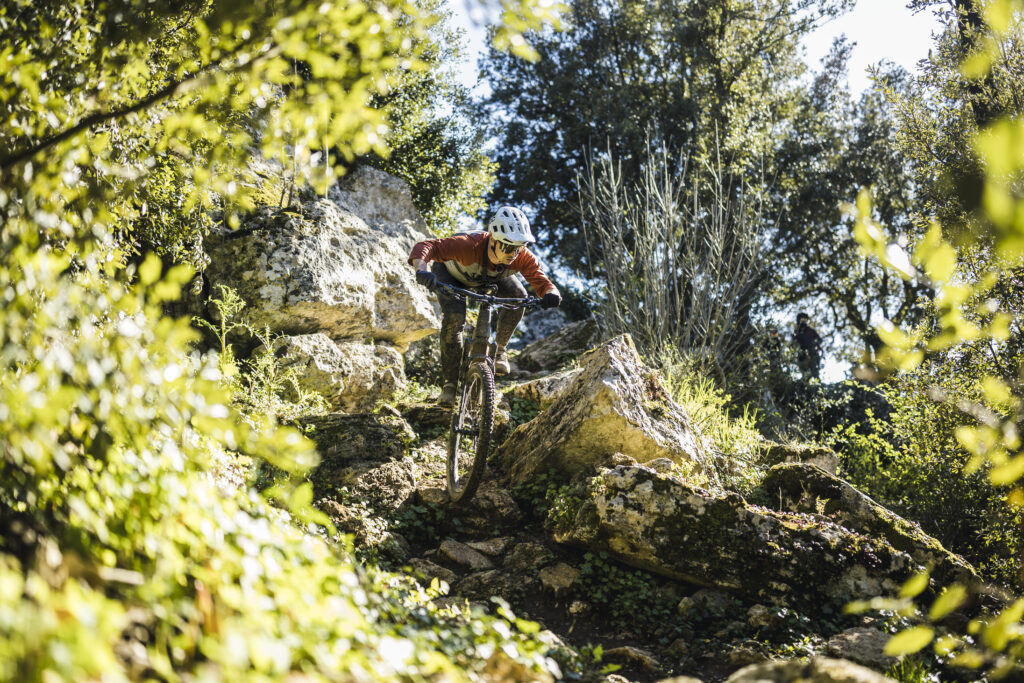
Stay loose on the bike, but well supported, and you’ll find yourself riding in harmony with your bike, not fighting it. That means keeping your body free to absorb any movement from the bike, as well as letting it slip every now and then. Usually, with correct technique and a solid attack position, a lapse in grip will be just that, as the bike settles back into traction. Even with correct technique, if you were to ride stiff, you’ll exaggerate any loss of grip and likely take a little tumble.
Don’t be afraid of the front wheel
With typically longer stems and drop handlebars, a lot of your weight is naturally fairly forward over the front wheel on a gravel bike, so weighting the front wheel isn’t necessarily at the forefront of a gravel rider’s mind. But even the most aggressive of cross-country bikes balance weight distribution a little more rearward in comparison. This can lead to the bad habit of leaning over the back of the bike when descending. While this can be a positive in some scenarios, generally, you’ll need to pay greater attention to how you’re weighting the front wheel, as a lack of weight on the front tyre can be detrimental.
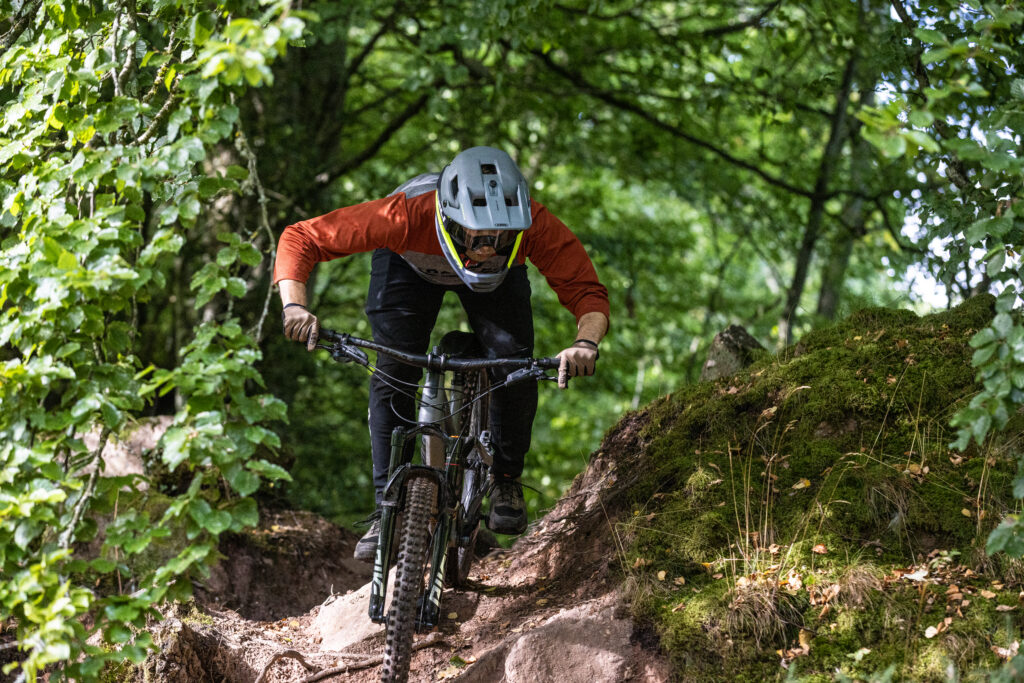
Any bicycle’s front wheel is to credit for an awful lot of what a bike can do. It’s the first thing to hit most kinds of trail obstacles, while being essential when cornering and delivering the bulk of a bike’s braking power. Neglecting to weight the front wheel properly will reduce your ability to do any of this.
As mentioned before, experiment in a large garden, park or any similar open space to push the limits of how far you can lean over the handlebars, and try to hit a balanced riding position when attacking the trail. Keep your elbows bent and chin in line with the stem. Doing so properly will stop your front wheel from washing out from underneath you when cornering, and achieve solid braking power while promoting a proper attack position, all of which will pay back in dividends when tackling wet and slippery terrain.
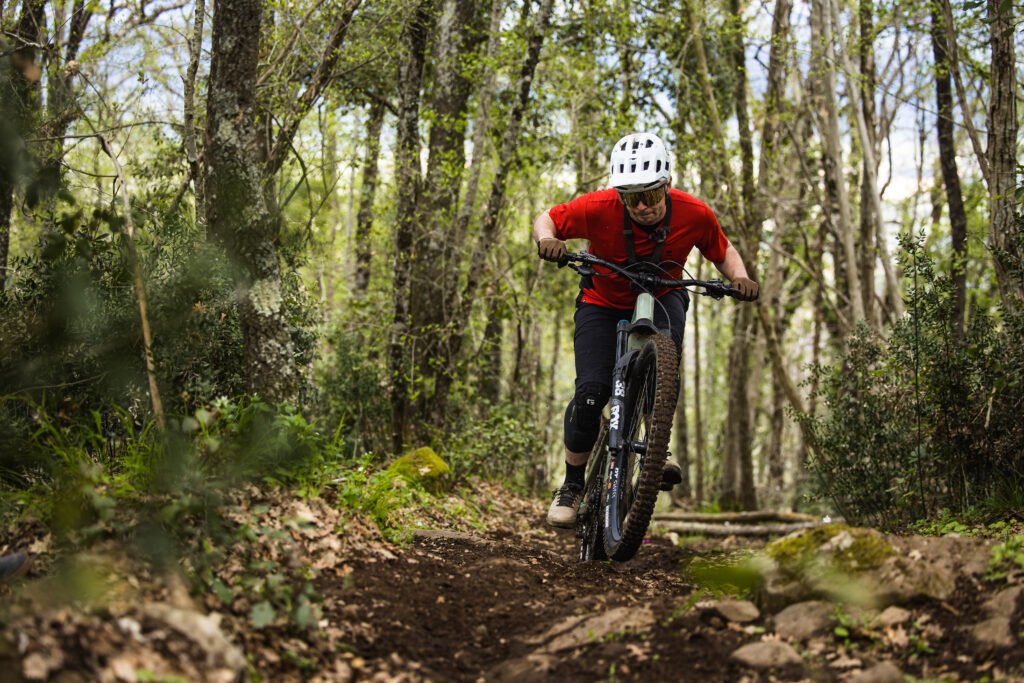
Weighting the front wheel can also lead to an easier life when climbing. Again, mountain bikes typically encourage a more rearward riding position compared to gravel bikes, and when ascending, this can lead to the front wheel lift, which reduces overall control. Get your chest closer to the bar, and it’ll keep your front wheel tracking the ground, boosting cornering ability.
Get your suspension set up
Although suspension is becoming commonplace in gravel, it’s still not something many drop-barred riders have a lot of experience with. In order to get your mountain bike working at its best for you, make sure you’ve set up your suspension properly.
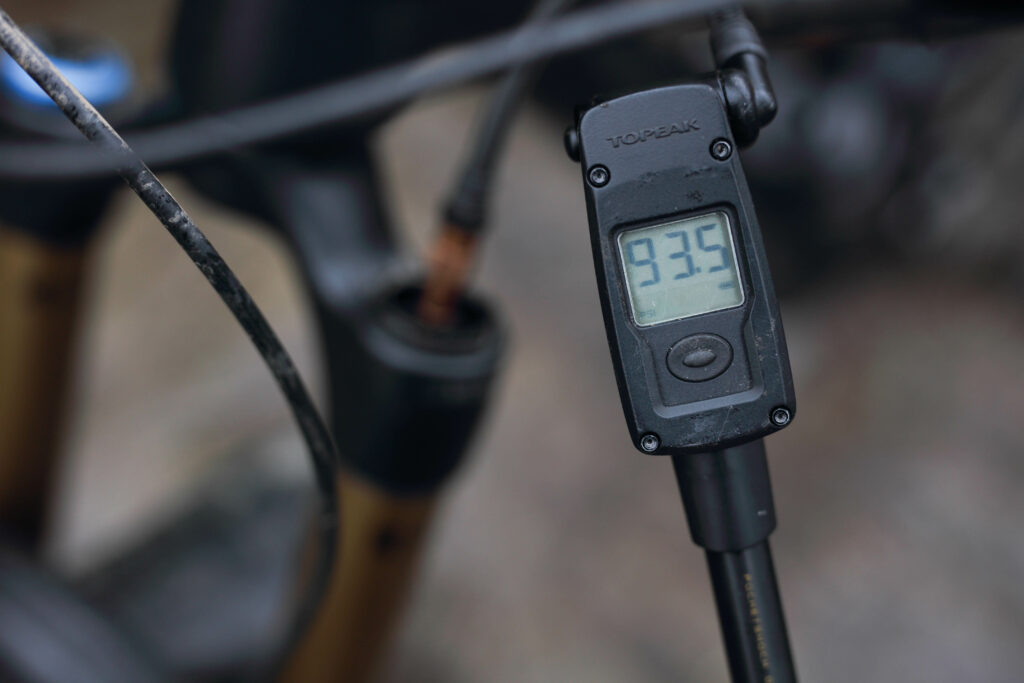
We’ve already got an oven-ready guide on how to set up your mountain bike suspension, so we won’t dive too much into that here – but achieving a proper suspension set-up, at least for your body weight, will extend the bike’s ability to work with you, not against you.
To start, that means dialling in the pressures of the fork and rear shock using a shock pump to attain the right sag. This is often around 25 to 30% of a given suspension component’s travel. Doing this will mean that the suspension can extend into trail imperfections, while compressing upon impact, but by the correct amount.
Setting up your suspension to be too firm for your body weight will result in a ride that’s not too dissimilar from the firm/soft tyre analogy I mentioned above. Get it dialled, and your bike will become the perfect foundation to learn aboard. You’ll also be revelling in the greater traction and comfort that a proper suspension setup will result in.
Have you made the switch from gravel to MTB recently? How was it for you, and do you have any more tips to add to our six? Let us know in the comments, as always!